
Museum of Anatolian Civilizations: A Visitor's Guide

Give the Museum of Anatolian Civilizations two to three hours. It is a single complex in Ankara's Atpazarı district, tucked against the outer wall of Ankara Castle in Ulus, and its galleries run in chronological order from the Paleolithic Age through to the Phrygians and Urartians. This guide sets out the two buildings, the objects worth pausing for, how to reach the entrance and what sits nearby.
What the museum is and why it earns an hour or two
The museum holds Anatolian archaeological finds displayed in sequence, starting with the Paleolithic and running forward through the Neolithic, Chalcolithic, Early Bronze Age, Assyrian Trade Colonies, Hittite, Phrygian and Urartu periods. That chronological layout is the reason to come: instead of a scatter of showcases, you follow one region's material culture as it changes. On 19 April 1997 it was named Museum of the Year in Europe in Lausanne, an award worth knowing as history rather than a current label.
Set just below Ankara Castle, the museum suits anyone with an interest in archaeology and history and works well as the anchor of a half-day in the old quarter. If you are choosing between Ankara's sights, this is the one that rewards slow reading of the labels rather than a quick lap.

Where it sits: Atpazarı, below the castle wall in Ulus
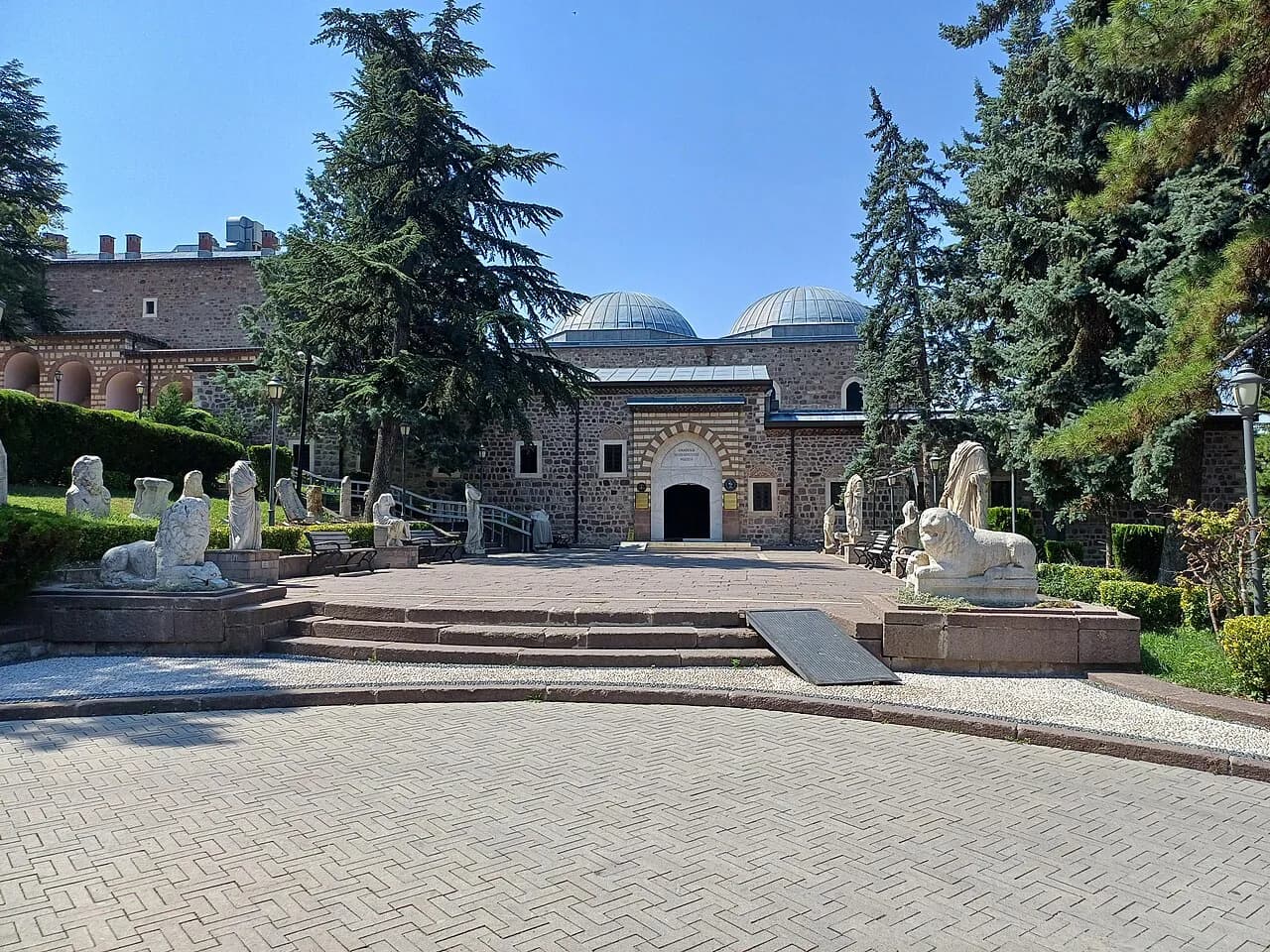
The museum occupies two Ottoman buildings in Atpazarı, on the south-east side of the outer wall of Ankara Castle, within the Ulus district. Because it sits on the castle slope rather than on a main boulevard, the approach is part of the visit: you climb through the old bazaar quarter to reach it. Use Ankara Castle as your landmark and the complex is straightforward to find.

How to get there from Ulus
Aim for Ulus first, then walk up towards the castle wall and Atpazarı. The last stretch is uphill, so allow a little slack in hot weather and wear shoes that cope with uneven paving. If you are arriving by public transport, ask your driver or hotel for the nearest stop to Ulus and Ankara Castle, because timetables and routes change and are best confirmed locally on the day.
If you are building a day around this part of the city, it pairs naturally with the other places covered in Ankara Attractions: 4 Visitor Guides, which takes in the monuments within reach. Treat the museum as the fixed point and arrange the rest of the day around your walking legs.
The two Ottoman buildings: the Bedesten and the Kurşunlu Han
One structure is the Mahmut Pasha Bedesten, a covered bazaar-type building, and the other is the Kurşunlu Han, a roadside lodging house. The Bedesten's domed central space was restored by 1940, exhibits began to be installed, and the middle section opened to visitors in 1943 while repairs continued; the museum took its final form in 1968. Today the Bedesten serves as the exhibition hall and the Han as the administrative building, housing researcher rooms, a library, a conference hall, a laboratory and workshops.
Paleolithic and Neolithic galleries: stone tools and first villages
The opening galleries set the baseline. In the Paleolithic section you see chipped stone tools and cores of quartz, flint and radiolarite, with the transitional Epi-paleolithic marked by tiny microliths used as weapons. The Neolithic rooms shift to the first producer villages, with domesticated animals, human and animal figurines, ornaments, bone tools and terracotta and stone vessels.
Çatalhöyük and the wall painting called the world's first city plan
The Neolithic gallery holds the exhibit many visitors remember longest: a wall painting from Çatalhöyük showing rows of adjoining rectangular houses, with what is thought to be volcanic Hasan Mountain rising behind the settlement. It is described as the first city plan in the world, and the label repays a close look before you move on.
Chalcolithic and Early Bronze Age: Hacılar pottery, Alacahöyük and Horoztepe tombs
The Chalcolithic section covers the shift that came with mining, when a ruling class and artisans emerged and villages grew more crowded. Look for the well-fired, burnished red wares with dense geometric patterns from Hacılar, alongside material from Canhasan, Tilkitepe, Alacahöyük, Alışar and Karaz, including a copper sceptre head from Canhasan and metal and stone stamps from Alışar.
The Early Bronze Age rooms turn to city-states and bronze. The metalwork from the Alacahöyük and Horoztepe king tombs is the draw: ceremonial objects in bronze, gold and silver, jewellery such as necklaces, bracelets, crown belts and pins, and metal vessels, with the Horoztepe and Hasanoğlan sculptures also on show here.
Assyrian Trade Colonies: cuneiform arrives in Anatolia
Assyrian merchants trading into Anatolia brought cuneiform script, and with it written history begins in the region. The gallery gathers terracotta and stone vessels, seals and seal impressions, statuettes, lead god and goddess figurines, stone moulds, cosmetic boxes, gold items and jewellery, bronze tools and weapons from Kültepe, Acemhöyük, Alışar and Boğazköy. Read a few of the seal impressions closely; they are where the merchant network becomes visible.
The Hittite gallery: the İnandık vase and a queen's letter
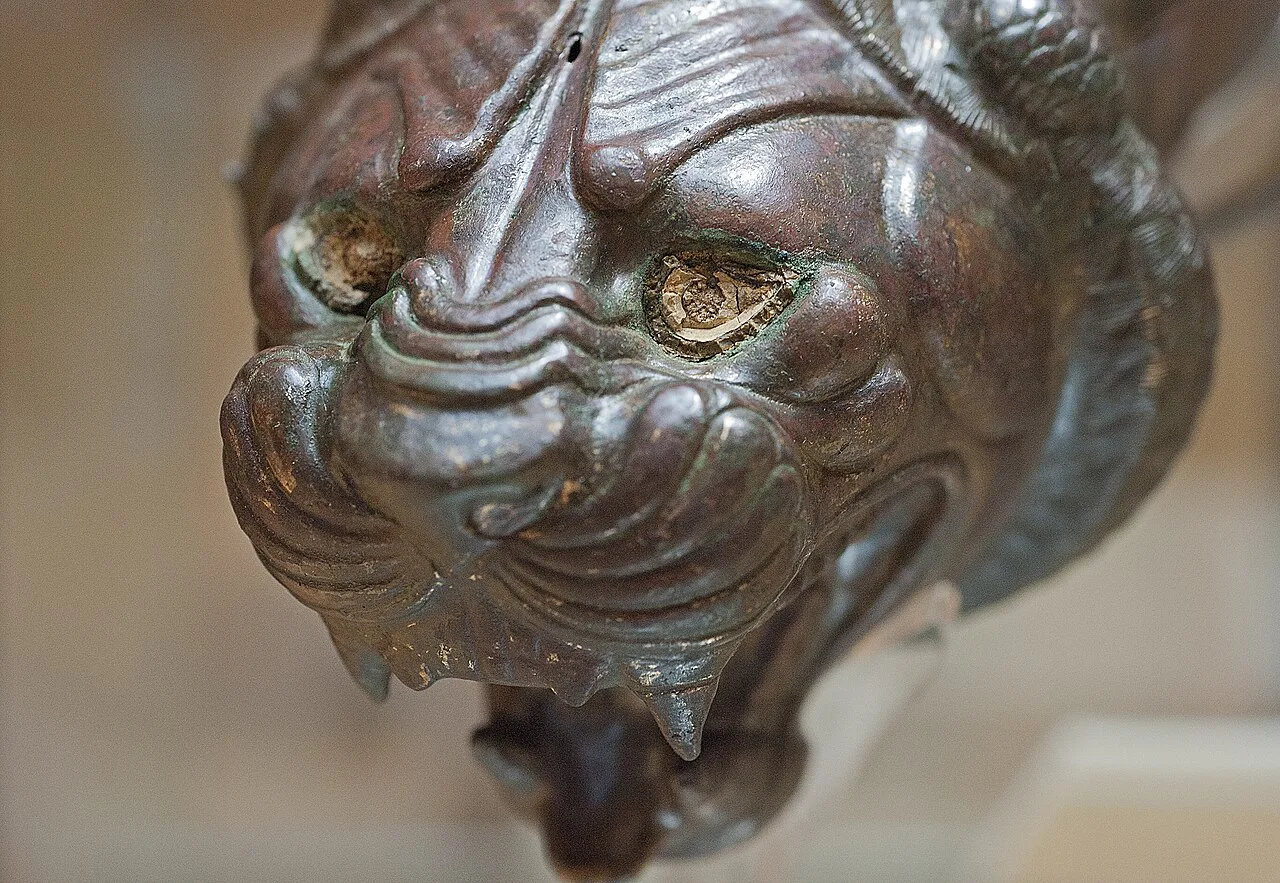
The Hittite section is the heart of the collection. The İnandık vase represents the tradition of Hittite relief vases, and the display includes god and goddess figurines in ivory, gold and bronze, large animal-shaped ceremonial vessels, cuneiform clay tablets and seal impressions of Hittite kings and queens, plus a bronze tablet that is the only example of its kind in Anatolia. Give this room the most time of any gallery.
One document stands out even among the tablets: a friendship letter written by the Egyptian queen Naptera to the Hittite queen Puduhepa. Find it before you leave the room, since it is easy to pass while reading the larger cases.
Phrygian and Urartu sections
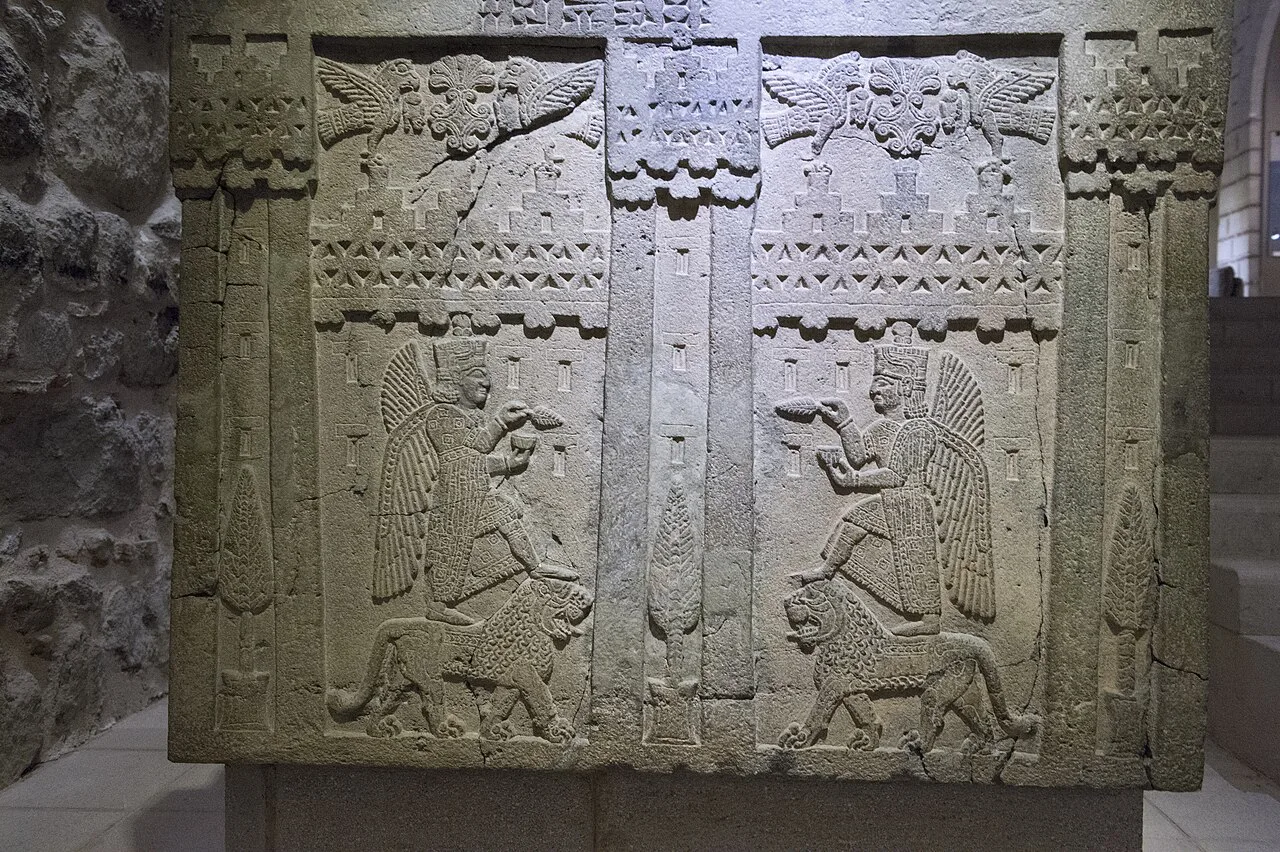
After the Hittite galleries, the Phrygian section shows the cultural shifts that followed the collapse of the Hittite Empire around 1200 BC, with changes visible across nearly every kind of object and taken as a sign of a new community arriving in Anatolia. The sequence ends with the Urartu material, closing the chronological walk-through before you step back out into Atpazarı.
How long to allow and how to pace the galleries
With eight period sections plus the Çatalhöyük painting and the Hittite cases, two to three hours is a realistic allowance for a considered visit; an hour covers the route but not the labels. Pace yourself by treating the Hittite room as the priority and skimming the earlier sections on the way in, then returning if time allows. The courtyard between the two buildings gives you a natural break midway.
Tickets and opening times: where to confirm before you go
Check the museum's own site or the ticket desk for current opening hours, closing days and holiday closures before you travel. One tour-booking listing gave an adult ticket of 100 Turkish lira in its stated year, with free entry for children under eight and a reduced rate for Turkish citizens; treat that as a historical figure rather than today's price.
Nearby: the castle, the bazaar quarter and the rest of Ulus
The museum sits directly below Ankara Castle, so the walls and the lanes of the bazaar quarter around Atpazarı are the obvious continuation of the same morning. Anıtkabir, the mausoleum of Atatürk, is the other major Ankara sight most visitors pair with this part of town.
If you want a modern counterpoint to the museum's deep chronology, Kocatepe Mosque is the city's landmark contemporary mosque and makes an easy second stop. Continue on foot or by taxi from Ulus and you can shape a full day around the old quarter.
Pair the museum with the castle slope
Build your Ankara day around the Museum of Anatolian Civilizations, arriving from Ulus and climbing to Atpazarı while you still have energy for the galleries. Give the Hittite room the longest stop, look up the Çatalhöyük painting, and check current hours and ticket policy at the museum itself before you set out.
Sources
- Step into the Museum of Anatolian Civilisations, where Anatolia’s story unfolds from the Stone Age to today. Set just below Ankara Castle, this remarkable museum is a must for history and archaeology lovers. Learn more at: Ankara.goturkiye.com #GoTürkiye #GoAnkara #Ankara #MuseumofAnatolianCivilisat
- Museum of Anatolian Civilizations || Turkey Tour Organizer
- Museum of Anatolian Civilizations Tours & Tickets