Things to Do in Pamukkale: Travertines, Hierapolis and Pools
Plan a day in Pamukkale: walk the white travertine terraces, see Hierapolis and its theatre, and weigh up a dip in the hot mineral water.
On this page
Treat Pamukkale and Hierapolis as one visit, not two: the white terraces and the ancient city sit next to each other, so a single trip covers the pools, the ruins, the theatre and the museum. The terraces are the image everyone comes for, but the archaeological site is the larger place to explore. This guide sets out what to see, in what order, and which extras are worth your time.
What Pamukkale is and why the terraces look white
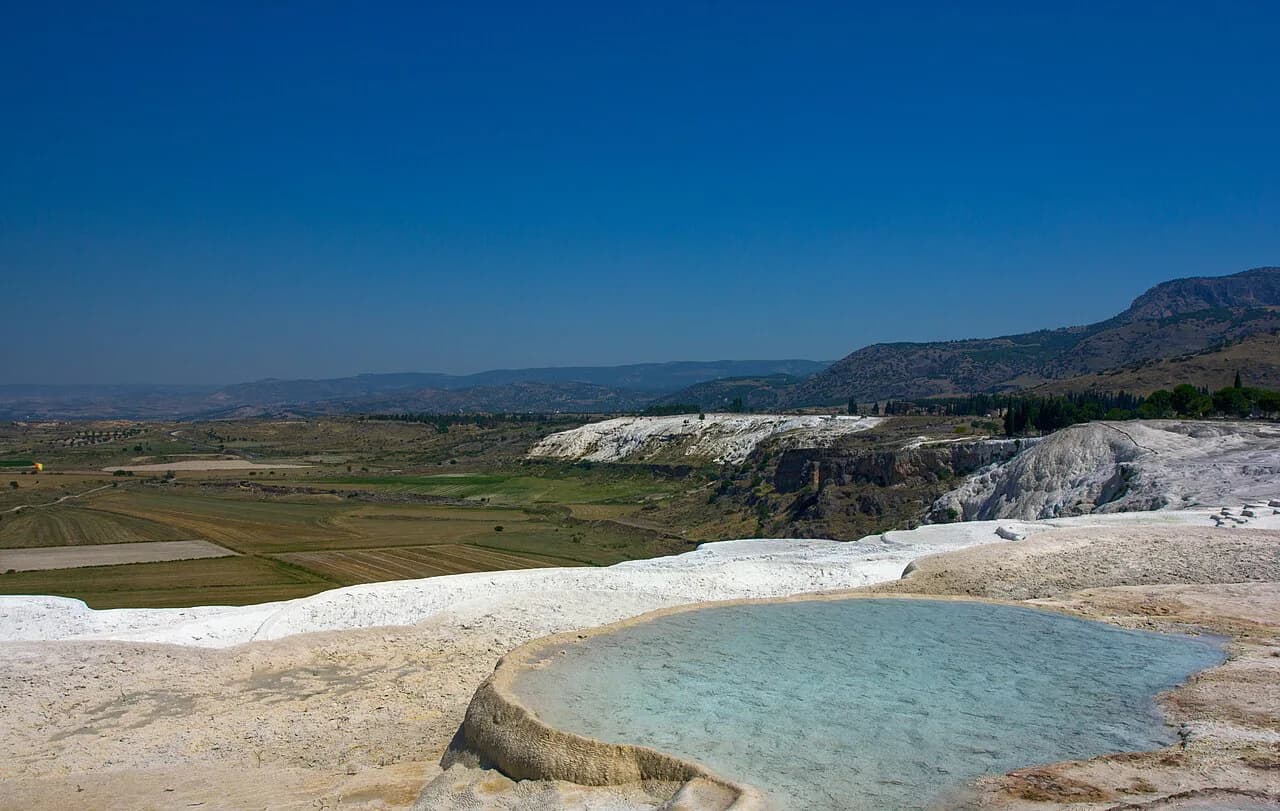
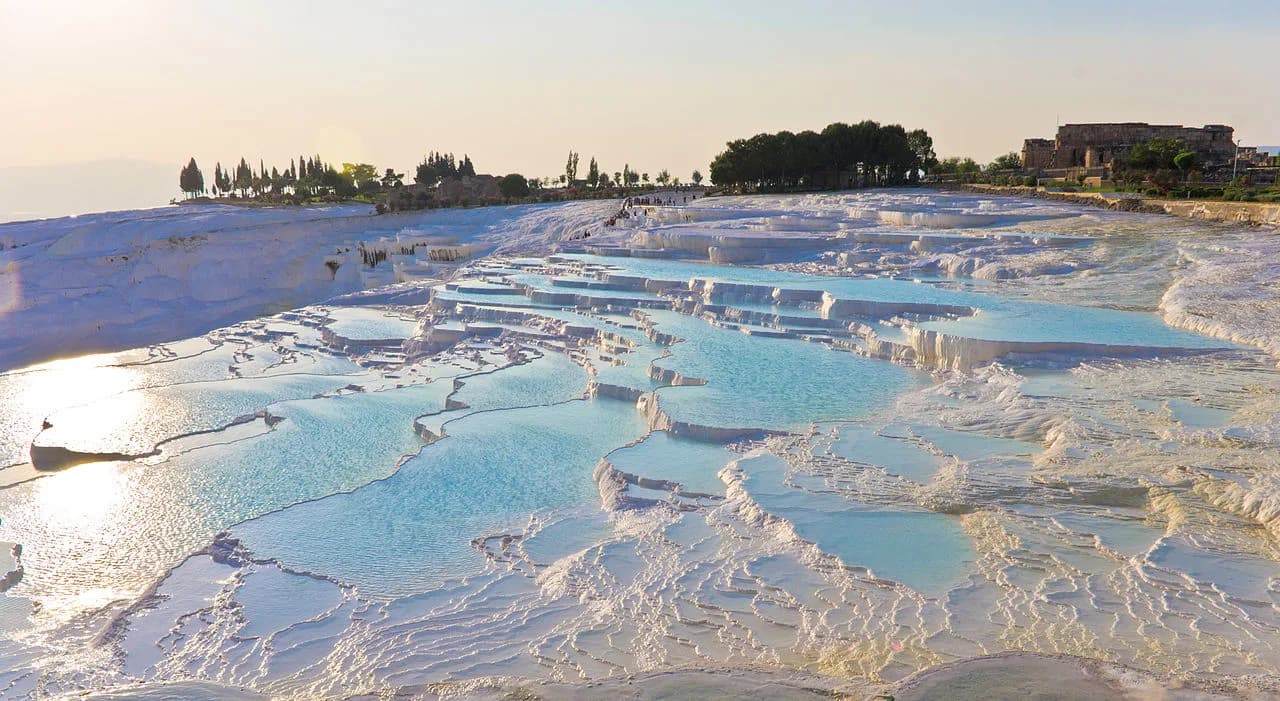
The white terraces are a natural formation, created as carbonate minerals settle out of the spring water and leave a crystalline coating across the hillside. That is why the place is nicknamed the Cotton Castle, and the bright white terraces are the image the town is best known for. Plan your visit around the terraces first, while you are fresh and the light is good.
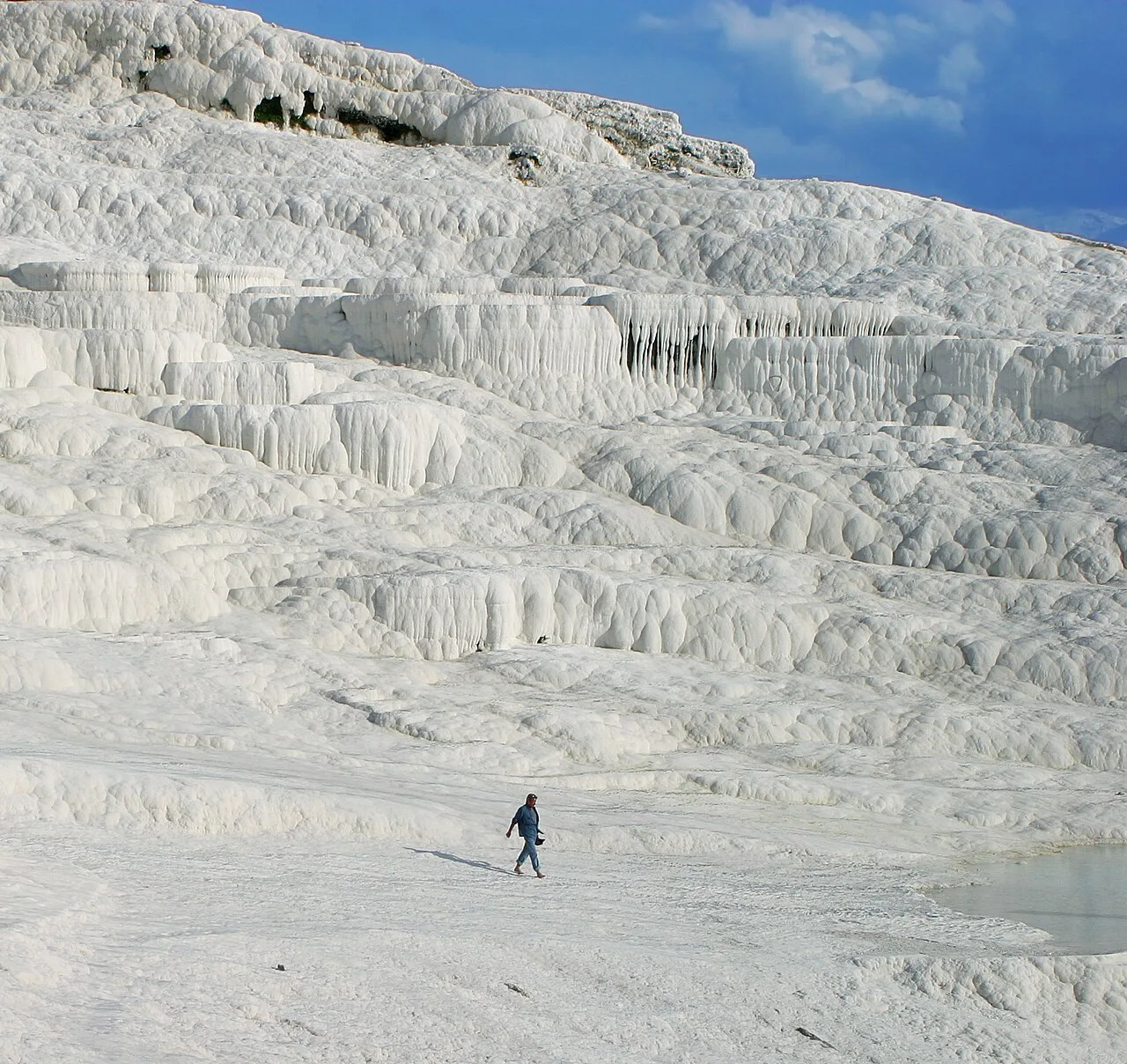
Walking the travertine pools: shoes off, costume on
You walk the terraces barefoot to protect the surface, so bring a bag you can carry your shoes and valuables in; there is nowhere at the pools to leave belongings. A small backpack works better than a tote. Pack a swimming costume if you intend to get into the water, plus sunglasses and sun cream for a hot day.
The barefoot rule is there to protect the surface, and the white terraces reflect the sun, so a hat and sun cream earn their place on a hot day. The terraces are walked on foot from the lower end up to the ruins, so plan a route that climbs once rather than zig-zagging back and forth.
Hierapolis next door: what to see in the ancient city
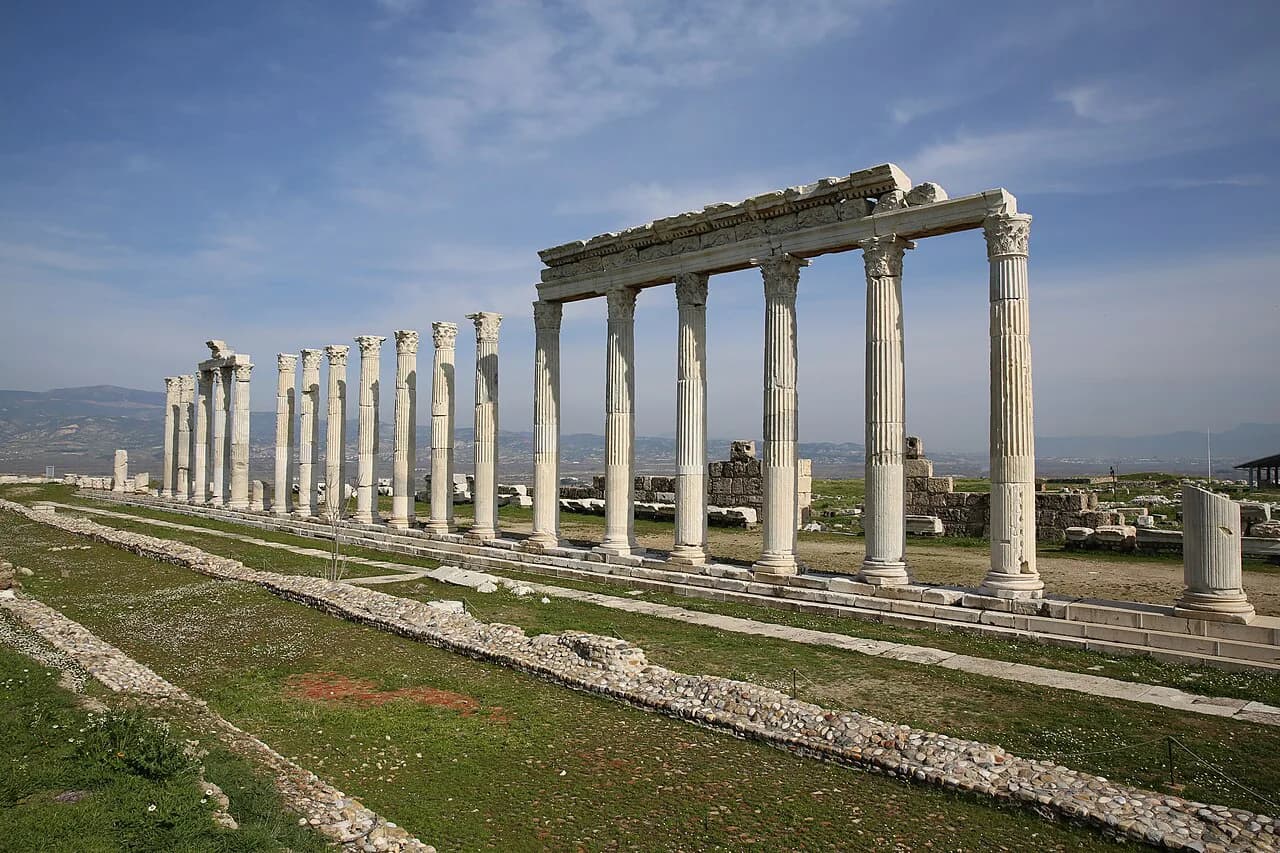
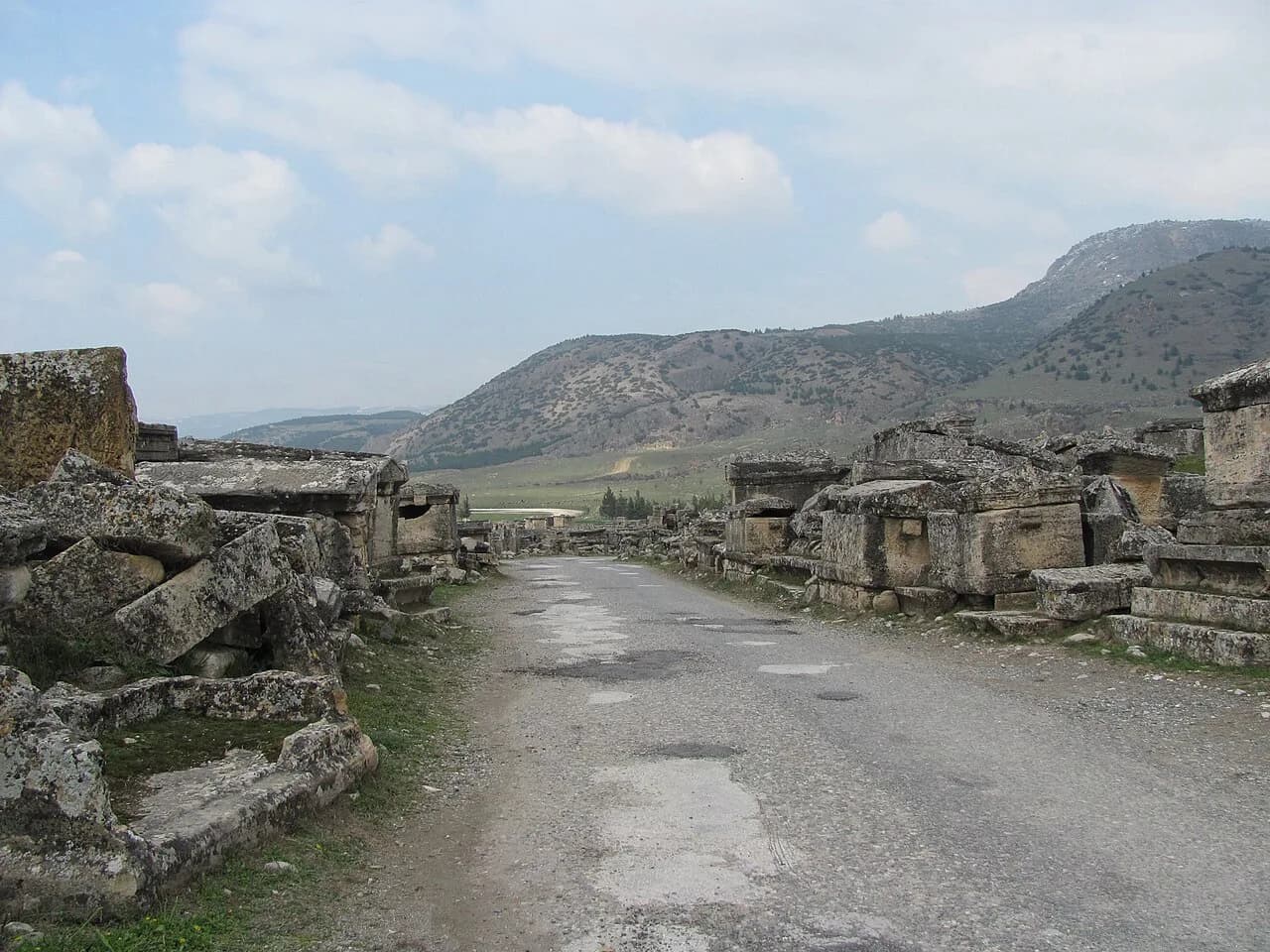
Hierapolis adjoins the terraces, so you move from the pools straight into the ruins without a second journey. The city was known for its hot springs, which were used as a spa as far back as the 2nd century BC, and the surviving remains include a large necropolis with tombs, a theatre, Roman baths and a temple dedicated to Apollo. Give the ruins more time than the pools: this is the bigger site, and it rewards a slow walk rather than a photo stop.
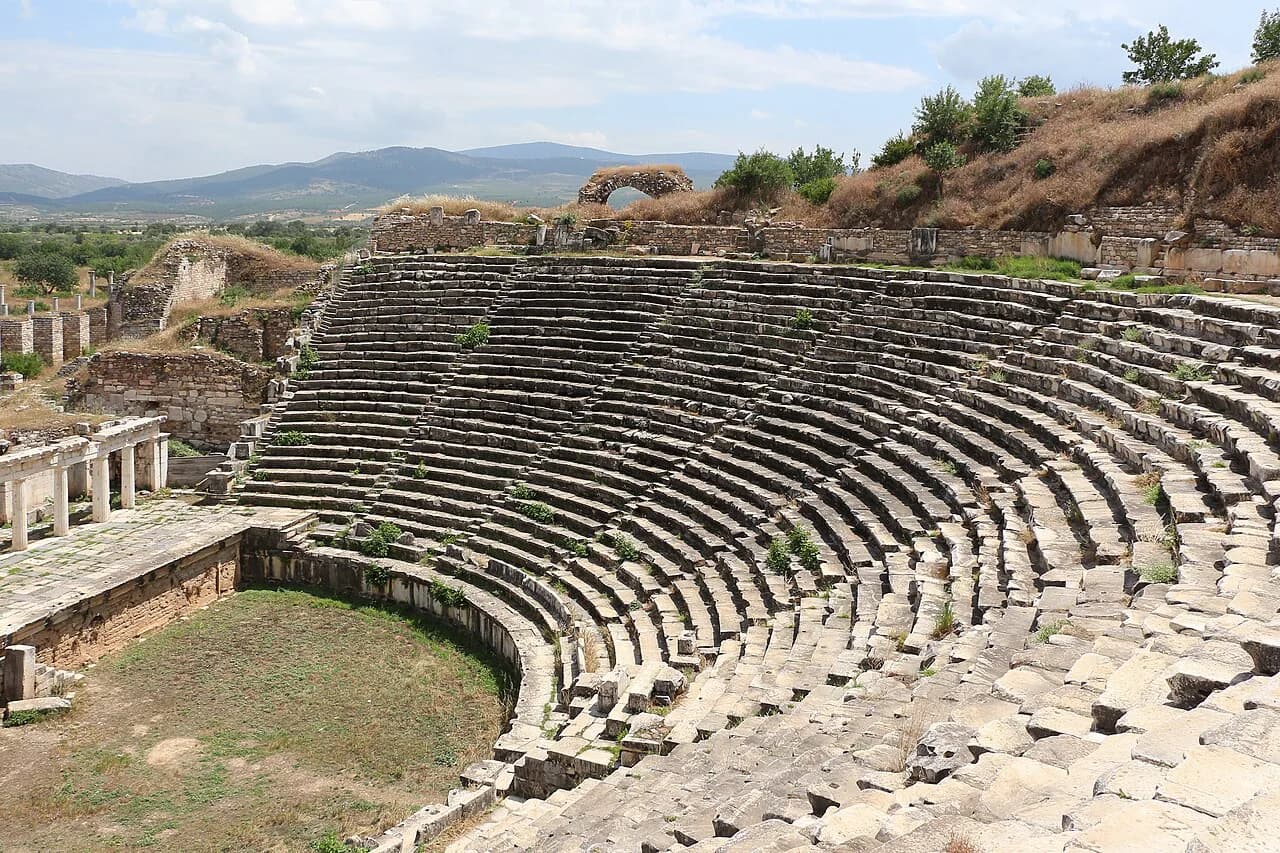
The theatre and the Temple of Apollo
The theatre is the set piece of Hierapolis, still legible as a performance space. The Temple of Apollo stands close by, alongside the Roman baths, so you can take all three in on one circuit of the upper site.
Build the walk so the theatre comes late in the day if you can: it is the part most people want to sit and absorb, and you will enjoy it more before tired legs set in. Keep the temple and baths for the cooler ends of the circuit.
The necropolis and the tombs
The necropolis is the other half of the Hierapolis story, a spread of tombs that shows how far the city reached beyond its centre. It is easy to skip after the theatre, but it is the part that makes the scale of the place clear. Allow time to walk among the tombs rather than viewing them from the path.
The archaeological museum
The site museum holds finds from Hierapolis and the surrounding area, and it is the place to make sense of what you have just walked past. Entry to the park is separate from the museum, so treat the museum as its own decision: the ticket for the terraces does not cover it.
If you are travelling with children or on a tight schedule, the museum is the element to drop first: the terraces, theatre and necropolis give the clearest sense of the place in the least time.
Cleopatra's Pool and the hot mineral water
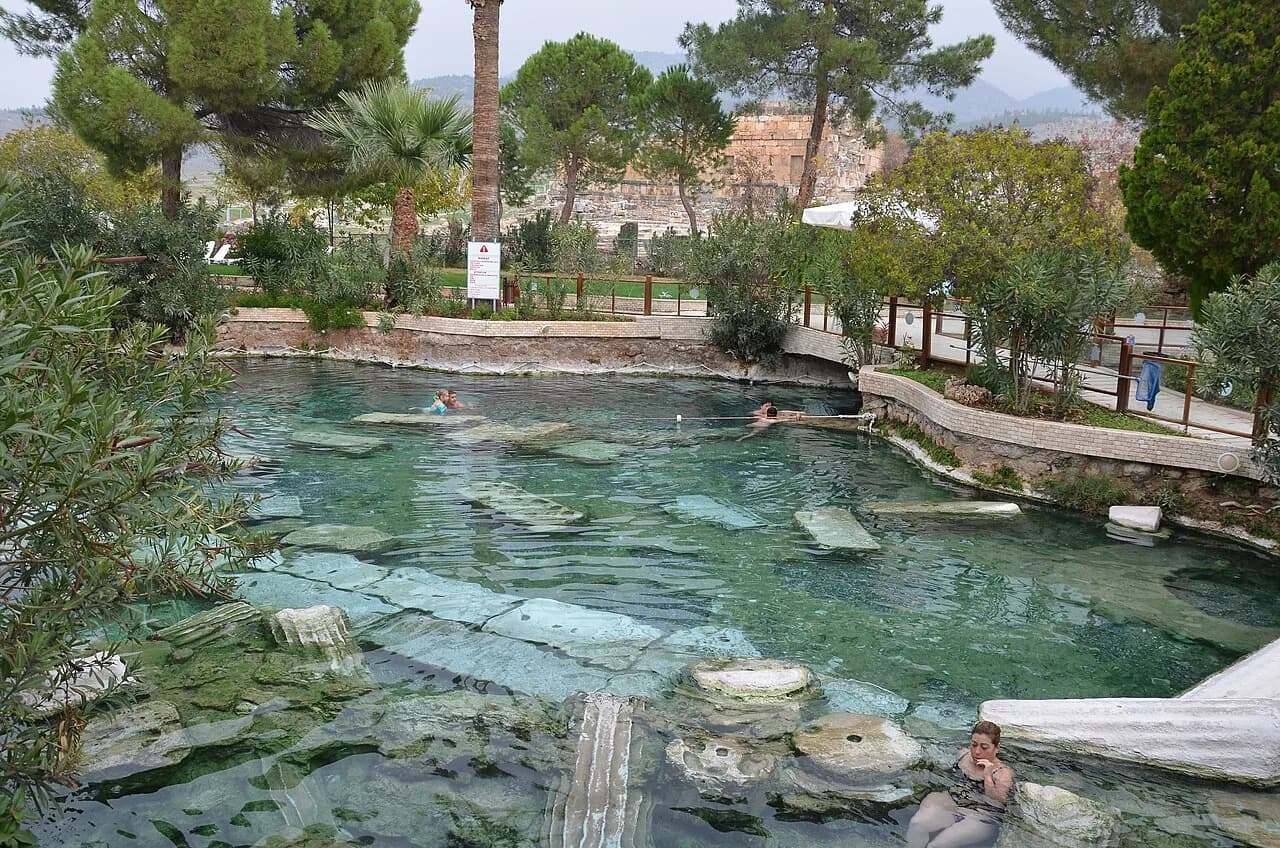
Cleopatra's Pool is the bathing pool among the ruins, fed by hot mineral water the source gives as a toasty 36°C (around the temperature of a hot bath) and rich in minerals. It is a separate extra from the terraces, so weigh a swim against the time it takes and the rest of the site you still want to see.
Treat the pool as its own choice rather than part of the terraces walk: decide on the day whether a warm mineral soak is worth the time it takes from the theatre, necropolis and museum, and keep a flexible half-day so a swim does not squeeze the ruins.
St Philip's tomb and church
The tomb and church associated with St Philip are among the Christian remains at Hierapolis, and they sit within the same walking circuit as the theatre and the baths. They are quieter than the main monuments, which makes them a good place to slow down.
Other places nearby: Karahayıt and Salda Lake
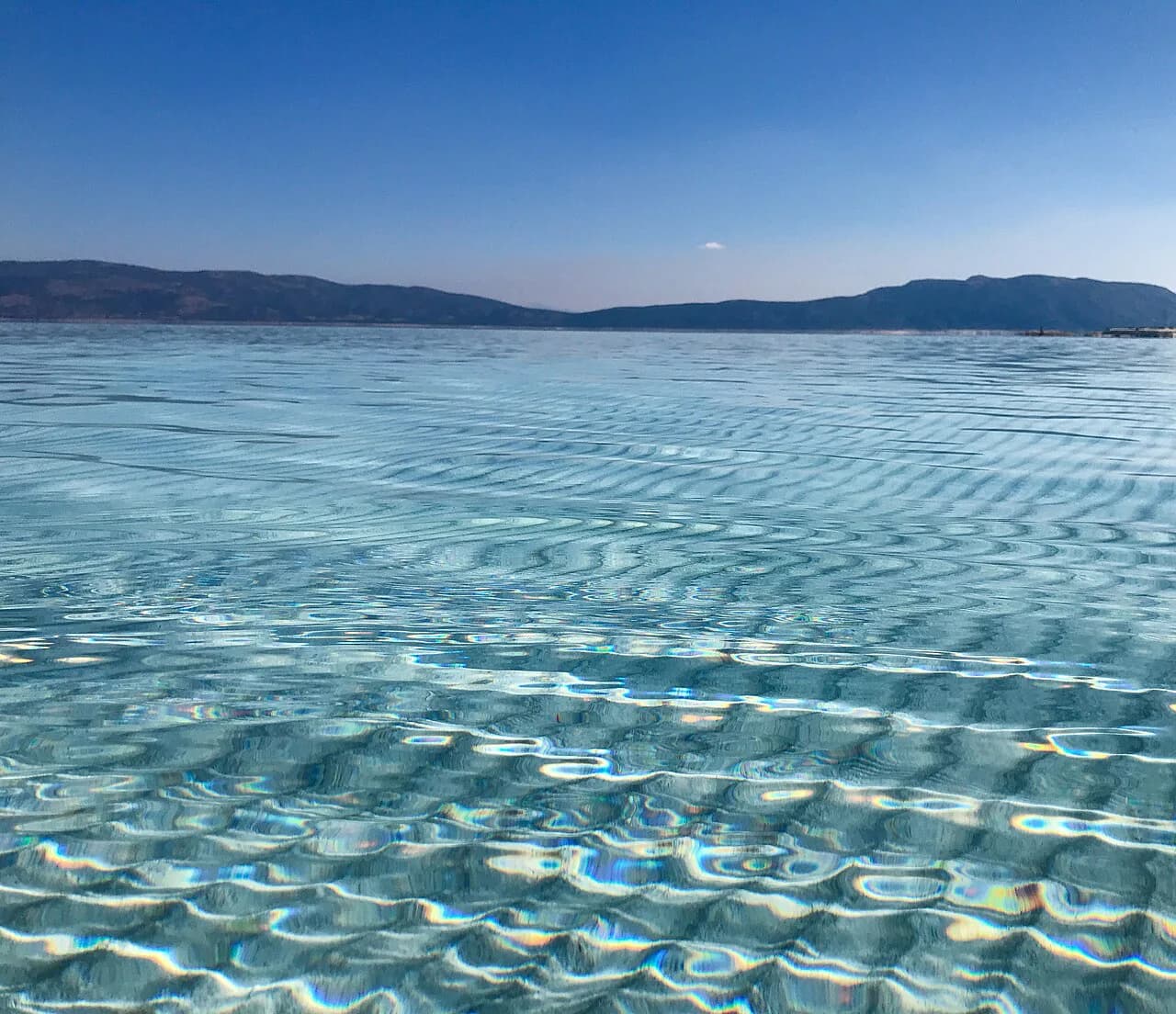
Karahayıt is a separate village near Pamukkale with its own hot springs, and Salda Lake is a distinct destination further out, known for its pale shoreline. Neither is part of the Pamukkale archaeological site, so treat them as add-ons for a second day rather than stops on the same ticket.
If you have a car, Karahayıt is the easier add-on; Salda Lake needs a proper half-day. Both are worth checking for current access before you commit, since the lake shore and the village springs are managed separately from the main site.
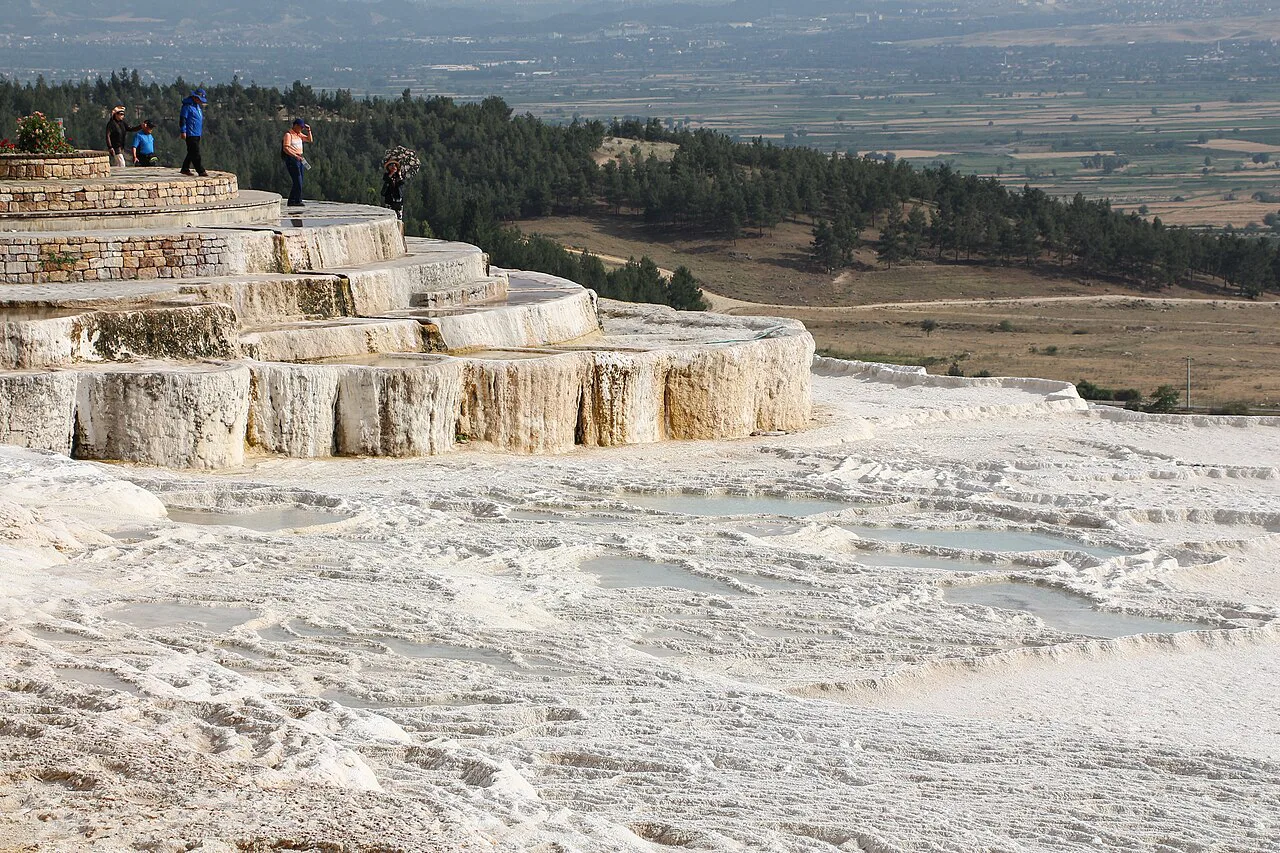
Getting around the site and how long it takes
The terraces and Hierapolis are walked on foot, with the pools at the lower end and the main ruins above, so plan a route that climbs once rather than zig-zagging. The site is large enough that you should budget a full half-day at minimum, and a full day if you add the museum and Cleopatra's Pool.
Pamukkale sits near Denizli, which is the transport hub for buses and connections onward; check current timetables locally, since services change with the season. Wear shoes you can slip off easily, since you will be carrying them on the terraces.
Should you add Cleopatra's Pool to your day?
Add Cleopatra's Pool only if bathing in warm mineral water is the point of the trip for you; otherwise spend the time on the theatre, necropolis and museum, which together tell the fuller story of Hierapolis. The terraces are the reason most people come, but the ruins are the reason to stay longer. If you are weighing a second stop on the same trip, the things to do in Alanya cover a harbour, castle and beach day that pairs well with a coastal extension.
Explore more Pamukkale guides
Frequently Asked Questions
Can you swim in the pools at Pamukkale?
You can paddle and bathe on the travertine terraces, but you walk them barefoot to protect the surface, and there is nowhere to leave bags, so carry everything with you. Cleopatra's Pool is the separate paid bathing pool among the ruins, fed by hot mineral water. Which terraces hold water varies through the year, so check before you go.
What are the opening hours of Pamukkale?
Opening hours change with the season and with the separate museum and pool, so check the official ticket office or the site's own listing for the day you plan to visit rather than relying on an old timetable.
Which is better, Cappadocia or Pamukkale?
They offer different things: Pamukkale pairs white terraces with the Roman city of Hierapolis on one compact site, while Cappadocia is a wider landscape of rock-cut valleys and cave towns. Choose Pamukkale if your priority is ancient ruins alongside a natural formation; choose Cappadocia if you want to spend several days moving between villages.
Sources
Notes for your next Turkey trip
Optional updates when we add or correct a town guide.
You might also like
Continue reading
More guides you'll find useful