Bodrum Amphitheatre Guide: Plan Your Visit to Halicarnassus
The Bodrum amphitheatre is the 4th-century BC theatre of Halicarnassus, carved into Göktepe above the marina. Here is what survives and how to walk to it.
On this page
The Bodrum amphitheatre is a Greco-Roman theatre carved into the mountain above town, and it takes about an hour to see properly. It sits in Yeniköy on the road towards Turgutreis, a short ride from the harbourside, and it is the same theatre ancient sources call the Theatre at Halicarnassus. This guide covers what survives, how the seating, stage and orchestra fit together, and how to walk up from the centre. Plan the rest of the day around Bodrum Old Town.
What the Bodrum amphitheatre is and where it sits above the town
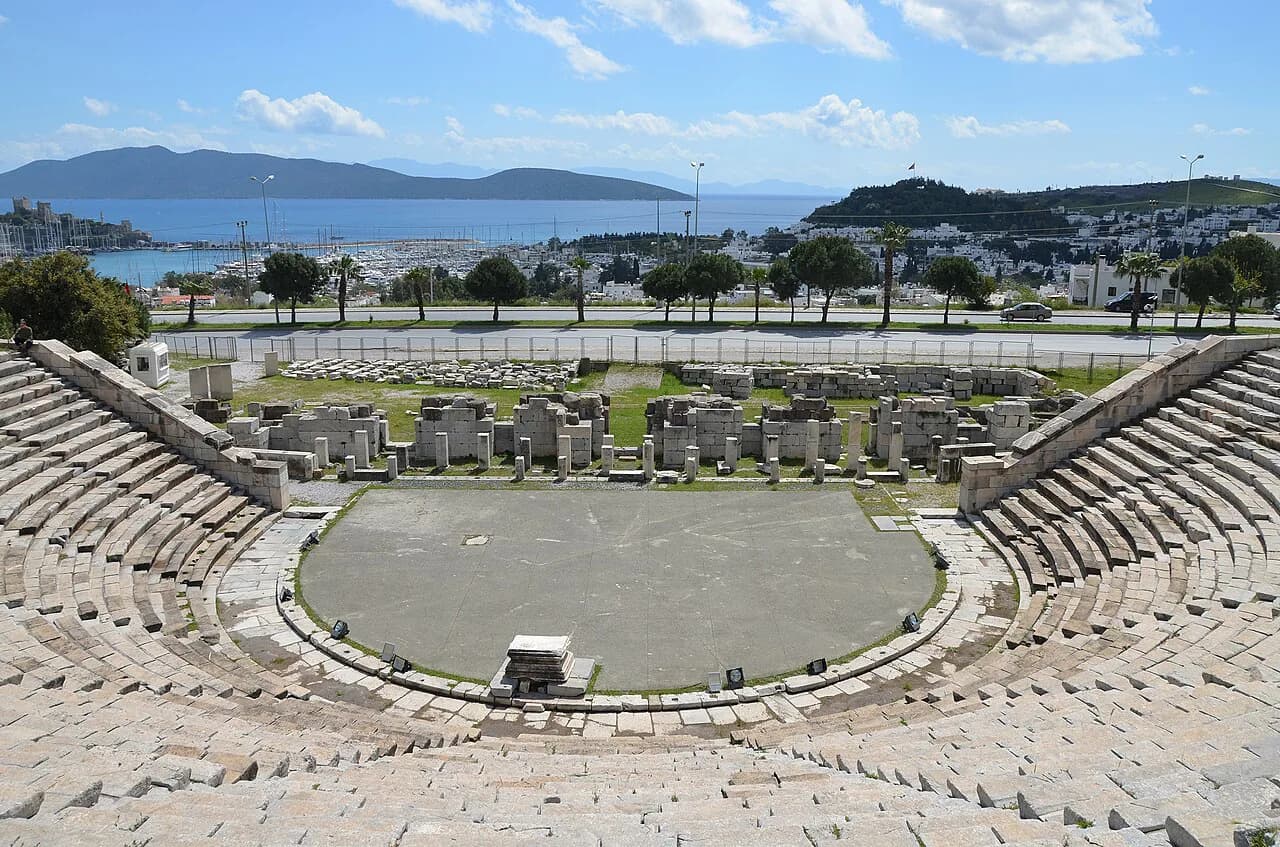
The theatre occupies the southern skirts of Göktepe, the hill above Bodrum, and looks out over the Aegean. It lies in Yeniköy on the road from Bodrum towards Turgutreis, on the right before you reach the Gümbet junction, which puts it within reach of the town centre while still feeling removed from the harbour bustle. The northern slopes of the same hill were the necropolis of ancient Halicarnassus.
Treat the visit as a ruin: the reward is the sweep of seating and the view back over the marina, Bodrum Castle and the water. Set aside time to climb to the upper rows, because the panorama matters as much as the masonry.
Who built it and when
The theatre dates from the 4th century BC and is thought to have been built under Mausolos, the ruler of Caria, before the Roman period. After the Carians and Persians, it passed into Roman hands and was used for gladiatorial contests, tragedies, comedies and musical performances. That double life explains why the structure reads as both a Greek hillside theatre and a Roman arena.
Halicarnassus is the ancient name for the place visitors now call Bodrum, so the theatre and the Mausoleum belong to the same Classical city. Knowing that helps you read the site: you are standing in the city that produced one of the seven wonders, not at an isolated monument.
What survives: the cavea, orchestra and skene explained
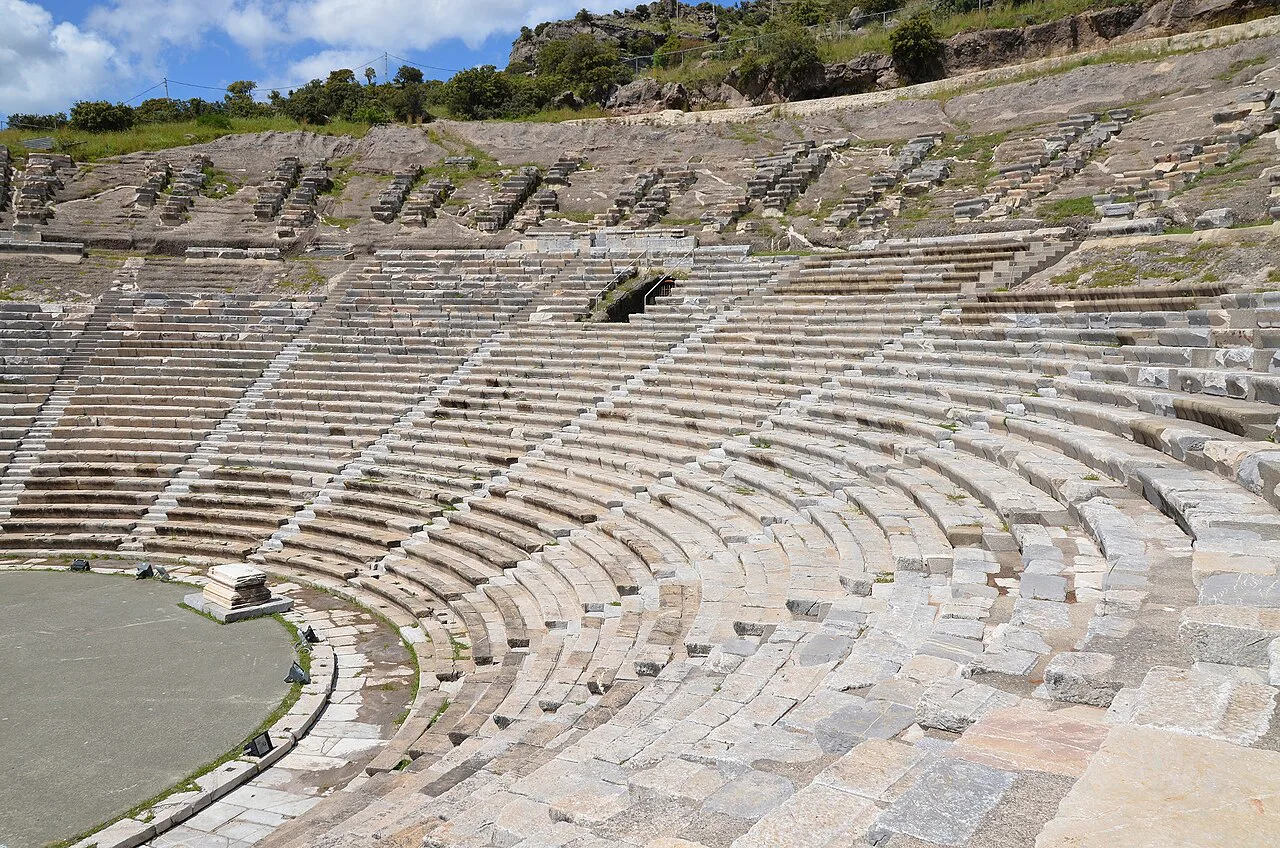
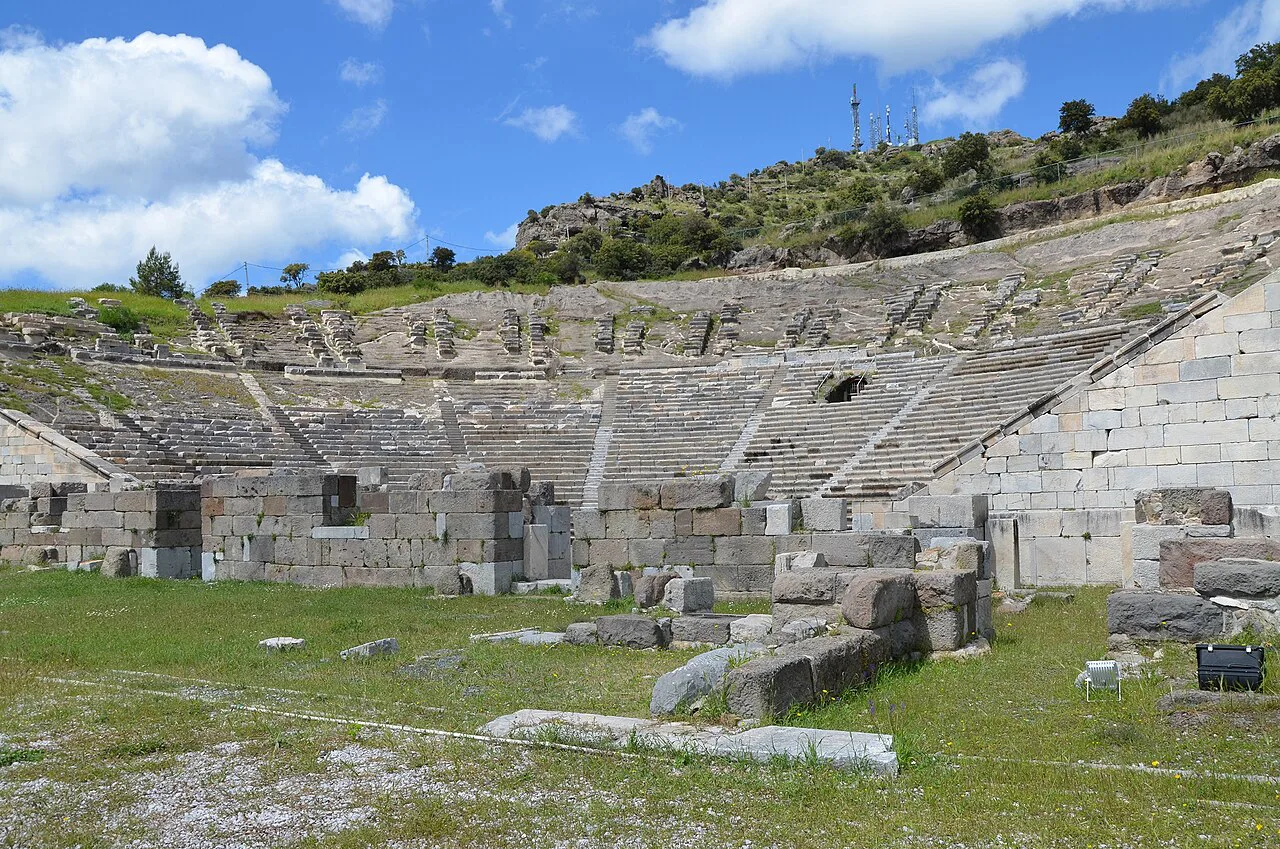
Like most ancient theatres, it has three parts: the cavea or seating, the orchestra, and the skene or stage building. The orchestra is the flat area, larger than a semicircle, between the seats and the stage; in antiquity a choir performed there, and gladiator or wild-animal fights sometimes took place in the same space. A large marble pedestal stood in front of the seats, thought to have served as an altar for offerings to Dionysus.
The skene sat on the sea-facing southern side and is thought to have had two storeys, with decorated panels on its facade and a podium in front. Read the three parts in order as you walk up: stage first, then orchestra, then the long curve of seats.
The seating, the rows and the capacity
The cavea was formed by flattening the rock and laying marble slabs on top, which is why the theatre feels carved into the hill rather than built up from it. The seating area is described as having 55 rows and room for roughly 10,000 spectators. Expect worn, uneven stone underfoot rather than tidy modern steps.
The view over the marina, the castle and the Aegean
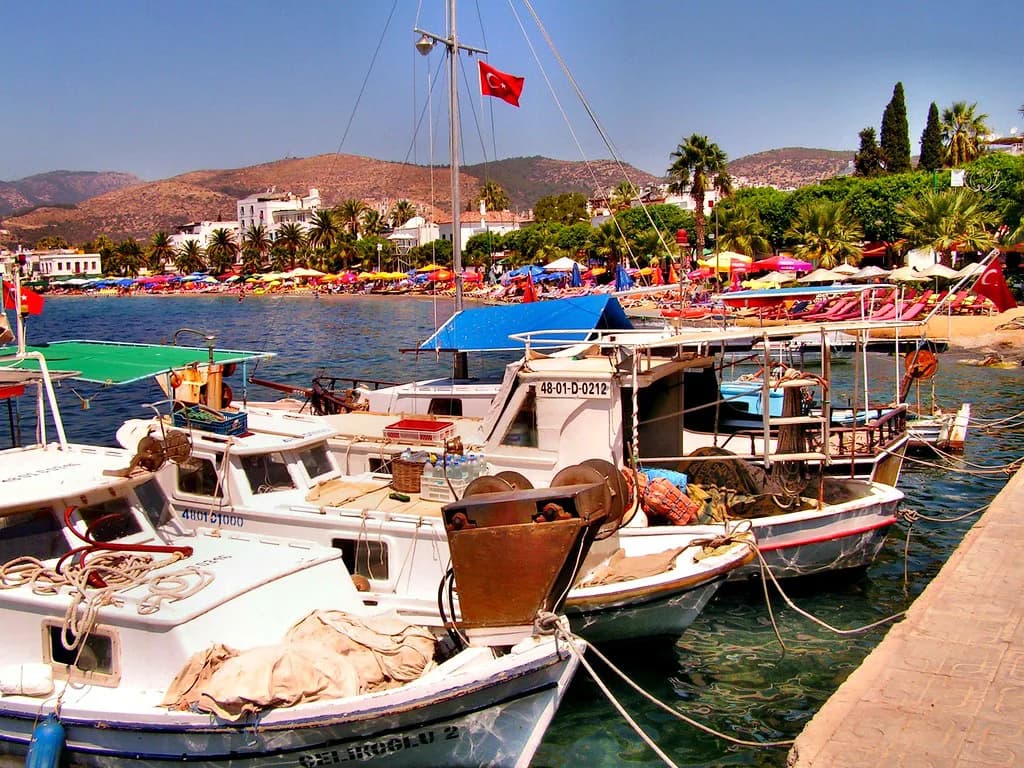
From the upper rows you get a wide view over the harbour, with Bodrum Castle in the frame, which is the best reason to keep climbing after the first few tiers. Visitors who reach the top single out the outlook over the marina and castle as the highlight. Bring water and go slowly in summer, because the slope is steep and shade is limited.
Getting there on foot from the marina and castle area
The walk up from the marina or castle area is straightforward but uphill, following the main road out towards Turgutreis. Drivers and dolmuş passengers should watch for the theatre on the right before the Gümbet junction. Once you leave the waterfront the pavements and junctions are ordinary town roads, so cross with care.
Taking a dolmuş along the Turgutreis road cuts out the climb and leaves you a short walk from the seating. Ask the driver to stop at the theatre, since it is a roadside monument rather than a signed attraction with its own gate. If you are unsure about the drop-off point, the tourist office or your accommodation can point it out.
Entry and opening times
The theatre is reported to be free to enter and open to the public without a fixed visiting slot, so you can walk the ruins, climb to the top or sit in the stands without a pre-booked ticket, and a 2022 visitor review records free entry with toilets there. These are traveller and tour-operator reports rather than an official statement, so check locally if you are planning a special trip.
How long to allow and when to go
An hour covers the seating, the orchestra, the stage area and the climb to the top with time for photographs. Add a little more if you want to sit in the upper rows or read the site slowly. Early morning and late afternoon are kinder than midday, when the stone radiates heat and there is little shade on the slope.
Concerts and performances in the theatre
The theatre has a long record of hosting concerts and performances, which is a different experience from a daytime ruin visit. Evenings mean cooler air and the same view over the water. Check the programme locally before you build an evening around it.
Nearby: the Mausoleum of Halicarnassus and Bodrum Castle
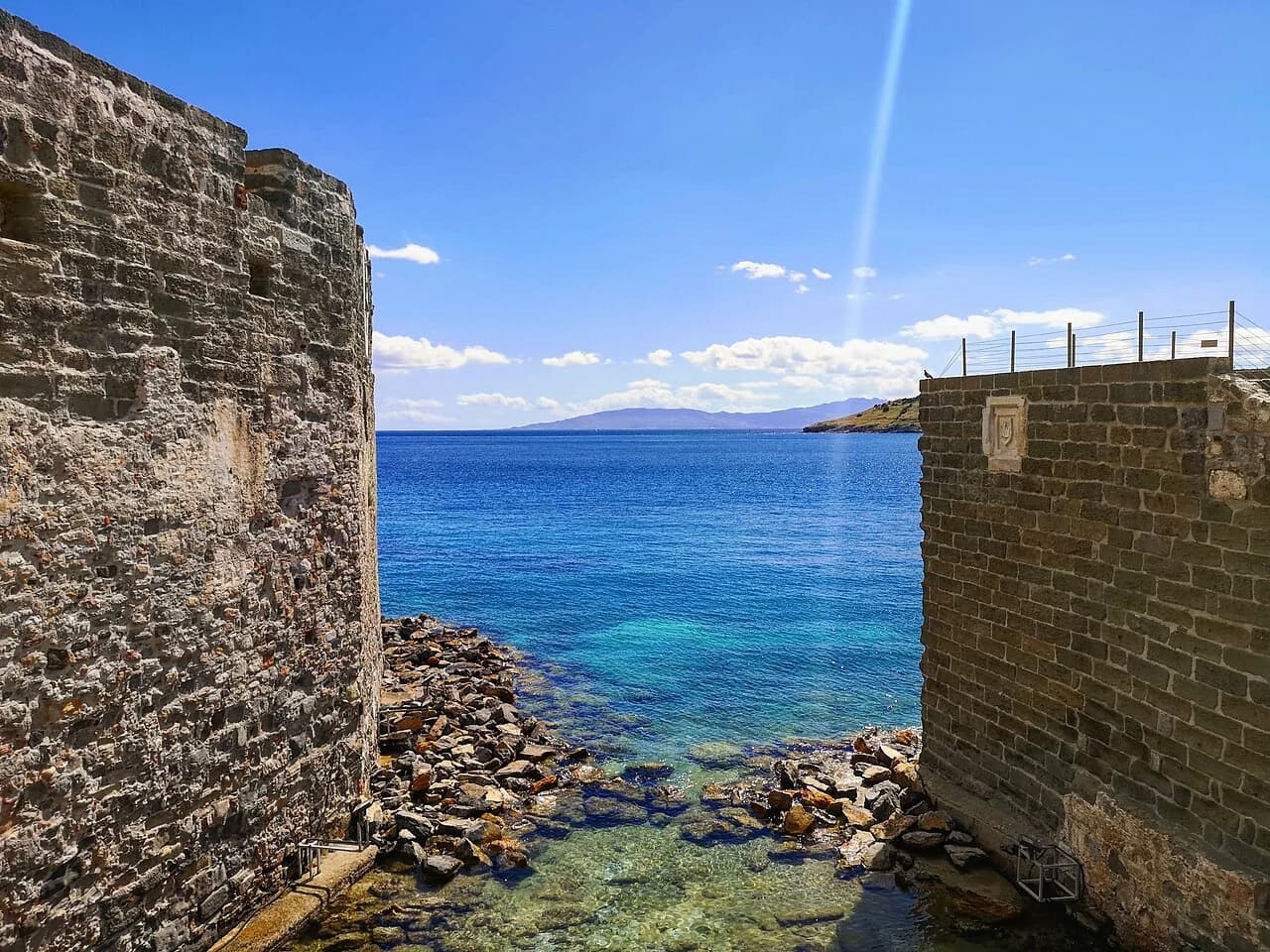
The Mausoleum of Halicarnassus, one of the seven wonders of the ancient world, lies in the town below the theatre, so the two fit naturally into one morning. Bodrum Castle anchors the harbour and is the other essential stop in the centre. Linking the three gives you a compact day of ancient and medieval Bodrum.
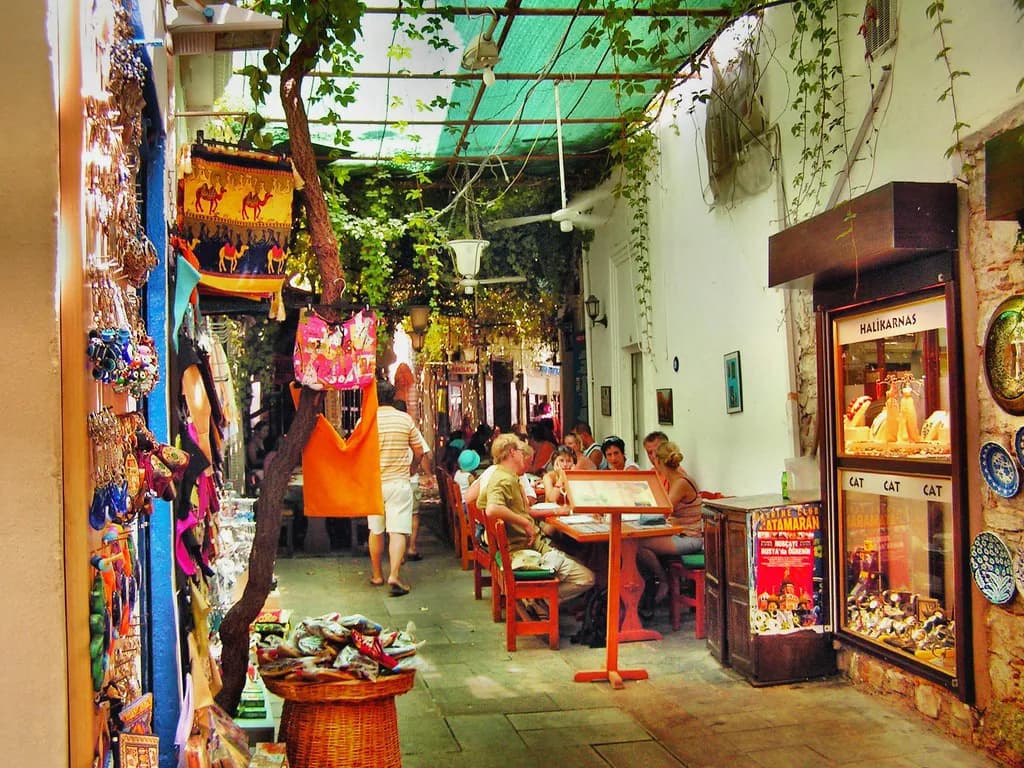
The castle is a separate sight with its own arrangements, so treat it as another stop rather than part of the theatre visit. Between sights, the old town lanes and the Bodrum mosque make an easy pause on foot.
Steps, uneven seating and footwear
The seating is worn stone, the paths are unraked and the climb between tiers is steep in places, so trainers or walking shoes are the sensible choice. Avoid smooth soles, and take extra care on the upper rows, where a slip has further to go. There are toilets on site, and the visit is manageable for most mobile visitors who take it slowly.
Is the amphitheatre worth the climb?
Yes, if you want a wide view over the harbour from ancient stone and a sense of the city that produced the Mausoleum. The theatre is reported as free to enter with no fixed slot, so slot it into a morning with the Mausoleum or a harbour walk. Go early or late, wear proper shoes, and climb to the top row before you leave.
Frequently Asked Questions
Is the Bodrum amphitheatre the same as the Theatre at Halicarnassus?
Yes. Halicarnassus is the ancient name for the city now called Bodrum, and the theatre carved into Göktepe is the Theatre at Halicarnassus. It dates from the 4th century BC and was later used in the Roman period for gladiatorial contests and performances.
Can you visit the Bodrum amphitheatre at night?
There is no confirmed nighttime access. The site is reported as freely visitable, but that comes from a tour-operator blurb and a 2022 review rather than an official statement, and nothing supplied confirms lit access after dark. Plan for daylight, and check locally if you want an evening visit.
How do I get to the Bodrum amphitheatre without a car?
Walk uphill from the marina or castle area along the Turgutreis road, or take a dolmuş heading that way and ask to be dropped at the theatre. It sits on the right before the Gümbet junction.
Sources
Notes for your next Turkey trip
Optional updates when we add or correct a town guide.
You might also like
Continue reading
More guides you'll find useful