Bodrum Mosque: The Byzantine Church Called Bodrum Camii
Bodrum Mosque in Laleli, Istanbul, is the former Myrelaion church, a brick cross-in-square building with a tall substructure and a fluted pumpkin dome.
On this page
Bodrum Mosque, or Bodrum Camii, is the former Myrelaion church in Laleli, Fatih, on the European side of Istanbul: a brick cross-in-square building of around 920 that the Ottomans converted into a mosque. If you were expecting the resorts and castle of Bodrum town on the Aegean, that is a different place entirely, covered in our guide to Bodrum old town. This page covers the church-mosque itself: its position near the old Mese, the outside walls and substructure that gave it its name, the interior dome and plan, the surviving fresco fragment, the former rotunda beside it, and how to visit a working mosque politely.
What Bodrum Mosque actually is
The building is the Myrelaion, a palace chapel built for the emperor Romanos I Lekapenos and intended as a family burial place rather than a conventional parish church. Romanos had pushed the young Constantine VII aside, and the choice of a private imperial mausoleum broke with the practice of burying emperors at the Church of the Holy Apostles. The chapel was later turned into a nunnery, and by 1315 it had become a male monastery. Late in the fifteenth century Mesih Pasha converted the church into a mosque, which is when it took the name Bodrum Camii and gained a mihrab and a minaret.
Along with the north church of the Monastery of Lips, the Myrelaion is among the earliest surviving domed cross-in-square churches in Constantinople. Both are thought to have followed the Nea Ekklesia of Basil I, which was destroyed in the fifteenth century. That architectural pedigree is the main reason to seek the building out; it sits low among apartment blocks rather than in a grand ensemble.
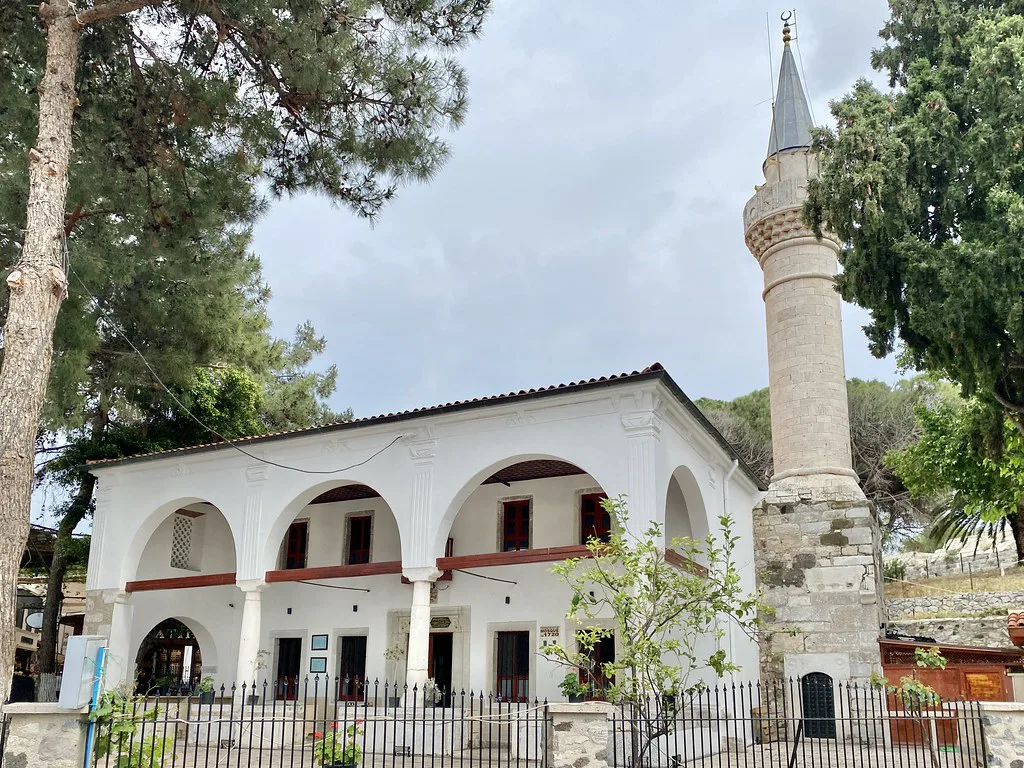
Where it is: Laleli, Fatih, west of the Forum of Theodosius
The Myrelaion once stood west of the Forum of Theodosius on the Mese, the city's main processional street, close to the Marmara Sea in what the Byzantines called the ninth region. Today it is in Laleli, in the Fatih district, hemmed in on three sides by apartment buildings. The setting is ordinary and easy to walk past, so treat it as a deliberate short stop rather than a site you stumble across.
Plan it as a single stop of perhaps half an hour, including the outside walls and the terrace, then link it to a broader day in the historic peninsula. Laleli sits in the Fatih district of central Istanbul, in the historic peninsula near Sultanahmet and Beyazıt. If your Turkish break is based on the Aegean coast instead, the Bodrum: a Practical Guide to the Town and Peninsula covers the castle town of the same name.
The outside: brick walls, buttresses and round windows
The church measures roughly 10 by 17 metres and is built entirely of brick, with a three-bay narthex and a tripartite bema. Look first at the west, north and south walls, where a row of semi-cylindrical buttresses mirrors the vaulting inside and gives the exterior a rippling, layered profile. Small round windows are another unusual feature, and a corbelled walkway once ran around the church at main-floor level, leaving the design remarkably open.
The mihrab that reorients prayer towards Mecca and the minaret for the call to prayer are Ottoman additions, and they show plainly that you are looking at a converted church. The original marbles and mosaics have gone, and the columns have been replaced with stone piers, so the surface you see is far plainer than the lavishly embellished building the Byzantines knew. Fires and heavy restorations did much of that damage, and it helps to know before you arrive.
The substructure that gave the mosque its name
Bodrum Camii means Basement Mosque, and the name comes from the tall lower storey built to bring the chapel level with the palace it was attached to. That substructure repeats the plan of the upper church and was later adapted as a funerary chapel in the Palaiologan period. A corbelled walkway and the terrace above hint at how the whole complex once sat on the platform of an older building.
The platform itself was a Late Roman rotunda, reused to carry the palace, and its scale was enormous: an outer diameter of nearly 42 metres, which made it second only to the Roman Pantheon among buildings of its kind. At some stage the rotunda's interior was divided up and turned into a cistern. That buried masonry is why the church needed a raised base at all, and why the building reads as two stacked storeys rather than one.
Inside: the plan, the narthex and the pumpkin dome
Inside, the cross-in-square plan is clear once you know what to look for: a central square roofed by a dome, with four cross arms. The dome and its drum have a fluted surface, the so-called pumpkin dome, and the cross arms are topped by groin vaults rather than simple barrel vaults. Look up as soon as you enter, because the upper surfaces carry most of the surviving architectural interest.
The interior is plainer than the original, but the sequence of narthex, naos and bema still reads clearly. The building was excavated in 1964 and 1965 by Cecil L. Striker of the University of Pennsylvania, who identified the church as the Myrelaion, and it was restored with the chapel beneath. After that restoration it returned to use as a mosque, which is what you see today.
The fresco fragment in the lower level
In the substructure, a fragmentary fresco survives: the lower part of a panel showing a female donor kneeling before a standing figure of the Virgin Hodegitria. It is a small, partial survival rather than a full programme of wall painting, and access to the lower level depends on what is open on the day. Fragments of marble and mosaic were also found during excavation, which gives a sense of how much decoration the building once held.
The rotunda beside it, now a subterranean shopping mall
Opposite the mosque, the rotunda of the Myrelaion was rebuilt as a subterranean shopping mall, entered from the south side of the terrace. It is easily mistaken for part of the church complex, so keep the two separate in your mind: the church is the domed brick building, and the rotunda is the buried structure beside it. The mall entrance is on the way past the terrace, so it is easy to see alongside the church.
Visiting a working mosque: dress, timing and etiquette
Bodrum Mosque serves as a working mosque, so visit outside prayer times and dress modestly: covered shoulders and knees, and a headscarf for women is the safe default in any Turkish mosque. Remove your shoes at the entrance and keep voices low while anyone is praying. Prayer times shift through the year, so check locally on the day rather than relying on a printed guide.
Sources describe the building as packed in by apartment blocks and easy to overlook, which is part of its appeal. Combine it with the wider Fatih neighbourhood rather than making a special journey across the city. If you want a fuller picture of the Byzantine churches of Istanbul, the Myrelaion works best as one entry in a sequence rather than a standalone sight.
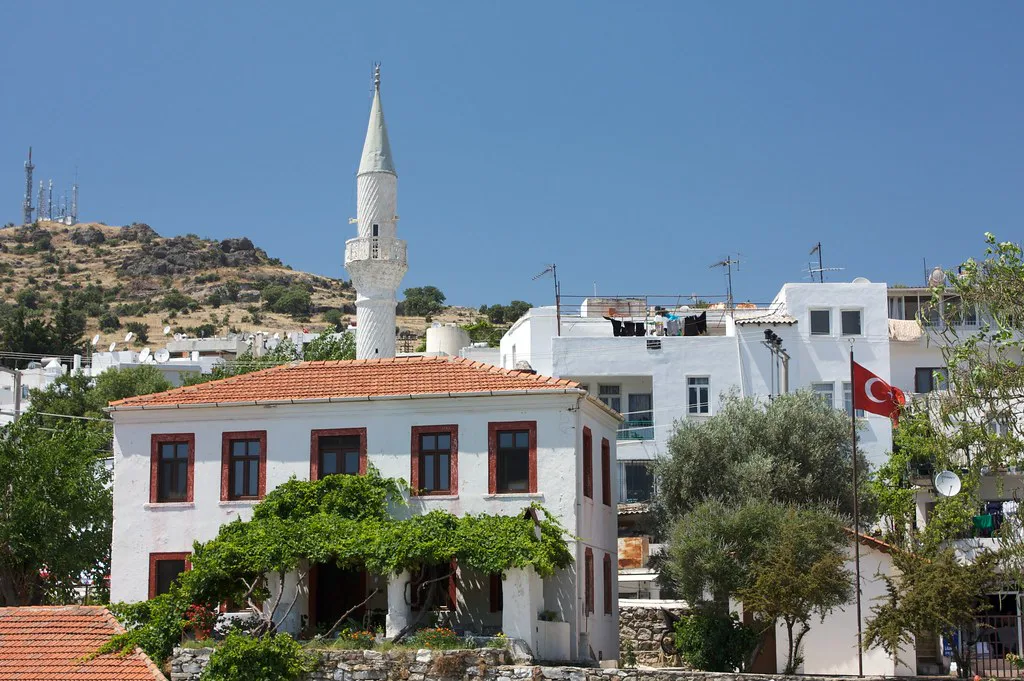
A short stop, not a headline sight
Bodrum Mosque suits travellers already in Fatih who want to see an early cross-in-square church adapted into a mosque, complete with a substructure that gave it its name. Allow half an hour, look up at the fluted dome and along the buttressed walls, and step into the terrace to see the rotunda entrance. It is a modest building, so pair it with the Grand Bazaar, Beyazıt or the Süleymaniye quarter rather than building a day around it alone.
Explore more Bodrum guides
Frequently Asked Questions
Is Bodrum Mosque the same as the mosques in Bodrum town?
No. Bodrum Mosque, or Bodrum Camii, is the former Myrelaion church in Laleli, Fatih, in Istanbul. The resort town of Bodrum on the Aegean coast is a different place, and its historic mosque and castle are covered separately.
Do I need a ticket to visit Bodrum Mosque?
The building is a working mosque, not a ticketed monument, so there is no admission desk to buy from. Any donation or access arrangement is handled locally, so ask on site rather than budgeting for a fee.
How long does a visit take?
Half an hour covers the exterior walls and the terrace comfortably, plus a brief look inside. The church is small and hemmed in by apartment blocks, so most visitors treat it as one stop on a walk through Fatih rather than a half-day outing.
Sources
Notes for your next Turkey trip
Optional updates when we add or correct a town guide.
You might also like
Continue reading
More guides you'll find useful