Kaş Amphitheatre: Visiting the Ancient Theatre of Antiphellos
The Antiphellos theatre in Kaş is free to enter, faces the sea and sits a short walk from the centre. Here is what survives, how long it takes and when to go.
On this page
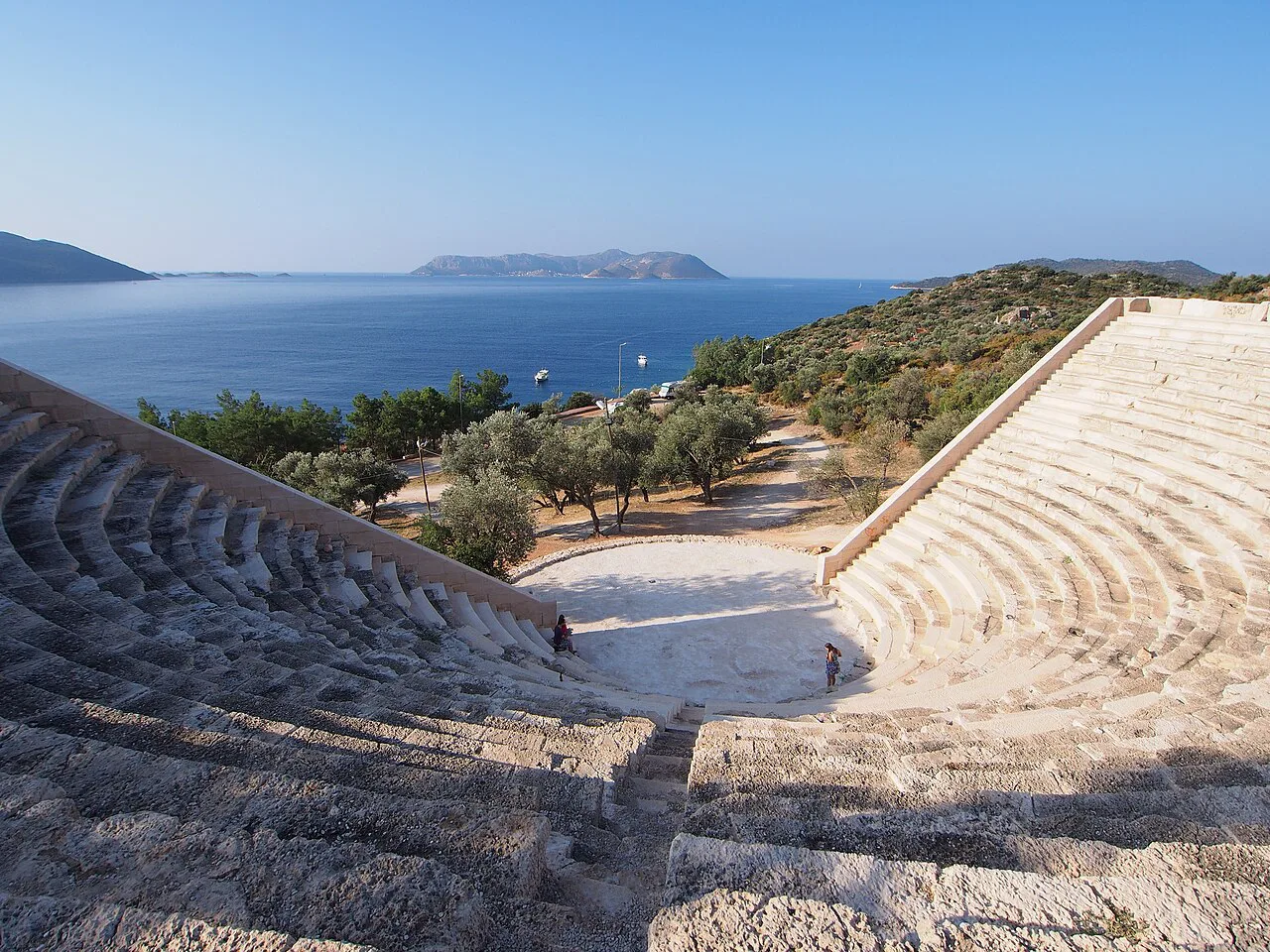
The Kaş amphitheatre is the Theatre of Antiphellos, a Hellenistic auditorium carved into the hillside above town that faces the Mediterranean rather than an inland stage wall. It is free to enter, sits a five to ten minute walk from the centre, and needs 30 to 60 minutes of your day. This guide covers what survives, how the seating is laid out, the walk up, and the other Antiphellos remains you can link on foot.
What the Kaş amphitheatre actually is
This is the best-preserved structure of ancient Antiphellos, the Lycian port that became modern Kaş. The auditorium is cut from local limestone into the southern slope of the ancient acropolis, which is why the rows feel grown out of the hill rather than built on top of it. Visitors reach it on foot from the town centre, in the Andifli neighbourhood.
For planning purposes, treat it as a viewpoint with ancient seating rather than a fenced monument with a gate and a queue. Time Out describes it as the only ancient amphitheatre of its kind with a sea front, and that orientation is the reason to come. If you want the wider picture of the peninsula's sites, our guide to the ruins in Kaş sets out what else is within reach.
Why it faces the sea
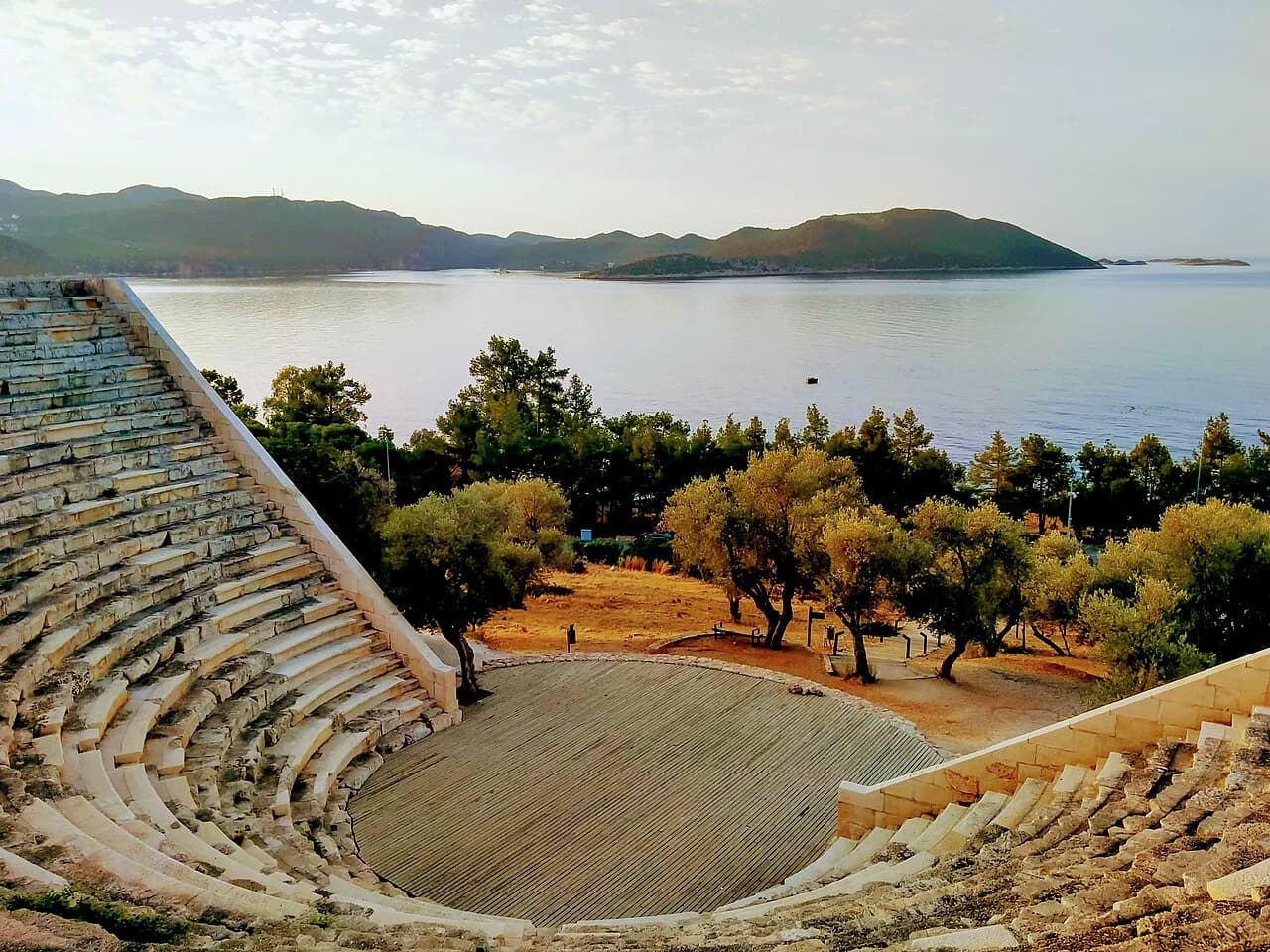
Most theatres across Anatolia were built with their seating looking at a stage building. Antiphellos was designed to face the water, giving a wide view of the Mediterranean from the upper rows; later reporting on the site calls it the only ancient theatre in Anatolia with a facade facing the sea. Come for the sightline as much as the stonework.
Seating and layout: the cavea and its stairways
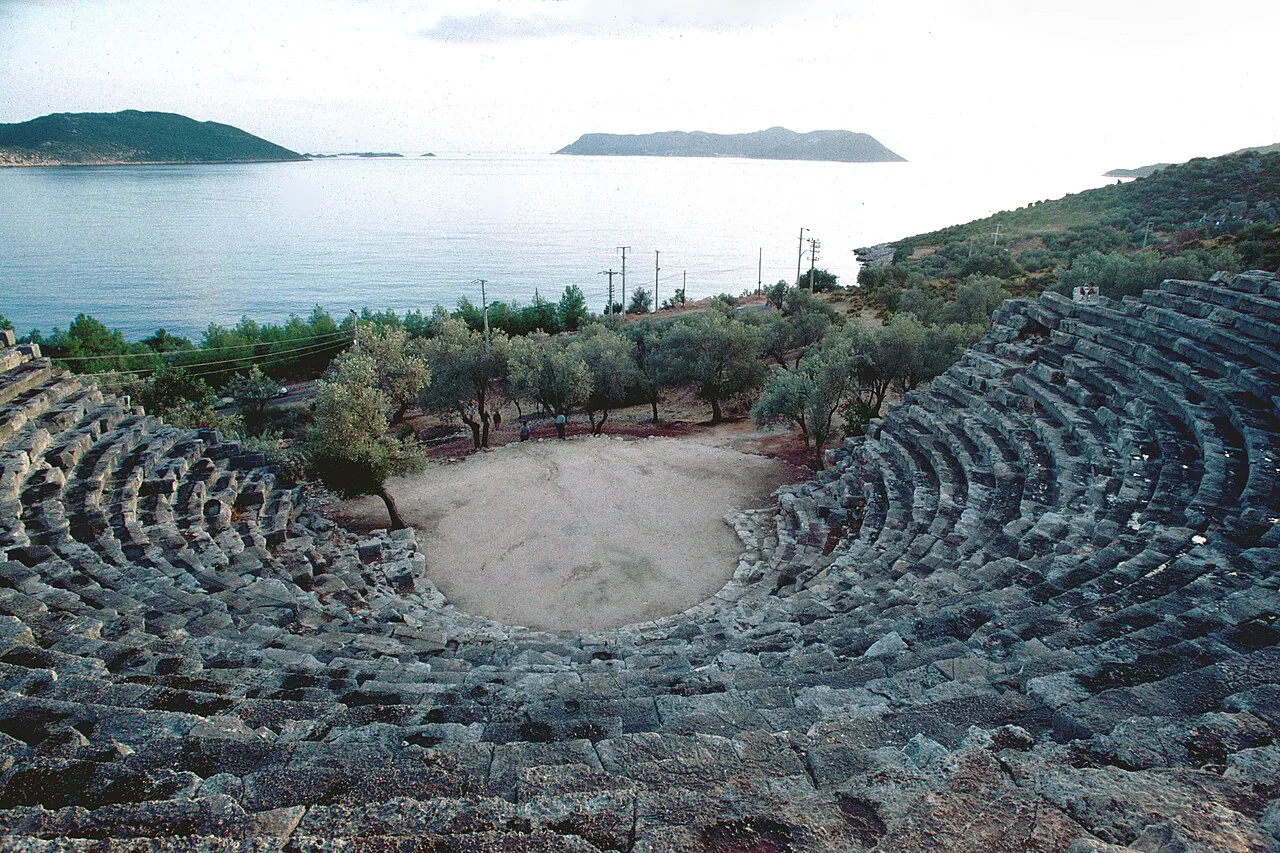
The stepped seating, or cavea, is split into three sections by four vertical stairways. There is no horizontal walkway dividing the rows, which points to an early style of construction. Look for that as you climb: the stairs run straight up the slope between blocks of seats rather than meeting a cross-passage.
The theatre was built without a permanent stone stage building, a common feature of its period, so there is no tall backdrop to frame the view. What you get instead is an open sweep of sea and sky from the top tier, which is why the upper rows are where most people settle.
How many people it held
Capacity figures differ between published accounts: a 2025 report describes room for around 3,000 spectators, while Time Out Türkiye gives a 4,000-seater structure. Either way, it is a mid-sized civic theatre rather than one of the vast Roman arenas of the south coast.
The 2008 restoration and what it changed
The theatre was restored in 2008, which is why the seating reads clearly today and is comfortable enough to sit on for a sunset. The restoration is also why it functions as a public gathering spot rather than a fragile excavation. That is how a giant-screen screening of a Türkiye World Cup match against Australia came to be planned for the auditorium in June 2026, with tea, coffee and simit for attendees; it was a coordinated local event, not a regular fixture, and the theatre remains open to the public free of charge the rest of the time.
Other remains of Antiphellos in town
Theatre aside, Antiphellos left rock-cut tombs, a Hellenistic temple and burial monuments in and around modern Kaş. The best-known is a tomb in the local marketplace with lion-head projections and an inscription in Lycian, dated to the fourth century B.C., whose carved pediment has become a symbol of the town. Northeast of the theatre, a chamber tomb carries twenty-four female reliefs on its facade.
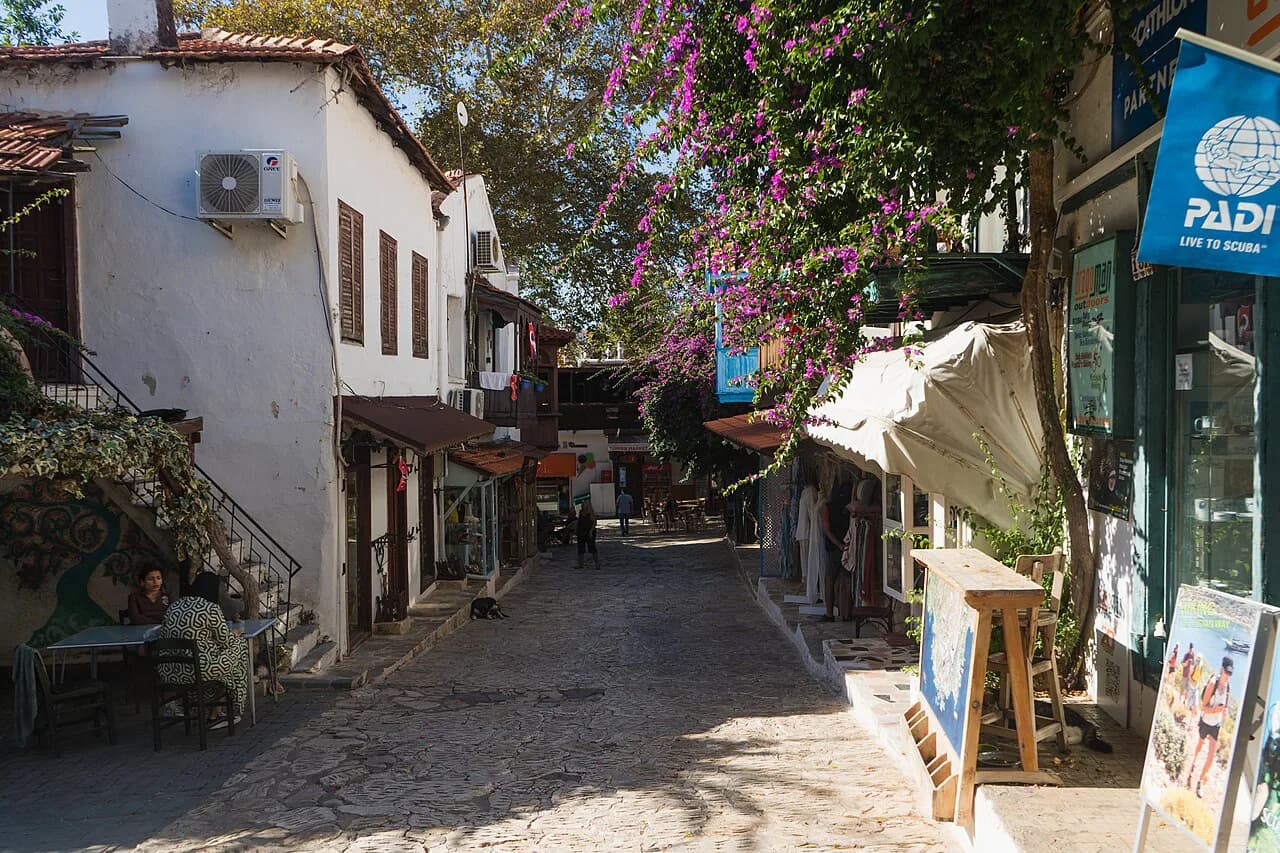
Further uphill on the north-eastern edge of Kaş you can pick out more rock tombs with Gothic-style elements and Lycian inscriptions, and a Hellenistic temple stands among modern buildings and greenery in the town centre. These are scattered stops rather than a single archaeological park, so they work best folded into a wander around Kaş Old Town rather than a separate outing.
Walking there from Kaş centre
The theatre is within walking distance of the town centre, and Time Out puts it at a five to ten minute walk. Come in from the Andifli streets and climb the steps to the seating; there is no visitor centre to find first. Wear shoes with grip, because the rows and stairways are worn stone.
If you are travelling by public transport from elsewhere on the coast, buses run between Antalya and Kaş along the D400, with the drive from Antalya taking about three hours by car; the nearest airports are Dalaman, roughly 150 kilometres away, and Antalya. Once in town, everything here is on foot, so you can pair the theatre with the town's smaller collections covered in our guide to the museums in Kaş.
How long to allow and when to go
Plan for 30 to 60 minutes. The site is small, and the time goes on sitting at the top, photographing the sea view and climbing back down rather than on reading panels. Visitors commonly rate sunrise and sunset as the best light, so a late-afternoon slot works well if you want the view without harsh glare.
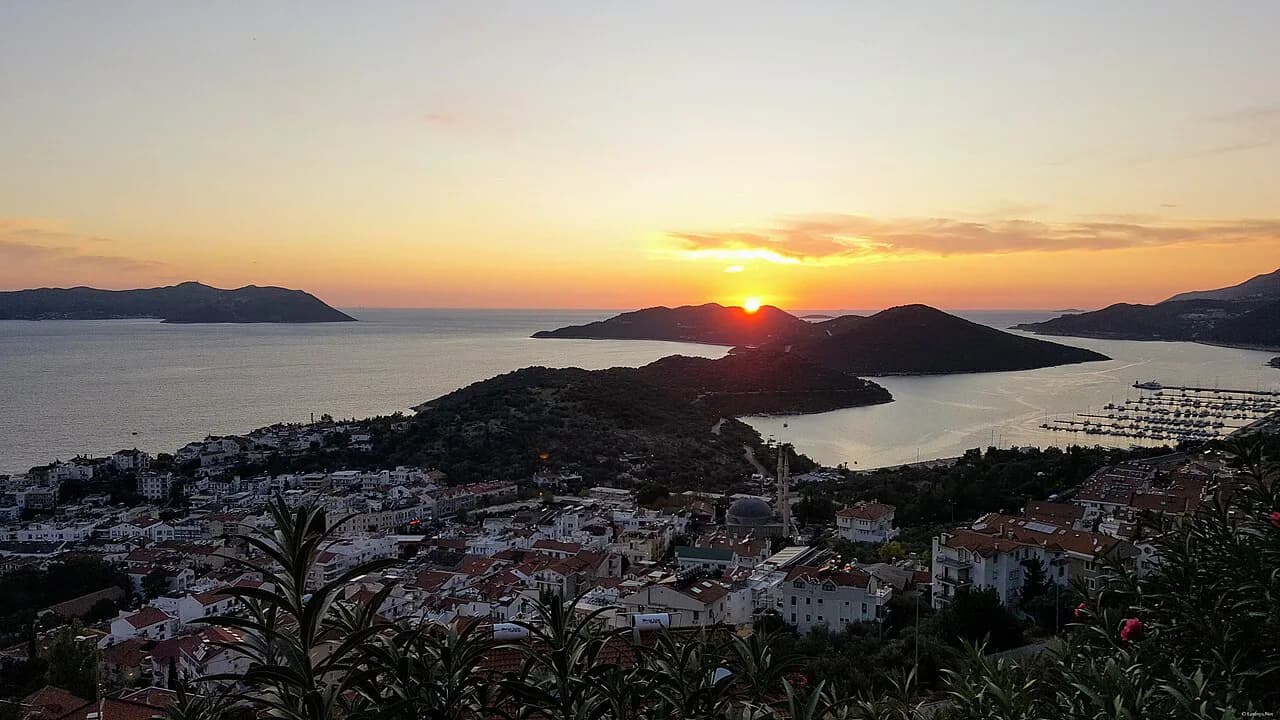
It also serves as a sunset viewpoint for locals, which affects how it feels in high season: expect company on the upper rows in the hour before dark. Mornings are quieter if you want the seating to yourself.
Tickets and access
A 2025 report describes the theatre as open to the public free of charge, with no ticket required, and no official opening hours are given for the auditorium. Check locally on the day if you want to be there at first light or after dark.
Practical trade-offs: parking, heat and crowds
Parking near the theatre is difficult because the spot is popular, and it is easier to leave the car within walking distance rather than hunting for a space beside the seating. In summer, plan around the heat at midday and combine the climb with the old town's quieter corners, including the mosques in Kaş, to keep out of the strongest sun.
How it compares with Ephesus and Aspendos
Ephesus and Aspendos are far larger theatre experiences, built for coach parties and structured visits. Antiphellos is the opposite: an open hillside auditorium you reach on foot in a few minutes from a harbour town, with the sea doing the work a stage wall does elsewhere. If you have an hour spare in Kaş, this is a better use of it than a long transfer to a bigger site.
Is the theatre worth the short climb?
Yes, if you want a free, quick dose of ancient Kaş with a sea view attached. Go within an hour or two of sunset in summer, allow 30 to 60 minutes, and walk up rather than driving to the gate. Pair it with the lion-head tomb in the marketplace and the rock tombs above town for a compact half-day on foot.
Frequently Asked Questions
Do you need tickets for the Kaş amphitheatre?
A 2025 report describes the Antiphellos theatre as open to the public free of charge, with no ticket required. No official opening hours are given for the auditorium, so check locally on the day if you plan to visit at first light or after dark.
How long does a visit to the Antiphellos theatre take?
Allow 30 to 60 minutes. The auditorium is compact, so most of that time goes on the climb, the top-tier view and the walk back into town.
Is the Kaş amphitheatre the same as the Antiphellos theatre?
Yes. The hillside amphitheatre above Kaş is the Theatre of Antiphellos, the best-preserved structure of the ancient Lycian port that became the modern town.
Sources
- Ancient theater of Antiphellos overlooking sea offers timeless views in Türkiye’s Kas - Türkiye Today
- The Antiphellos Amphitheatre | Attractions in Türkiye
- 2,000-year-old theater in Antalya to host Türkiye’s World Cup match against Australia | Türkiye Today
- Hellenistic theatre, Kas, Turkiye - Reviews, Ratings, Tips and Why You Should Go – Wanderlog
Notes for your next Turkey trip
Optional updates when we add or correct a town guide.
You might also like
Continue reading
More guides you'll find useful