Marmaris Castle and Archaeology Museum: What to See Inside
Marmaris Castle holds the town's archaeology museum, four exhibition halls and rampart views over the harbour. Here is what you see inside, plus tickets and hours.
On this page
Marmaris Castle is a small, quick museum rather than a half-day monument: four exhibition halls in vaulted rooms, a courtyard, and walls you can climb for the best view over the harbour. Allow under an hour inside and a little more for the walk up and the ramparts. This guide covers the location on the peninsula, the halls room by room, the climb through the old streets, and the ticket and opening details the museum publishes.
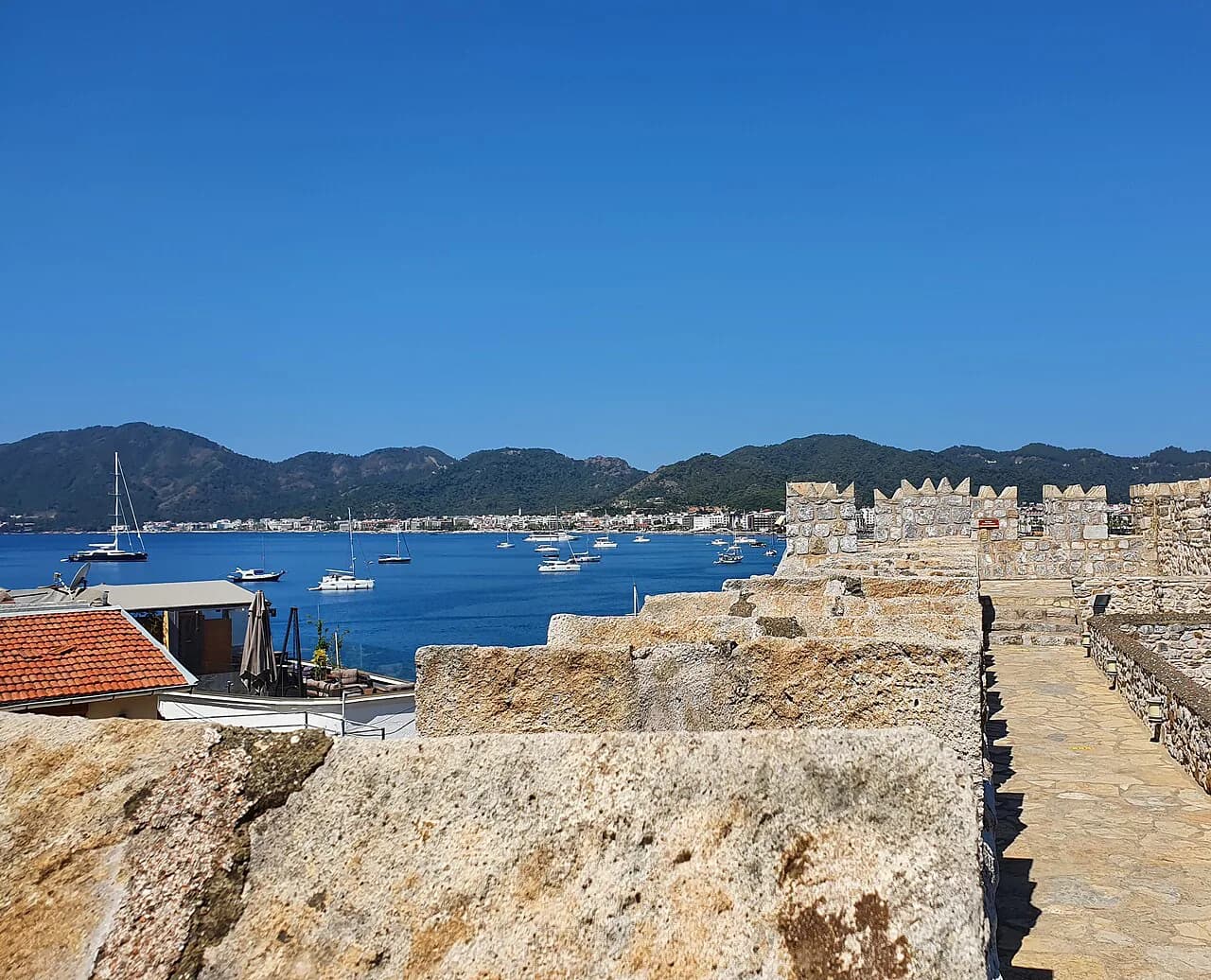
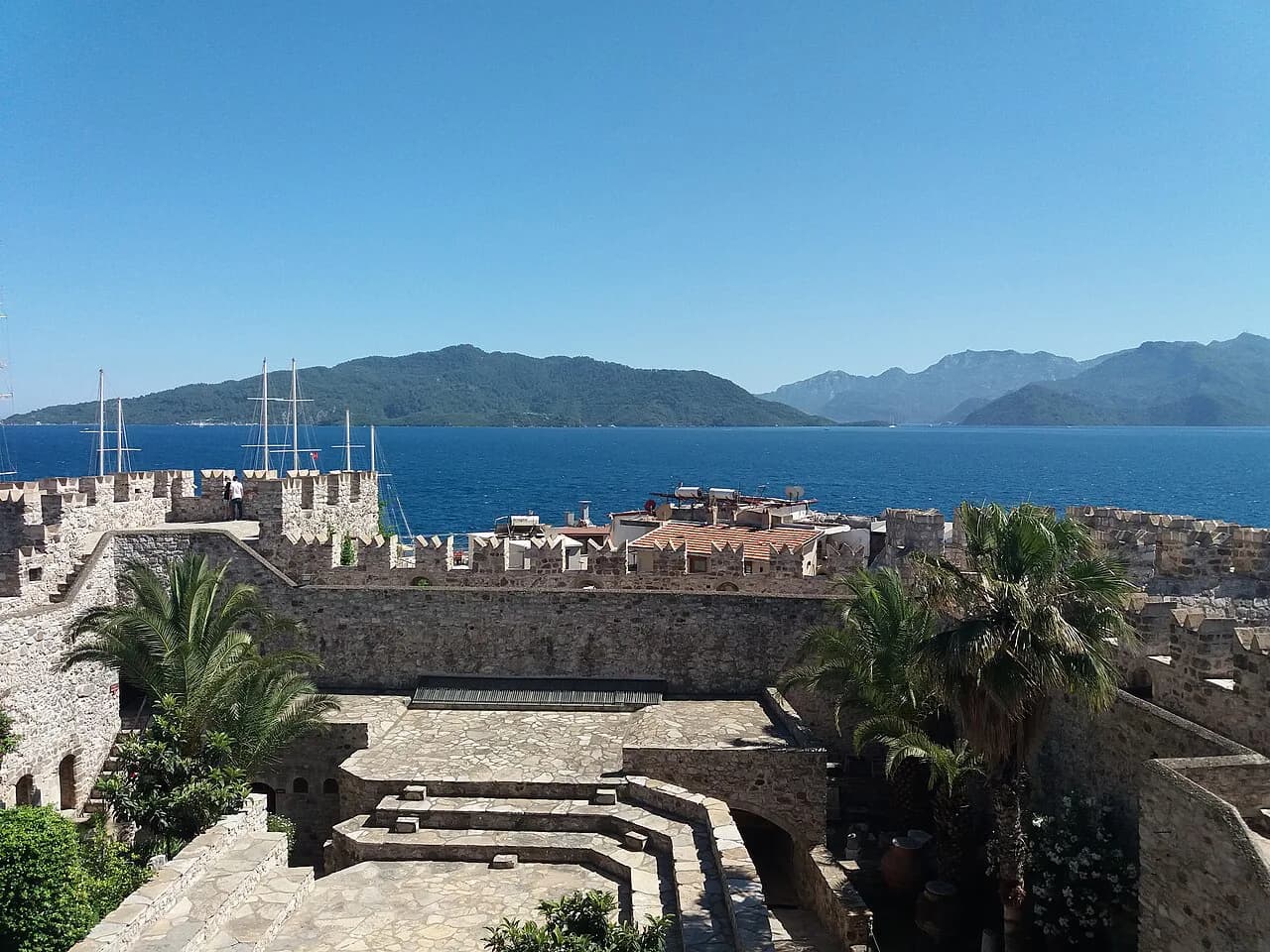
The castle is a registered historical site and stands on a peninsula behind Marmaris harbour in a position that faces the sea. It is built of ashlar and rubble on rock, with four bastions at the corners, an inscription panel above the main entrance, seven covered rooms and stairs on both sides leading up to the fortress wall. Read it as a harbour fort with a museum inside, not as a ruined citadel.
Where the castle is in Marmaris
The museum address is Tepe Mahallesi, Kale Sokak No:54, Marmaris, in Muğla province. Kale Sokak means castle street, so the lane itself is your signpost: from the harbourfront and the bazaar quarter you climb inland and uphill until the walls close the street. The whole approach sits inside the old town, so pair the visit with a wander rather than treating it as a separate trip.
On foot this is a short climb of a few minutes from the lower streets, not a hike, and the lanes wind past small houses and terraces before the entrance appears. Wear shoes with grip, because the paving and the stairs inside the walls are worn and uneven. If you are coming from further along the bay, walk to the old town first and start the ascent from there.
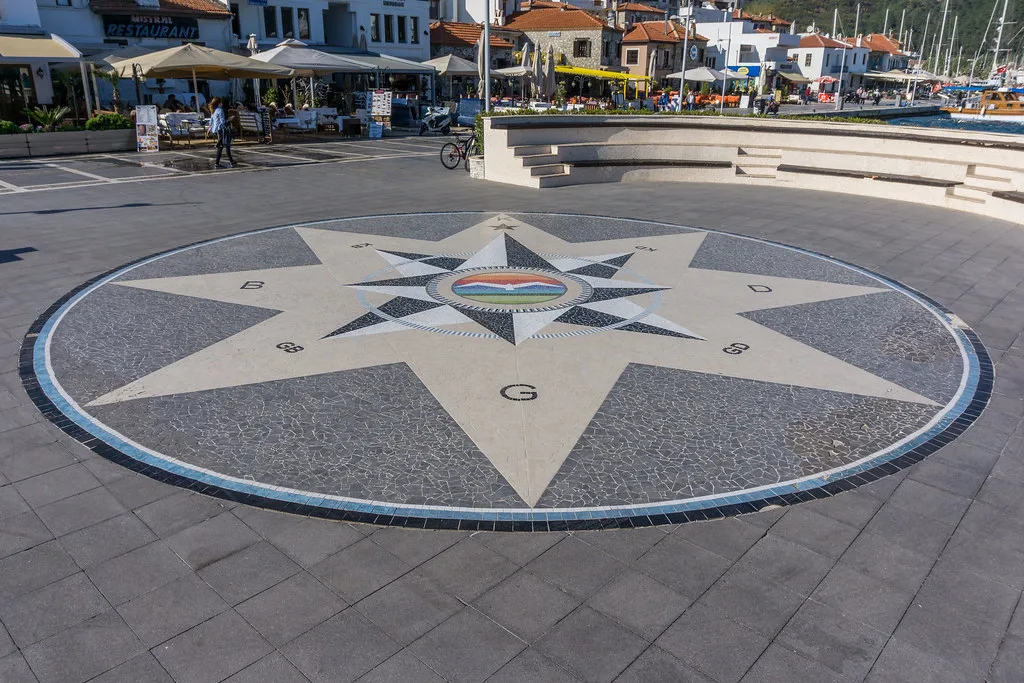
The walk up through Kale Sokak and the old streets
Treat the climb as part of the visit. The lanes below the castle are the densest, most photogenic part of Marmaris, and the terraces and windows in the walls open unexpectedly onto the harbour and the town below. Go early in the morning or in the late afternoon, when the light is softer and the stairways are quieter.
Between the harbour and the castle gate you pass through a working neighbourhood rather than a walled-off monument zone: expect cafés, small shops and residential doorways on the same lanes. A short detour to a Marmaris mosque fits naturally into the same hour and gives you a sense of how the old quarter and its places of worship sit together.
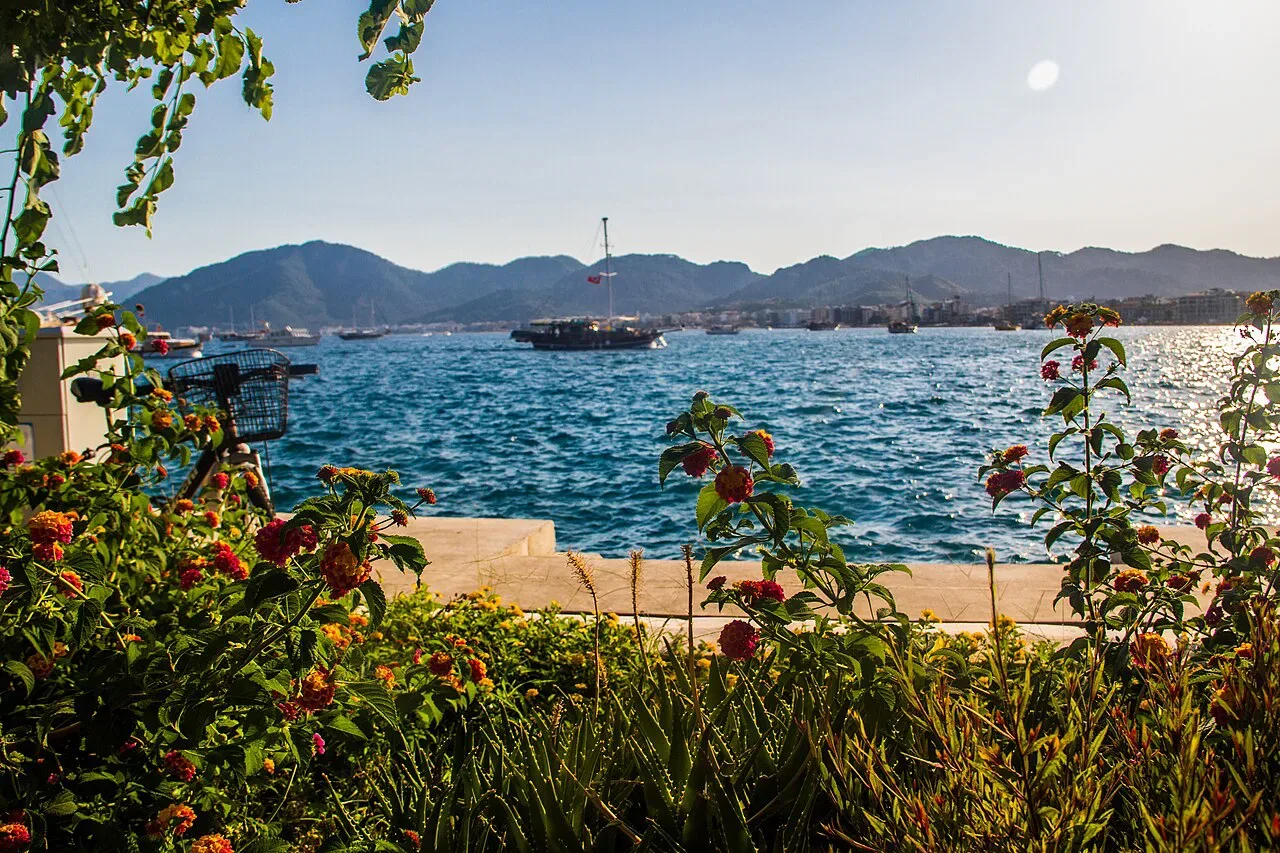
Inside the castle: courtyard, vaulted halls and stairs
The entrance passage has a barrel-vaulted ceiling and opens into an inner garden, which doubles as an open-air display area. Rooms with the same vaulting are used as exhibition halls, and stairways on the right and left lead up to the fortress wall. Other spaces in the complex serve as stores and offices, so not every door is open to visitors.
The halls are laid out in rough chronological order, running from the Bronze Age through Archaic, Classical, Hellenistic, Roman and Eastern Roman (Byzantine) periods to the early Republic. If you only have half an hour, walk the rooms in sequence and save the walls for last.
What the museum shows: Knidos Hall and the Datça finds
The first room is Knidos Hall, filled with material brought from Datça on the Reşadiye peninsula, where Knidos was a leading centre of ancient Caria. Look for marble statues uncovered by the Knidos excavations, statue heads, figurines, ornaments, amphoras and everyday pottery. Two pieces stand out: a bronze sheath thought to belong to a colossal statue, and a seated priest statue.
This is the strongest room for sculpture, so give it the most time if your interest is classical art rather than coins. The labels identify the find spots, which helps you connect the museum to the ruins you may visit along the coast.
Burgaz and Emecik Hall: Archaic figures
The second hall holds mostly limestone statuettes and baked-clay figurines excavated at Burgaz in Datça and at the Apollo sanctuary near Emecik. They date to the Archaic period and count among the museum's most important pieces. The figures are small, so get close and look at the faces and the modelling rather than scanning the cases from the doorway.
Marmaris and its Environment Hall: coins, gold and lost cities
The third hall sits where the east and south fronts of the castle meet, and covers Marmaris and its surroundings. Its contents were bought, retrieved and handed in from the town and nearby villages, which gives it a local feel rather than a grand excavation feel. Displays include gold pieces, coins, ornaments, figurines, glass and domestic pottery.
Look for labels naming the ancient cities of the area: Physkos, Amos, Kastabos, Hydas, Erine, Tymnos, Bybassos and Phoenix. A separate section traces coinage through Persian, Roman, Eastern Roman, Seljuk and Ottoman periods. If you have already driven around the peninsula, this room explains what you were passing.
The stone pieces hall: gravestones, friezes and statue heads
The fourth hall displays stone: gravestones, osteotheks (burial containers for ashes and bones), friezes and statue heads. It is the least processed room and the most atmospheric, with heavy pieces set at eye level. Check the carving on the friezes and the weathering on the heads, which shows how long the stone sat exposed before it was recovered.
The rampart views over the harbour and town
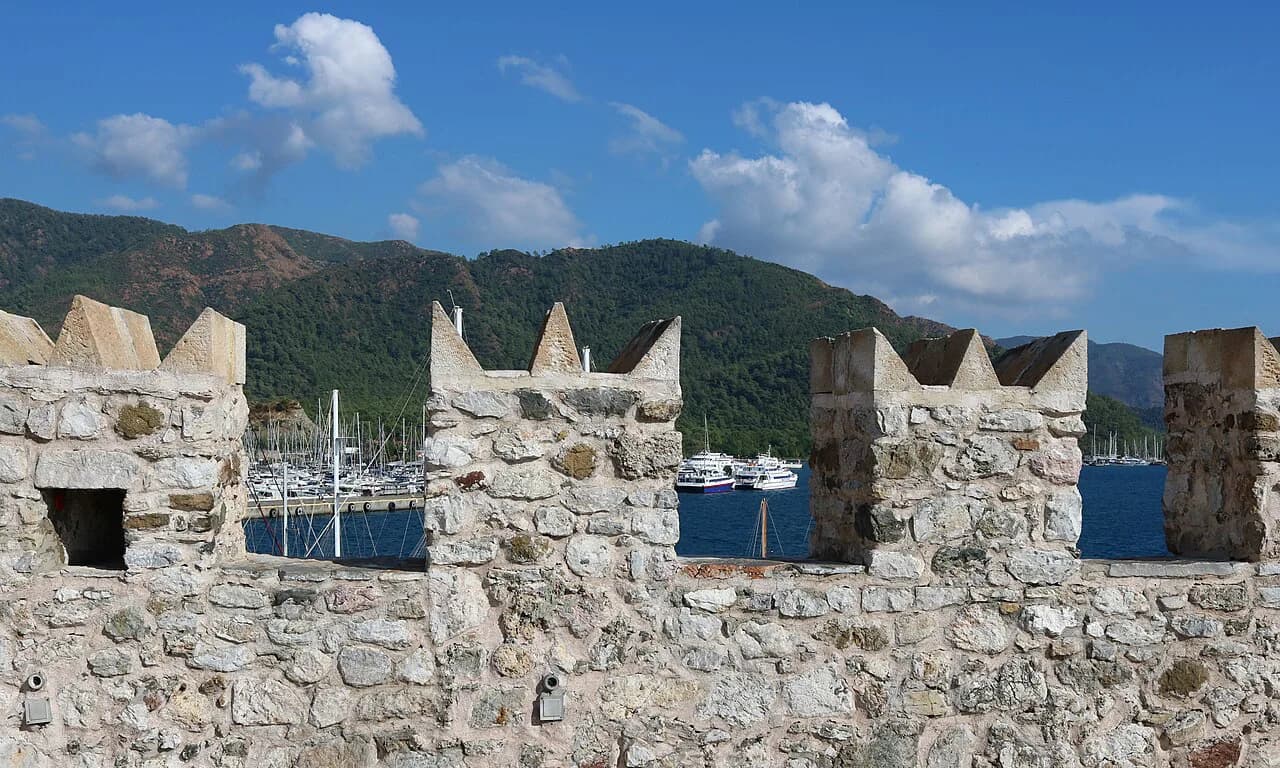
Climb the stairs to the walls and the visit changes: the harbour, the bay and the rooftops of the old town open up below, and this is the view most people come for. The castle stands on a dominant position facing the sea rather than on the town's highest summit, so treat it as a harbour panorama, not a summit. Bring water in high summer; there is little shade on the walkway.
Tickets for non-Turkish visitors and Turkish citizens
Ticket bands are split by nationality and age on the official museum listing. Non-Turkish adults aged eight and above pay six euros, as do non-Turkish visitors aged 8 to 18, and non-Turkish children under eight enter free. Turkish adult citizens pay 200 TL, while Turkish citizens aged 8 to 18, Turkish citizens aged 65 and over, and children aged 0 to 18 enter free. Students of art history, archaeology and museum departments at university also enter free. Treat these figures as the rates the museum published, not as a guarantee for your visit, and confirm at the desk or on the museum page before you go.
Bring identification for every adult and child in your group, because the bands are checked at the ticket window. Pay in the currency quoted at the desk rather than assuming your card will be converted at a good rate.
Museum Pass The Aegean: what it covers and the pool exception
Museum Pass The Aegean covers more than 40 museums and archaeological sites run by the Ministry of Culture and Tourism in İzmir, Aydın, Muğla and Denizli over seven days, priced at ninety-five euros on the museum listing. Marmaris Castle and its museum sit inside Muğla province, so the pass is relevant if you are touring this coast. It is not valid at the Pamukkale Ancient Pool in Denizli, where you buy a separate ticket; note that this is the pass and not the Müzekart.
Opening hours in summer and winter
The museum works to two seasons. From 1 May to 15 October it opens 08:30 to 19:30 every day, with the ticket desk closing at 19:00. From 16 October to 1 May it opens 08:30 to 17:30, with ticket sales ending at 17:00. Arrive at least an hour before the desk closes so the halls and the walls are not rushed.
These are published seasonal hours and can move around public holidays or for maintenance, so check the listing or ring the museum on the day. The listed telephone number is +90 (252) 412-1459 and the email is marmarismuzesi@ktb.gov.tr.
How long a visit takes and when to go
Budget under an hour for the museum itself and add twenty to thirty minutes for the climb and the ramparts, so ninety minutes is a comfortable total. The collection is modest, and the halls are small enough that a slow walk covers everything without fatigue.
Timing matters more than pace here. Midday in July and August is hot on the stairs and crowded on the walls, while the first hour after opening and the last hour before the ticket desk closes are cooler and calmer. In winter, go in the morning and keep an eye on the early closing time.
Who the castle suits and who should skip it
The castle suits anyone already exploring the old town who wants harbour views, a quick dose of local archaeology and a short indoor stop for an hour. It also works for families, since under-eights enter free and the walls give children somewhere to look out. Skip it if you are expecting a large national museum, if stairs and uneven paving are difficult, or if your only aim is a full day of ruins, in which case the ancient sites along the coast give you far more for the time.
Is the castle worth the climb?
Yes, if you set your expectations to a small museum with a big view. The four halls give you Datça sculpture, Archaic figurines and locally found coins in under an hour, and the ramparts repay the short climb from Kale Sokak. Go early or late, carry your ID for the ticket bands, and check the season's hours before you set out.
If you have more time in town, the lanes below the castle are worth an unhurried morning on their own, and the castle works best as the high point of that walk rather than a separate excursion.
Explore more Marmaris guides
Frequently Asked Questions
What is the history of Marmaris Castle?
The castle was reconstructed by Suleiman the Magnificent during his expedition against Rhodes, and it later served as a military base according to the 17th-century traveller Evliya Çelebi. The museum listing notes that Herodotus of Halicarnassus recorded a much earlier fortification on the site and that the castle first came under Ottoman rule in 1390. The castle is a registered first-degree monument under a 1978 heritage board decision.
Does Marmaris have an old town?
Yes. The castle sits on the peninsula behind Marmaris harbour, in Tepe Mahallesi on Kale Sokak, and the lanes climbing to the gate run through the old quarter.
What is Marmaris famous for?
For visitors, the harbour and the castle above it are the defining pair, with the old-town lanes climbing between them. The museum's local hall also names the ancient cities of the surrounding peninsula, including Physkos, Amos and Bybassos, which explain the area's older layers.
Sources
Notes for your next Turkey trip
Optional updates when we add or correct a town guide.
You might also like
Continue reading
More guides you'll find useful