Kalkan History: What Visitors Can Still See in the Old Town
Kalkan's trading-port past still shows in its old town lanes and harbour. Here's what visitors can see, from Lycian ruins to Ottoman-era streets.
On this page
Kalkan's past as a coastal trading port is still visible in the lanes and harbour of the old town, and the wider Lycian coast adds the ancient sites that make the town worth more than a beach stop. This guide separates what you can walk to in Kalkan itself from what needs a dolmuş, a car or a boat.
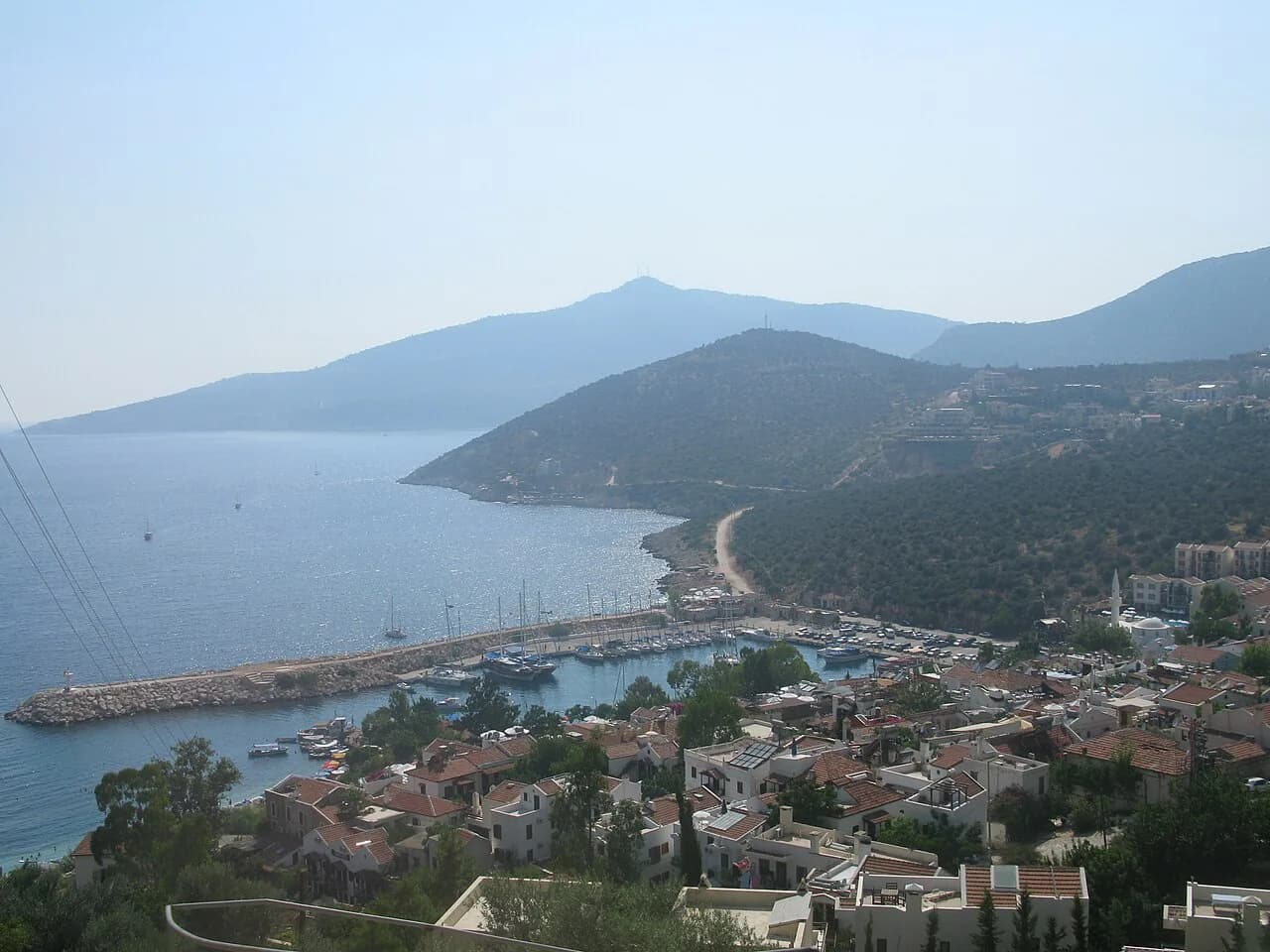
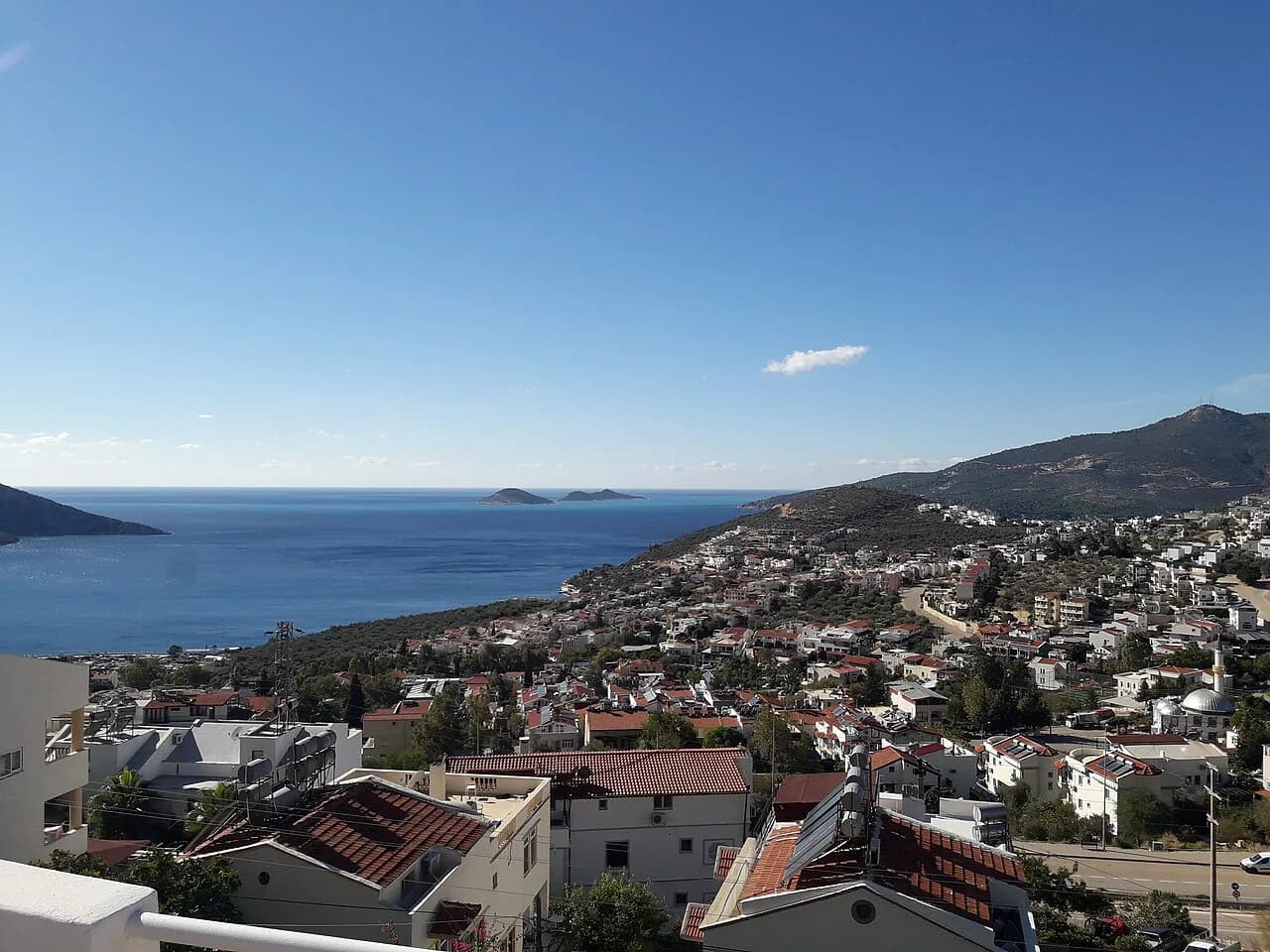
Expect hills and steps rather than a flat grid. The town is built on a slope above a wide bay with the Taurus Mountains behind, which is why the centre rewards slow walking and comfortable shoes.
What Kalkan was before tourism
Kalkan began as a coastal trading port, and that layered, lived-in character survives in the old town's narrow streets, shuttered houses, small boutiques and roof-terrace restaurants stepping up the hillside. Visitors looking for a purpose-built resort will find something older and more uneven here.
Rooftop dining is part of that inheritance rather than a recent import, with restaurants set on terraces above the harbour and the water. Gironda Restaurant occupies a former Greek merchant's house and serves from a sea-view rooftop, which puts you inside the building stock you came to look at.
Where you see that past today: the Old Town lanes and harbour
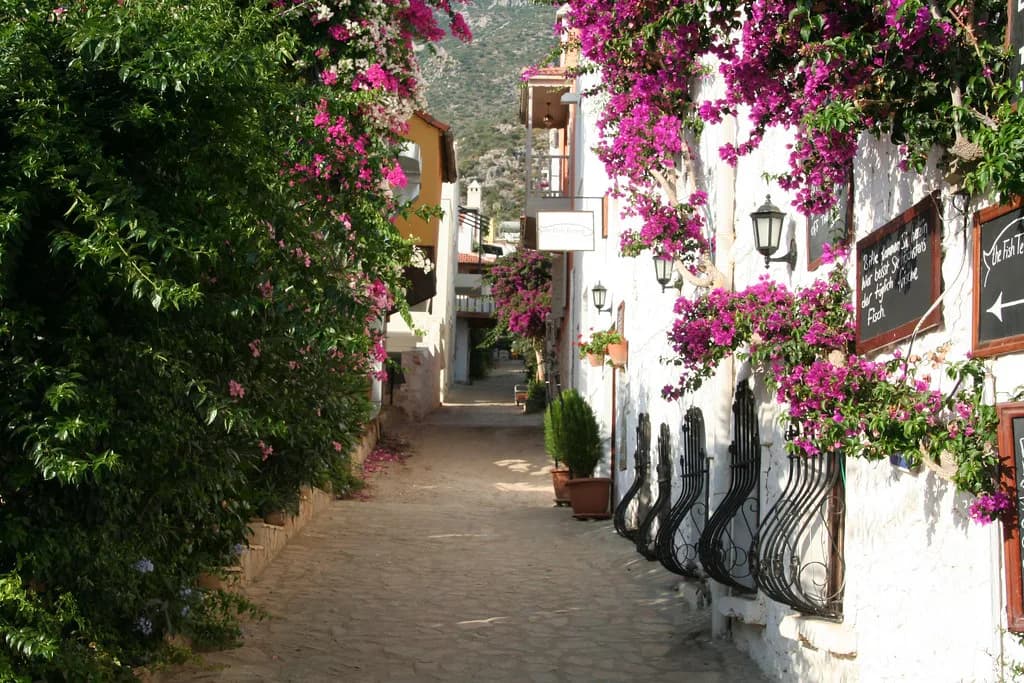
The old town is the heart of Kalkan's charm: lanes lined with boutique shops, artisan jewellery stores and art galleries, bougainvillea spilling over balconies and the smell of bread from nearby cafés. Walk it in the morning before the terraces fill, when the shutters are open and the lanes are at their clearest.
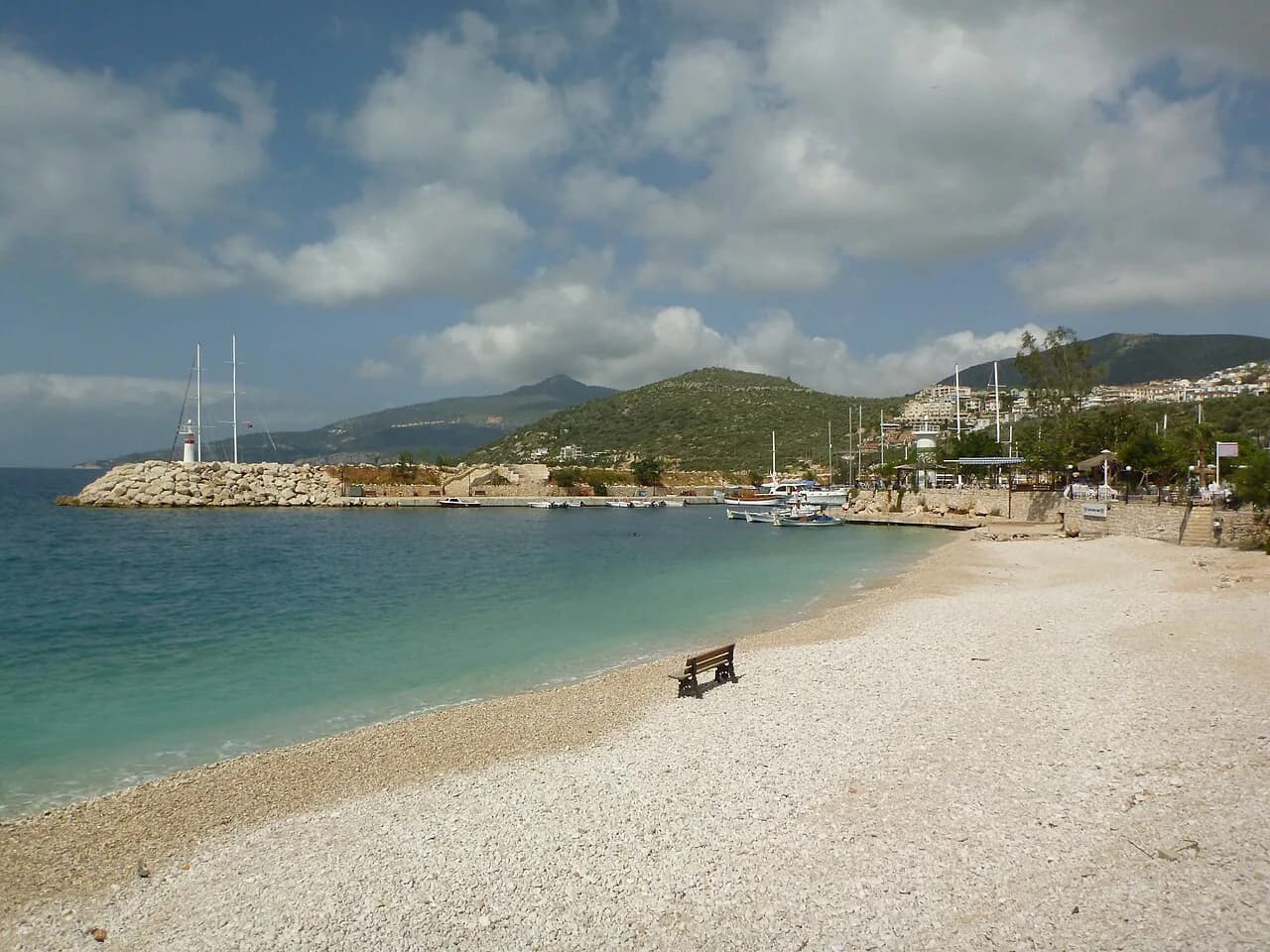
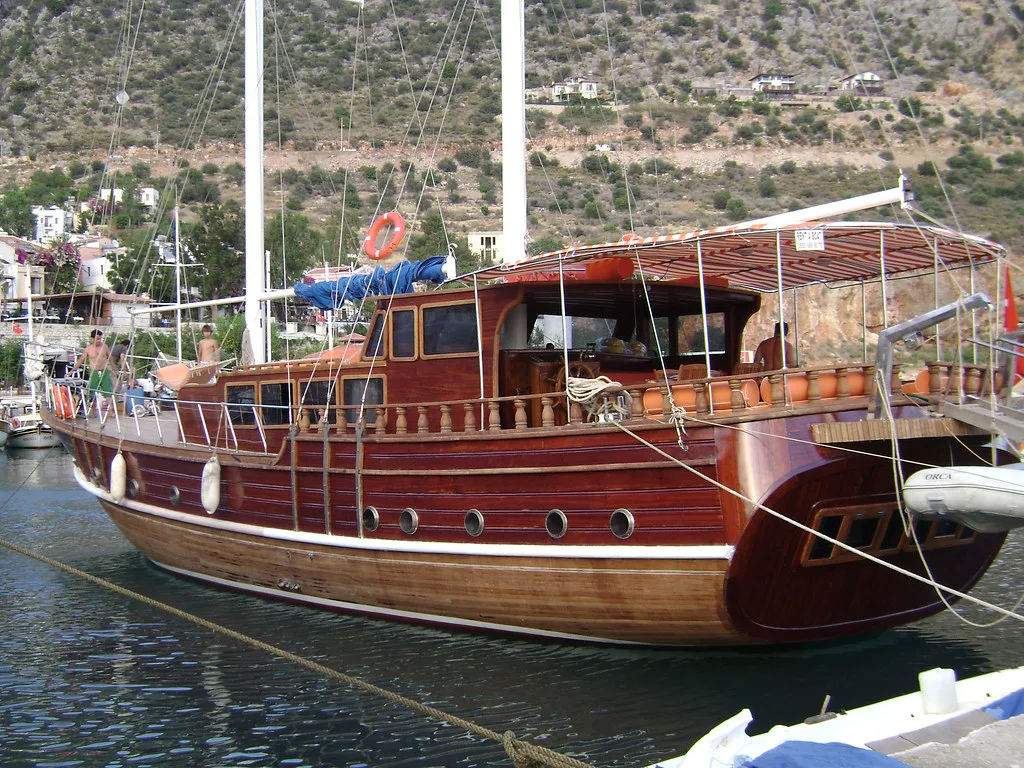
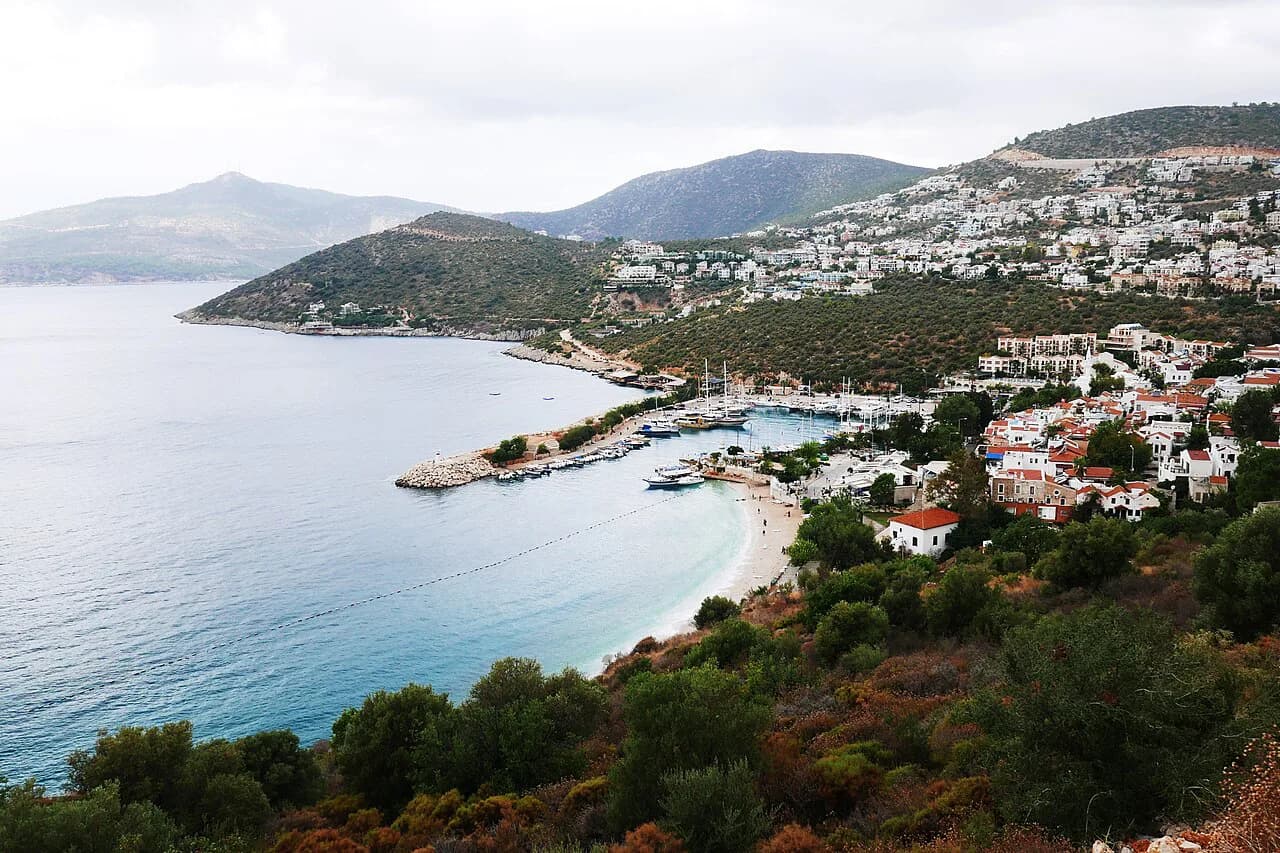
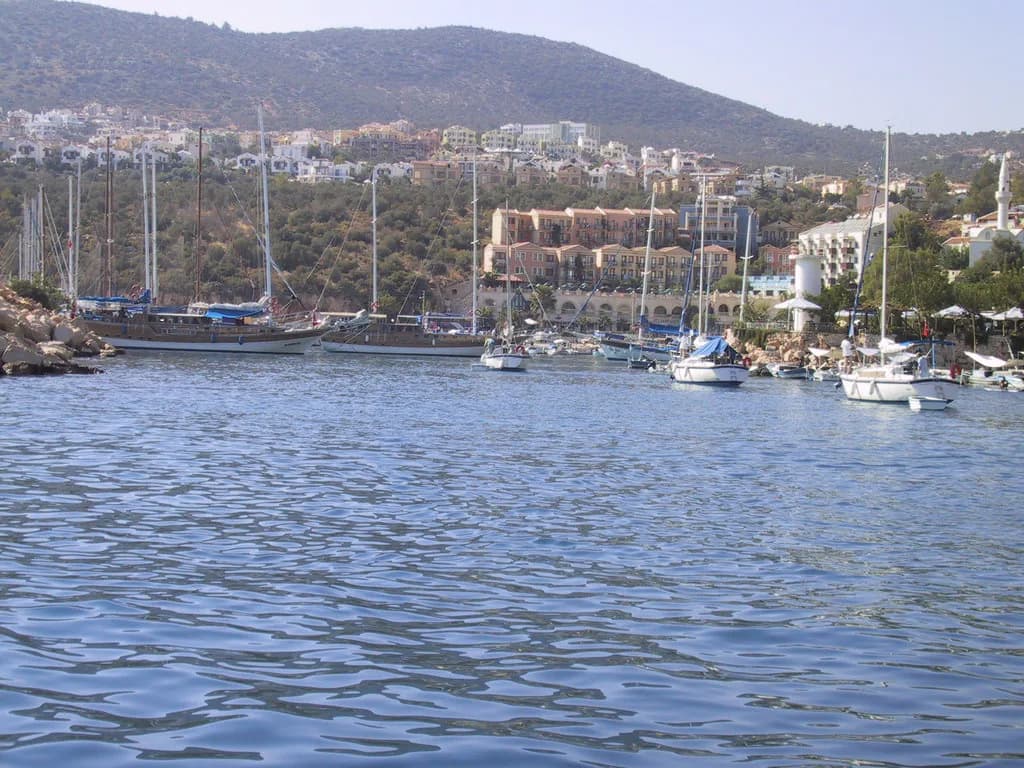
The harbour is the other half of the picture: busy in season, with boat trips coming and going and the sea clear and turquoise beside a pebbly town beach. Bring beach shoes for the pebbles if you plan to swim after walking the lanes.
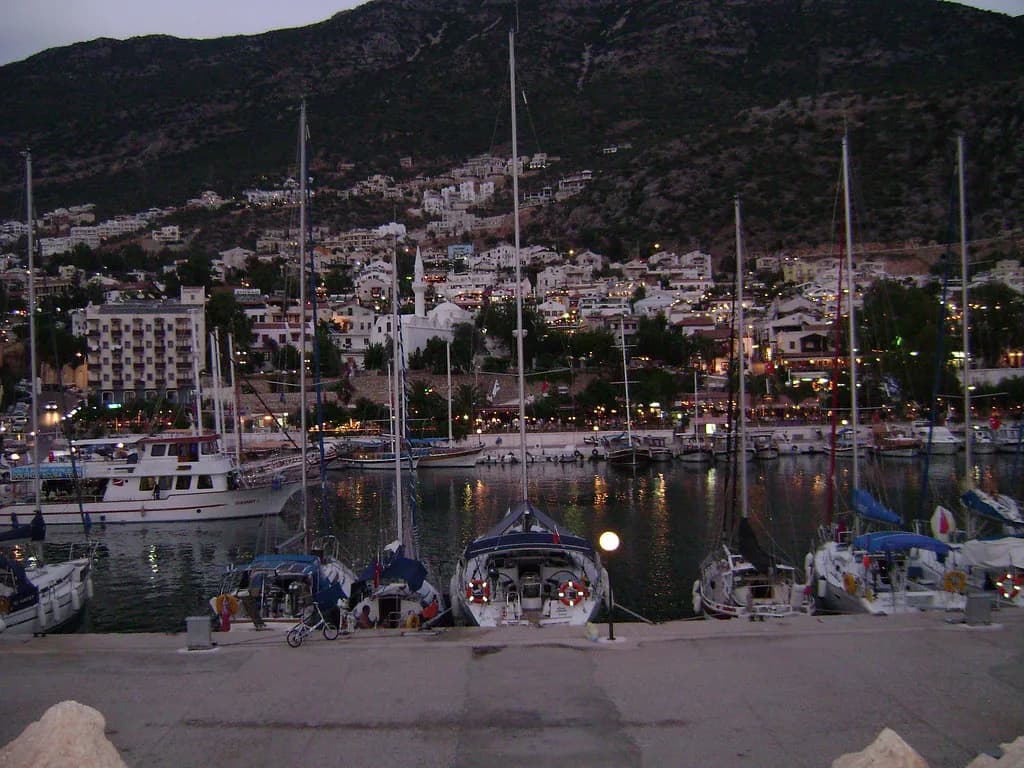
Kalkan Harbour is where the town's maritime life is easiest to read, and it makes a natural end point for a morning loop through the Kalkan Old Town lanes. Combine the two rather than treating them as separate outings.
The Old Town's layout: narrow streets, shuttered houses, hillside steps
Because the town sits on a slope, you can do a surprising amount on foot depending on where you stay, but the hills make taxis the more comfortable choice for evenings. The main taxi rank sits on the roundabout at the top of the old town, which is the landmark to aim for when walking back up.
Plan the old town as an ascent: start at the harbour, climb through the shopping lanes, and finish at the top of the town for the view and an easy taxi down. Anyone with mobility concerns should treat the steps as the main constraint and budget for a taxi rather than a long climb.
Lycian and Roman traces around Kalkan
The region's Lycian roots are the most obvious ancient layer when you are out and about, from tombs that appear to hang off the mountainsides to sarcophaguses peppering nearby Kaş. The wider landscape is scattered with Lycian city ruins along the coastline, with ancient tombs in the mountains above it.
For the ancient sites within a short drive, the UNESCO ruins of Xanthos, the gorge at Saklıkent and Patara's long sandy beach are often combined in a single set tour. If you would rather build your own day, the Kalkan ruins and outlying sites are easier to reach by car than by foot.
Xanthos and Letoon: the UNESCO-listed Lycian cities within reach
Xanthos and Letoon are the ruined Lycian cities to prioritise if you want one substantial archaeological day from Kalkan. Both are described as UNESCO World Heritage Sites, and Xanthos is the one typically bundled with Saklıkent and Patara on a set tour.
The local dolmuş is the most economical way to reach places such as Kaş, Patara, Kaputaş and Xanthos, though a car gives you more control over timing. Check departure points and seasonal timings locally before relying on a minibus for a site day.
Patara: a Lycian port, its ruins and the beach
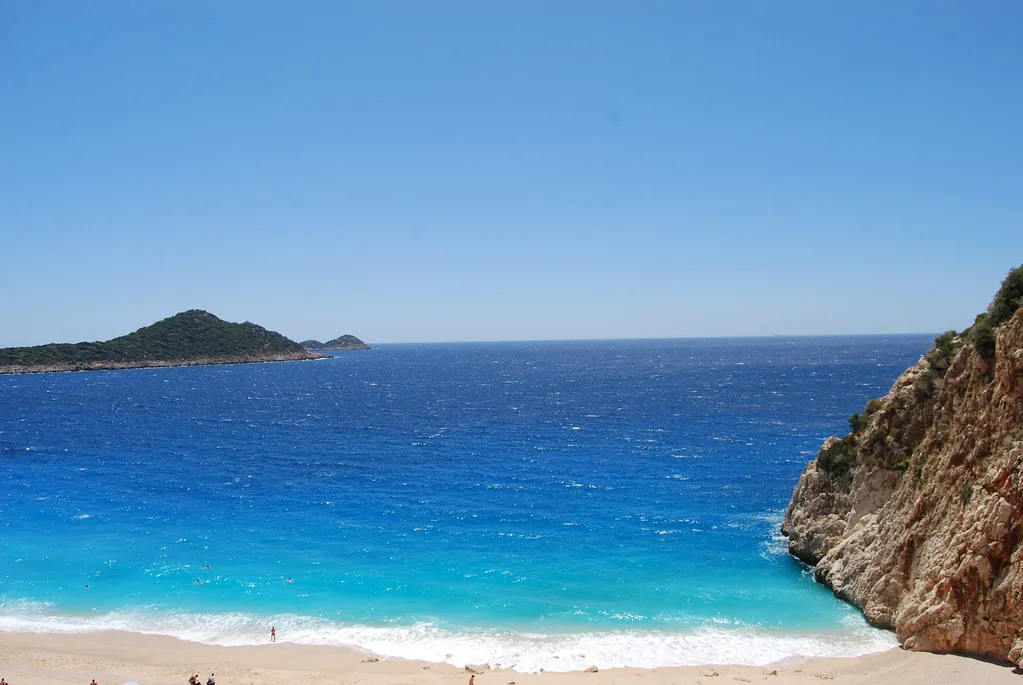
Patara pairs a Lycian port's ruins with the country's longest beach, fringing the ancient site. It is one of the two headline beaches near Kalkan alongside Kaputaş, and the combination of ruins and sand is what makes it a full half-day rather than a quick stop.
The same site appears on set tours alongside Xanthos and Saklıkent, which is the simplest way to see it without driving. If you go independently, treat Patara as a site plus a beach and allow for both.
Tlos and the rock tombs in the hills behind town
Tlos holds ancient ruins dating from several empires, including the Lycians and Ottomans. Its cliff-face rock tomb is the feature most tied to the site's legends, and it suits a half-day by car, paired with a mountain village stop rather than a harbour morning.
Traditional villages such as Bezirgan and İslamlar sit in the same hills, and the trout farms around İslamlar give a lunch stop on the way back down. That makes a tomb-and-village loop the most efficient use of a car for a day.
Kekova, Simena and the sunken city by boat
A daily boat trip to the sunken city of Kekova and the castle at Simena is one of the most popular excursions from Kalkan, usually setting off from the village of Üçağız. The partially submerged ruins and a Byzantine church are the sights, and organised day trips run from local operators.
Kalkan's signature day is time on the water, with boat trips along the coast to hidden bays for swimming and a lunch prepared on board. Stops often include Kaputaş and the Blue Cave, plus beaches that can only be reached by boat.
Beach clubs around the bay are often reached by water taxi in season, though provision varies by month and weather. Ask on the day whether a boat is running.
Kayaköy: the ghost village a short bus ride away
The ghost village of Kayaköy is a short bus ride from the centre, and tour providers in Kalkan also run excursions that head directly there. It works well as a low-effort historical half-day if you do not want to drive.
Further afield, Fethiye can be reached within a couple of hours on public transport and deserves an overnight if you want to explore it properly. Its old town and fish market are the usual reasons to make the trip.
Meis (Kastellorizo): the Greek island day trip from nearby Kaş
From nearby Kaş, a ferry crosses to the Greek island of Meis (Kastellorizo), and the Blue Cave is the recommended sight once you are there. The crossing starts in Kaş rather than Kalkan, so build the drive into the day.
Kaş itself has a beautiful sea-facing amphitheatre that is worth seeing at sunset before dinner in town, which makes a night in Kaş a sensible add-on to the island trip. Treat the ferry as a seasonal service and confirm sailing days locally before booking around it.
How long the historical sights need and how to reach them by dolmuş or car
Give the old town and harbour a morning on foot, then use afternoons for sites. A car opens up beaches, ruins and villages at your own pace, while the dolmuş is the cheapest option for Kaş, Patara, Kaputaş and Xanthos.
Dalaman is the closest airport at roughly an hour and thirty minutes by road, with Antalya as the longer alternative, so a history-focused trip fits easily into a standard villa week. The main bus stop sits about ten minutes from the centre, past the market.
Allow a full day for a boat trip to Kekova and Simena, a half-day each for Tlos and Kayaköy, and a full day if you combine Xanthos, Letoon and Patara. Pair a walk through the lanes with the Mosques in Kalkan guide to see the town's living streetscape alongside its older buildings.
Which historical day should you book first?
Book the boat trip to Kekova and Simena first if you only have one free day, because it covers scenery and ancient ruins in a single outing and needs no driving. Second choice is the Xanthos, Letoon and Patara loop by car or set tour, which gives you the UNESCO-listed Lycian cities and the long beach together.
Keep the old town, harbour and hillside steps for a morning you are not driving anywhere, and leave Tlos and Kayaköy for the days when you want something shorter. That ordering keeps the walking days and the driving days separate.
Frequently Asked Questions
Does Kalkan have an old town?
Yes. The old town is the town's historic core, with narrow streets, shuttered houses, boutiques, galleries and roof-terrace restaurants stepping up the hillside above the harbour. It is built on a slope, so expect steps and allow for taxis if walking uphill is difficult.
What is the closest airport to Kalkan, Turkey?
Dalaman is the closest airport, typically around one hour and thirty minutes by road. Antalya is the other option, with a longer transfer time that varies with traffic, time of day and route.
Is Kalkan in Turkey expensive?
Kalkan is presented as an upmarket destination, but the town itself is walkable and the dolmuş is the most economical way to reach Kaş, Patara, Kaputaş and Xanthos. Boat trips, set tours and beach clubs carry their own costs, so ask operators for current prices when you book.
Sources
- Kalkan Things to Do
- A mini break in Kalkan The historic town of Kalkan is an enchanting place and one of the most beautiful locations along Turkey’s gorgeous Lycian Coast. Kalkan remains a charming and unspoiled haven of lush nature, brilliant blue crystal-clear sea, historic architecture, ancient history and warm trad
- Kalkan, Turkey FAQ's | The Turquoise Collection
- Things to do in Kalkan, Turkey : Turkish Travel Blog
- Kalkan Travel Guide | Oliver's Travels
Notes for your next Turkey trip
Optional updates when we add or correct a town guide.
You might also like
Continue reading
More guides you'll find useful