Shopping in Marmaris: Bazaars, Markets and What to Buy
Plan a shopping day in Marmaris with the covered bazaar, the Thursday village market and Blue Port, plus what to buy, how to haggle and how to get around.
On this page
Shopping in Marmaris works best when you split it by mood: haggling for carpets, leather and ceramics in the shaded covered bazaar in the centre, fresh produce and spices at the weekly district markets, and fixed-price brands and groceries at Blue Port. The bazaars reward patience and a calculator; the mall rewards a list. This guide sets out which area suits which purchase, which day each market runs, and how to move between them without wasting a morning.
Which parts of Marmaris suit which kind of shopping
The town sorts itself into three shopping zones. The covered market, known locally as the kapalı çarşı, is a warren of narrow, traffic-free lanes in the centre where stallholders sell leather, ceramics, tea glasses and carpets. Blue Port sits on the main road between Siteler and the centre, about 50 metres from the beach, with roughly 40 to 50 brands, a supermarket, a food court and a cinema. The open weekly markets in Içmeler, Armutalan and Beldibi are where locals buy fruit, vegetables, cheese, olives and spices.
Choose between atmosphere and certainty. The bazaar and the marinas give you the pleasure of browsing and talking to shopkeepers, while Blue Port gives you air conditioning, fixed prices and a supermarket for the practical bits. If you are buying a serious piece such as a carpet, the bazaar is the place to take your time; if you need sun cream, snacks and a pair of trainers, go straight to the mall.
The Grand Bazaar and the covered market in the centre
The Grand Bazaar is the most central and best-known market in Marmaris, with a huge number of shops selling mosaic lanterns, vases, jewellery, souvenirs, clothes, leather, rugs and Turkish delight. Because the same goods turn up in several shops, you can compare prices before committing, and if a vendor will not move on price you can usually find the item nearby. Bargaining is normal here, though you can also simply name the price you want to pay.
The covered market and the Grand Bazaar overlap in the same central lanes, and the difference matters more than the naming. The covered market is where you find hand-painted ceramics, tulip-shaped tea glasses and the nazar boncuk, the blue glass eye sold as a talisman against bad luck. Carpets here often come from Milas, a town a couple of hours away, with vivid colours and geometric designs, so ask where a rug was woven before you discuss price.
Marmaris Main Street, running from the centre towards the Grand Yazıcı, is the practical alternative if you want clothing rather than crafts. The shops are aimed more at garments and international brands than at sweets and decor, and the street is on the route between the beach and the centre, which makes it the easiest stop of the day.
The village market on Thursdays and the smaller Sunday market
The Marmaris Thursday Market, sometimes called the village market, runs on Thursdays on G. Mustafa Muğlalı Caddesi and draws farmers and fishermen from neighbouring towns and villages. Expect fruit and vegetables, homemade cheese, olives, nuts, honey and local sweets, plus clothes, linen, tablecloths and household goods. A smaller bazaar sets up on the same site on Sundays, so a Thursday-only plan is not the only option.
Go early or late. The market is at its calmest in the morning and again in the late afternoon, and the seafood stalls trade every day rather than only on market days, which makes a fish lunch an easy add-on to a shopping morning.
Beldibi market on Sundays for produce and spices
Beldibi market runs on Sundays in a quiet residential area and feels smaller and friendlier than the main town market. It is where local farmers sell fresh produce, cheeses and olives, and the spice stalls are the draw for anyone wanting saffron, cumin, sumac or paprika to take home.
Beldibi suits a gentle morning rather than a full shopping day. Because it sits in a residential district rather than on the seafront strip, it is a good place to combine with a walk and a coffee, and it is far less crowded than the central bazaar.
Içmeler's Wednesday market and Armutalan market
The Içmeler Wednesday Market sits about eight kilometres from Marmaris near the entrance to Içmeler, on the road to Turunç. It is a compact traditional market selling fruit, vegetables, honey, fresh bread and spices alongside textiles, clothing and shoes, and it works well for souvenirs such as handmade items. Shopkeepers here expect a haggle, so treat the first price as an opening figure.
Armutalan market is within walking distance of central Marmaris and is a straightforward option if you are staying in that district rather than travelling out to Içmeler. Pair it with the main bazaar on the same day to compare prices and range without a second journey.
Blue Port shopping centre: brands, supermarket, rooftop food court
Blue Port sits right in the middle of Marmaris on the main road between Siteler and the centre, with a supermarket, brand clothing stores, personal care shops, a cinema and a children's playground. The food court on the top level opens onto a terrace with views across the bay, which makes it a sensible lunch stop when the heat is at its worst.
The trade-off is atmosphere. Shops here are described by visitors as pricier than the street bazaars but without the fake goods, and prices are fixed, so there is no haggling. If you want a predictable purchase and a sit-down meal, this is the day's anchor; if you want the ritual of bargaining, stay in the bazaar.
Netsel Marina and the marina boutiques
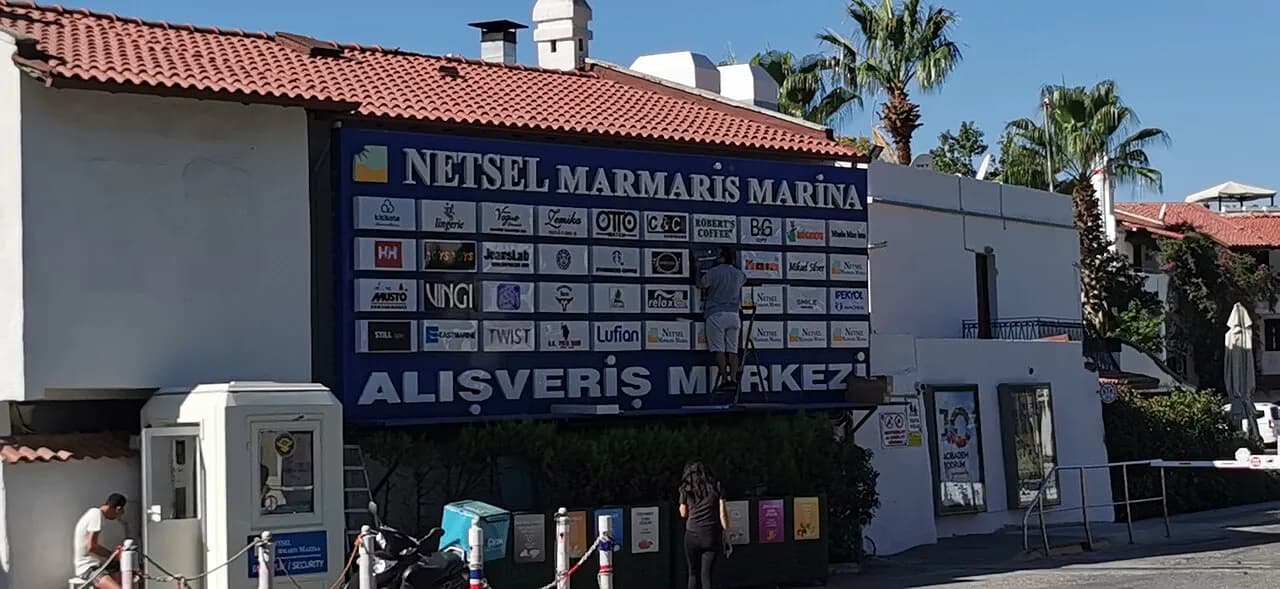
Netsel Marina has a shopping area with shops selling branded clothes and souvenirs, along with bars and restaurants for when your feet give out. The marina is the upmarket end of Marmaris shopping, and the walk between the marina and the central bazaar is short enough to combine both in an afternoon with a coffee in between.
For a more boutique version of the same idea, the Marina area also holds shops selling jewellery, leather goods and Turkish textiles in a quieter setting. It is the place to buy something special rather than bulk souvenirs, and the setting is worth the extra minutes on foot.
What to buy: carpets and rugs, ceramics, textiles, leather, gold and jewellery, honey and jam, Turkish delight, spices, nazar boncuk, tea glasses
Carpets are the signature purchase, and the region around Marmaris has a long weaving tradition. Milas carpets, with their bright colours and geometric patterns, are the regional option, and the bazaar also has carpet schools and factories where you can watch weaving before you buy. Hand-painted ceramics, small bowls for meze and breakfast, and tulip-shaped tea glasses are lighter and cheaper souvenirs that suit a suitcase.
Food is where the weekly markets win. Marmaris honey and Turunç jam are the local specialities worth carrying home, alongside spices and Turkish delight from the bazaar. Leather bags, wallets, jackets and belts appear in both the bazaar and the market stalls, and the bazaars are also a reasonable place to buy gold jewellery from established shops rather than from a stall.
The nazar boncuk, the blue glass eye sold everywhere as a talisman against bad luck, is the easiest gift to buy and the least likely to break in a bag. Tuck one into a corner of a suitcase rather than a hand-luggage pocket; ceramic and glass items need clothes around them.
Haggling in the bazaars and markets
Bargaining is expected in the covered bazaar and the weekly markets, so start below the asking price and be ready to walk away. The bazaars work on volume, and because the same item appears in several shops you lose nothing by comparing before you commit.
Blue Port and the supermarket are a different world: prices are fixed and haggling is not part of the deal, which is precisely why some visitors prefer them. On carpets, do your homework, talk to the shopkeeper in depth and bargain hard before agreeing, because a serious rug is a considered purchase rather than a souvenir.
Keep the haggle friendly. Shopkeepers often invite browsers in for a glass of apple tea and will explain where a piece comes from, and a calm conversation over tea tends to get you further than a hard opening offer. Set a ceiling before you start and stick to it.
How to get between the markets and the centre
The central bazaar, Main Street and the marina are walkable from each other, and Blue Port is a short walk from the beach on the main road. For Içmeler, Armutalan and Beldibi, use the dolmuş minibuses that run along the coast road and through the residential districts; they are cheap, frequent and stop on request. Check the day before you go that the market you want is running, since the days are what locals go by.
Plan one loop rather than three separate trips, and sketch the stops on the Marmaris map before you set out, since the bazaar, the marina and the Blue Port road all sit close together while Içmeler and Beldibi need a minibus. A Thursday morning in the centre bazaar, lunch at Blue Port and a late-afternoon stop at the village market uses one day well, while a Wednesday morning in Içmeler and a Sunday in Beldibi are separate outings. If you are undecided about the town itself, read is Marmaris worth visiting before you build a shopping day around it.
Which Marmaris market should you put in the diary?
Put the covered bazaar and Grand Bazaar in the diary for any day, the Thursday village market for crafts and produce, Içmeler on a Wednesday and Beldibi on a Sunday, and Blue Port when you want air conditioning and fixed prices. Match the market to the day you are in town rather than the other way around, and keep one afternoon free for the marina walk between the two.
Explore more Marmaris guides
Frequently Asked Questions
Is Marmaris good for shopping?
Yes, if you want variety rather than a single mall. The town has a shaded covered bazaar and the Grand Bazaar in the centre for haggled crafts, leather, ceramics and carpets, weekly open markets in Içmeler, Armutalan and Beldibi for produce and spices, and Blue Port for brands, a supermarket and a food court.
What day is the market on in Marmaris?
The main village market runs on Thursdays on G. Mustafa Muğlalı Caddesi, with a smaller bazaar on the same site on Sundays. Içmeler holds its market on Wednesdays, and Beldibi on Sundays. Armutalan market is a shorter walk from the centre than Içmeler and is best paired with a central bazaar day.
Are clothes cheaper in Turkey?
Clothing is widely sold in the bazaars, on Marmaris Main Street and at Blue Port, but quality and prices vary too much to generalise. Bargaining is expected in the bazaars and weekly markets, while Blue Port prices are fixed. Compare a few shops in the covered bazaar before buying, since similar items appear in several stalls.
Sources
Notes for your next Turkey trip
Optional updates when we add or correct a town guide.
You might also like

Continue reading
More guides you'll find useful