
Myndos Gate, Bodrum: What to See and How Long It Takes

Myndos Gate is worth about an hour. It is the only significant remnant of the defensive walls that once ringed ancient Halicarnassus, and, unlike the castle, the gate itself carried no ticket booth or fence when it was last documented, in 2024. Two andesite towers, a silted moat and a little-visited group of Roman tombs sit on the western edge of Bodrum, within walking distance of the harbour. This page covers where the gate stands, how to reach it, what to look for in each part of the site, and what lies within a short walk.
What the Myndos Gate is
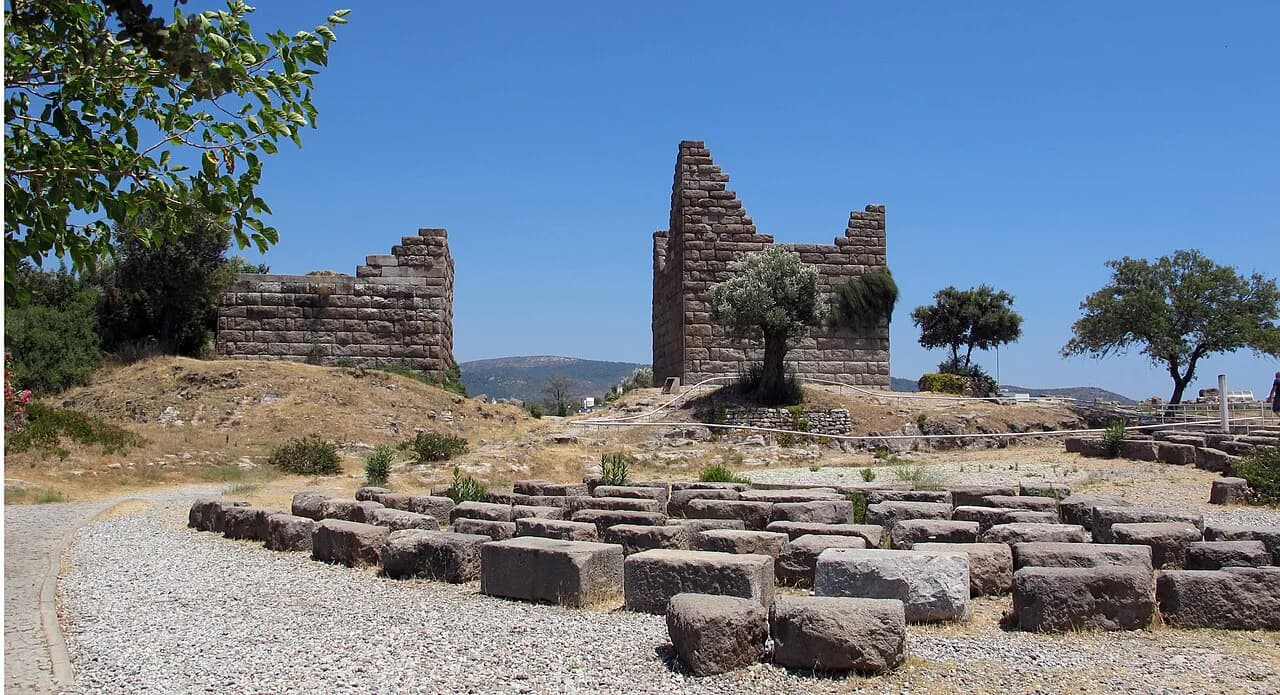
The gate was the western entrance to Halicarnassus, the city that stood here before Bodrum. The walls were built under the Carian ruler Mausolus around 364 BCE and ran from the western side of the harbour to Göktepe Hill, with two gates: the western one facing Myndos and the eastern one facing Mylasa. Nothing of the Mylasa Gate survives, which leaves the Myndos Gate as the single substantial piece of the circuit still in place.
Read the layout as a defensive scheme rather than a ruin. Three monumental towers of grey andesite once stood around an inner courtyard, with a single passage running between them; the central tower is gone, but the two outer towers still dominate the ground. Anyone funnelled through the passage below was overlooked from both sides at once. If you only glance at the stones from the road, you miss the point of the place.

Where the gate is
Myndos Gate stands in the Eskiçeşme district on Büyük İskender Caddesi (Alexander the Great Street), on the western edge of Bodrum near the point where the coast road bends towards Gümbet and Turgutreis. The D330 ring road passes close by, and the site is signposted from it. The Roman tombs described below lie about 100 metres further west, so keep walking after the towers.
Bodrum Municipality lists Myndos Gate among the town's historic sites alongside the castle, the Mausoleum and the Ottoman shipyard, which confirms it is treated as one of the town's monuments rather than a commercial attraction. The municipality publishes road closures and works notices for the district, so it is the place to look for any disruption to the approach along Büyük İskender Caddesi.

How to get there
The shortest walk from St Peter's Castle to the gate is 2 kilometres, which puts the site within reach of the harbour on foot; the same walk passes the remains of the Mausoleum and the ancient theatre. Public buses from Bodrum Otogar, the main bus terminal, also serve the area, and Bodrum Cruise Port describes the site as a 10-minute drive west of the town centre. By car, roadside space near the towers is limited, so parking can be the awkward part of a visit.
In practice, a dolmuş along the Gümbet or Turgutreis road plus a short walk is the simplest way to arrive without a car, and walking from the centre takes about half an hour each way at an easy pace. Allow for that in your day rather than treating the gate as a five-minute stop between the marina and the castle.
The two towers and the passage
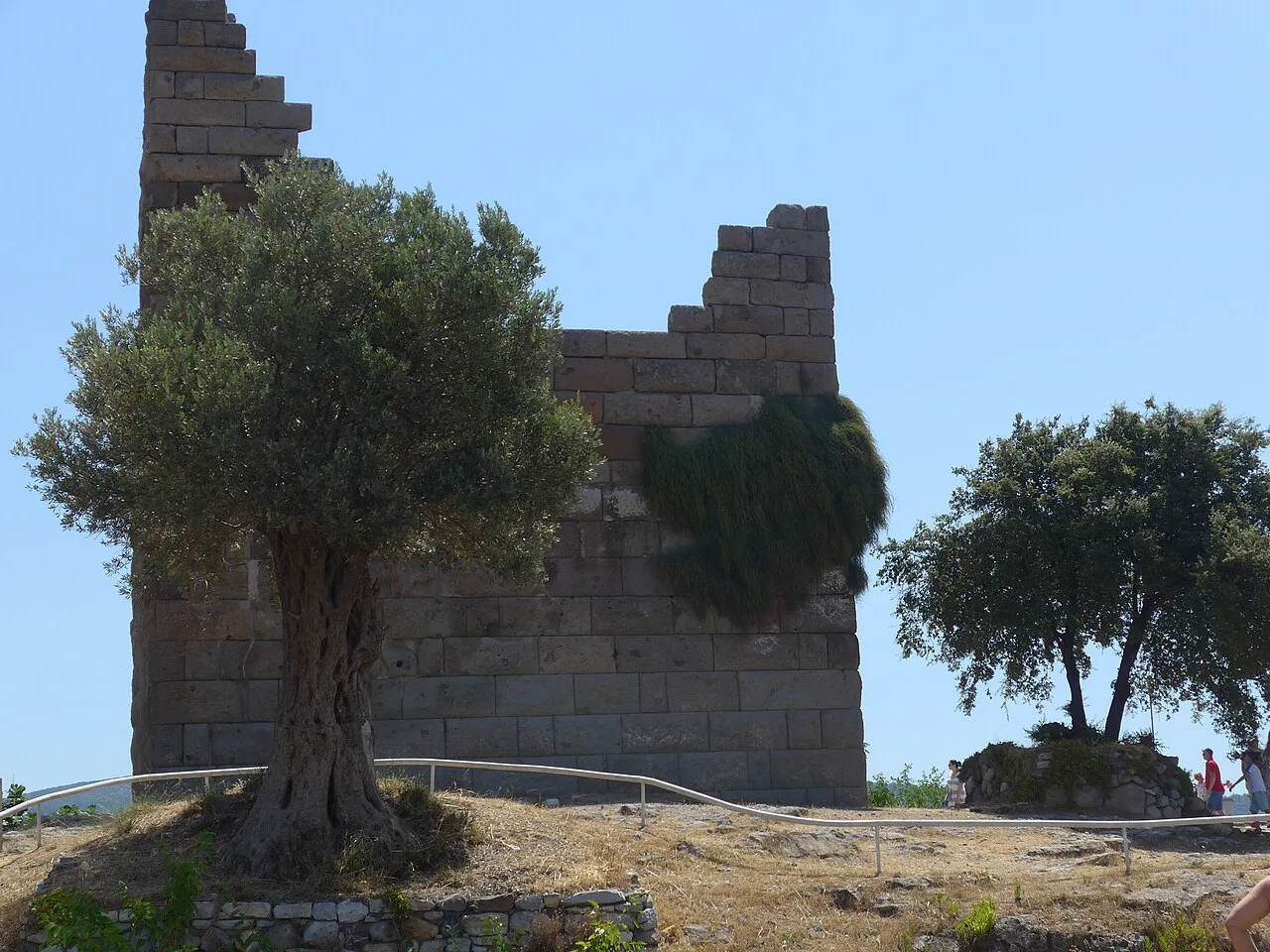
Three towers once framed an inner courtyard here; the central one is entirely destroyed, but the two outer towers still shape the site. One of them keeps close to its original form at roughly 7 by 8.5 metres, and a stone stair climbs to a cramped platform near the top. From that height the trap of the passage below becomes obvious, with the ground overlooked on both flanks.
Treat the stair as a description of the structure rather than a promise of access. Stairs at open archaeological sites in Turkey are sometimes closed for repair or safety, and no source sets out a rule for these towers, so see what is roped off when you arrive. The same caution applies to the evening floodlighting that one description mentions: it is worth asking locally before planning a trip after dark.
The moat in front of the southern tower
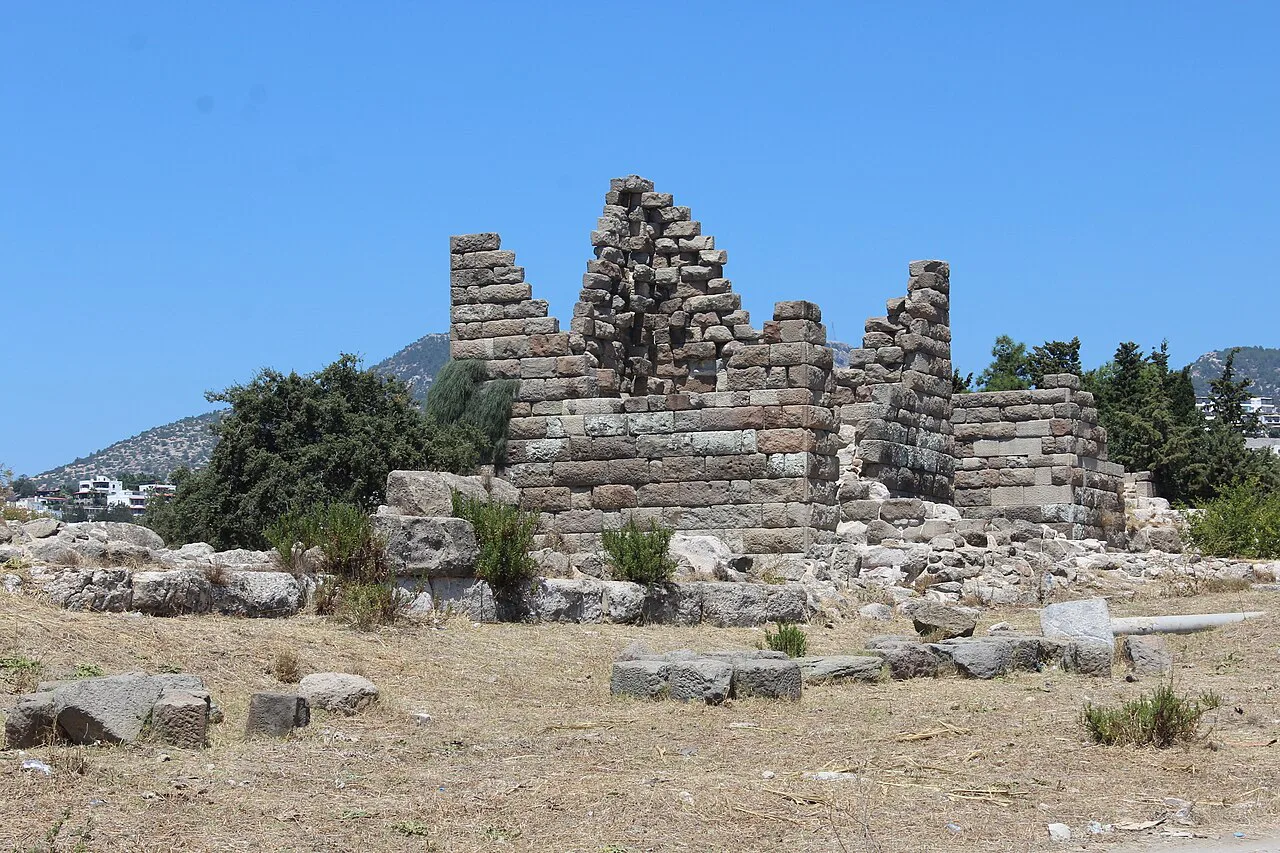
The ditch is the first thing the Macedonians met and the first thing most visitors walk straight past. It survives as a shallow line in the ground about 56 metres long and 7 metres wide, once some 2.5 metres deep, wrapping the southern tower on its west and south sides. The water drained centuries ago and grass now covers the floor of the trench, which makes it easy to read as a landscaping feature rather than a defence.
The siege has been handed down through the account of Alexander the Great's biographer Ariannos: when Macedonian troops assaulted Halicarnassus in 334 BCE, they had to cross this moat, and a narrow footbridge collapsed under the men crowding it. The source describes about a thousand defenders dying that day against some 40 Macedonians. Stand on the bank and the narrowness of the crossing explains why.
The Roman tombs about 100 metres west
Most people turn back at the towers, which is a mistake. About 100 metres west of the gate lies the area of a Roman-era necropolis, with 17 visible tombs dated to the 4th century CE, roughly seven centuries after the siege. The floor of one tomb keeps a mosaic of vine leaves and birds almost intact, and the necropolis stands on hotel grounds, with the hotel owners funding its restoration.
Two arched tombs from the 4th century BCE were also unearthed next to the gate itself, one with two storeys and one with a single level. Walk west from the towers slowly and look down rather than ahead; the tombs sit low in the ground and are easy to pass without noticing.
Entry and when to go
Entry to the gate was free of charge in 2024, with no ticket booth, and the site was recorded as an unfenced, open-access monument. That makes it a different proposition from the castle, where you pay and pass through a gate; budget for the castle and museum separately. Treat free entry as the last documented position rather than a permanent guarantee, and check locally if the gate forms part of a paid day out.
Because no set opening hours are published for the gate, it can be slotted into a morning or late afternoon without fuss. The site is well maintained and carries new information boards in Turkish and English, so you can read the layout on the spot instead of carrying a guidebook.
How long it takes and how busy it gets
Give the gate an hour, which covers the towers, the moat, the tombs and a slow read of the panels. If you are short of time, 30 minutes gets you the towers and the moat, but you will probably skip the necropolis. The gate is rarely visited compared with St Peter's Castle, so you have a fair chance of having the place largely to yourself.
The site sits in a built-up area, with hotels and commercial buildings around it, so the views from the towers now take in rooftops, satellite dishes and the two bays rather than open country. That contrast is part of the experience. Bring water in summer, as there is no site café or kiosk to retreat into once you are among the stones.
What is within walking distance
The walk from the centre links the gate with two other ancient sites: the remains of the Mausoleum and the ancient theatre on the slope of Göktepe Hill, both excavated and renovated as part of a wider programme that began with the gate. Ericsson and Turkcell funded that first restoration stage at the end of the 20th century. Pairing the three makes a half-day of ancient Halicarnassus on foot.
For the Mausoleum, treat the stop as its own small visit rather than a glance from the roadside, and read our guide to the Mausoleum at Halicarnassus to make sense of what remains. The ancient theatre is a separate walk away, roughly 15 minutes on foot, and is used for summer concerts, so check what is scheduled if you want the ruins without staging in the way.
The Bodrum windmills on the ridge above town round out the ancient and Ottoman sights for anyone staying a few days. They sit on the peninsula's skyline and make a natural companion stop to the theatre.
If the castle is on your list, the museum inside it covers the harbour's underwater finds. Read about the Bodrum museum of underwater archaeology before you go, because it is a substantial museum rather than a single room.
Should Myndos Gate be on your Bodrum list?
Yes, if you have any interest in what Bodrum was before the resorts: the towers, the moat and the tombs together explain the city's ancient plan in under an hour. Skip it if you are in Bodrum purely for the harbour and the castle and have only a day.
Go on foot from the centre if you can, so the Mausoleum and theatre come free with the walk, and finish with the tombs west of the towers. Before setting out, confirm that Büyük İskender Caddesi is open along your route and check the castle's current ticket arrangement separately.
Explore more Bodrum guides
Frequently Asked Questions
Is Myndos Gate free to visit?
Entry was free of charge in 2024, with no ticket booth and an unfenced site. Free access is not something to treat as permanent, so confirm locally before you build it into a paid day out.
How do I reach Myndos Gate without a car?
Walk west from the harbour, where the shortest route from St Peter's Castle is about 2 kilometres, or take a public bus from Bodrum Otogar. The gate sits on Büyük İskender Caddesi near the D330 towards Turgutreis, signposted from the road.
Can you climb the towers at Myndos Gate?
A stone stair climbs one tower to a small platform, and the view from it explains how the passage was overlooked from both sides. Access to the stair is not guaranteed at all times, so check for ropes or barriers when you arrive.
What else is close to Myndos Gate?
The Roman tombs and necropolis lie about 100 metres west, the Mausoleum remains and ancient theatre are on the walk from the centre, and the amphitheatre is roughly a 15-minute walk away.