
Mausoleum at Halicarnassus: Visiting the Bodrum Site Today

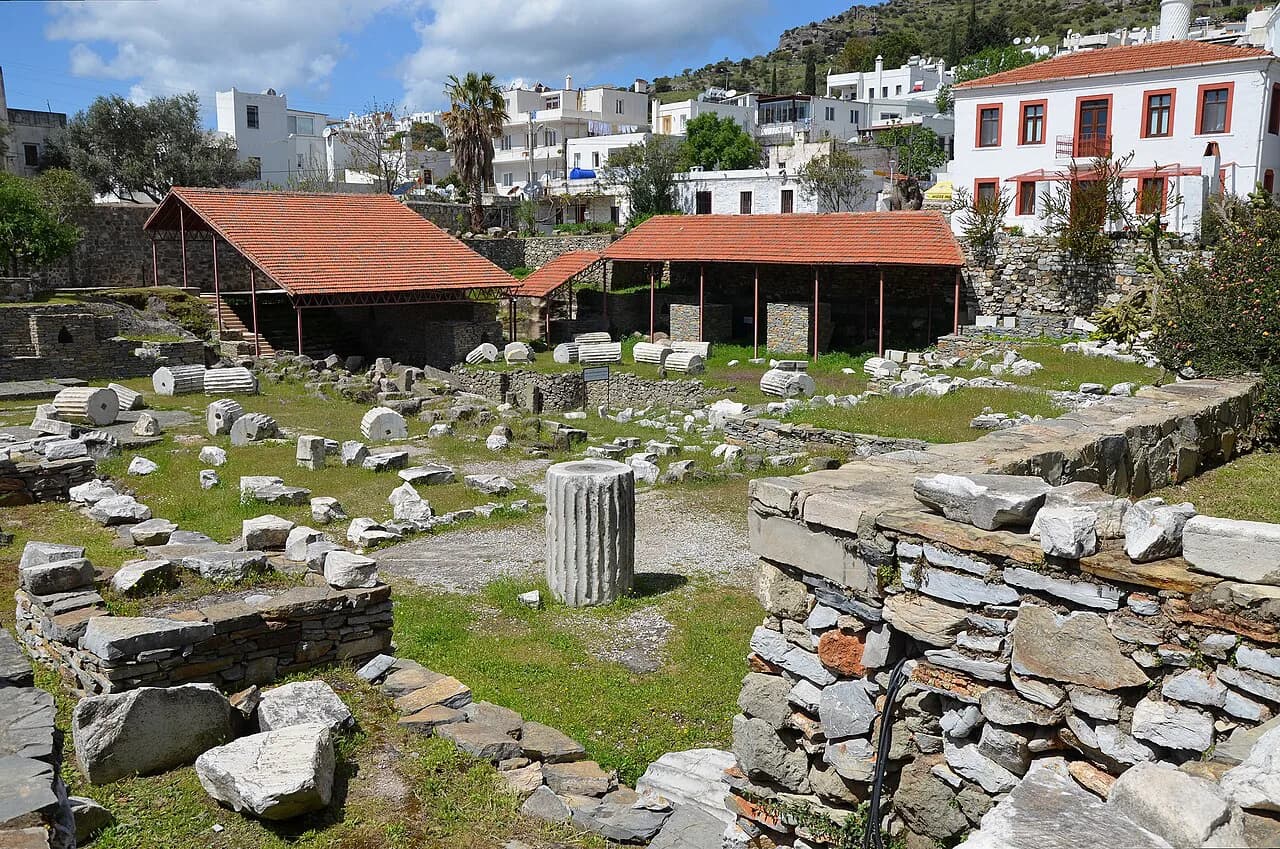
The Mausoleum at Halicarnassus is a ruin of fragments, not a standing tomb. The marble monument built for Mausolus around 350 BCE was destroyed by earthquake and its stone was later taken for Bodrum Castle, so visitors today see podium and column remains rather than the Wonder itself. This guide covers what the tomb was, where the site sits in Bodrum, what survives, and how to combine it with the castle and harbour.
What the tomb of Mausolus actually was
Mausolus was a satrap of Persia who ruled semi-independently in Caria, in modern south-west Turkey, from about 377 BCE, and he made Halicarnassus his capital around 370 BCE. He built up the city with a new harbour, a palace and temples, and planned a tomb for himself and his descendants. When he died around 353 BCE his body was placed in what became known as the Maussolleion, the Mausoleum at Halicarnassus.
His sister-wife Artemisia finished the project, probably completing it around 350 BCE, although she died the year before and was buried alongside him and later family members. The tomb stood in a large precinct in the city centre, joined to the agora by a monumental staircase. The Roman architect Vitruvius names Pythius of Priene as supervisor of the build, with the sculptor Satyrus working alongside him.
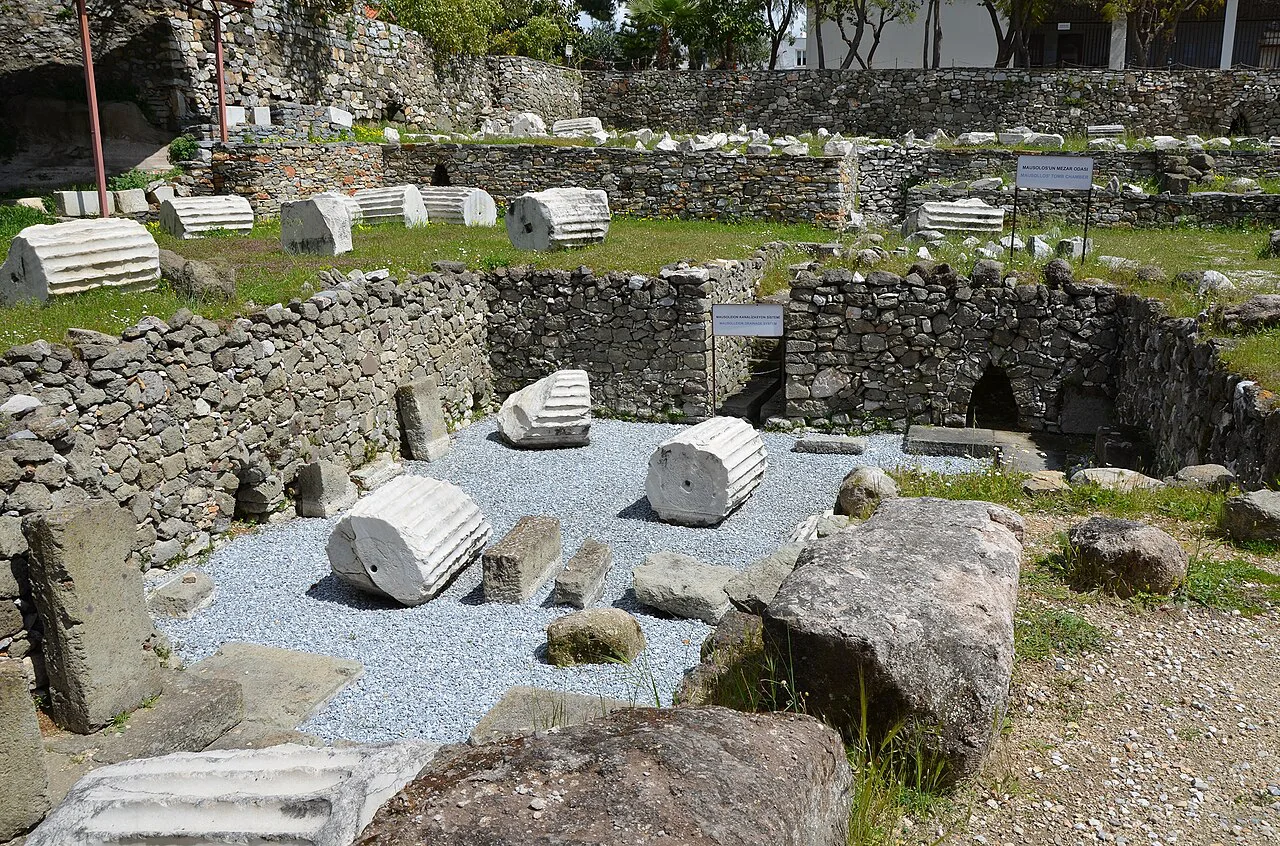
The design mixed Greek, Near Eastern and Egyptian elements and was built of Anatolian and Pentelic marble on a rectangular podium: an Ionic colonnade carried a stepped pyramidal roof, topped by a statue of Mausolus in a chariot shown as Hercules. Modern excavation puts the high podium at 38 by 32 metres, and a surviving lintel stone suggests an overall footprint of about 32 by 26 metres. A wall roughly two metres high once enclosed the whole monument.

Why it counted as one of the Seven Wonders
Scale, sculpture and the colonnade earned the tomb its place on the list of the Seven Wonders of the Ancient World, and the building's name became the general word for a large funeral monument. Pliny the Elder describes a circuit of 36 Ionic columns above a podium, with a 24-step pyramid of equal height above and a four-horse chariot on the summit, giving a total height of 140 classical feet. Excavation has corroborated the 36 columns and the 24 steps, though his overall dimensions differ slightly from what the cornerstones in place suggest.
Treat the height figure as an ancient description rather than a surveyed measurement. The value of a visit lies in reading the fragmentary plan against those accounts: what you see on the ground is the footprint and surviving pieces, not the elevation Pliny knew.

Where the site is in Bodrum
The remains lie in the centre of modern Bodrum, the town that grew over ancient Halicarnassus, close to the harbour and castle of the present town. Come up through the back streets rather than expecting a separate archaeological park on the edge of town. Because it sits in a built-up neighbourhood, the site is best treated as a short stop between other central sights rather than a half-day outing.
Bodrum itself is the base for this and the town's other ancient and later sights, and the Bodrum Attractions: 4 Visitor Guides collection sets out what else is within walking reach. If you are still deciding how the town and peninsula fit together, the wider Bodrum guide covers how long to stay and how to get around.
What you actually see today
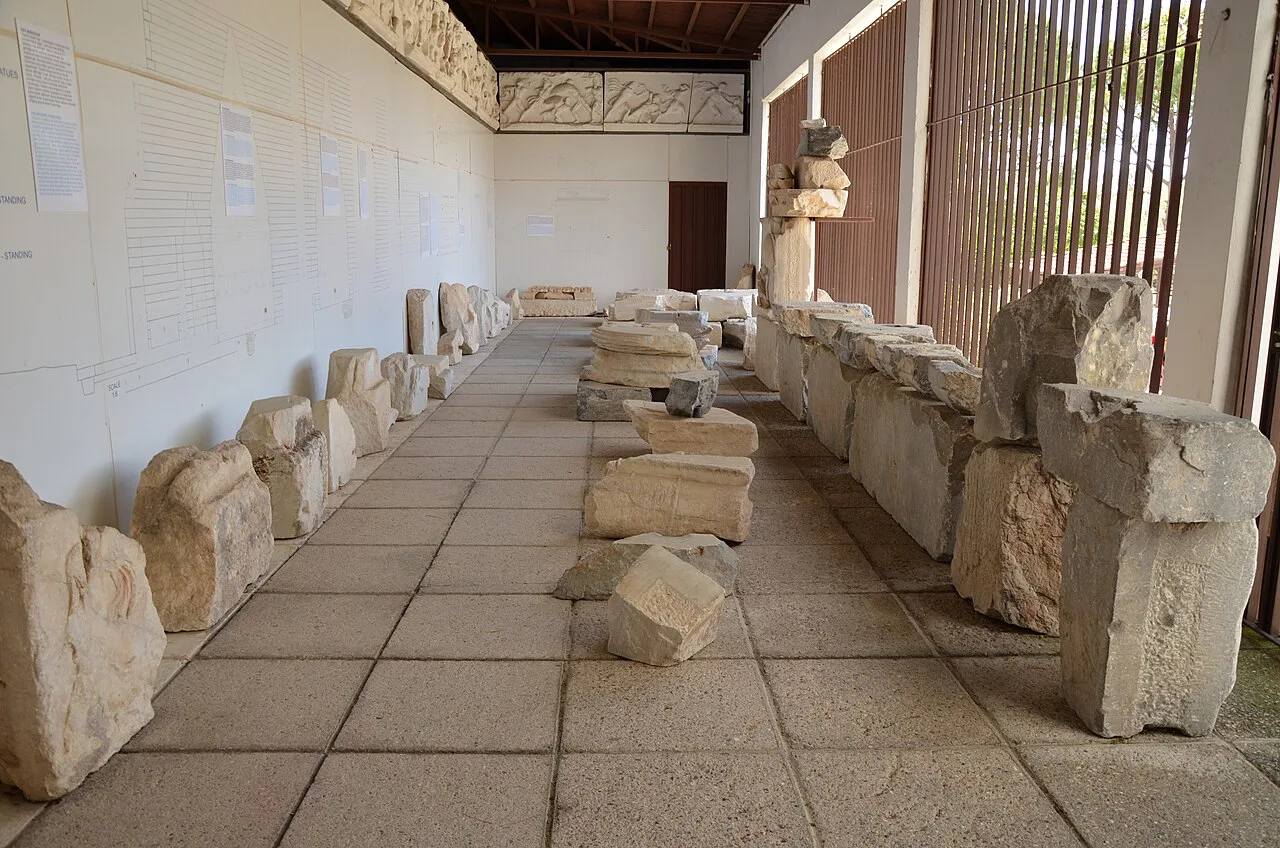
Arrive expecting low masonry, not a monument. Podium and column fragments survive, and that is the honest measure of the site: there is no standing colonnade, pyramid or chariot group to look at. The pleasure is in picking out the scale of the platform and matching it to the descriptions above, which takes far less time than a conventional ancient-city visit.
Set aside roughly half an hour to an hour at the remains, longer if you read the ancient accounts carefully against the stones. The site rewards a little preparation more than a long stay, so bring the Pliny description in mind rather than planning an afternoon around it.
What happened to the Mausoleum
Two things finished the monument: a damaging earthquake, and the removal of much of its stone for the 15th-century Bodrum Castle. The castle is therefore part of the Mausoleum's story rather than a separate sight, and seeing both on the same day makes sense of what happened to the marble you cannot see at the tomb site.
The castle houses the Bodrum museum of underwater archaeology, whose halls and gardens are the practical reason to continue there after the ruins. The fortress itself gives you the reused-stone connection in person. Allow considerably more time at the castle than at the tomb fragments, and check the museum's own published times and ticket terms before you go.
Bodrum's other fragments are close by and fit the same morning. The Myndos Gate, on the landward side of the ancient city, is the other obvious stop for anyone following Halicarnassus on foot.
Where the sculpture went
Substantial pieces of the Mausoleum's decorative sculpture are held at the British Museum in London, so the finest carved work from the tomb is not in Bodrum. If the sculpture is your reason for coming, plan a London visit as well as the Bodrum stop; if you only want the site and its story, the fragments in Bodrum plus the castle are enough.
Substantial pieces of the Mausoleum's decorative sculpture, including colossal statues of Mausolus and Artemisia II, are the highlights of what survives as carved work, but they are not the fragments left in Bodrum. If the sculpture is your reason for coming, plan a London visit as well as the Bodrum stop; if you only want the site and its story, the fragments in Bodrum plus the castle are enough.
Mausolus and Artemisia II
Mausolus ruled Caria from Halicarnassus and used coastal trade, especially with Rhodes, and better inland roads to fill his treasury, which paid for the tomb. Artemisia II, his sister and wife, carried the work to completion after his death and was interred with him. The pair are the reason the monument exists, and the reason its name became a byword for grand tombs.
Their story also explains the site's odd character: a dynastic monument built in the heart of a thriving ancient city, later quarried for a medieval fortress, now sitting quietly among Bodrum's streets.
How long to allow and what to combine
Budget half a day in central Bodrum for the tomb site, the castle and the harbour, with the Mausoleum remains taking the least of that time. Walk between them rather than taking transport, since they sit close together in the town centre. Add the Bodrum windmills if you want a longer walk and a view, though that is a separate outing rather than a pairing with the ruins.
Bring water and sun protection in summer, and go early if you want the fragments to yourself. Opening hours, ticket prices and whether a museum pass covers the site are not fixed details you can rely on from a distance; check the site's own signage or the museum service before travelling.
Is the Mausoleum worth the stop?
Yes, if you come for the story and pair it with Bodrum Castle. The tomb itself is a short stop of fragments, so it earns its place as part of a central Bodrum morning rather than a destination in its own right. Skip it only if you have no interest in ancient Halicarnassus and are in town purely for the harbour.
Frequently Asked Questions
What was the Mausoleum at Halicarnassus built for?
It was the tomb Mausolus planned for himself and his descendants at Halicarnassus, the capital of Caria. His sister-wife Artemisia II finished it after his death, probably around 350 BCE, and was buried there with him.
When was the Mausoleum of Halicarnassus destroyed?
The tomb no longer survives because of a damaging earthquake and because much of its stone was later taken for the 15th-century Bodrum Castle. Podium and column fragments remain at the site, and substantial sculpture pieces are held at the British Museum in London.
Can you still see the Mausoleum in Bodrum?
You can see the surviving podium and column fragments in central Bodrum, close to the harbour and castle. The standing monument, its colonnade and its roof sculpture are gone, so plan a short visit of roughly half an hour to an hour and combine it with the castle.