Balıklıgöl, Şanlıurfa: the Pool of Abraham and What to See
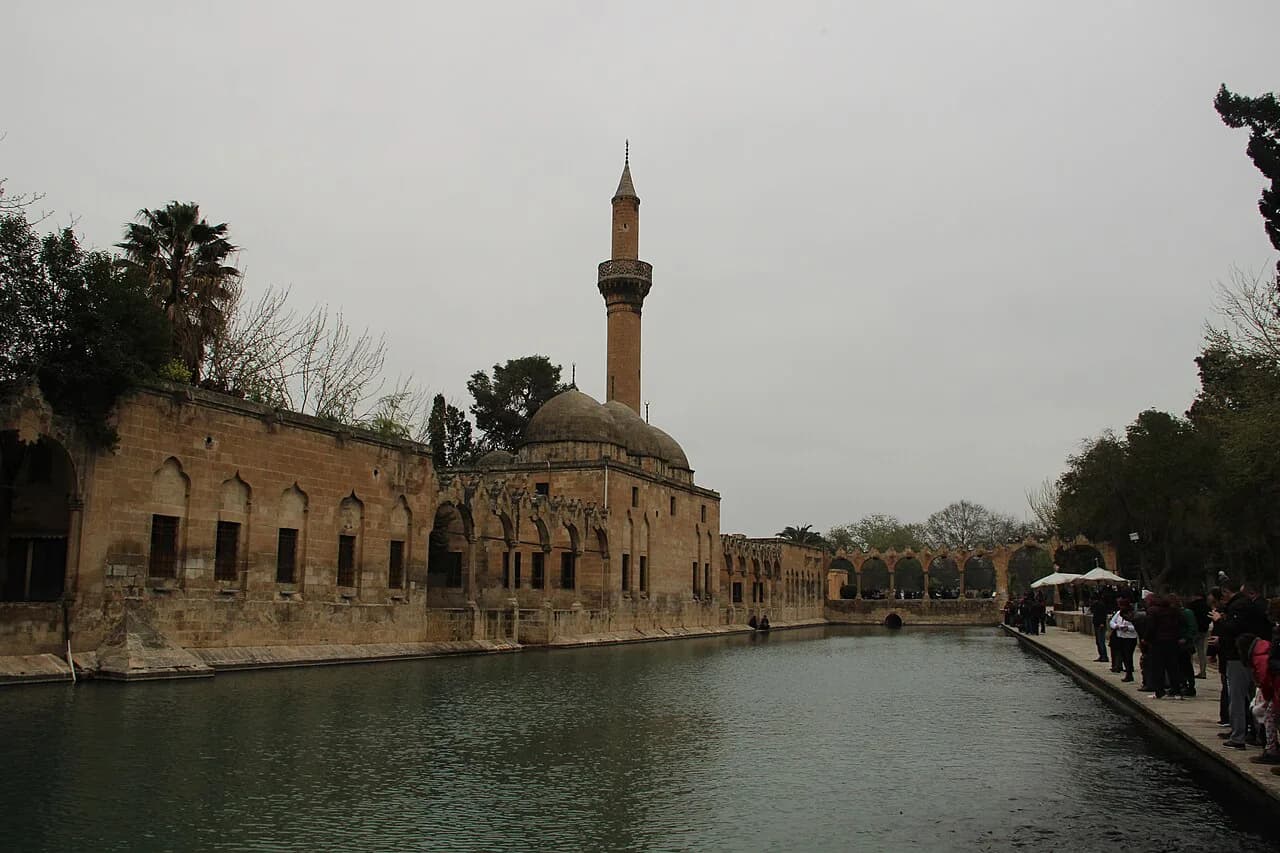
Balıklıgöl is the sacred fish pool in south-west Şanlıurfa, ringed by the Halil-ur Rahman and Ayn Zeliha lakes, mosques, tea gardens and Urfa Castle above.
On this page
Balıklıgöl is the sacred fish pool in the south-west of Şanlıurfa's city centre, and a sensible plan is an hour or two for the lakes, the mosques and a tea stop, with another stretch for the castle stairs above. The complex takes in two lakes, Halil-ur Rahman and Ayn Zeliha, joined by canals, plus historic mosques and madrasas and the Cave of Mevlid-i Halilurrahman. This guide lays out what each part is, the legend the site rests on, and how to fit it into a Şanlıurfa day that also takes in Göbekli Tepe.
What Balıklıgöl is and where it sits
Balıklıgöl, also called the Pool of Abraham or Halil-ur Rahman Lake, lies in the south-west of Şanlıurfa's city centre. It is treated as a single name but works as a small district: the Halil-ur Rahman lake with its sacred fish, the smaller Ayn Zeliha lake beside it, canals running between the two, and a cluster of historic mosques and madrasas inside the same complex.
Go Türkiye describes the site as Şanlıurfa's coolest, greenest and biggest wetland, with a mystical and spiritual atmosphere alongside its practical role as a breathing space in a hot inland city. That mix is the reason to give it more than a photo stop: the pools, the grass and the shaded courts are what people actually linger over.
Turkish Museums places the lakes in the south-west of the centre and links them directly with the Cave of Mevlid-i Halilurrahman and Urfa Castle, so the whole group reads as one walk rather than separate excursions. Treat the pool area as your anchor and work outwards from there.
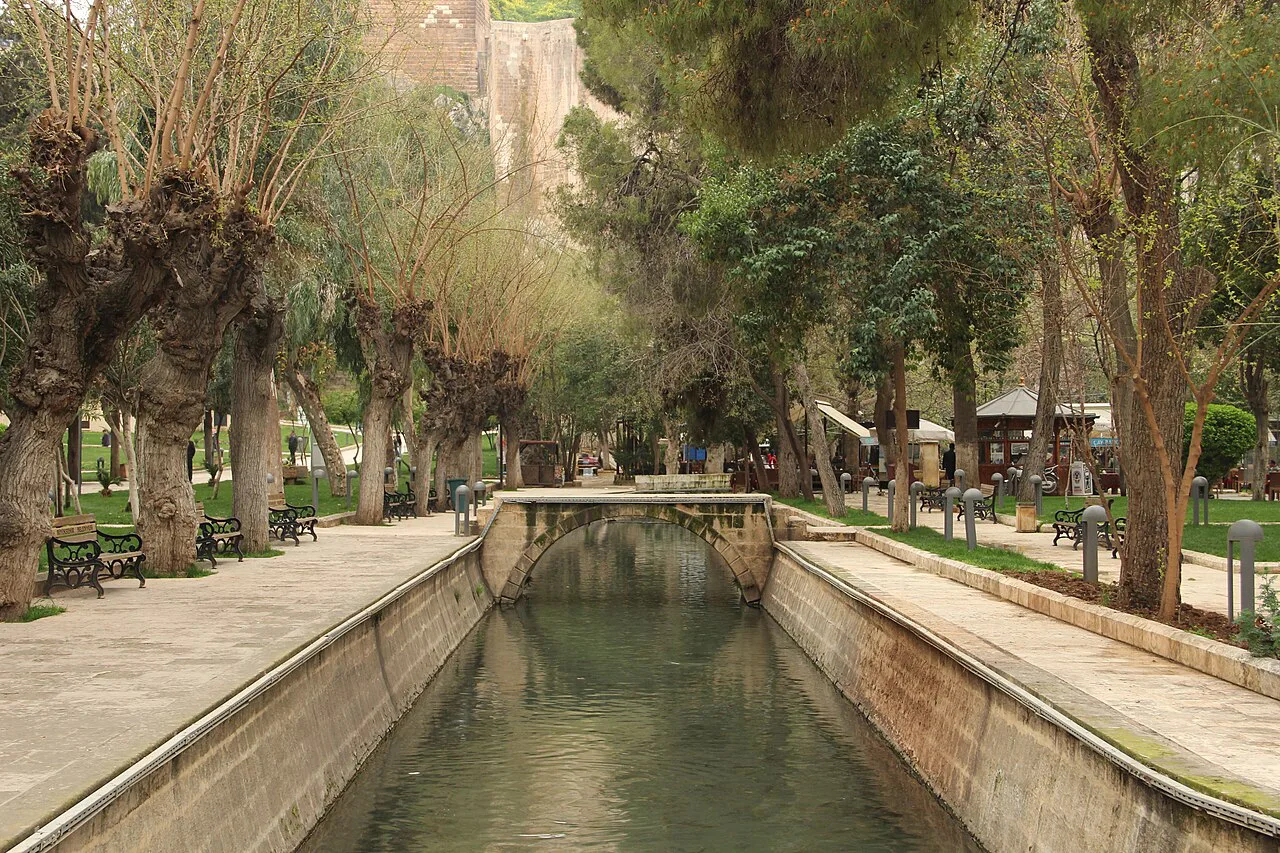
The two lakes and the canals between them
Within the complex, the Halil-ur Rahman lake and the Ayn Zeliha lake are connected by canals, with historic mosques and madrasas set inside the same complex. Walk the full circuit rather than stopping at the first pool: the second lake has its own character and its own edge of tea gardens.
The Ayn Zeliha lake is the smaller pond beside Balıklıgöl, and the tea gardens sit next to it, which makes it the natural place to pause once you have walked the main pool. Go Türkiye suggests resting on the grass, taking tea, coffee or mırra, the bitter local coffee, and photographing the main pool, so build that pause into the route instead of saving it for the end.
The site is a working religious complex as well as a visitor attraction, with historic mosques and madrasas inside it. Plan the mosques and madrasas for when you want shade, and give the courtyards to the people praying and washing rather than treating them as part of the photo route.
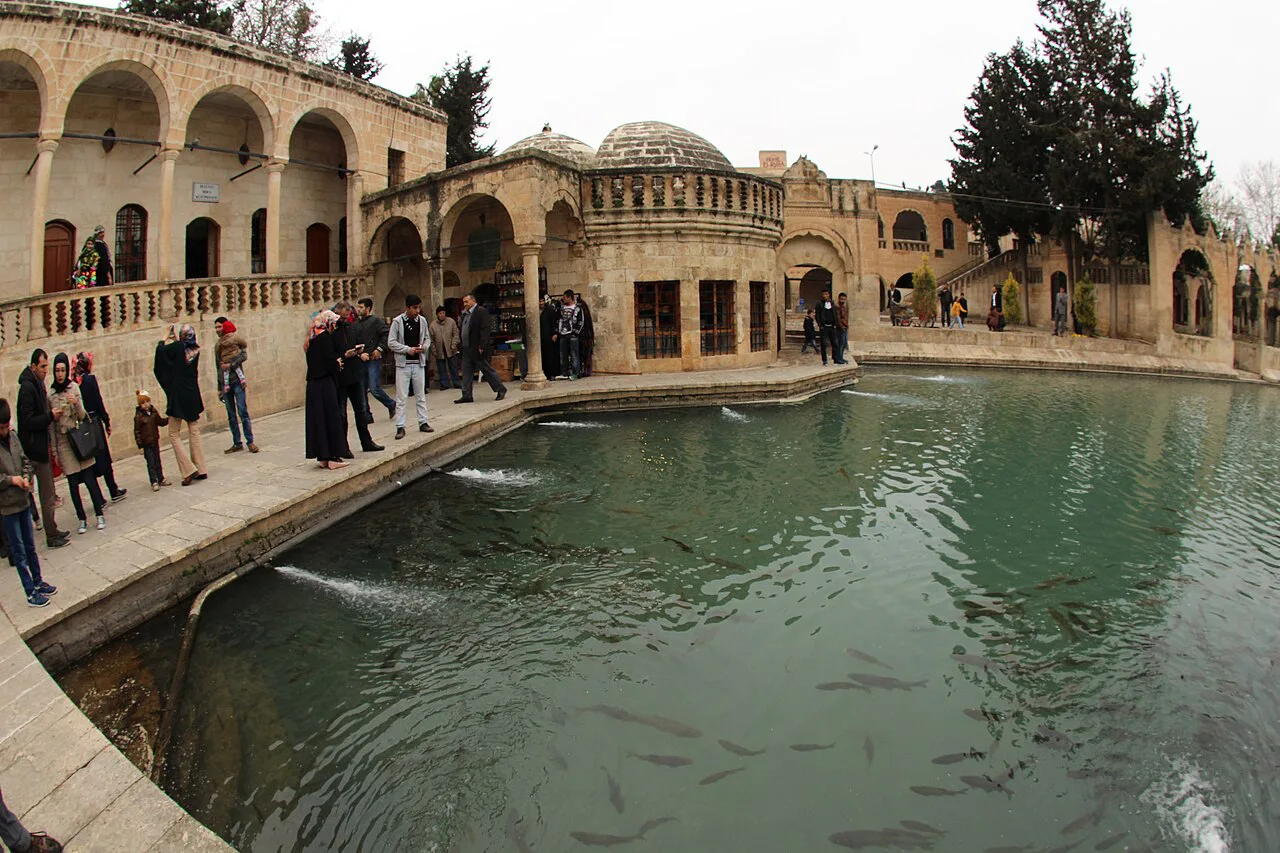
The sacred fish and their black markings
The fish in the Halil-ur Rahman lake are considered sacred, respected by local people and not eaten. That is not a suggestion for visitors to ignore: the pool is a religious site first, and the fish are the reason it holds its name.
Visitors notice black spots on the backs of the fish, and the legend accounts for them as traces of the fire from which the fish emerged. Read that as part of the story attached to the pool rather than a natural-history note, and you will understand why people lean over the water looking for them.
The Abraham story behind the site
Şanlıurfa is commonly associated with the birthplace of the Prophet Abraham, though that is not historically proven, and millions of people place sites around the city inside the narrative of his life and visit them as holy places. Balıklıgöl is the centre of that map.
In the legend, Abraham is born in secret because the ruler Nimrod, told a boy would overthrow him, orders the killing of male children born that year. Later, after Abraham destroys the idols in the temple, Nimrod has him thrown onto a great fire, and the moment he falls in, the flames turn to water and the wood becomes fish.
A second strand of the tale gives Ayn Zeliha its name: Zeliha, who believed she had lost Abraham, wept, and her tears formed the smaller lake. Tellings vary in detail, and the telling is not the point; what matters on site is that both pools carry the story and the mosques are built around it.
Nimrod belongs to the same Mesopotamian storytelling world as many of the region's legends, and the site presents these as accounts rather than chronicles. Take the story as framing for what you are walking through, not as a history you will see proved on a plaque.
Urfa Castle above the pools
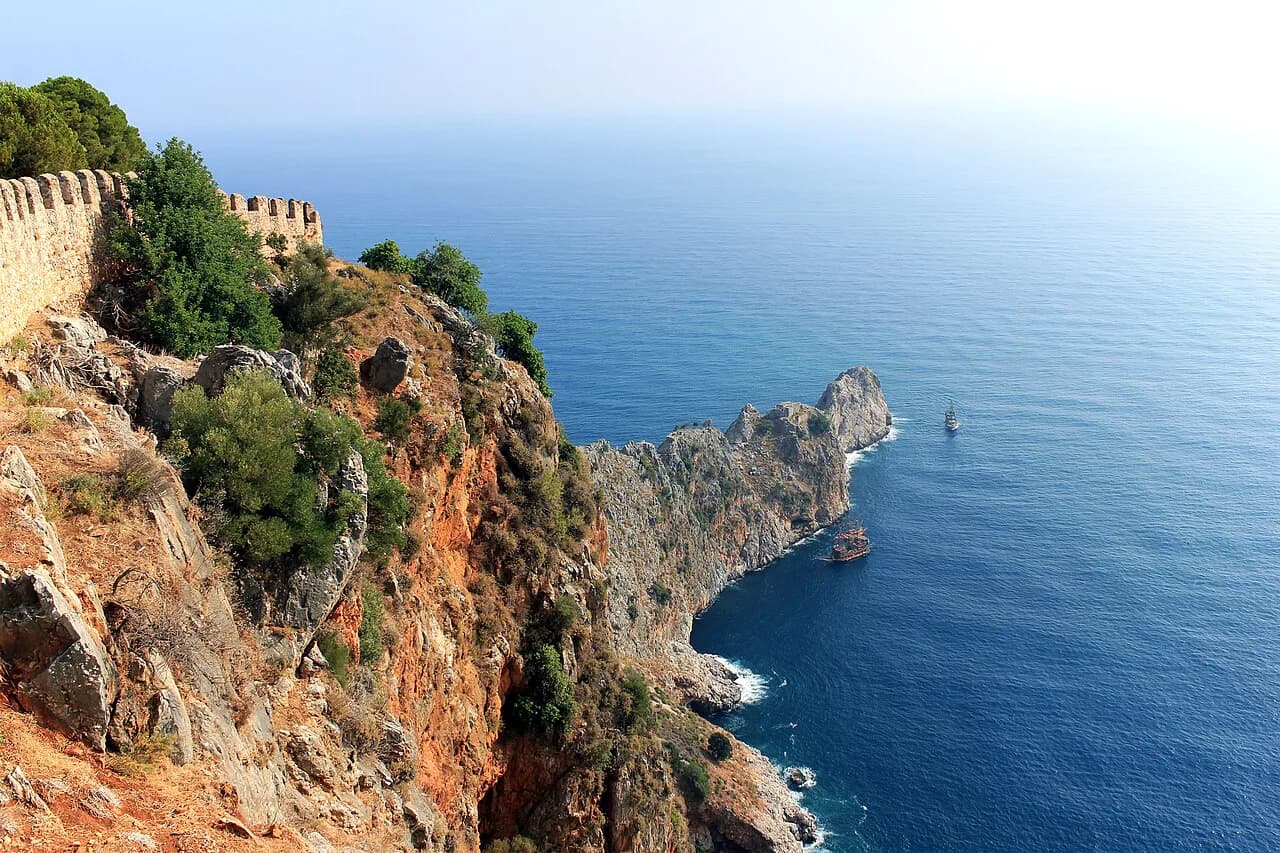
Şanlıurfa Castle rises to the south of the Balıklıgöl complex, and the climb up the steep stairs gives you the view back down over the lakes and the city. Go Türkiye treats the ascent and the view as the experience, so budget for the climb separately from the flat walk around the water.
The castle is best treated as an add-on, not a detour: see the pools first, then decide whether your legs and the heat allow the stairs. If you are visiting on a tight schedule, the flat circuit of the two lakes and the tea gardens delivers more of what most people come for.
Turkish Museums lists Urfa Castle alongside Balıklıgöl and the Cave of Mevlid-i Halilurrahman as sites clustered in the same part of the city, which is the most useful way to plan the stop. Note the castle's own entry arrangements when you arrive rather than assuming they match the lakes.
The Cave of Mevlid-i Halilurrahman
The cave believed to be Abraham's birthplace, the Cave of Mevlid-i Halilurrahman, sits within the same religious cluster around the lakes and is visited as a holy site. Place it between the pools and the castle in your route so you are not doubling back through the busiest stretch.
Go Türkiye lists seeing the cave where Abraham is believed to have been born alongside feeding the fish and resting by Ayn Zeliha as part of the standard visit. Dress and behave as you would in any place of prayer: quiet voices, covered shoulders and knees, and no rush through the space.
How long to allow and how to pace the walk
Two hours is a reasonable shape for the pools, the mosques, the cave and a sit-down at the tea gardens; add the castle climb on top if you want the view. The lakes are flat and compact, so the pacing question is not distance but how long you want to sit still in the shade.
Arrive on foot or by taxi from the city centre and treat the pool area itself as open ground to walk round. If you want timings confirmed before setting out, check locally on arrival, since published visitor hours for the lakes are not stated here.
Build the visit around a cool part of the day rather than trying to do the pools, castle and cave back to back at midday. The grass, the water and the tea gardens are the reason people describe the site as the city's greenest and coolest spot, so use them as rest stops rather than scenery.
Etiquette around the mosques, the cave and the fish
This is a religious complex before it is a visitor site: the mosques and madrasas inside it are places of worship, and the fish are sacred. Keep voices low near the prayer spaces, avoid blocking the entrances and washing areas for people going in, and leave the water and the fish alone.
Feeding the fish is part of what people do at the pool. Follow what the people around you do and keep wrappers and litter out of the water; the pool's standing as a sacred site depends on that restraint.
Pairing Balıklıgöl with Göbekli Tepe and Harran
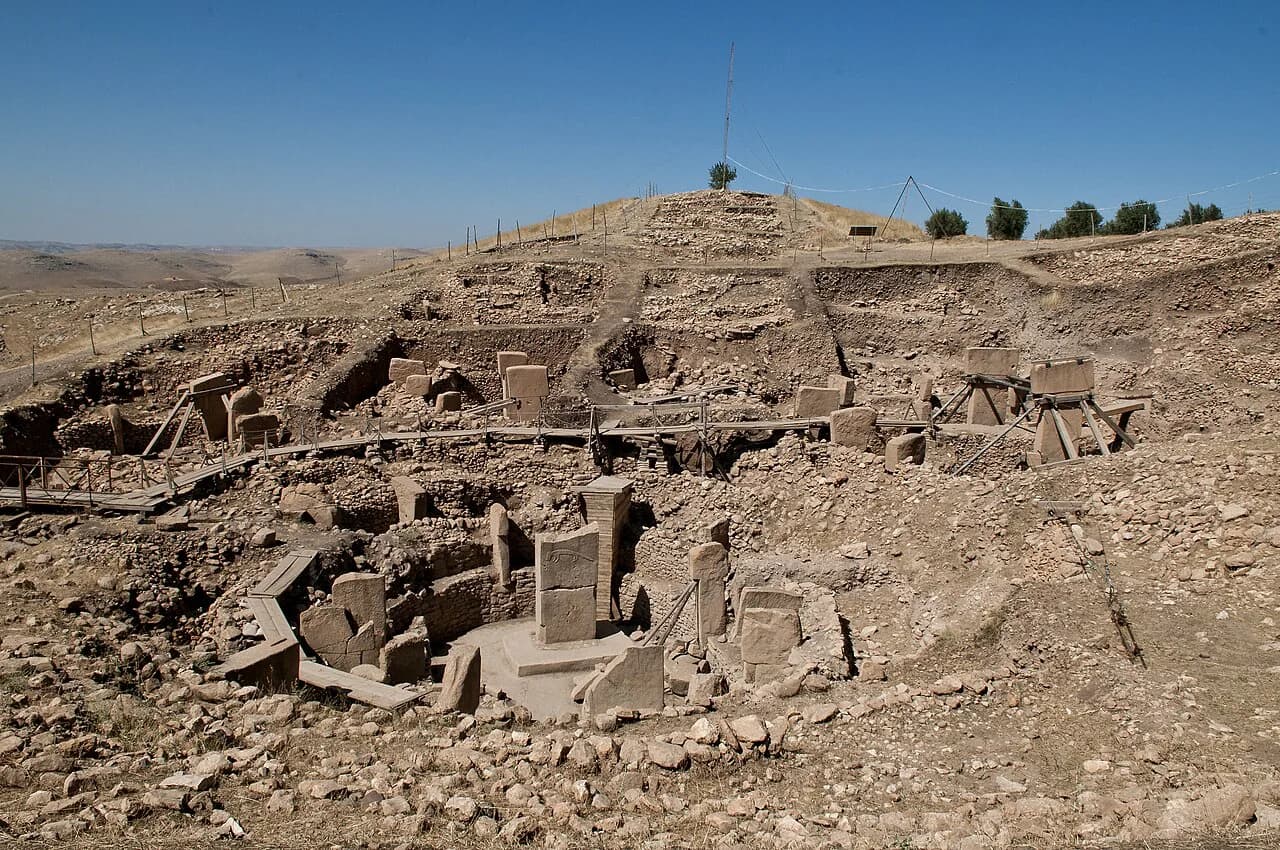
Şanlıurfa has been associated in recent years with Göbeklitepe, claimed as one of the oldest temples in the world, and Turkish Museums is explicit that seeing it means visiting the city too. Build a day that takes in the pools in the morning or late afternoon and the larger site around it, rather than trying to do both at the busiest hour.
The Taş Tepeler sites are the wider reason many people come to Şanlıurfa at all, and Balıklıgöl is the green, cool counterpoint to a day spent among the region's older monuments. Read the Göbekli Tepe guide for what that site involves.
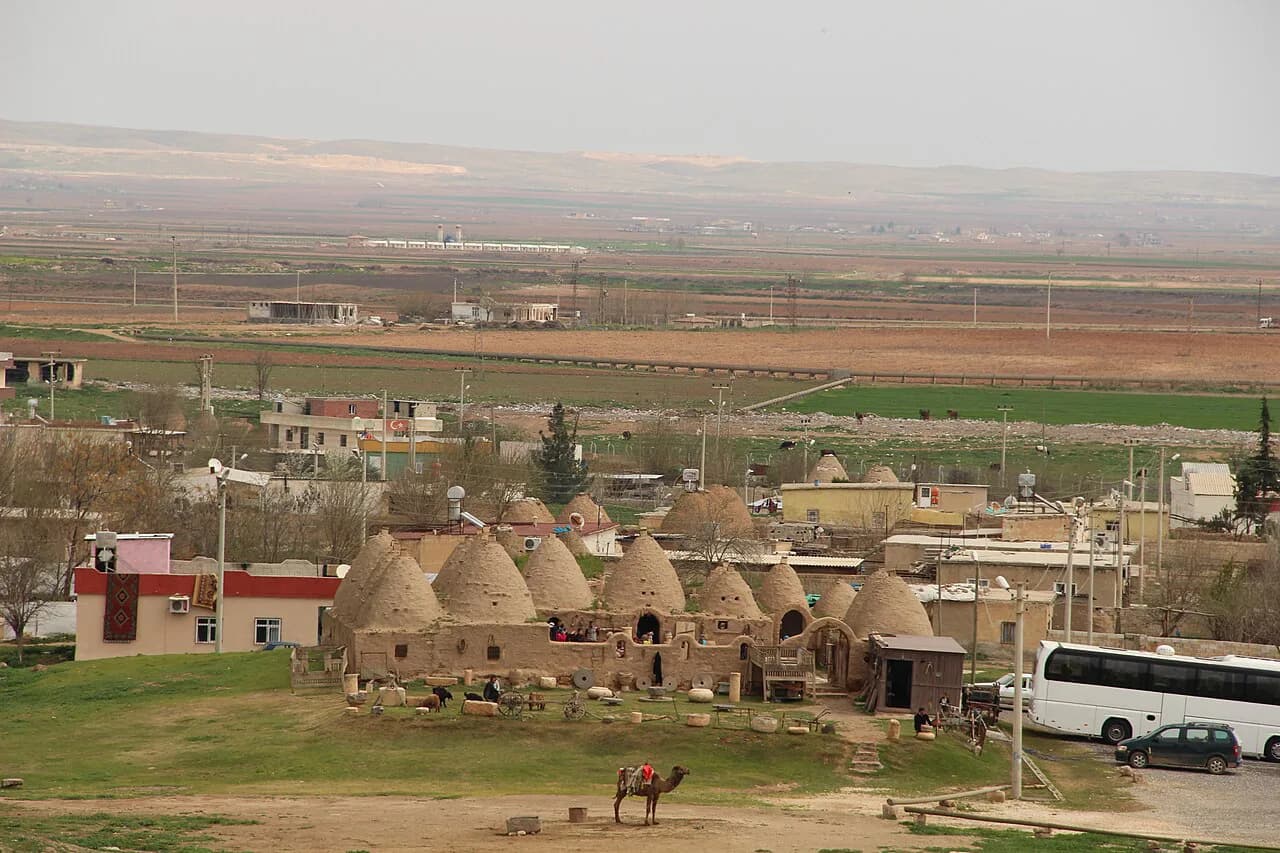
For a half-day extension beyond the city, the domed beehive houses of Harran are the natural addition to a Şanlıurfa stay; Go Türkiye lists them in its Şanlıurfa and Taş Tepeler menu of regional experiences. Our Harran: Beehive Houses, the Grand Mosque and Getting There from Şanlıurfa covers the layout and how to get out there.
Is Balıklıgöl worth building a Şanlıurfa day around?
Yes: Balıklıgöl is the easiest place in Şanlıurfa to understand what the city is about, with two linked lakes, the Abraham story, the cave and the castle within one compact circuit. Give it a relaxed couple of hours, sit at the tea gardens by Ayn Zeliha and let the pools be a pause between bigger sites rather than a box to tick.
Then stack the day around it: Göbekli Tepe for the deep past, Harran for the beehive houses, and the pools for the green and the quiet in between. Visitor hours and any entry charge for the pool area are not published here, so confirm them locally before you go.
Explore more Sanliurfa guides
Sources
Notes for your next Turkey trip
Optional updates when we add or correct a town guide.
You might also like
Continue reading
More guides you'll find useful