Harran, Turkey: What to See and How to Get There from Şanlıurfa
Harran is a district of Şanlıurfa Province known for mud-brick beehive houses and its Grand Mosque. Here is what to see and how to reach it from the city.
On this page
Harran is a half-day trip from Şanlıurfa, not a full day out. The district centre sits on a flat plain roughly 45 km south-east of the city, near the Syrian border, and the sights cluster tightly enough that you can walk between them in an hour or two.
The draw is a specific pair of things: the mud-brick beehive houses, built without wooden supports, and the Grand Mosque, one of the oldest in Anatolia. Around them lie the ruins of the ancient city and a handful of wells and tombs that reward a slow wander rather than a rushed photo stop.
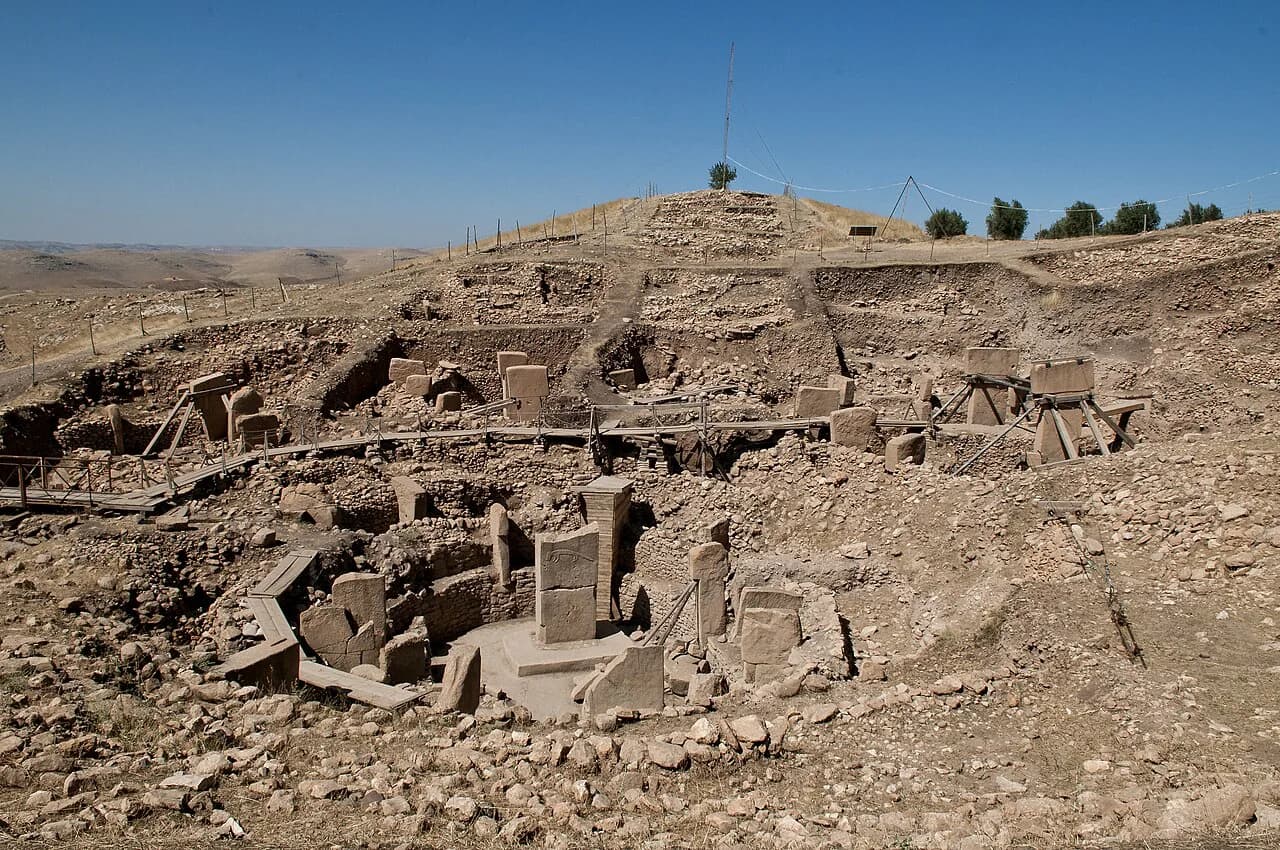
This guide covers where Harran sits in Şanlıurfa Province, the distance from the city, the beehive houses and mosque in detail, and how long to allow. Pair it with Göbekli Tepe, the neolithic site on the Germüş range north-east of Şanlıurfa, if you have a second day in the area.
Where Harran is and what the name covers
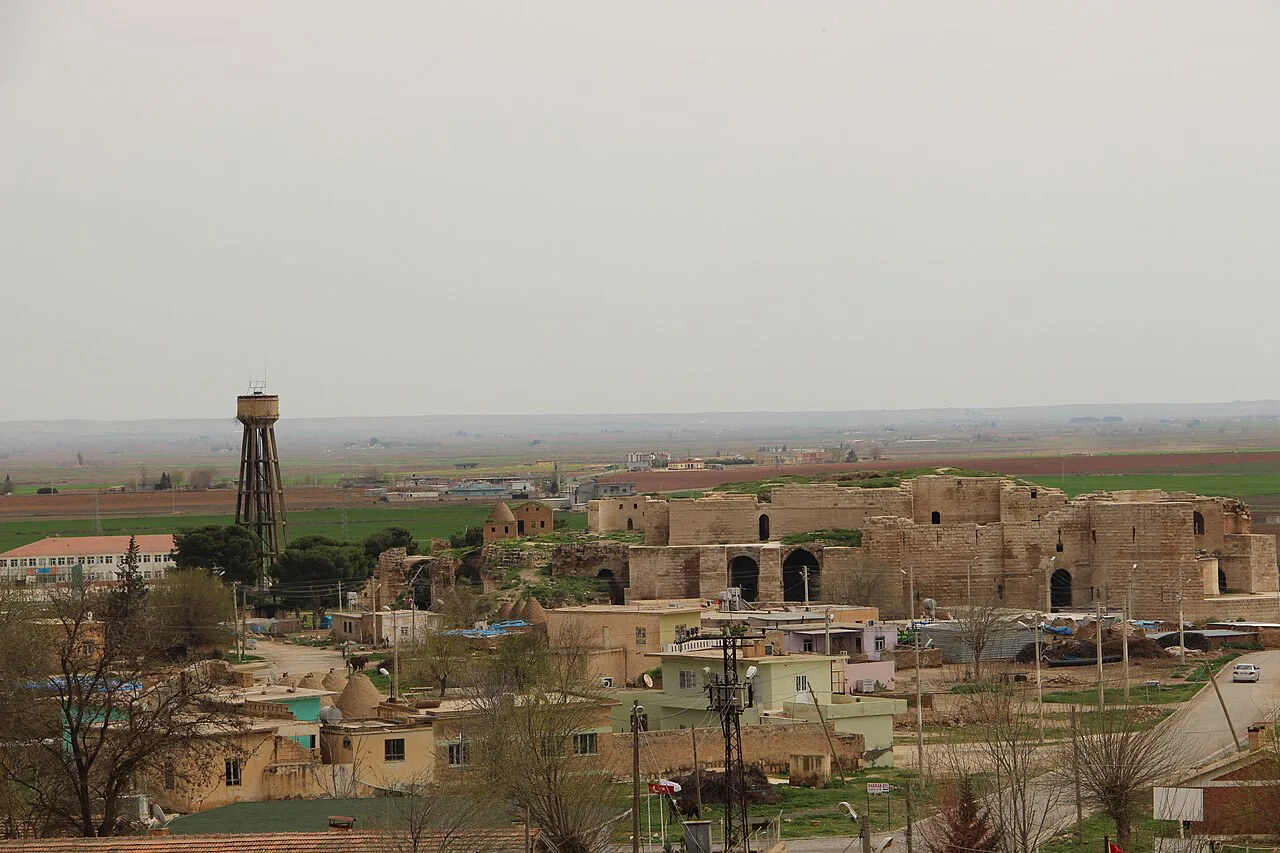
Harran is a district of Şanlıurfa Province in south-eastern Turkey, not a single monument. It lies on a wide, dry plain, close to the Syrian border, and covers 904 square kilometres, with the town centre as the place visitors actually go.
The municipality reads the name as a junction: in Akkadian, Harranu meant travel and caravan, and the town grew as a meeting point for Assyrian merchants trading between Anatolia and Mesopotamia. That trade history is the reason there is a walled ancient city here at all, and the reason the plain around it was crossed rather than farmed.
Keep two Harran apart in your head. The modern district centre is where people live and where you arrive; the archaeological remains sit beside it, and beyond them stretches the Harran Plain, flat to the horizon and hot in the middle of the day.
Much of the population now lives in the newly built village of Altınbaşak, and the surviving beehive houses near the ruins are kept as tourist exhibits rather than lived-in homes. That changes how you read the place: you are walking through a display of a building tradition, not through a village going about its day.
How far Harran is from Şanlıurfa and how to get there
Figures differ by source, so plan around the range rather than a single number. The municipality puts Harran 48 km from Şanlıurfa city centre, while map data gives 44 km. Treat it as roughly an hour's drive each way.
By public transport, vehicles leave from the district terminal for the run out to Harran. The municipality says so plainly but publishes no timetable or frequency, so confirm departure times at the terminal in Şanlıurfa on the day rather than planning around an assumed service.
A hired car or a taxi gives you the most control, because the sights sit apart from the bus drop-off and you will want to move between the houses, the mosque and the wells. If you take a dolmuş, agree the return leg before you get out, since the town is small and the last minibus back is the one thing that can strand you.
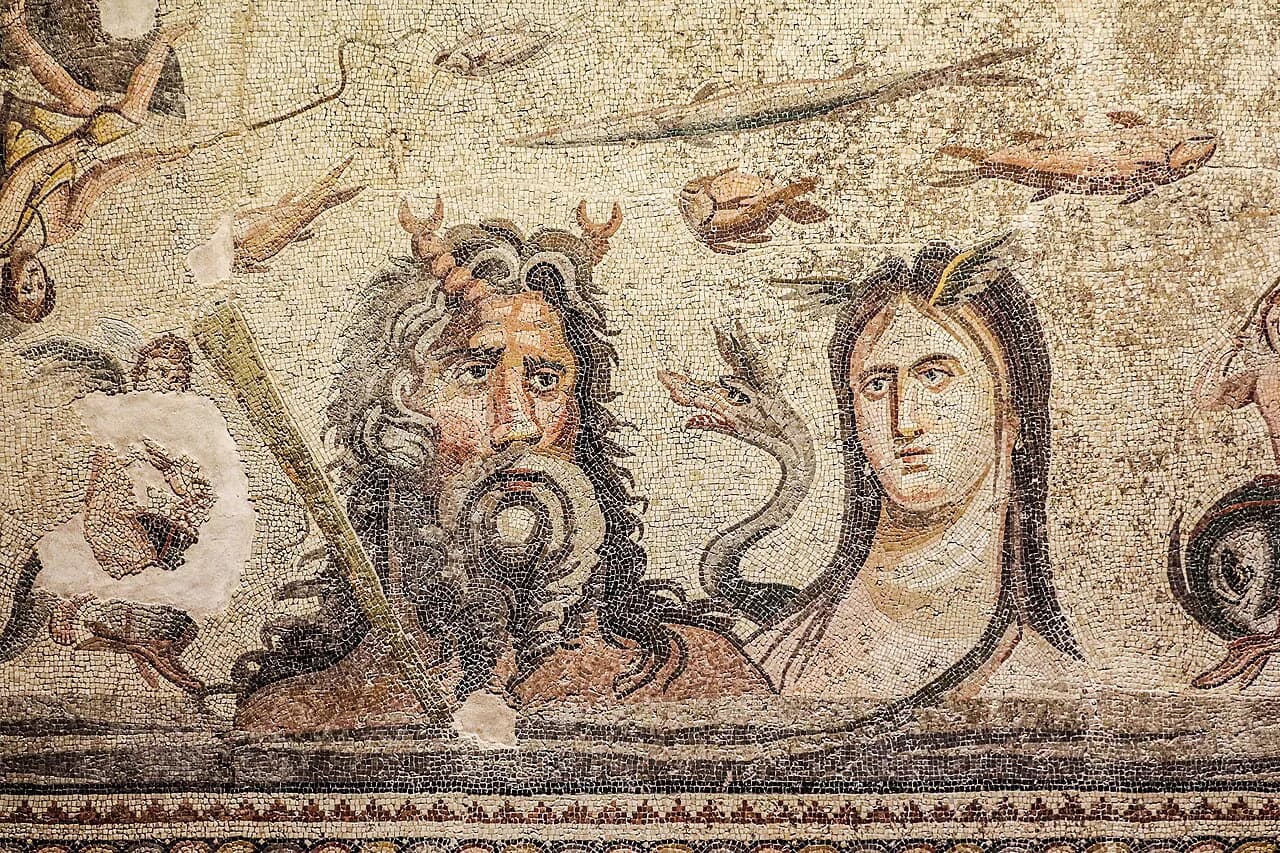
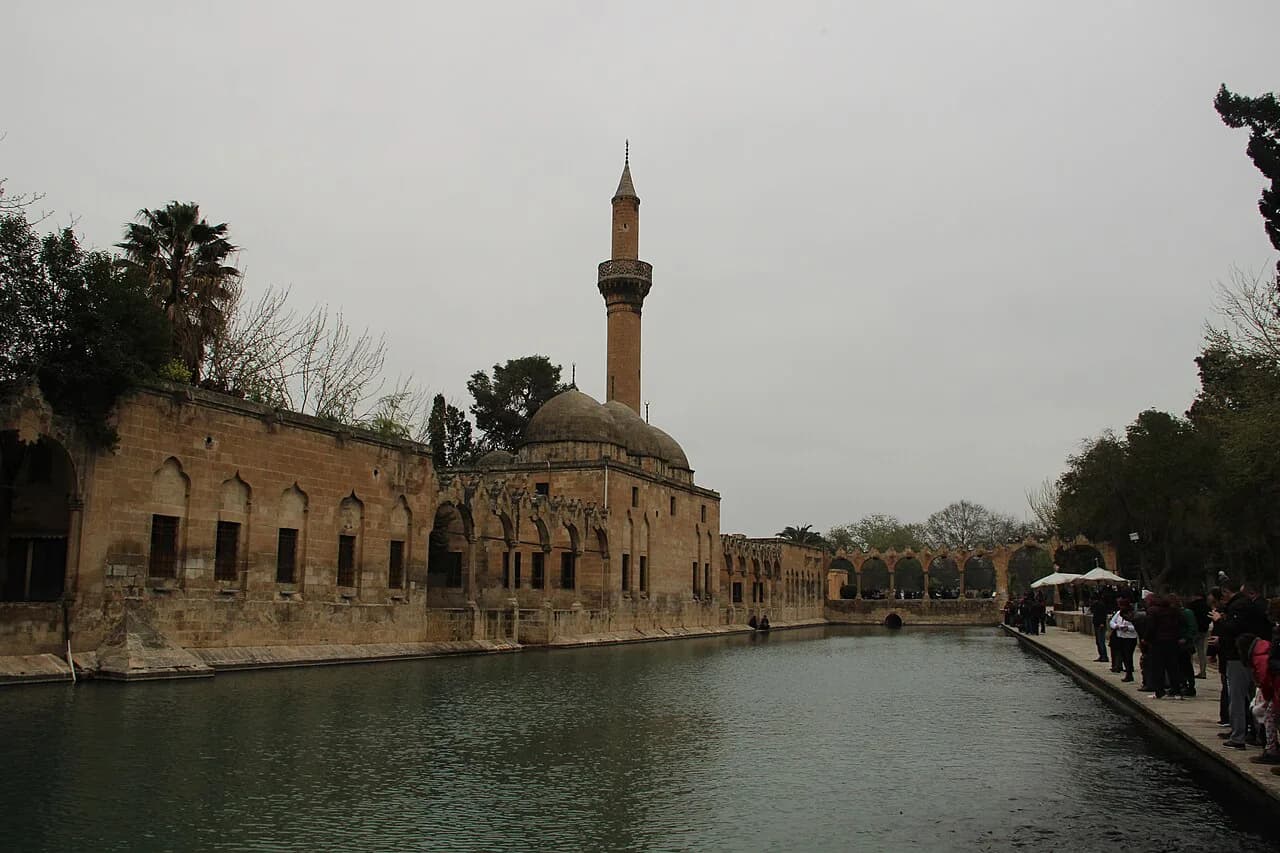
Harran also fits neatly into a wider Şanlıurfa day. Balıklıgöl, the pool and mosque complex in the city centre, is the obvious anchor for the other half of the day, and the Zeugma Mosaic Museum in Gaziantep is a further option if you are heading west.
The beehive mud-brick houses: what you actually see
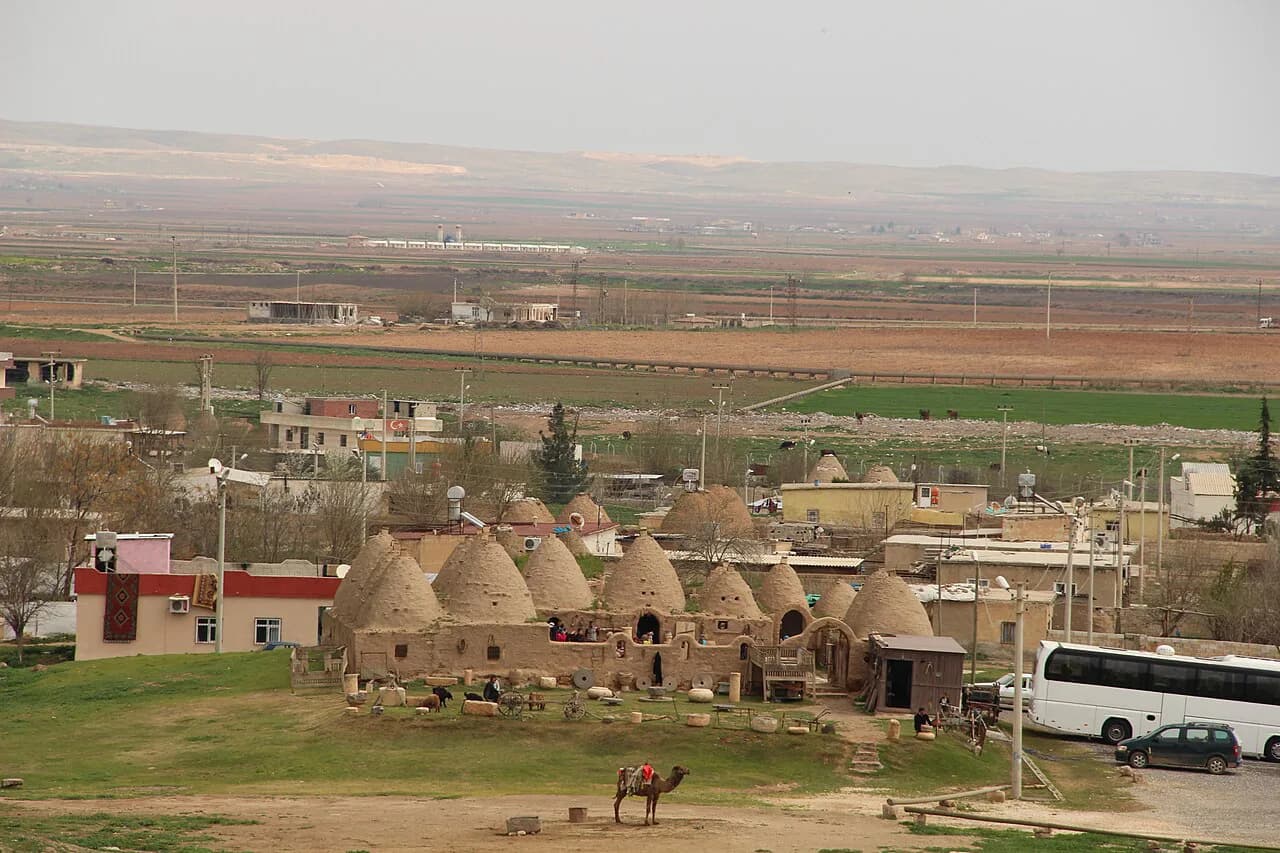
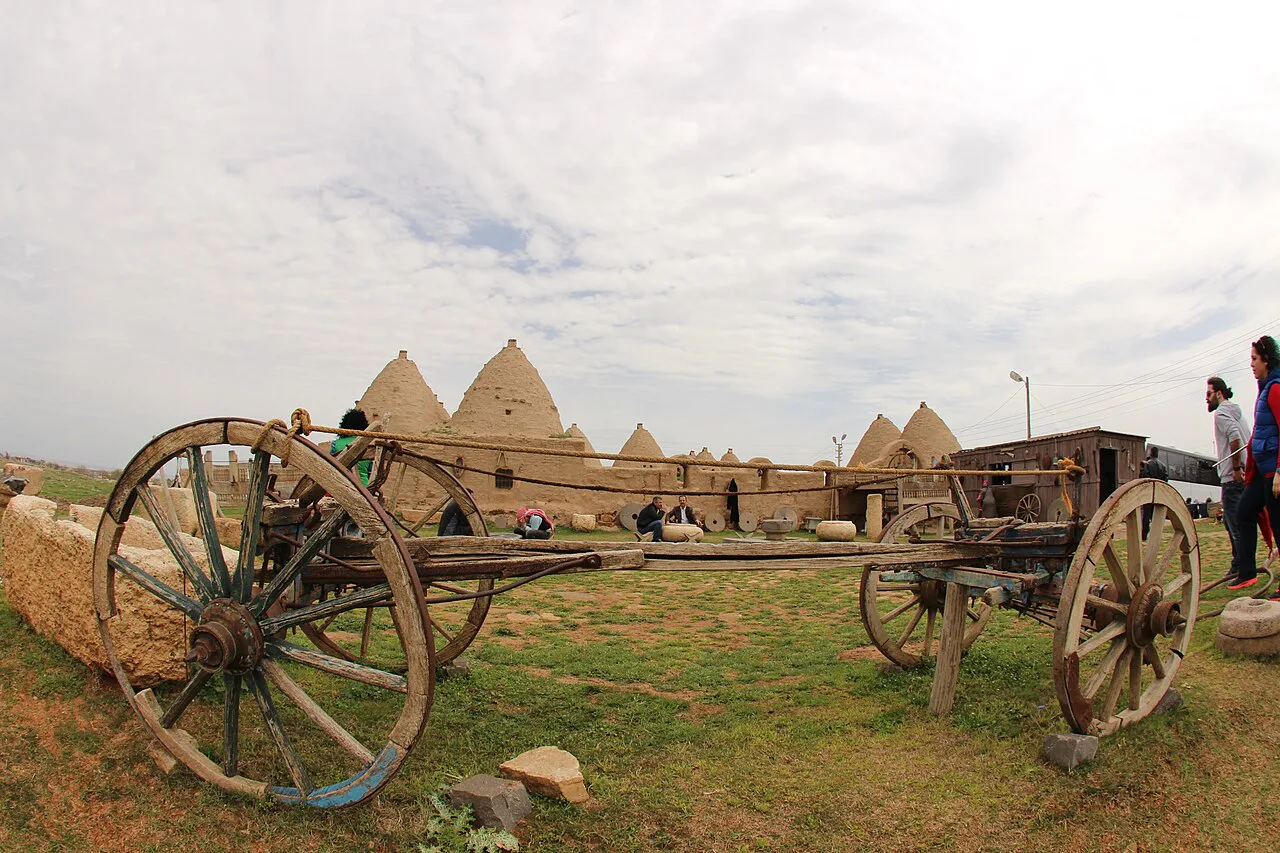
The beehive houses are the image everyone comes for, and they are worth the trouble of getting here. They are built of mud brick with a gently sloped roof that tapers to a point, and, unusually, they hold that shape without any wooden supports inside.
That construction is the point. Similar domed mud-brick homes appear in hot, dry regions elsewhere, but the Harran version avoids timber entirely, which is a sensible choice on a plain with little wood to spare. The thick walls and the shape together keep the interior cool when the plain outside is baking.
According to one traveller's account, some of these houses were still in use as dwellings until the 1980s. The same visitor found what stands today presented as exhibits, with the ceiling, kitchen, bedroom and living room laid out as they were, so it reads as a look at domestic life rather than an empty shell.
Expect the usual small-scale tourist economy around them: tea and Turkish coffee, and offers of camel or horse rides. Fees are not published in any consistent form, so agree any price before you climb on and carry small notes.
Harran Grand Mosque and the castle ruins
The Grand Mosque, sometimes called the Paradise mosque, is one of the oldest mosques built in Anatolia. It was constructed between 744 and 750, and it still draws visitors from well beyond the region.
The ruined ancient city around it is the other half of the visit. Its remains are spread across open ground, and the castle stands among them as a fragment rather than a furnished monument. What you get is walls and foundations rather than interpretive displays.
The history is heavy in a way the ruins do not spell out for you. Harran was destroyed and abandoned in the 1260s during the Mongol invasions of Syria, which is why so much of the ancient city is ground-level rubble rather than standing architecture.
Wear shoes that cope with dust and loose stone, and bring water. There is little shade across the site, and the plain reflects heat, so an early start is kinder than a midday one.
The Well of Hz. Yakub (Bir-i Yakup) north of the town
North of the walled town, outside the old city walls and beside the tomb of Sheikh Hayati el-Harrani, sits a historical well known as the Well of Hz. Yakub, or Bir-i Yakup. It is a modest sight, enclosed rather than monumental, and easy to miss if you are only looking for the houses and the mosque.
Make the circuit deliberately: beehive houses first, then the mosque and castle ruins, then the well and the tomb on the northern edge. Walking the whole set takes less time than the drive out, which is why Harran works as a half-day rather than a full one.
Photographs of the beehive roofs are best in low, slanting light, since the plain offers no other foreground. Late afternoon gives you shape and shadow on the mud brick; midday flattens it.
How long Harran needs and how it fits a Şanlıurfa trip
Allow half a day including the drive: an hour or so at the houses and mosque, half an hour for the ruins and the well, and the rest on the road. If you are coming by dolmuş, add waiting time at both ends, and confirm departures at the terminal rather than assuming a frequent service.
The most sensible pairing is Harran in the morning and Şanlıurfa's Balıklıgöl in the afternoon, or the reverse if you want the mosque in softer light. Both are compact enough to combine without rushing either.
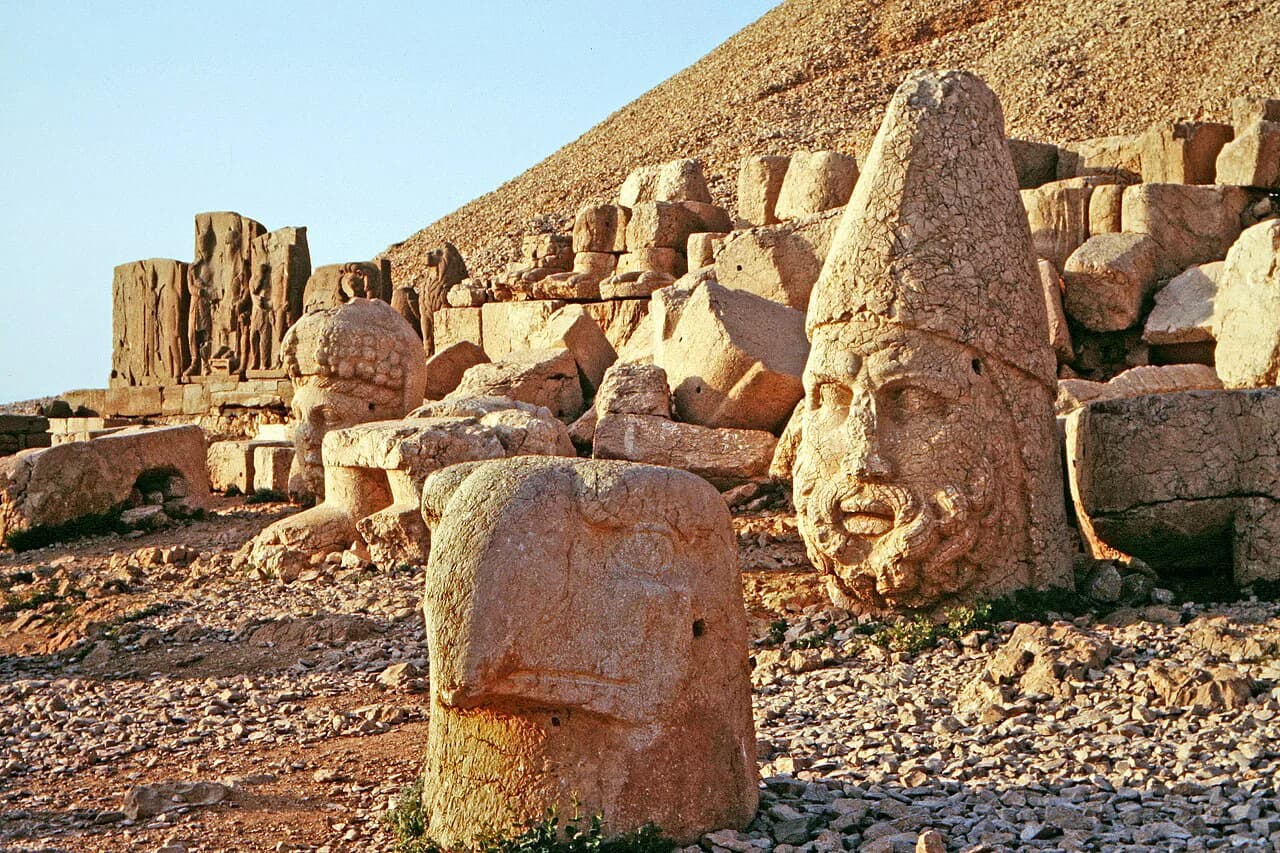
With a third day, look north-east to Göbekli Tepe in the Germüş range, or consider Mount Nemrut if you are extending towards Adıyaman. Both are full-day propositions in their own right rather than add-ons to a Harran morning.
Do not try to bolt Harran onto a Gaziantep day as well. The distances look short on the map but the roads cross open country, and a three-site day turns into a coach tour of car parks.
Practical points: heat, the plain and the border setting
Harran is dry and the plain gives almost no shelter, so the visit is weather-dependent in a way city sights are not. Carry more water than you think you need, wear a hat, and plan to be out of the open ground by early afternoon in high summer.
The district lies close to the Syrian border; map data places it there, and it remains a working district rather than a resort. Keep that in mind when arranging transport, and build in slack rather than a tight schedule.
Entry arrangements, opening hours and any fees for the ruins and the beehive houses are not published in a reliable form, so sort them on arrival or ask at the terminal before you set out. If a guide or driver quotes a combined price, ask what it covers before agreeing.
Göbekli Tepe and its surrounding landscape belong to the same Şanlıurfa trip, and Balıklıgöl is the natural city-centre companion. Between them they give you the neolithic, the ancient and the living town in two days.
Should Harran be on your Şanlıurfa itinerary?
Yes, if you want something the coast resorts cannot give you: a building tradition you can walk into, an eighth-century mosque, and a ruined city on a plain with the Syrian border beyond it. Skip it only if you are unwilling to spend two hours in a vehicle for a half-day out.
Go early, arrange your return transport before you leave the city, and keep the fee question simple by asking on the ground rather than trusting an outdated figure. Then give the beehive houses the time they deserve.
Frequently Asked Questions
Which country is Harran in today?
Harran is a district of Şanlıurfa Province in south-eastern Turkey, close to the Syrian border. Its modern centre is a working town, with the archaeological remains and beehive houses beside it.
Can you visit Harran without a car?
Yes, with patience. Vehicles run from the district terminal in Şanlıurfa, but departure times are not published online, so confirm them at the terminal and agree your return leg before setting out.
Sources
Notes for your next Turkey trip
Optional updates when we add or correct a town guide.
You might also like
Continue reading
More guides you'll find useful