Chimaera (Yanartaş) Turkey: The Eternal Flames Above Çıralı
Yanartaş, the Chimaera, is a hillside of burning gas vents above Çıralı near Olympos. Here is what you see, how to reach it and how long the climb takes.
On this page
The Chimaera is a patch of permanently burning gas vents on a hillside above Çıralı in Kemer district, around 55 km south of Antalya, and it is best visited in the hour before dark, when the small flames read clearly against the rock. This guide covers what sits at the top, the half-hour walk up from the entrance, the drive and bus chain from Antalya and Kemer, and the entrance fee as it was last reported.
It is not a single fire but a field of vents where methane escapes through cracks in the rock, with the remains of a Temple of Hephaestus and a Byzantine church nearby. That combination of live geology and ruined stonework is why the site rewards an hour on the ground rather than a quick photograph.
What the Chimaera actually is
Yanartaş, as Turks call it, is a volcanic hillside where gas from a reservoir underground reaches the surface through fissures opened by earthquakes and burns on contact with air. The flames sit about 100 m above the ruins of Olympos, inside the Olympos-Beydağları National Park, and they have drawn visitors since antiquity under the name Mount Chimaera.
The flames vary. Out of some holes comes fire, out of others only gas, and the display is stronger after rain because more channels open up for the gas. That is useful planning information: a wet spell before your visit tends to mean a livelier hillside.
A heritage write-up describes the site as a mountain sanctuary dedicated to Hephaistos where fires have burned for at least 2,500 years, which is the framing to keep in mind when a guide tells you the flames have never gone out.
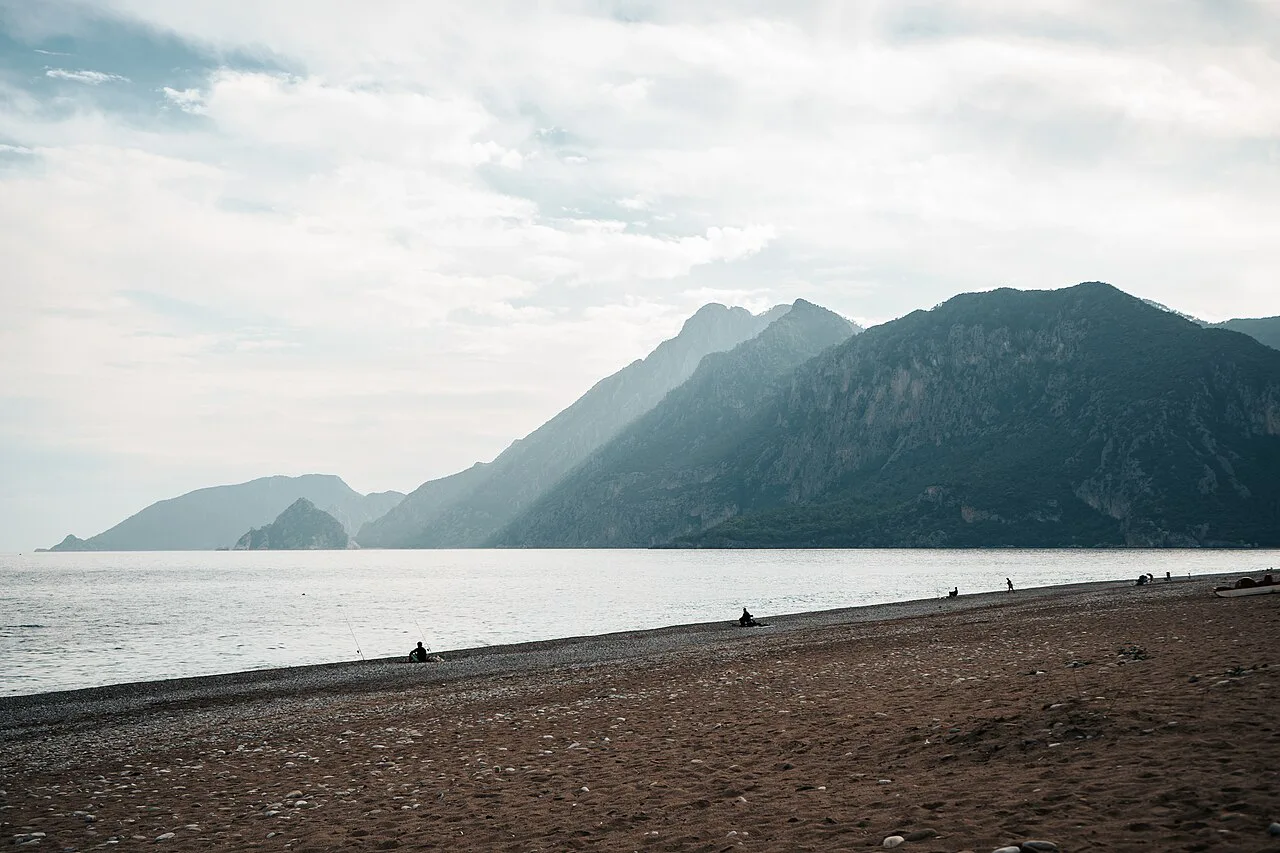
Where Yanartaş sits in relation to Çıralı and Olympos
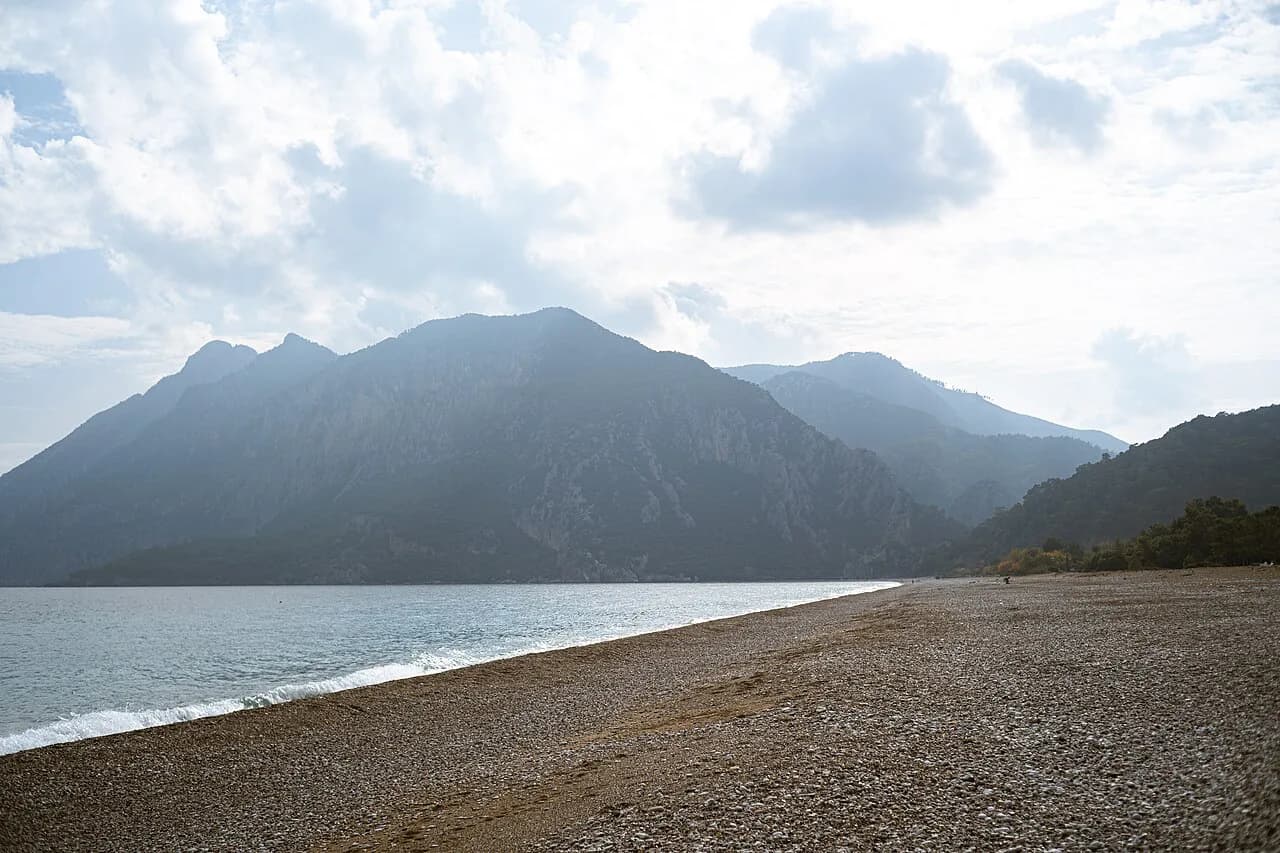
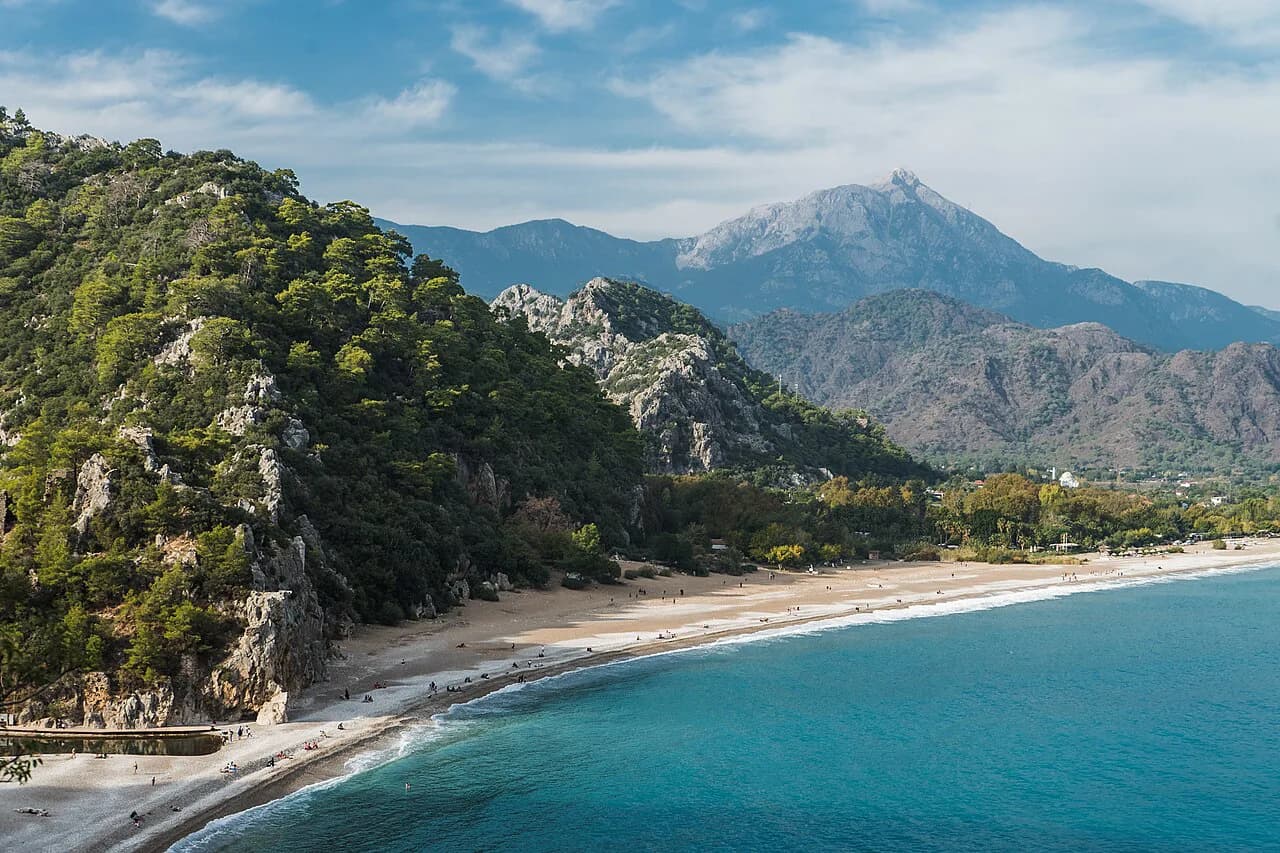
Yanartaş is roughly 1.5 km from Çıralı and about 55 km south of Antalya, at an altitude of about 230 m on the hill behind the village. Çıralı itself is the low-key coastal village in Kemer district that most people use as their base, and the beach and orange groves there are covered in the guide to Çıralı, Turkey.
The ancient city of Olympos lies on the coast below, so the two sights share a single outing: ruins and beach in the afternoon, then the climb to the flames as the light goes. The ruins close to the sea are a separate walk from the burning hillside above them.
The walk up from the entrance
From the entrance, a gently inclined path shaded by trees leads to the flames in about half an hour, with places to stop and look back over the valley and the Çıralı coast. A 5th-century church stands at the entrance to the site, so the visit starts with ruins before the climb even begins.
The climb is steady rather than technical, but you will probably sweat; good walking shoes and a spare T-shirt are worth packing. Bring a torch or use your phone light for the descent if you go up late, because the path back down is unlit and uneven underfoot.
What you see at the top
The flames themselves come out of rocky pits scattered across the hillside, and the best-known viewpoint is the cluster of vents that glow most visibly once the sky darkens. Immediately below the fires are the remains of the Temple of Hephaestus, the god associated with fire and the chief deity of Roman Olympos, of which some inscriptions and an altar survive.
A Byzantine basilica was later built over the temple, and a Roman fountain structure is another of the ruins in the area, along with other Byzantine remains. Two further spots nearby also have burning gas, so the hillside is worth a slow circuit rather than a stop at the first flame you meet.
Why evening is the right time to go
In daylight the flames are faint and easily missed against sunlit rock; as the light fades they become the main event, which is why the ideal hours for a trip here are when the weather starts to get dark. Sunset from the hillside is the reason many people make the climb.
Build the day backwards from dusk: Olympos and the beach in the afternoon, then a half-hour climb, then the flames as night comes in. Keep an eye on the return walk, since you will be coming down in low light.
Getting there by car
By car, cross the bridge at the entrance to Çıralı and continue in the direction of the orange groves on the left, following the road for about 3.5 km to the point where the path to Yanartaş begins. The drive takes roughly 1.5 hours from Antalya, about 50 minutes from Kemer and about 30 minutes from Olympos.
The road ends before the climb, so plan on arriving with time to walk rather than expecting to drive to the vents. If you are based in Kemer, this is an easy half-day; from Antalya it eats most of an afternoon and evening.
Getting there by bus and minibus
Without a car, take the Antalya–Kaş bus and get off at the Çıralı junction, a journey of roughly 1.5 hours from Antalya, then pick up a minibus from the stop at the junction for the run to the Yanartaş entrance. Check the last return minibus before you commit to a sunset visit.
Travelling from Çıralı village itself, the walk or a short minibus hop covers the approach road before the climb proper starts. Allow buffer time either way: the bus, the minibus and the half-hour path all stack up on the same afternoon.
Tickets and visiting hours
Yanartaş sits inside Olympos National Park and carries an entrance fee; it was reported at around 10 TL in 2021, a historical figure only, so check the current lira charge at the gate rather than budgeting from that number. Hours can differ with the season, and the site can be visited day and night.
Treat the national park entrance as the charge you will pay, and ask on arrival whether a Müzekart is accepted at this gate. Keep some cash in lira for the gate and the minibus.
How long to allow, and what to pair with it
Budget about half an hour up, twenty minutes to half an hour among the vents and ruins, and twenty to thirty minutes down: a two-hour visit once you are at the entrance. Add the drive from Kemer or Antalya and the outing takes an afternoon into the evening.
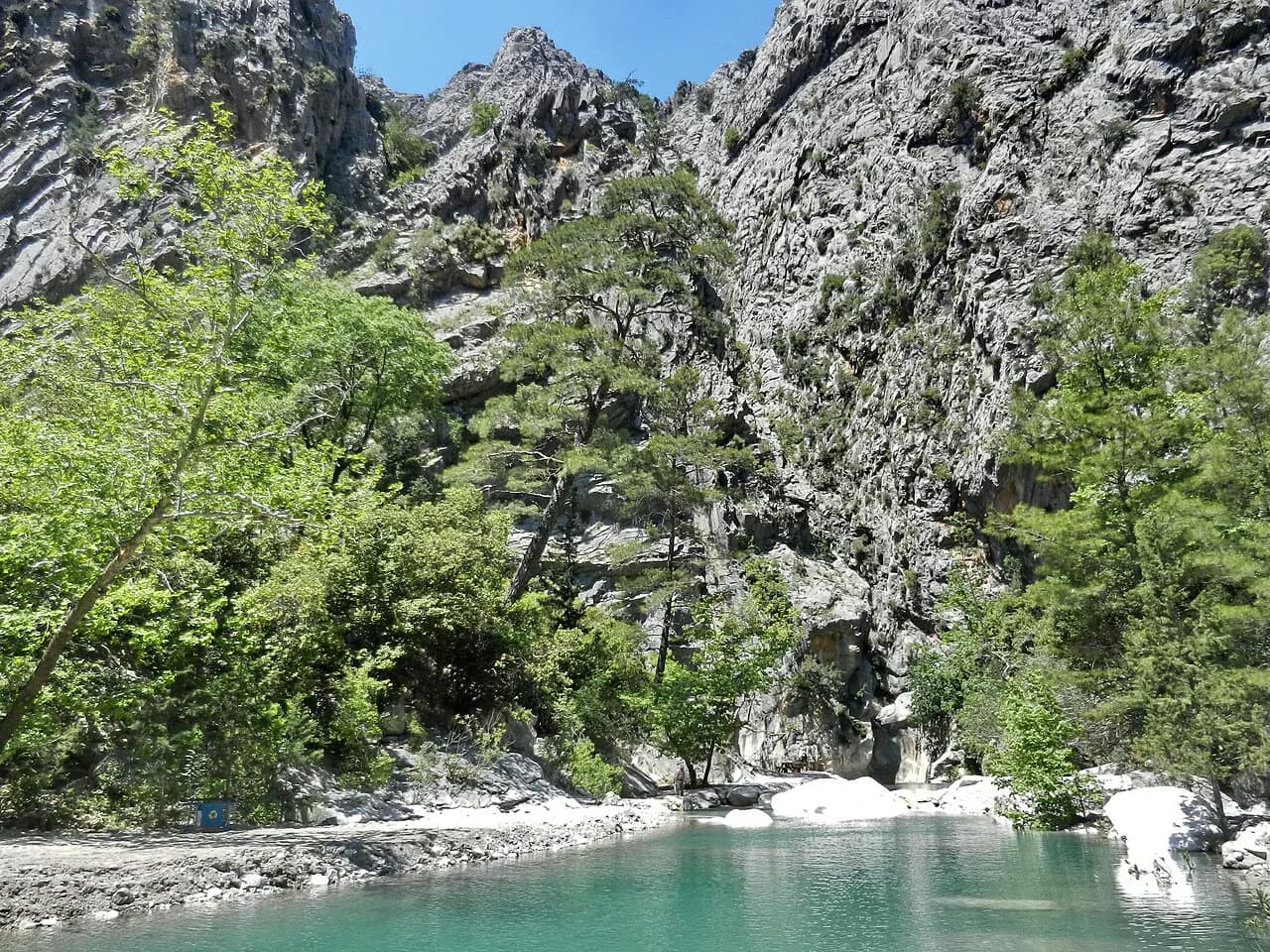
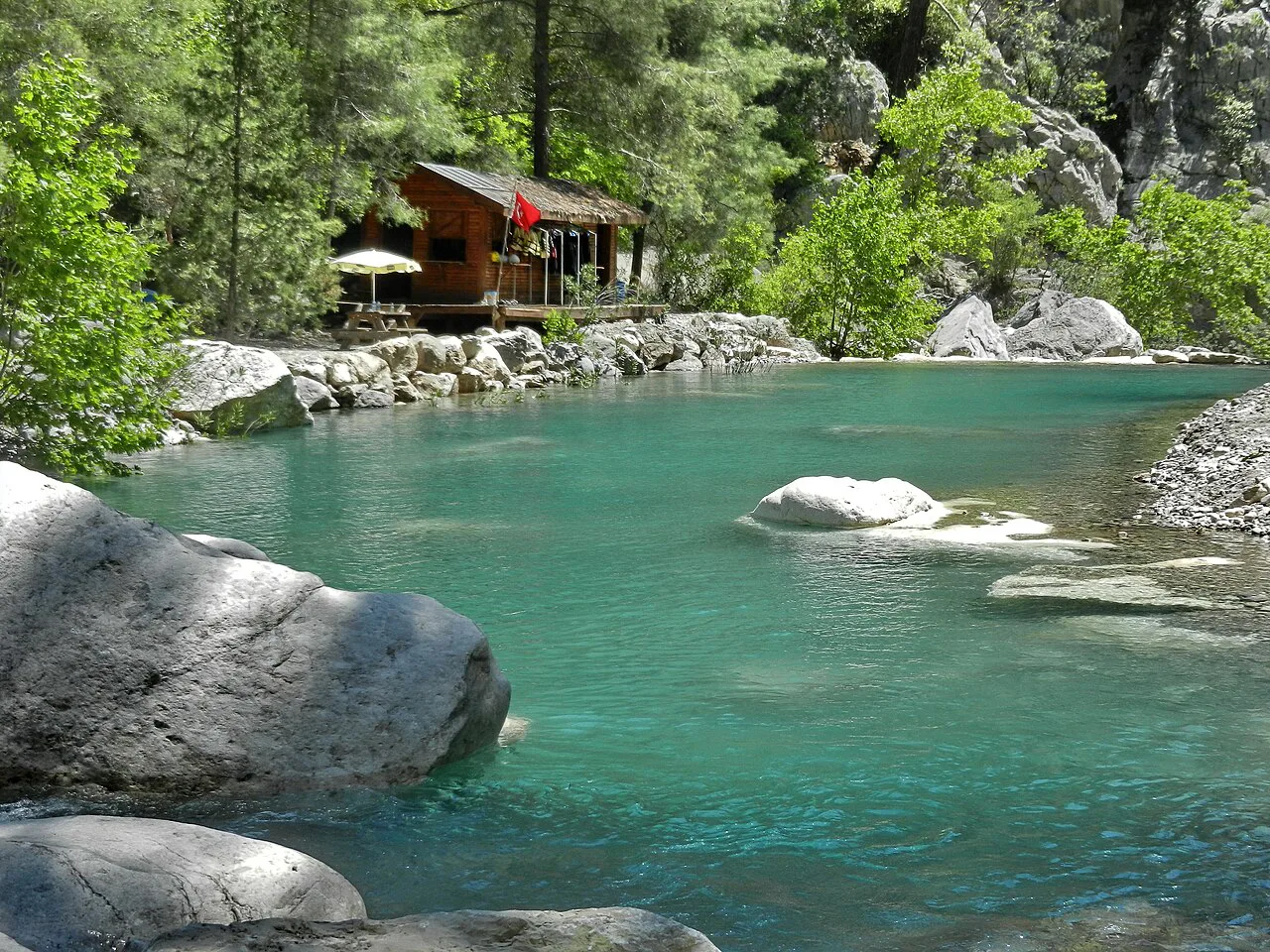
The natural pairing is Olympos below, where the ruins sit in scrub near the coast and the beach is a short walk on. If you have another day in the area, Göynük Canyon near Kemer makes a wet, shaded contrast to the dry hillside, and Phaselis further east adds a second ancient harbour city to the trip.
Practical cautions on the hillside
Some holes on the hillside show no flame but still release gas, so keep your face away from the vents and do not try to light anything near them. The surface around the burning pits is hot and broken in places, which is another reason to wear proper shoes rather than sandals.
Take water, a layer for the wind on the top and a light for the way down, and keep children close around the open flames. The hill is exposed once you leave the shaded path, so dress for the wind even on an evening visit.
The legend in brief
The hill's old name, Chimaera, comes from the myth of a fire-breathing creature said to live underground, part lion, part goat and part snake, killed by Bellerophon with the help of Pegasus; the flames were explained as its last fiery breath. Homer's texts are the usual starting point for the story, which is why the site is still marketed under the creature's name.
Treat the myth as colour rather than geology: the fires are methane, the legend explains nothing about the vents but explains a great deal about why travellers have climbed this hill for centuries. Telling the story to children on the way up is half the fun of the walk.
Should the Chimaera be your evening in Çıralı?
Yes if you are staying in Çıralı, Olympos or Kemer and can time the climb for dusk, when the flames are at their most striking and the valley drops away behind you. Skip it as a standalone dash from Antalya: the drive, the bus change and the walk make better sense as an evening built onto an afternoon at Olympos.
Check the current entrance fee and seasonal hours at the gate or with the national park before you set out, and confirm the last minibus back from the Çıralı junction if you are going without a car.
Frequently Asked Questions
Where is Mount Chimaera in Turkey?
It is the hill known in Turkish as Yanartaş, about 1.5 km from Çıralı in Kemer district, roughly 55 km south of Antalya and about 100 m above the ruins of Olympos within the Olympos-Beydağları National Park.
Is there a fire mountain in Turkey?
Yanartaş is the best-known one: methane seeps through cracks in the rock on the hillside above Çıralı and burns where it meets the air, with flames visible day and night. It is a burning hillside rather than a volcano in eruption.
Can you visit the Chimaera at night?
The site can be visited day and night, though opening hours vary by season. The flames are faint in daylight, so most visitors aim to arrive around dusk, and a torch helps on the walk back down.
Sources
Notes for your next Turkey trip
Optional updates when we add or correct a town guide.
You might also like
Continue reading
More guides you'll find useful