Çıralı, Turkey: What to See and How Long to Stay
Plan a trip to Çıralı on Turkey's Lycian coast: the pebble beach, Olympos ruins, the Yanartaş flames and how to get there from Antalya by bus, car or transfer.
On this page
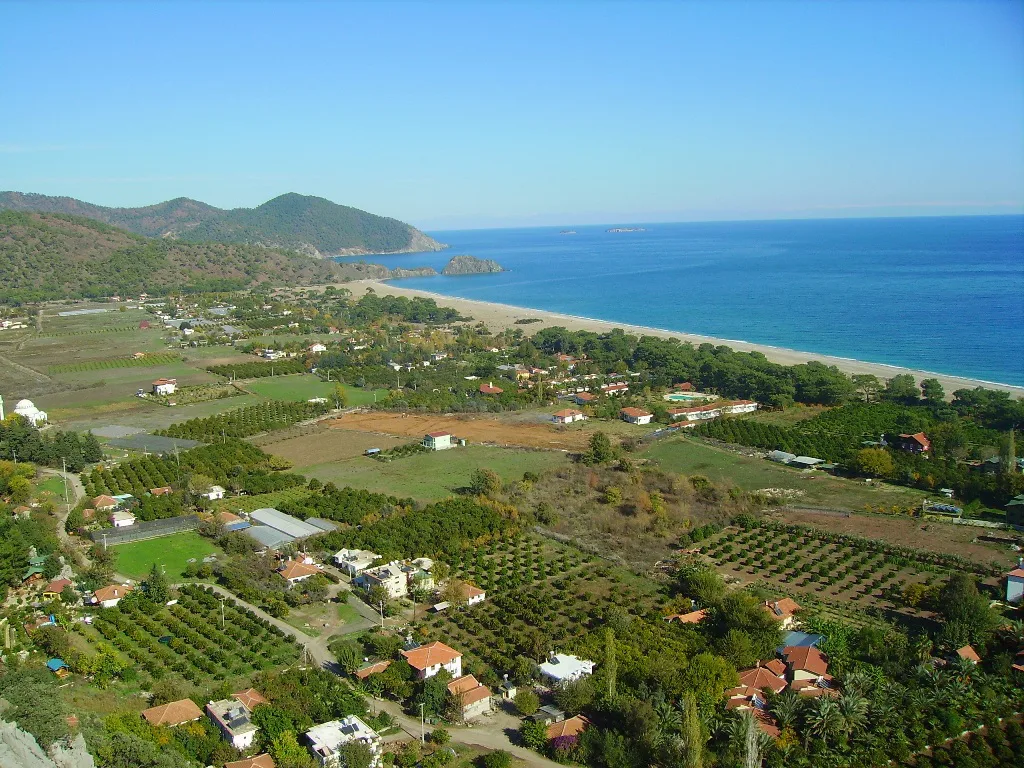
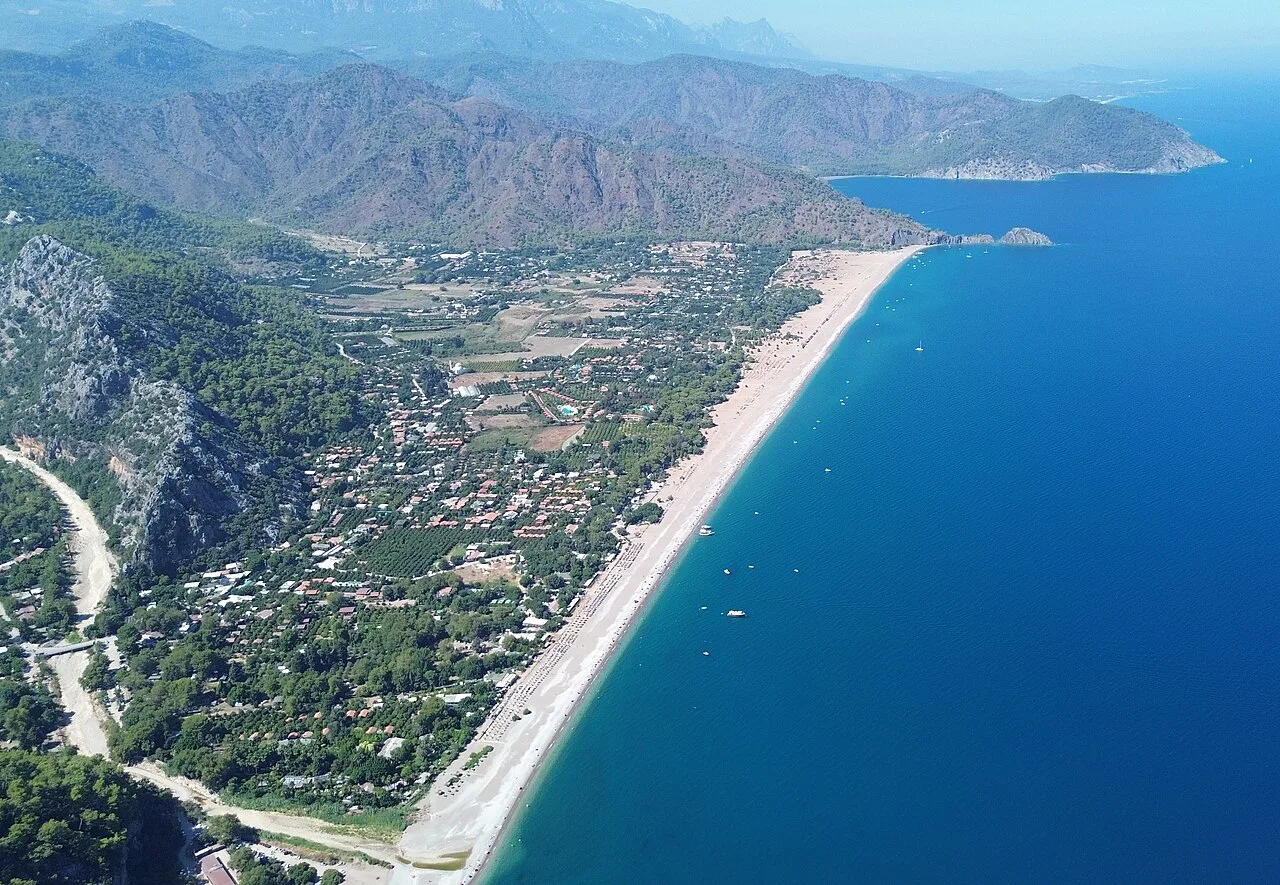
Çıralı suits travellers who want a quiet, low-rise base with ancient ruins and a natural fire site within walking distance, rather than a resort strip. It sits on the Lycian coast in Antalya province, roughly 70 km southwest of Antalya city, and its environmental conservation status has kept out high-rise hotels and loud beach clubs. Expect a long pebble beach, bungalow-style guesthouses in citrus gardens and a village that slows down outside the main season.
The practical shape of a visit is simple: reach the D400 junction, ride the dolmuş down the last 8 km, then spend your days between the beach, the ruins of Olympos, the Yanartaş flames on the hillside and day trips along the coast. This guide sets out the transport chain step by step, separates the two ways into Olympos, and explains how long the village rewards.
Where Çıralı sits on the Lycian coast
Çıralı lies in the ancient Lycia region, sheltered between pine-covered mountains and the Mediterranean shoreline. The village is in Antalya province, about 70 km southwest of Antalya city, on the stretch of coast between Kemer and Kumluca. Its protected status is the reason the setting feels unusually calm for this part of Turkey.
Everything that draws visitors sits within roughly a 4 km radius: the beach, the Caretta caretta nesting grounds, the ruins of Olympos and the Yanartaş flames. That compactness is what makes Çıralı work as a base without a car once you have arrived. It also means you can plan each day on foot rather than around timetables.
Getting to Çıralı from Antalya
Fly into Antalya Havalimanı (AYT), which European carriers and Turkish Airlines serve year-round, then take the airport bus to Antalya Otogar, the main bus terminal, in around 30 minutes. From there, intercity coaches run towards Kumluca or Kemer; ask the driver to drop you at the Çıralı/Olympos junction (kavşak) on the D400 highway, roughly 1.5 hours away. At the junction, shared minibuses (dolmuş) cover the final 8 km of winding mountain road to the village in about 15 minutes.
The one weak link is the junction itself: Çıralı has no direct bus terminal, so the dolmuş connection is part of the journey rather than an optional extra. Build in slack if you arrive late in the day, and confirm the last minibus time locally before you set off. Travellers with heavy luggage or a late flight may prefer to arrange a transfer instead of chaining three legs together.
Driving yourself and parking in the village
Renting a car at Antalya airport gives you the most flexibility, particularly if you want to combine Çıralı with Olympos, Phaselis or Kaş in one loop. The drive from the airport takes about 1 hour 20 minutes via the D400 coastal highway. Parking within the village is free at most accommodation properties, which removes the usual worry about finding a space.
Weigh the car against the walking you will actually do. A vehicle helps for the drive to the north entrance of the ruins and for day trips along the coast, but it sits idle while you are on the beach or climbing to the flames. If your plan is a few slow days in the village, the bus-and-dolmuş route does the job.
Private transfers and what your accommodation can arrange
Several Antalya-based transfer companies offer door-to-lodge service, and accommodation providers can often coordinate a pickup if you ask before arrival. That turns a multi-leg journey into a single ride straight to the village. It is worth the conversation if you are arriving after dark or carrying dive kit, pushchairs or heavy bags.
Çıralı Beach, Blue Flag status and the turtles
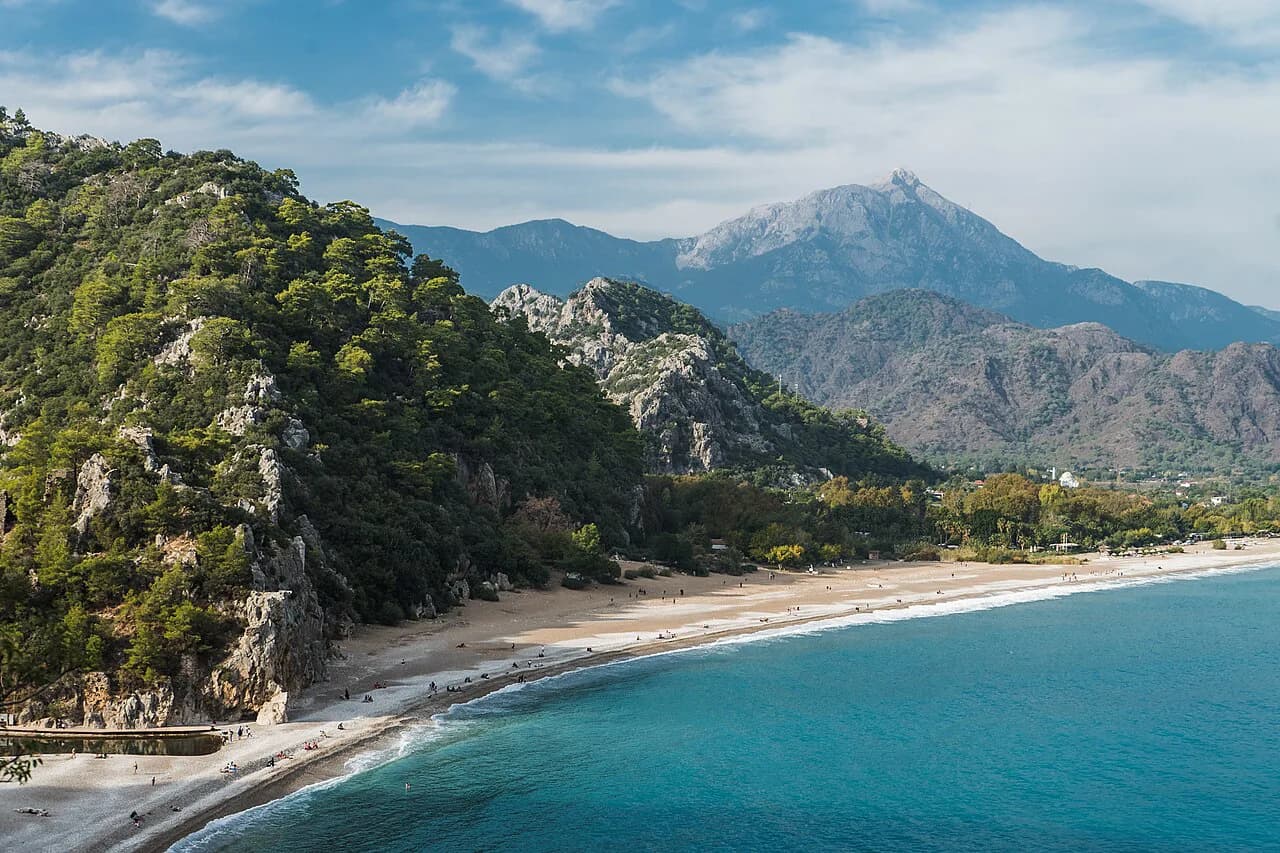
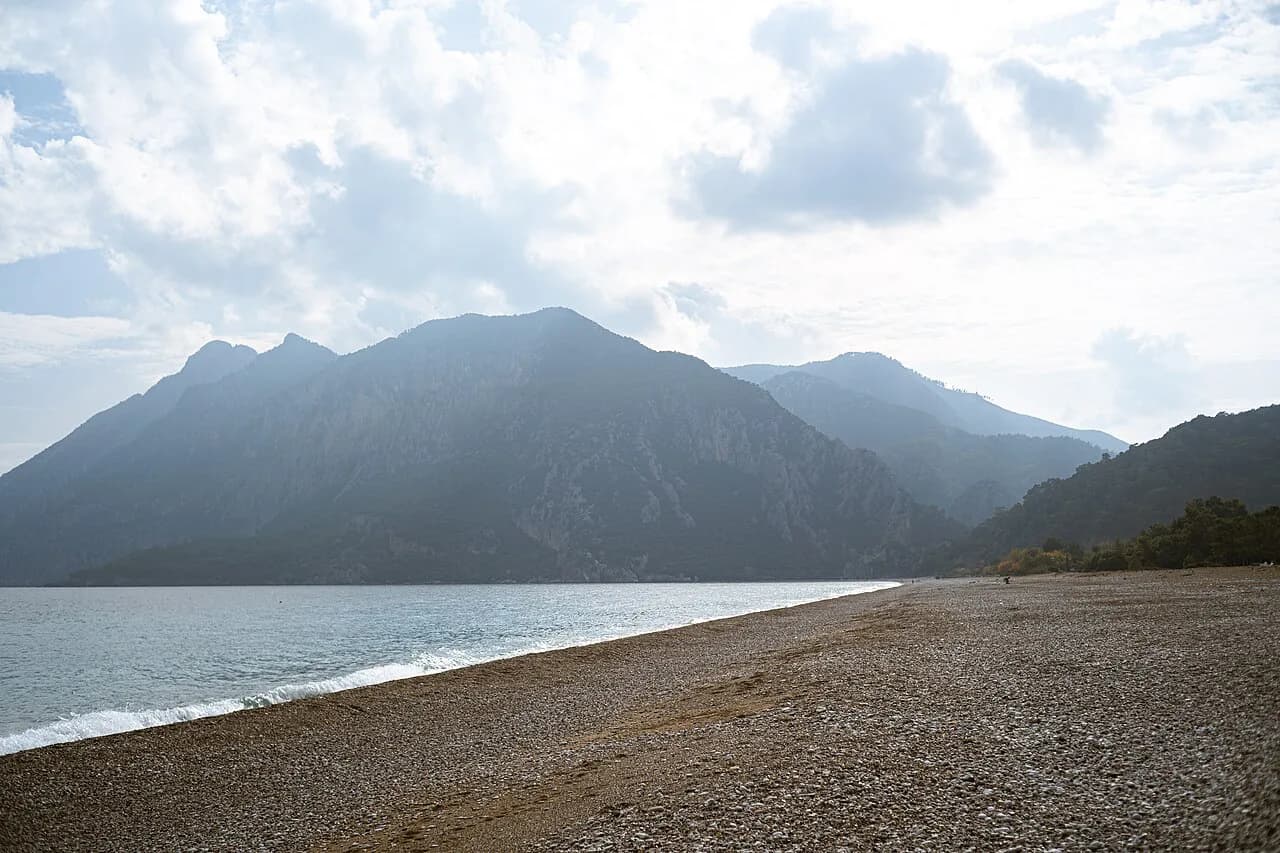
The beach is a long pebble strand between forest and sea, and it holds Blue Flag status. Bring shoes you can wear in the water rather than expecting sand between your toes. Restaurants, cafés and sun loungers sit close by for a full day on the shore.
The beach is also a nesting ground for endangered Caretta caretta loggerhead turtles, which come ashore at night. Turtles begin nesting in the peak summer period, and beach sections are cordoned off after 20:00; eggs hatch 45 to 70 days after laying, so from mid-July you may see hatchlings heading for the sea early in the morning. Keep off the marked areas and keep lights low after dark.
Olympos: walking in from the beach or driving to the north entrance
You reach the ancient city of Olympos either on foot along Çıralı Beach or by road to the north entrance, about a 7-mile drive from the village. Walking in from the beach means you arrive among the ruins without a car. The road route suits anyone combining the ruins with a wider day out.
Inside, dense forest and overgrowth wrap the remains, with boardwalks and explanatory panels helping you pick out the necropolis with its rock-cut chamber tombs, the sarcophagus of Captain Eudoemos and the Roman theatre with its elaborate entrance. Ground underfoot is uneven, so proper footwear matters more than you would guess from the beach. Our guide to Olympos, Turkey sets out the layout in more detail.
The Divergent Travellers guide recorded the site as open from 8am to 7pm in summer and until 5pm in winter, with an entrance fee of 20 TL at the time of writing. Treat those figures as a historical record rather than a promise, because hours and ticket prices change; check the ticket office on arrival or the official museum pages before you set out.
Yanartaş, the Chimera flames on the hillside
Yanartaş, known locally as the burning rock, is a hillside vent of methane gas that feeds flames rising directly from the rock, and the site has inspired myths for generations. The climb from the village is a proper hillside walk rather than a roadside photo stop. Go with shoes that grip, water and a torch if you plan to come down after dusk.
Timing is the real decision. The flames are a hillside walk from the village rather than a roadside photo stop, and the climb is steep enough to plan around daylight. Decide before you set off whether you are walking both ways or arranging a lift, and carry a torch if you plan to come down after dusk. Our guide to Chimaera (Yanartaş) Turkey covers the route and what to expect at the vents.
Eating in Çıralı
Meals in Çıralı are shaped by local produce and the season: fresh seafood, garden vegetables and traditional dishes served in open-air settings, often with views of the sea or the surrounding hills. Many places sit within citrus gardens and guesthouse grounds, which makes dinner part of the evening rather than a separate outing. Expect unhurried service and a short walk back to your room.
Day trips within reach of Çıralı
Phaselis, another ancient city set on a peninsula by the sea, is about a 20-minute drive north of Çıralı. It is larger and arguably better preserved than Olympos, which makes it a natural pairing on a day when you have a car. Farther afield, Kaş and the wider Lycian coast are within range for a longer excursion.
With a car you can also use Çıralı as a quiet base while visiting the coast between Kemer and Kumluca. Keep the day trips modest: the village rewards time spent in it, not time spent leaving it. One or two outings across several days is the right rhythm.
How long Çıralı needs
Three to four nights is the comfortable minimum if you want the beach, the Olympos ruins and the Yanartaş climb without rushing any of them. Add a day if you plan to drive to Phaselis or spend a morning at the turtle beach. Two nights works only if you treat Çıralı as a single stop between Kemer and Kaş and accept that you will miss something.
When the village is busy and when it quietens
Late May and the first two weeks of September give you warm sea, accessible ruins and the Chimera walk without peak-summer intensity, while April to May brings wildflowers and milder temperatures and September to October thins the crowds while the sea stays warm. Mid-July to August is the hottest stretch, with daytime highs reaching 38°C, and the beach fills up. Accommodation books quickly in June and early July.
From November to March the village largely hibernates, though some family-run guesthouses and bungalow lodges stay open for walkers passing through. Outside the season, check directly with any property before booking transport, because the quiet that makes Çıralı appealing also means fewer services running.
Should you base yourself in Çıralı?
Çıralı earns its place as a base if you value a protected village, a pebble beach and ruins you can reach on foot over a resort strip with everything on tap. The trade-off is the transport chain, the pebbles instead of sand and the closed-down feel outside the season. If those suit you, give it three or four nights and use the car sparingly.
Explore more Kemer guides
Frequently Asked Questions
Is Çıralı beach sand or pebbles?
It is a pebble beach, a long strand between forest and sea. Pack shoes you can wear into the water and a mat rather than expecting sand.
Do you need a car to get to Çıralı?
No. You can fly into Antalya, take the airport bus to Antalya Otogar, catch an intercity coach towards Kumluca or Kemer and get off at the Çıralı/Olympos junction on the D400, then ride a dolmuş down the final 8 km. A car gives you more flexibility for day trips and for driving to the north entrance of Olympos.
Sources
Notes for your next Turkey trip
Optional updates when we add or correct a town guide.
You might also like
Continue reading
More guides you'll find useful