Phaselis: Ancient Harbours, Aqueducts and Pines Near Kemer
Phaselis is an ancient port city 16 km west of Kemer, with three harbours, Roman aqueducts, agorae, baths, a theatre and a beach among the pines.
On this page
Phaselis is worth visiting for its setting as much as its stones: a small peninsula of pine and cedar forest inside the Bey Dağları coastal national park, 16 km west of Kemer, where three ancient harbours, Roman aqueducts, three agorae, two baths and a theatre sit among the trees. It is a compact site you can walk in half a day rather than a sprawling ruin that needs a full one. This guide sets out what the ministry lists, how the harbours shape a route, how long to allow, how to get there and what to confirm before you go.
What Phaselis is and where it sits
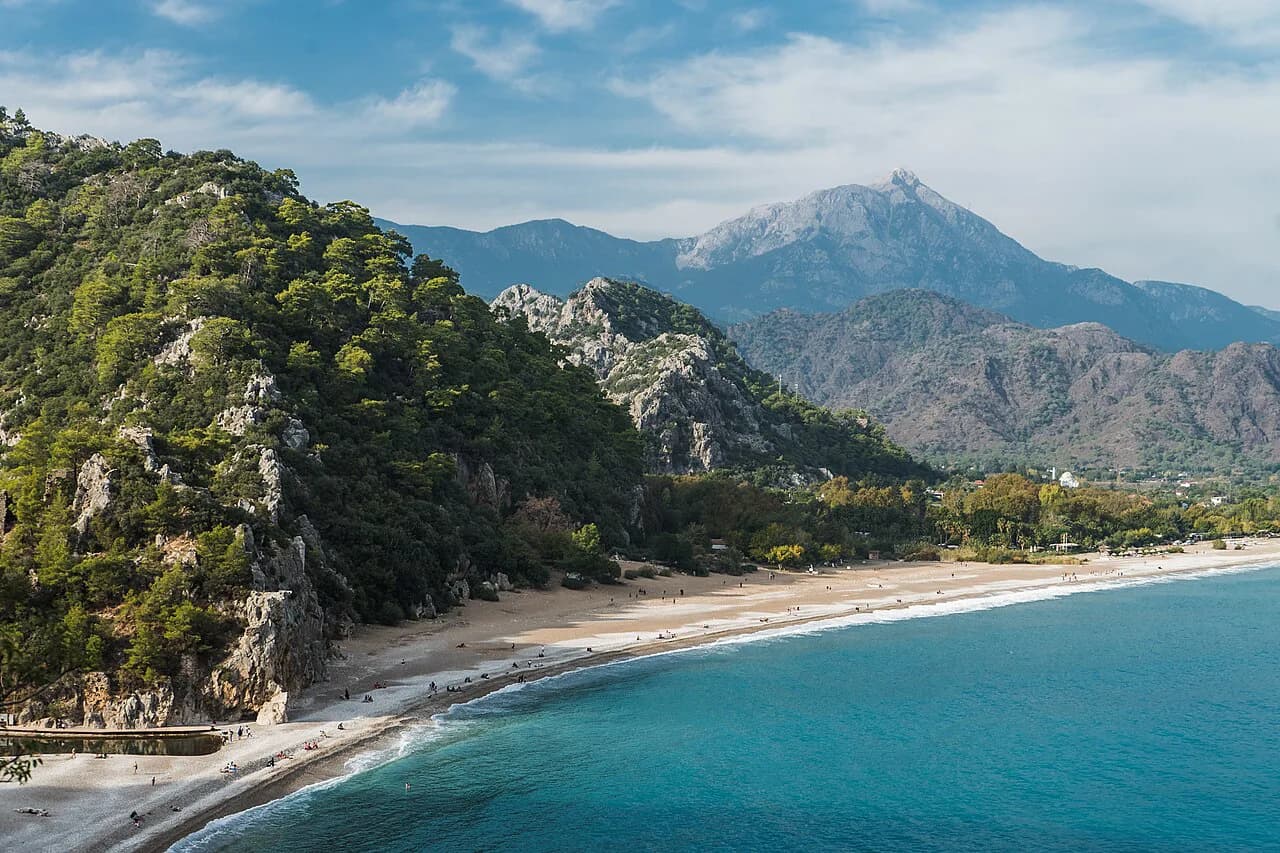
The ancient city stands on a small peninsula reaching into the Mediterranean, within the pine and cedar forest of Bey Dağları Sahil Milli Parkı, the Bey Dağları coastal national park. It lies 16 km west of Kemer, and the modern reference point for drivers and minibus passengers is Tekirova, the village just south of the site. The ministry describes Phaselis as an important port city with three harbours, and the ship images on its civic coins underline that trading identity.
The city is said to have been founded by Rhodian colonists in the seventh century BC, though the ministry presents this as a tradition rather than a fixed date. What survives above ground belongs mostly to the Roman and Byzantine periods, which is why the aqueducts, baths and agorae read as imperial engineering and late-antique reuse rather than Archaic Greece. Phaselis joined the Lycian League and struck League coins, and its later history runs through Persian, Mausolos of Caria, Perikle of Limyra, Alexander and finally Rome.
The three harbours and how they shape a walk
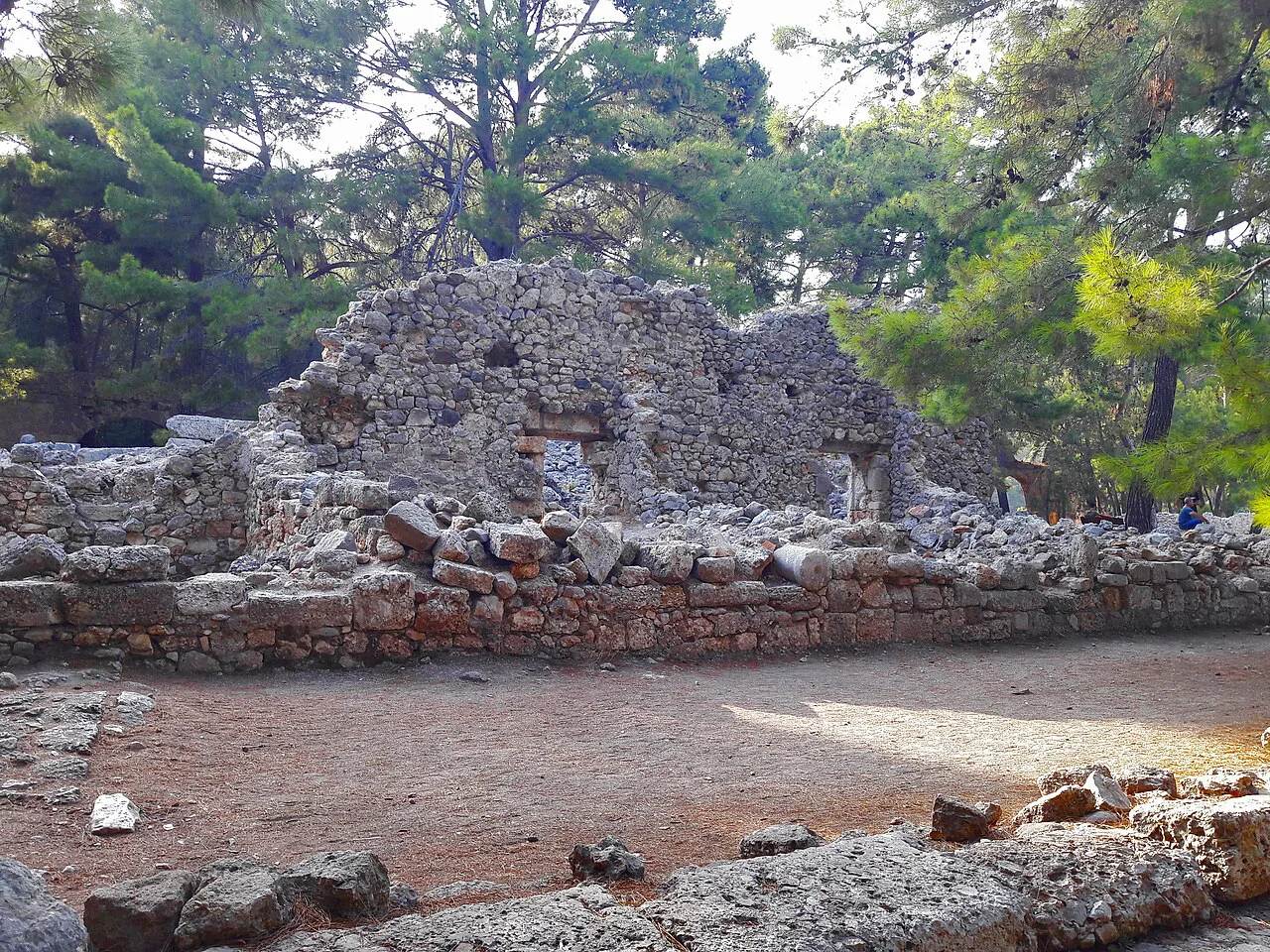
Phaselis had three harbours: the North Harbour on the northern side of the peninsula, the Military Harbour to its north-east and the South Harbour to the south-west. Use them as your route markers. Arriving from the entrance, most visitors work from the landward walls out towards the water, picking up the northern shore first and finishing at the South Harbour end, which keeps the harbours as a sequence rather than three unconnected coves.
The North Harbour is worth pausing over because the slope behind it is the city's cemetery area, with tombs cut and built into the hillside. The ministry records that pairing of harbour and burial ground, and the shoreline here is where the city's trading life is most legible. From there, the path of the peninsula leads towards the Military Harbour and then the southern shore, where the second and third agorae sit beside the main street running down to the South Harbour.
Main ruins: walls, aqueducts, theatre and agorae
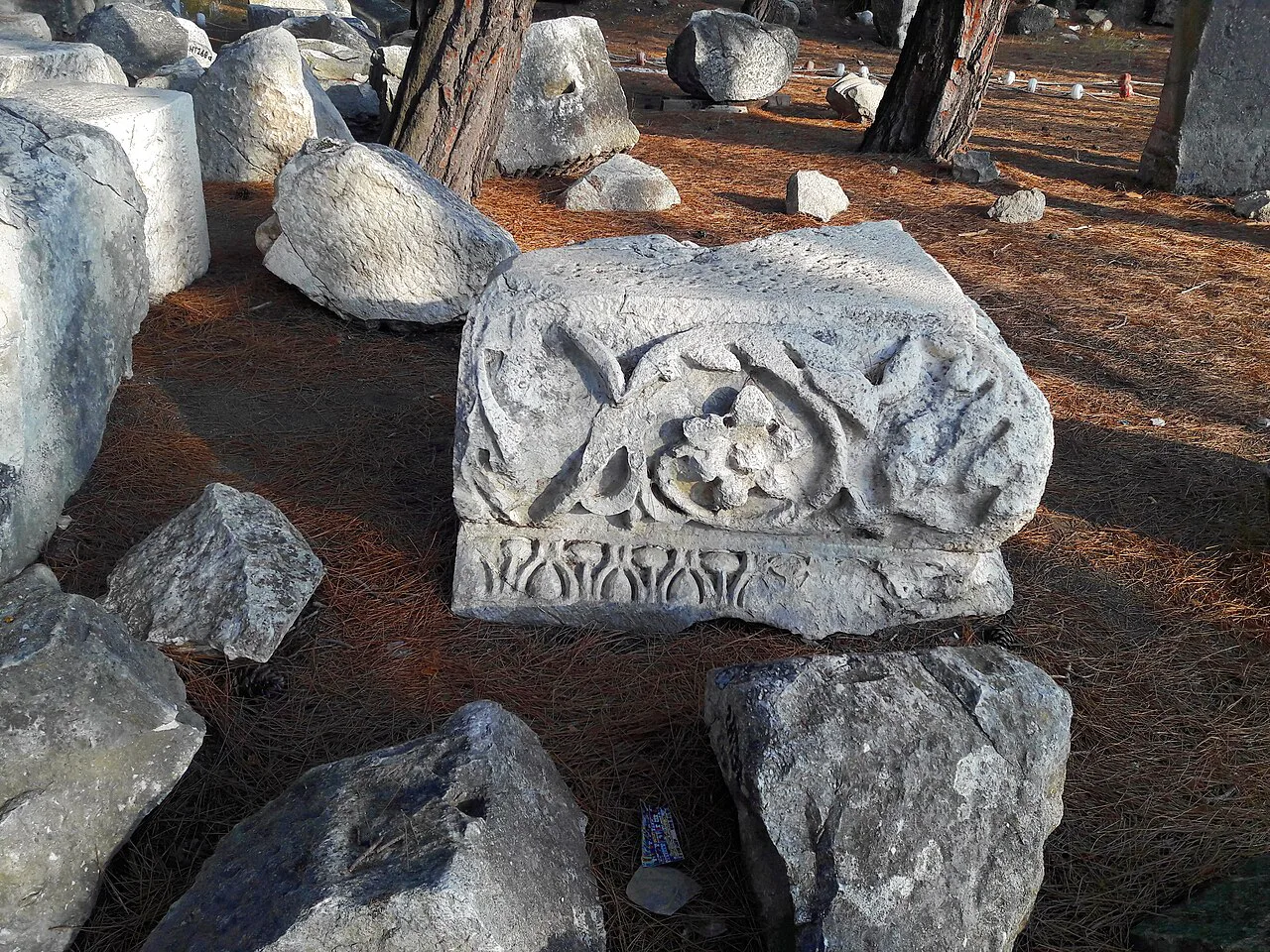
Near the entrance, on the right, you pass the remains of the city walls, dated by the ministry to the third century BC, together with foundation traces that may belong to a temple or a monumental tomb. Beyond that, the most monumental structure on the site is the aqueduct on the northern hill, built in the Roman period to bring water from a spring on the heights and distribute it through pipes and channels across the city. It is the building to look for first if you only have an hour.
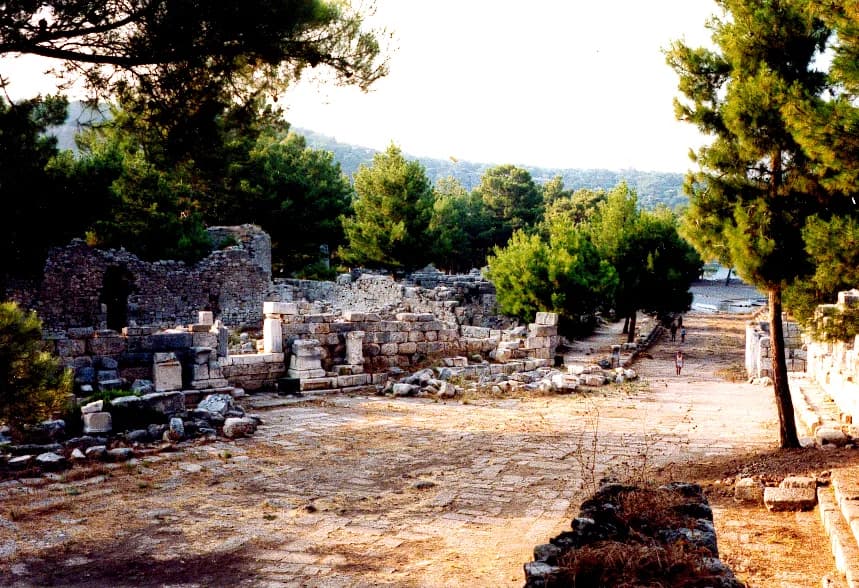
Phaselis has three agorae: one facing the theatre, and two on the right of the main street leading to the South Harbour. Inside the agora opposite the theatre are the remains of a small Byzantine basilica, a reminder that the city carried on as a Christian settlement after its Roman prosperity. The theatre and its facing agora make a natural stop on the way to the South Harbour end of the peninsula.
The two baths and the Byzantine basilica
The city's other principal remains are the two bath buildings on the city square, one small and one large. They sit close to the theatre-and-agora group, so you can see them without a detour if you keep to the central spine of the site rather than drifting straight to the water. The basilica remains inside the theatre-side agora are on a much smaller scale, so save them for the same stop.
Together these late-Roman and Byzantine structures tell the second half of the story: a port that kept functioning long after the imperial building programme ended. Read them after the aqueduct and harbours rather than before, so the sequence of engineering, trade and late-antique conversion makes sense as you walk back towards the entrance.
Walking Phaselis in the pine shade
Pines and cedars grow across the wooded peninsula and reach into the ancient city itself, and the ministry notes that you can walk the site without feeling the full force of the Mediterranean sun. That shade is a practical reason to visit in the middle of the day rather than only at the edges of it, and it makes the site easier on children and on anyone who wilts in open ruins. Wear shoes with grip: tree roots, uneven stone and the slopes above the harbours are the places to watch.
How long Phaselis needs
Allow three to five hours on site, the sightseeing time given in the attraction listing for Phaselis Koyu. That range covers a relaxed walk through the harbours, the aqueduct, the theatre and agorae, the baths and the basilica, with stops for photographs and shade. If you only want the highlights, the aqueduct, the theatre-side agora and the South Harbour cover the essentials in less.
The figure is the listed recommendation. Your own pace, the heat and how long you linger at the water will shift it. If you are combining Phaselis with other Kemer-area stops on the same day, give Phaselis the morning and keep the afternoon free for the mountain and canyon stops further east.
Getting there from Kemer and Antalya
Phaselis sits 16 km west of Kemer on the coastal road towards Tekirova, with Tekirova the modern town just south of the site. Coming from Antalya, the drive follows the coast through Kemer and beyond, so build in extra time in summer traffic along that stretch. Dolmuş minibuses run along the Kemer–Tekirova corridor; ask the driver for Phaselis and confirm the return times on the day, because coastal services thin out in the evening.
If you want to combine Phaselis with other stops, the attraction listing places the Olympos Teleferik cable car about 5.9 km away and Göynük Canyon about 17.7 km away, so either is a plausible add-on. For a wider look at the Lycian coast's ruins and how they fit together, see our guide to Olympos, Turkey, the neighbouring ancient city that shares this stretch of shoreline.
If you are driving yourself, park at the site entrance and walk in rather than trying to drive between the ruins; the peninsula is pedestrian ground once you are through the gates. Coming from the west, Tekirova is the last town before the site, useful for supplies and for turning round if you arrive late in the day.
Opening hours and tickets to confirm before you go
When the listing was checked it showed Phaselis Koyu marked closed on that day and otherwise open from 08:00 to 16:30, with no entry price given. Treat those hours as listed rather than guaranteed, since site hours shift with the season and with ministry decisions, and confirm the day and the closing time before you travel.
Ticket prices for Turkish archaeological sites change often, and the ministry's Antalya pages set out the general rules for museum and site entry without listing a Phaselis fee here. Check the current ticket price and whether a Müzekart applies at the gate or on the ministry's site pages on the day you plan to go, rather than budgeting from an old figure.
What the setting adds: beach and wooded peninsula
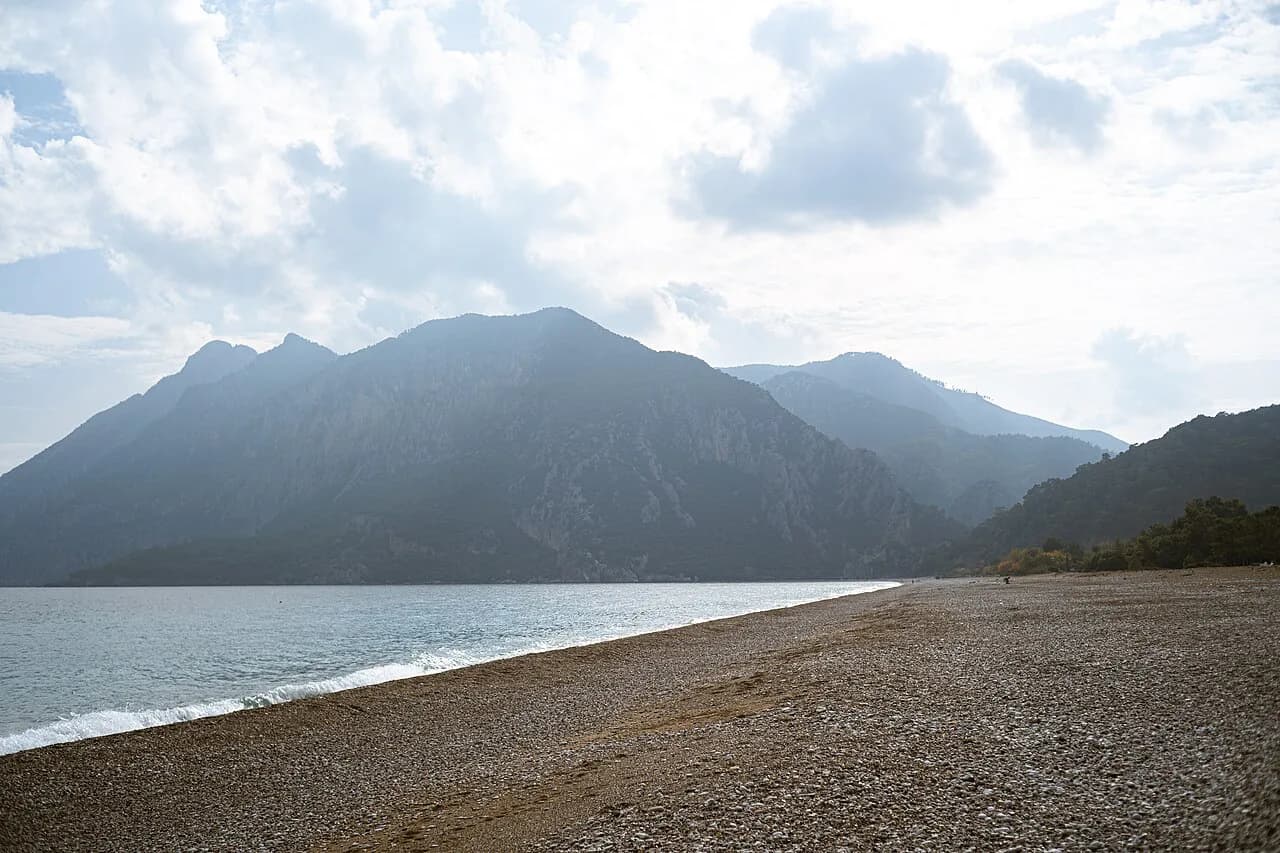
Phaselis has a beach alongside its ruins, and the wooded peninsula extends beyond the stones, so the site gives you an ancient city and a stretch of coast in one visit. The ministry describes the setting as a combination of historical wealth and natural beauty, with the pines reaching right into the ancient city. That is the trade-off to weigh against a dedicated beach day: you get both, but neither at full length.
Nearby stops that pair with Phaselis
The attraction listing puts the Olympos Teleferik cable car about 5.9 km from Phaselis, Göynük Canyon about 17.7 km and the Bey Dağları coastal national park about 17.8 km, making any of them a possible half-day addition. That is proximity in distance, not a packaged itinerary; arrange your own transport or tour.
South of Phaselis, the ancient city of Olympos and the perpetual flames of the Chimaera (Yanartaş) make a longer but rewarding day out along the same coast. Both suit travellers who want more ruins and landscape after Phaselis rather than a change of pace on the beach.
Phaselis or Olympos: which ancient city suits you
Phaselis and Olympos are close neighbours on the same stretch of Lycian coast, but they read differently. Phaselis is a peninsula port with three harbours, a Roman aqueduct, three agorae, two baths and a theatre, all in pine shade and within an easy walk of the entrance. It suits a half-day visit with a strong engineering and harbour story and a beach at the end.
Olympos, further south, is a river-valley site with its own character and access to the Chimaera flames nearby. If you only have one morning, Phaselis is the tighter, more legible walk; if you have a full day and want variety, pair Phaselis in the morning with Olympos and the Chimaera later. Neither needs to be chosen over the other if your schedule allows both.
Is Phaselis worth the detour from Kemer?
Yes, if you want a half-day that combines real Roman engineering with shade and sea rather than a long, exposed ruin. Go for the aqueduct, the theatre-side agora and the harbours, allow three to five hours, and check the listed day and hours at the gate before you set out. Pair it with Olympos or the Chimaera if you are staying longer on this coast.
Explore more Kemer guides
Frequently Asked Questions
What is Phaselis?
Phaselis is an ancient port city on a small peninsula 16 km west of Kemer, inside the Bey Dağları coastal national park. It has three harbours, Roman aqueducts, three agorae, two bath buildings, a theatre and Byzantine basilica remains among pine and cedar forest.
How much time should I allow at Phaselis?
The attraction listing gives three to five hours. That covers the harbours, the aqueduct, the theatre and agorae, the baths and the basilica at a relaxed pace, with time in the shade. A highlights-only walk takes less.
Does Phaselis have a beach?
Yes. The ministry describes Phaselis as having both historical wealth and a beach, with the wooded peninsula extending beyond the ruins. It is not a dedicated beach day, but it lets you combine ruins and coast in one visit.
Are Phaselis's opening hours fixed?
No. The attraction listing showed Phaselis Koyu closed on one day and otherwise open 08:00 to 16:30, with no entry price given. Hours shift with the season and with ministry decisions, so confirm the day and closing time before you travel.
Is there a Müzekart discount at Phaselis?
The ministry's Antalya site page does not list a Phaselis fee or Müzekart validity for it here, so check the current ticket price and whether a Müzekart applies at the gate or on the ministry's site pages on the day you plan to go.
How do I get to Phaselis from Kemer?
Phaselis sits 16 km west of Kemer on the coastal road towards Tekirova. Dolmuş minibuses run along the Kemer–Tekirova corridor; ask the driver for Phaselis and confirm the return times on the day, because coastal services thin out in the evening.
Sources
Notes for your next Turkey trip
Optional updates when we add or correct a town guide.
You might also like
Continue reading
More guides you'll find useful