Shopping in Side: Markets, Bazaars and Old Town Shops
Plan your shopping in Side with market days for Side and Manavgat, what the old town sells, how bargaining works and how to reach the bazaars by dolmuş.
On this page
Side works best as a two-part shopping stop: a relaxed browse along the old town's limestone pedestrian street, plus one trip to a weekly bazaar in Manavgat or a nearby village. The town itself is not the cheapest place to buy, but it is the most convenient, and the markets are where the deals and the crowds are. This guide sets out which bazaar runs on which day, what each one sells, how bargaining works and how to reach them, and it slots into our wider guide to Things to Do in Side once you have had your fill of stalls.
Everything here follows the market days and locations as published listings give them, so treat them as a planning aid rather than a guarantee. Traders can shift days, and the most reliable confirmation comes from your hotel reception or the local dolmuş stop on the morning you plan to go.
Which days the Side and Manavgat markets run
The biggest weekly fixture is the Manavgat Market, which listings put on Mondays in Aşağı Pazarcı Mahallesi on 1010 Sokak and again on Thursdays in Aşağı Hisar Mahallesi on Gülveren Caddesi. A further Wednesday market is listed for Kasaplar Mahallesi on Şeh Şamil Caddesi, 7063 Sokak.
Side's own market is listed for Saturdays in Bahçeli Evler Mahallesi on 5044 Sokak. Around it, Çolaklı is listed on Wednesdays along the Çevreyolu, Sorgun on Wednesdays in Örnek Mahallesi, Taşağıl on Wednesdays on Dede Korkut Caddesi and Kumköy on Sundays in Sarılar Mahallesi on 1092 Sokak.
One excursion operator describes the markets as running on Mondays and Thursdays and calls those the best days for deals, which matches the Manavgat pattern but not the village days. If your holiday is short, build the trip around Monday or Thursday and leave the rest as optional extras.
Each of these listings also gives an eight-in-the-morning to nine-in-the-evening window, which is a broad trading day rather than a promise that every stall is open at both ends. Arrive mid-morning for produce and late morning for textiles.
What the Side Saturday market and Manavgat bazaars sell
Expect the full range of everyday Turkish market goods: seasonal fruit and vegetables, Turkish delight, baklava, textiles, ceramics and handmade souvenirs. The stalls add clothes, bags and spices to that mix, which makes the bigger bazaars the better stop for bulkier purchases.
Because Manavgat is a working town market as well as a visitor one, its prices are generally keener than the old town's, and the same operator notes that Side town centre shops can charge slightly more for the convenience and atmosphere. Plan to buy ceramics and textiles at the bazaar and save the old town for browsing.

Shopping in Side old town: the limestone street and its covered ruins
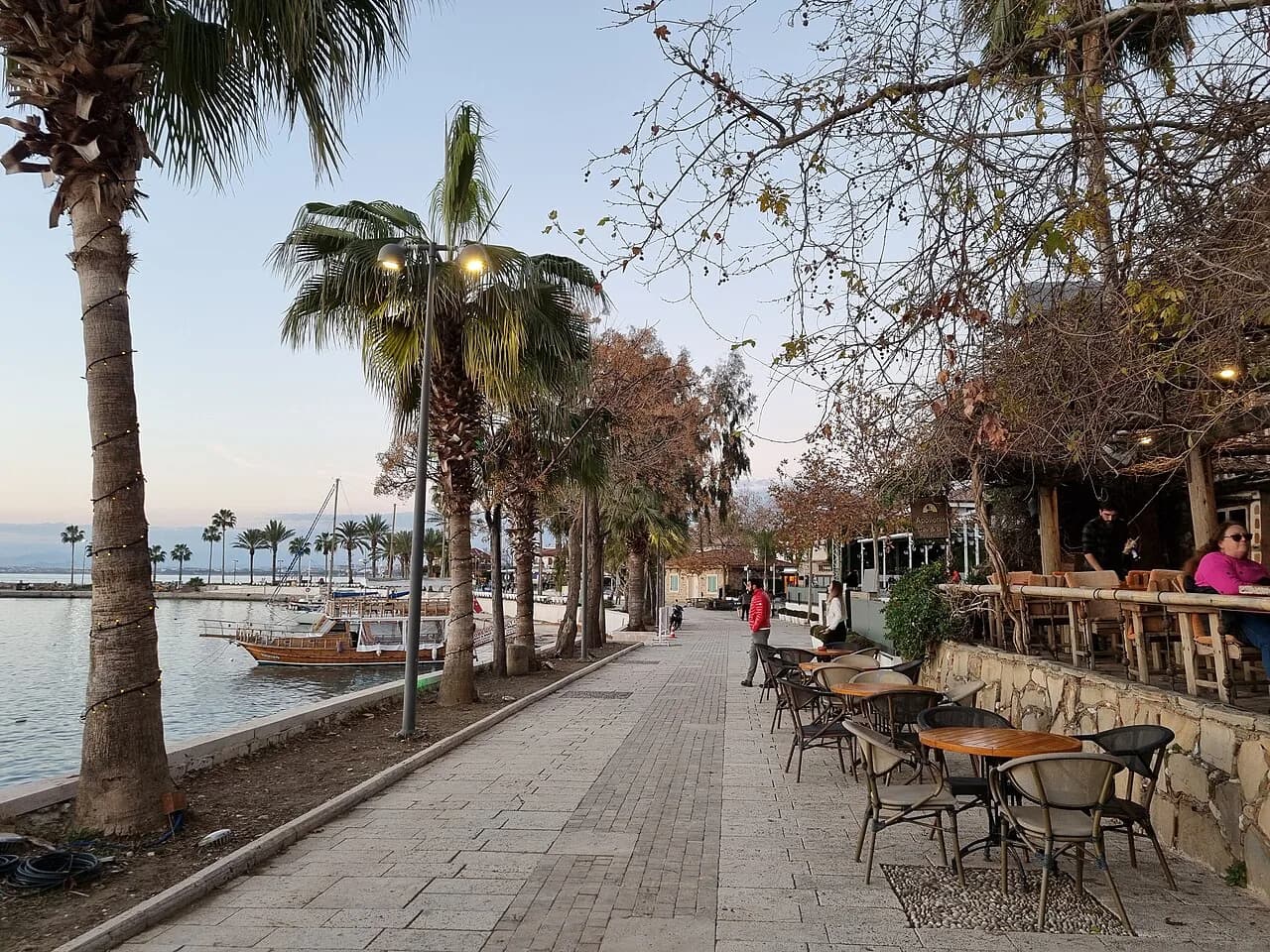
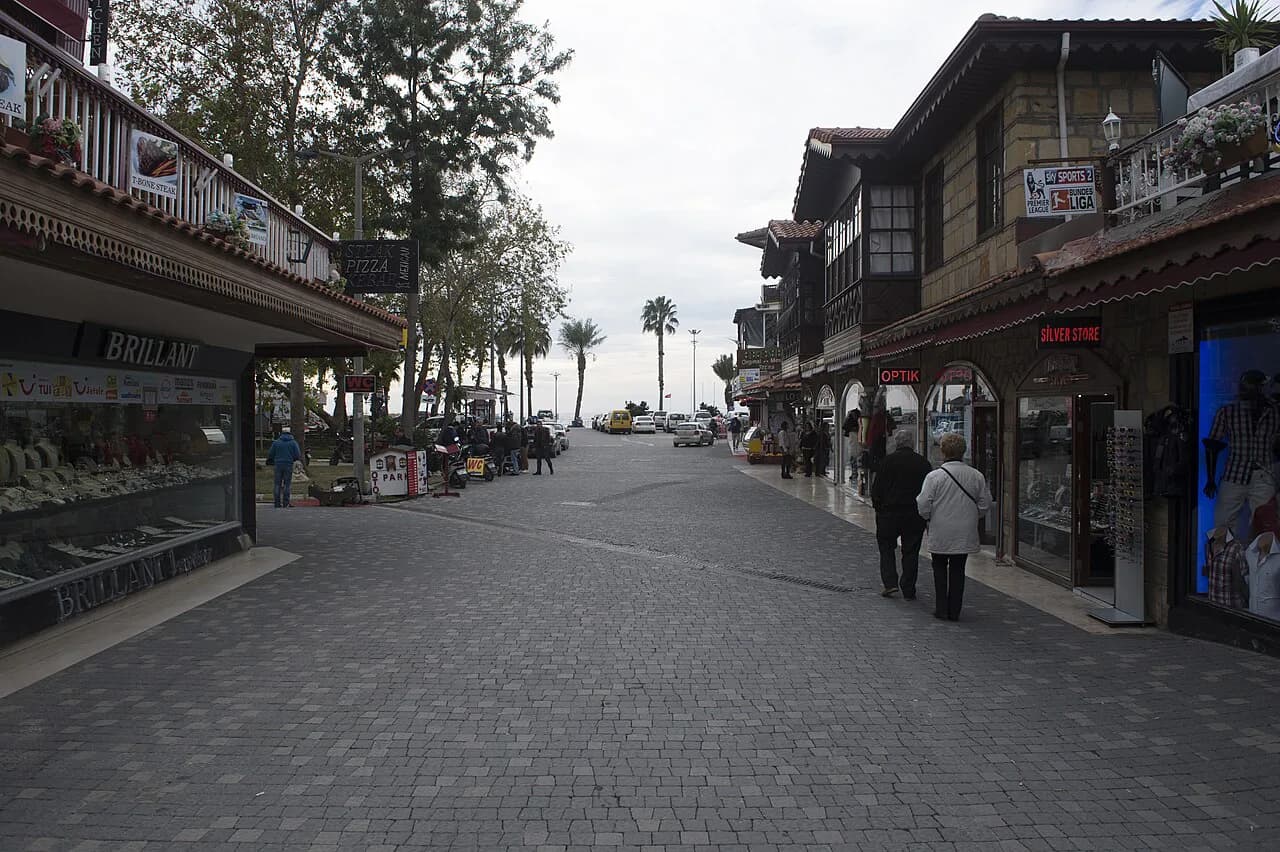
The old town's shopping is concentrated on a pedestrian street built along a limestone lane, with many shops set into historic ground floors selling souvenirs, snacks, clothes and handmade hookahs. Parts of the street are glass-covered so you can see the ancient ruins beneath your feet, which makes this the most distinctive shopping walk in the area.
A separate guide describes the old town market area as the place for traditional pottery, textiles, souvenirs and gifts, with shopping best done from mid-morning to evening. That makes it a natural evening stroll rather than a morning errand, and it pairs well with dinner nearby.
Beyond the street, individual named shops in Side include Side Cotton, Kökçam Ayakkabi, LeCuir Leather and Palmiye Jewellery, which cover clothing, shoes, leather and jewellery respectively. Treat these as starting points for a browse rather than a route, since opening times vary by season.
Manavgat town centre bazaar versus the old town shops
Choose Manavgat if you want volume, price competition and the full market experience, and accept the crowds and the transport. Choose the old town if you want a short, scenic browse with no planning, and accept that you will pay a little more for the same class of goods.
The Manavgat day is more tiring: the town centre fills up on market days, especially in high summer, and getting back out can take longer than getting in. The old town has no such logistics problem because you can walk away at any point.
If you want to combine the market with a day out, boat trips from Manavgat are the obvious pairing, since the boats leave from the same town. Keep the shopping for after the water rather than before, and see our Side Bazaar guide for the day-by-day picture.
Getting to the markets by dolmuş or taxi
Local minibuses, known as dolmuş, run frequently between the resort areas and the markets, and hotel reception can point you to the right stop and time. That is usually the cheapest and simplest option for Manavgat and the village bazaars.
Taxis are quicker but harder to find on the return leg when the market empties, so agree a pickup point or keep a local taxi number. Organised market trips with hotel transfers exist if you would rather not deal with the logistics yourself.
Market days pair badly with a beach morning, because the best stalls are picked over by early afternoon and the return transport is at its busiest. Give the market its own half-day and keep the beach for the other half.
Haggling in Side and Manavgat: when to bargain
Bargaining is normal in the bazaars and is described as part of the culture in Manavgat, so a friendly counter-offer is expected. Do not buy from the first stall you see; compare a few and you will quickly learn the going rate.
The clearest rule is the price tag: where no tag is displayed, bargaining is expected, and where prices are marked in a shop or supermarket, pay the marked price. Keep it light and walk away if the number does not suit you.
Supermarkets and modern shopping centres
For groceries and everyday items, the chain supermarkets Migros, A101, Şok, CarrefourSA and BİM generally offer better prices than souvenir shops. Use them for water, snacks and picnic supplies rather than carrying heavy bottles back from the bazaar.
Side and Manavgat also have modern shopping complexes, with Novamall, Mall of Side, Sural Shopping Centre and Selge Park named among them, several close enough to visit in one day. They suit air-conditioned browsing, electronics and branded clothing; a separate guide lists the Ottoman Shopping Centre and Nova Mall, the latter at Sorgun outside Manavgat, among the same cluster of modern venues.
Modern centres of this kind change their hours seasonally, so check on arrival rather than planning a day around a published time. If you want the traditional market instead, our Side Bazaar guide sets out the weekly rounds.
Imitation goods and cosmetics: what to check
Side's markets sell clothing and imitation designer items openly, and one local operator warns that imitation cosmetics may not be reliable even where other imitation products are fine. If you are buying skincare or makeup, buy from a proper pharmacy or supermarket instead.
For leather, jewellery and ceramics, check stitching, clasps and glaze in daylight before you pay, and ask for a receipt where the shop offers one. Bargaining hard on a piece you have not inspected is how most bad buys happen.
Market manners for first-time visitors
Markets are working places, so keep bags zipped, hold your money discreetly and expect some good-natured calling from stallholders. A simple greeting and a smile go a long way, and a polite no is always respected.
If you visit a mosque during your shopping day, dress modestly, remove your shoes and keep quiet during prayer times. The same courtesy applies in the old town's small shops, where you should ask before photographing people or displays.
Which Side shopping day suits you?
For most visitors the answer is one Manavgat bazaar day on a Monday or Thursday plus an evening in the old town. If you have only a few hours, skip the bazaar and browse the limestone street, where the ruins under glass are worth the trip on their own.
Build the rest of the trip around the harbour walk and the ancient sites, and use the markets as a half-day rather than the main event.
Explore more Side guides
Frequently Asked Questions
Is Side in Turkey good for shopping?
Yes, but in two different ways. The old town offers a scenic pedestrian street of souvenir, textile, ceramic, leather and jewellery shops, while the weekly bazaars in Manavgat and the surrounding villages offer a wider, cheaper and busier market experience.
Is there a market day in Side, Turkey?
Side's own market is listed for Saturdays on 5044 Sokak in Bahçeli Evler Mahallesi. Nearby, Manavgat holds markets on Mondays and Thursdays, and several villages run their own bazaars midweek or at the weekend.
Do I need cash for the markets in Side?
Bring Turkish lira in small notes and coins, since market stalls rarely accept cards and change can be scarce early in the day. Larger shops and shopping centres are more likely to take cards.
How do I get to the Manavgat bazaar from Side?
Take a dolmuş minibus from the resort areas, which run frequently to the markets, or ask your hotel reception for the nearest stop and time. A taxi is quicker but harder to find when the market empties.
Sources
Notes for your next Turkey trip
Optional updates when we add or correct a town guide.
You might also like
Continue reading
More guides you'll find useful