Side Old Town: Layout, Ruins and a Walking Route
Side Old Town is an open-air Roman city woven through a modern peninsular town. Here is how its streets, gates, theatre, museum and Temple of Apollo fit together.
On this page
Side Old Town works as a single loop: much of the ancient city is open-air and woven through the modern streets, so you can walk it freely, and only certain sites such as the theatre and the Side Museum carry a separate fee. Allow most of a day if you want the theatre, agora, museum and the Temple of Apollo without rushing. This guide explains how the peninsula fits together, then sets the ruins in walking order from the gate of Vespasian to the water's edge.
Side sits on a small peninsula in the Manavgat district of Antalya, with the ancient city built through the modern old town rather than fenced off from it. That arrangement decides how you visit: you drift between columns, courtyards and cafés on foot, and the day rises and falls with the heat and the light rather than with a turnstile.
What Side Old Town is and how it sits on the peninsula
The old town is the ancient city itself, still inhabited, with the ruins of Side running through the lanes of a resort town on the Turkish Mediterranean coast. Because it is an open-air museum spread across the peninsula, walking the streets is free; the theatre and the Side Museum are the exceptions and charge their own entrance.
Plan the shape before the detail. The peninsula gathers the monumental gate, colonnaded streets and agora inland, the theatre and museum close to the middle, and the Temple of Apollo at the sea edge, so a sensible route crosses the town once rather than doubling back.
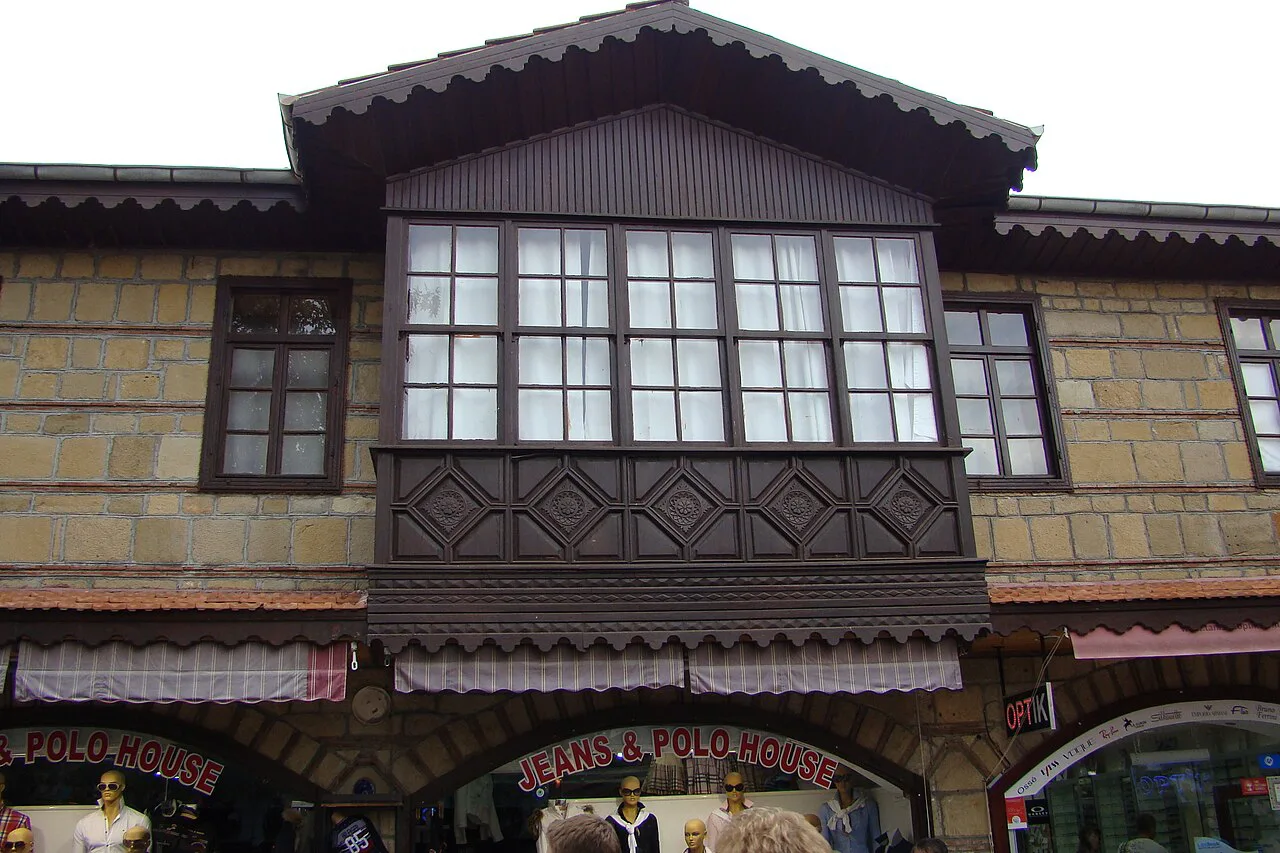
The lanes: a maze of alleys, courtyards and traditional houses
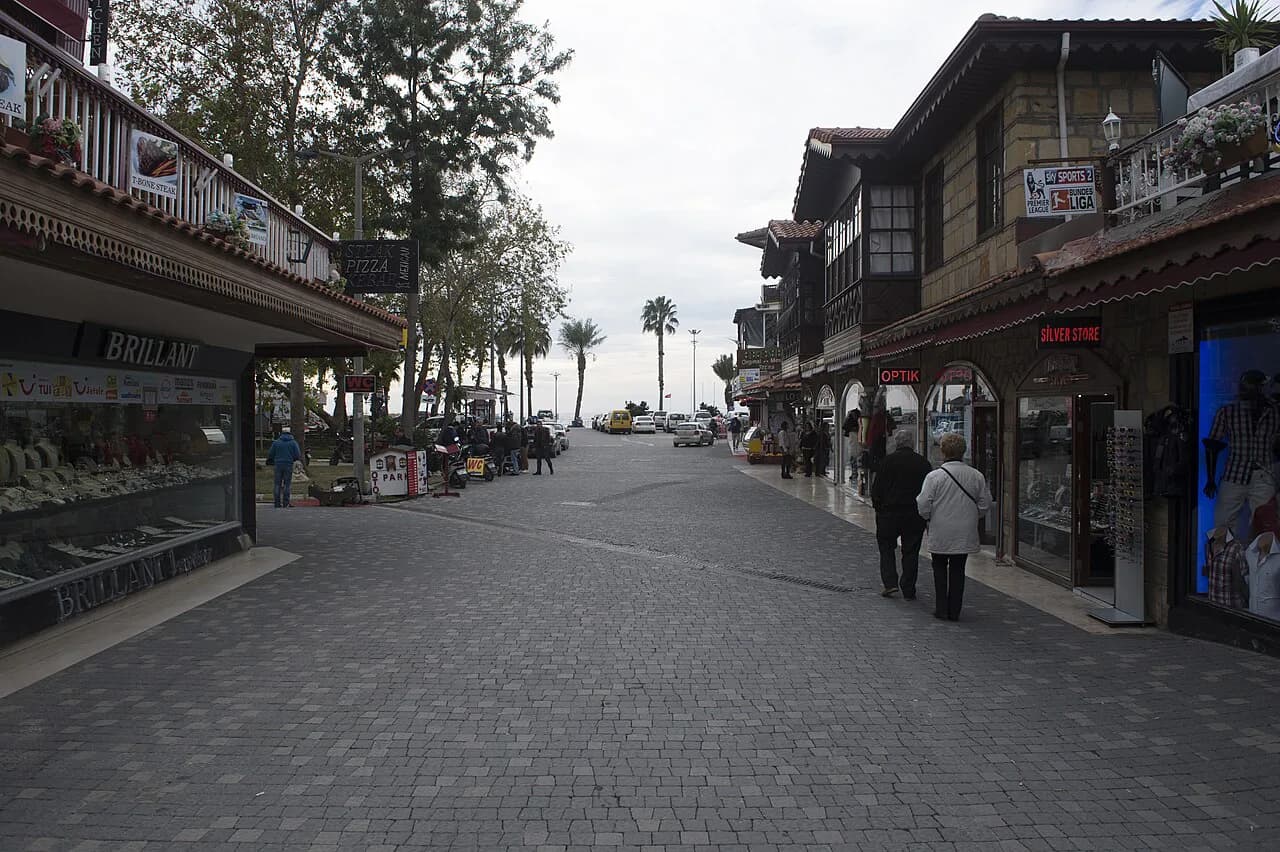
The narrow streets of the old town form a maze of alleys, courtyards and traditional Turkish houses, which is the texture you remember as much as the monuments. Walking is slow and pleasant here, but the surfaces are old and uneven in places, so wear shoes with grip and watch children near the ruins.
Along the lanes you pass restored houses, boutique shops and cafés set among the monuments, which makes the middle of the day easy: step indoors or into shade when the sun is high, then carry on. Treat the lanes as the connective tissue between sights rather than a separate stop.
The city walls and the gate of Vespasian
The city walls run for roughly six kilometres around ancient Side, and the monumental gate of Vespasian is the natural place to start a walk. Begin here in the first hours after sunrise, when the open-air ruins are cool and quiet and the light is kind for photographs.
From the gate, follow the colonnaded streets inland toward the commercial heart of the ancient city. The line of columns gives the walk its direction and keeps you off the busiest lanes.
The colonnaded streets and the agora
The colonnaded streets lead to the agora, the old commercial heart of Side and the hub of the ancient grid. Walk it before the heat builds, because the open ground here offers little shade and the stone throws the sun back at you by mid-morning.
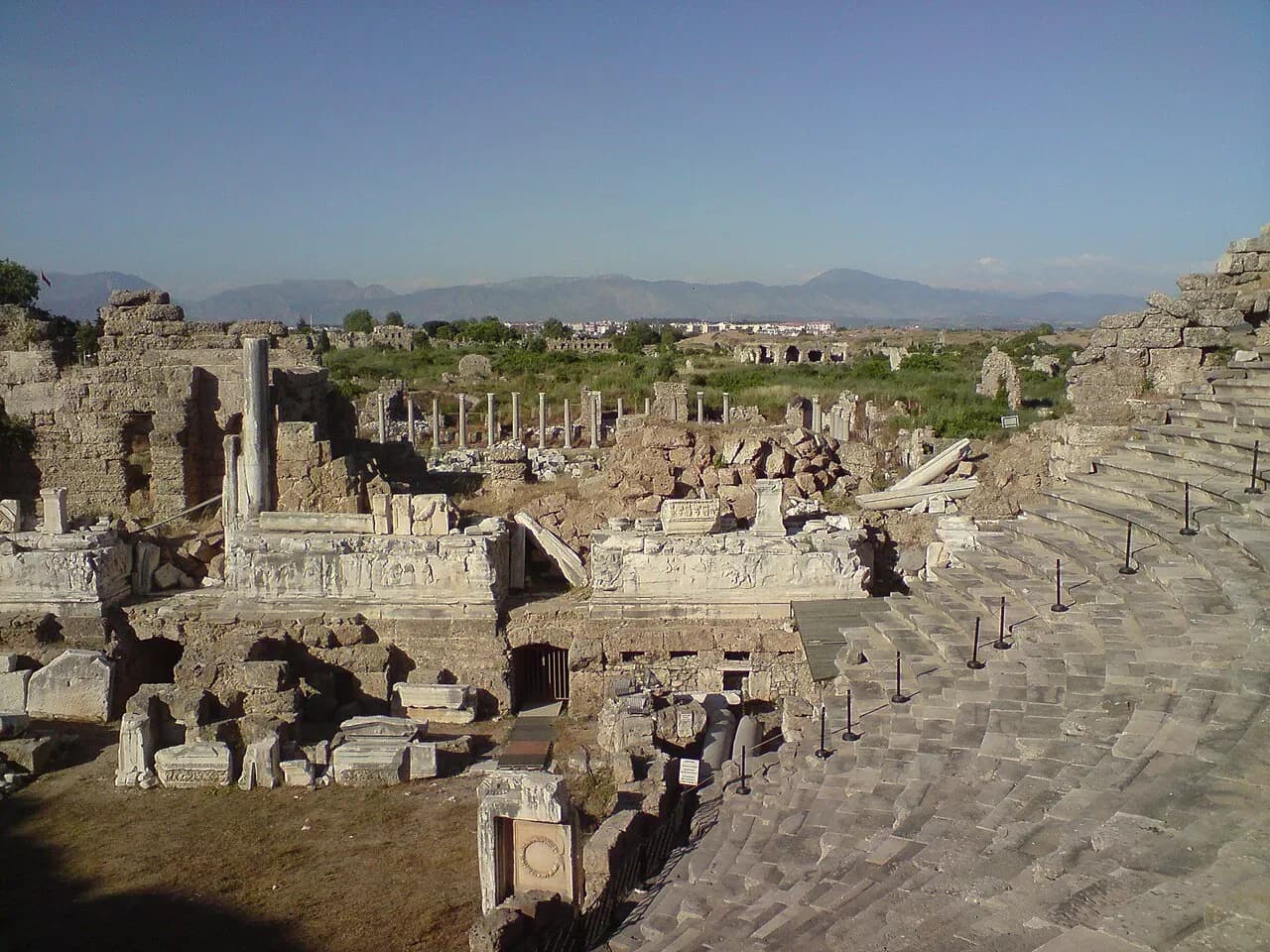
Beyond the agora the great theatre is impossible to miss, and it marks the transition from the streets and squares to the ticketed monuments. Read the agora as the place where the ancient town's business happened, then move on rather than lingering.
The ancient theatre
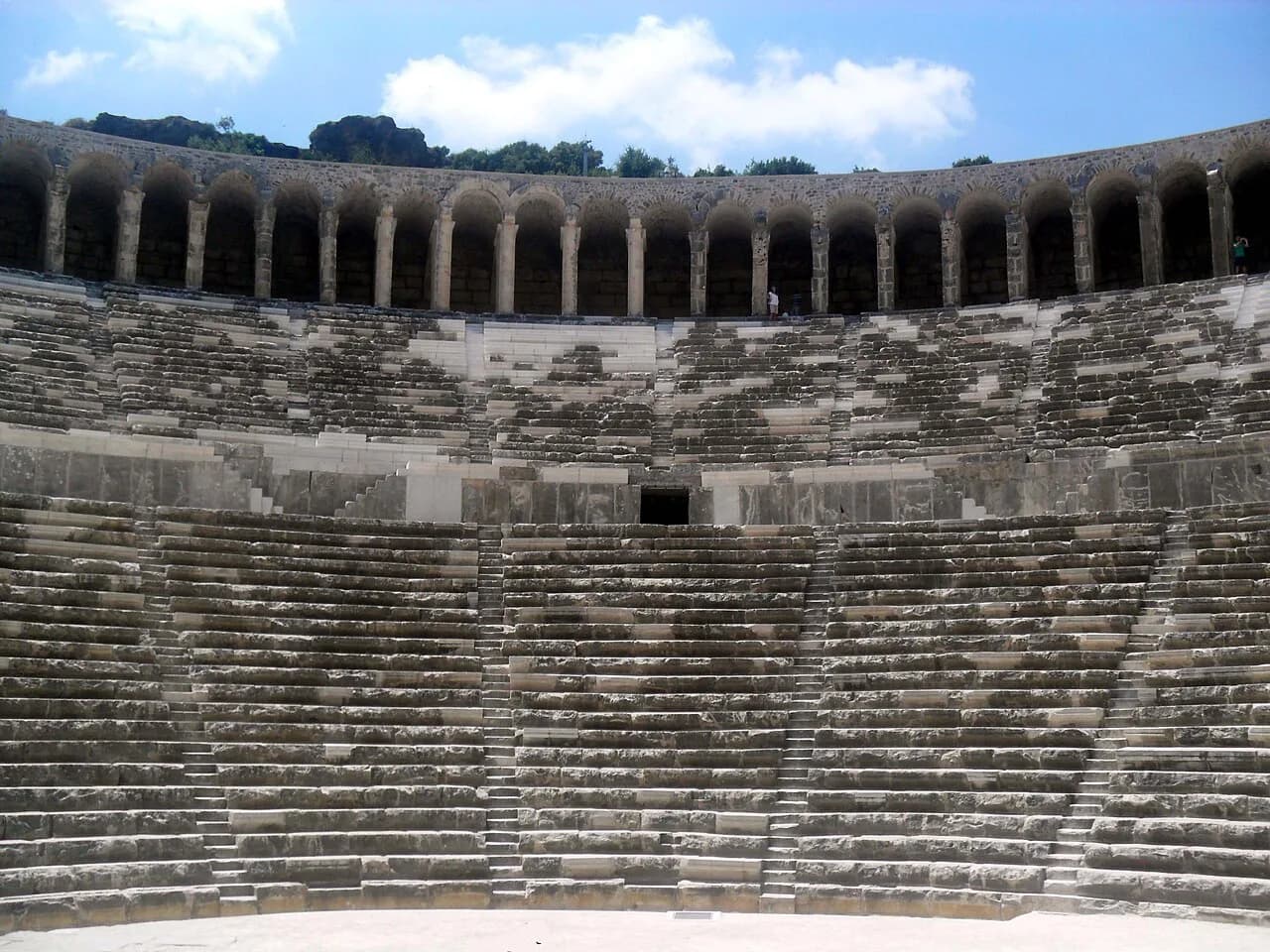
Side's theatre is one of the largest in the region, described by the Ministry of Culture and Tourism as an architecturally unique example in Anatolia that blends Hellenistic design with Roman vaulted construction. It can have its own entrance fee and visiting hours, and both change with the season, so check the official museum site before you rely on any figure you read online.
One tour-seller listing gives the theatre at 8 euros and the Side Museum at 5 euros, which is useful for rough budgeting rather than a guarantee at the gate. Treat the two together, since they sit close enough to visit back to back.
The Side Museum and its restored Roman bath
The Side Museum occupies a restored Roman bath inside the ancient city, displaying sculpture and finds from the local excavations. It has a separate entrance ticket, so budget for it alongside the theatre, and save it for the middle of the day when stepping indoors is a relief.
Because the museum and the theatre are the two ticketed stops, they set your pace. If time is short, the museum gives you the finds in one contained space; if you have the day, pair it with the theatre and let the rest of the old town stay free.
The Temple of Apollo and Athena at the water's edge
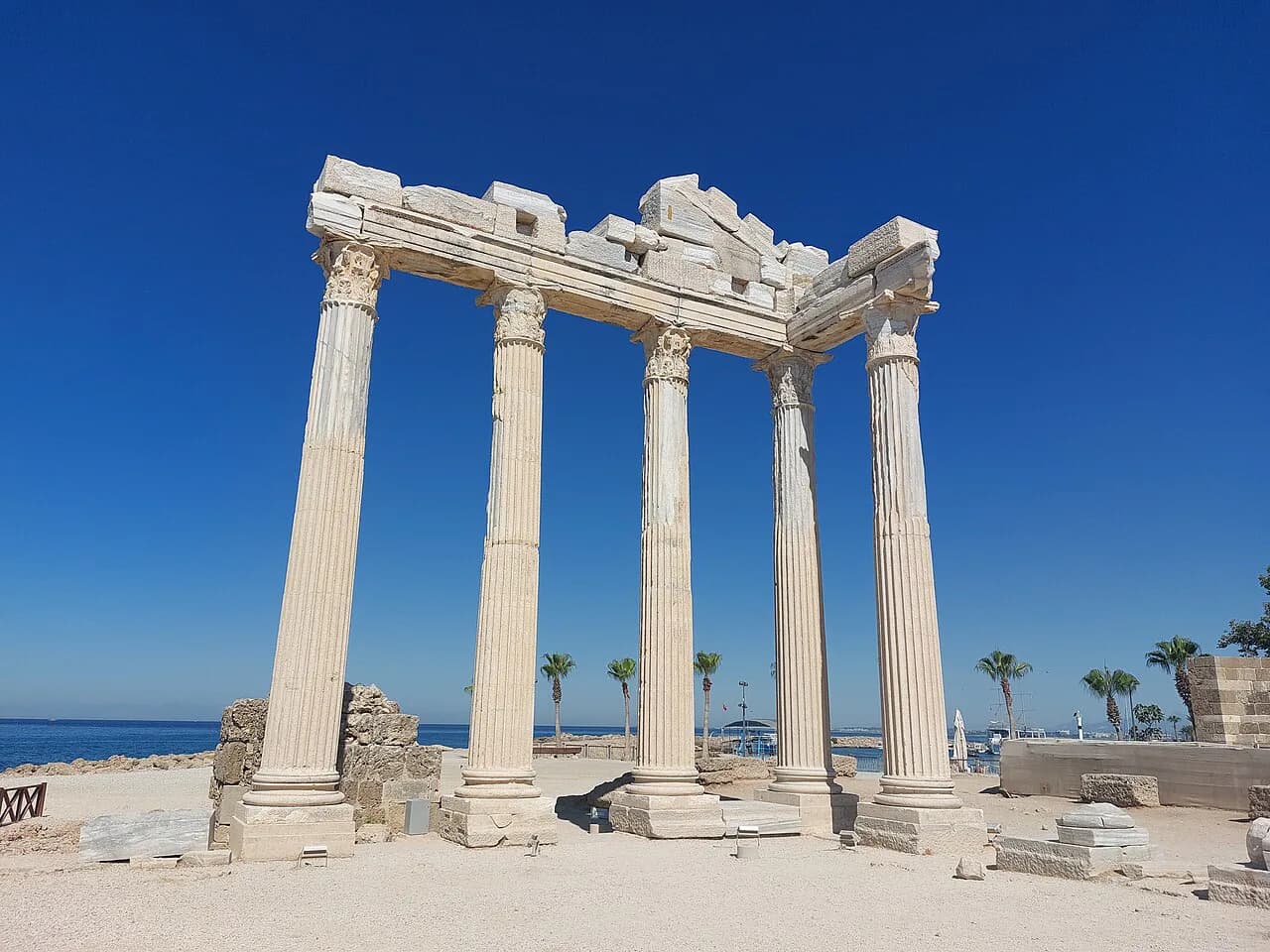
The Temple of Apollo and Athena stands at the water's edge, its marble columns built in the second century BC and surviving beside the sea. Save it for last: at sunset the columns glow gold against the Mediterranean, which is why this is Side's most photographed view.
Arrive with time to spare, because the best light fills with people, and early morning is quieter if you would rather have the columns to yourself. Choose your trade-off deliberately: sunset for colour, sunrise for space.
A walking route through the peninsula from gate to temple
Start at the gate of Vespasian and the city walls, follow the colonnaded streets to the agora, then take in the theatre and the museum before the afternoon heat peaks. Finish with the Temple of Apollo at the water's edge as the light turns gold. Allow most of a day; you can see the highlights faster, but Side rewards a slow pace.
Keep the route one-directional. Crossing the peninsula once takes you past the rubble-and-column backstreets on the way in and drops you at the harbour and lanes for the evening, with no backtracking through the museum quarter.
The harbour side and the lanes around it
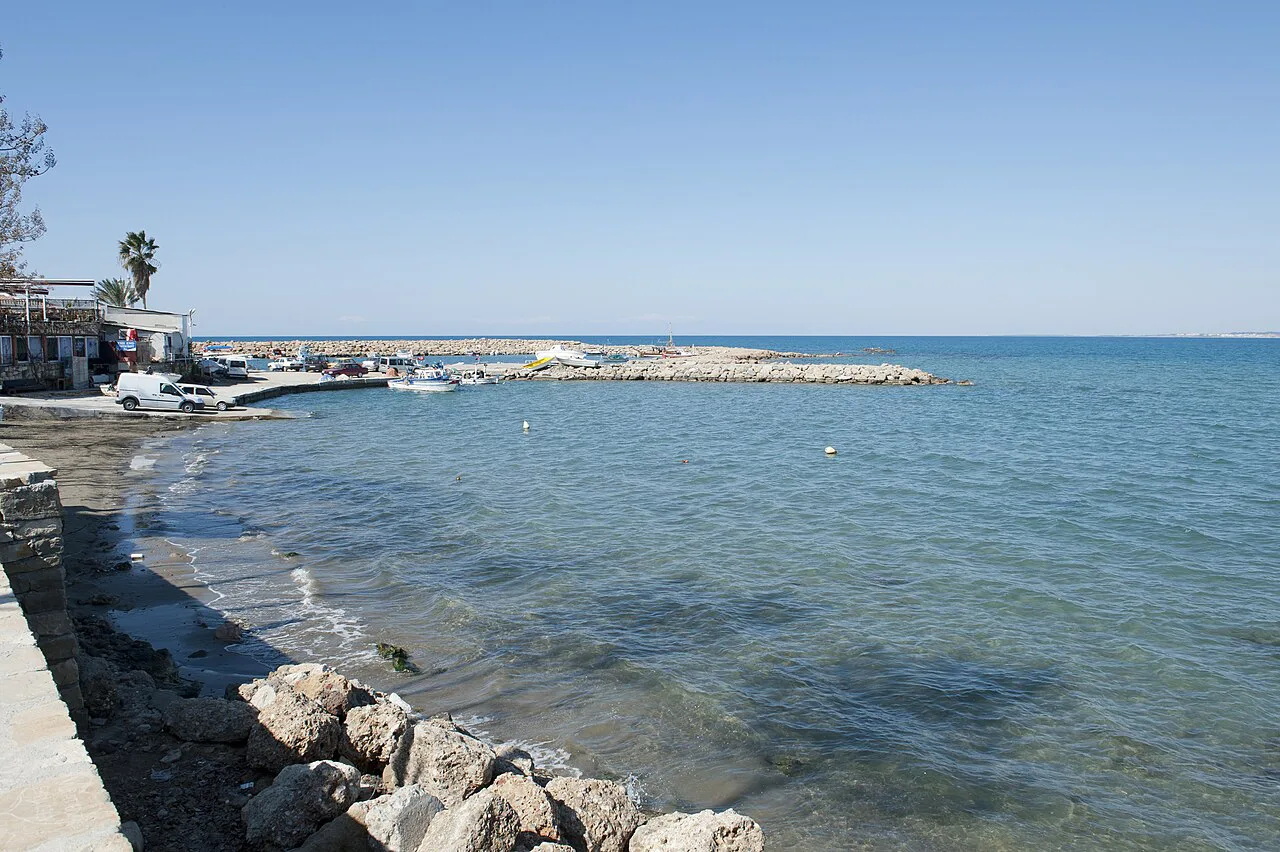
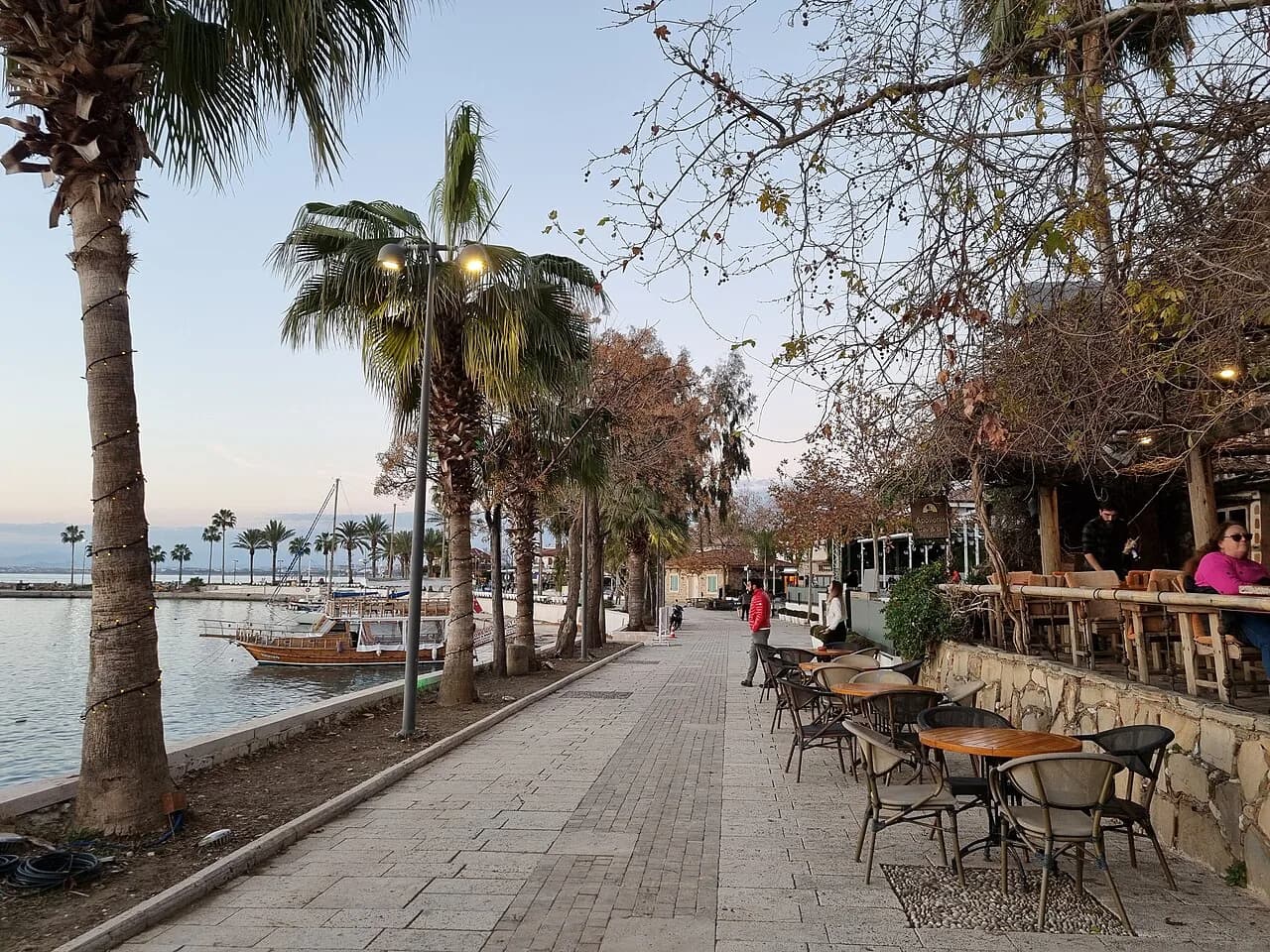
The harbour side is where you end up after the temple, with the lanes around it made for a slow wander past shops and shaded spots to eat. The Side ancient theatre and the museum sit within reach of this lower route, so you can re-enter the ruins without retracing the whole peninsula, and the Side Harbour is the obvious place to finish.
From the lanes, the Side promenade and its seafront make a flat walk back toward the resort side of town. It is the easy way to close the loop without another climb through the alleys.
What Side Old Town is like in summer heat and crowds
The ruins are largely open-air and spread through the old town, so the first hours after sunrise are the most pleasant for walking and the light is at its kindest. In high summer, treat early morning and sunset as the two working windows and use the middle of the day for the museum, the lanes and shade.
Spring and autumn give the most comfortable walking weather, and the open-air old town suits families despite the uneven paths. Those paths also mean you should eat and rest when the sun is high, then carry on when it drops.
Tickets: what is free to walk and what has a separate fee
Walking the old town costs nothing, because much of the ancient city is open-air and runs through the modern streets, with the theatre and the Side Museum carrying their own fees. Treat those two as your budgeted stops and the lanes, walls, streets, agora and temple as the free frame around them.
One tour-seller listing gives the theatre at 8 euros and the Side Museum at 5 euros, but fees and seasonal opening vary, so confirm before you set out. Guided options generally quote guiding and transfers at booking and leave site and museum entrance fees out of the price.
Early morning or sunset at the temple?
Pick early morning if you want the streets, colonnades and agora quieter and cooler, and accept that the temple will not be at its golden best. Pick sunset if the Temple of Apollo is the photograph you came for, and accept the company around the columns.
Either way, walk the peninsula once in order and leave the museum and theatre for the middle of the day. Compare Side with the lanes of Antalya Old Town (Kaleiçi) or Alanya old town if you are weighing a base on this coast.
Explore more Side guides
Frequently Asked Questions
Do you need a ticket to walk around Side Old Town?
No. Much of the ancient city is open-air and woven through the modern old town, so you walk freely. The theatre and the Side Museum are separate ticketed stops.
How long should you give Side Old Town?
Allow most of a relaxed day to take in the theatre, agora, museum and Temple of Apollo without rushing. You can cover the highlights faster, but the town suits a slow pace.
Where do you start a walk through Side Old Town?
Begin at the city walls and the gate of Vespasian, follow the colonnaded streets to the agora, then continue to the theatre, museum and Temple of Apollo at the water's edge.
Sources
Notes for your next Turkey trip
Optional updates when we add or correct a town guide.
You might also like
Continue reading
More guides you'll find useful