Side Bazaar: Market Days, What's Sold and How to Haggle
Side Bazaar is Side's Saturday market, held opposite the big mosque and selling clothes, souvenirs and food. Here is what to buy and how to haggle.
On this page
Side Bazaar is Side's Saturday market, set up opposite the big mosque rather than inside the ancient old town. It is a weekly open-air affair of clothing, souvenirs and food, with the same kind of goods sold at the weekday markets across the river in Manavgat. This guide sets out the market days, what is on the stalls, how bargaining works and how to get there by dolmuş.
Treat it as a half-day outing rather than a quick browse: the stalls spread across open ground, the textile rows reward a slow walk, and the food side moves to its own rhythm. If Saturday does not fit your holiday, Manavgat holds markets on several other weekdays in named neighbourhood streets.
What the Side Bazaar is
This is a weekly street market, not the permanent shop-lined streets of the old town, and stalls go up for the day and come down afterwards. Visitors describe the Side version as carrying the same range as the two Manavgat markets, which makes it the simplest single stop if you are staying in Side itself.
Manavgat's markets are the larger operation, with some spread across several streets and divided into a covered food section and an open-air clothing section. That split is the useful thing to picture before you go to the bigger markets: one half for produce, cheese, honey and village goods, the other for T-shirts, towels, bags, jewellery and souvenirs.
Market day and location
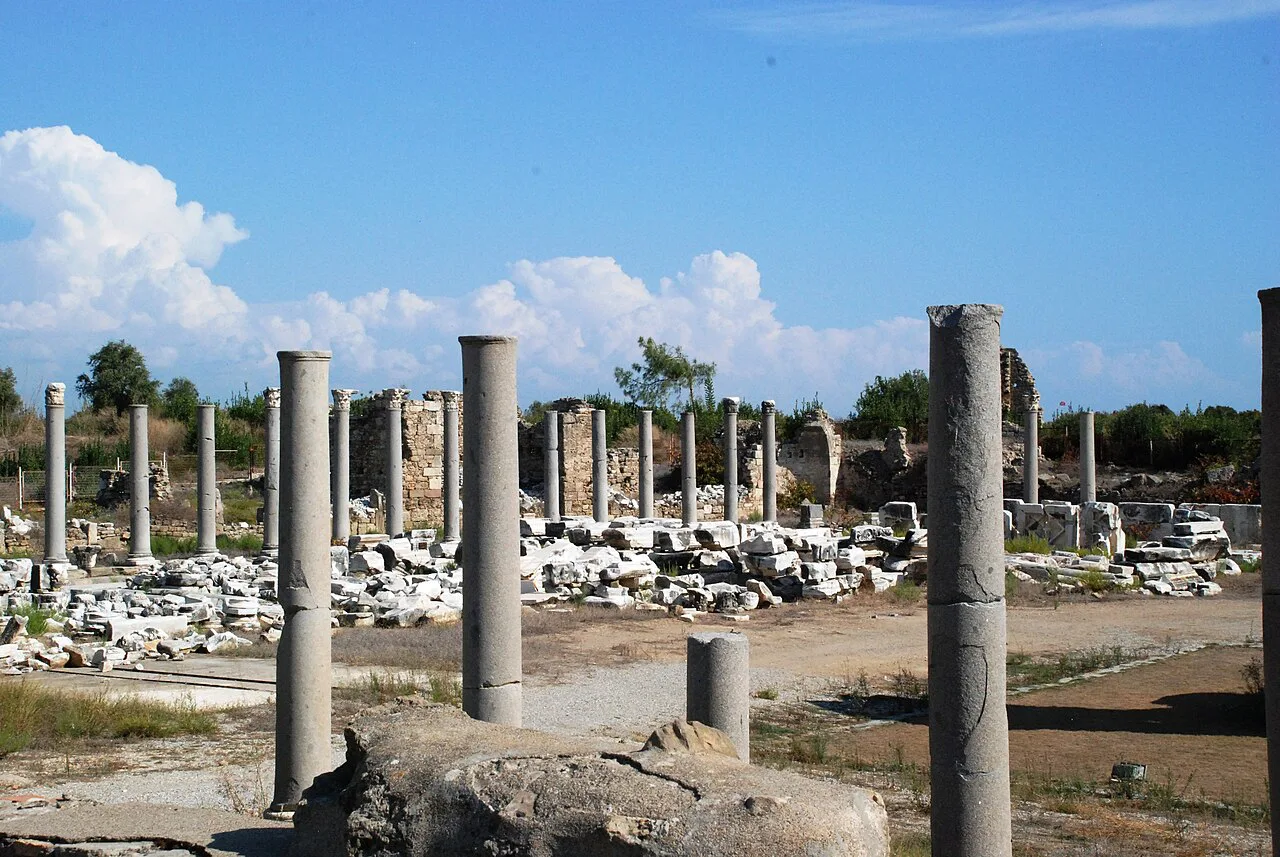
Side's market day is Saturday, and it is held opposite the big mosque. It is not held in the ruins of the old town, so do not plan to wander straight from the theatre into the stalls; the market sits in the modern town instead.
The Side market sells the same broad mix that the Manavgat markets do — clothing, souvenirs and food — so a single visit covers much of what you would otherwise travel inland for. Browse the Manavgat bazaar days below if you want to see the larger operation for yourself.
Manavgat's other market days
If Saturday does not fit, Manavgat covers most of the week. Monday brings the Pazartesi Halk Pazarı on Pazarcı Mah. 1010 Sk., Wednesday the Çarşamba Halk Pazarı on Kasaplar Mah. Şeyh Şamil Cad. 7063 Sok., Thursday the Perşembe Halk Pazarı on Aşağı Hisar Mah. Gülveren Cad. and Friday the Cuma Halk Pazarı on Yayla Mah. 2592 Sok.
The Monday market spreads over flat residential streets on the east bank of the Manavgat River, a short walk inland after you cross the main bridge, and is not directly on the riverfront. The Thursday market sits closer to the town centre, reached by walking downhill after turning right from the main street where the banks are, and its flat ground and clear rows make it the easier one to navigate with a stroller or at a slower pace.
What is sold
The food side is the local half: seasonal fruit and vegetables, fresh herbs and greens, olives, cheeses, honey, butter and jams, with some produce brought in directly by village producers. Expect bread, olive oil and tea among the everyday staples, and pomegranates, tomatoes, cucumbers and olives among the fresh goods.
The open-air side is where most visitors spend their time and money: T-shirts, dresses, sportswear, children's clothing, beach bags, backpacks, belts and wallets, towels and bed linen, jewellery, magnets and evil-eye charms. Replica football shirts and branded-style items turn up too, so check stitching and sizing before you agree a price.
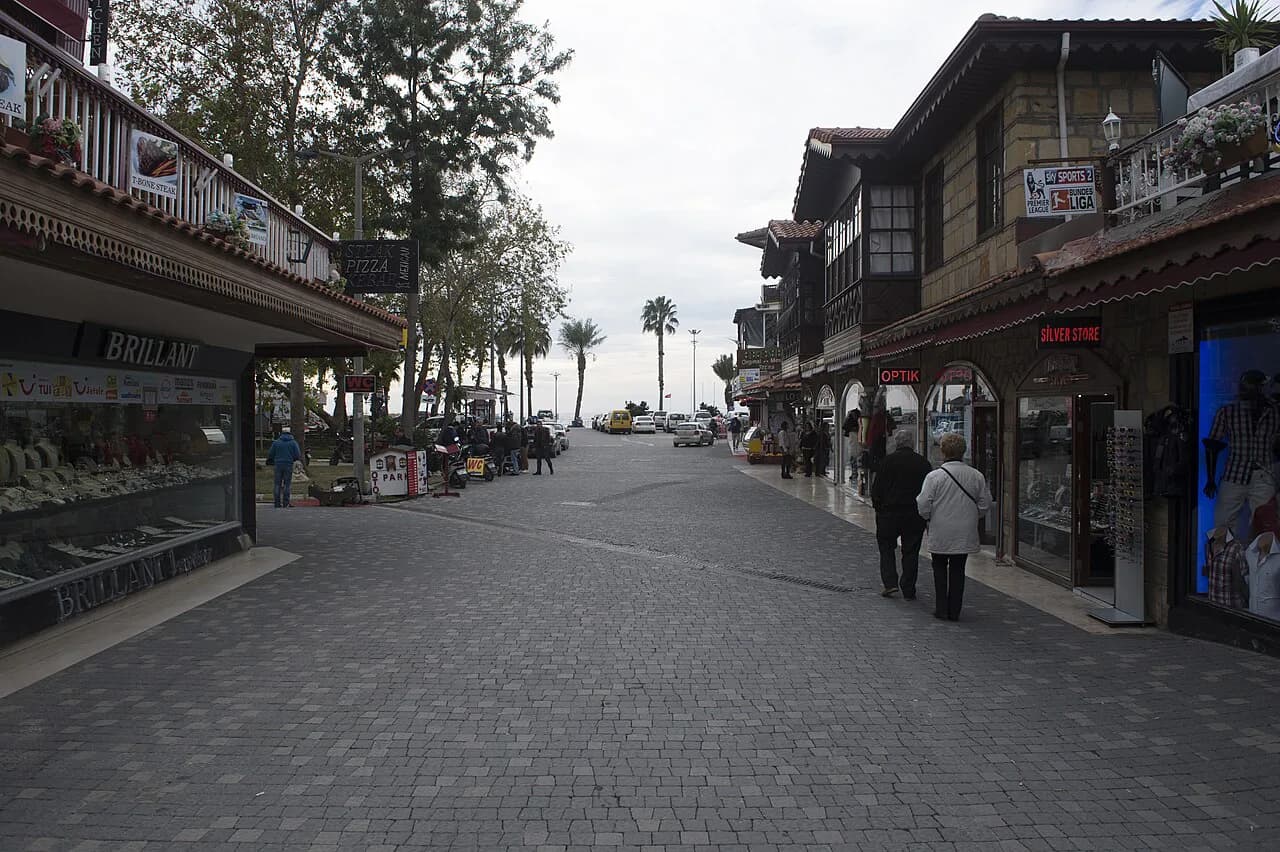
Beyond the market itself, shopping in Side splits between the Saturday stalls and the shops of the old town. If you want a permanent shop rather than a market table, browse the Side old town and harbour streets on another day.
How to haggle
Bargaining is normal on the clothing and souvenir side, and it works best when you stay polite and relaxed and treat it as part of the outing rather than a contest. This is true in particular at the Manavgat Monday market, where the food side runs differently: prices are usually written and fair, and small discounts happen mainly when you buy in larger quantities.
Walk the rows once without buying to compare quality and asking prices, then return to the stall you liked. Ask the price before you handle anything fragile, and count your change on the spot. Carry cash in small notes, since card readers are not a given at a table stall.
Crowds and timing
At the Manavgat Monday market, dolmuşes begin arriving from Side, Kumköy, Evrenseki, Çolaklı, Sorgun and Titreyengöl from around 08:00, with the busiest stretch typically 10:00 to 13:00 and the atmosphere calming noticeably after about 15:30. Use it as a rough guide to the rhythm of the weekly markets rather than a fixed timetable.
At the Manavgat Monday market, go early for the food section, which is quieter and more local before the crowds build, and later for the clothes if you want room to browse. In high summer, a late-afternoon visit also avoids the worst heat of the day.
Getting there by dolmuş
Dolmuş minibuses run to the Manavgat markets from Side, Kumköy, Çolaklı, Kızılağaç and Kızılot, and on market days drivers often call out the market name as they approach, so listen for the announcement rather than watching for a stop. A typical fare at the Monday market is around €2 per person, paid in cash.
From Side itself the ride is short, which is why a Saturday market works well as a morning trip without a car. Ask your driver on the way in where the dolmuş picks up for the return, since market-day stops are not always signed.
Pairing the market with the rest of the day
A market visit fits naturally into a half-day plan. Near the Manavgat markets you will find small local restaurants by the river, pide and lahmacun bakeries, and gözleme stands with fresh juice, which makes lunch straightforward once the shopping is done. For sit-down options closer to the resort, the best restaurants in Side cover the old town and the modern streets.
Boat trips on the Manavgat River, including a waterfall-and-bazaar combination, run in the same area, and jeep and quad safaris operate from Side for anyone who wants more of the day. Keep the market as the anchor and add one of these rather than trying to fit in everything.
Is the Side Bazaar worth a morning?
Yes, if you want a genuine weekly market rather than a purpose-built shopping street, and Saturday is your day. The best version of the trip is an early dolmuş, a slow pass through the food section, a haggle over a bag or a towel, then lunch by the Manavgat River before the afternoon crowds thin.
Frequently Asked Questions
What day is the market in Side, Turkey?
Saturday. The Side market is held opposite the big mosque, and traders sell much the same mix of clothing, souvenirs and food as the Manavgat markets. If you are in resort for a week, check the day against your arrival before planning around it, and remember the Manavgat weekday markets as a fallback.
Is the Side Bazaar in the old town?
No. It is set up opposite the big mosque in Side rather than among the ancient ruins, so build a separate walk through the old town into your day if you want to see the theatre and harbour as well.
Do you haggle at the Side Bazaar?
On the clothing and souvenir side, yes, and a friendly, relaxed approach is normal. On the food side prices are usually written and fair, with discounts mainly for larger quantities. Ask before you handle goods and count your change.
How do I get to the Side Bazaar without a car?
Take a dolmuş from Side or the nearby villages; drivers often call out the market name on market days. Fares are typically paid in cash, so keep small notes handy, and ask your driver on the way in where the dolmuş stops for the return.
Sources
Notes for your next Turkey trip
Optional updates when we add or correct a town guide.
You might also like
Continue reading
More guides you'll find useful