Side Amphitheatre Guide: Visit Side's Roman Theatre
The Roman theatre in Side Old Town was built in the 2nd century AD and held thousands. Here is what survives, how it was used, and what sits beside it.
On this page
The Side Amphitheatre is the Roman theatre at the heart of Side Old Town, beside the Side Museum and easily combined with it in a single morning. It was built in the 2nd century AD and later reshaped more than once, so the structure holds three phases of use in one shell. This guide covers what stands, how the building worked, what sits beside it, and how to plan the stop without relying on outdated ticket or closure information.
Where the theatre sits in Side Old Town
The theatre stands in the centre of Side Old Town, close enough to the harbour and the main streets that you will pass it without a detour. It is right next to the Side Museum, which occupies a restored Roman bath, so the two sights sit almost on top of each other. Arriving early in the day keeps the site quieter than the middle of the afternoon, when tour groups move through the old town, but access can be affected by restoration, so check that the gates are open before you plan around it.
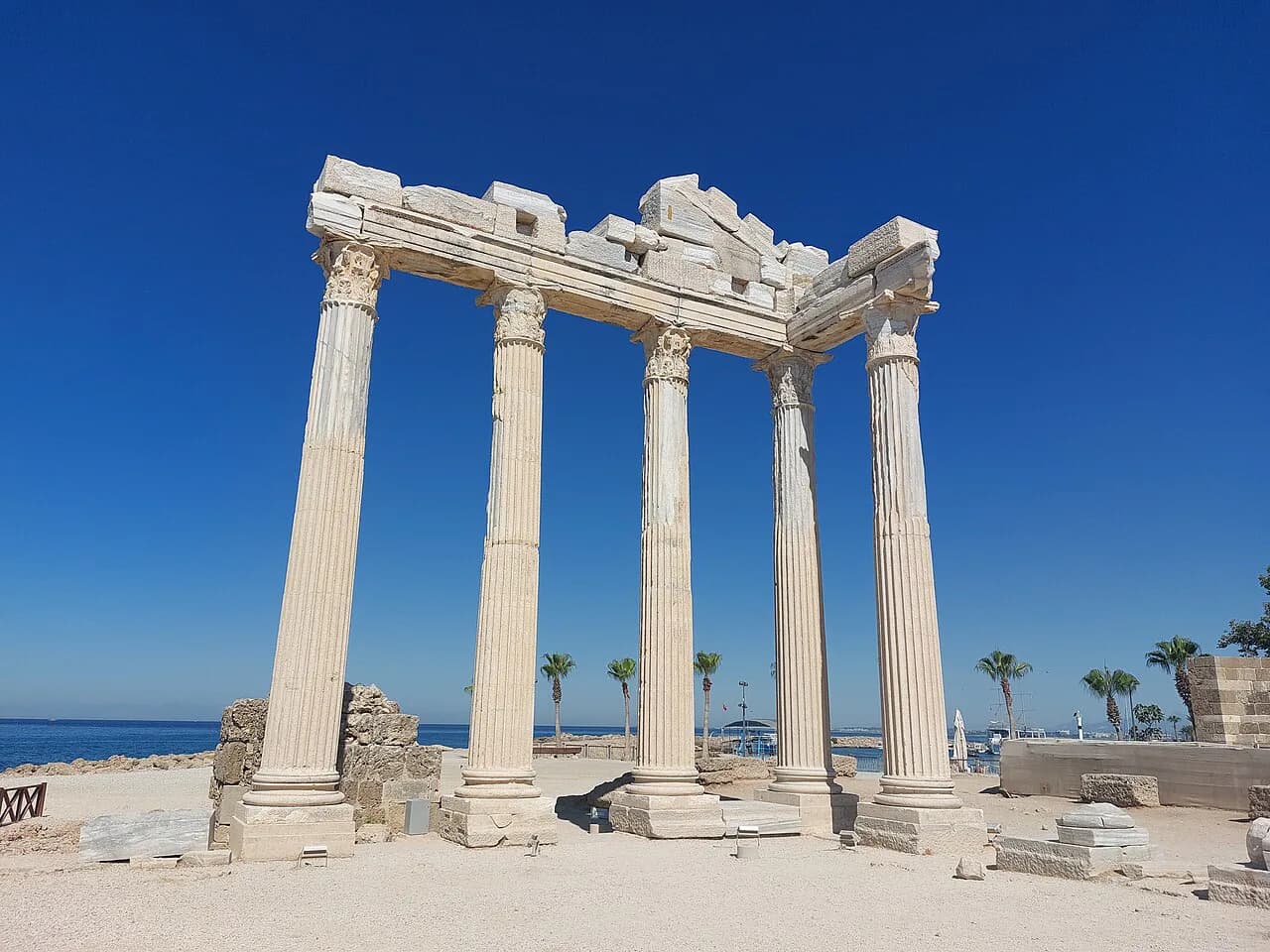
Because the theatre is inside the old town rather than out on a separate archaeological site, it works as a stop on a walking loop rather than a half-day excursion. Pair it with the Temple of Apollo and Athena down by the water and the rest of the ancient city, and you have a compact circuit on foot. Plan roughly an hour for the theatre and museum together if you read the information panels, less if you are simply looking.
What you see inside the theatre
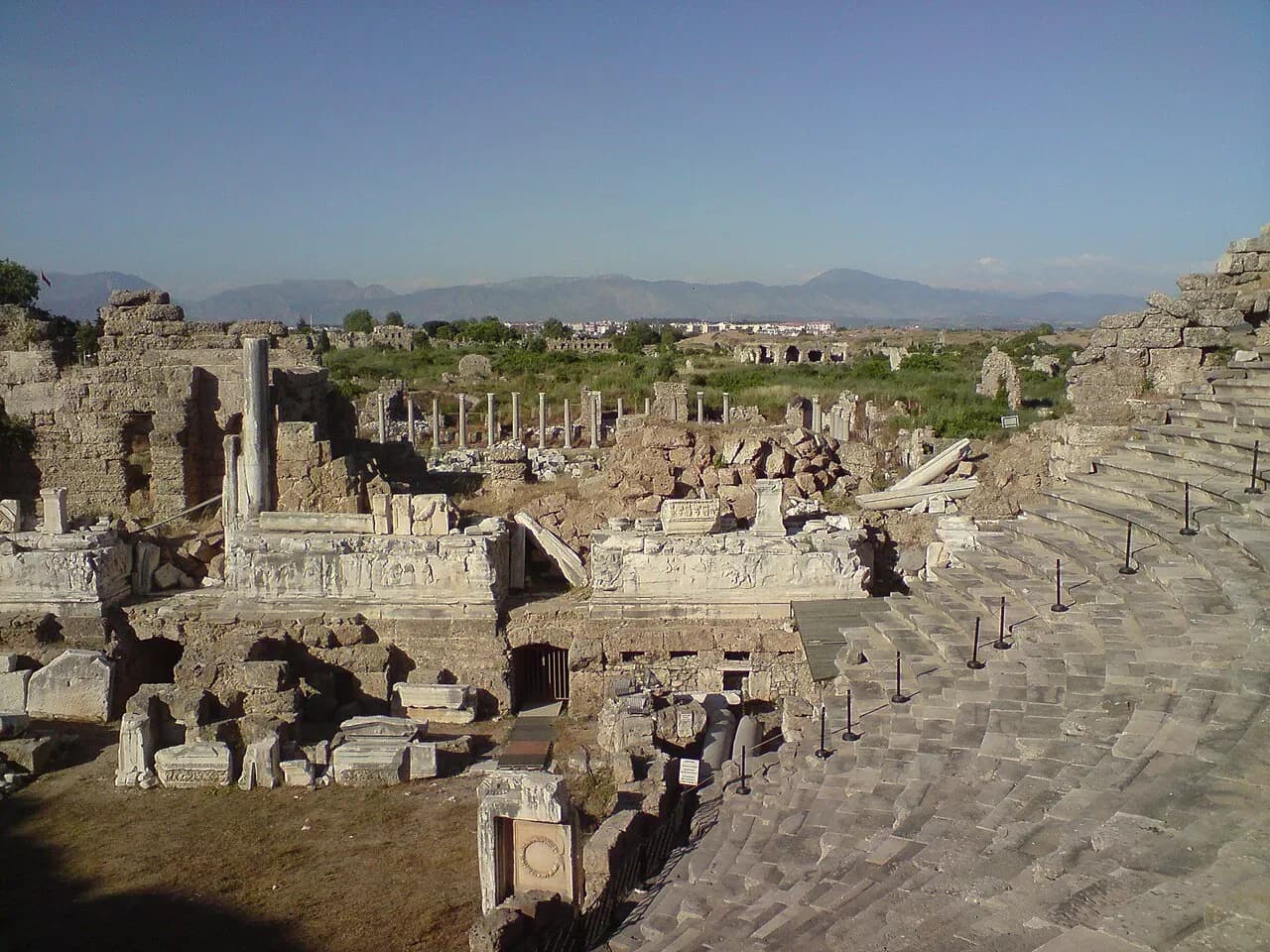
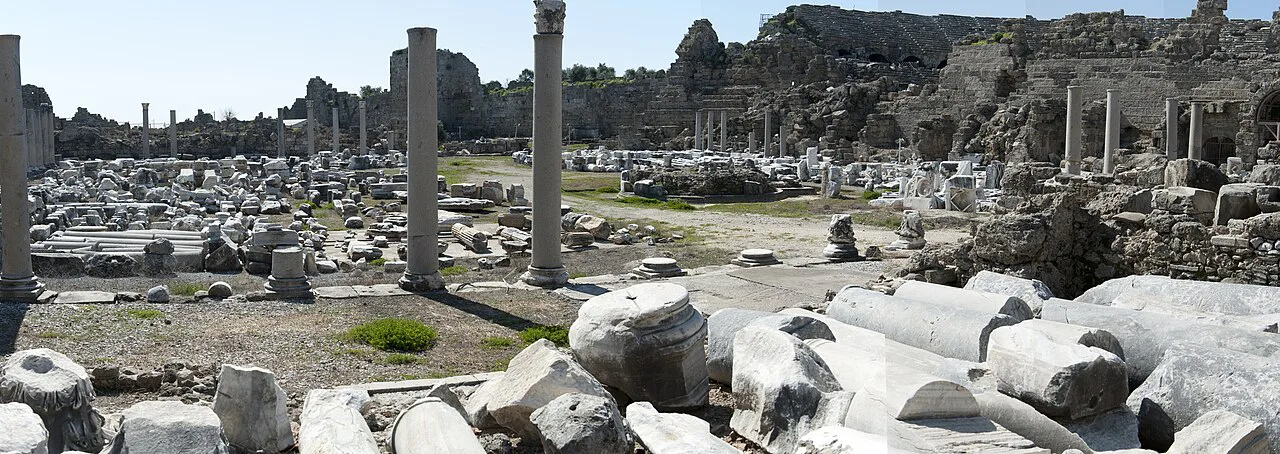
The seating area mixes Greek and Roman building styles, and accounts of the theatre describe rows arranged so that even visitors in the upper tiers can see the stage clearly. Between the stage and the audience sits the orchestra, the flat semicircular area that in this theatre could be flooded to stage sea-battle scenes. Carved details remain on the walls and are still legible in places, which rewards a slow walk around the perimeter rather than a quick photo from the top, where that is possible given the damaged and partly restored seating.
Only part of the original structure survives, so the cavea today is smaller than the full Roman seating bowl. The theatre appears in the Ministry of Culture and Tourism's list of museums and monuments, which is the place to check its status before you build a day around it.
How many people it held
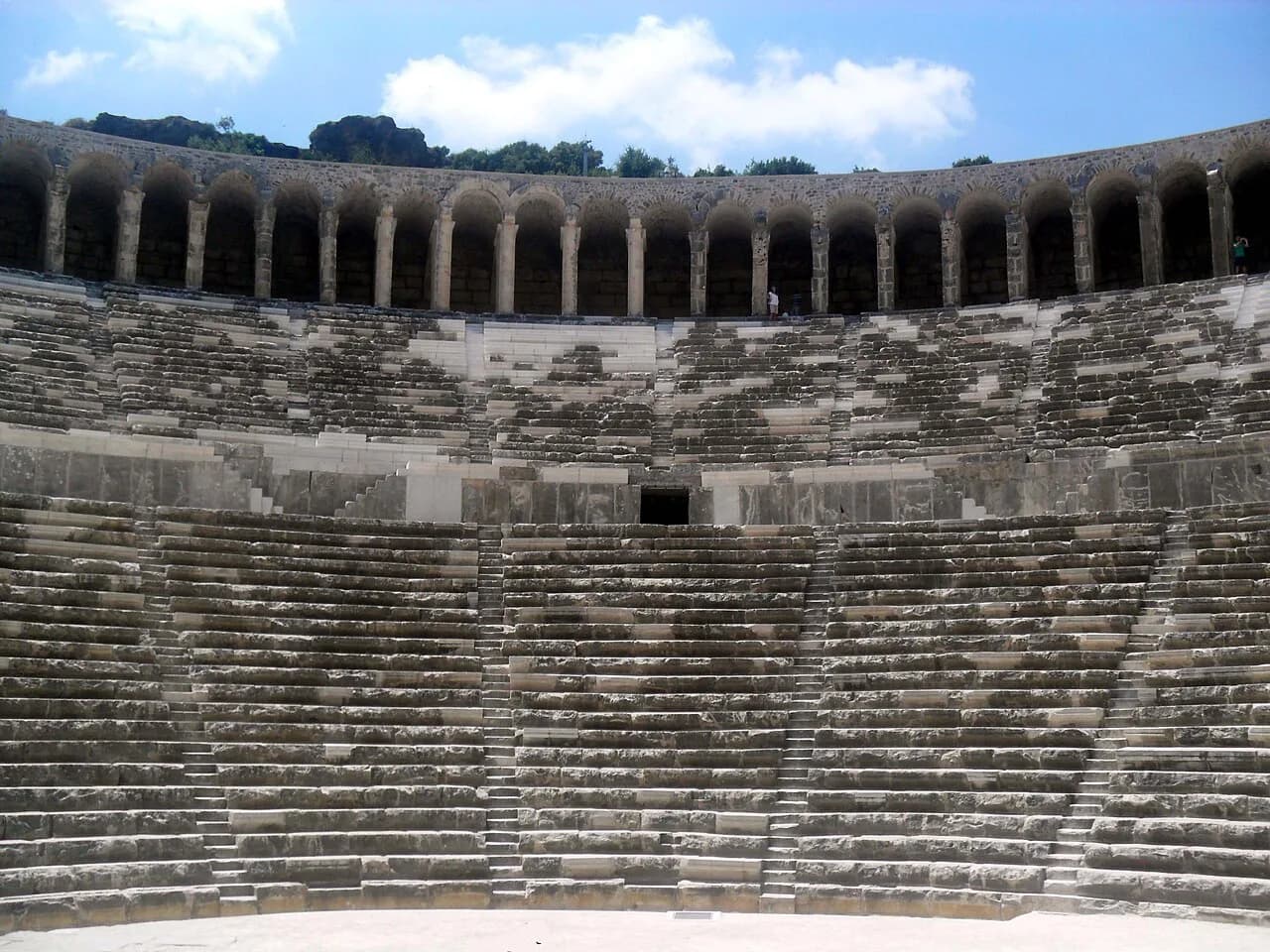
Published capacity figures do not agree: one Side operator puts the theatre at 15,000 to 20,000 spectators, while a hotel guide to the ancient city gives 9,000. Treat either figure as approximate. What matters on site is the scale of the seating bowl, which is large enough that the stage feels distant from the top rows.
A Side operator describes the theatre as the largest in the Pamphylia region. The stage building and seating were made for large audiences, and the surviving rows still convey that scale better than any figure.
Roman build, arena phase and Byzantine church
The Romans built the theatre in the 2nd century AD on the remains of an older Hellenistic theatre, so the site had already been a performance space before the Roman rebuild. In the 3rd century AD it was converted into an arena for gladiator fights, with additions made to the structure for that purpose. Later, in the Byzantine period, it became an open-air church where religious ceremonies were held.
Knowing these phases changes how the ruins read. The arena additions explain modifications to the seating and stage area that look odd if you assume a single Roman theatre, and the church phase explains why the building survived in use long after classical drama ended.
Why it stands on arches rather than a hillside
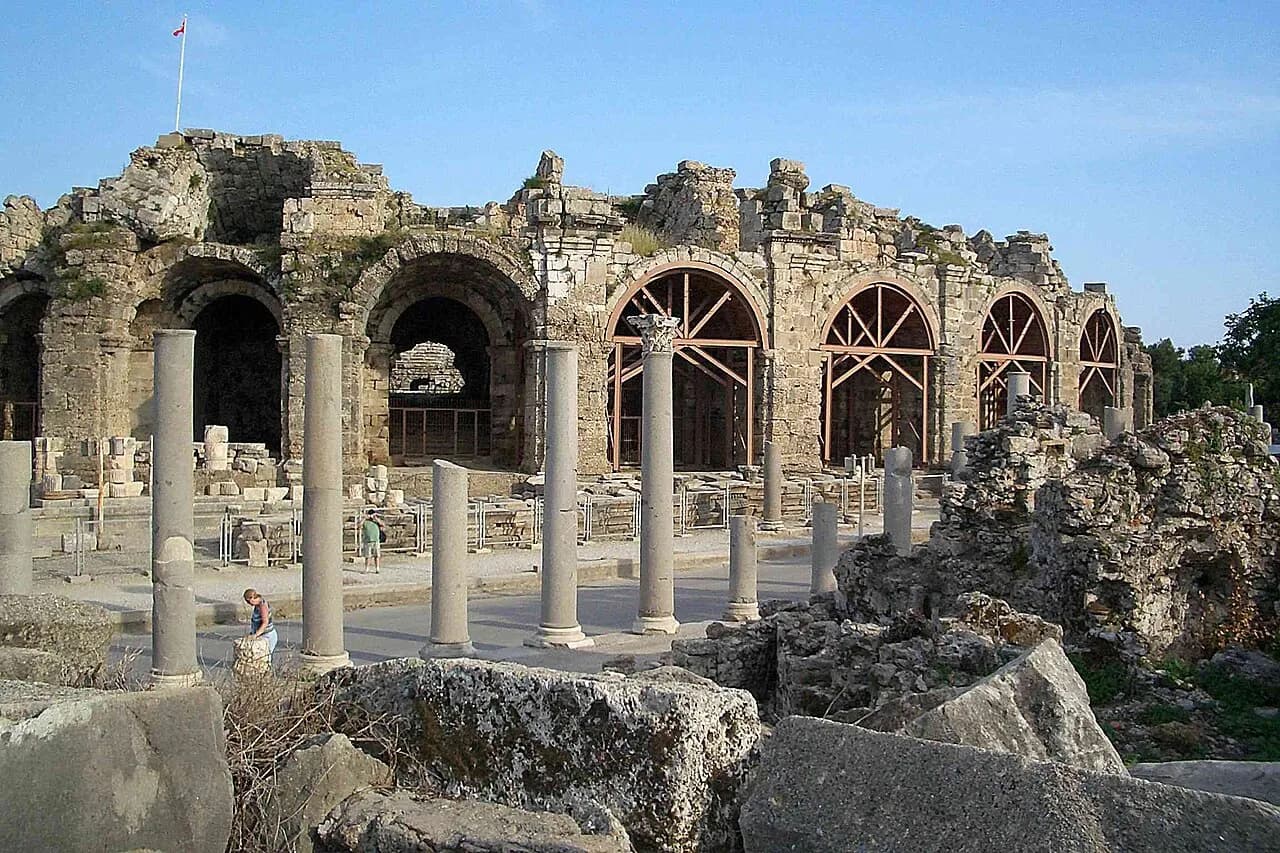
Most Roman theatres in Anatolia are cut into a hillside, using the slope to support the seating. This one is different: only part of it rests on the slope, and the rest is carried on raised floors supported by columns and arches. A hotel guide to the monument calls it the only example of this construction you will encounter in Turkey, which is the reason to look at the substructure as well as the view from the seats.
Walk around the outside base before you climb the rows. The arches are the structural trick that let the builders place a full-size theatre on flat ground in the middle of the city rather than on a convenient hill outside it.
Concerts and events in the theatre today
The theatre is not a sealed monument in normal use. By the accounts of ExcursionSide and the hotels nearby, it hosts concerts and cultural events from time to time, keeping it in use as a performance venue. Event programming changes year to year, and access can be affected by restoration work, so check the current site status before you plan a visit around a performance.
Tickets, opening and closures
Access at the time of writing is not guaranteed. A TripAdvisor review reports the Roman theatre closed for the rest of a season, and travellers have asked publicly whether it is shut for restoration without a confirmed answer. A Side operator says the theatre is open to visitors and that entry fees change over time, but gives no current figure. Confirm the gates are open and check the price at the site or on the official listing before you travel, and budget for the Side Museum separately or as part of a combined ticket depending on what is on offer.
Restoration closures are a real risk at Side. A TripAdvisor review reports the Roman theatre shut for the rest of a season, and a traveller has asked publicly whether it is closed for restoration and when it might reopen, without a confirmed answer. Check the site status before making the theatre the centrepiece of a day, and keep the museum and harbour as fallbacks if the gates are locked.
Nearby: the Side Museum and the rest of the ancient city
The Side Museum next door occupies a Roman bath built in the 2nd century AD and renovated in the 5th century AD, and it holds finds from the ancient city. Doing the museum first gives context to the theatre, the city walls and the harbour monuments.
From the theatre, walk down to the Temple of Apollo and Athena by the water and follow the old-town streets towards the harbour. The Side ruins are spread across the peninsula, so a loop taking in the theatre, museum, harbour and temple covers the main monuments without a car.
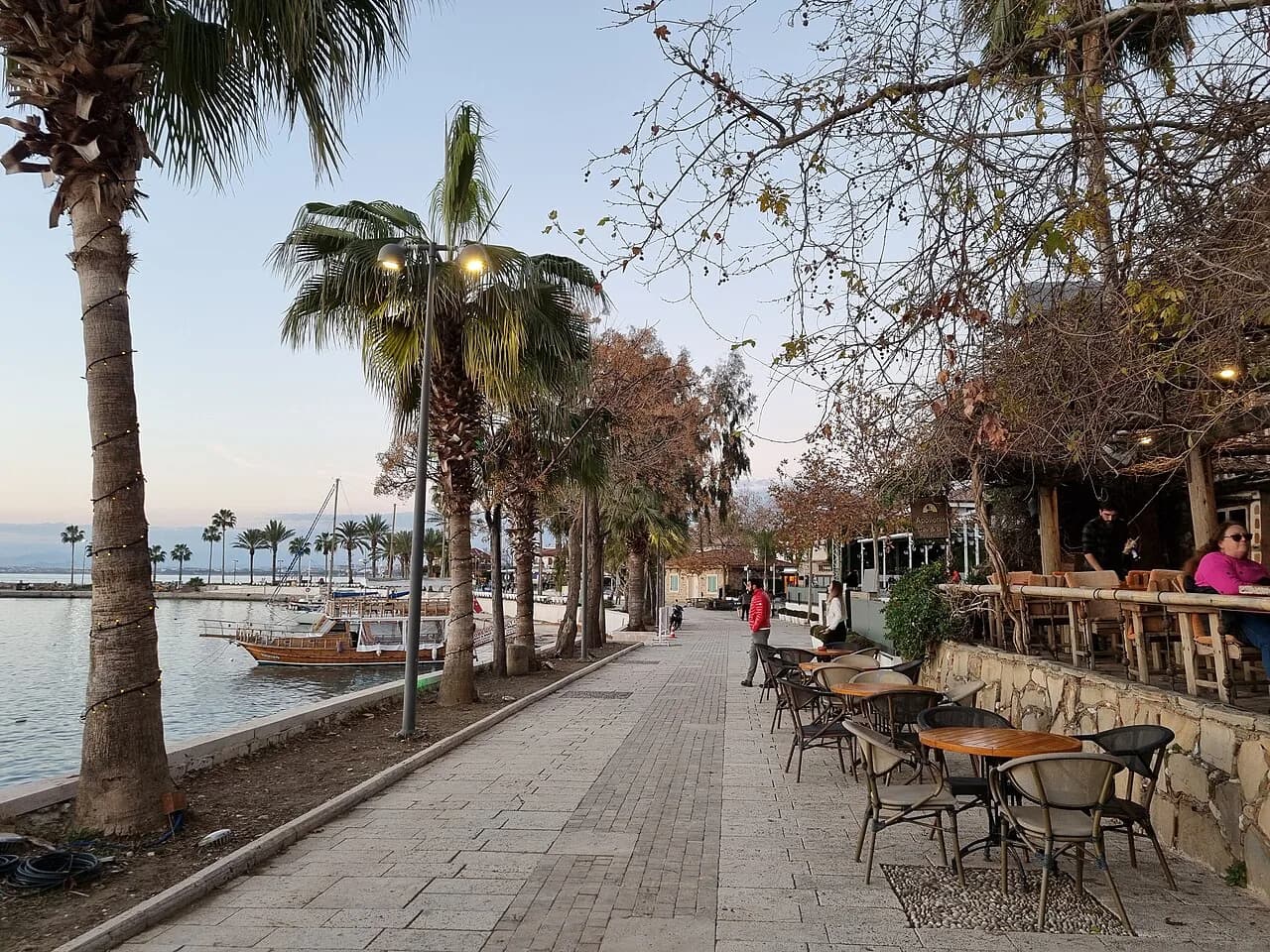
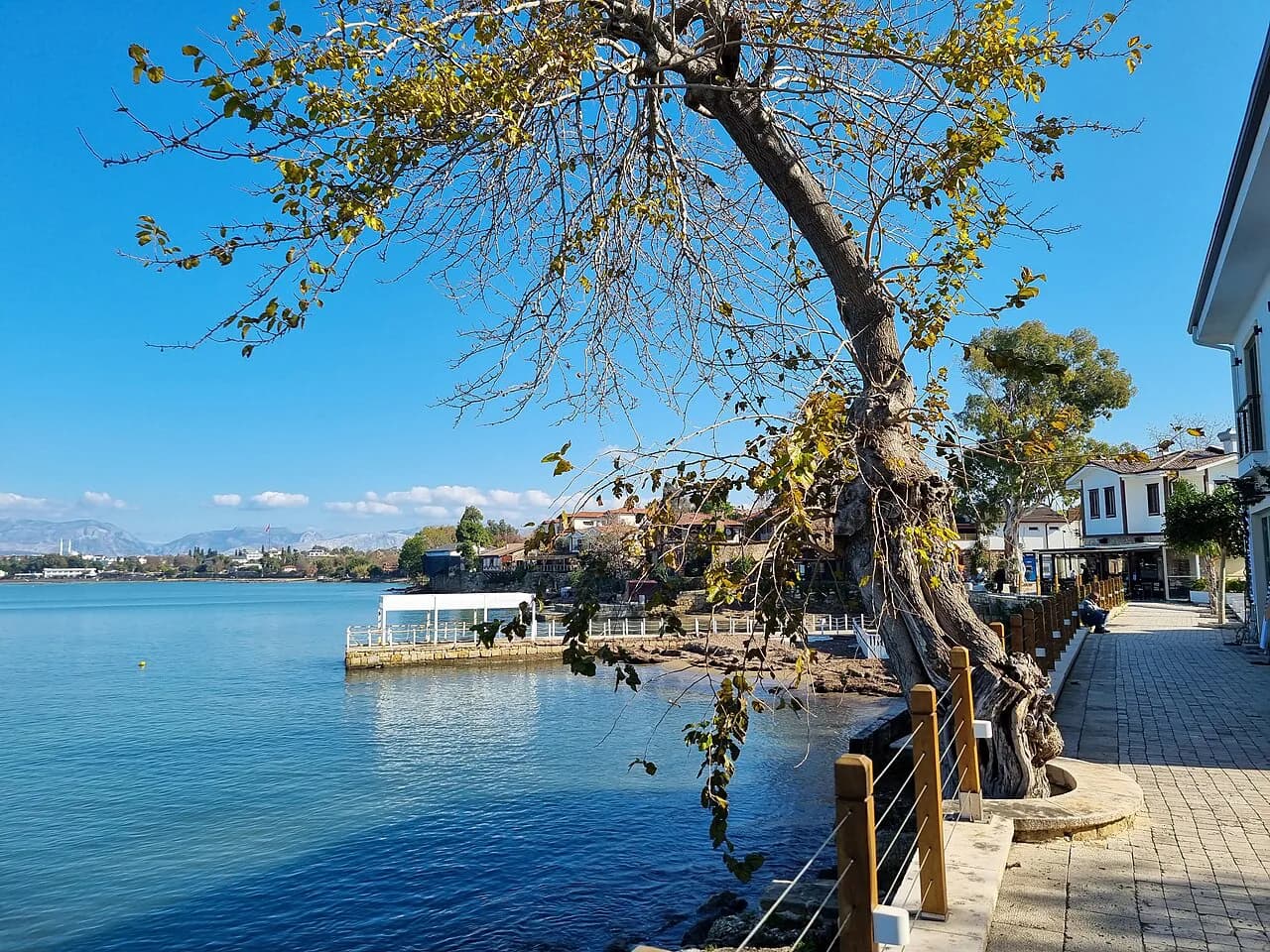
If you are staying along the seafront, the Side promenade links the beach strip to the old town on foot. That makes the theatre an easy evening walk from the resorts rather than a taxi trip.
Does the theatre justify the stop on its own?
Yes, if you are already in Side Old Town and the gates are open. The theatre takes under an hour, sits beside the museum and fits naturally into a walk between the harbour and the temple.
It does not justify a long transfer by itself, and a restoration closure can remove it from your day entirely. Check the site status and the current entry fee before you set out, then build the visit around the museum, the temple and the old-town streets so a locked gate does not spoil the trip.
Explore more Side guides
Frequently Asked Questions
Is the Side Amphitheatre the same as the Side Theatre?
Yes. The Roman theatre in Side Old Town appears in the Ministry of Culture and Tourism's list as the Side Theatre, and locally it is often called the Side Antik Tiyatrosu. It is the monument next to the Side Museum.
How long do you need at the Side Amphitheatre?
Allow around 30 to 60 minutes for the theatre itself, depending on how much you read and photograph. Adding the Side Museum next door brings the whole stop to roughly an hour and a half if you read the information panels.
Was the theatre used for sea battles?
The orchestra area could be filled with water to stage sea-battle scenes, according to one Side operator's account of the theatre. It is one of several uses the building saw over the centuries, alongside plays, gladiator contests and Byzantine church ceremonies.
Is the Side Amphitheatre currently open?
Access is not guaranteed: a TripAdvisor review reports the Roman theatre closed for the rest of a season, and travellers have asked whether it is shut for restoration without a confirmed answer. A Side operator describes it as open to visitors, so check the site status on the official listing before travelling and keep the museum and harbour as fallbacks.
Sources
Notes for your next Turkey trip
Optional updates when we add or correct a town guide.
You might also like
Continue reading
More guides you'll find useful