Aspendos: The Roman Theatre, What to See and How to Visit
Plan a visit to Aspendos in Turkey: the Roman theatre, how to get there from Side or Antalya, how long you need, and which nearby ruins to pair it with.
On this page
Aspendos is an ancient city of Pamphylia, just north of the modern resort coast around Serik and east of Antalya, and its Roman theatre is the one sight nearly every visitor comes for. Allow two to three hours on site, or build it into a half-day out of Side. This guide covers what stands there, how the site is reached, how long to give it and how it fits with the other ruins of the Antalya region.
The name trips up plenty of British readers: there are Turkish restaurants called Aspendos in Inverness, Dover, Folkestone and Canterbury, and none of them has anything to do with the ruins. The restaurant in Inverness, for instance, takes its name from the ancient city rather than sitting anywhere near it. Keep that name overlap in mind when you search, and check that any listing you book from is in Turkey.
What Aspendos is: a Pamphylian city and its Roman theatre
Aspendos was a city of Pamphylia, the coastal region of what is now Antalya province, and the settlement's history reaches back to roughly the sixth to fifth centuries BC. Over the centuries the city passed through Persian, Greek and Roman influence, which is why its remains read as a layering of cultures rather than a single build. The theatre is the structure that survived best and the reason the site is on the coast's shortlist of ancient places.
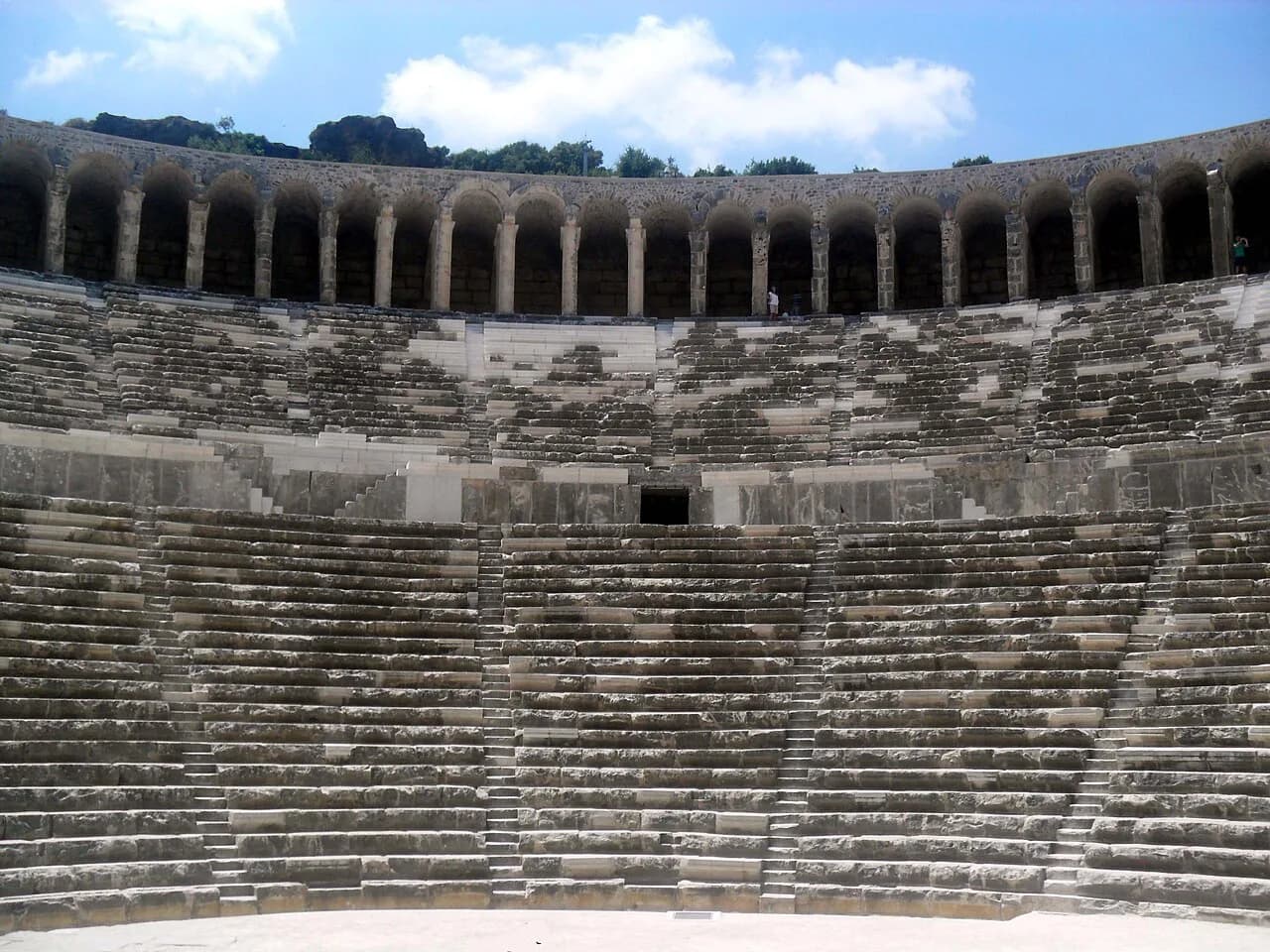
The theatre was built in 155BC, which makes it roughly two thousand years old. It is a working performance venue for the Aspendos International Opera and Ballet Festival, so stage equipment and seating may be in place during the festival season.
If your only image of Aspendos comes from a restaurant menu in Britain, reset it: the site is an archaeological zone, not a dining room. The Dover branch of the restaurant name, for example, sits next to the Market Square in Dover and serves mezze and kebabs, a world away from a Pamphylian acropolis. Treat the two as separate places and your planning stays simple.
The theatre itself: what to look for
Most visitors spend their time in the cavea, the tiered seating that curves around the stage, and in front of the stage building behind the orchestra. Walk up the seating rows for the view back over the stage and out across the plain, then come down and look at the stage wall from the orchestra floor, where the scale is clearest. The acoustics are the other thing to test: stand at the centre of the orchestra and speak at normal volume.
Because the theatre is used for the festival, stage equipment, seating or barriers may be in place when you visit during the performance season. That does not spoil the visit, but it changes what you can photograph, so plan your stop around the stage area first.
The rest of the site: aqueduct, acropolis and standing remains
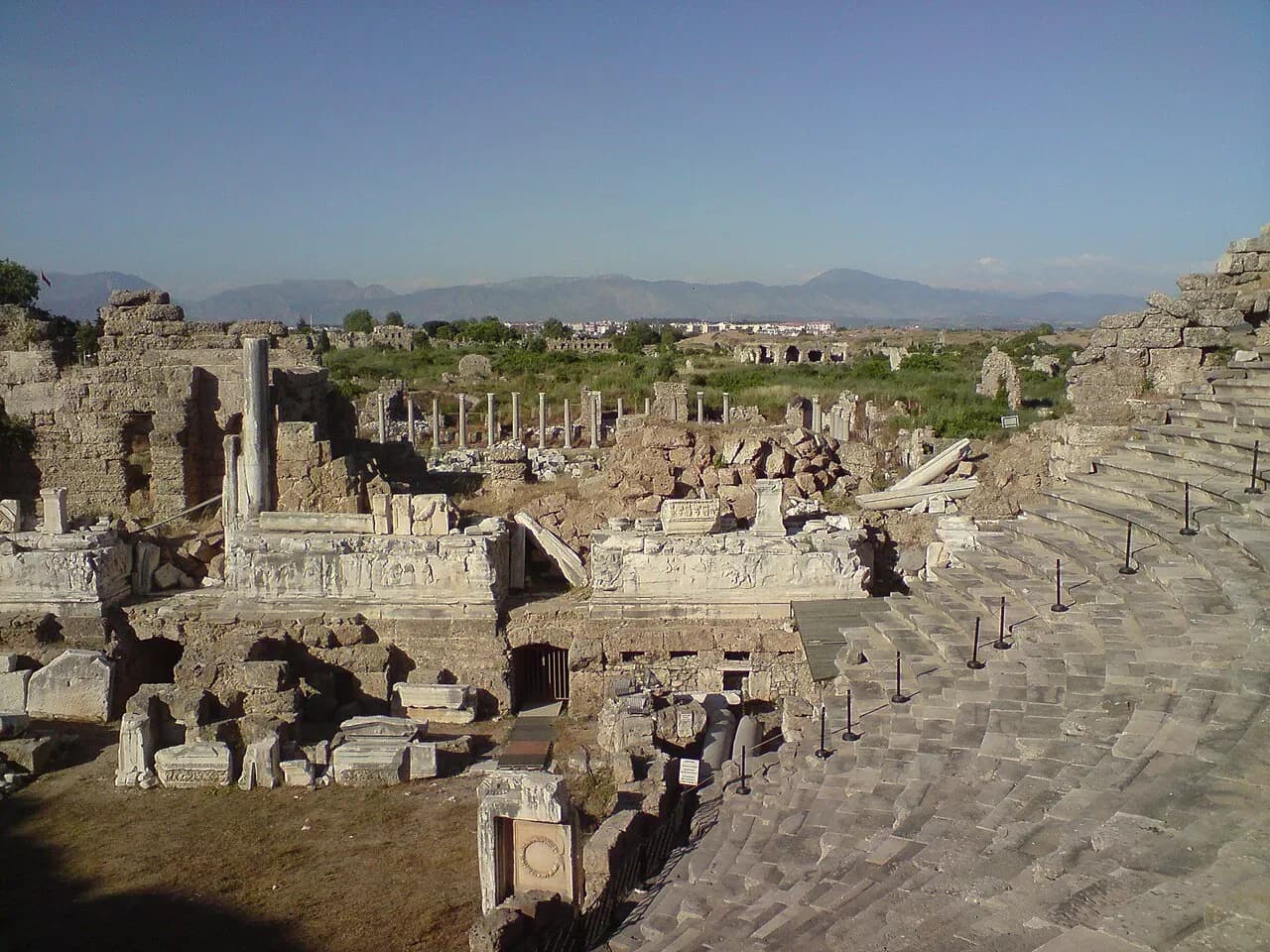
Beyond the theatre, the site holds the acropolis hill above and the remains of the Roman aqueduct that carried water into the city. The aqueduct is the piece most people photograph on the approach, and it is worth a few minutes before or after the theatre rather than a rushed glance from the car park. Give the acropolis a walk if you have the legs for it: the climb gives you the layout of the whole city in one view.
Expect rough ground, loose stone and uneven steps between the monuments. Sturdy shoes matter more here than at a manicured site, and the difference between a comfortable hour and a twisted ankle is usually footwear. Carry water; shade between the monuments is limited.
How long to allow, and a half-day from Side
Two to three hours covers the theatre properly, the aqueduct and a wander on the acropolis without rushing. If you are combining Aspendos with Side, give the theatre an hour and a half and keep the rest of the morning or afternoon for the old town. The theatre rewards a slower look more than a longer list of monuments. If you are choosing where to base yourself for this stretch of coast, the guide to Side Neighbourhoods breaks down the town's quarters by distance from the ruins.
A workable half-day from Side runs: leave after breakfast, see Aspendos while the light is still low and the coach parties have not massed, then return to Side for lunch and an afternoon among the harbour and the Temple of Apollo. The coastal road east from Side towards Serik is the corridor you follow. That shape keeps the heat off the exposed seating and leaves the evening free, and if you are deciding which quarter of the town to return to, the Side Neighbourhoods guide maps out the options.
Getting there from Side, Antalya and the coast resorts
Aspendos sits inland from the coast near Serik, north of the beach strip that runs east of Antalya towards Side and Manavgat. Drivers reach it off the main Antalya–Side corridor; from Side the run is short enough to treat as a morning out, and from Antalya it is a straightforward drive east. Figure on a car or a tour rather than a stroll.
Many organised tours combine Aspendos with Side or with the Manavgat river and waterfall. Independent travellers should confirm local transport and return times before setting out, since rural services thin out in the afternoon. A taxi gives you a fixed departure time and a fare agreed in advance.
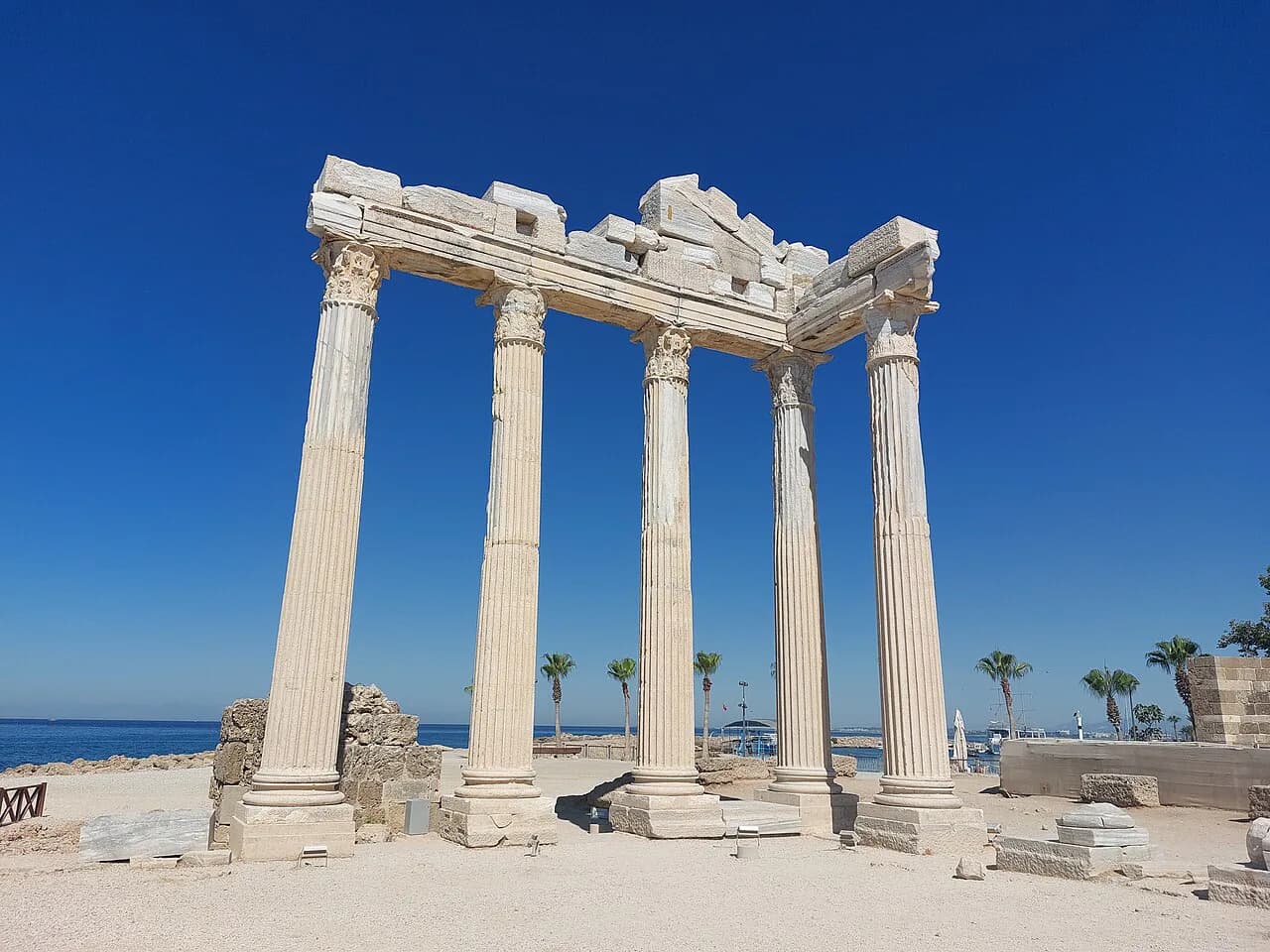
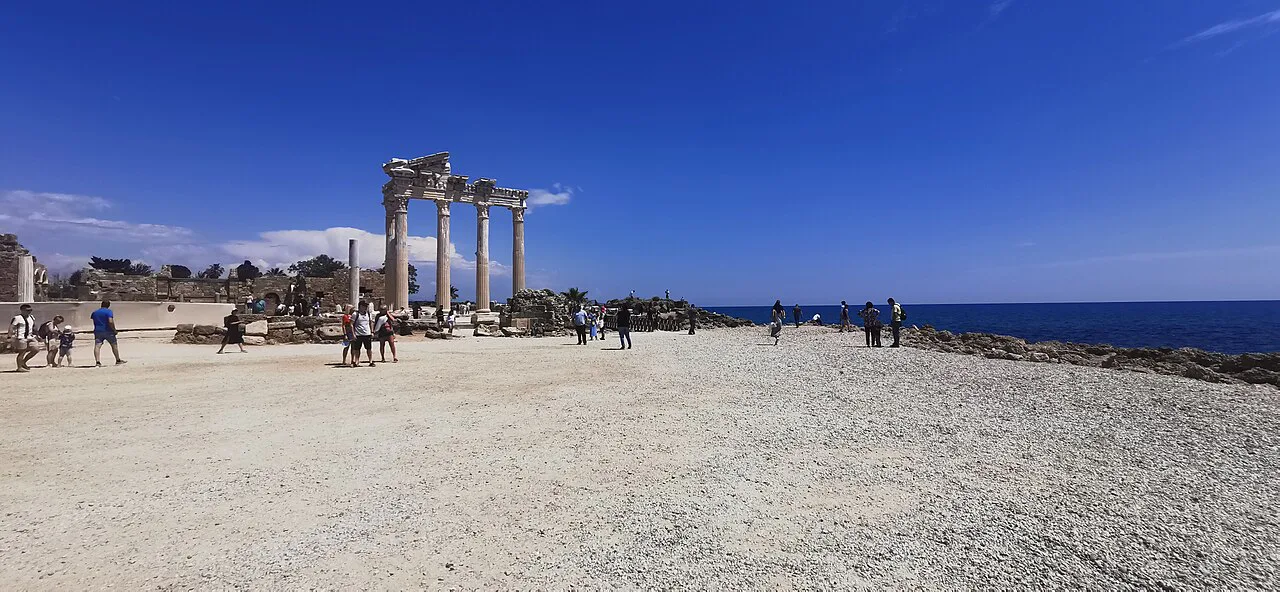
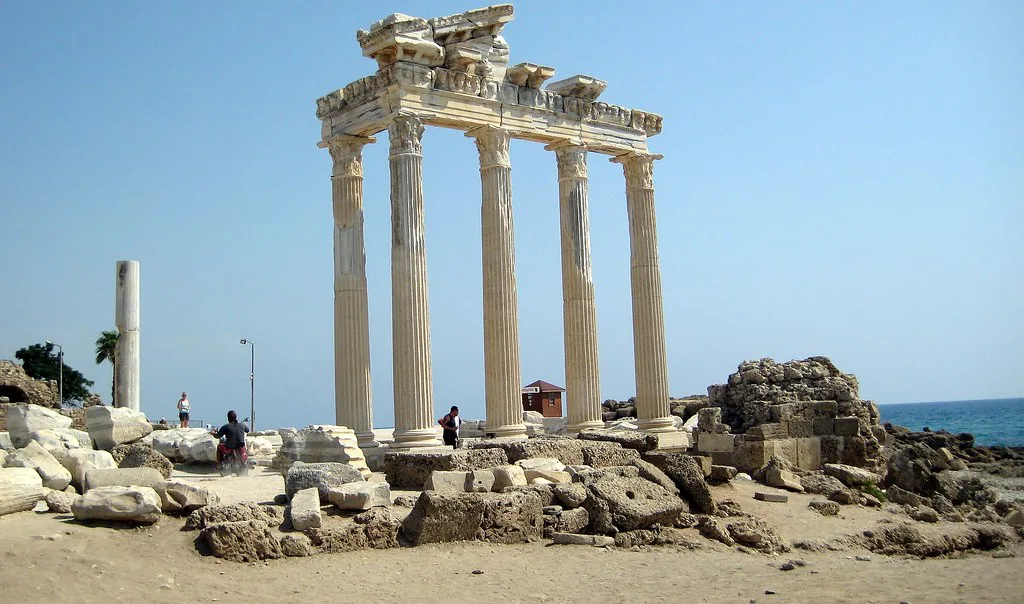
If you are staying in Side itself, the old town is worth a separate wander: the Temple of Apollo in Side and the harbour lanes make a natural pairing with the theatre at Aspendos, and the two are close enough to share a day. Walk the Side Neighbourhoods before you commit to a base, because the town's different quarters put you at different distances from the ruins.
Tickets, opening hours and Müzekart
Ticket prices, opening hours and closing days for Aspendos change with the season and with museum policy, so confirm them with the official Turkish culture and tourism ticket service or at the gate on the day you plan to go. Do not rely on a figure you saw in a blog last year. Carry cash in Turkish lira as a fallback and check whether card payment is accepted.
Müzekart can cover entry to state-run sites, but validity and the pass's terms vary by site and by pass type. Check the current Müzekart rules against Aspendos before you buy one, and ask at the ticket office whether your pass is accepted here. If the pass does not apply, the standard ticket is the route in.
The Aspendos International Opera and Ballet Festival
The Aspendos International Opera and Ballet Festival puts on an annual season of productions in the theatre in spring and early summer. That is why performance infrastructure may be present at certain times, and why a visit in those months can feel different from a midwinter one. Programmes and dates are set by the organisers, so check the current season's schedule before you build a trip around a performance.
If you want to see a performance rather than the empty theatre, check the current festival programme before you build a trip around one, as the schedule and staging change from year to year. If you want the ruins without performance infrastructure, avoid the festival season and the middle of the day. Either way, factor in the journey back to the coast after an evening performance.
Aspendos with Perge, Ephesus or Termessos
Perge is the natural pairing with Aspendos if you are basing yourself around Antalya: the two together make a full day of Pamphylian ruins, and the Antalya Museum fills in the sculpture and small finds that the sites themselves no longer hold. For a single ancient city with a theatre, Aspendos is the more theatrical; Perge is the broader townscape.
Ephesus is a far bigger site and belongs to a different day and a different base, so pairing it with Aspendos in one push makes for a long drive. If you have only one day for ruins from the Antalya coast, do Aspendos and Perge rather than chase Ephesus. For a mountain site with a very different atmosphere, Termessos in the Güllük Dağı National Park is the alternative when you want fewer tour groups.
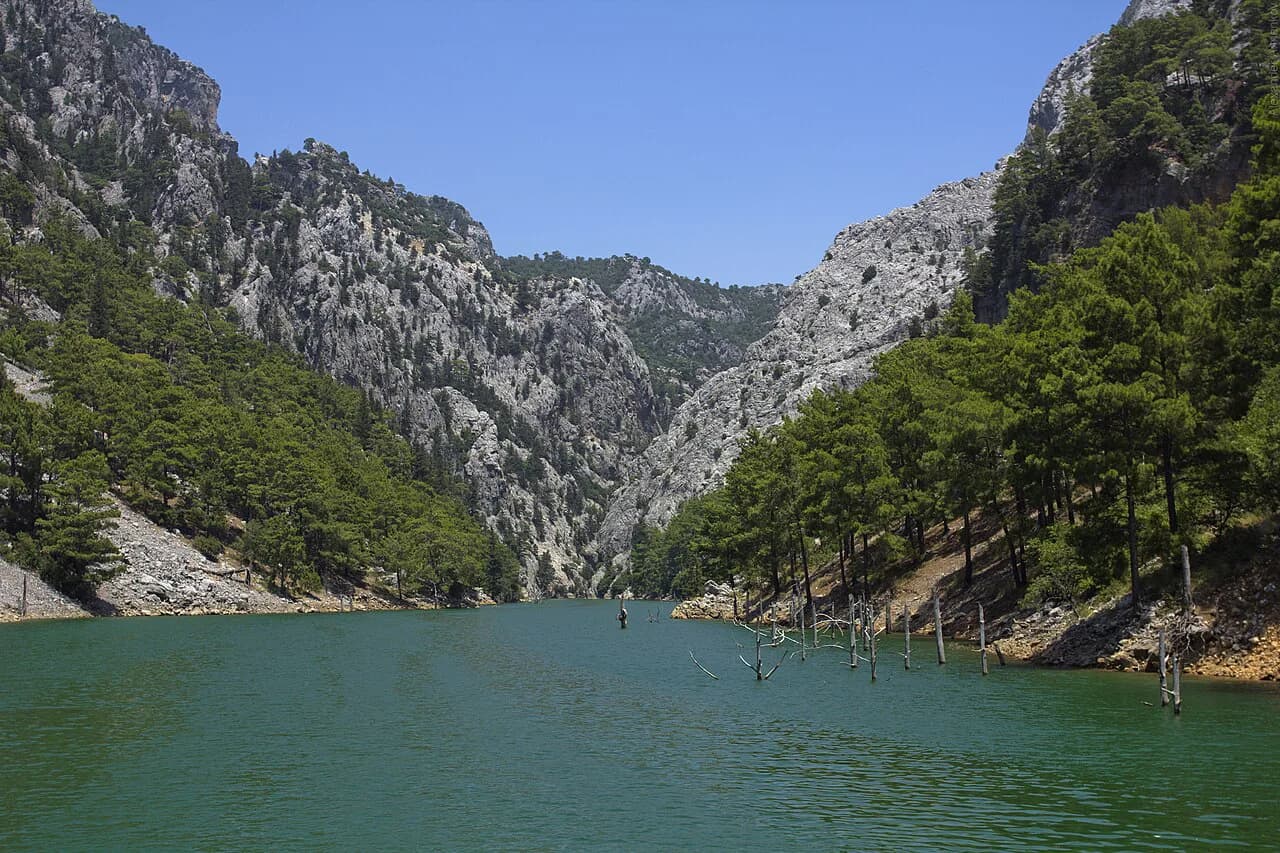
Inland excursions pair naturally with the theatre: the Köprülü Canyon and Tazı Canyon draw rafters and walkers, and the Green Canyon around the Oymapınar Dam suits a scenic drive. Pick one of these for the afternoon after a morning at Aspendos rather than trying to fit two canyons in a day. A Side boat trip is the better choice if you want to be on the water instead of the road, and our guide to Side Boat Trips explains which cruise to pick and what's included.
Practical notes: heat, shade, coaches and footwear
The seating at Aspendos is exposed, and in summer the stone holds heat through the middle of the day. Go early or late, wear a hat and carry water. There is little shade on the cavea itself, so a slow morning beats a midday sprint.
Coach groups arrive in waves, usually mid-morning onwards. If you want photographs without crowds, be at the gate when it opens and head straight for the seating. If you are on a coach tour yourself, accept the tighter timing and prioritise the theatre.
Wear shoes with grip: the steps between the seating rows and the paths to the aqueduct are worn and uneven. A light layer helps against the wind on the exposed hill. Bring small change for the ticket office in case card payment is unavailable.
When Aspendos fits your trip
Aspendos fits best as a half-day out of Side or a morning from Antalya, built around the theatre rather than a full-day monument crawl. If you have one day for ancient sites on this coast, pair it with Perge; if you want the sea, keep Side and the Temple of Apollo for the afternoon, or swap the ruins for a morning on the water with a side boat trip.
Before you go, confirm the current ticket price, opening hours and Müzekart terms through the official museum channels, and check whether a performance is scheduled during your dates. That done, the visit itself is simple: early arrival, sturdy shoes, water and time to sit in the seating and listen.
Explore more Side guides
Frequently Asked Questions
Is Aspendos Greek?
Aspendos was a city of Pamphylia, in what is now Antalya province, and its history reaches back to around the sixth to fifth centuries BC. Over the centuries the city came under Persian, Greek and Roman influence, so its remains are a mix rather than purely Greek or purely Roman. The theatre was built in 155BC.
How far is Aspendos from Antalya?
Aspendos lies inland from the coast near Serik, east of Antalya, off the main Antalya–Side corridor. It is a straightforward drive from the city and shorter still from Side; journey times and traffic vary by season, so check current details locally before setting out.
Can I see a performance at the Aspendos theatre?
The Aspendos International Opera and Ballet Festival runs an annual season of productions in the theatre in spring and early summer. The programme is set by the organisers, so check the current season's schedule before booking travel around a performance.
Do I need to book Aspendos tickets in advance?
Check the official ticketing service for current prices, hours and whether advance booking is available. If you are visiting during a performance season or with a group, book ahead. Check Müzekart validity for the site before relying on a pass.
Sources
Notes for your next Turkey trip
Optional updates when we add or correct a town guide.
You might also like
Continue reading
More guides you'll find useful