Side Promenade: The Seafront Walk and What Lines It
Walk the Side promenade from the beach to the ancient city, past the Vespasian Gate, colonnaded street and Temple of Dionysus, with route lengths and timings.
On this page
The Side promenade is a seafront walk that joins the beach with the ancient city, and a recorded loop from the bus stop takes it in the Vespasian Gate and fountain, the colonnaded street and the Temple of Dionysus before returning past the Ottoman-style shopping lanes to the bus stop where it began. The recorded loop from the dolmuş stop covers 10.1 km with 40 m of elevation gain and is timed at 2 hours 36 minutes, so it fills a half-day rather than a quick stroll. This guide breaks the route into its beach stretch and its ancient-city stretch, then covers surfaces and access.
What the Side promenade is and where it runs
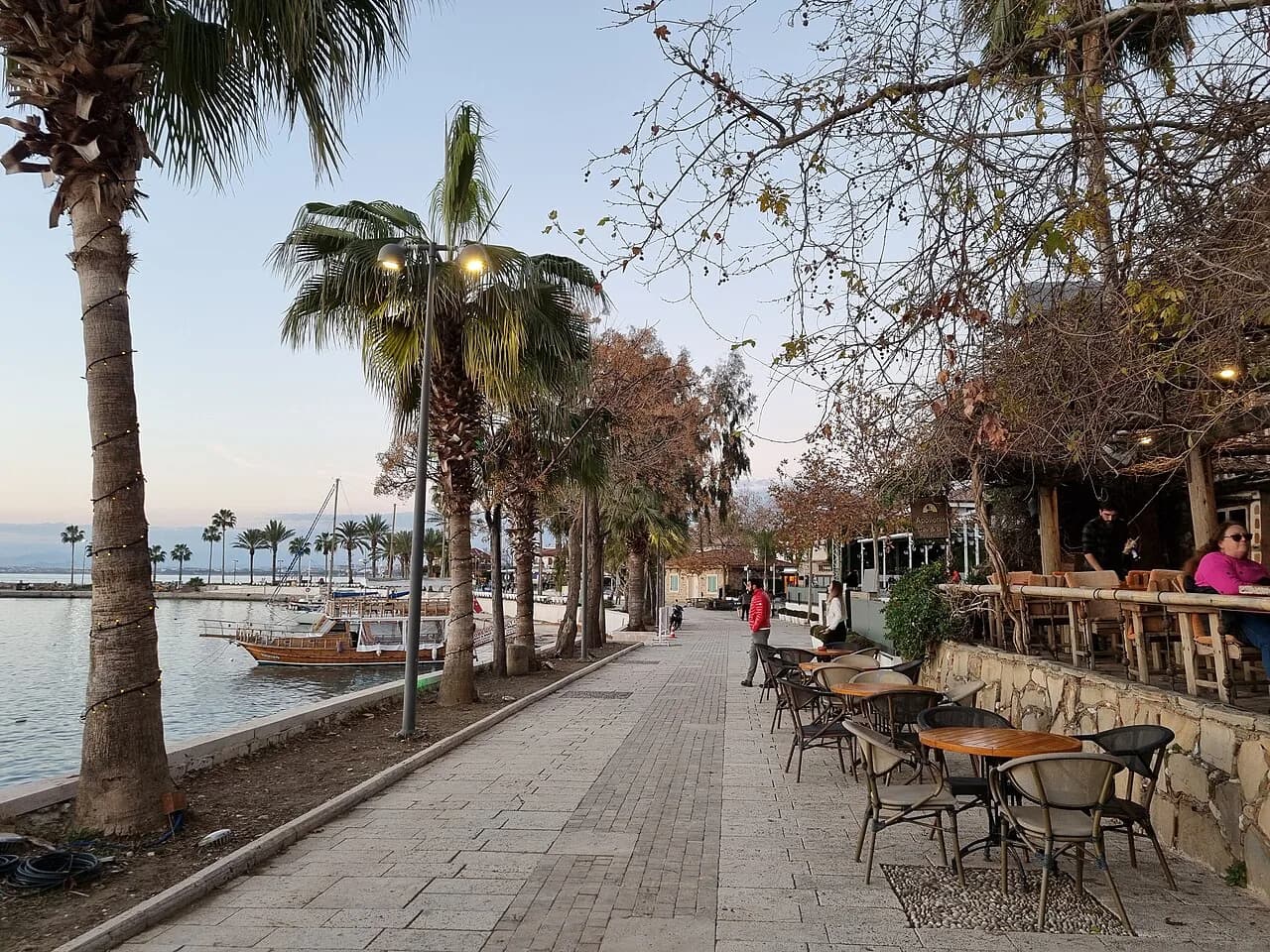
The promenade runs along the sea before turning inland into the ancient city, and the marked loop starts and ends at a bus stop, so you can reach it by dolmuş without a car. Walkers describe the seafront path as a place to walk by the sea, and the route then continues to the Vespasian Gate and fountain before entering the old centre. Treat the walk as two halves: open shoreline first, then stone streets and ruins.
The old centre is not a static backdrop. Walkers report that many houses in central Side no longer stand and that excavation is under way, with uncovered finds protected under glass panels you can walk across. That makes the final stretch more interesting than a plain shopping street, but it also means the ground underfoot and the views change from season to season.
Walking the promenade: the beach stretch
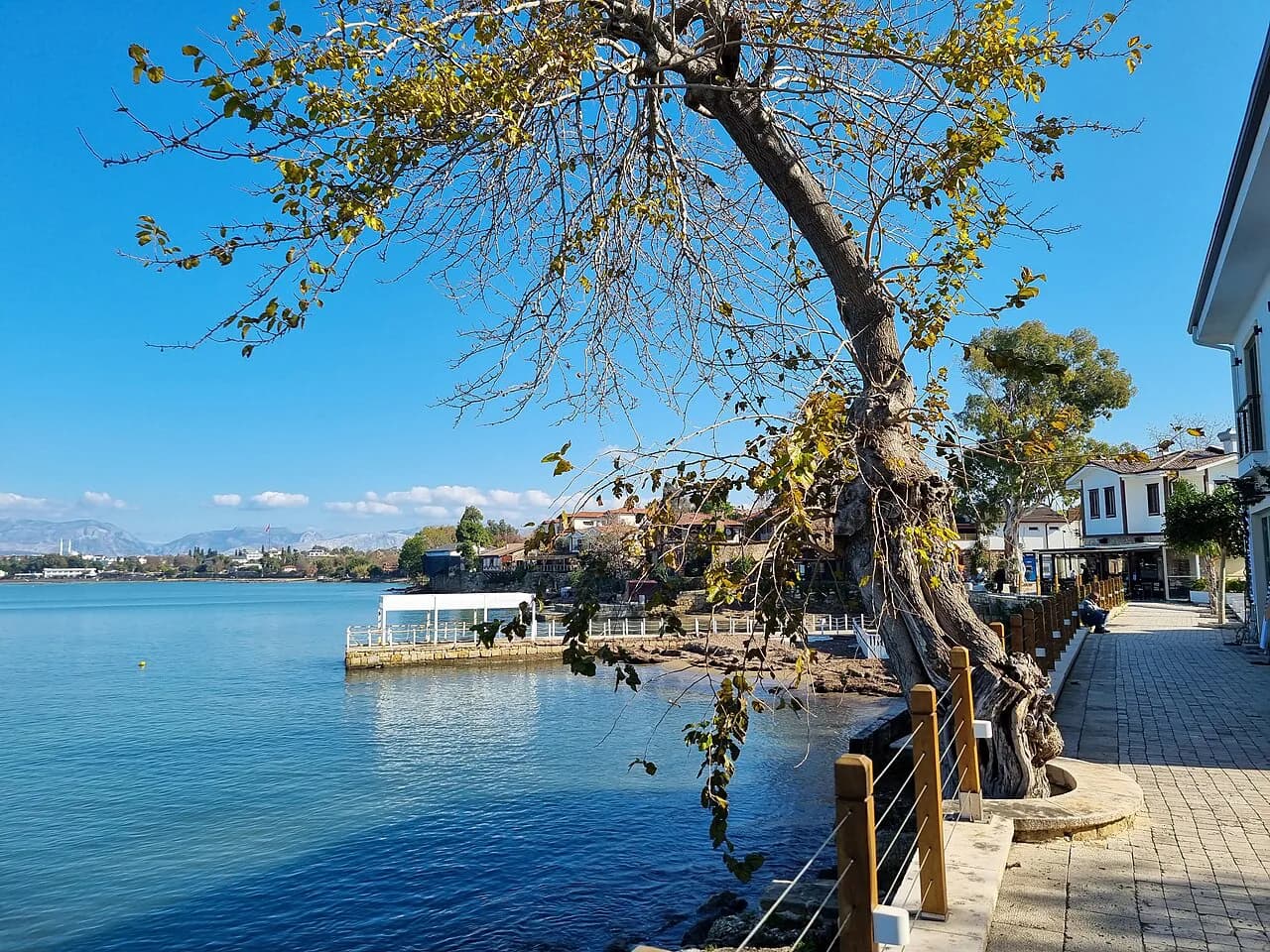
The first part of the loop follows the Side Beach Promenade, a paved seafront segment, before the route turns inland. On the recorded route the beach section begins about 1.7 km from the bus stop, so you have a short approach through town before the water opens up. This is the stretch for an unhurried start, with the ancient city still ahead of you.
Footwear matters less than you might expect. The route is paved for the great majority of its length, with 8.66 km of paving recorded, plus short stretches of asphalt, gravel and natural surface. Trainers cope with the promenade itself; the uneven ground comes later, among the ruins and excavations.
The ancient city stretch: Vespasian Gate, colonnaded street and Temple of Dionysus
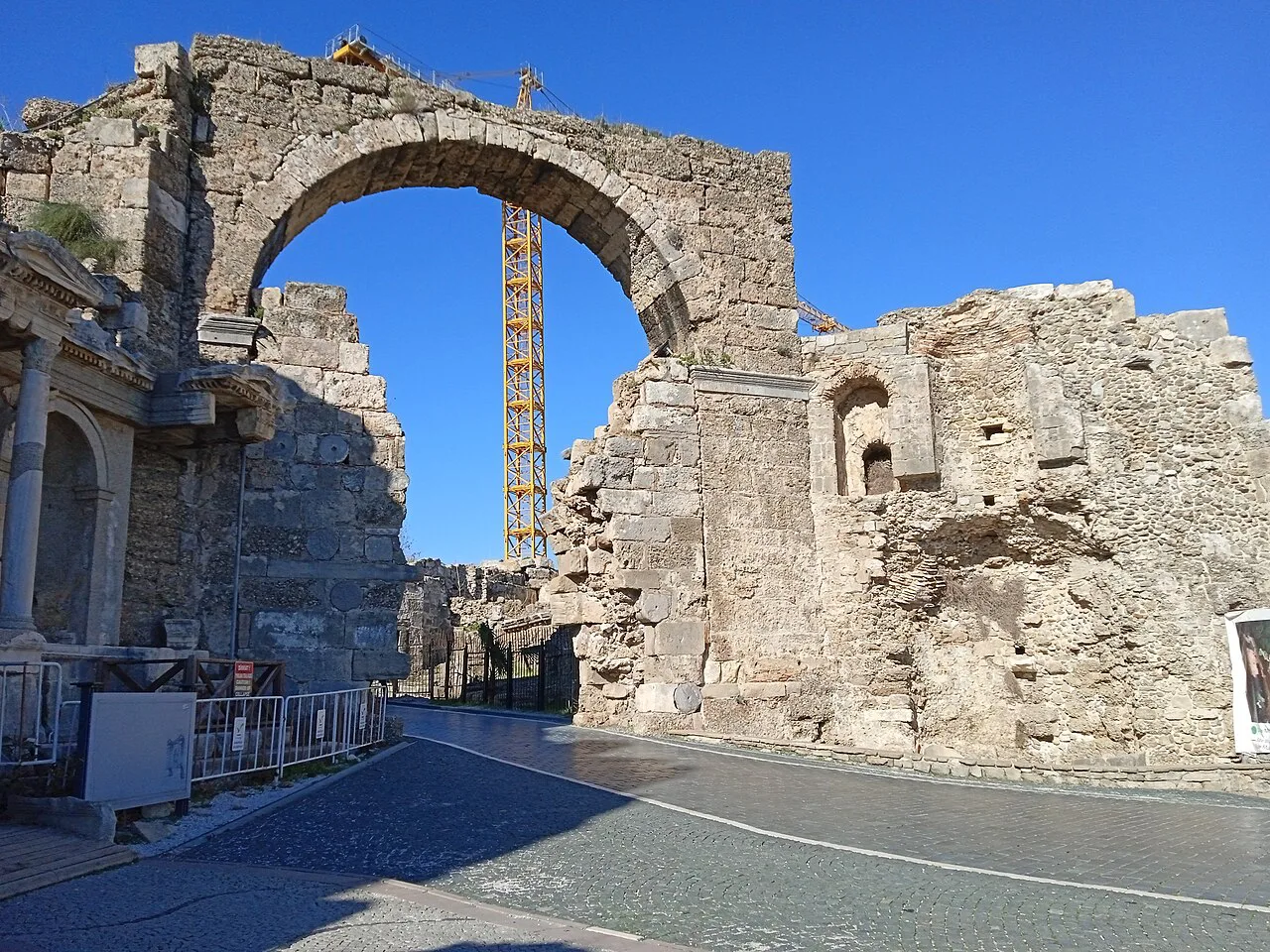
At roughly 4 km the route reaches the Vespasian Gate and its fountain, built next to the inner city gate in honour of the Roman emperor Vespasian and treated by walkers as one of Side's landmarks. From there you are inside the ancient city, where the route passes the colonnaded street and the Temple of Dionysus in quick succession. Allow time to stop rather than powering through: this is the part of the walk people come for.
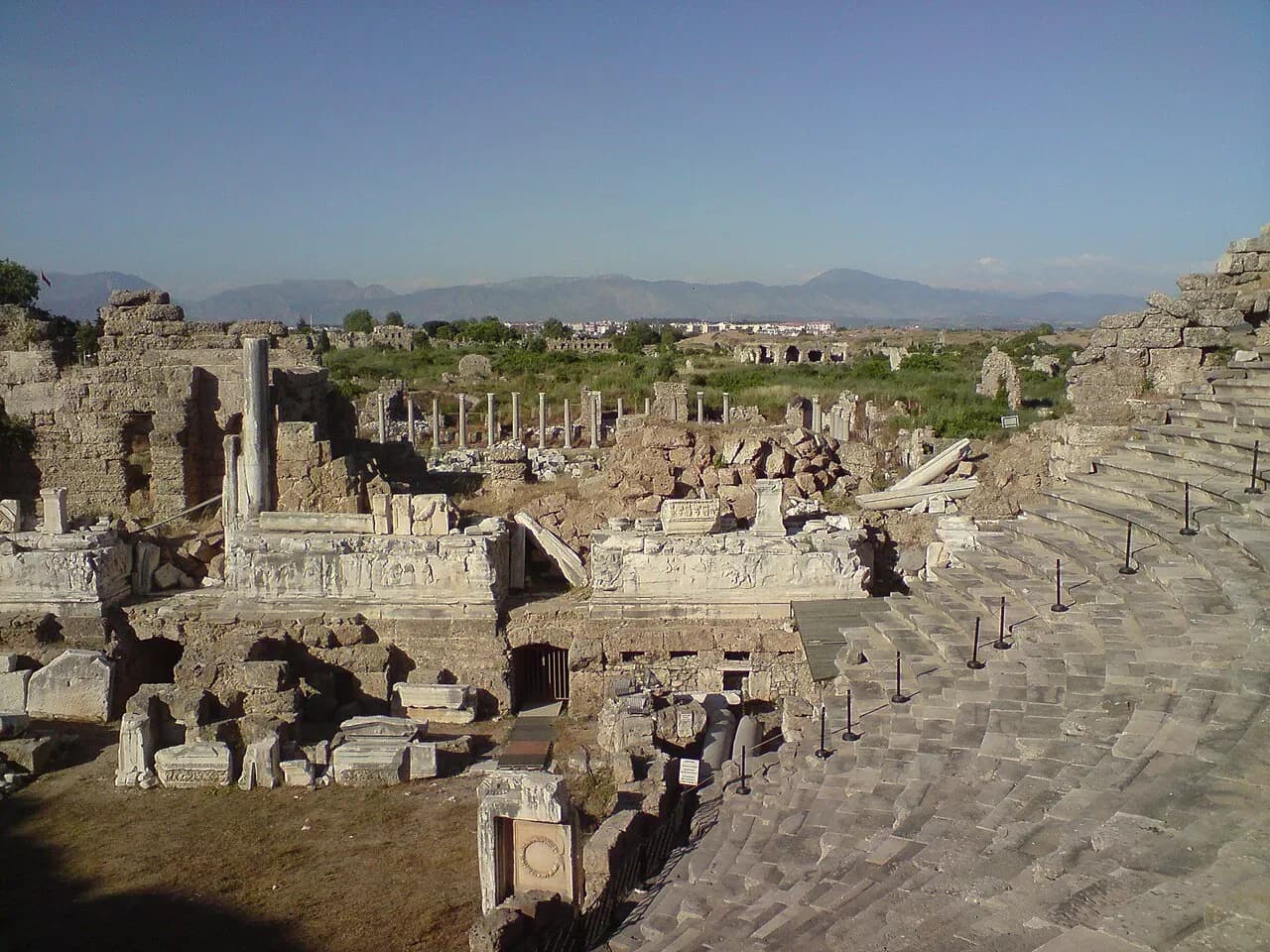
Ancient Side had two colonnaded streets running from the city gate towards the sea, and one of them runs south from the main gate. The surviving colonnades give a sense of how the ancient city was laid out. The Temple of Dionysus, a small temple dedicated in antiquity to the Greek god of wine, sits close to this axis and is marked at around the 4.9 km point of the recorded loop.
The ruins continue beyond the temple, and the wider archaeology of the peninsula is worth a separate look, from the Roman bath to the Side ancient theatre. If the walk whets your appetite, the Side Museum and the sites it covers give the finds their context.
The shopping streets and Ottoman-style houses at the old town end
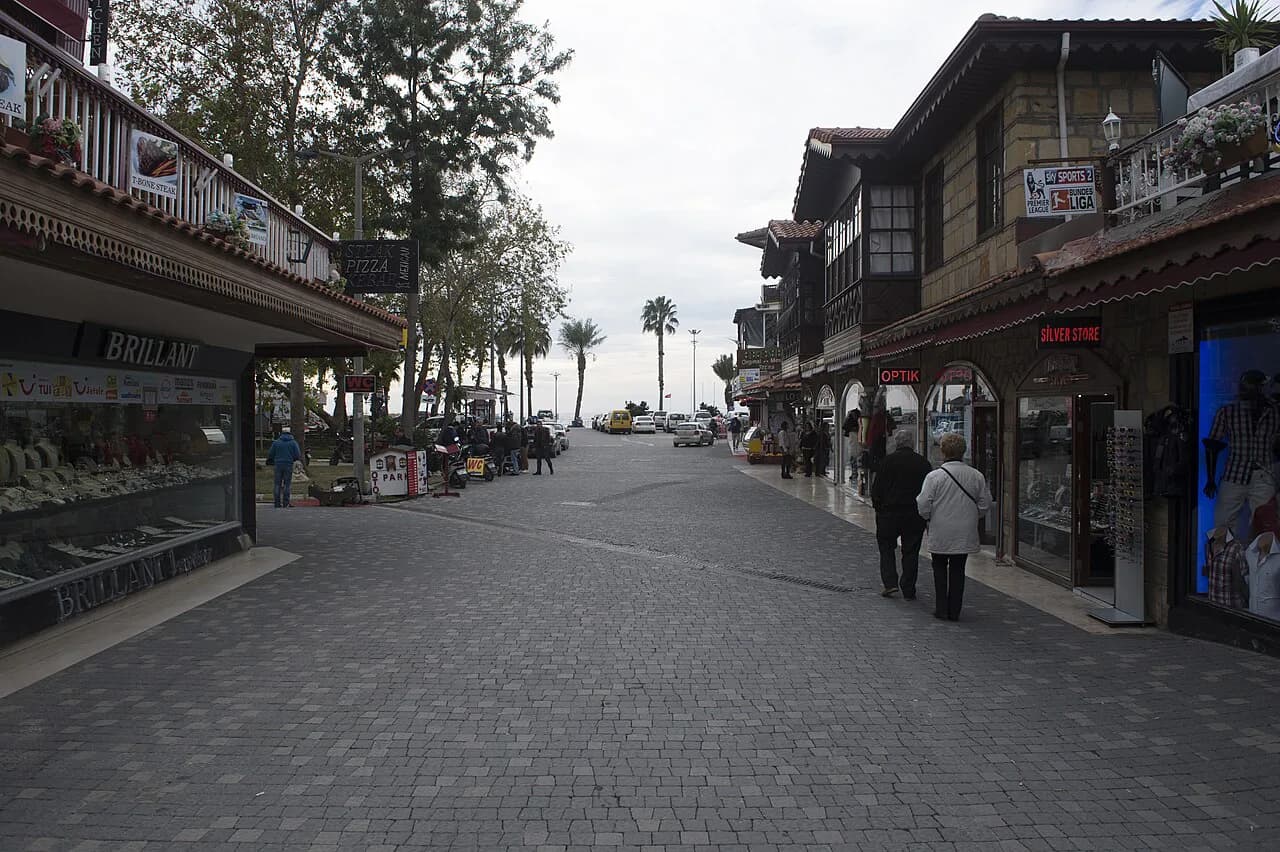
The recorded loop finishes through the shopping streets of Side, lined with small Ottoman-style houses and shops, at around 5.25 km from the start before returning to the bus stop at 10.1 km. This is the point to pause for a drink or to browse, since you are back in the built-up centre rather than on open ground. For a fuller picture of the lanes and waterfront around you, the side old town layout is the obvious next read.
If your interest is the classical street plan rather than the shops, the side ruins sit within a short walk of these lanes, and pairing the promenade with a detour inland gives you the gates, colonnades and temples in the same outing.
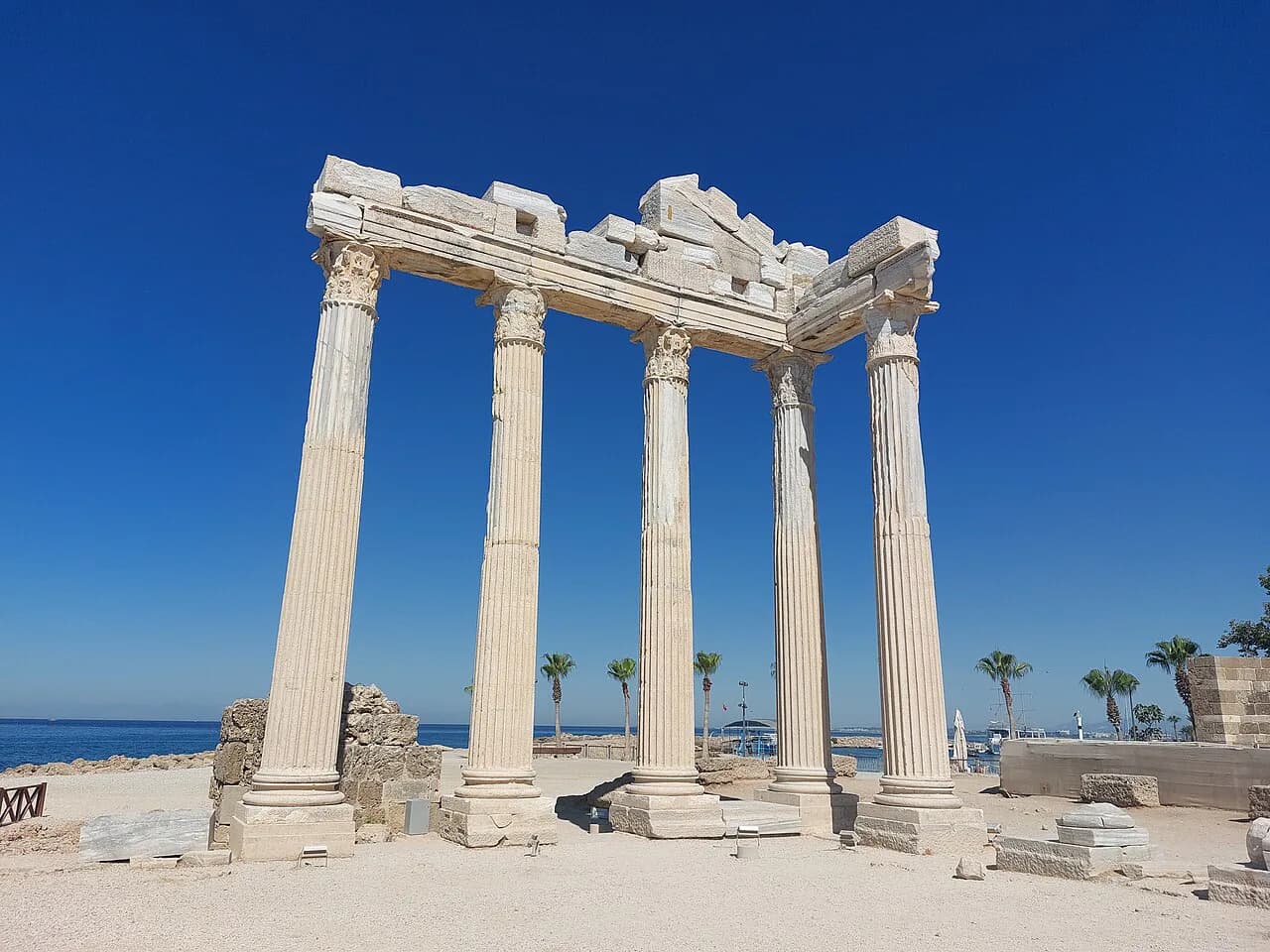
The harbour end lies on the ancient-city side of town, and the Temple of Apollo stands nearby, so the waterfront is a natural extension of a walk through the ruins rather than a separate trip. The side harbour is worth adding to the same outing.
A loop route from the bus station: distance, surface and elevation
The recorded loop from the dolmuş stop at Side is graded moderate on the route listing, with a 4.8 rating from 188 reviews. At 10.1 km and 2 hours 36 minutes, with just 40 m of elevation gain, the climbing is negligible and the distance is the real consideration. The route's own listing is the place to confirm the current track before you set out.
Break the surfaces down before you commit. Of the 10.1 km, 7.9 km is path, 1.33 km is street and 877 m is road, with a sliver of hiking path, so the walk mixes traffic-free promenade with stretches where you share space. That mix is why the loop suits a half-day with stops rather than a brisk circuit.
The recorded loop starts and finishes at a bus stop, so it is accessible by public transport without a car. If 10 km is too much, start at the beach promenade and walk only the ancient-city section, then return the way you came.
Times of day and seasonal considerations
Early morning and late afternoon are the comfortable windows for the open promenade, and evening walking has its own appeal: one walker describes a night walk to the Apollo Temple along the promenade into the ancient town after dinner. The same stones feel different after dark.
A visitor video shows the Side beach and promenade in early March towards evening, which gives a sense of the light outside high summer. Summer brings heat and crowds on the same stones, so shift the walking to the cooler ends of the day and keep the middle hours for shade and water. Conditions change, so check the forecast before a long loop.
Should you walk the full loop or just the ancient city?
Walk the full 10.1 km loop from the bus station if you want the beach and the ruins in one go and have a half-day to spare; otherwise start at the promenade and cover only the ancient-city stretch as far as the Temple of Dionysus and the shopping lanes. Either way, the paving does most of the work for you.
Take water, wear shoes you can walk 10 km in, and time the loop for the morning or the evening. Confirm the route and current conditions on the day you go, then give yourself permission to stop at the Vespasian Gate longer than planned.
Frequently Asked Questions
How long does the Side promenade take to walk?
A recorded loop from the dolmuş stop at Side is timed at 2 hours 36 minutes over 10.1 km, with 40 m of elevation gain. Most people take longer with stops at the Vespasian Gate, the colonnaded street and the Temple of Dionysus, so plan a half-day. A shorter out-and-back along the beach and into the ancient city takes considerably less, though no official timing is published for it.
Is the Side promenade suitable for buggies?
The recorded route is paved for 8.66 km out of 10.1 km, with short asphalt, gravel and natural sections, so the promenade stretch itself is on firm ground. The old centre involves uneven surfaces and glass-covered excavations, where a pushchair would be harder work. That said, the listing is a hiking-route record rather than a facilities guide, so check the ground in person.
How do I get to the Side promenade without a car?
The recorded loop starts and ends at a bus stop served by public transport, so a dolmuş will get you to the route's start point. From there, follow the seafront until the path turns inland towards the Vespasian Gate.
Can you walk the promenade in the evening?
Walkers describe night walks along the promenade into the ancient town, including one after dinner to the Temple of Apollo. The route is the same; the ruins and sea simply look different under evening light. No source states official evening access or lighting for the ruins, so treat this as a walker's account rather than a guarantee.
Sources
Notes for your next Turkey trip
Optional updates when we add or correct a town guide.
You might also like
Continue reading
More guides you'll find useful