Side Ruins: The Ancient City, Theatre and Harbour Temples
Walk the Side ruins in order: the Roman theatre, the harbour temples, Liman Caddesi and the old-town lanes, with layout, access and how long to allow.
On this page
The Side ruins are a Graeco-Roman city spread across a narrow peninsula, with the modern town built over and among the remains. You can walk from the Roman theatre down Liman Caddesi to the temples at the harbour tip in one continuous circuit, and much of that route is open streets rather than a gated site. This guide sets out what survives, how the pieces sit together on foot, and how much time to give them.
Plan around three anchors: the theatre at the inland end, the temples of Apollo and Athena at the water's edge, and the colonnaded street linking them. The museum sits separately in an ancient baths complex. One practical quirk of walking here is that ancient paving sometimes continues under glass panels set into the modern street surface.
What the Side ruins are
Side grew as a trading port and later flourished under Roman rule, when emperors funded public works that left the theatre, baths, streets and temples you see today.
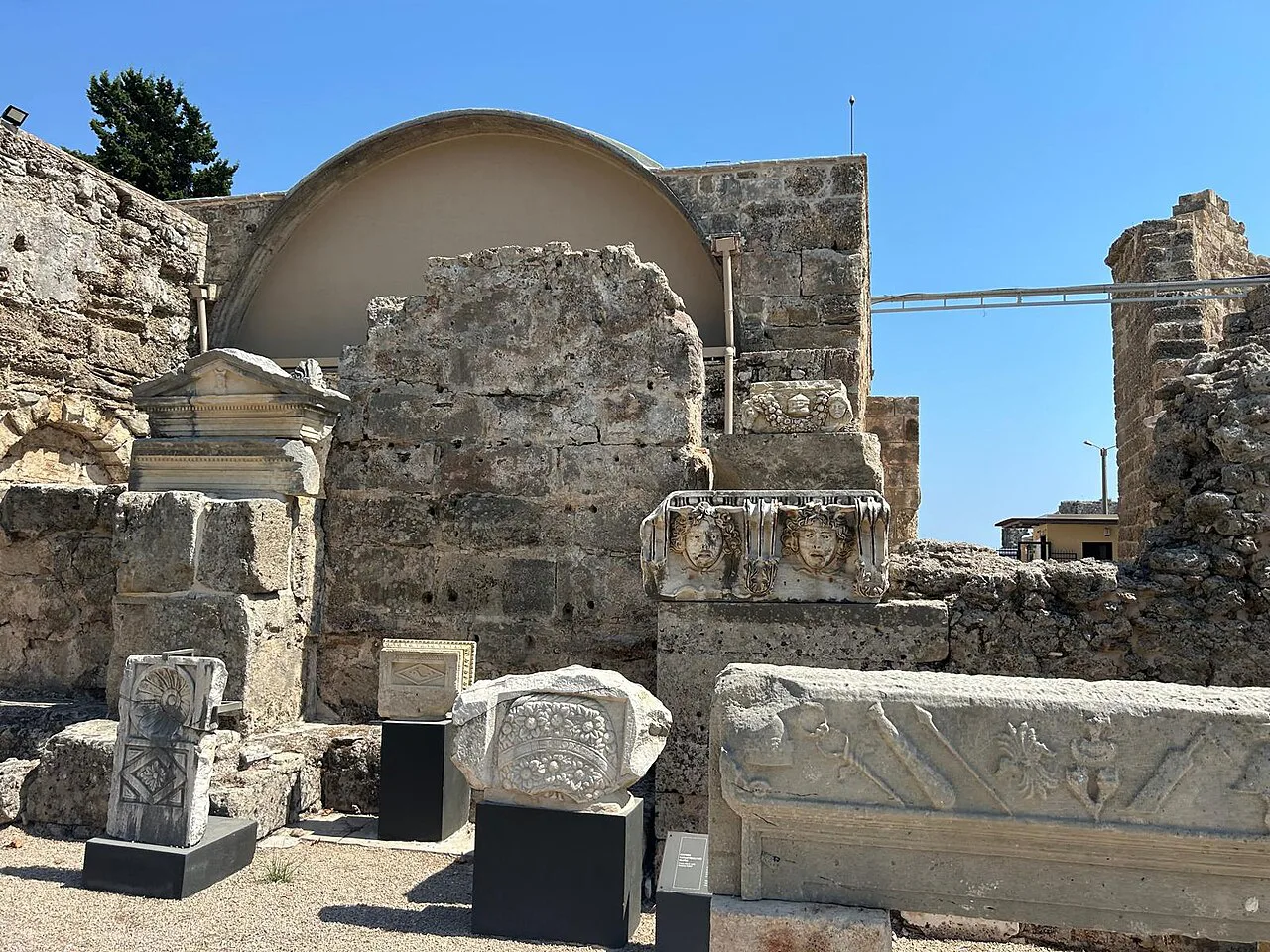
The ancient city occupies a promontory on the coast, with the ruins wrapped around and through the modern town rather than sitting behind a single ticket gate. Visitors walk among columns, paved streets and fragments of walls in the ordinary course of a day in the old town.
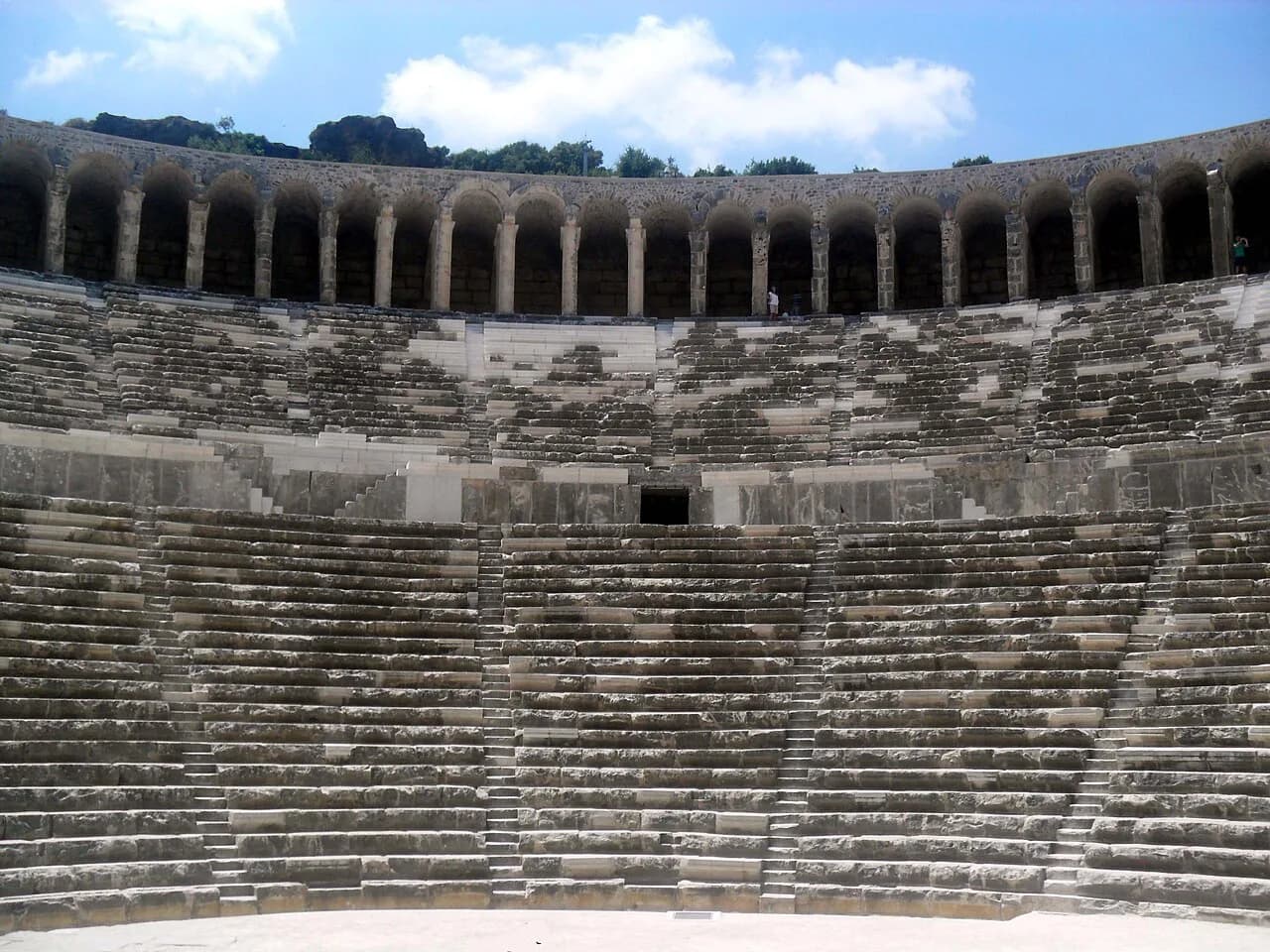
The Roman theatre
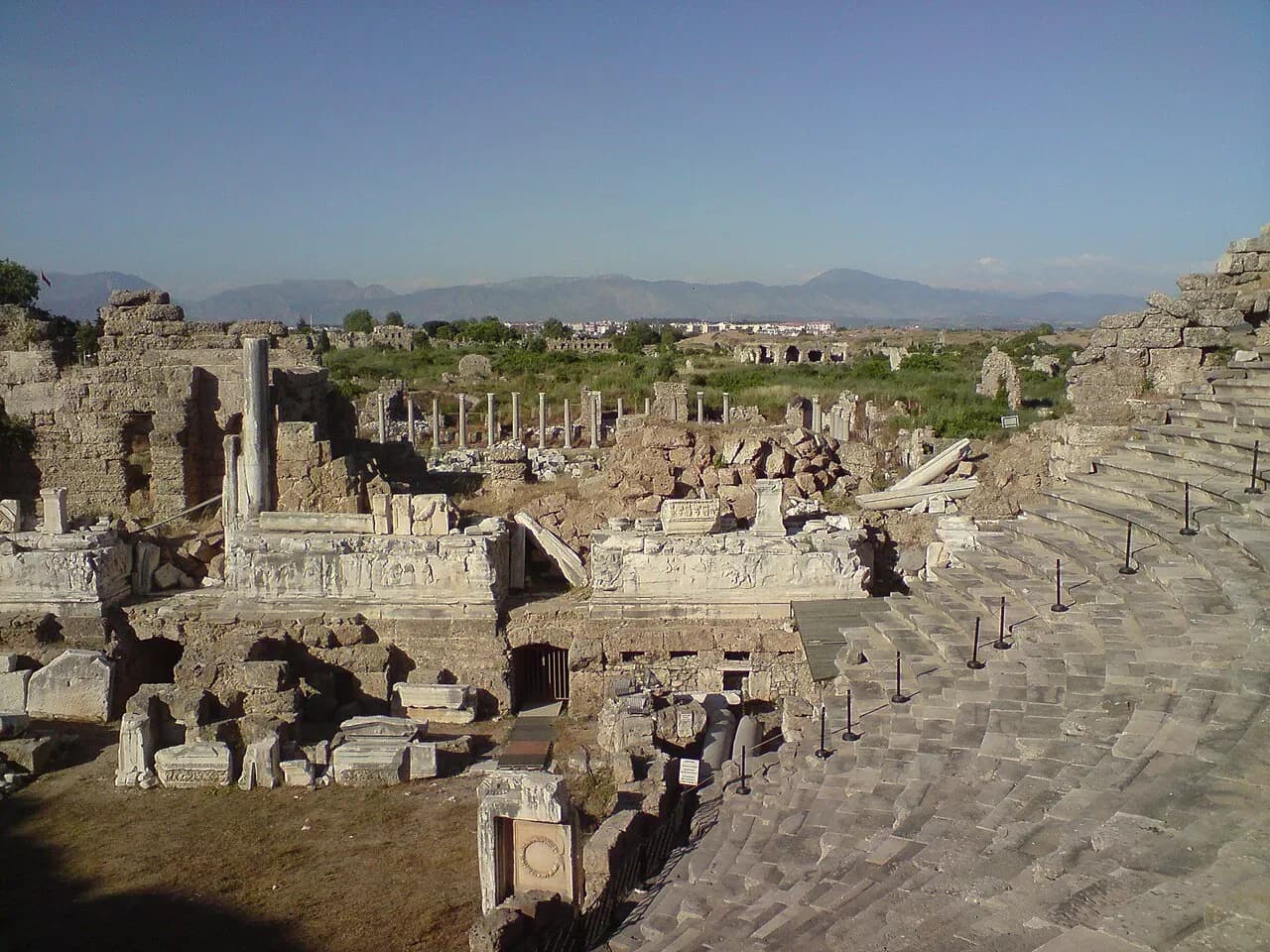
Side's 2nd-century AD theatre combines a Greek ground plan with Roman construction, and its exterior columns carry scenes from the story of Dionysus, the god of wine and patron of the theatre. It is the most prominent single monument on the peninsula and the natural anchor of any walk through the ruins.
From the seating you look down over the agora with the Taurus Mountains behind it, which makes the theatre the natural starting point for a walk through the rest of the site.
If you want the theatre without the surrounding town, start here and work outwards; if you would rather understand the monument in detail first, the amphitheatre guide covers its structure and setting.
Temples of Apollo and Athena at the harbour tip
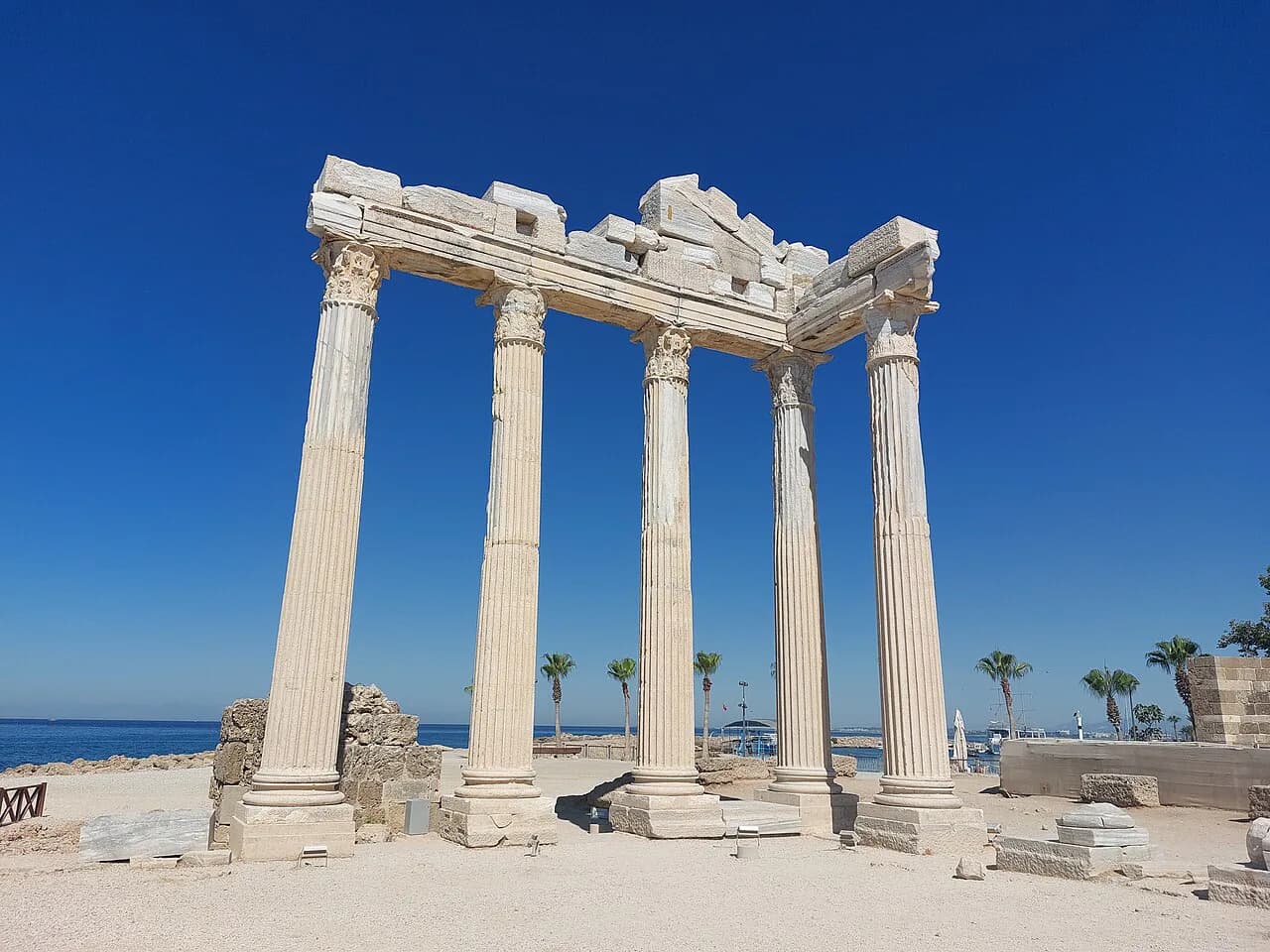
The temples of Apollo and Athena stand at the very tip of the peninsula, their columns framed by the Mediterranean, and they are the highlight of most visits to Side. Apollo was a chief god of the city, and the paired temples rising in front of the ancient harbour remain its best-known monuments.
Come here at the end of the walk rather than the start, so the theatre, street and agora build up to the harbour view. The harbour itself is a short continuation of the same route.
Liman Caddesi and the lanes behind it
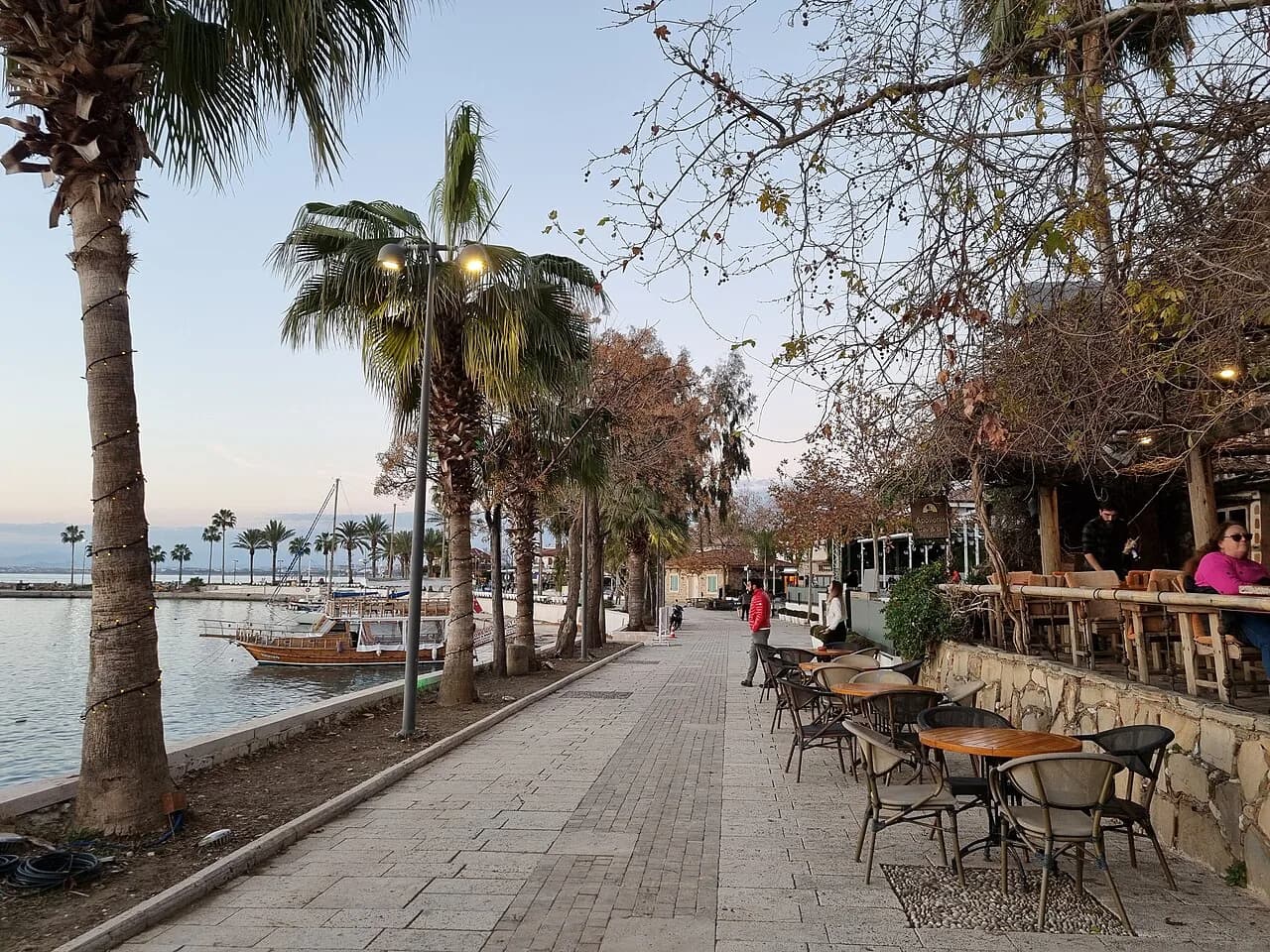
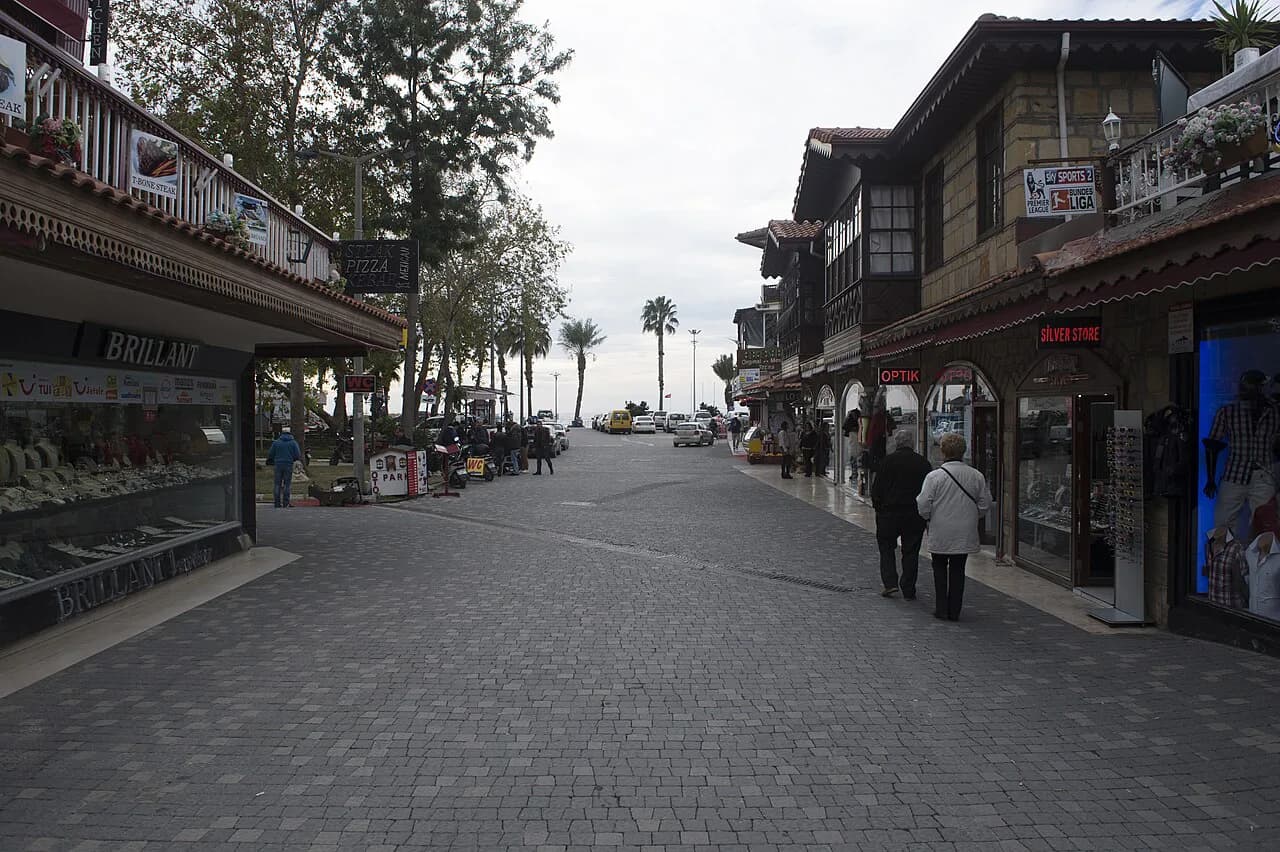
Liman Caddesi runs from the theatre straight down the peninsula to the temple tip, and it is the busiest stretch in Side. Step one block off it and the crowds thin out almost completely, which is the simplest way to combine sightseeing with a quiet wander.
This is also a living shopping street, with vendors selling pomegranate juice along the way, so expect the ruins to be interleaved with cafés, shops and souvenir stalls rather than presented as a sealed archaeological zone.
The agora, baths, nymphaeum and Hellenic gate
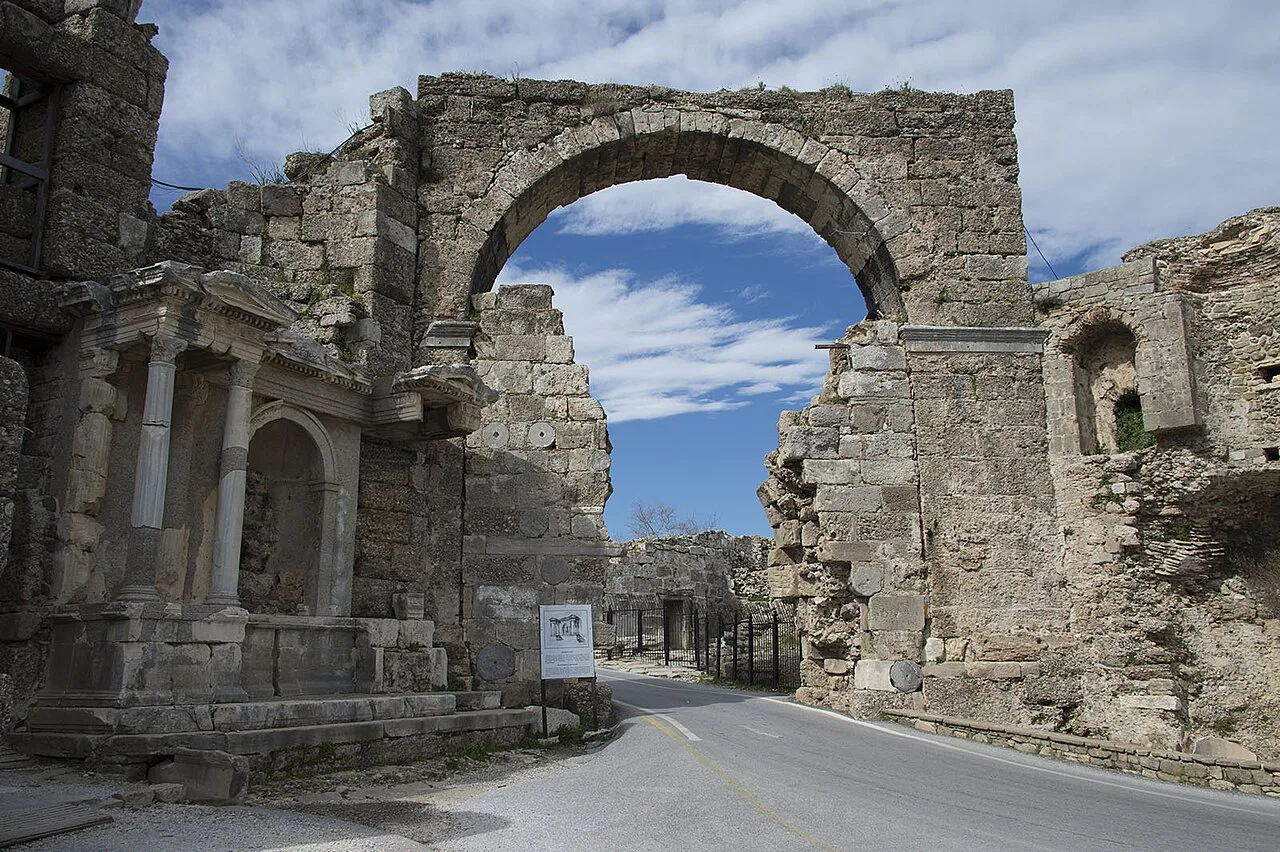
Beyond the theatre the site includes the remains of the colonnaded main street, Roman baths, a nymphaeum and a Hellenic gate set into the exterior walls.
Paving blocks in the streets give way to plexiglass panels in places, letting you walk above the excavated ancient city. It is an unusual way to move through a site, and worth pointing out to anyone who expects ruins to be roped off.
The museum in the old baths
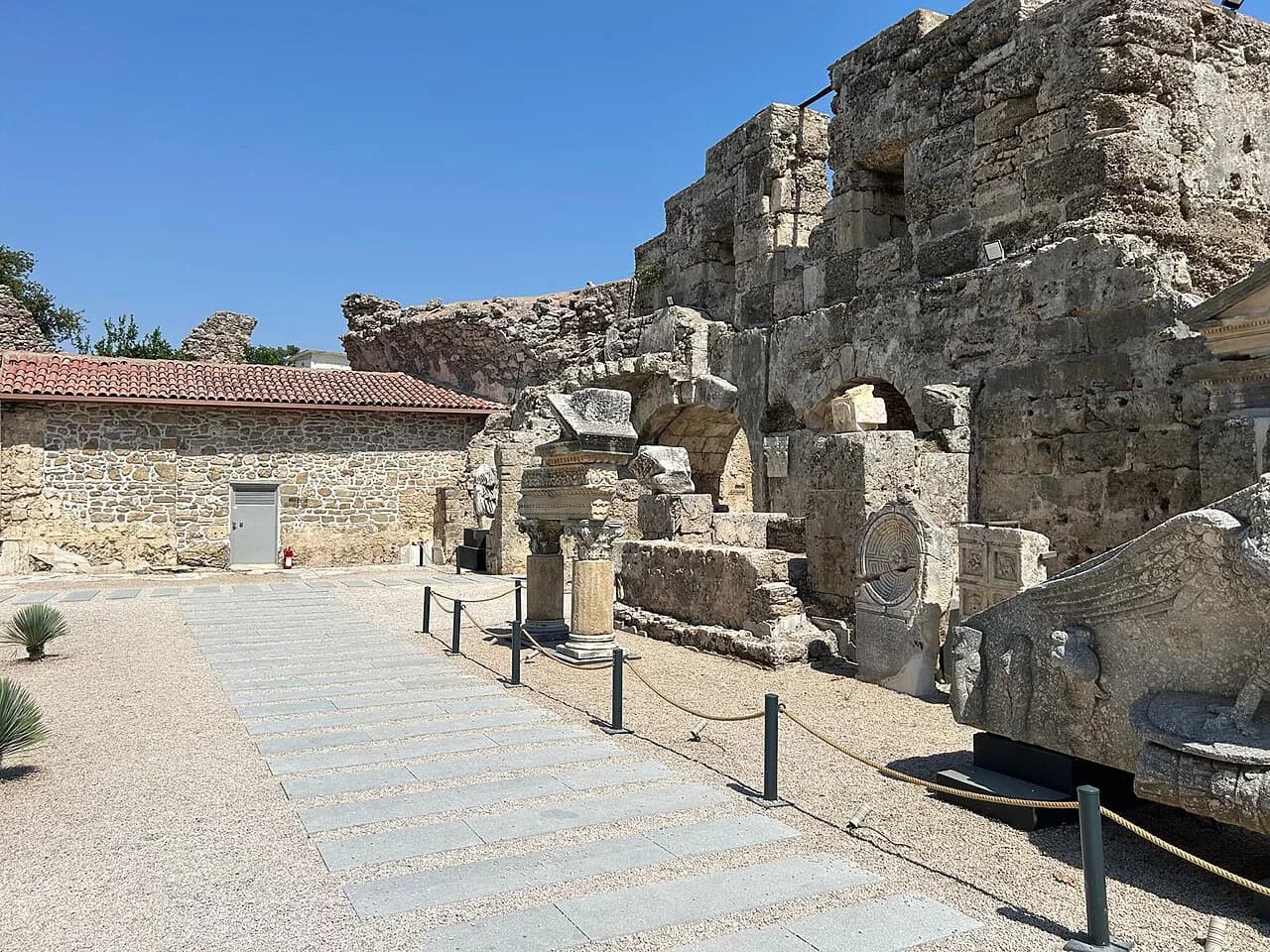
Side's museum occupies a 2nd-century baths complex and holds many of the finds made at the site in the 20th century. It is a separate stop from the open streets and the theatre, so build it into the route rather than treating it as part of the same wander.
The museum is described as open during the summer, so check the current opening arrangement before you set aside time for it. Ticket prices, opening hours and whether a Müzekart covers entry are not fixed here; confirm them at the museum entrance or with the local tourist office on the day.
Getting there and getting in
Side sits off the D400 on the coast, just over an hour's drive from Antalya. Coaches and cars park in a large lot at the edge of town, and a tram runs from the car park past the ruins of the agora to the entrance of the town proper.
That tram ride runs from the car park past the ruins of the agora towards the town, so you can begin near the theatre and walk downhill to the water. Check the current tram fare and running times locally, as they are not listed here.
The wider old town, including its lanes, shops and waterfront, is covered on the old town guide; use it to plan the non-ancient parts of the day around the monuments.
How long Side needs
Allow a couple of hours to walk from the theatre down Liman Caddesi to the temples and harbour, with time for the side streets and the glass panels. Add an hour if you want the museum and its collection of local finds.
Coach groups cluster around the theatre and the main street, so early or late in the day gives you the quieter lanes to yourself. Walking the route in one direction, from theatre to harbour, avoids retracing your steps.
Worth visiting: what the ruins add to a Side holiday
The ruins are what separate Side from a plain resort strip: you can swim, eat and then walk through a Roman street to columns at the harbour. The trade-off is that the town is busy and the scenery is shared with day-trippers, so plan the monuments around the crowds rather than the other way round.
If you have already seen a great many ancient theatres, treat the Side one as a view as much as a monument and give the temple tip and the lanes your remaining energy.
Should the Side ruins anchor your day?
Yes, if you want one compact walk that takes in a Roman theatre, a colonnaded street and temples by the sea. Start at the theatre, work down Liman Caddesi, and finish at the harbour tip with a drink in the lanes behind it.
Before you set out, check the current theatre and museum opening arrangements and the tram from the edge-of-town car park, since these details change and are not fixed here.
Explore more Side guides
Frequently Asked Questions
Is the theatre included in the general old town walk?
The theatre sits inside the town on the same circuit as the freely walked harbour temples, but it has its own entrance, and visitors queue to get in. Check the current entry arrangement at the theatre entrance.
Is Side Old Town worth visiting?
Yes, for the combination of the theatre, Liman Caddesi and the temples at the harbour. The town is busy with day-trippers around the main street, so use the lanes one block back for a quieter walk.
Where should I start the Side ruins walk?
Begin near the theatre, where the tram from the edge-of-town car park brings you, then walk down Liman Caddesi to the temples of Apollo and Athena and the harbour.
Sources
Notes for your next Turkey trip
Optional updates when we add or correct a town guide.
You might also like
Continue reading
More guides you'll find useful