Uzumlu, Fethiye: Village Guide and the Cadianda Ruins
Uzumlu near Fethiye is a mountain village of dastar weavers, vineyards and the Cadianda ruins above it. Here is what to see and how long to allow.
On this page
Uzumlu is worth a half-day from Fethiye if you want village life rather than a resort strip: looms in open-fronted houses, a weekly market and wine made from the local grapes. The Cadianda ruins sit on the mountain above, and many visitors treat village and ruins as one outing. This guide covers where Uzumlu is, how to reach it, what to see, and how long to allow.
The village sits 16 km from Fethiye, and Cadianda is reached on foot above it at around 400 metres above sea level.
What Uzumlu is and where it sits
Uzumlu, also written Yesiluzumlu, is a village of roughly 3,500 people 16 km from Fethiye, named for the grape; the name translates from Turkish as 'grape', with Yesiluzumlu meaning 'green grape'. Narrow old streets are lined with Ottoman-style stone houses, ivy and craft shops, and vineyards and fruit trees run through the valley. It is rural rather than manicured, which is the main reason to come.
The setting is wooded slopes rising above a fertile valley, with the village's streets, stone houses and weaving shops giving glimpses of traditional village life. The name and the local wine both come from the grapes grown around the village.

Getting there and how the village is laid out
The practical route from Fethiye is by car: hire one in Fethiye and drive up, with the village 16 km away and Cadianda reached from there on foot. A car also lets you combine Uzumlu with Kayaköy or the coast on the same day.
Once you are in the village, the weekly market sits near the main square, alongside several shops selling fresh food and locally baked bread. The lanes around the centre are where you find the weaving houses and the older stone buildings.

Dastar weaving in the open-fronted houses
Dastar is the cotton fabric Uzumlu is known for, and it is not a ticketed attraction: you watch it being made. Look into open-fronted houses near the village centre and you can see weavers at work, and many homes have a loom where the patterned cloth is produced.
A greeting in Turkish, a smile and some sign language go a long way if you want to watch and ask about the patterns. You will likely be offered something to eat or drink, and there may be cloth to buy, though there is no pressure to purchase.
The weekly market and the food stalls
The weekly market near the main square is the village's food shopfront, with a wide choice of fresh fruit, vegetables and spices from local farmers. The outdoor food stalls do a steady trade in stuffed pancakes, morel soup and the local Uzumlu wine, so it is a sensible place to build lunch around.
Arrive with an appetite rather than a shopping list: the market is best treated as a browse and a snack, not a timed stop.
Restaurants, pide and saz music
Uzumlu has a number of restaurants serving local specialities, and on some evenings there is live music on the saz, the Turkish stringed instrument. If you have less time, a snack bar serving pide, the Turkish flatbread pizza, covers a quick lunch.
Uzumlu is also a base for the surrounding countryside: the wooded slopes and mountains make it a gentler stop than the coast, and the village has several restaurants serving local specialities.
Cadianda above the village
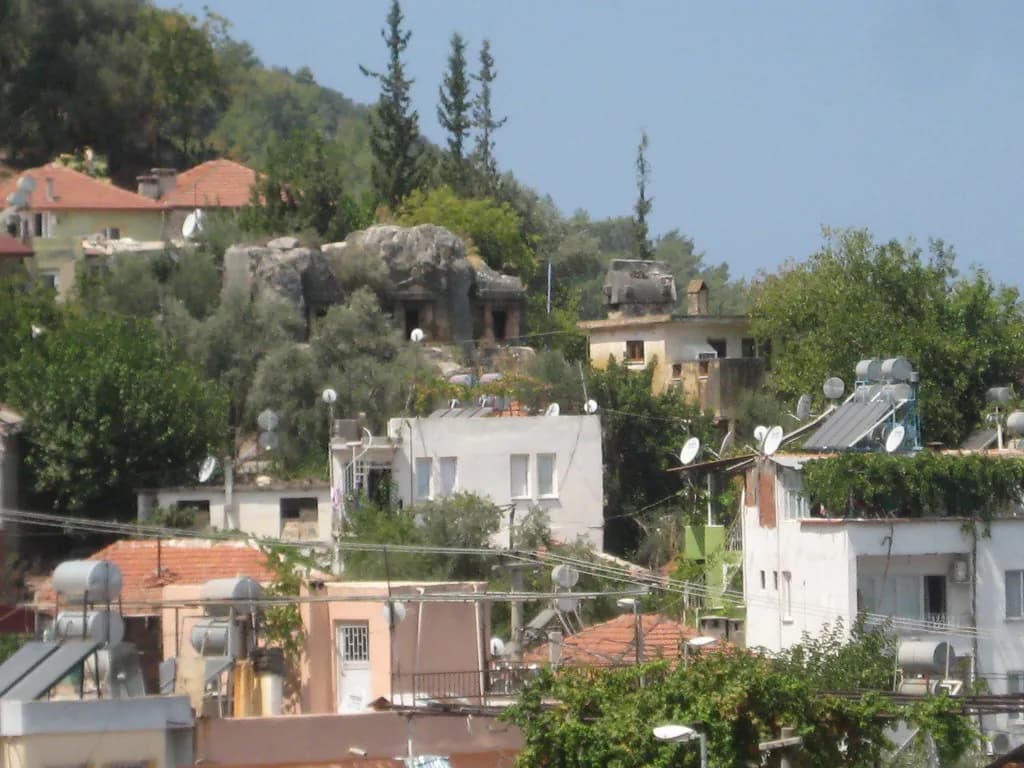
Cadianda is the ancient settlement on the mountain above Uzumlu, encircled by a wall of large stones and set at about 400 metres above sea level. It is known as the last city to join the Lycian Union, and the ruins include Roman-era structures. Near the entrance are four Lycian rock tombs, three of them cut in the fourth century BC and shaped like the houses that have not survived. The fourth tomb carries carvings of a man reclining on a couch and, on the north side, a rider with spear and shield.
Inside the site, north of the acropolis entrance, you can pick out the remains of a Doric temple and, beside it, a bath built of large hewn stones in the reign of the Roman emperor Vespasian. A small theatre sits on the hillside, with the western part of the orchestra well preserved and the stage building gone.
A 900-metre foundation runs west to east through the centre of the city, and inscriptions found in excavation describe athletic festivals here; the foundation is believed to be the stadium. Pedestals for athletes' statues stand nearby. Treat the walk between these remains as the point of the visit rather than a checklist of set pieces.
How long Uzumlu and Cadianda need
Allow half a day for the village itself: a wander through the lanes, time at the looms, the market or square, and a long lunch. Add a few hours for the climb and walk around Cadianda, which is the more demanding half of the outing and the part most people underestimate.
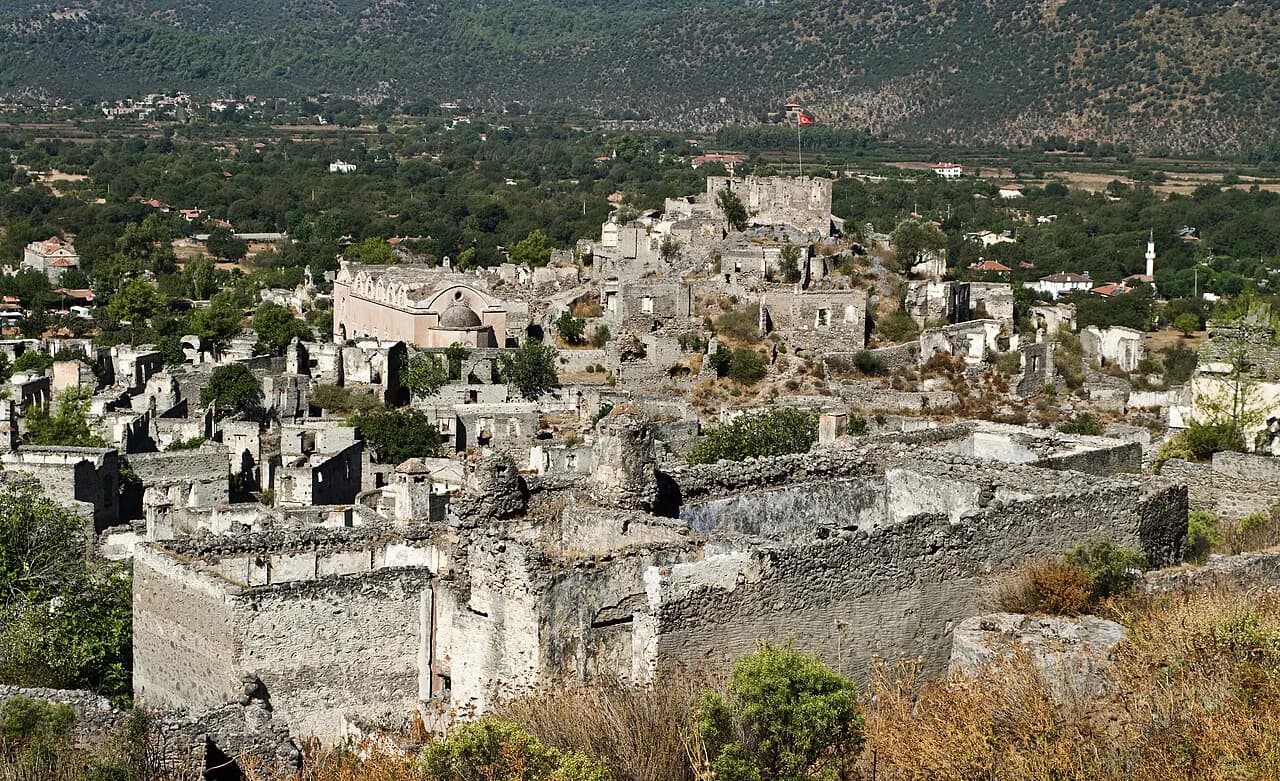
If you have a single day, pair the village with Kayaköy on the way back down to the coast, or with Fethiye town for the harbour and market. Kayaköy, the abandoned village above Fethiye, is covered in our guide to Kayaköy: Visiting the Abandoned Village Above Fethiye, and the coast beyond it includes Butterfly Valley, a boat-trip stop rather than a village add-on.
The April mushroom festival and guided walks
Uzumlu holds a mushroom festival every April, built around the morel that grows locally; the proceedings run for three days with traditional music, folk dancing and talks on local culture and history. Guided mushroom-hunting walks in the surrounding hills are also organised for those who want to search out their own morels.
The festival centres on the morel rather than a fixed programme, so confirm the year's dates with the organisers before booking travel around it.
Village first, then the ruins?
Do the village in the morning, when the lanes and looms are quiet, then climb to Cadianda in the afternoon with water. If the heat is heavy, reverse it: ruins early, market and lunch after.
Travel from the coast takes time, so treat Uzumlu as a day rather than an hour's detour. Hire the car in Fethiye the day before, and keep the return drive to the evening rather than squeezing in another stop.
Explore more Fethiye guides
Frequently Asked Questions
Is Uzumlu worth visiting?
Yes, if you want a rural Turkish village rather than a resort. The draw is the dastar weaving you can watch in open-fronted houses, the weekly market by the main square, the local wine, and the Cadianda ruins on the mountain above.
How far is Uzumlu from Fethiye?
Uzumlu is 16 km from Fethiye, reached most easily by hiring a car in Fethiye and driving up.
What is there to do in Uzumlu?
Watch dastar weaving in the village lanes, browse the weekly market and its food stalls, eat pide or a restaurant meal, and walk up to Cadianda for the Lycian rock tombs, temple and bath remains, small theatre and stadium foundation.
Sources
Notes for your next Turkey trip
Optional updates when we add or correct a town guide.
You might also like
Continue reading
More guides you'll find useful