Lycian Tombs in Turkey: Where to See Them and What to Expect
Lycian tombs are the cliff-carved burial chambers of ancient Lycia. See where they are in Turkey, from Fethiye's Tomb of Amyntas to the Dalyan rock tombs.
On this page
For most holidaymakers the Lycian tombs in Turkey mean one of two places: the cliff-cut chambers looming over Fethiye old town, crowned by the Tomb of Amyntas, and the row of tombs carved into the rock above the Dalyan River at ancient Kaunos. Fethiye is the more accessible for a short visit: you can walk up from the harbour, see the tombs from the road for nothing and pay to stand at the tomb, while the Dalyan tombs are viewed from the river or far bank. This guide covers both, the walk up through Fethiye, what the entrance fee buys and how to read the tombs once you are there.
What Lycian tombs are and where Lycia was
The tombs are burial chambers cut straight into the living rock, and the Fethiye examples sit in the cliff above the town at ancient Telmessos. The western stretch of Turkey's Mediterranean shore where they cluster is the modern Lycian coast, and it overlaps heavily with what holidaymakers call the Turquoise Coast, so a resort break and a tombs visit often share the same base. You do not need a classics background to get something out of them: the appeal is the setting, the scale and the views.
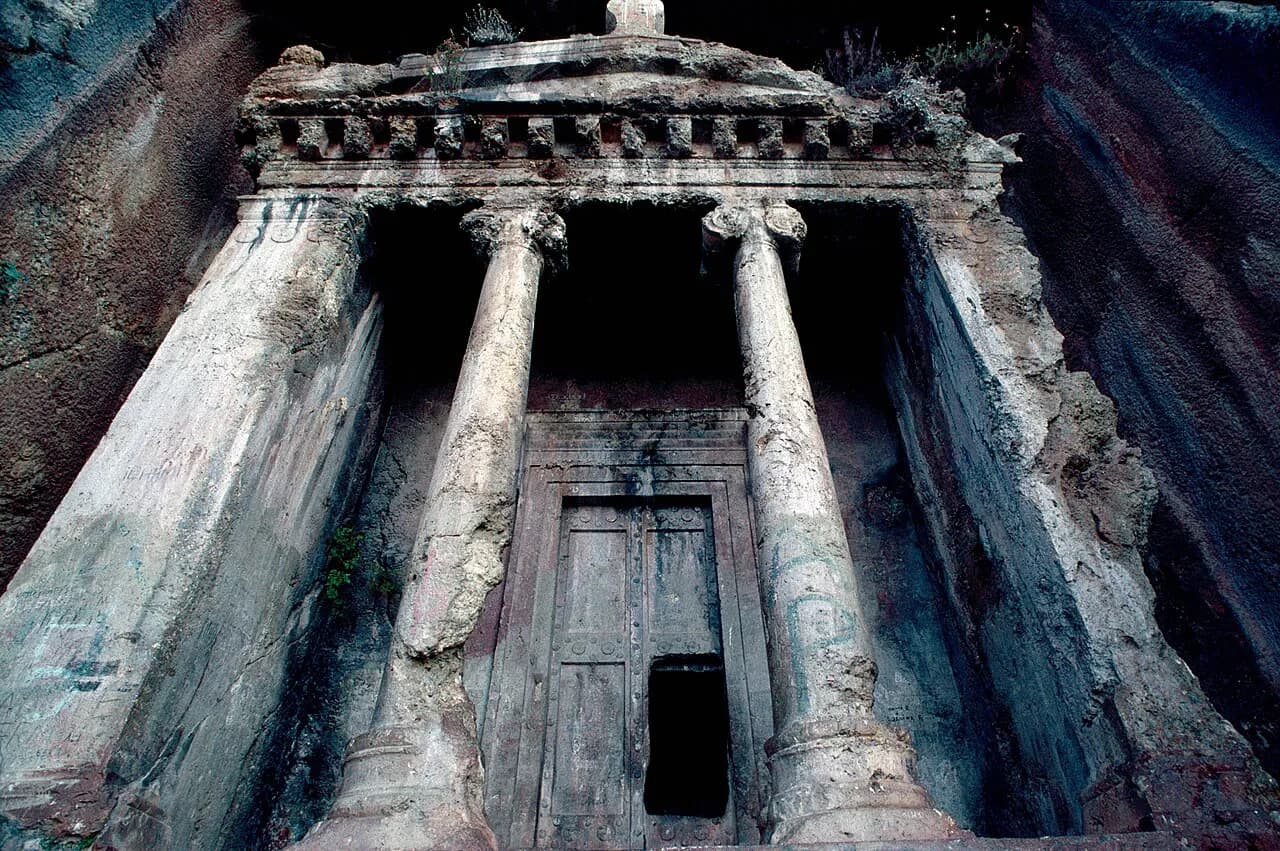
The classic Lycian form here is a chamber carved to imitate a temple front, with a portico above the entrance; the Amyntas tomb is cut from a single piece of rock in this Ionian temple style, with its doorway set at the bottom right. Size and height told the ancient viewer something: Amyntas sits higher and larger than the tombs around it, which is how it reads as the important one. Once you know that, the rest of the cliff becomes legible rather than a pretty backdrop.
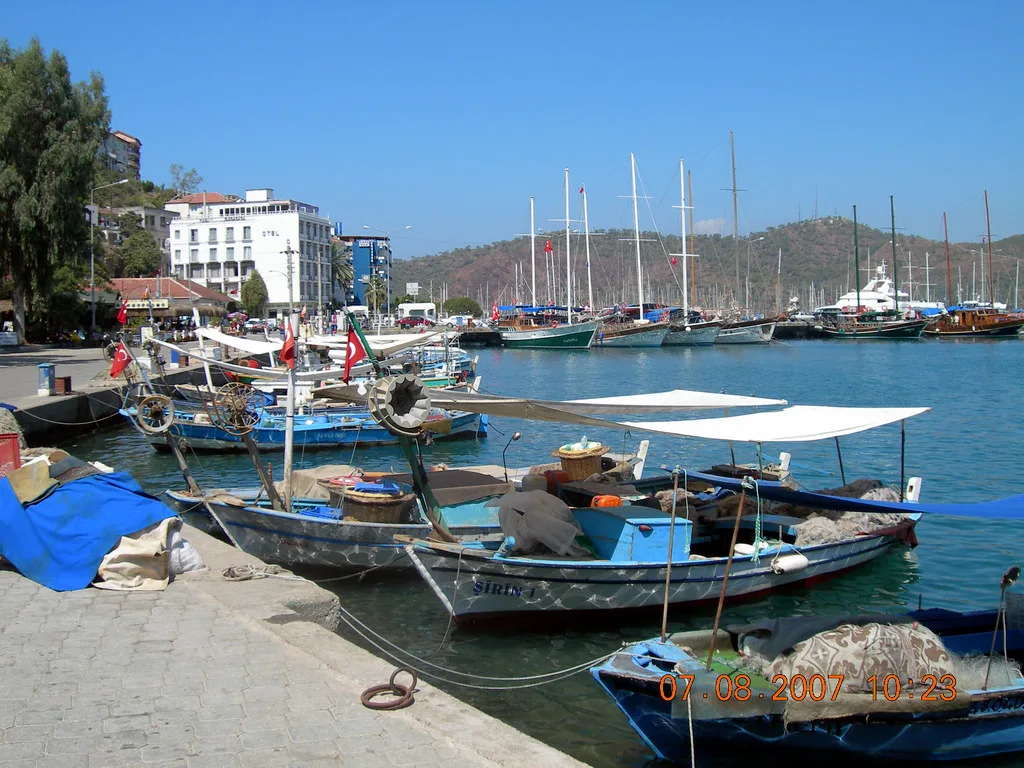
Fethiye rock tombs: the Tomb of Amyntas and the lower chamber group
The Lycian rock tombs in Fethiye are carved into the cliff face high above the town and are easy to spot from the streets below, which makes them the obvious first stop on any walk through the old centre. The Tomb of Amyntas, also called the King's Tomb, is the highest and most prominent, and the only one you can walk right up to. It is not in perfect condition, but the position and the view carry it.
Lower down, a group of smaller tombs for less prominent Lycians is cut into the cliff beside the path back towards old Fethiye. Their sea views were blocked long ago by the growth of the town, so they are less about panorama and more about seeing the carving up close. Take the right-hand downhill fork after the main tomb and you walk straight past them on the way into the old neighbourhood.
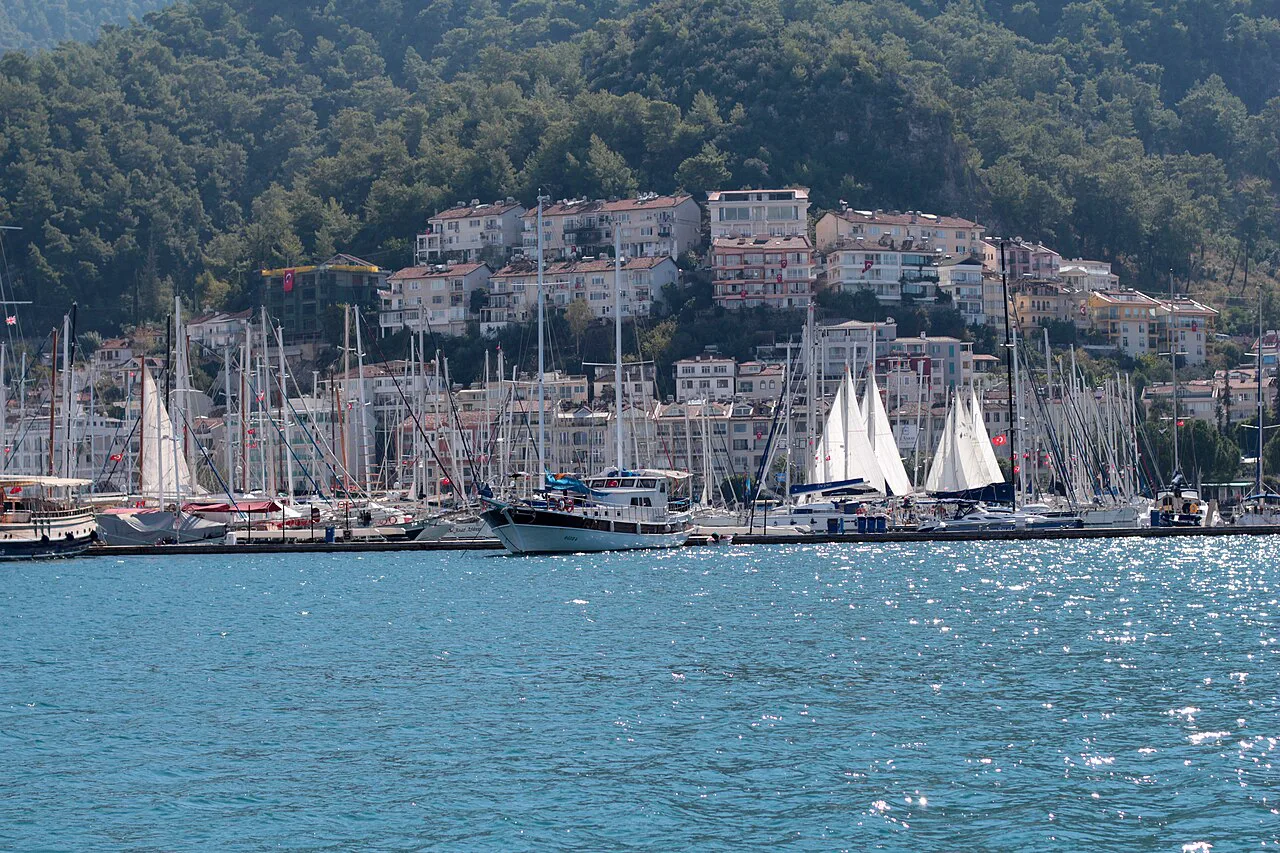
Getting up to the Fethiye tombs on foot from the old town
Access is on foot and uphill from the centre of Fethiye: keep heading up towards the cliff and you cannot really miss it. The steps are winding but shallow, so the climb is a steady pull rather than a scramble, and the town and bay open up below you as you go. A tour listing puts the uphill walk at about 15 minutes, which is a fair planning figure for a reasonably fit adult but not a timed schedule.
Approach from the east side of Kaya Caddesi and you pass a different kind of Lycian burial on the way: two sarcophagi in a fenced area on the right of the street, plus a freestanding stone pillar tomb standing in the middle of the road. Most people walk past them looking at their phones, so slow down on this stretch. It makes the climb feel like part of the sight rather than transport to it.
Bring water, because the climb is exposed and there is only a small snack bar opposite the booth at the top of the steps. Aim to start early in the day in high summer, when the steps are in shade for longer and you are not sharing the viewpoints with a midday queue. Allow around an hour for the whole thing once you include photos and the lower tombs.
Entry, opening hours and how long the Fethiye tombs take
You can see all the Lycian rock tombs from the roadside for free, since the cliff and the fence along the road give a clear view from below. Paying gets you through the gate and up to the Tomb of Amyntas itself, which the writer behind Turkey's For Life rates as worth it for the views. That is the honest trade-off: the fee buys proximity and panorama, not a museum. It is an hour's outing that pairs easily with a wander through the old quarter, where the best restaurants in Fethiye are gathered.
In May 2026 the entrance fee was €3, payable if the warden was at the gate, and the same source notes that official Turkish museum and archaeological site fees have been quoted in euros since 2024. Opening was daily from 08:30, with last entry at 19:30 and closing at 20:00. Treat those as the published position at the time of writing and take the figure in euros rather than converting it in your head at the gate.
Entry is free for Turkish citizens and residents using the MüzeKart app, and that concession is specific to those groups rather than a general discount for foreign visitors. If you hold a MüzeKart on another basis, do not assume it covers this site; ask at the booth. Current fees and opening times are the sort of detail worth confirming on arrival or through the official museum site before you build a day around them.
What you see from the top: views over the harbour and Paspatur
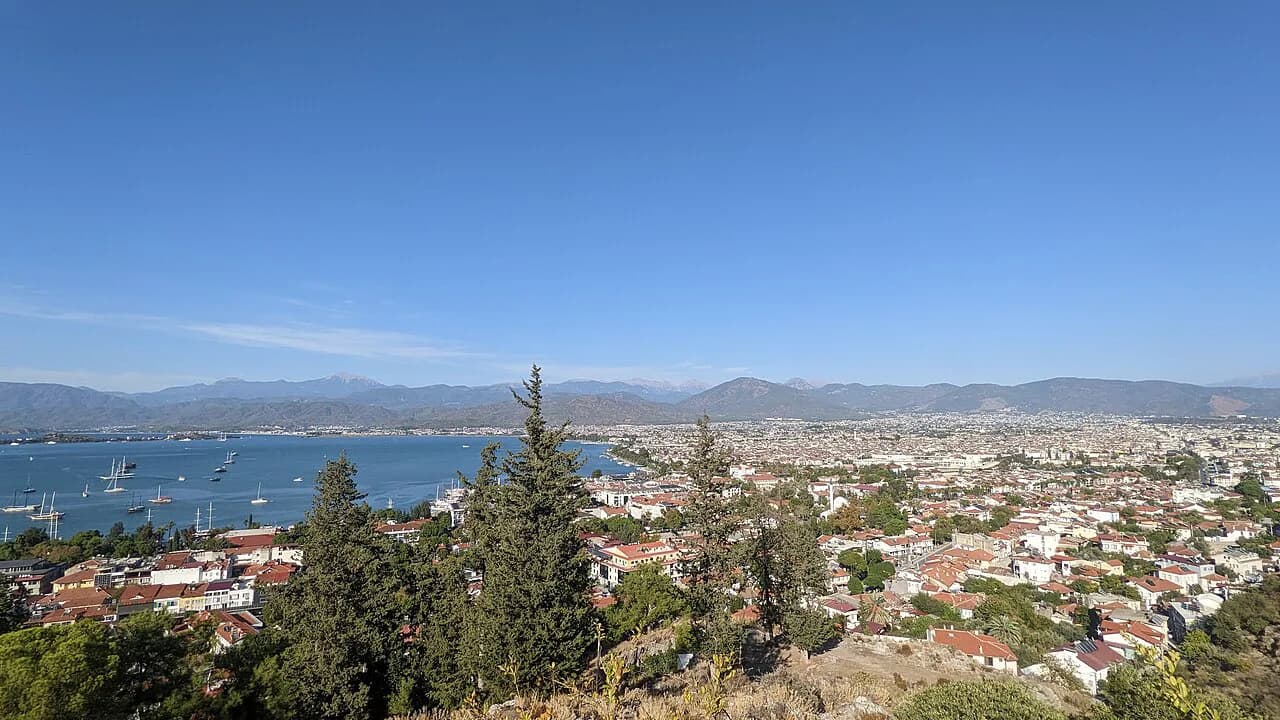
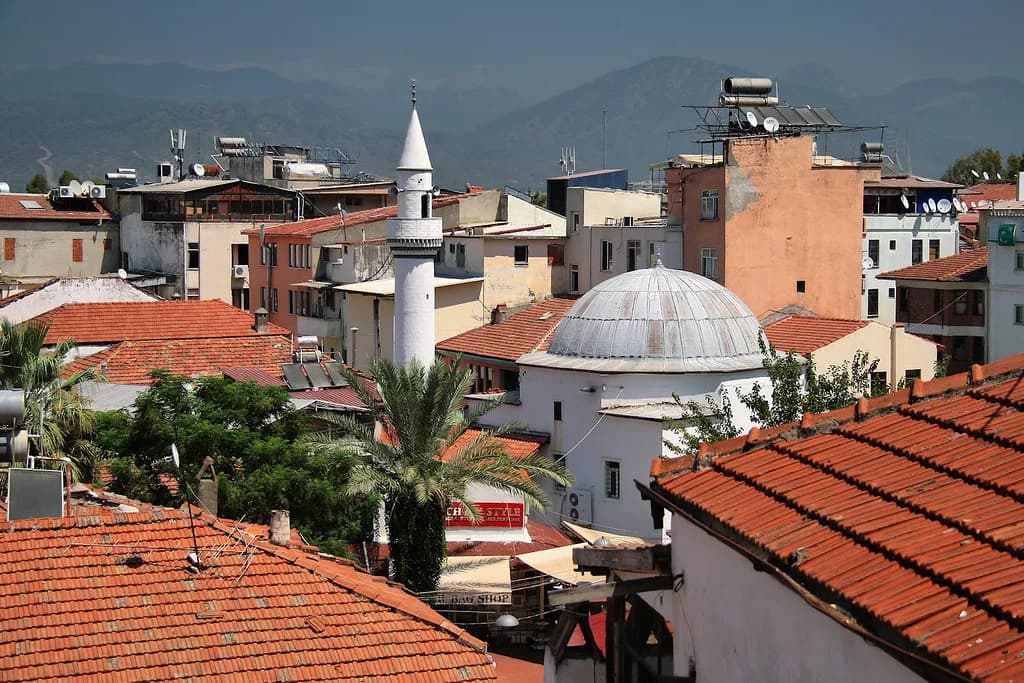
From the level of the Amyntas tomb the view runs over the rooftops of old Fethiye, across Paspatur and out over the whole bay and the newer sprawl beyond. It is the best free-standing photograph in town, and the reason to climb rather than admire from the street. Turn round on the way down to catch all the rock tombs in one frame; that angle shows how far Amyntas stands apart from the rest.
Time the climb for late afternoon if you want the town in warm light, or first thing if you want the steps to yourself. Either way, the descent drops you into the old quarter, which is where you want to be for a late lunch or an evening meal; the best restaurants in Fethiye are a short walk from the bottom of the path.
Dalyan rock tombs above the Dalyan River at ancient Kaunos
The Dalyan rock tombs are rock-cut funerary monuments at ancient Kaunos, carved high into the cliff above the Dalyan River and dated to the mid-4th to 2nd century BC. They are the ones you see on every Dalyan river photograph: a facade of temple-like fronts stacked along the rock wall opposite the town. Because they face the river, much of the experience is had from the water or the far bank rather than from a staircase.
The practical difference from Fethiye is that the tombs sit a river crossing away rather than a walk from your hotel, so they pair naturally with a boat trip or a visit to the Kaunos site rather than a standalone hour. Plan them as half a day with the river and the ruins, not a quick photo stop, and confirm boat schedules locally before you set out. For the crossing, the viewing points and the timings, our guide to the Dalyan rock tombs covers the same decision for the other side of the river.
How to read a Lycian tomb: portico, position and scale
Look first at the shape of the cut: the best tombs imitate a temple portico, with a pitched roofline carved above the door and the entrance offset rather than centred. Then look at height. The higher and bigger the tomb, the more important its occupant, which is why Amyntas commands the cliff while smaller chambers huddle below. Finally, check what the tomb faces; the Lycians placed their dead close to the living, and the views were part of the design.
Reading the tombs this way turns a ten-minute photo stop into something closer to an hour, and it costs nothing. It also makes the smaller, plainer chambers worth a look rather than an afterthought. If you go on to Tlos or Xanthos later in the trip, you will recognise the same grammar in a much bigger setting.
Seeing the tombs from the road versus paying to go right up
If your time in Fethiye is tight, the roadside view is a legitimate way to see the tombs: the cliff is high, the fence is low and the whole face is visible from the street below. Pay the small gate fee only if you want the climb, the close-up of the Amyntas facade and the panorama over the bay. Travellers who dislike steps or heat should take the free view without guilt.
The gate arrangement is casual, with payment taken at the booth by the steps, so carry a little cash in euros as well as lira in case card handling is inconvenient on the day. Keep the visit short if you are combining it with a boat trip or a gorge excursion, and give it a full morning if the tombs are the point of the day. Either way, wear shoes with grip: the steps are shallow but numerous.
Which tombs fit a Fethiye or Dalyan day, and when to go
Base yourself in Fethiye and the Amyntas tombs slot into any afternoon: an hour up and down, then the old town and harbour. Base yourself in Dalyan and the Kaunos tombs work as a morning on the river before the heat builds. If you have time for both, do Fethiye when you want the close-up climb and Dalyan when you want the facade seen from the water; the closer Amyntas view makes the Dalyan front easier to read.
Both sites are outdoor, unshaded and hot in July and August, so early mornings and late afternoons are kinder than midday. Spring and autumn give you cooler steps and clearer light on the rock, and the Fethiye climb is short enough to fit around whatever else you have planned. A boat trip and the tombs can share a day in Fethiye without either feeling rushed.
Other Lycian sites within reach of the coast
If the tombs leave you wanting more of Lycia, Xanthos and Letoon are the sites that have yielded most of what is known about the civilisation, and both sit within reach of the Fethiye–Kaş stretch of coast. Tlos, inland from Fethiye, combines a hilltop acropolis with its own rock-cut tombs, so you can compare a bigger site with what you saw above the harbour. None of these needs a guide to be worthwhile, but each needs a car or an organised tour to reach comfortably.
Should the Fethiye tombs be your first stop?
If you are staying in or near Fethiye, this is an easy first stop: the climb is short, the roadside view is free and the outlook over town and bay is the reward. Pay at the gate only if you want to stand at the Tomb of Amyntas itself, and keep an hour free so the lower chambers and the Kaya Caddesi sarcophagi get their due. In Dalyan, treat the river tombs as a half-day with Kaunos rather than a tick-box stop. Coming down into the old quarter afterwards, the best restaurants in Fethiye are within easy walking distance of the foot of the path.
Explore more Fethiye guides
Frequently Asked Questions
Where is Lycia today?
Ancient Lycia covered the western stretch of Turkey's Mediterranean coast around Fethiye, Kaş and the Xanthos valley, which is the area holidaymakers now call the Lycian coast or the Turquoise Coast. The Fethiye rock tombs and the Dalyan tombs at ancient Kaunos are two examples you can visit from a resort base.
What are the ancient ruins in Fethiye?
The headline ruins are the Lycian rock tombs in the cliff above the town, headed by the Tomb of Amyntas at ancient Telmessos, along with the smaller chamber group lower down and the sarcophagi and pillar tomb on Kaya Caddesi.
Do I need a ticket to see the Fethiye rock tombs?
Not to see them: the whole cliff face is visible from the road below and along the approach path. A gate fee applies if you want to climb the steps and go right up to the Tomb of Amyntas, and entry was free for citizens and residents using the MüzeKart app (May 2026). Check the current fee and opening times before you build a day around them.
Sources
Notes for your next Turkey trip
Optional updates when we add or correct a town guide.
You might also like
Continue reading
More guides you'll find useful