Kayaköy: Turkey's Abandoned Village Near Fethiye
Kayaköy is the abandoned stone village above Fethiye, with two churches, hundreds of roofless houses and hilltop views. Here is how to visit and what to see.
On this page
Kayaköy is worth half a day, not a full one. The abandoned village above Fethiye is a compact hillside of roofless stone houses, two Greek Orthodox churches and worn stairways, and 1.5 to 2 hours covers the main lanes at an unhurried pace. This guide sets out what the village is, how to reach it from Fethiye, Ölüdeniz and Hisarönü, which church you are standing in front of and how to slot the visit into a wider Turquoise Coast itinerary.
What Kayaköy is and where it sits
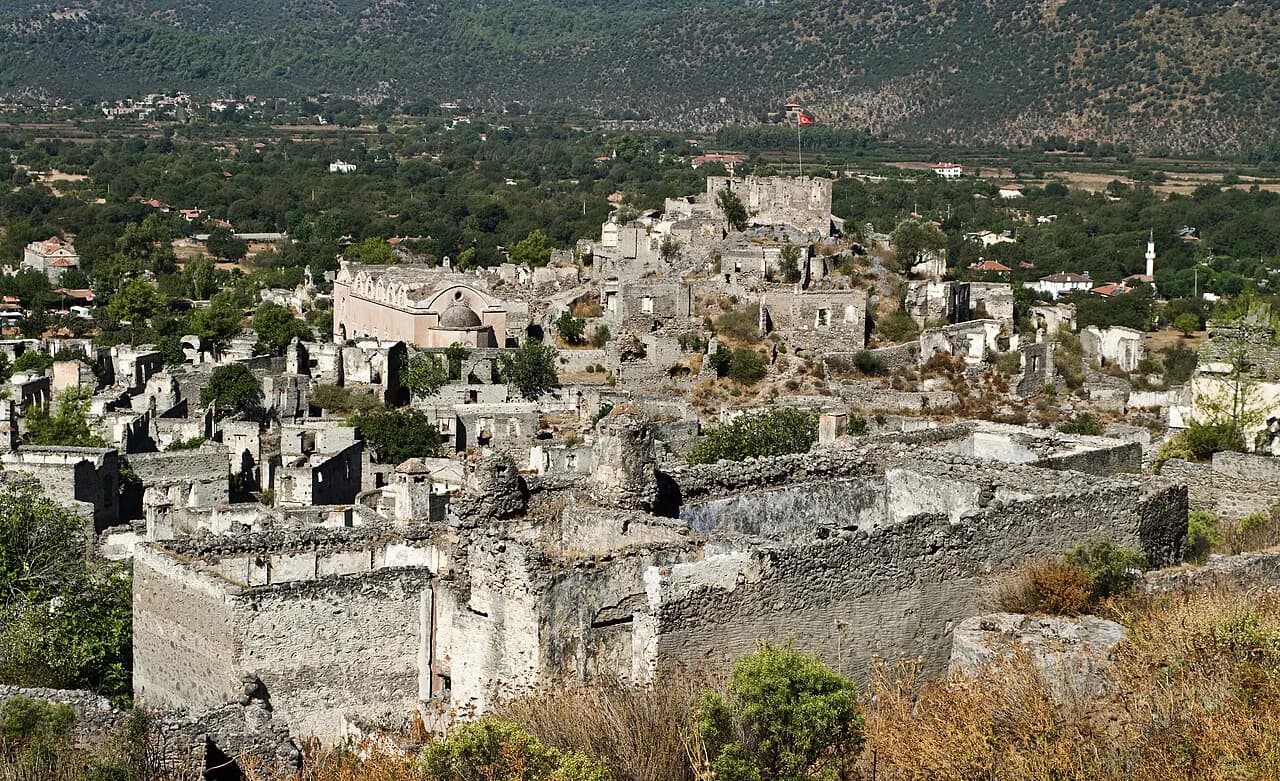
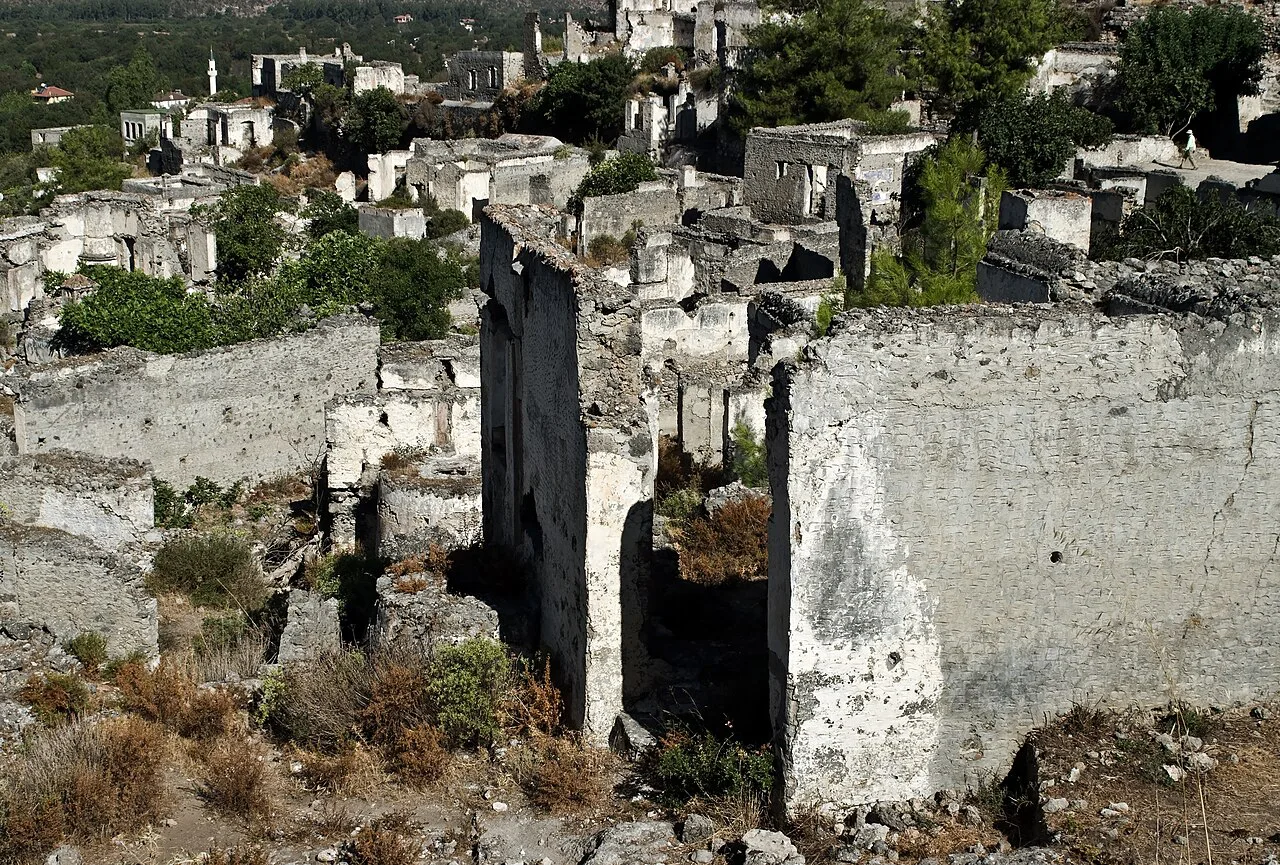
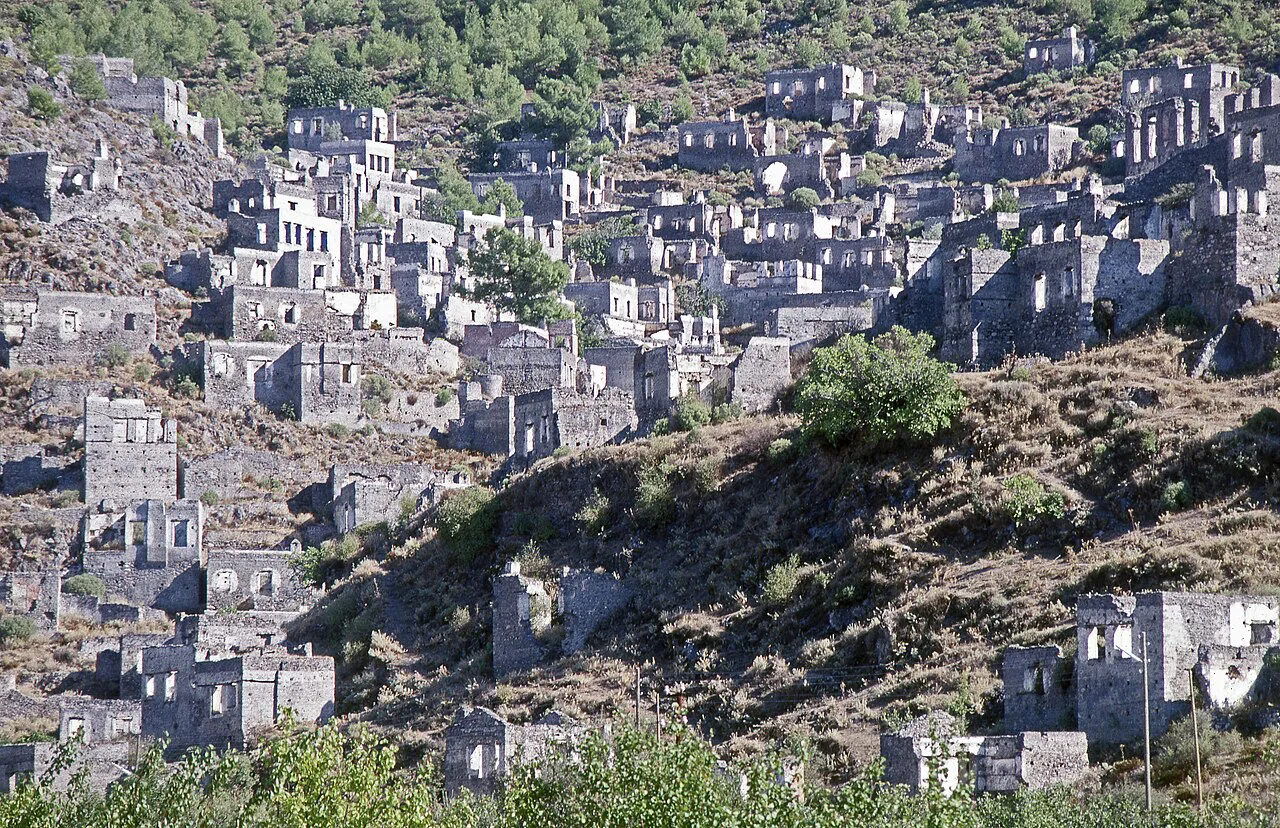
Kayaköy sits on a forested hillside in the Fethiye district of Muğla province, roughly 8 km from Fethiye town and within easy reach of Ölüdeniz. Much of the village was built in the 18th century, and its former name was Karmylassos, also written as Levissi. Hundreds of stone houses, two churches and a school survive as an open-air museum, with lanes that are grass-covered in places and stairs that climb steadily between the terraces.
The houses were laid out so that each one kept its view of the valley, built with thick stone walls that stay cool in summer and warm in winter, and most had a kitchen, a pantry and a small water tank. Enter through the museum sign and the scale of the place is immediately clear: rows of grey walls without roofs or windows, climbing toward the upper streets.
Why the village was abandoned
Kayaköy's Greek Orthodox population left in 1923 under the population exchange agreed between Turkey and Greece at Lausanne, and the village never refilled. In the early 20th century it had been a self-sufficient place of roughly 20,000 people, living from olives, wine and trade, with two large churches and 14 small chapels.
Muslims arriving from Greece found the stone houses poorly suited to their farming habits and the terrain, and a major earthquake in 1957 brought down many of the structures that were still standing. That combination of emptied streets and later quake damage, rather than any single event, is why the village stands roofless today.
The Lower Church and the Upper Church
Two Greek Orthodox churches dominate the site: the Lower Church and the Upper Church, whose flaking vaulted interiors survive under open roofs. Everything is fragile, so look rather than climb, and keep to the marked lanes.
Taksiyarhis Church is the largest of the village's churches, notable for its high ceiling, arched structure and surviving fresco remains. Treat the interiors as fragile: walls are unstable in places, so look rather than climb, and keep to the marked lanes.
Stone houses, stairways and the old fountain
Beyond the churches, the pleasure of Kayaköy is in the small detail: staircases rising between houses, alcoves, the remains of ovens, and an old fountain dated 1888. Walk the lower lanes first, then take the weathered steps up through the upper streets for the clearest sense of how the village was terraced into the hill.
The village is described as a site considered to need protection, and restoration work continues on selected structures; a few boutique cafés and craft shops have opened in the village. That means parts of Kayaköy are a working conservation site rather than a ruin you roam freely, so respect any barriers you meet.
The hilltop chapel walk and the views
From the Lower Church, a trail marked with red dots climbs to the Little Chapel on the hilltop in about 20 minutes. The reward is a wide view of the sea on one side and the valley on the other, and it is the single best short walk at Kayaköy if you have the legs for it in the heat.
The upper streets give a similar panorama with far less effort, looking out over the valley and the mountains. Go early or late if you can: there is very little shade across the site and the sun is intense in summer.
How to get to Kayaköy from Fethiye and Ölüdeniz
Dolmuş minibuses run between Kayaköy and Fethiye, and in the warmer months also between the village and Ölüdeniz. From Fethiye, take a minibus marked Kayaköy from the bus station; the ride takes about 20 to 30 minutes and drops you at the museum sign. Frequency and seasonal timetables are not fixed here, so ask at the station on the day rather than relying on a printed time.
By taxi or hire car the road from Fethiye winds through the valley, and the road is paved with parking by the entrance. If you are based in Hisarönü or Ölüdeniz, this is the quickest option and lets you combine Kayaköy with the coast on the same afternoon.
Walking in and out: routes to Ölüdeniz and Fethiye
Walkers can reach Kayaköy on foot from Ölüdeniz along a trail over the hills, roughly 2.5 km with sea and mountain views along the way. A longer route heads north from the village toward Fethiye and Ovacık, about 8 km in total.
For anyone staying above the lagoon, Ovacık makes a sensible base for doing this on foot; our guide to Ovacık: The Village Above Ölüdeniz explains how the village sits in relation to the coast. The walking option is genuinely scenic, but the climb is steep and exposed in summer, so carry water and start early.
Tickets, timing and what to wear
There is an entrance fee to the ghost town, sold on site. The amount is not fixed here, so check the price when you arrive rather than budgeting from an old figure, and carry cash as a fallback.
Allow 1.5 to 2 hours for the main lanes and one church, and nearer three if you add the hilltop chapel walk. Wear proper shoes for uneven stone stairs, bring water, and do not enter dilapidated buildings, as walls can be unstable.
What to pair with a Kayaköy visit
Kayaköy works best as a morning or late-afternoon outing bolted onto the coast rather than a day in itself. Pair it with the Blue Lagoon at Ölüdeniz, or with a lazy afternoon in Fethiye's harbour and bazaar; a Fethiye boat trip makes an easy contrast on another day of the same stay. If the harbour stop leaves you choosing where to eat, our guide to the best restaurants in Fethiye covers the options around Çalış Beach and the fish market.
If you are driving or using dolmuş, Hisarönü sits conveniently between Kayaköy and the coast and has plenty of places to eat after a hot walk. For a quieter village day inland, Uzumlu (Üzümlü) near Fethiye makes a calm counterpoint to the ruins, and Butterfly Valley (Kelebekler Vadisi) and Faralya: a guide to Fethiye's cliffside village above Butterfly Valley cover the coast further south.
Is Kayaköy worth the trip?
Yes, if you want an hour or two of quiet stone lanes with sea views and churches to explore, and you are already in the Fethiye or Ölüdeniz area. Go early for shade, wear proper shoes, expect a modest on-site entrance fee, and pair it with the lagoon or the harbour rather than treating it as a standalone day out.
Explore more Fethiye guides
Sources
Notes for your next Turkey trip
Optional updates when we add or correct a town guide.
You might also like
Continue reading
More guides you'll find useful