Fethiye Old Town: Paspatur Streets, Harbour and Old Bazaar
A walker's guide to Fethiye old town: the Paspatur bazaar lanes, the harbour, the castle hill and the rock tombs, and how the quarters connect.
On this page
Fethiye old town is small enough to walk end to end in an afternoon: the Paspatur quarter sits a few minutes from the harbour, with the castle hill at its southern edge and the rock tombs above the town behind it. Most of what you want to see — bazaar lanes, the fish market, the waterfront and the Tomb of Amyntas — falls inside a single loop on foot. This guide follows that loop in the order you actually walk it, names the streets that bracket the quarter and explains where the working harbour ends and the yacht marina begins.
What Fethiye old town actually is
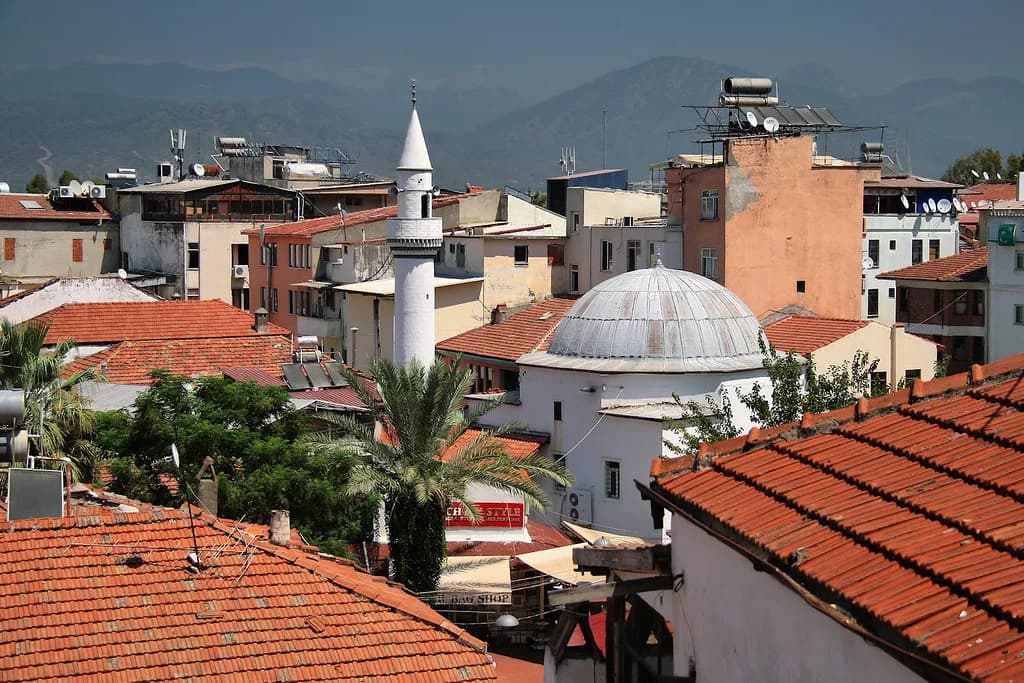
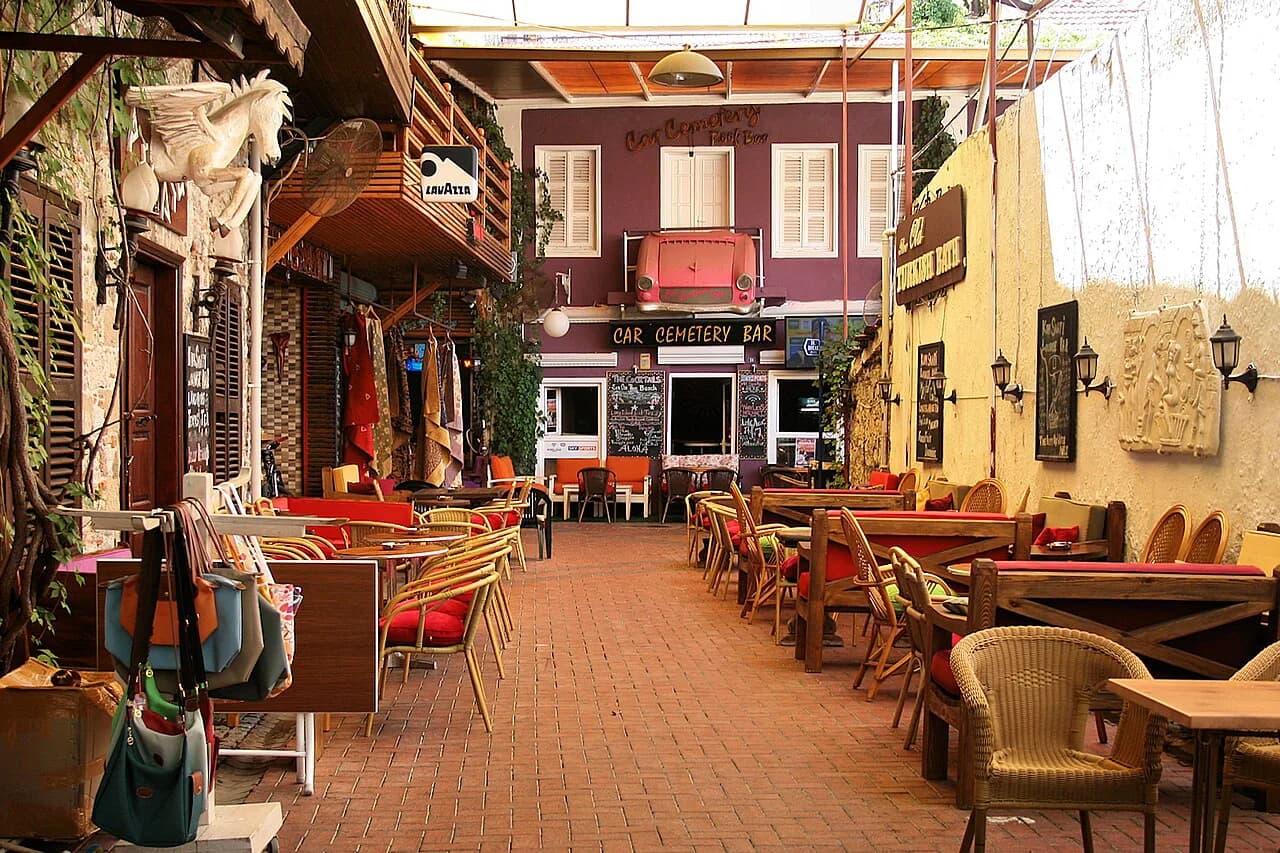
Paspatur, also signed as Fethiye Eski Şehir, is the old bazaar district, a compact grid of pedestrian lanes between Atatürk Caddesi and Çarşı Caddesi, minutes from the harbour. It is one of the few parts of the city that kept its old buildings through the 1957 earthquake, which is why the historic core feels like a survivor rather than a whole Ottoman town. The lanes are paved with terracotta-coloured cobblestones and mostly car-free, so the quarter works as a walking zone rather than a sight with a gate.
Plan around Paspatur as a district, not an attraction: there is no ticket window and no single entrance, and one visitor listing simply has it open all day. In practice the shops, cafés and restaurants set its rhythm, so early morning is quiet and the lanes fill from mid-morning onwards. Sturdy shoes help on the cobbles, and the vine canopies overhead make the shaded alleys noticeably cooler than the seafront in midsummer.
How the old town is laid out
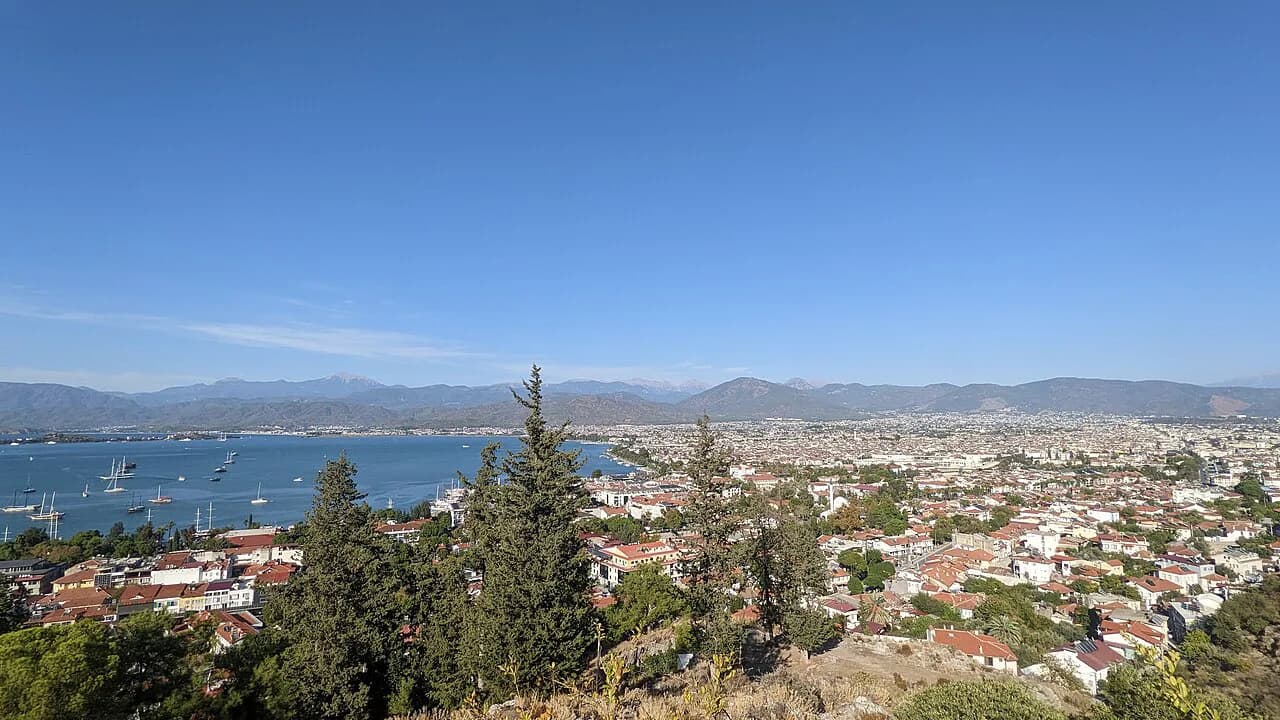
Read the district from its two anchors: the castle hill to the south and the busy marina to the north. The ruins on the hill can be seen from almost anywhere in the quarter, so they double as a compass when the lanes start to twist. The shoreline road then runs west from the harbour through smaller hotel districts within walking distance, which is how most visitors reach Paspatur from their accommodation.
Within Paspatur, a central square sits where the lanes open out, with the shopping streets radiating from it. The old stone houses on either side have mostly been converted into shops and restaurants, and you can walk the whole quarter without meeting a main road. That compactness is the point: you can shop, eat and come back for the castle in the same afternoon without a bus or taxi.
Getting there and getting oriented
Arriving from Dalaman or elsewhere in western Turkey, you usually land at Fethiye's main otogar, which sits about 1.5 km from the marina and old town area. Walk west or take a dolmuş minibus to reach the historic district; arriving from the east, from Kaş or Ölüdeniz, you are normally dropped at the main dolmuş stop much closer in, leaving only a short walk. From the town side, the old town is roughly 2 km and about 30 minutes on foot, with a taxi taking five to ten minutes.
The practical arrival order is harbour first, then Paspatur, then up to the castle. Come in along the waterfront so you see the boats and the marina before the lanes close in, then cross into the bazaar streets and finish with the climb. That way the uphill work comes last, when you are ready to stop for a drink at the top.
Paspatur on foot: a route through the lanes
Start at the harbour end of Çarşı Caddesi and walk south, letting the lanes pull you off the main line. The vine-hung alleys and the umbrella-covered side streets are the details people photograph, and the small square at the centre is the natural place to pause and get your bearings. Because the quarter is pedestrianised, you can zigzag without worrying about traffic.
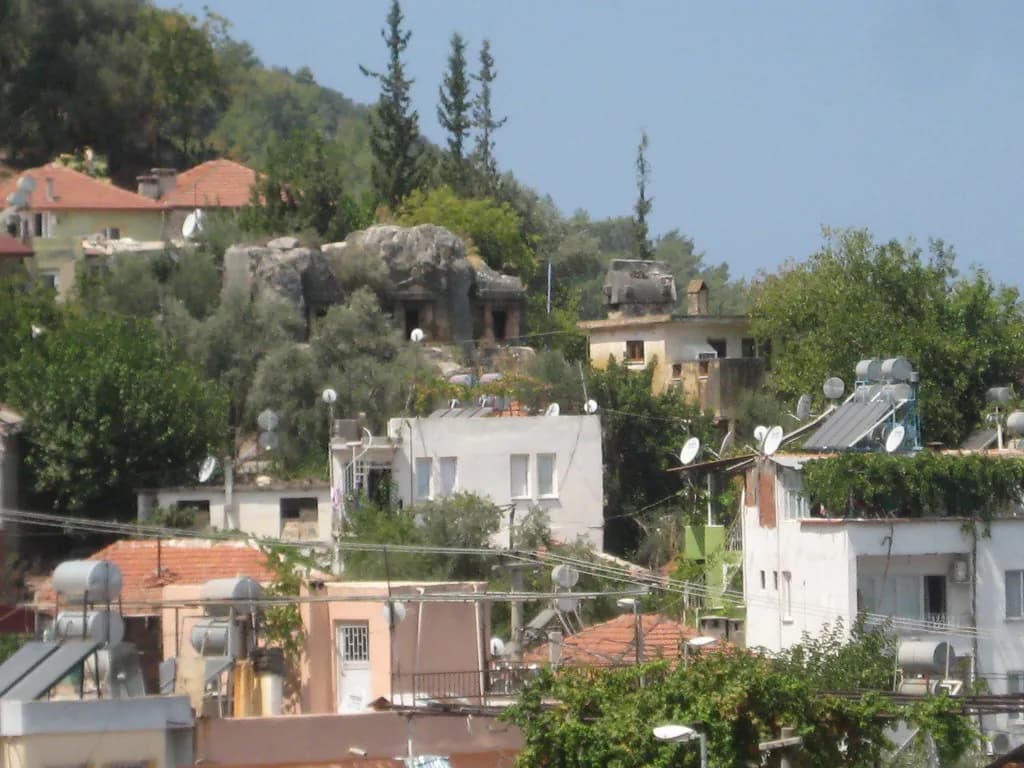
When you reach the southern side of the quarter, the ground starts to rise towards the castle hill. Look up for the ruins on the ridge and the Lycian rock tombs cut into the cliffs behind the town; the tombs sit above the rooftops and are the clearest signal that the old town is ending. From here you can either climb or drop back to the harbour, which is the easy half-day version.
What the shops in Paspatur sell
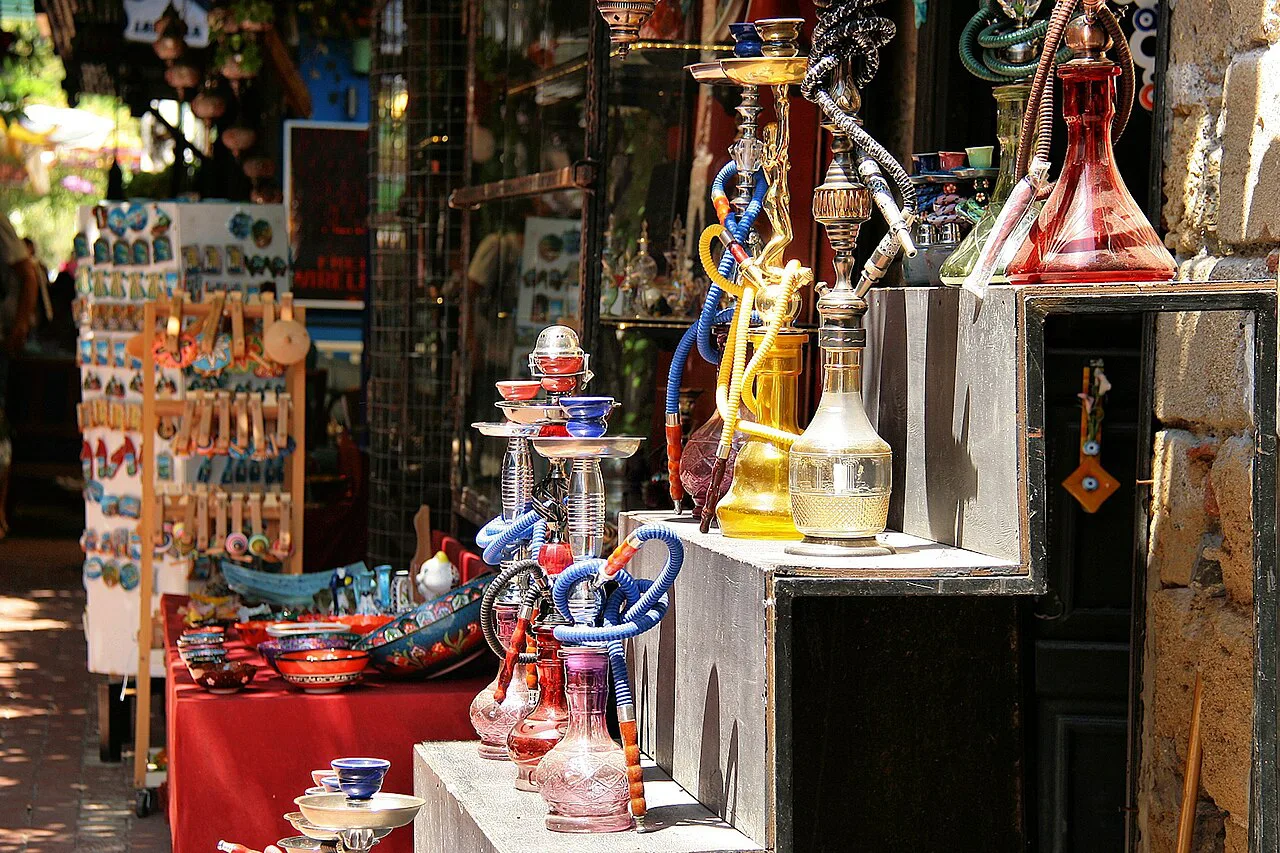
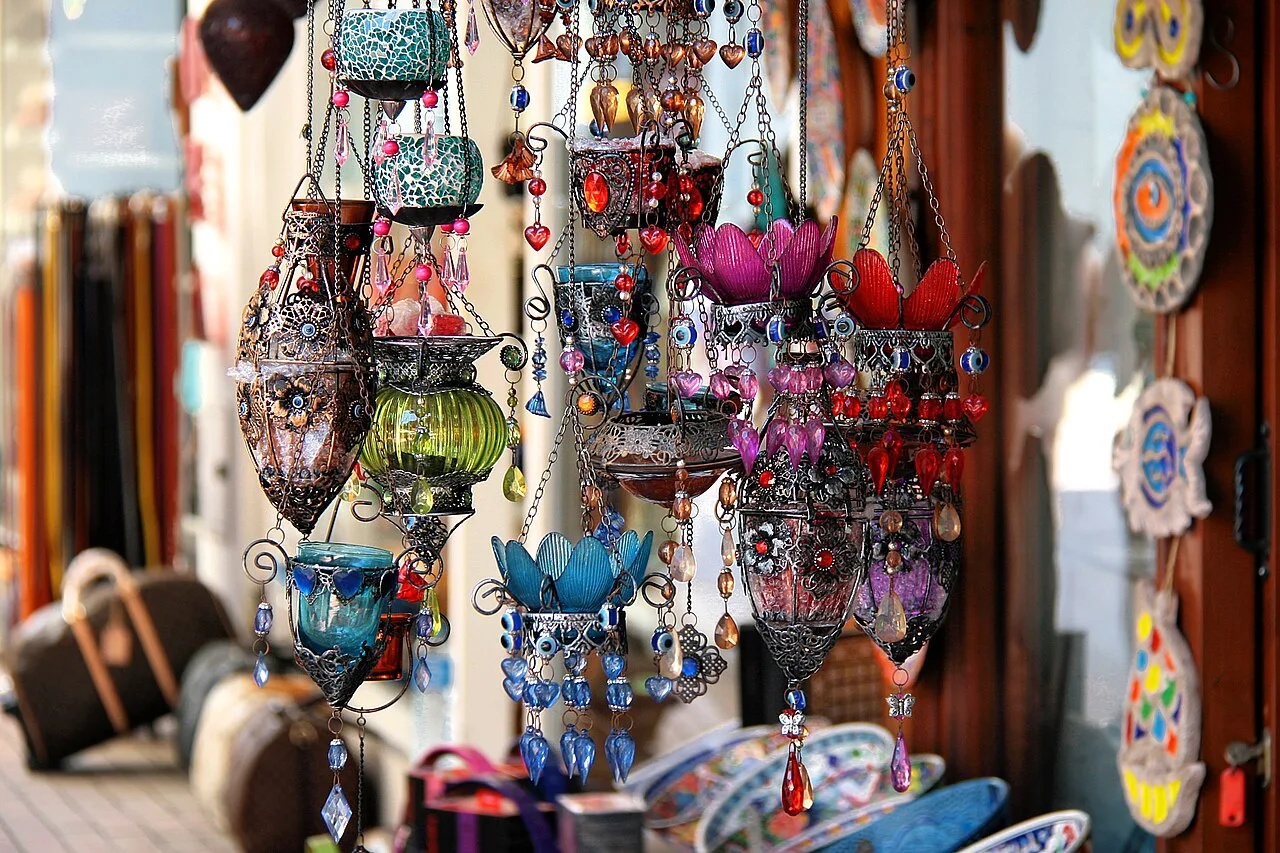
The lanes are dense with shops: carpets and kilims, textiles, mosaic glass lamps, leather goods, gold and silver jewellery, antique pieces, and cooperatives selling local honey. Spice shops and Turkish delight shops sit among them, so the walk comes with a running scent trail. It is a browse-and-haggle district rather than a fixed-price mall, and the old stone houses give the shops more character than a modern arcade would.
If you want the town's weekly market, it runs on Tuesdays and is busy, but it is mostly orientated to tourists, so do not expect many bargains. Treat the Tuesday market as a browse rather than a shopping mission, and use the Paspatur shops for anything you actually want to buy. That distinction saves you carrying purchases around on the busiest day of the town's week.
Harbour, working boats and the marina
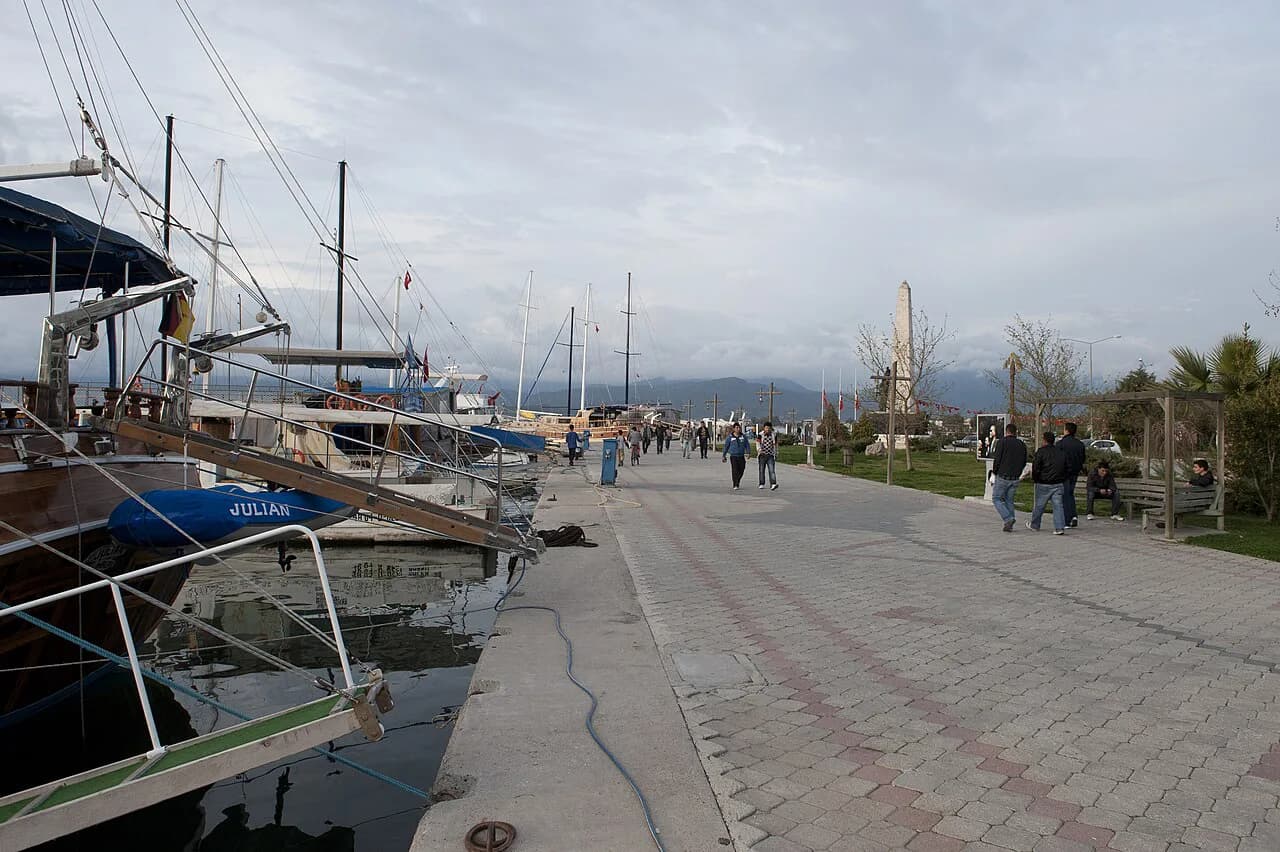
Fethiye Harbour is where the day boats and local fishing boats work from, which makes it the place to look if you want to be out on the water. The marina, Ece Saray Marina on Fevzi Çakmak Street in Karagözler, is a different animal: a yacht port with berths, a hotel, a spa and fine dining rather than excursion boats. Mixing them up sends you to the wrong end of the waterfront when you are trying to find a boat trip.
The working harbour is also the natural start of a stroll back into town, with the water on one side and the old quarter uphill on the other. The Roman amphitheatre near the marina is an easy addition on the way, and the waterfront restaurants do the job when you want to sit rather than walk.
Castle hill and the rock tombs
The castle ruins on the hill above the old town are the orientation landmark: visible from almost everywhere in Paspatur, they are worth the climb for the view back over the lanes and harbour. They are ruins in the literal sense, so go for the position rather than expectations of intact walls, and note that visitor access and any current restrictions are not something the sources confirm. The hill is also the obvious place to be at the end of the day, before you drop down for dinner.
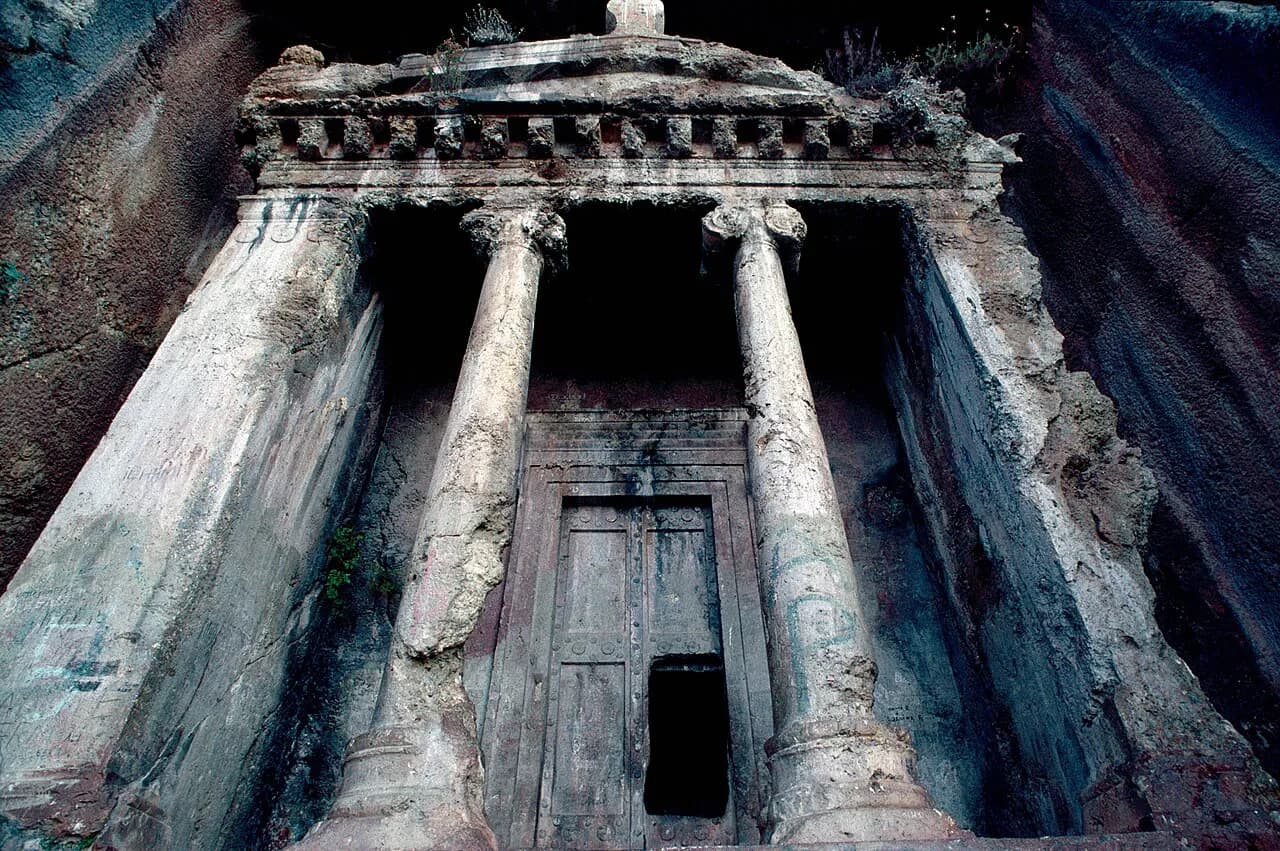
The Tomb of Amyntas, Amintas Kaya Mezarı, is the largest of the Lycian rock tombs in the cliffs above Fethiye and dates to the fourth century BC; its inscription reads Amyntas, son of Hermagios. It is reached by steep stone steps, so wear walking shoes and leave the climb for a cooler hour. On clear days the view stretches as far as Rhodes, and the smaller tombs and sarcophagi sit nearby.
Lunch and the fish market
The old town's practical meal is at the fish market on its edge: pick your fish, then take it to one of the adjacent restaurants, which will cook it to your specifications. It is a working arrangement rather than a novelty, and it keeps lunch straightforward when you are halfway through a walking loop. Sitting down in the lanes for kiln-baked pide or a home-style stew is the simpler alternative.
In Paspatur itself, restaurant tables spill into the lanes, and Mozaik Bahçe is the Turkish-Mediterranean restaurant named in the district's listings. Booking matters more in the evening than at lunch, and the shaded alleys are far more comfortable than the seafront at midday in summer.
The Ottoman bathhouse and the evening lanes
A sixteenth-century Ottoman bathhouse sits inside the district, giving you a traditional Turkish bath without leaving the old town. The old-town lanes change character after dark, when café and restaurant tables are set out in the streets. It is worth walking the same route twice — once in daylight for the shops, once after dark for the atmosphere.
How long the old town needs, and what to add
Half a day covers Paspatur, the harbour and the castle hill at a comfortable pace; a full day lets you add a museum and a slower lunch. The Fethiye Museum opened in 1987 and specialises in Lycian culture, with ceramics, inscriptions and larger stone pieces in the garden. If you want another viewpoint, Aşıklar Tepesi, Lovers' Hill, is the high ground above the town.
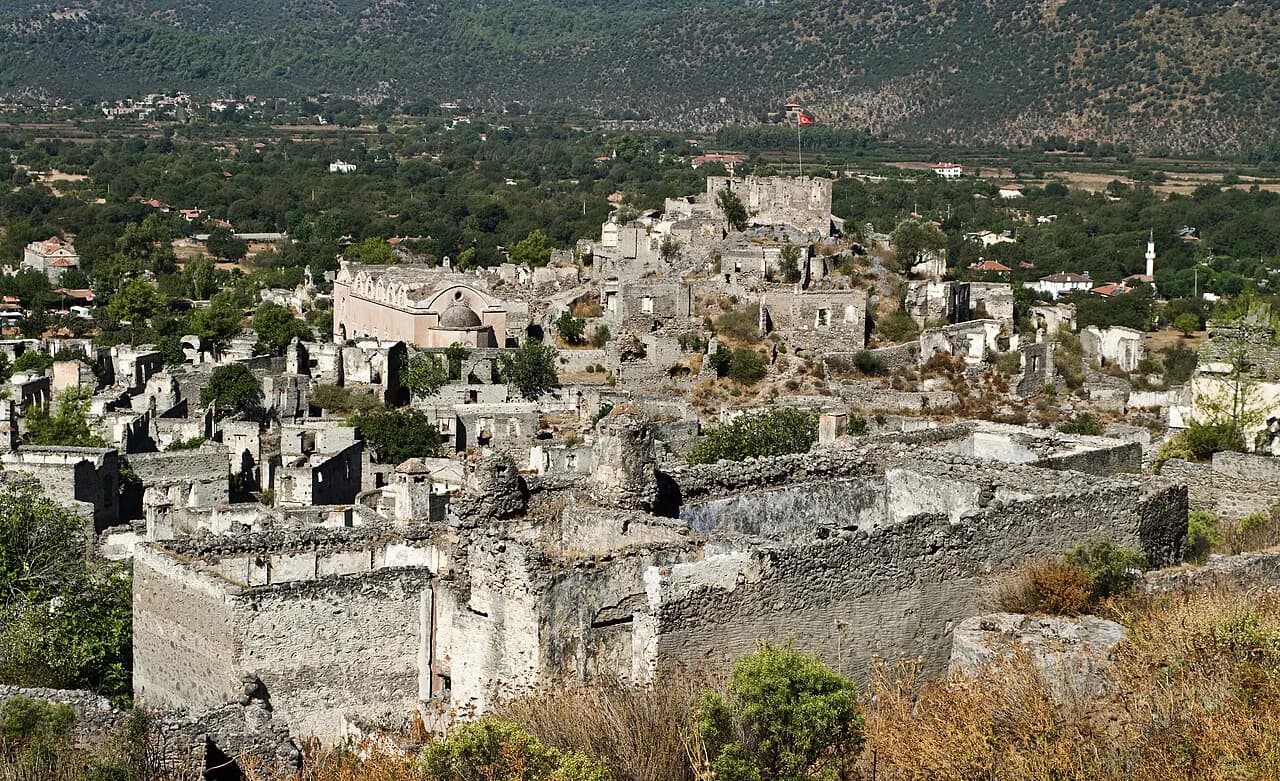
For the wider Lycian region, Fethiye works as a base and a connection point, with coach services across Turkey and dolmuş routes to local villages. Kayaköy's ghost town is the popular extension walk via Ovacık, with frequent dolmuş service if you would rather ride. Keep the old town as the fixed anchor of the day and let these be the add-ons.
Where the old town stops
West along the shoreline road, the old town gives way to smaller districts of hotels and guesthouses, all within walking distance and linked to the harbour by the coastal road. Further out, Çalış Beach stretches nearly 5 km and is reached from the town centre by dolmuş or water taxi. That makes Çalış the natural evening or beach add-on rather than part of the old town walk itself.
If you have come for the old quarter alone, there is no need to go further than the castle hill and the harbour. If you are comparing Turkish old towns, Alanya old town and Antalya Old Town (Kaleiçi) are the other coastal quarters with a similar bazaar-and-harbour shape; Paspatur's distinguishing feature is its compact scale.
Is the castle hill worth the climb?
Yes, if you treat it as the end of the walk rather than the start. The castle ruins anchor the whole district visually, and the climb gives you the one view that makes the layout of Paspatur, the harbour and the tombs make sense. Go late in the day, wear proper shoes and come down into the lanes for dinner.
Before you set out, check the current opening arrangements for the museum and bathhouse, since these change with the season. For a quieter stop between the bazaar and the waterfront, Mosques in Fethiye covers the town-centre places of worship within easy reach of the same walk.
Explore more Fethiye guides
Frequently Asked Questions
What is the name of the abandoned Greek city in Turkey that has been empty for more than a century?
Kayaköy is the ghost town near Fethiye, reachable on the popular one-day extension walk via Ovacık from Fethiye, with frequent dolmuş service if you would rather ride than walk.
What day is Fethiye's market on?
Fethiye's weekly market runs on Tuesdays and is busy, but it is mostly orientated to tourists, so do not expect many bargains. The lanes of Paspatur are the better bet for a browse the rest of the week.
Is Fethiye a nice part of Turkey?
It is a city of about 80,000 on the Turquoise Coast, with a walkable old quarter, a working harbour, castle ruins and Lycian rock tombs above the town. Whether that suits you depends on whether you want a town base or a resort strip.
Sources
Notes for your next Turkey trip
Optional updates when we add or correct a town guide.
You might also like
Continue reading
More guides you'll find useful