Cleopatra's Pool, Pamukkale: Swimming Among Roman Ruins
Cleopatra's Pool sits inside the Hierapolis site at Pamukkale, where you can swim among fallen Roman columns in 36°C water when it is open.
On this page
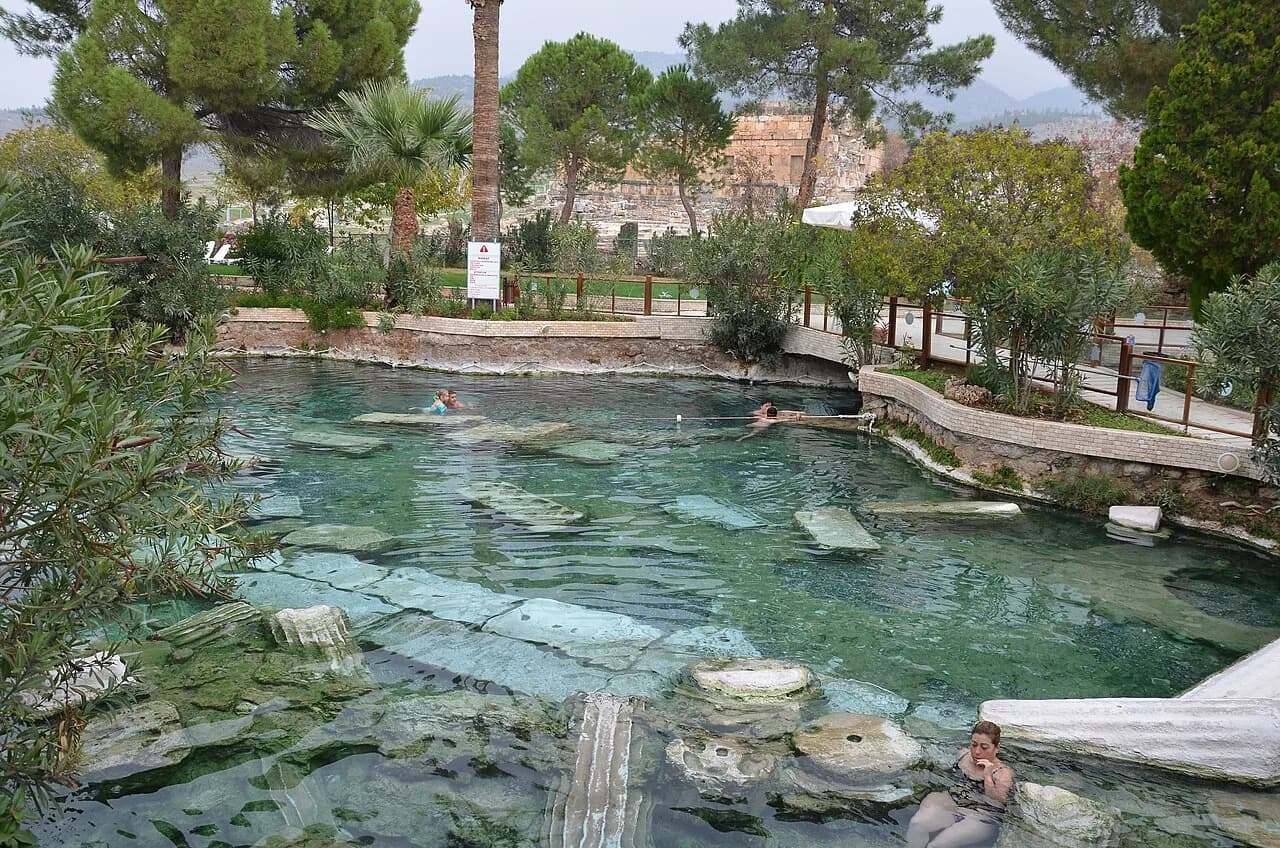
Cleopatra's Pool is a warm thermal pool inside the Hierapolis-Pamukkale site where you swim around genuine Roman columns lying on the pool floor. It is also called the Antique Pool or Antik Havuz, and it needs the main site ticket plus a separate swimming fee paid at the pool itself. This guide covers what is in the water, how the tickets work, how to reach it from Denizli and how to fit the swim into a day among the travertines and ruins.
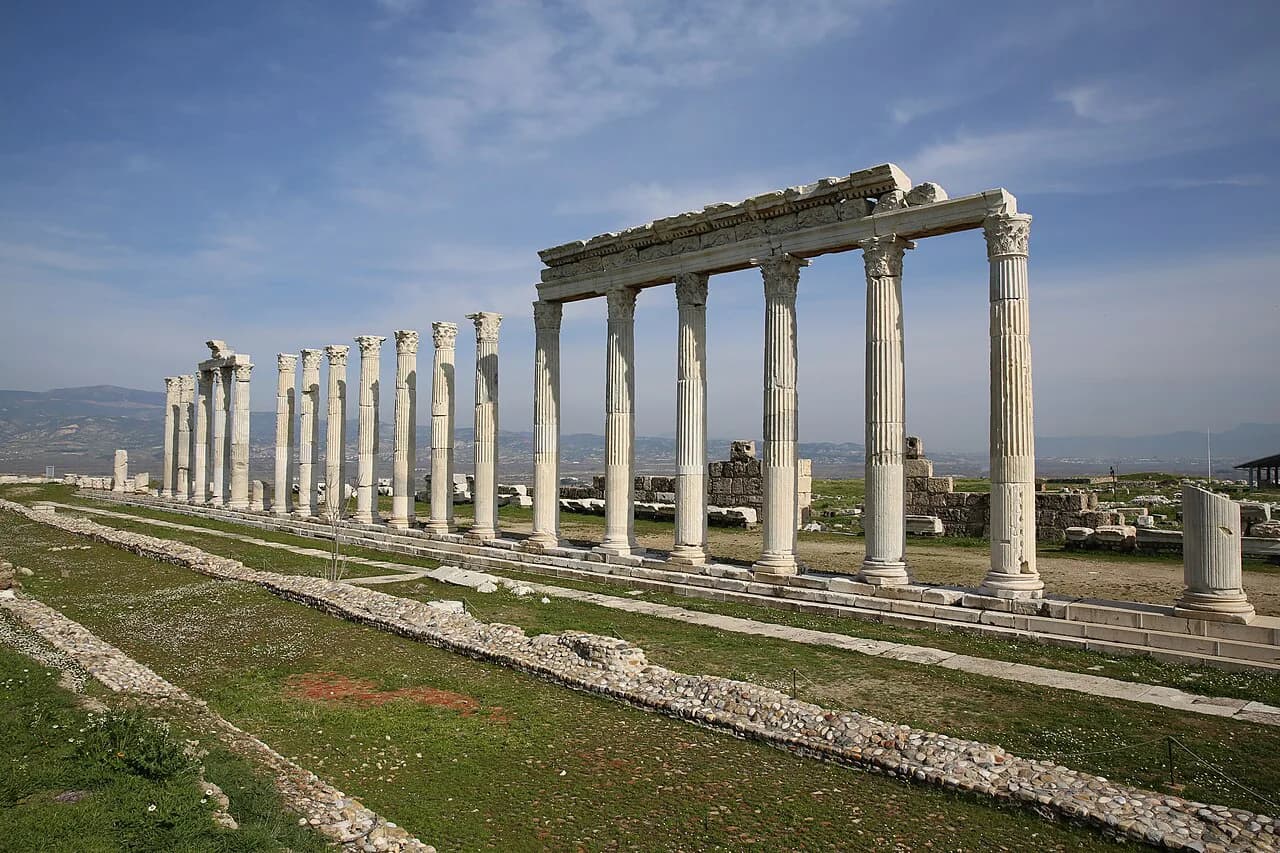
Treat the swim as one stop inside Hierapolis rather than a standalone outing. The pool sits within the archaeological site, so you pass the theatre, the colonnaded streets and the terraces on the same ticket, and the walking between them is what fills the day.
What Cleopatra's Pool actually is
The pool is fed by a geothermal spring within Hierapolis, the Greco-Roman spa city at Pamukkale in Denizli Province that forms part of a UNESCO World Heritage Site. Hierapolis was founded in the 2nd century BC as a spa city, and the Romans built bathing facilities directly over the hot springs. The pool is the modern swimming spot over that same source, which is why it feels like a piece of the ancient city rather than a resort add-on.
The water holds at a constant 36°C (97°F) all year, so the swim is as appealing in cooler months as in high summer. It carries calcium, magnesium, bicarbonate and carbon dioxide, and the carbon dioxide produces the fizzing sensation on the skin that gives it the champagne nickname. That temperature is also why it works as a soak rather than a lengths session: most people float, wade and move slowly.
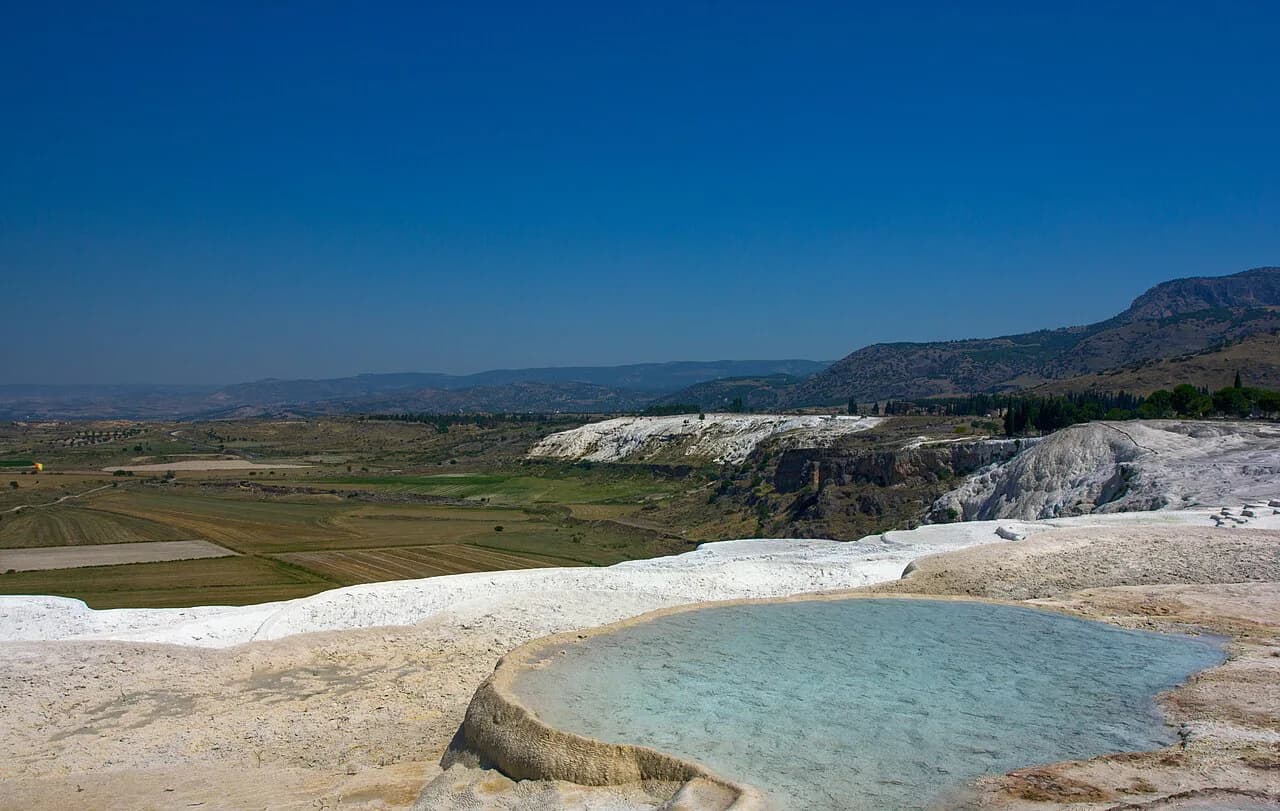
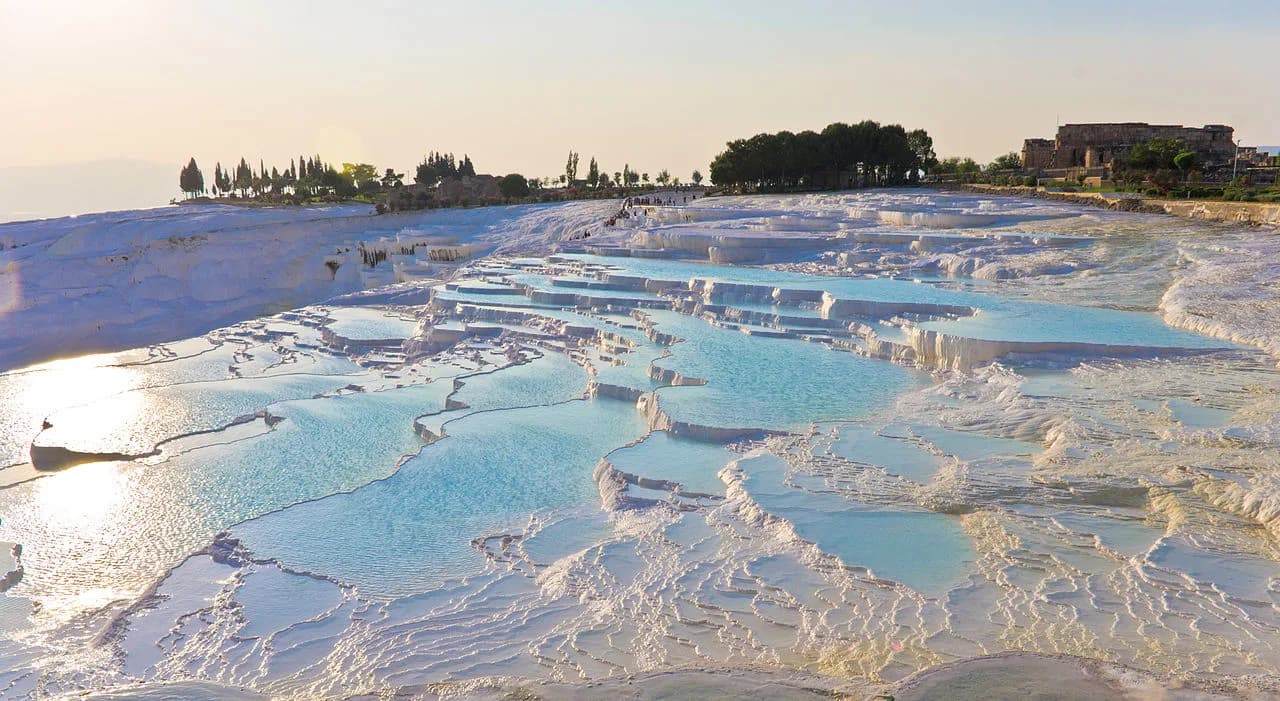
The setting is the point: the pool sits beside the white travertine terraces that cascade down the hillside and are visible from kilometres away, and those terraces come with the site ticket. If you want the wider picture of what to see around the terraces, the guide to things to do in Pamukkale sets out the options.
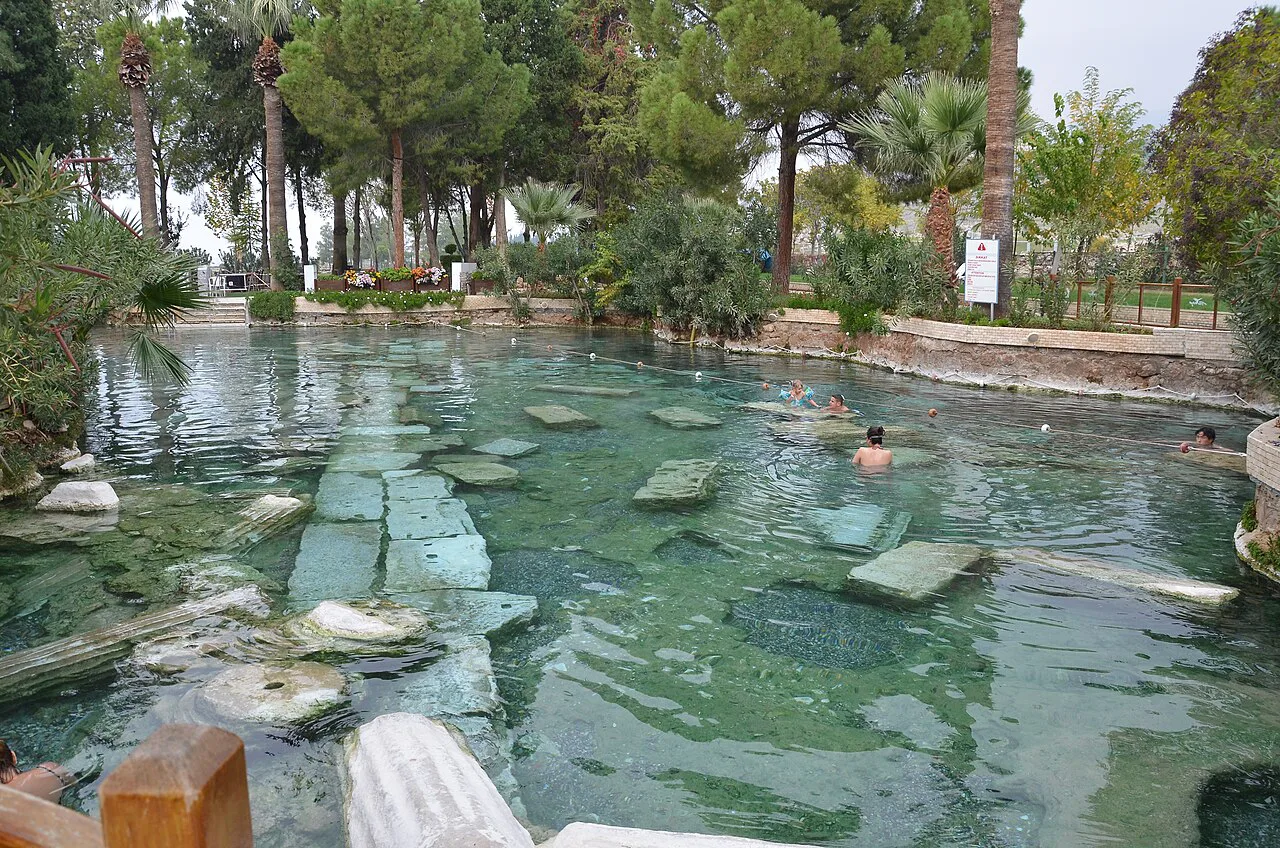
The columns under the water
The marble Doric columns and stone fragments on the pool floor are real Roman architectural remains from Hierapolis, not a modern installation. They toppled into the pool during an earthquake, likely in the 7th century, and have stayed submerged since. That is what separates this swim from any other thermal bath: you are moving around fallen masonry from the ancient city above you.
Toppled column drums, capitals and marble fragments lie in the water, and the pool is shallow enough for wading and deep enough for floating. Walk carefully and keep your feet where you can see the bottom, because the ruins are uneven and slippery underfoot, and make a slow entry rather than diving in.
Tickets: the site fee plus the swimming fee
Entry to the pool is not covered by the Hierapolis-Pamukkale site ticket. You pay the general site admission first, then a separate thermal pool swimming fee charged at the pool gate. Budget for two payments; check the current swimming fee at the gate before you plan the swim.
Reported rates vary between sources and years. One guide gives 600 TL per foreign adult, with 300 TL for children aged 7 to 12 and under-7s free, described as roughly €11 at 2026 exchange rates and priced in lira only. Another gives free entry under 6 and a reduced rate for ages 6 to 12. Treat these as figures reported for those years rather than a current tariff, and confirm the amount at the gate before you commit.
The pool area has changing rooms, lockers and a restaurant, according to one guide, so you can change and leave valuables behind while you swim. Bring your own towel and a bag for wet swimwear, and note that facilities and their availability should be confirmed on site.
Who the pool suits
The pool works for families and mixed swimming abilities: children get reduced rates in both reported tariffs, and the shallow sections let weaker swimmers stand. It suits anyone who wants a thermal soak combined with a major archaeological site, and it is easy to reach with no hike beyond the walk through Hierapolis. Anyone expecting a quiet spa, though, should picture a shared pool with other visitors moving among the columns.
A swimsuit is required, so pack one even if the rest of the day is sightseeing in the heat. The path from the site entrance to the pool is paved and signed, though some parts of the wider Hierapolis site have uneven ground.
Getting there from Denizli and the gates
Pamukkale sits about 20 km north of Denizli. Denizli Çardak Airport takes domestic flights from Istanbul, and Denizli is also reachable by bus from major Turkish cities. From Denizli, minibuses and taxis run to Pamukkale village, which is the practical base for the site and its gates.
Hierapolis has two main entrances, the North Gate and the South Gate, and you reach the pool by entering through either one and walking through the ancient city to the pool area. A hot-springs guide lists gate hours of 8 AM to 9 PM for the north and 6 AM to 11 PM for the south, with the pool itself running 8 AM to 8 PM and last entry an hour before closing. Those are not a guarantee, and the pool's opening status has changed at times, so confirm the day's opening on muze.gov.tr or at the gate.
Cleopatra's Pool forms part of the UNESCO Hierapolis-Pamukkale site, and a Go Türkiye Denizli tourism post has announced the pool reopening after a closure, so confirm it is open on the day before you build a trip around it. If you are still planning the rest of the itinerary, a Pamukkale map helps you see how the gates, terraces and pool line up before you commit to a route.
How long to allow, and what to pair with the swim
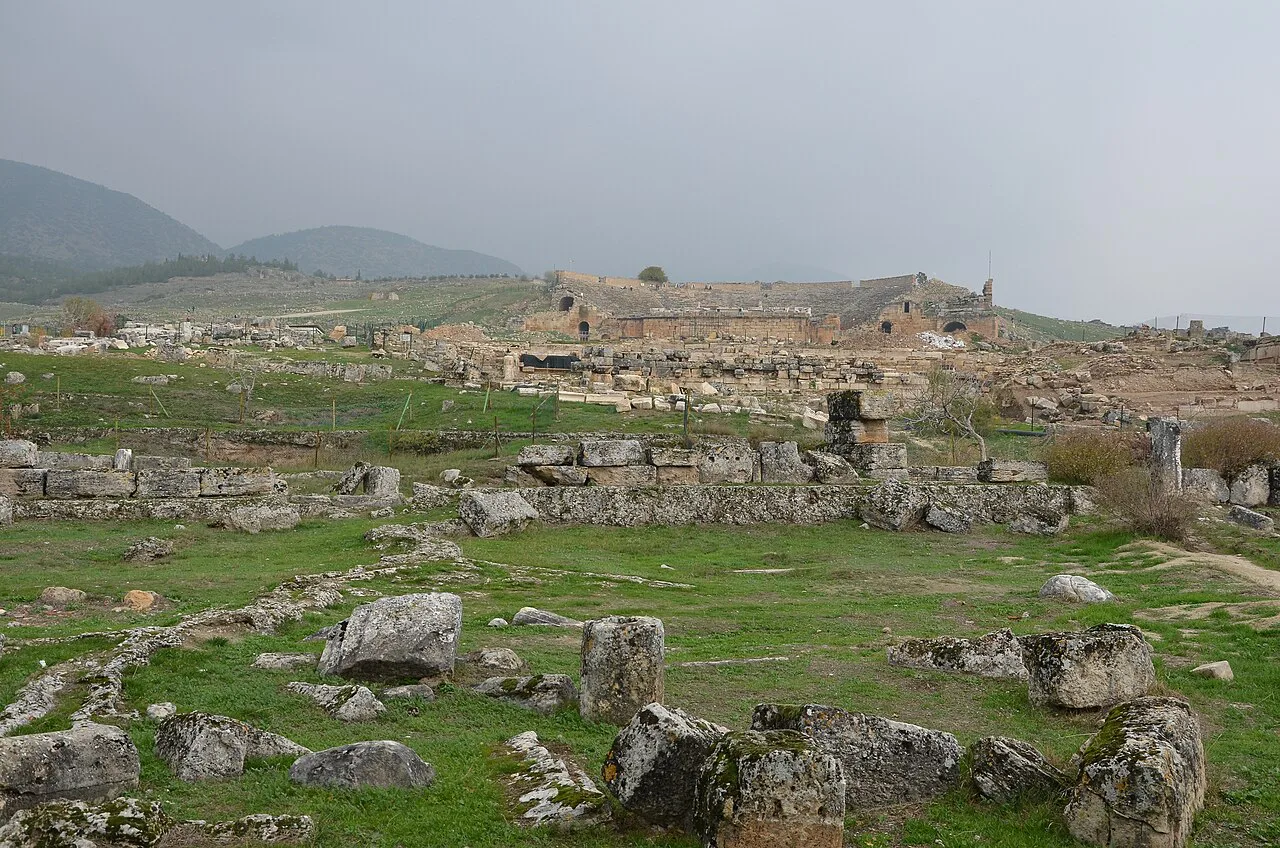
Give the pool at least an hour if you plan to swim, change and dry off, and allow more if you want a long soak. The whole Hierapolis visit takes longer than the pool alone: the theatre, the colonnaded streets and the travertine terraces all sit on the same ticket, and the walking between them adds up.
Pair the swim with the Roman Theatre and the rest of the ancient city, which are the reason to come up through the gates rather than straight to the water. Hierapolis is a large, spread-out site, so plan the circuit around the theatre, the colonnaded streets and the terraces before you head for the pool.
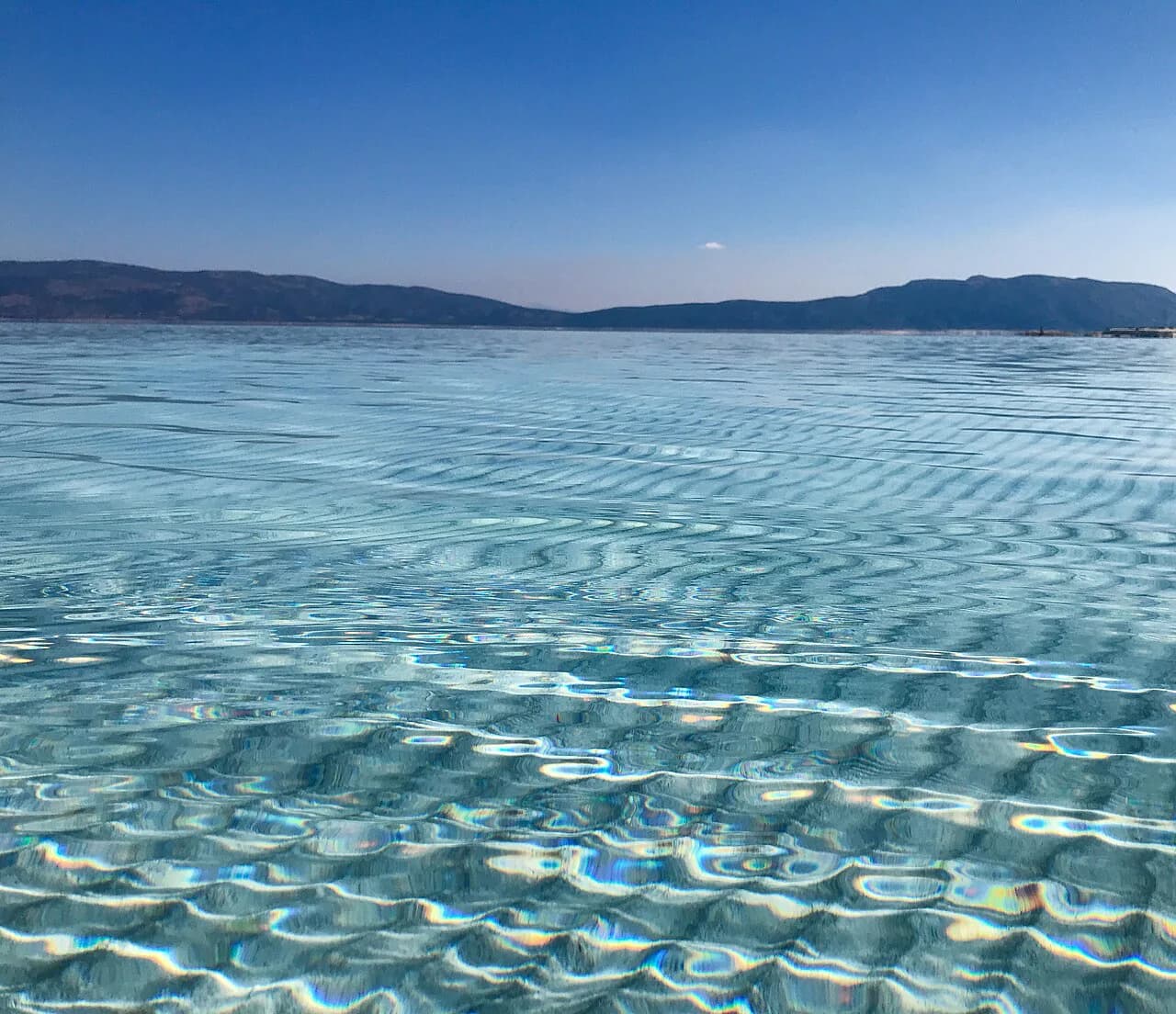
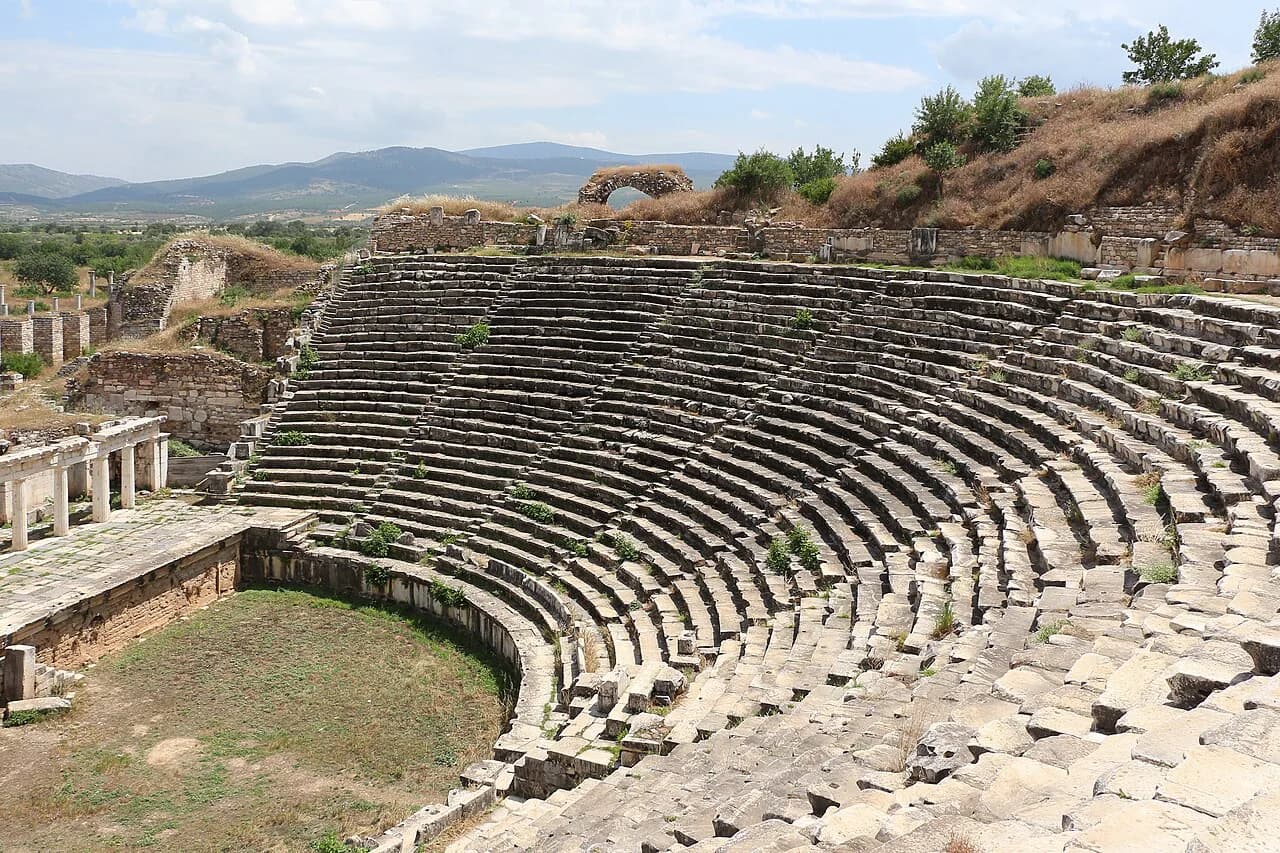
If you have a car or a spare day, the wider region adds options. Laodicea on the Lycus lies near Denizli on the road from the airport, Aphrodisias rewards a longer detour for its sculpture and Temple of Aphrodite, and Lake Salda makes a scenic stop if you are driving through the Lakes Region. All three need their own time rather than a quick stop between gates.
The Cleopatra legend, honestly
The name comes from a popular story that Mark Antony gave the springs to Cleopatra VII, and that she bathed in them. Historians treat the connection as unverified, and there is no firm evidence she visited Hierapolis at all. Hierapolis itself was a major Roman spa city whose thermal waters were used for bathing for over 2,000 years, which is a stronger reason to swim than the royalty.
Some travellers come mainly for the geology of the white cliffs and the mineral water rather than the story, and that is a fair way to approach it. Others find the story adds colour to a soak without needing to be true. Either way, the experience is the same: warm water, Roman stone underfoot and a view back over the terraces.
Is the swim worth the extra fee?
Swim if you want to float among genuine Roman columns in warm mineral water inside a World Heritage site, with changing rooms, lockers and a restaurant on hand. Skip it if you are short of time or happy with the free travertine terraces and the rest of Hierapolis, both of which are included in the site ticket.
Either way, check the day's opening and the swimming fee at the gate or on muze.gov.tr before you set out, because the pool has been reported closed at times and hours and rates have shifted between years. Build a visit into a Hierapolis day rather than making a separate trip for it.
Frequently Asked Questions
Can you swim in Cleopatra's Pool at Pamukkale?
When it is open, the Antique Pool inside the Hierapolis site is a thermal pool where visitors swim among submerged Roman columns. You need the main Hierapolis-Pamukkale site ticket plus a separate swimming fee charged at the pool, and you should confirm the pool is open before you rely on swimming.
Is Cleopatra's Pool open?
It has not always been open and has been listed as temporarily closed in the past, while official tourism posts have announced reopenings. Check the Hierapolis-Pamukkale pages on muze.gov.tr or ask at the gate on the day.
Sources
- Cleopatra's Pool Pamukkale - Ancient Thermal Swimming Experience | Entry Prices and Fees
- Shaped by nature, steeped in history. 🌿 Set within the UNESCO World Heritage Site of Hierapolis - Pamukkale, the Cleopatra Antique Pool is now open again. A place to slow down and soak in the past. Learn more at: Denizli.goturkiye.com #GoTürkiye #GoDenizli #CleopatraAntiquePool #History #Nature | Go
- Cleopatra's Pool at Hierapolis, Turkey
- Cleopatra’s pool – Don't hold your breath
Notes for your next Turkey trip
Optional updates when we add or correct a town guide.
You might also like
Continue reading
More guides you'll find useful