Derinkuyu Underground City: Cappadocia Visit Guide
Derinkuyu Underground City is Cappadocia's largest excavated underground city. See what survives on its levels, how long a visit takes and how to get there.
On this page
Derinkuyu Underground City is the largest underground settlement still preserved in Cappadocia, cut more than 85 metres into the soft volcanic tuff and laid out over many levels. Allow two to three hours for the visit if you want to read the spaces properly, and rather less if you move briskly through the main passages. This guide covers what survives inside, how much climbing and crouching to expect, how to reach the site from Göreme and the surrounding villages, and how Derinkuyu compares with Kaymaklı.
The city sits in the town of Derinkuyu in Nevşehir Province, south of the main Cappadocia villages, which makes it a natural half-day outing rather than a stop you fold into a morning in Göreme. Pair it with a second underground city or a valley walk, and plan your other things to do in Cappadocia around the drive back.
Why Derinkuyu was dug into the tuff
Volcanic eruptions left Cappadocia with a soft layer of tuff that could be hollowed out by hand, which is how settlements of this scale came to exist underground. The caves and shelters here began in the Hittite period, around 2000 BC, according to studies of the site, and the underground cities in their present form grew as early Christian communities hid from persecution in the Roman Empire.
People lived down here for months at a time rather than sheltering for a night, and the layout reflects that: separate levels for livestock, wells for water and shafts that kept air moving through the lower galleries. The site stayed in use until 1923, when the Greek population left Cappadocia, and the dwellings were then abandoned. For the wider picture of how these settlements relate to each other across the region, see the guide to Cappadocia underground cities.
How deep it goes and how many levels you walk through
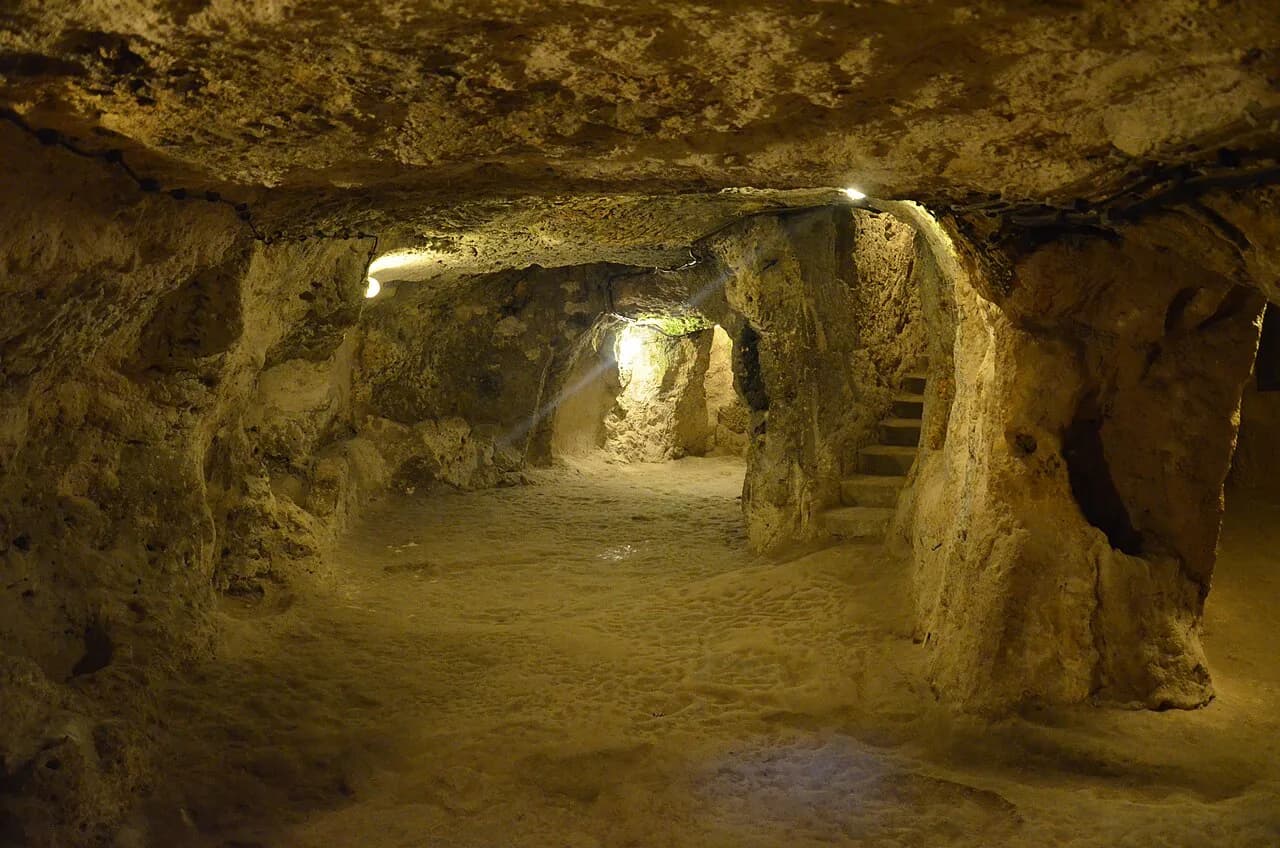
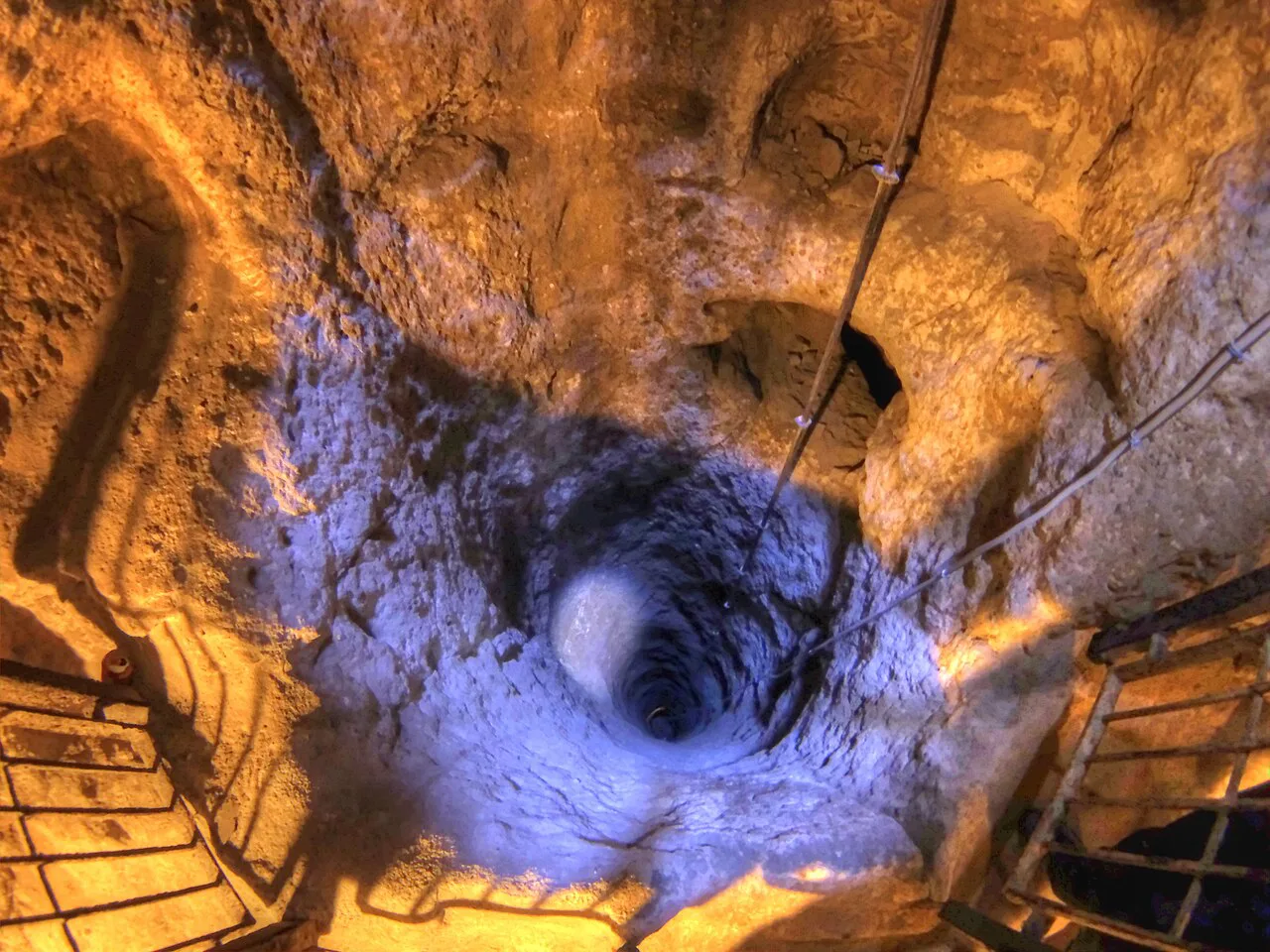
The city reaches more than 85 metres underground, and some sections run to around 20 levels, though a visit covers only part of that depth. Go in expecting a descending route of stairs, ramps and tunnels rather than a lift, and judge your own stamina before you commit to the lower galleries.
Visitors' accounts describe only a portion of the complex as open to the public, while others give different figures for the depth and level count, so treat any specific number of accessible floors as a rough guide. What you can rely on is the shape of the experience: a steady descent into cool, dim, enclosed space.
The stable level, ventilation shafts and millstone doors
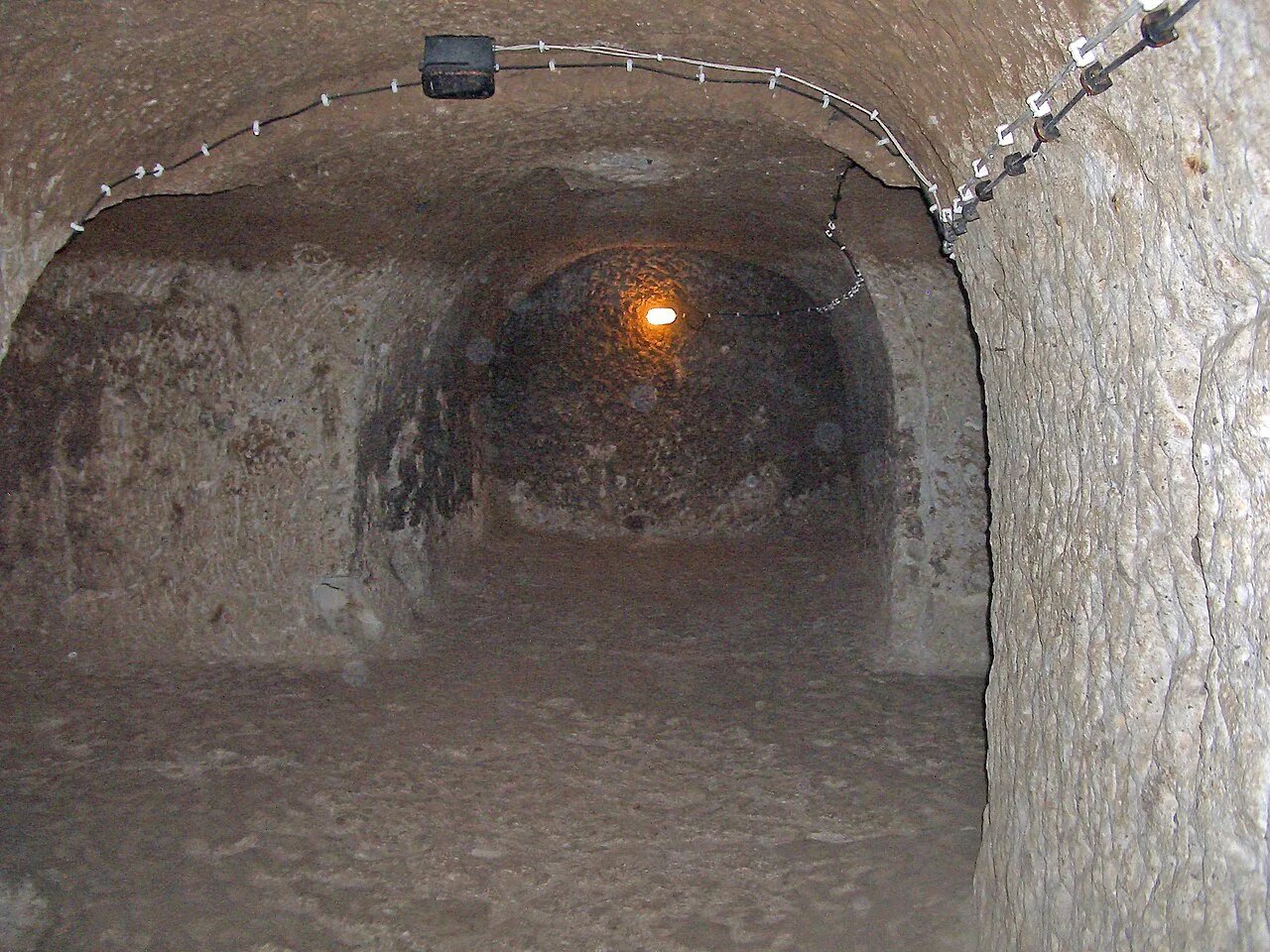
The first level down was given over to stables, deliberately kept close to the surface so animal waste gases did not seep into the living quarters and so the body heat of livestock warmed the layer above the cold depths. Look for the mangers and tethering points as you pass through, because this is the one part of the city where the working logic is easiest to read.
More than 50 ventilation shafts carried air down to the inhabited levels and doubled as light sources at depth, and the great round millstone doors could be rolled across passages from the inside to seal a gallery off. Knowing what these are changes the visit: the circular stones set in the walls are not decoration but the city's defence, and the narrow chimneys above you are its lungs.
The wells, kitchens, ovens, chapels and school rooms that survive
Below the stables the city keeps its water wells, kitchens and ovens, along with churches and rooms identified as children's schools, all carved from the same tuff. These are the spaces that make the scale of the place land, because they show ordinary daily life rather than a bolt-hole.
At its height the city is said to have housed around 20,000 people, and a separate sign at the site has been reported as giving 30,000, so take the population figure as an indication of scale rather than a precise count. Give yourself time in the chapels and storage rooms rather than hurrying past them towards the exit.
How long a visit takes and how much climbing to expect
Two to three hours covers the main route at an unhurried pace, including the climb back up, which is the part most people underestimate. The passages are narrow and the ceilings low in places, so you will crouch, twist and take steep stairs rather than stroll; wear shoes with grip and keep your hands free for the handrails.
If you are short of time, an hour gives you the stables, a ventilation shaft and one chapel, which is enough to understand the site. Groups move slowly through the tightest sections, so an early start buys you clearer passages more than it buys you cooler air.
Getting there from Göreme and the Cappadocia villages
Derinkuyu lies south of the main Cappadocia villages in Nevşehir Province, reachable by dolmuş minibus, private car or an organised tour, and the drive from Göreme is the usual approach. Dolmuş services run between the towns, but frequencies and fares change with the season, so confirm the return departure with the driver before you set off.
With your own car the trip is straightforward and lets you combine Derinkuyu with a second stop on the same day; tours handle the driving but tie you to a fixed schedule. Either way, check the day's departure points locally, as rural minibus routes are not always posted online.
Tickets, opening hours and Müzekart
Derinkuyu operates as a ticketed archaeological site, but the ticket price, opening hours and any closing day change from year to year and are not fixed here. Check the official museum pass and culture portal, or the ticket window in Derinkuyu, for the day you plan to travel.
Whether the Müzekart pass covers Derinkuyu is worth checking at the gate, since coverage differs between sites. If the pass does apply, it usually pays for itself across two or three paid sites in the region, so work out your total before buying.
Derinkuyu or Kaymaklı: which suits your day
Derinkuyu is the larger and deeper of the two, with the greater depth and the more elaborate shaft system, while Kaymaklı is smaller, better preserved in parts and housed around 3,500 people at its height. Kaymaklı has eight levels, four of which can be visited, so it delivers a similar experience in less time and with less climbing.
Choose Derinkuyu if you want scale and have a free half-day; choose Kaymaklı if you are tight on time, travelling with people who dislike confined spaces, or want to fit in more of the region, such as the Göreme Open-Air Museum with its painted rock-cut churches. The two are sometimes described as linked by tunnels, which adds interest to seeing both if your schedule allows.
Claustrophobia, low ceilings and summer heat
This is a genuinely enclosed site: passages narrow to shoulder width, ceilings drop, and the route involves steep stairs in dim light. If confined spaces trouble you, Kaymaklı or a shorter partial visit is the fairer choice, and no one should feel obliged to descend to the lowest open level.
Underground the temperature stays cool year-round, which makes Derinkuyu a sensible stop on a hot Cappadocia afternoon, but the stairs still work you hard and the air in crowded galleries feels stale. Carry water, leave bulky bags behind and wear a layer you can put back on once you are below ground.
Pairing Derinkuyu with nearby stops
Derinkuyu sits on the southern edge of the region, which makes it a natural pairing with the Ihlara Valley gorge and with Kaymaklı, both roughly on the same loop from Göreme. A car or a tour gives you the flexibility to do two sites in a day; public minibuses make the connections slower but still workable.
On the way back, the rock formations of Devrent Valley make an easy roadside stop, and Uçhisar Castle gives you a high viewpoint over the whole area if you still have daylight. Both are outdoor stops, so they balance a morning spent underground.
Is Derinkuyu worth the detour?
Yes, if you have a half-day to spare and no trouble with enclosed spaces: Derinkuyu is the most complete picture of how these underground cities worked, from the stable level down to the millstone doors. If you are rushed, travelling with someone who dislikes tight passages, or simply want a shorter visit, Kaymaklı delivers a similar experience with less climbing.
Build the trip around a two-to-three-hour visit, confirm dolmuş return times and the day's ticket details before you set out, and keep the rest of the day for the valleys and viewpoints above ground.
Explore more Cappadocia guides
Frequently Asked Questions
How do you pronounce Derinkuyu?
Say it roughly as deh-rin-KOO-yoo, with the stress on the middle syllable and a rolled r. The Turkish ı in the final syllable is an unrounded sound closer to the u in put than to a long ee.
Do people still live in caves in Cappadocia?
Cave dwellings are still used in parts of Cappadocia, though Derinkuyu itself was abandoned after 1923 when the Greek population left the region. Many cave hotels and homes in villages such as Göreme are converted rather than continuously occupied as dwellings.
Can you visit Derinkuyu Underground City independently?
Yes. You can reach Derinkuyu by dolmuş, car or taxi and walk the site without a guide, though a guide explains the shafts and millstone doors far better than signage alone. Check current opening hours and ticket arrangements locally before travelling, since these change with the season.
Sources
Notes for your next Turkey trip
Optional updates when we add or correct a town guide.
You might also like
Continue reading
More guides you'll find useful