Paşabağ Monks Valley Cappadocia: Fairy Chimneys Guide
A practical guide to Paşabağ, Cappadocia's Monks Valley: the three-headed fairy chimneys, how to get there from Göreme, and how long to allow on site.
On this page
Paşabağ, also called Monks Valley, is worth a stop of roughly half an hour to an hour for the densest cluster of multi-capped fairy chimneys in Cappadocia and a rock-cut chapel above the valley floor. It sits on the Göreme to Avanos road beside Zelve Open-Air Museum, so the two are usually seen on one outing with one ticket. This guide covers what the formations are, the climb to Saint Simeon's hermitage, how to reach the valley without a car, and how to time a visit around the coach parties.
What Paşabağ is and why it is called Monks Valley
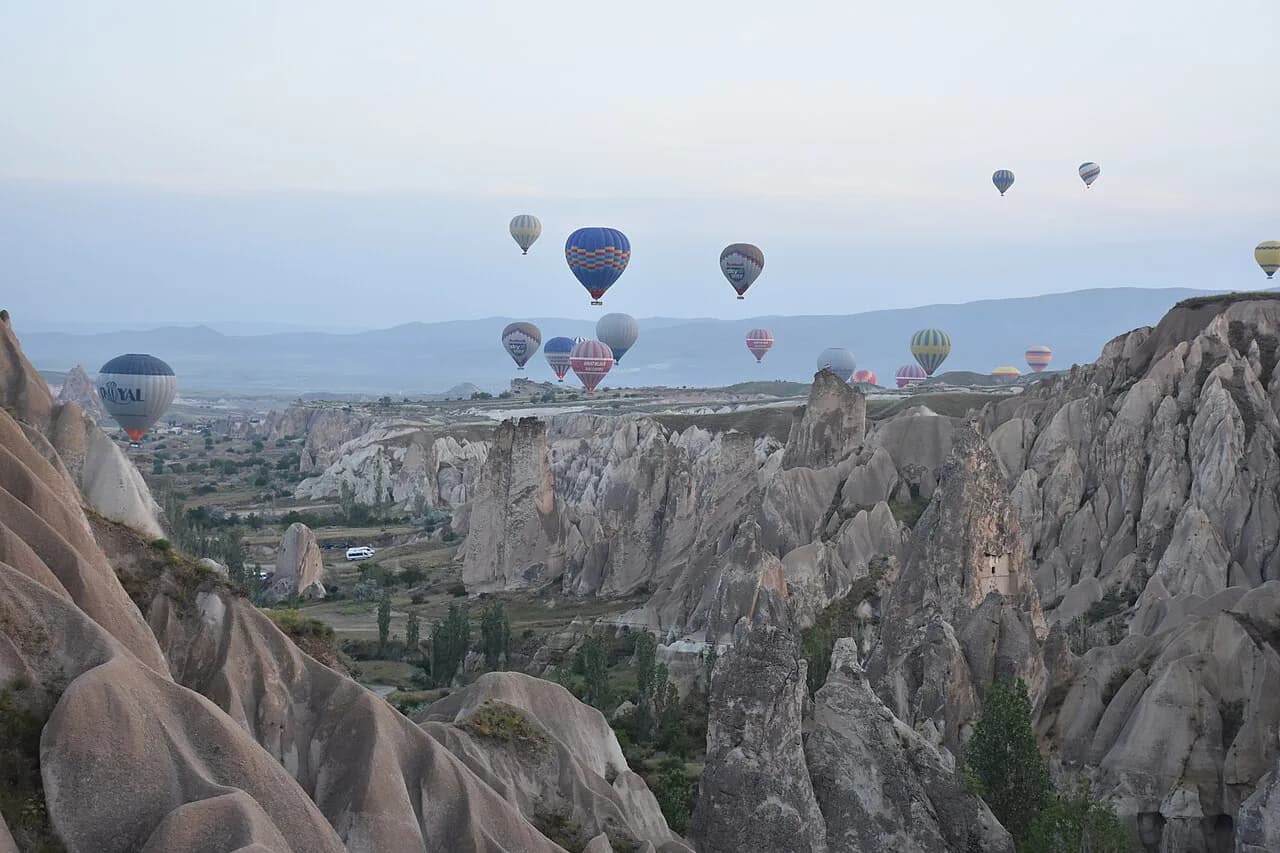
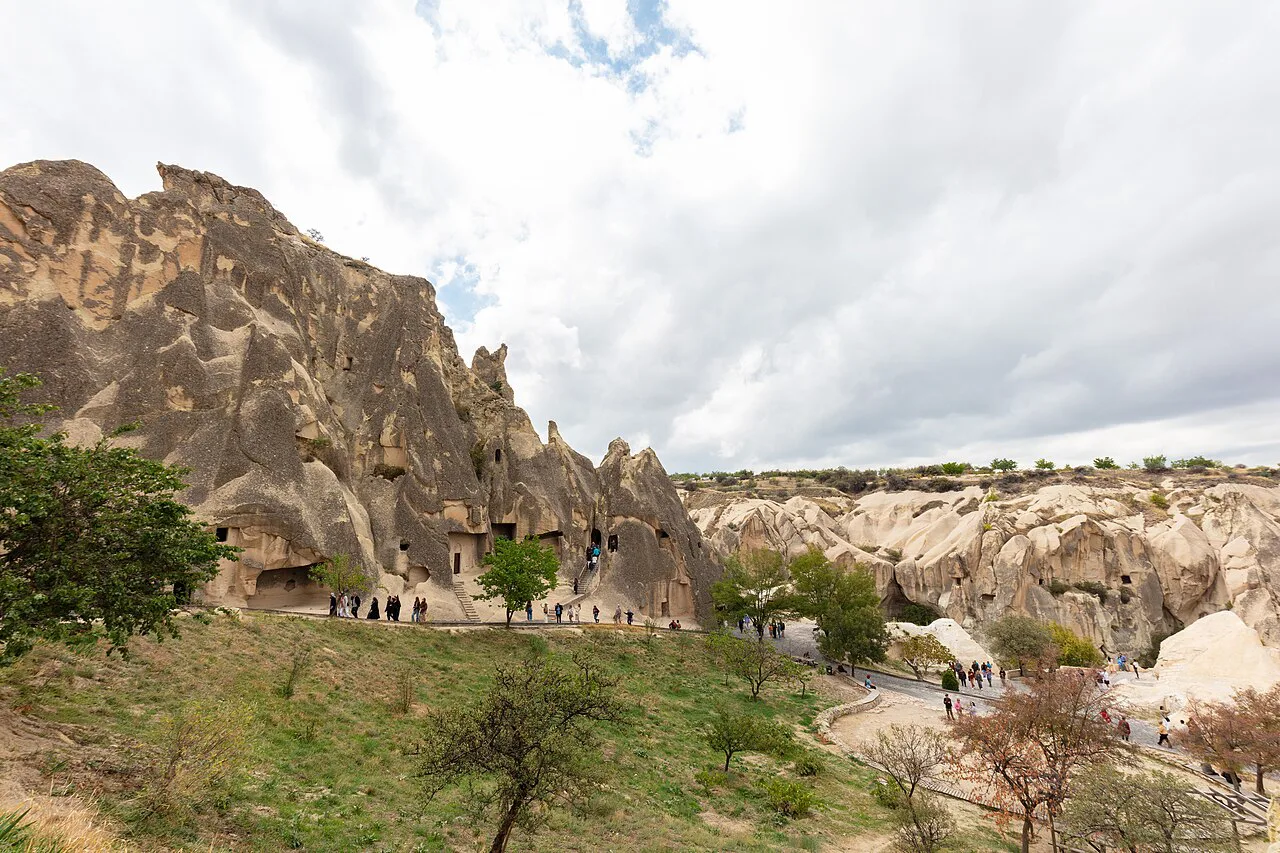
Paşabağ means "Pasha's valley" in Turkish, but the name visitors use is Monks Valley, because hermit monks cut cells, chapels and small living quarters into the tall chimneys here over a long stretch of the Byzantine period. The valley is a compact field of tuff pinnacles rather than a scattered landscape, which is why a short visit covers the main sights. It forms part of the wider rock-cut heritage around Göreme, and it sits naturally alongside the painted churches of the Göreme Open-Air Museum in any plan of things to do in Cappadocia.
The valley lies 6 km from Göreme and 5 km from Avanos, on the road towards Zelve, with a public car park at the entrance. A little market sells drinks and traditional Turkish food, and a small bazaar offers craft items and miniature models of the fairy chimneys — useful if you want a souvenir without a detour into a town.
The setting is open and largely unshaded, so sun protection and water matter more here than on a wooded site. The vines around the valley are part of the local landscape, and the area has a long winemaking history.
The three-headed mushroom fairy chimneys and how they formed
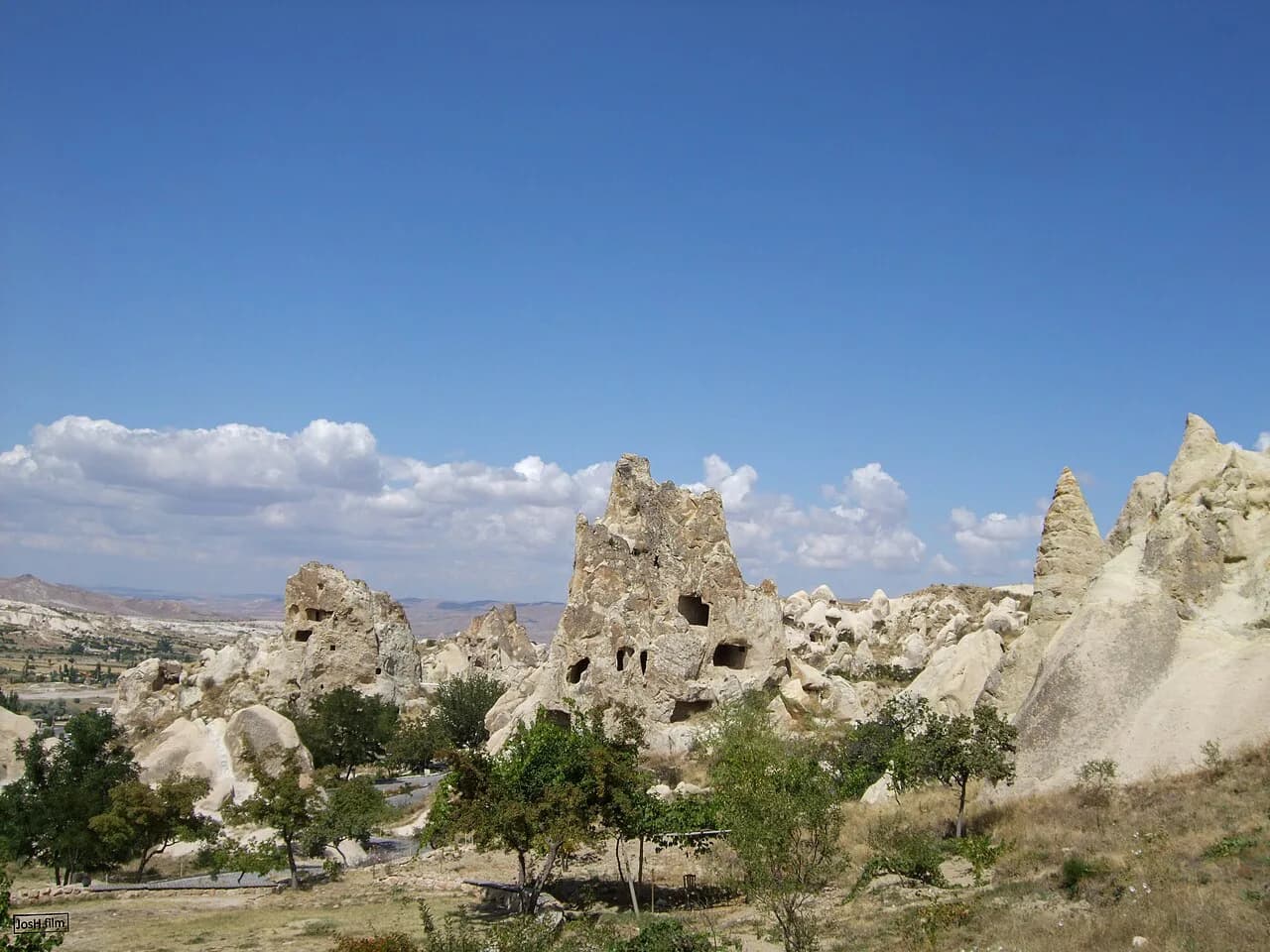
Most fairy chimneys in Cappadocia carry a single capstone of harder rock on a softer pillar of volcanic tuff that rain and wind have not yet worn away. At Paşabağ erosion has split many of those capstones into two or three sections, producing the three-headed mushroom silhouettes that stand as the region's best-known shape. The tallest formations reach 15 to 20 metres, and the tuff shifts from pale cream at midday to gold and rose towards evening.
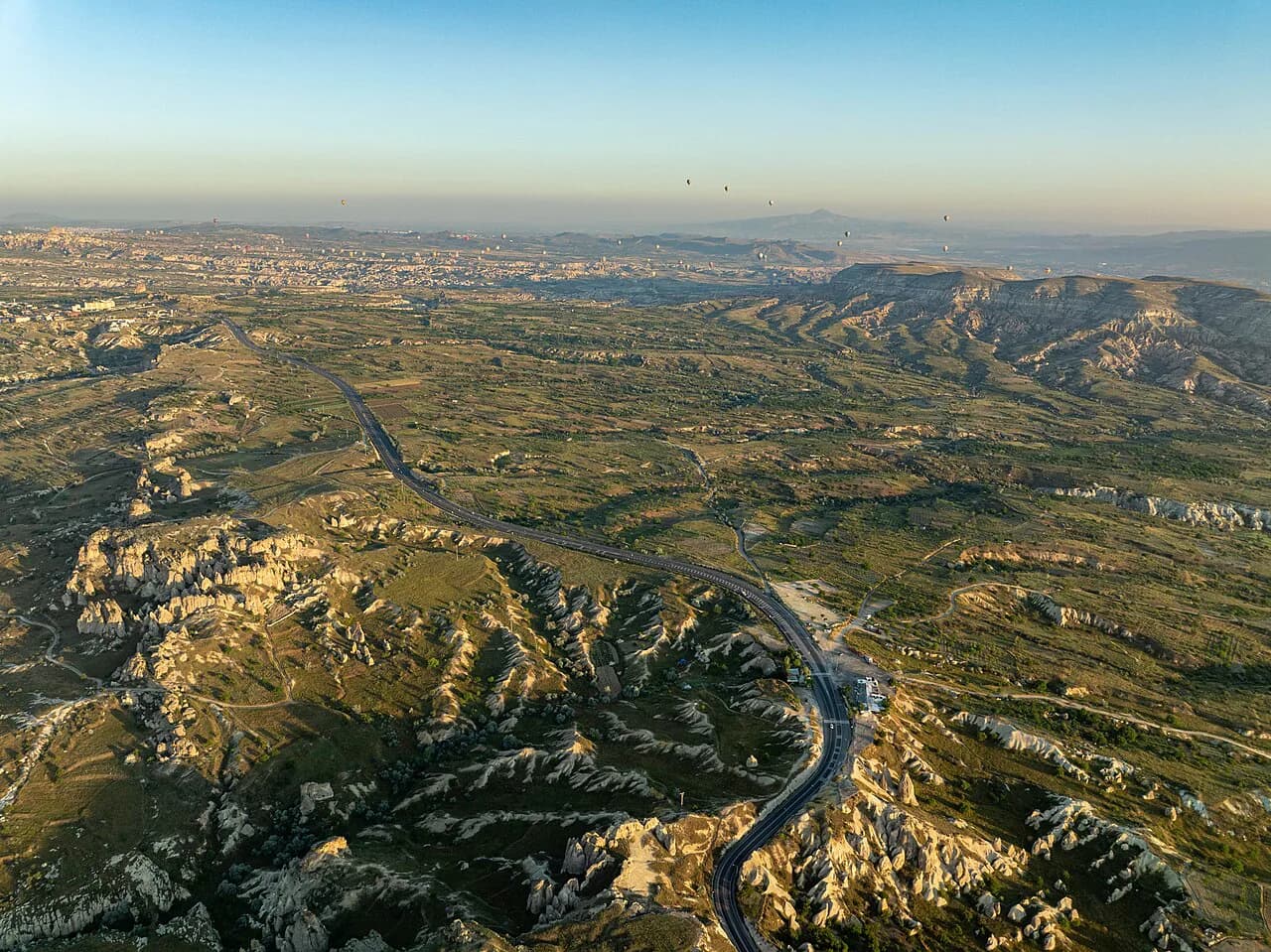
This concentration is what makes the valley different from the single-capped chimneys you pass elsewhere in Cappadocia, and it is why the site appears on so many postcards. For a wider view of how the formations, valleys and towns fit together, a Cappadocia map helps you see just how close Paşabağ sits to Zelve, Çavuşin and Avanos.
Saint Simeon's hermitage and the rock-cut chapel
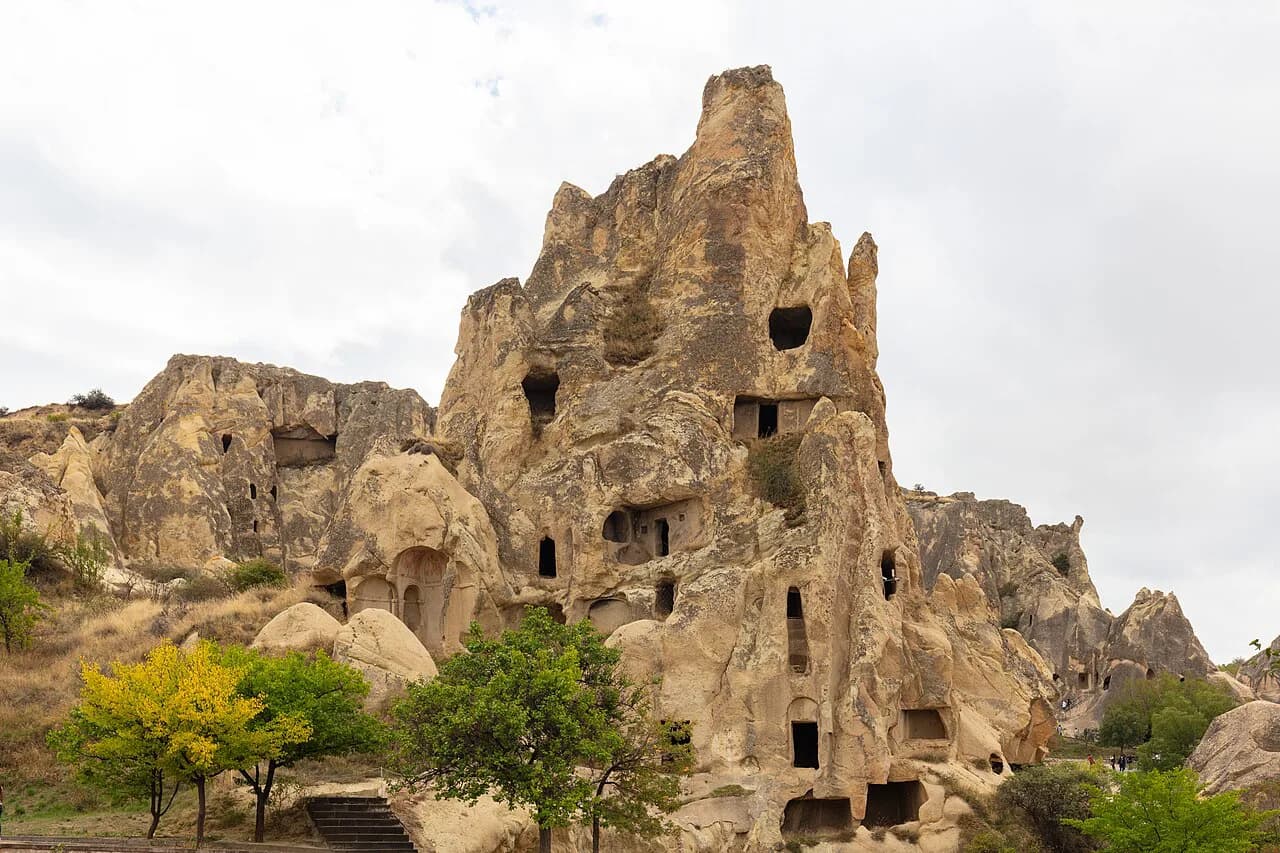
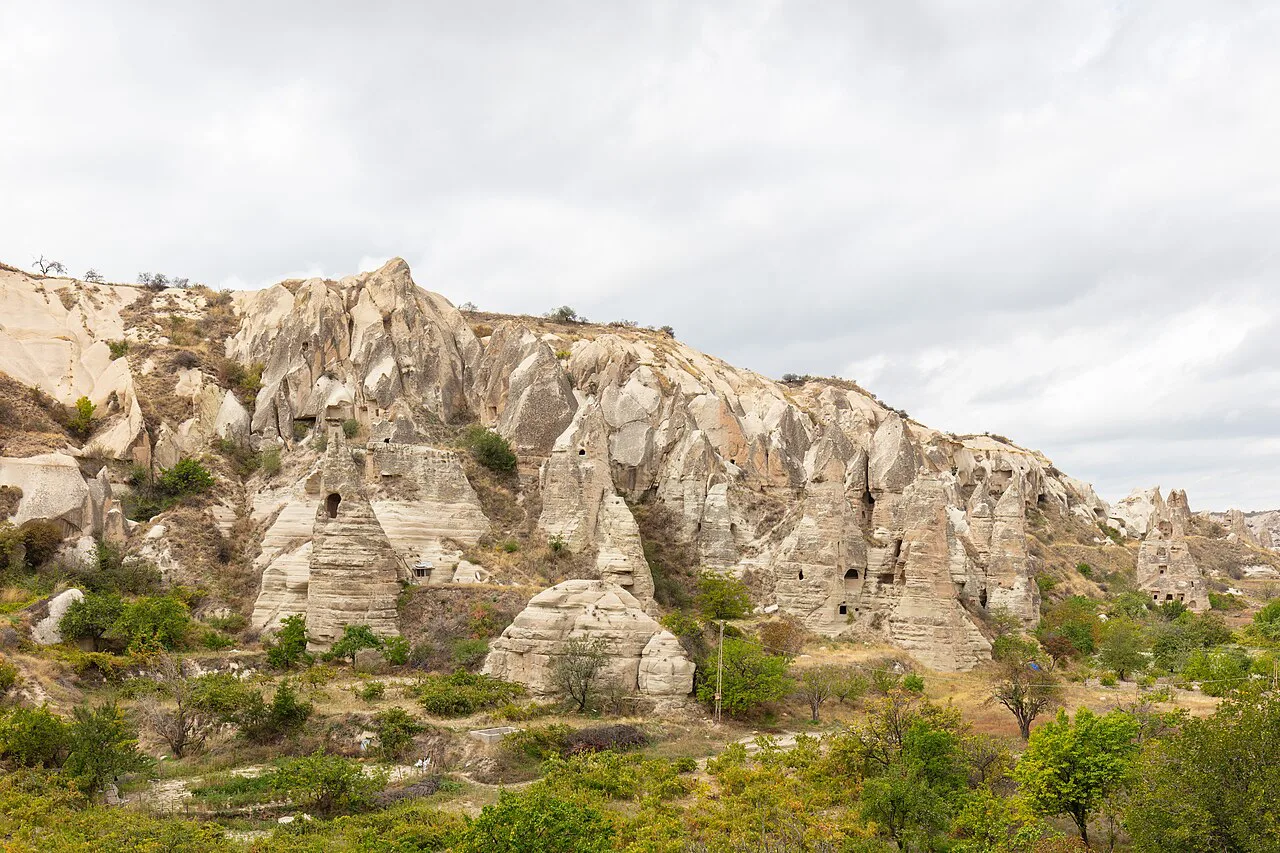
The most famous structure at Paşabağ is the chapel of Saint Simeon, cut into one of the three-headed chimneys and reached by a narrow rock-cut staircase that climbs several metres above the valley floor. Inside you can make out the carved cell where the hermit lived, a simple prayer niche oriented towards Jerusalem, and a small window through which food was reportedly passed up from the community below. The dedication recalls Simeon the Stylite, the fifth-century Syrian ascetic who lived on top of a pillar.
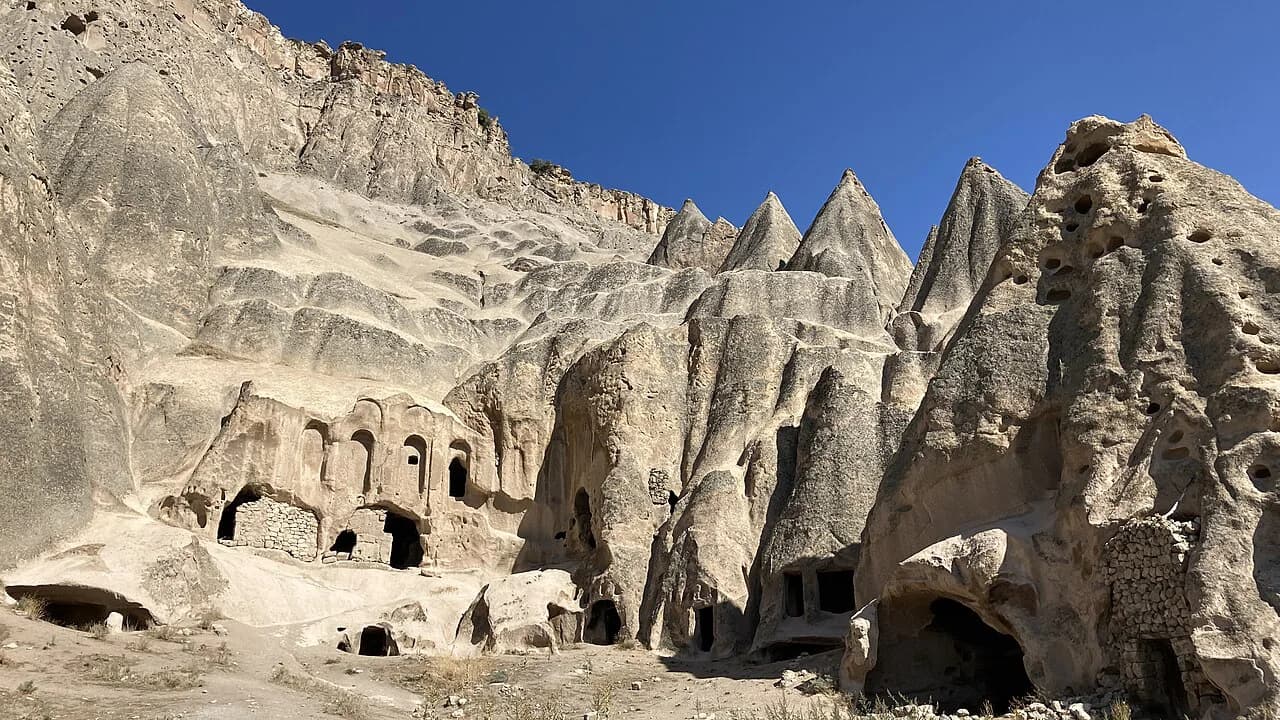
The monks here did the opposite of Simeon: they hollowed out the chimneys from bottom to top, creating rooms up to 15 metres high rather than sitting on open columns. Several chimneys hold cave dwellings of two and three storeys, and you can step inside to see how the levels were stacked. The chapel entrance carries several crosses, and the saint's association with the valley runs through the site's other name, Hermits' Valley.
Getting there from Göreme, Çavuşin and Avanos
A public bus runs from Göreme every hour and drops you very close to Paşabağ Valley, which makes the site practical without a car. The drive from Göreme town centre to the valley is a short one, and the turn-off is signposted from the Avanos road.
From Göreme town centre the drive to Paşabağ is a short hop — allow for roughly 6 km on the Avanos road — and the turn-off is signposted from the Avanos road. From Çavuşin, the valley lies about 2 km along the road towards Zelve.
The scenic walk between Zelve and Paşabağ is about 1.5 km and passes more chimneys and rock formations on the way, so walkers can link the two without returning to the road. From Avanos the approach is straightforward along the same road, and parking at the entrance suits anyone driving.
The shared Paşabağ and Zelve ticket, opening hours and Müzekart
Paşabağ and Zelve Open-Air Museum are joined administratively, and one ticket covers both sites, so there is no reason to pay twice if you plan to see the abandoned cave village down the road. The valley opens daily from 8am to 7pm in summer and 8am to 5pm in winter, and the Turkish Museum Card (Müzekart) is accepted. The entrance ticket was around €12 or 400 TL as of 2026, and prices and hours change, so check the ticket desk before you travel.
If you are travelling independently by public transport, buy the combined ticket and walk between the two while it is still valid rather than returning another day. Drivers have the easier option: the car park sits at the entrance, with toilets and stalls close by.
How long to allow and the best time to beat the coaches
Allow 20 to 40 minutes for the main loop and the short climb to Saint Simeon's chapel, or about an hour if you want a slower look at the dwellings. The site is small enough that a long stay is not needed, and most of the reward comes from the light and the view from above rather than distance covered.
Coach crowds are the real constraint. At least fifteen large tour buses have been counted in the car park during the day, and popular photo spots can be impossible to shoot without people in them. Arrive early in the morning before the excursion coaches, or head up in the last hour before sunset for the warmest light; the midday window is the busiest.
What is on site: car park, toilets, souvenir stalls and the small bazaar
Facilities sit at the entrance rather than inside the valley, so plan to carry what you need: there are no facilities within the chimneys themselves. A modest cluster of stalls sells drinks, traditional food, craft items and miniature models, and basic toilets serve the car park.
Shade is scarce across the site, so sun cream and a bottle of water are sensible even on a short visit, and the stallholders are the nearest option if you run out. The site is not large enough to need a map, and the loop is easy to follow on foot.
Walking the loop and climbing to the upper level safely
Walk a full lap of the paths inside the valley first to see the dwellings and chimneys at floor level, then take the landing or second level for the view down over the site. Ledges up there make good resting spots and photo positions, and you can pick out the layout of the whole valley from one point.
The tuff is slippery and crumbles underfoot, so keep away from edges you are unsure of rather than trusting a worn path. A sign discourages going up to the upper level, and while many people ignore it, the climb is at your own judgement and the footing is the real risk.
Pairing Paşabağ with Zelve and Devrent Valley
Zelve is the better half of a combined trip: an abandoned cave village with three valleys to explore and a rock-cut mosque, entered on the same ticket as Paşabağ. The walk or short drive between them is scenic, and Zelve often feels quieter even when Paşabağ is full of coaches.
Devrent Valley sits close to Zelve and works well as a third stop on the same morning or afternoon. It is a brief roadside pause rather than a long walk, so it fits easily before or after the main pair. If you are building a wider itinerary, this fits neatly with other things to do in Cappadocia across the region.
A guided half-day tour that links Paşabağ with Zelve, Devrent and Çavuşin is one option if you would rather not drive or wait for the hourly bus. The standard Red (North) Tour also includes the valley, which explains much of the coach traffic arriving mid-morning.
Is Paşabağ worth it compared with quieter fairy chimney valleys?
Paşabağ earns its place for the three-headed chimneys and the Saint Simeon chapel, but it is a tourism hotspot rather than a quiet discovery. If you want solitude among similar formations, Zelve a short way up the road offers more space, and the smaller valleys around Göreme deliver comparable rock scenery with far fewer people. The trade-off is simple: Paşabağ gives you the iconic silhouettes and a rock-cut chapel in a compact stop, while quieter alternatives give you room to look.
Come at opening time or late in the day and the balance tips back towards Paşabağ, since the light is better and the coaches have not yet arrived or have gone. Midday visitors should expect to share every viewpoint, which is fine if you are on a tour with a fixed schedule but less so if you came for photographs.
Should Paşabağ go on your Cappadocia shortlist?
Yes, if you pair it with Zelve on the shared ticket and arrive early or late to dodge the coach wave; no, if you want a quiet morning among the chimneys, in which case Zelve and the smaller valleys serve better. Either way, allow 20 to 40 minutes for the loop, wear shoes with grip for the tuff, and carry water for the unshaded paths.
Explore more Cappadocia guides
Frequently Asked Questions
Is Paşabağ Valley free to enter?
No. Entry requires a ticket, which is shared with Zelve Open-Air Museum and also covers that site. The Turkish Museum Card is accepted, so check whether yours is valid before paying separately.
What is Paşabağ famous for?
It is known for the densest cluster of multi-capped, three-headed mushroom fairy chimneys in Cappadocia and for the rock-cut chapel of Saint Simeon, reached by a narrow staircase carved into one of the chimneys.
Do I need a guide at Paşabağ?
No. The valley is small and the loop is easy to follow on foot, so a guide adds context rather than access. Guided half-day tours that combine Paşabağ with Zelve, Devrent and Çavuşin are available if you prefer interpretation and transport in one.
Sources
Notes for your next Turkey trip
Optional updates when we add or correct a town guide.
You might also like
Continue reading
More guides you'll find useful