Ihlara Valley, Cappadocia: Gorge Walk & Transport Guide
The Ihlara Valley is a gorge in Cappadocia with rock-cut churches and a riverside walk. Here is how long it takes, how to get there and what you see.
On this page
The Ihlara Valley is a riverside gorge in Cappadocia where a walk of a few kilometres passes rock-cut churches and dwellings cut into the cliff walls. Most visitors walk a section between two of its four entrances rather than the whole canyon, and that choice of entry point is the main decision to make before you go. This guide covers the gorge's length, the descents at each end, the churches and their frescoes, the Selime Monastery at the northern end and how to get there with or without a car.
What the Ihlara Valley is and where it sits in Cappadocia
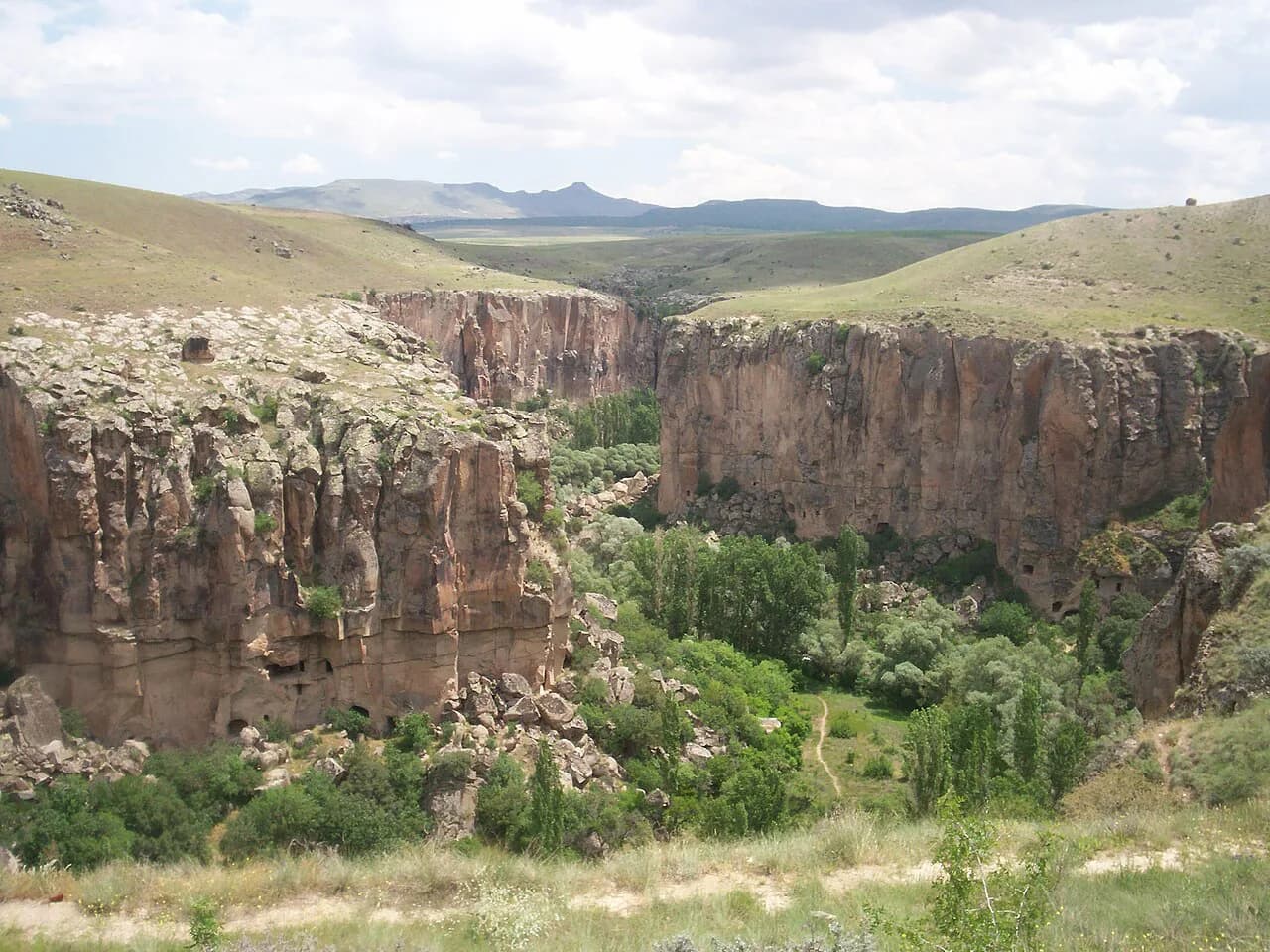
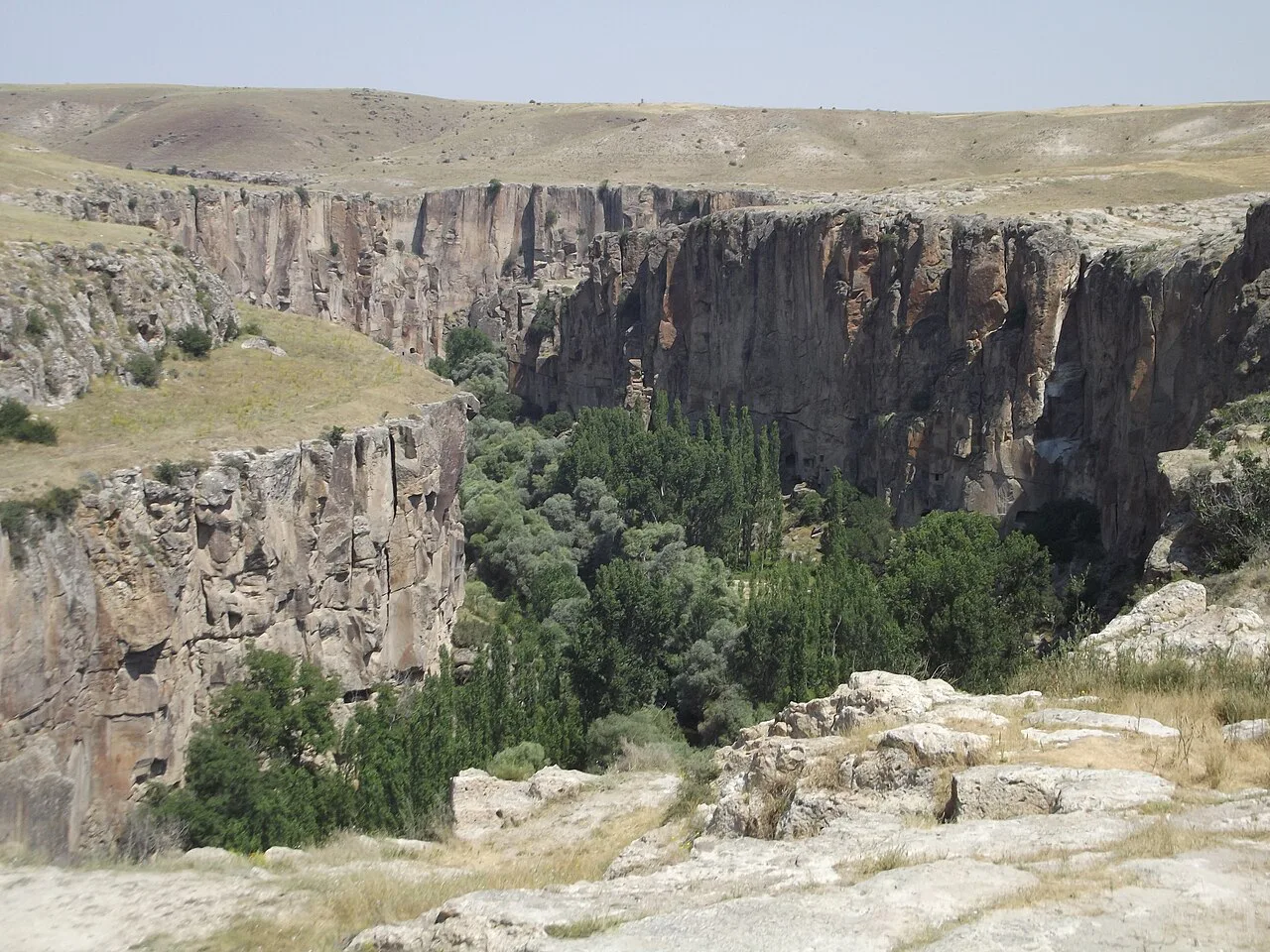
The gorge runs through the Güzelyurt district of Aksaray Province, on the south-western side of the Cappadocia region, and was cut by the Melendiz River. Sources give its length as roughly 14 kilometres, while others describe a canyon of about 15 kilometres and up to 150 metres deep, so treat anything between 14 and 15 kilometres as the working figure. That places the valley outside the core triangle of Göreme, Uçhisar and Ürgüp that most visitors use as a base.
The water in the bottom of the gorge supports vineyards, poplars and pistachio trees, which makes the valley a greener and shadier place to walk than the tuff valleys around Göreme. If you are still choosing how to spend your days in the region, the wider list of things to do in Cappadocia helps you slot the valley in alongside the other sites.
How long the gorge is and how much of it to walk
Very few visitors complete the full length. The valley has four entrances and exits at different points, so you can walk as little as a 4-kilometre stretch and still see churches, cliffs and the river. A common through-walk between two entrances covers about 10.5 kilometres with roughly 276 metres of ascent, which the trail listing puts at somewhere around three to three and a half hours of walking.
On a guided day tour the valley is often allotted about three hours including lunch, which is enough for a short section but not a full traverse. If you want churches at an unhurried pace, plan a half day at minimum and pick a one-way route so you are not walking back up the gorge at the end.
The four entrances and the stepped descent from Ihlara village
The main entrance sits by Ihlara village at the southern end of the valley, and the traditional hike begins there. One descent into the gorge is a long flight of steps, while other entrances let you drive down to the floor, which matters if you are travelling with anyone who struggles with steep stairs.
Choose your entrance by how you plan to leave. Starting high and walking north puts the climb at the start when you are fresh; finishing at a road exit lets you catch transport back rather than retracing the river. Arrange your lift or pickup before you descend, because dolmuş services on the valley floor are rare rather than something to plan a tight itinerary around.
The rock-cut churches and their frescoes along the route
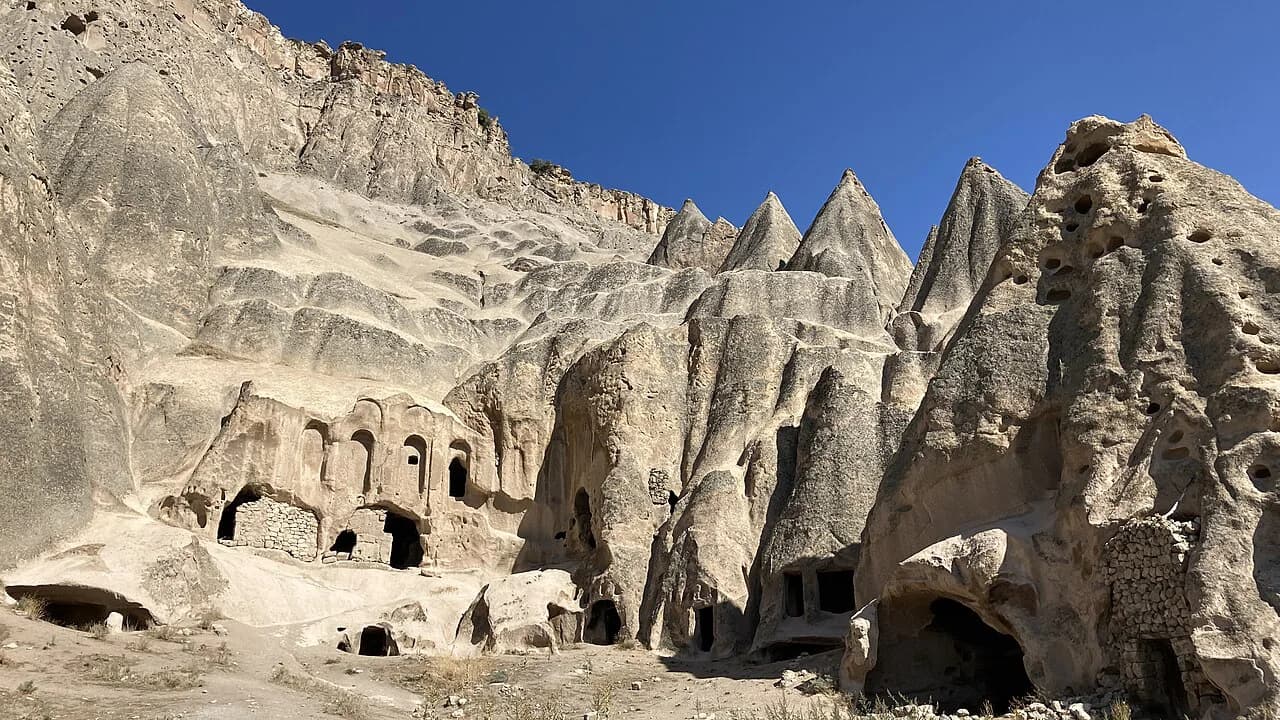
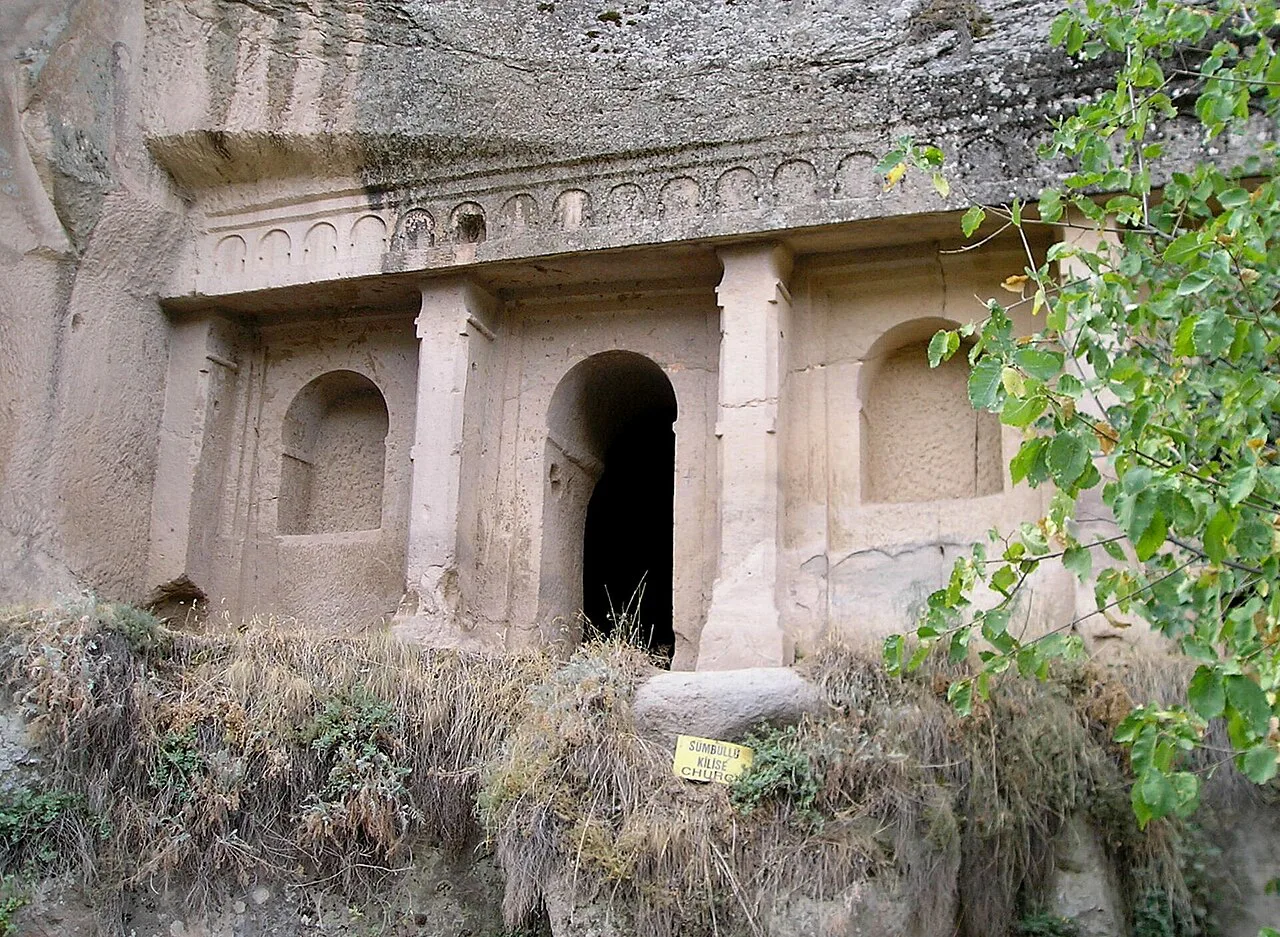
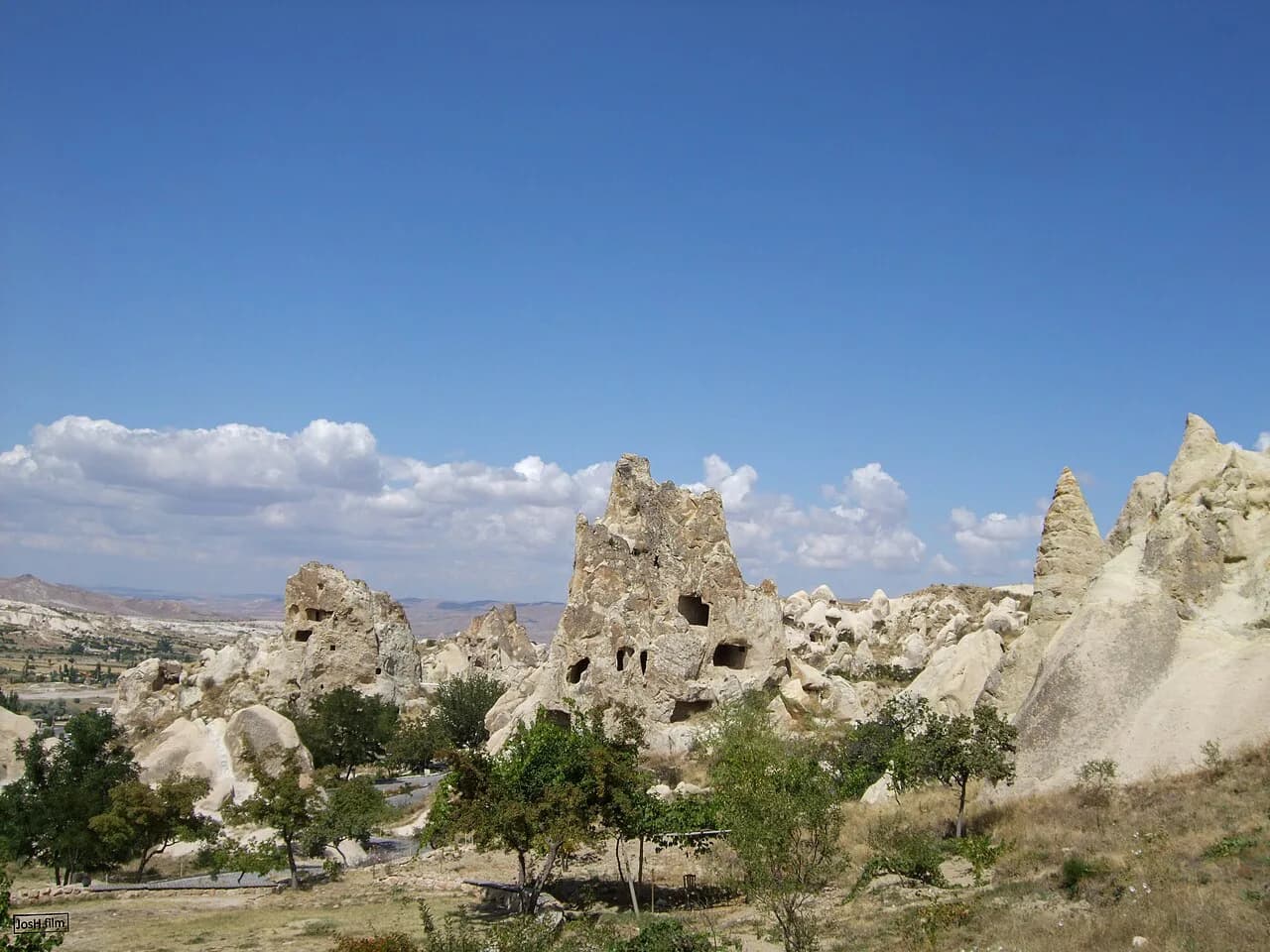
The walls of the gorge are honeycombed with dwellings and churches carved into the rock, decorated with frescoes showing biblical scenes. The churches near the Ihlara village entrance date from the 6th century and show Persian and Syrian influence, while further down the valley you meet a run of Byzantine churches and domestic rooms.
A self-guided walk along the gorge passes four ancient Christian churches within the section most people cover. Organised tours differ in exactly which churches and dwellings they stop at, so if a particular fresco cycle matters to you, check the itinerary before booking rather than assuming every tour covers the same ground.
The Melendiz River, tea gardens and rest stops on the walk
The Melendiz River runs along the floor of the gorge, and there are tea gardens and restaurants at points along the trek where you can sit down and refill. They are useful stops rather than a full meal service you should count on, so carrying a packed lunch is the safer plan if a long walk makes you hungry.
Water is the thing to overpack. Even with stops along the way, the riverside path builds a thirst, and the shade comes and goes with the cliffs rather than covering the whole route.
Selime Monastery at the northern end
At the northern end of the valley stands the Selime Monastery, a complex cut straight out of the rock wall rather than built up in stone. It was commandeered as a fortress by Byzantine and Seljuk armies between the 10th and 12th centuries, which is why it reads more like a stronghold than a courtyard monastery.
Its position makes it the natural finish to a through-walk from the southern end. If you are travelling by car, you can drive to Selime separately and walk a shorter section of the gorge below it, which suits anyone who wants the monastery without the full traverse.
Getting there: drive times from central Cappadocia and the dolmuş option
By road it is about an hour and a half from central Cappadocia, following the road through Nevşehir to Aksaray and then on to Ihlara village. Hiring a car or joining a tour is the straightforward way to reach the main entrance, since the valley sits well south of the Göreme cluster.
Public transport is thin. You can hike up and out to the main road and pick up a dolmuş back towards the main entrance, but this is a rare service rather than something to build a tight itinerary around. If you are relying on minibuses, confirm the return leg locally before you start walking.
Walking independently versus an organised day tour
A tour solves the transport problem and usually includes lunch, but it compresses the valley into a few hours and often covers only part of the gorge. Walking independently means you can spend a full day at your own pace, stop at the churches you care about and visit the village of Ihlara itself, which most coach groups skip.
The trade-off is logistics: you need your own vehicle or a pre-arranged transfer at both ends, and you carry your own water and food. For a first visit with limited time, the tour is the lower-effort option; for anyone with a full day and a car, the independent walk gives you the valley without the crowd timing.
What to take and how the heat affects the walk
Pack plenty of water for the riverbank walk, which builds a thirst, and wear shoes with grip for the stepped descents and the uneven path. Bring sun protection and a hat as well: the riverside path is a green corridor, but much of the route is more sheltered than the open tuff valleys around Göreme.
A packed lunch is worth the weight if you are walking a long section, because the food stops along the route are limited and a sit-down meal eats into your walking time. There are tea gardens and restaurants along the way, but they are useful stops rather than somewhere to count on for a full meal, and prices and opening hours change. Confirm entry arrangements and any ticket cost at the gate or with your tour operator on the day.
Nearby places to pair with the valley
The valley sits on the Aksaray side of the region, so it pairs naturally with the southern Cappadocia sights rather than with a morning in Göreme. If you are working from a Cappadocia map, you can see how the gorge sits south-west of the main cluster and plan a loop that avoids backtracking. The rock-cut churches here make an interesting counterpoint to the painted interiors at the Göreme Open-Air Museum, where the churches' frescoes are the draw.
Derinkuyu Underground City lies on the Nevşehir side and works as a half-day add-on if you are driving yourself and want a second stop on the same day. Allow real time for both rather than squeezing them together, because each involves stairs, narrow passages and a fair amount of standing.
Should you walk the whole gorge or a section?
Walk a section between two entrances unless you have a full day, a car and an arranged pickup at the far end. The 4-kilometre stretch gives you churches, cliffs and river without committing to the full traverse, and it fits inside a tour schedule if that is how you are travelling.
If you go independently, start early, carry more water than you think you need and confirm your return transport before descending. Entry arrangements and any ticket cost are settled at the gate, so check the current position there or with your operator on the day.
Explore more Cappadocia guides
Frequently Asked Questions
Is the Ihlara Valley in Cappadocia?
Yes. The gorge lies in the Güzelyurt district of Aksaray Province, on the south-western edge of the Cappadocia region, and was cut by the Melendiz River. It is roughly an hour and a half by road from central Cappadocia, following the road through Nevşehir to Aksaray and then to Ihlara village.
How long does the Ihlara Valley walk take?
It depends on the section. A through-walk of about 10.5 kilometres with some ascent is listed at roughly three to three and a half hours of walking, while guided day tours typically allow about three hours in the valley including lunch. A short 4-kilometre stretch is quicker, but the exact time depends on your pace and stops.
Do I need a guide to walk the Ihlara Valley?
No. You can walk between the entrances independently, which lets you spend a full day and visit the village of Ihlara. The catch is transport: you need your own vehicle or an arranged pickup, whereas a tour handles the driving but covers only part of the gorge.
Sources
Notes for your next Turkey trip
Optional updates when we add or correct a town guide.
You might also like
Continue reading
More guides you'll find useful