Fethiye Food: What to Eat, Where to Find It and How to Order
Fethiye food is Aegean and Mediterranean cooking built on olive oil, wild herbs and daily fish. Here are the local dishes to order and where to find them.
On this page
Order the herb plates, the fish and the local meatballs first: Fethiye cooks in the Aegean olive-oil tradition, with the Mediterranean catch of a working harbour on top. The dishes that separate a good meal here from a generic Turkish menu are arapsaçı, radika, cibez and şevketi bostan in spring, sea bass and bream landed the same day, and the town's own spiced meatball. This guide covers what to order, where visitors find it, and how to read a menu and a bill.
It is a dish-level guide, not a venue list: named restaurants appear only where they illustrate a point, and the full shortlist sits in the best restaurants in Fethiye. Prices change quickly in Turkish lira, so a figure is given only with the year the source states it.
What Fethiye food is: Aegean cooking on a Mediterranean coast
Fethiye sits where the Aegean meets the Mediterranean, and its kitchen leans on generous olive oil, fresh vegetables and the day's catch. Village markets, small producers and family-run places carry much of that cooking, so the same dishes appear in a lokanta, a market stall and a home kitchen. Expect lighter, greener plates than the kebab-and-pide image of Turkish food.
That split matters when you plan a day. A long lunch of herb plates and fish suits the harbour and the beach neighbourhoods, while a quick pide or kebab fits a morning at the ruins or a market run. Build the meal around where you will be at one o'clock rather than crossing town for a single dish.
The local dishes to try first: Fethiye meatballs, keşkek and herb plates
Fethiye meatballs are the town's own version of the Turkish köfte, made soft with a distinctive spice mix. Keşkek is the slower dish, a long-cooked mixture of meat and cracked wheat that appears at weddings and special occasions. Order one of each across two meals rather than at the same table, since both are filling.
The third pillar is the olive-oil counter: vegetables and herbs cooked in oil and served at room temperature with lemon. In a lokanta these appear behind glass, so point at what looks good and take two or three small plates. They are the cheapest way to eat well and the best introduction to how the region cooks.
Wild herbs and olive oil: arapsaçı, radika, cibez and şevketi bostan
Four herbs define the spring table: wild fennel (arapsaçı), chicory (radika), cibez and blessed thistle (şevketi bostan). Locals serve them dressed with olive oil and lemon, sometimes as a salad and sometimes as a warm dish. They are the reason a spring visit eats differently from an August one.
Spring is when the herbs are at their freshest, sold in local markets and cooked the same day in restaurants. Outside that window the same names may still appear on menus but with less to recommend them, so ask what came in that morning. If herbs are not your thing, the fish and meze carry the meal perfectly well.
Fish and seafood: sea bass, bream, grouper and red mullet
Sea bass, sea bream, grouper and red mullet are the fish most often named, alongside shrimp, calamari and octopus. Fish caught early in the morning is served in restaurants the same day, which is the strongest argument for eating seafood here rather than inland. Ask for the catch to be shown before it is cooked.
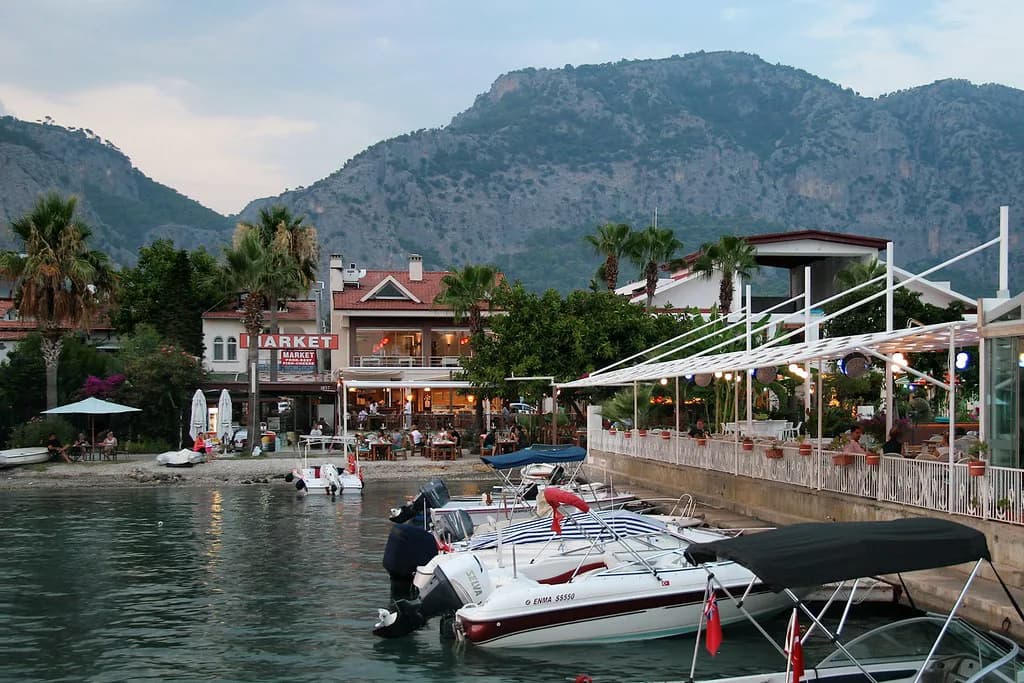
Seaside tables at sunset are the obvious setting, and the harbour and beach neighbourhoods both deliver it. Budget matters more than view: a whole fish is priced by weight, so confirm the weight and the price per kilo before ordering. A plate of calamari and a shared meze spread costs far less than a large grouper.
Street food and quick snacks: gözleme, kumru and stuffed mussels
Fethiye street eating is built for walking: gözleme flatbreads, kumru sandwiches and stuffed mussels sold from small stalls. These are filling, cheap and available from breakfast through to a late snack, which makes them useful on a day of sightseeing. Our Fethiye street food guide covers the stalls and the going rate in more detail.
Use them as a lunch strategy rather than a fallback. A kumru and an ayran costs little and leaves the evening free for a proper fish dinner, and a stuffed mussel stall is a good way to try something you will not see at home. Keep small notes handy for the stalls that do not take cards.
Turkish breakfast in Fethiye and why Kayaköy and Faralya suit it
A Turkish breakfast here means village cheeses, homemade jams, olives and fresh bread, usually laid out as a spread rather than a single plate. Kayaköy and Faralya are named as the places to eat it, partly for the setting as much as the food. It is a long, social meal, so book it into a morning rather than squeezing it before an excursion.
Portions are designed for sharing, so two people can order one spread and add eggs or a hot dish. Breakfast places in the villages sit away from the centre, which makes them a natural pairing with a slow morning rather than a quick stop.
Desserts and drinks: pumpkin, fig, tea, coffee and ayran
Desserts lean on local produce: pumpkin dessert, fig dessert and syrup-based sweets, with milk-based puddings and ice cream favoured in summer. Order one between two after a fish dinner, since the syrup sweets are sweet enough to share. Turkish tea and Turkish coffee are the default drinks, with ayran and fresh fruit juice close behind.
Ayran is the practical choice with kebab and pide, and it is what locals drink alongside them. Coffee here is served strong and small; ask for it without sugar if you want it plain, since the sugar is stirred in at brewing.
Pide and kebab: what a pide salon and a kebab house serve
A pide salon rolls dough thin and bakes it in a stone oven, with cheese, minced meat and kaşar cheese among the standard toppings, served with çoban salad and ayran. Nazilli Pide is one place in town that works this way. It is a fast, inexpensive meal and a sensible lunch before an afternoon on the water.
Kebab houses are a bigger affair, and an Adana kebab often arrives with a spread of meze rather than a lone plate. At Adanalı Hacı Usta Taşköprü Adana Kebab the kebab came with eight types of meze, and the writer paid 500 TL for it in July 2025. That figure is history, not a current price, and it shows why you should ask what accompanies the kebab before you order sides.
Where to eat in town: Çalış Beach, Ölüdeniz and Hisarönü
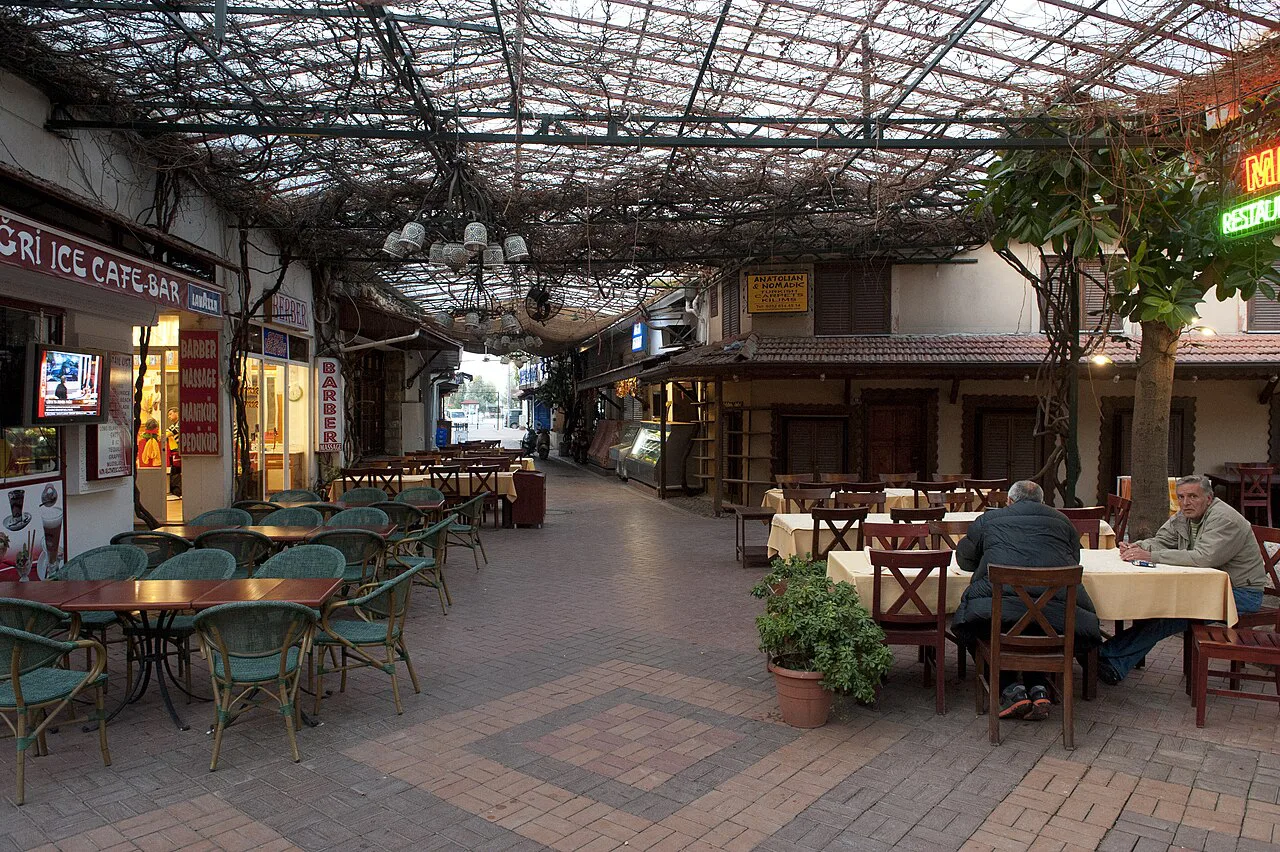
Each neighbourhood has a different job. Çalış Beach suits a relaxed seafood dinner by the water, with fish, fried shrimp and octopus salad on the menus and a peaceful evening away from the busiest streets. Ölüdeniz is the sea-view setting, and Hisarönü serves the resort strip with a broader range of menus.
The old centre and harbour reward wandering, and a short walk usually turns up a lokanta or pide salon you had not planned on. Our pick of the best restaurants in Fethiye covers specific venues and what each is good for, so use it once you have decided on a neighbourhood and a budget.
Markets and buying local: village produce, herbs and the food market
Village markets, local producers and small family businesses are a working part of how Fethiye eats, not a tourist add-on. That is where the spring herbs, village cheeses and olives behind your breakfast come from. Go early, bring cash and expect to point rather than translate.
One supermarket chain appears in visitor accounts for wine and freshly made pastries, which is a fair reminder that self-catering is easy here. For produce, the spring herbs, village cheeses and olives are the things worth seeking out at the markets.
How to order: meze, kebab and reading a menu
Start with the meze counter and choose two or three plates for the table, then decide on fish or meat. If you order a kebab, ask what comes with it, since an Adana may already arrive with a full spread of meze and complimentary salads. Ordering both blindly is the most common way to end up with too much food.
For fish, confirm the weight and the price per kilo before it goes on the grill, and check whether meze and bread are charged separately. Menus in resort areas often carry English alongside Turkish, but the names of local herb dishes may not be translated. Pointing at the counter is perfectly acceptable.
Vegetarian and lighter eating in Fethiye
This is easy ground for vegetarians. The olive-oil herb plates, çoban salad, gözleme, pide with cheese and most meze are meat-free, and the Aegean style keeps the cooking light. Ask for the herb dishes without meat stock if you want to be certain.
Lighter eaters should build a meal from meze and a shared fish rather than ordering a main each. Breakfast spreads are another good route, since they are mostly cheese, olives, bread and jam.
What to expect on the bill and how prices are quoted
Almost everything is quoted in Turkish lira, and prices move quickly, so a figure from last year is a guide to relative cost rather than what you will pay. The Adana kebab priced at 500 TL in July 2025 is a useful benchmark for a hearty kebab with meze; check the current menu before you sit down.
Seafood is the variable: a whole fish by weight can dwarf the rest of the bill, while meze and pide keep costs down. Ask for the total before the fish is cooked and keep a cash reserve for small stalls and markets that may not take cards.
Build your Fethiye eating plan around the herbs and the fish
Plan one spring herb lunch, one fish dinner by the water and one street-food day, and you will have covered what makes eating here distinct. Keep a kebab or pide meal for the day you are moving between the harbour and the beach neighbourhoods.
For the venues themselves, work from the best restaurants in Fethiye once you know your neighbourhood and budget, and confirm the day's fish and its price before ordering. Prices in Turkish lira are best checked on the menu rather than assumed from any published figure.
Explore more Fethiye guides
Frequently Asked Questions
What food is Fethiye known for?
Fethiye is known for olive-oil herb plates such as arapsaçı, radika, cibez and şevketi bostan, its own spiced meatballs, the slow-cooked keşkek served at weddings, and daily fish including sea bass, sea bream, grouper and red mullet. Street snacks such as gözleme, kumru and stuffed mussels fill the gaps between meals.
When is the best time to eat the wild herbs?
Spring is when the wild herbs are at their freshest, sold in local markets and cooked the same day in restaurants. Outside spring the same dishes may appear on menus with less to recommend them, so ask what came in that morning.
What should I know before booking a table in Fethiye?
Seafood places by the water are set up for a relaxed sunset dinner, and some are pitched at visitors wanting to escape the crowds, so ask about a table in advance in summer. For smaller lokantas, pide salons and street stalls, ask the venue on the day.
How much does a meal in Fethiye cost?
Prices are quoted in Turkish lira and change quickly, so check the current menu rather than relying on published figures. A kebab with meze was priced at 500 TL in July 2025, which gives a sense of relative cost for a hearty meal; whole fish is priced by weight and can dominate the bill.
Sources
Notes for your next Turkey trip
Optional updates when we add or correct a town guide.
You might also like
Continue reading
More guides you'll find useful