Green Mosque in Bursa: What to See and How to Visit
A practical guide to Bursa's Green Mosque and Green Tomb, from the tiled mihrab and unfinished façade to the sultan's loge and the walk between the two buildings.
On this page
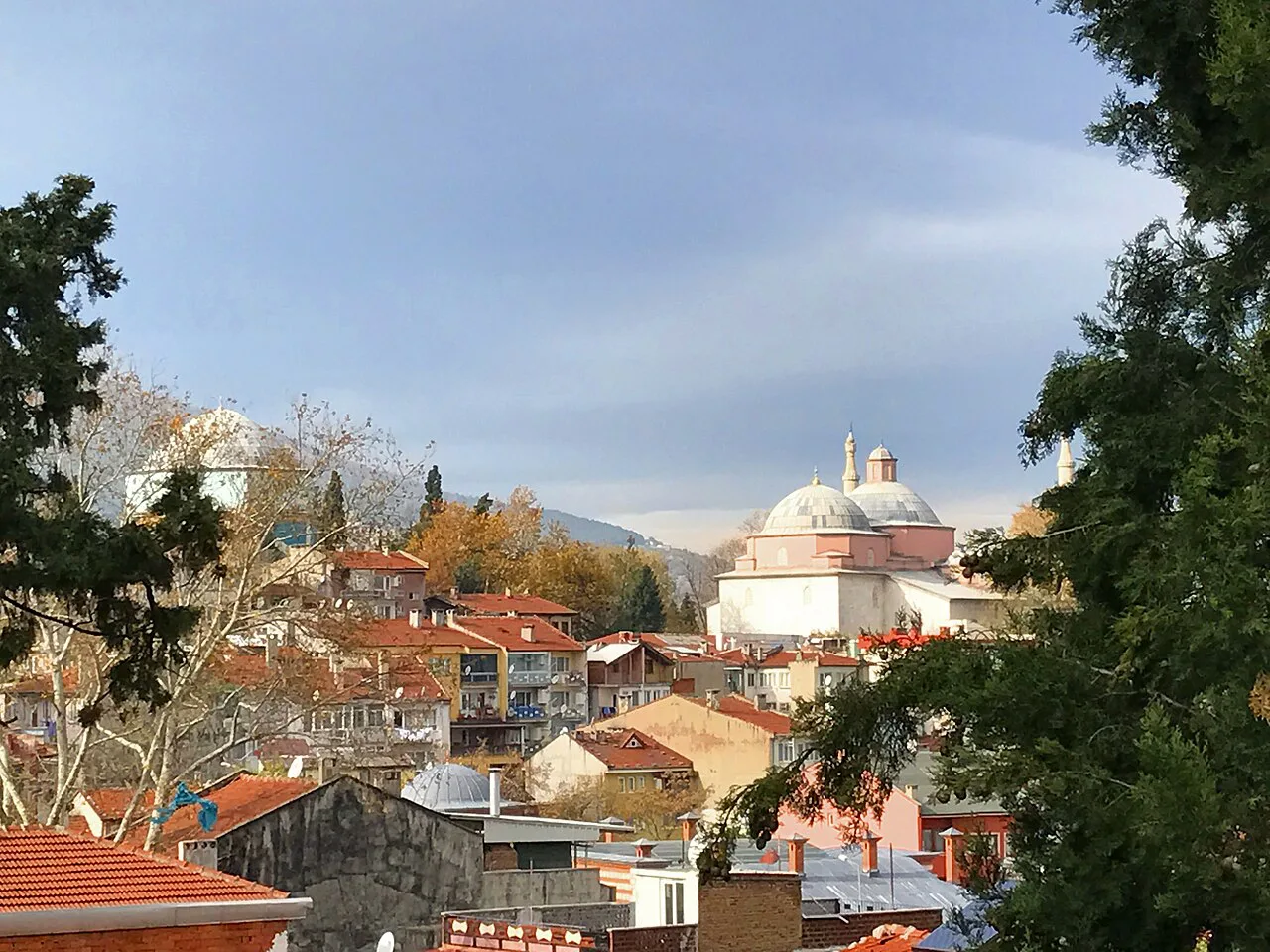
Bursa's Green Mosque (Yeşil Cami) and the Green Tomb (Yeşil Türbe) face each other across a narrow street in eastern Bursa, and an unhurried hour covers both. Start at the mosque, which sits lower in pale marble, then cross to the tomb rising among cypresses. This guide covers what each building holds, the tiles that gave the complex its name, how long to allow and how to get there.
What the Green Mosque and Green Tomb are, and where they sit
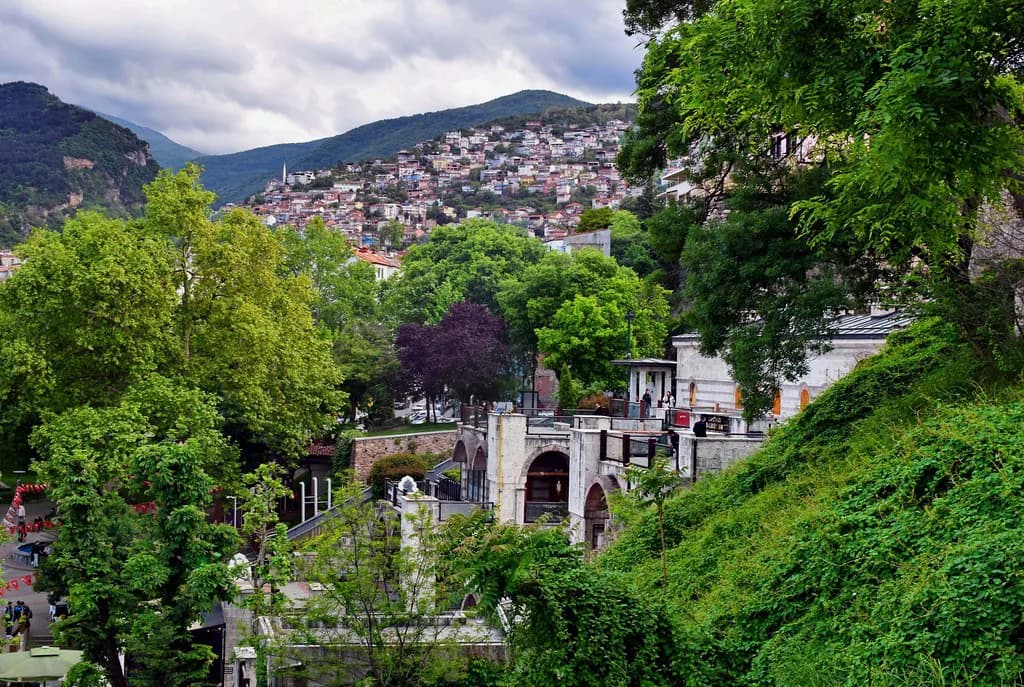
The complex was built for Sultan Mehmed I, and in 2014 it joined the UNESCO World Heritage List as part of Bursa and Cumalıkızık: the Birth of the Ottoman Empire. The address is Yeşil Mahallesi, 1. Yeşil Caddesi, in the Yıldırım district of eastern Bursa. Between the two buildings a terrace looks north over rooftops and minarets.
Ottoman records called the foundation the Sultan's imaret, but locals named it after its tiles; by the 17th century the traveller Evliya Çelebi knew it as the Green Imaret. The name spread to the whole neighbourhood, still called Yeşil today. The külliye around the mosque took in a madrasa, a soup kitchen and a bath, with three hans in the bazaar belonging to the same foundation.
Why it is called Green: the tiles behind the name
The colour comes from the blue-green tiling, which shows from far across the city on the tomb's walls. Green hexagonal tiles line the mosque's prayer hall to head height, and the mihrab is tiled almost from top to bottom in navy, turquoise, yellow, green and white. Some accounts also tie the name to the original minarets, believed to have been covered in green tiles.
The marble north façade and its unfinished arches
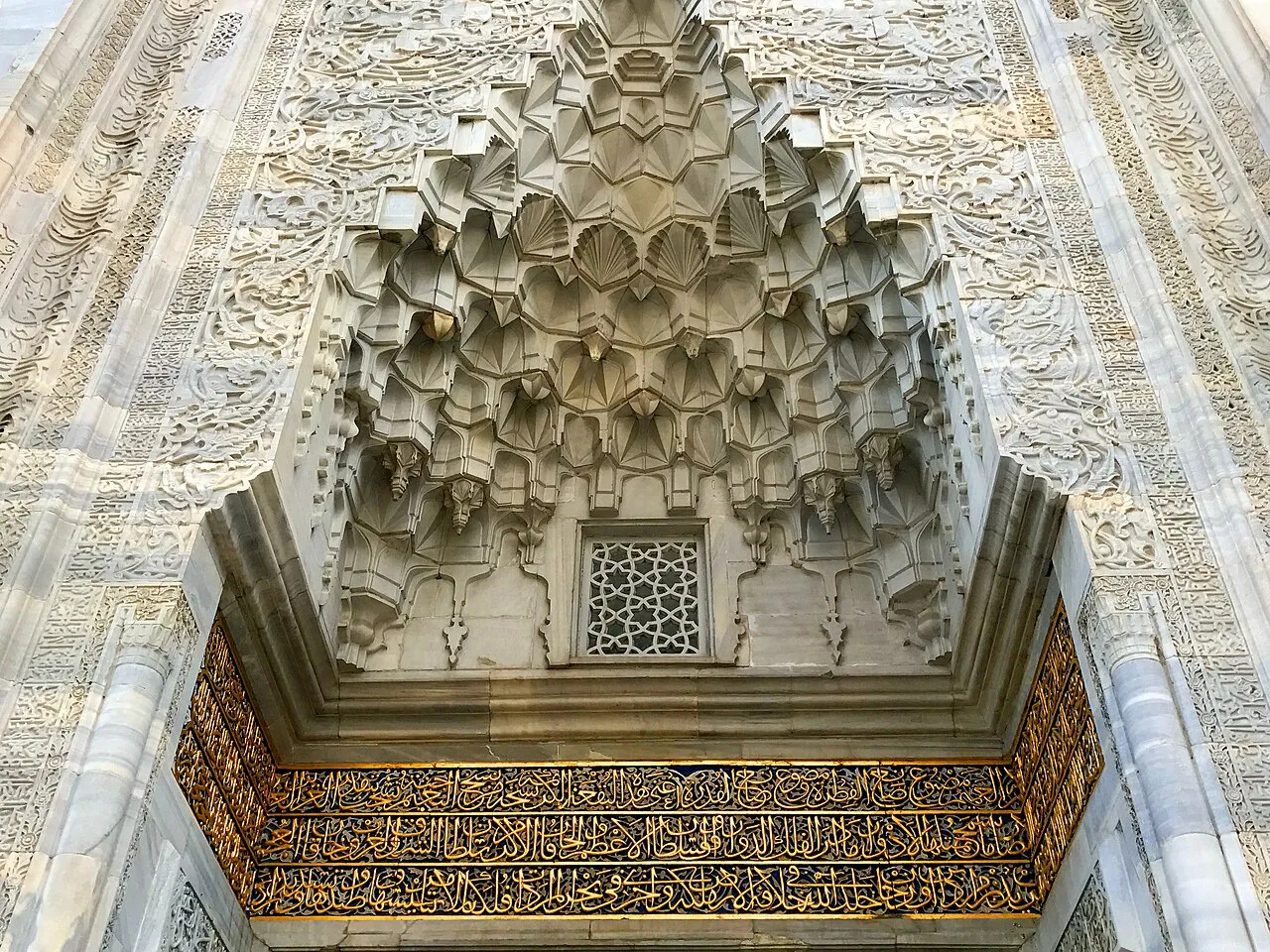
The north front is faced in white marble, with two bands of script in thuluth and Kufic framing the portal and a deep muqarnas hood filling the arch above the door. Thousands of small carved motifs cover the stone, and the bronze window grilles carry fine filigree ornament. The Green Mosque is the first marble structure of the Ottomans in Bursa, with the marble brought from Marmara Island.
The front was never finished. Stubs of arches remain above the windows, waiting for a porch that was never built, and some carved inscriptions stop halfway, so look at the upper stonework rather than reading the front as a complete design.
Inside the prayer hall: basin, eyvans and the inverted T plan
A short vestibule leads up a few steps into a square domed hall with a fountain basin at its centre, or an octagonal pool in some descriptions. Raised side halls called eyvans open to the left and right, forming the inverted T plan typical of early Ottoman Bursa. The domes span 13 metres and rise 25 metres, and a further flight of steps leads up to the mihrab.
Green hexagonal tiles run along the hall to head height, and painted decoration once covered every wall above them. After the 1855 earthquake only the domes kept their painting.
The tiled mihrab and the Masters of Tabriz signature
The mihrab rises more than ten metres and is tiled almost from top to bottom, framed by a wide band of Qur'anic script. On the right-hand colonnette the tilers signed themselves as the Masters of Tabriz. They worked under Ali bin İlyas Ali, called Nakkas Ali, a Bursa painter who learned his art in Samarkand and led the painted and tiled work on both buildings.
A Persian couplet near the mihrab, usually traced to Sa'di Shirazi, has long intrigued researchers. One popular reading ties its line about wrong done to the wrongdoer's neck to the architect's fall, but no document supports that link.
The sultan's loge and the side chambers
Above the entrance sits the sultan's loge, reached by stairs from the vestibule and laid out like a small pavilion with fireplaces in its rooms. The chambers on either side are said to have housed the sultan's household. Look up as you enter rather than only ahead, because the loge is easy to walk past.
Crossing the street to the Green Tomb
Murad II built the tomb across from the mosque as a royal burial place for his father and his family, and Mehmed I's sarcophagus is noted for its colourful, intricately designed tiles. The building's octagonal dome is filled with blue-green tiles, which give it its name. Mehmed I died in 1421; local tradition holds that his tomb was completed forty days before his death, and that his viziers kept the death secret until Prince Murad reached Bursa.
The rest of the külliye: madrasa, kitchen, bath and hans
The foundation Mehmed I began in 1414 gathered a madrasa, a soup kitchen and a bath around the mosque, and the madrasa became one of the leading colleges of its day. Three hans in the bazaar belonged to the same foundation. The bathhouse remains part of the complex.
Work on the mosque ended in December 1419, but its decoration took almost five more years, until August 1424. The architect was Hacı İvaz Pasha, a soldier from Tokat who had just held Bursa against a Karamanid attack, and his name is carved beside the sultan's on the portal. The minaret fell in the 1855 earthquake; in 1863 the governor called in the French architect Léon Parvillée, who took charge of restoring the tiles, and a new minaret followed in 1869.
How long a visit takes and the order to see the buildings
An unhurried hour covers the mosque and the tomb on either side of the street. Go into the mosque first, working from the vestibule to the hall, the eyvans and up to the tiled mihrab, then finish on the terrace before crossing to the tomb. The Turkish and Islamic Arts Museum in the Green Madrasa is nearby if you want to add it to the same visit.
Getting to Yeşil and the terrace viewpoint
The complex sits at Yeşil Mahallesi, 1. Yeşil Caddesi, 16360 Yıldırım, Bursa, with the mosque and tomb facing each other across the street. The terrace between them looks north over rooftops and minarets, which is where to end the visit. Contact details for the provincial culture and tourism directorate are listed against the address if you need to confirm access on the day.
Mosque etiquette and what to wear
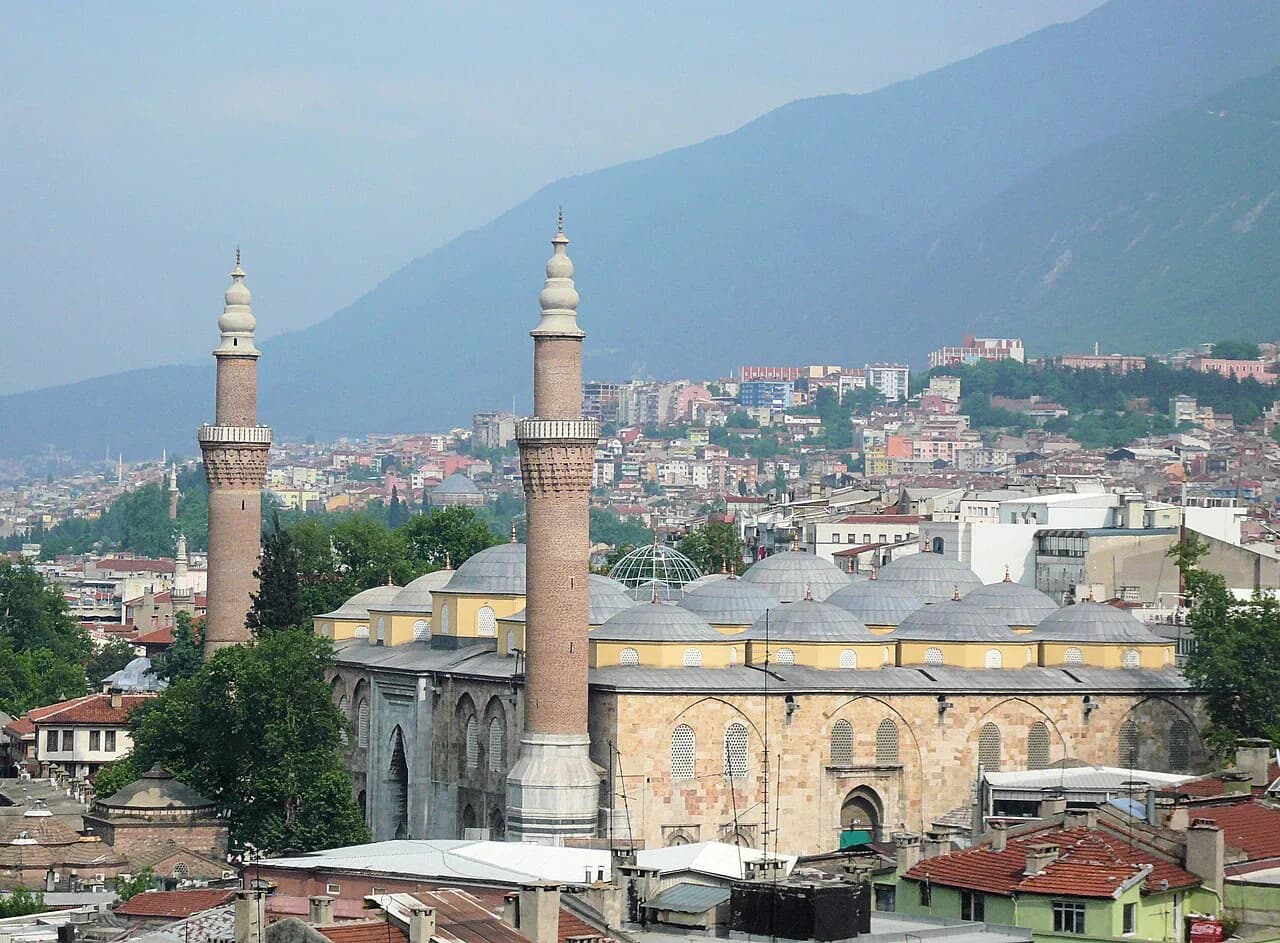
You are walking into a working mosque and a royal tomb rather than a museum gallery, so dress modestly and keep your voice low in the prayer hall. Plan the prayer hall around prayer times rather than pushing through, and take photographs without blocking the mihrab or the entrance to the sultan's loge. For a larger Ottoman congregational mosque to compare on the same trip, the Bursa Grand Mosque in the city centre makes an obvious pairing.
Nearby: the Turkish and Islamic Arts Museum in the Green Madrasa
The Turkish and Islamic Arts Museum now sits in the Green Madrasa within the külliye, so you can add it to the same visit without another journey. Its contact line is +90 224 327 76 79. Check the current opening hours before you build the day around it.
Is the Green Mosque worth the detour to eastern Bursa?
Yes, if you want to see early Ottoman tilework at close range: the ten-metre mihrab, the tiler's own signature on the colonnette and the tomb opposite make a compact, high-value stop. It rewards an hour of unhurried looking rather than a quick photograph of the façade. Give it less time only if you are already short of time for Bursa's wider old city.
Before you go, check current opening times for the mosque, the tomb and the museum, since services and restoration affect access. Build the Yeşil visit around a single morning so the terrace and the two buildings sit together, then move on to the rest of the city. For a tile-making town within reach of Bursa, see İznik, Turkey.
Explore more Bursa guides
Frequently Asked Questions
How old is the Green Mosque in Bursa?
Work on the mosque ended in December 1419, and its tile and painted decoration ran until August 1424. Sultan Mehmed I, who commissioned it, died in 1421 and did not see it finished.
Are the Green Mosque and Green Tomb the same building?
No. They are two separate buildings facing each other across a narrow street in the Yeşil neighbourhood, with a terrace between them looking north over the city. The mosque stands lower and the tomb opposite rises among cypresses.
Do I need a ticket to visit the Green Mosque?
Entry arrangements and any ticket requirement are not established by the available sources. Check the current position with the Turkish and Islamic Arts Museum in the Green Madrasa or the provincial culture and tourism directorate before you travel. The museum has its own arrangements and is worth confirming separately.
Sources
Notes for your next Turkey trip
Optional updates when we add or correct a town guide.
You might also like
Continue reading
More guides you'll find useful