Selimiye Mosque, Edirne: What to See and How Long It Takes
Plan a visit to Selimiye Mosque in Edirne: the great dome, four minarets and külliye, the İznik tiles inside, and how long to allow on the day.
On this page
Allow around an hour for the Selimiye Mosque itself and a further half-hour to walk the surrounding külliye, the complex of madrasas, library and arasta bazaar that wraps around it. The mosque is the centrepiece of a visit to Edirne, the former Ottoman capital, and its four slender minarets and single great dome dominate the skyline. This guide covers what to look at outside and inside, how the complex is laid out, and how to fit it into a day in the city.
Selimiye Mosque is an Ottoman imperial mosque built for Sultan Selim II by Mimar Sinan, and it was recognised on the UNESCO World Heritage List in 2011 for its architecture and its social complex. Read it as a building and as a neighbourhood: the prayer hall rewards a slow look upward, while the outer courtyard and the arasta bazaar show how a large Ottoman mosque worked as a public institution.
What the Selimiye Mosque is and why it draws visitors to Edirne
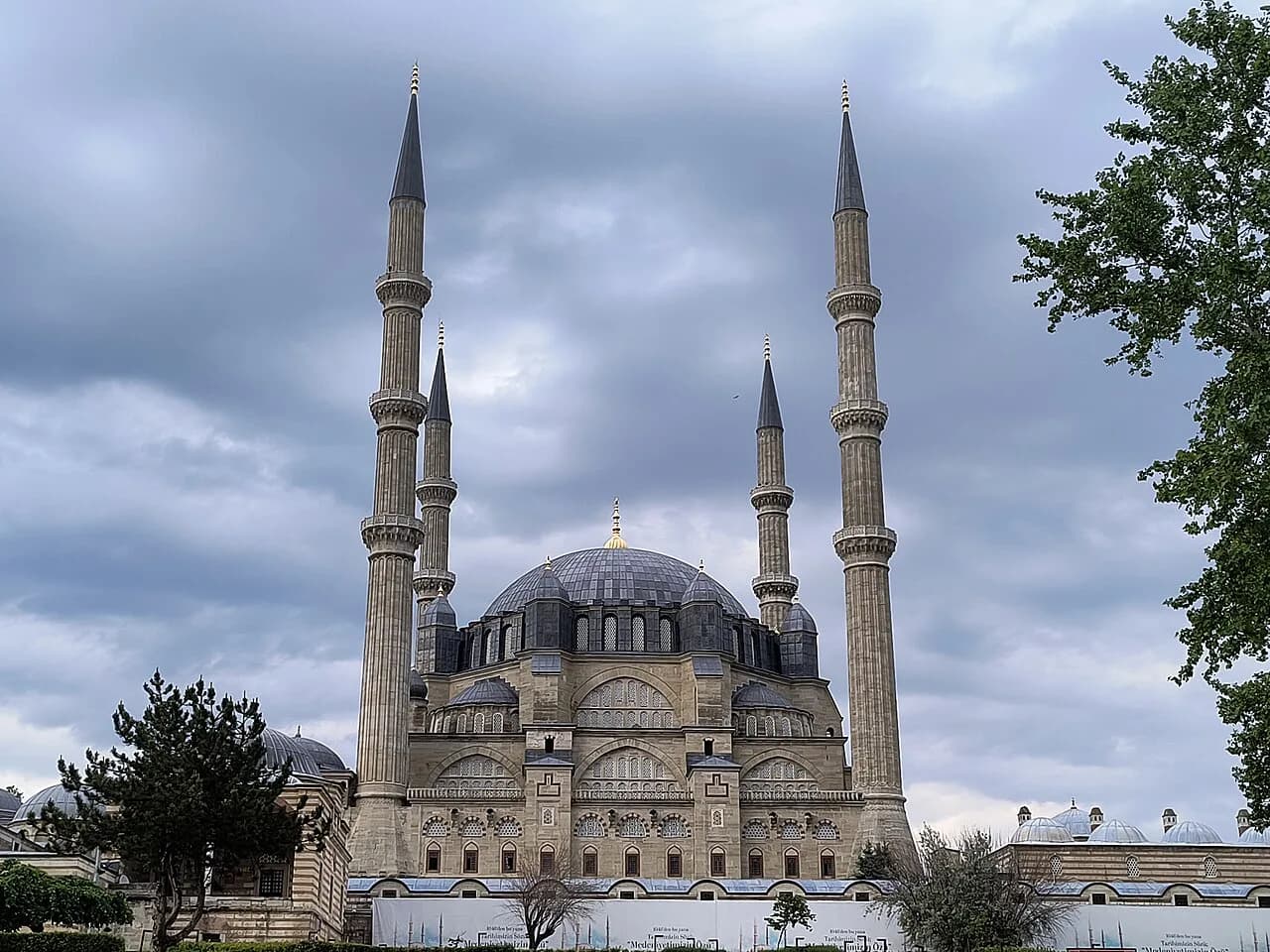
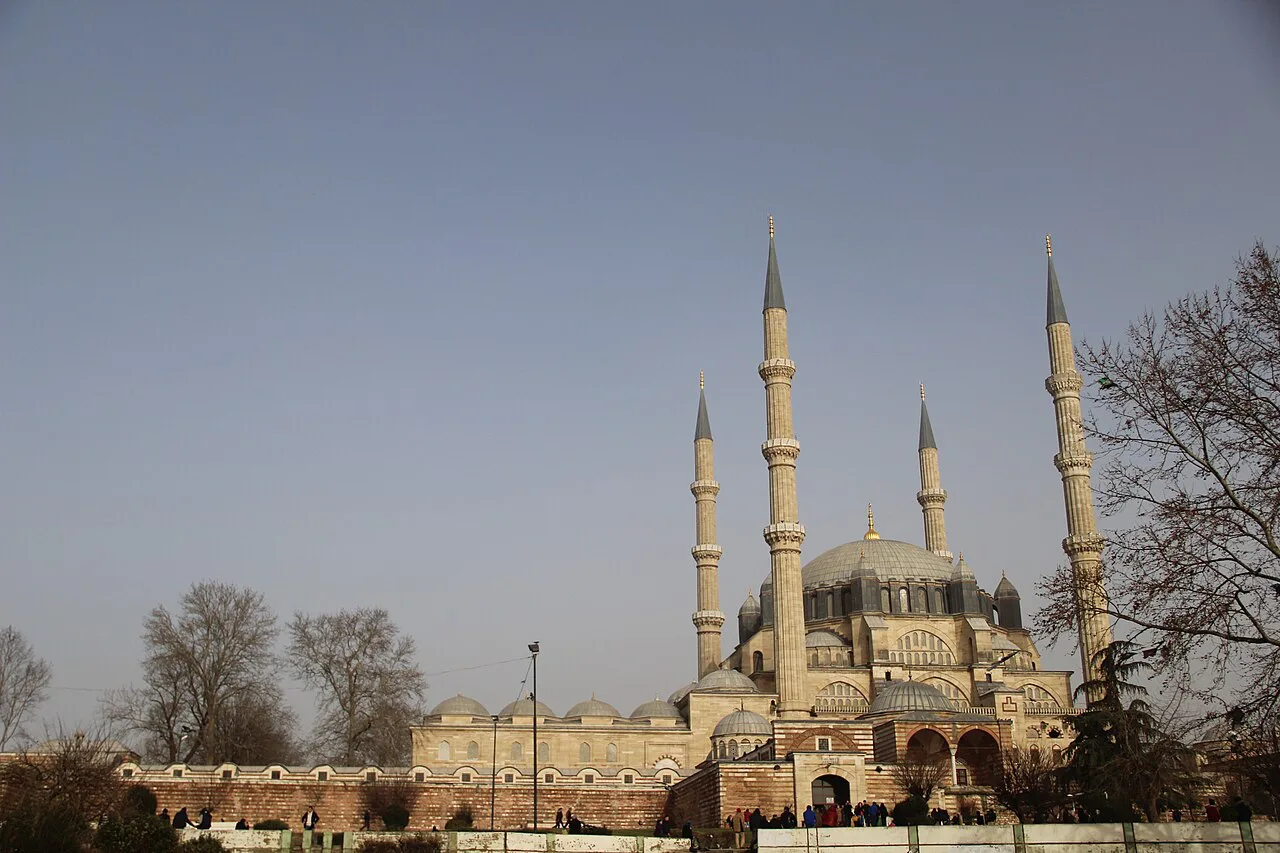
Selimiye Mosque is Mimar Sinan's imperial mosque in Edirne, built between 1568 and 1575, and UNESCO describes it as the square mosque with a single great dome and four slender minarets that dominates the skyline of the former Ottoman capital.
What sets it apart from many Ottoman mosques is the size of the central dome relative to the rest of the roof: the interior covers 1,620 square metres, and the dome rises over 43 metres with a diameter of more than 31 metres. It rests on eight colossal columns and uses only five half domes, fewer than in Sinan's earlier works, which is why the interior feels like one vast room rather than a series of steps.
The four minarets reach 85 metres. Two of them, near the front door, have three balconies each, and their placement at the corners contributes to the structural stability of the building as well as its silhouette. Look at how they sit against the dome before you go in: that view explains why the mosque is one of the most recognisable monuments in Türkiye.
Where the mosque stands in Edirne and how it fits into a town visit
The mosque stands at the heart of Edirne, the former Ottoman capital before İstanbul, and is the reason many travellers give the city a night or a long day. It is a town-centre monument rather than a walled site: you approach it through streets, and the complex opens out around you as you arrive. Plan Edirne as a walking town, with the Selimiye as the fixed point you return to.
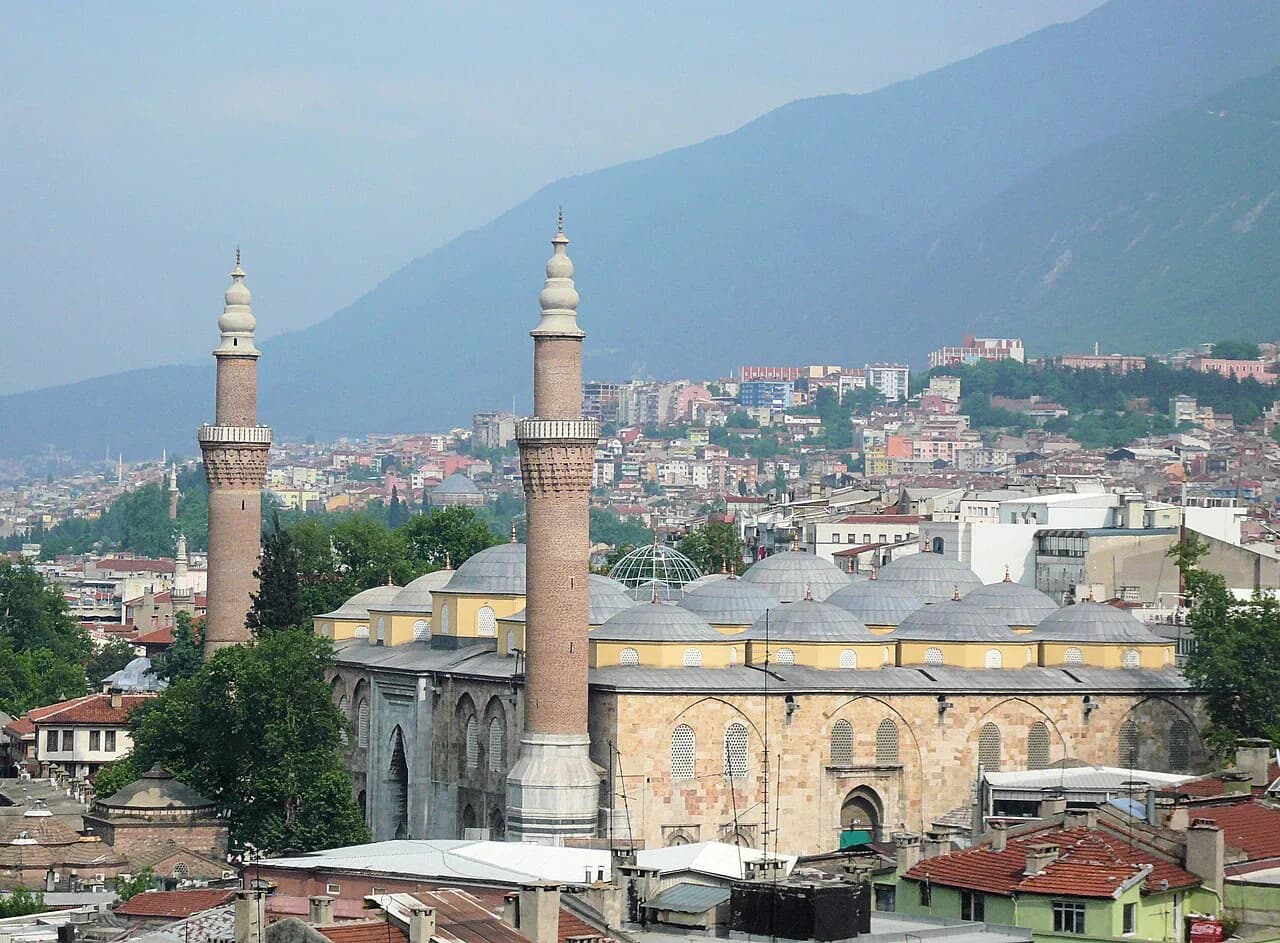
If you are comparing Ottoman mosques before you travel, the Selimiye is the mature statement of Sinan's career, while the earlier Bursa Grand Mosque (Ulu Cami) is a different, multi-domed experiment; seeing both is a way to read the development of Ottoman religious architecture rather than ticking off similar buildings.
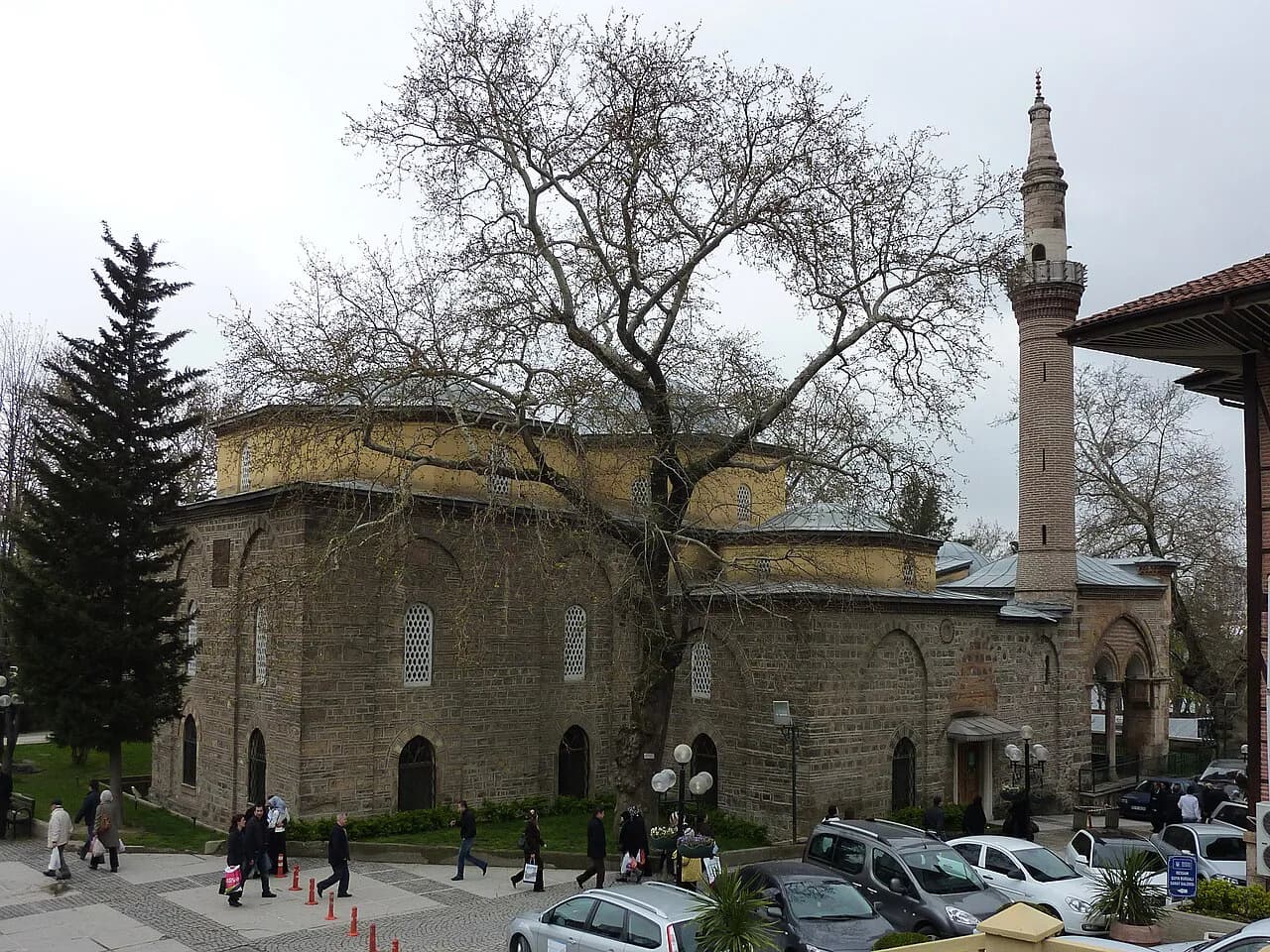
If Bursa is also on your route, the Green Mosque in Bursa shows the early Ottoman use of tilework inside a smaller prayer hall. Pairing the two makes the Selimiye's İznik tiles and its scale easier to appreciate by contrast.
What to see outside: the four minarets, the dome and the courtyard
Start in the outer courtyard, which wraps around the building on three sides. This is where you see the minarets at full height and understand their role in holding the composition together. Walk the full circuit before entering, because the courtyard view is what most photographs try to capture and it is easy to rush past on the way to the door.
The dome is best read from outside as a single grey curve above a square base, with the minarets framing it at four corners. Look for the two front minarets with three balconies each; their engineering is part of the design, not just decoration. The outer courtyard also holds the educational buildings of the külliye, so the mosque and its institutions are visible as one group from here.
Inside the prayer hall: the dome, the mihrab, minbar and İznik tiles
Inside, the 1,620 square metre hall puts the dome directly over your head. Sinan limited the number of windows because they weaken a load-bearing wall, but still filled the interior with light, so look at how the windows are placed rather than just at the dome. The effect is a bright, unified space rather than a dark shell.
Focus on four interior features: the marble mihrab, the minbar, the muezzin's mahfil and the İznik tiles. The tiles carry 101 different tulip patterns, which is why the tile panels reward close looking rather than a glance from the door. The marble carving on the mihrab and minbar and under the muezzin's mahfil is among the most impressive decoration of the period.
The dome rests on eight columns, and from the floor you can trace how the transition from square room to round dome is handled. Keep this as a ten-minute pause in the prayer hall: sit or stand at the edge, look up, and let the geometry do the work. Visitors who photograph the tiles but never look at the dome miss the point of the building.
The külliye around the mosque: madrasas, library and the arasta bazaar
The mosque is the centre of a külliye, a public complex unique to the Ottoman Empire that grouped social and educational institutions around a large mosque. In the outer courtyard you can see the Dar al-Sibyan, Dar al-Qurra and Dar al-Hadith madrasas, the Dar al-Muwaqqit and a library. Walking the courtyard is how you see them, since they are part of the mosque enclosure rather than separate museums.
The arasta runs along the retaining wall on the west side of the complex and operated as a bazaar that supported the mosque economically. Treat it as part of the visit rather than a separate shopping stop: it is the commercial arm of the külliye, and its position explains how a large mosque paid for its staff and upkeep. Browse it on the way out, when you have already seen the mosque and the courtyard.
How long a visit takes and how to pace it around the complex
A sensible pace is fifteen minutes in the outer courtyard, twenty to thirty minutes in the prayer hall, and fifteen minutes for the arasta and the remaining külliye buildings. That gives about an hour without hurrying, and it leaves time to sit in the courtyard, which is where the scale of the dome and minarets actually registers. If you are short of time, the courtyard and the prayer hall come first; the arasta is the part to skip.
The complex is a working mosque, so a visit can overlap with prayer times; plan to look at the exterior and the külliye first and enter the prayer hall when it is open to visitors. No fixed visitor timetable for non-worshippers is posted for the mosque, so confirm on the day rather than relying on a printed schedule.
Mosque etiquette for visitors and what to wear
Dress as you would for any working mosque in Türkiye: shoulders and knees covered, and women should carry a scarf for their hair. Shoes come off at the entrance, so wear socks or accept the cool stone floor. Keep voices low and avoid walking in front of anyone who is praying.
Photography is normally acceptable outside prayer times, but do not use a flash and do not photograph worshippers without asking. If a service is under way, wait outside or stay at the back and leave promptly when it finishes. These are courtesies rather than rules published for tourists, and the staff at the door will tell you if the hall is closed to visitors at that moment.
Practical points: tickets, opening times and Müzekart
The Selimiye Mosque is an active mosque rather than a ticketed museum, so visitors come and go around prayer times rather than through a ticket desk. Check the mosque's own notices or the Edirne tourism office on the day for opening to non-worshippers before you travel.
The mosque has no visitor opening hours published separately from prayer times. The practical approach is to arrive in the morning or mid-afternoon, see the courtyard and külliye first, and enter the prayer hall when the door is open to visitors. If you are building a day around Edirne, leave the mosque until you have confirmed locally that the hall is open.
What else to see near the Selimiye Mosque in Edirne
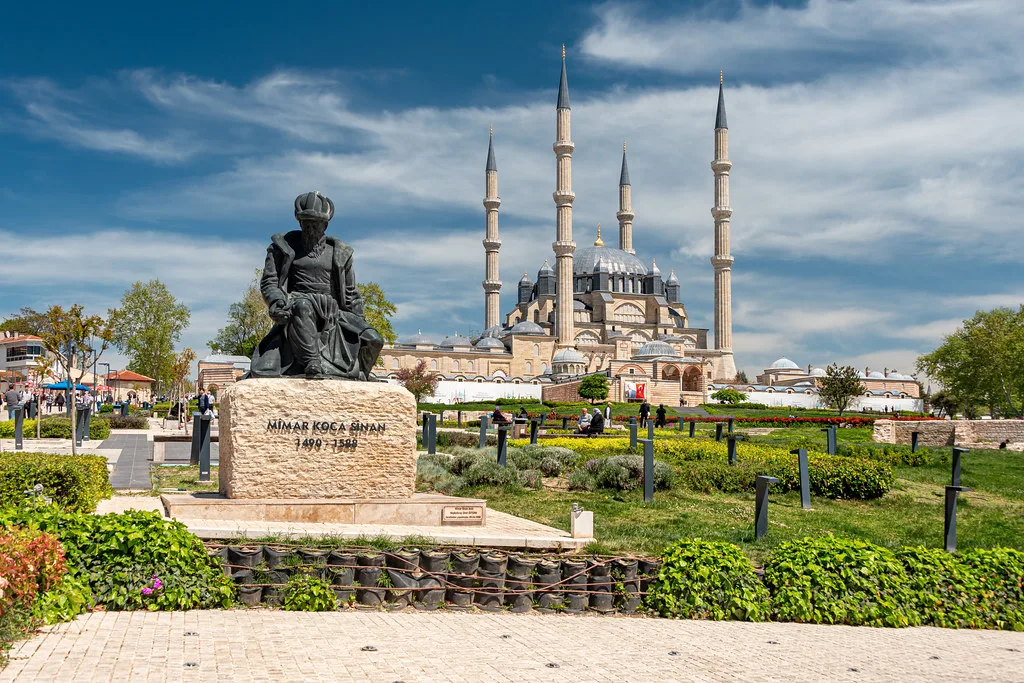
Edirne is compact, and the mosque sits within walking distance of the old town's covered streets and other Ottoman monuments. The city was the Ottoman capital before İstanbul, and the Selimiye is the monument that expresses that status most clearly. Give Edirne at least a day: the mosque, the surrounding bazaar streets and a walk along the river make a full visit without a car.
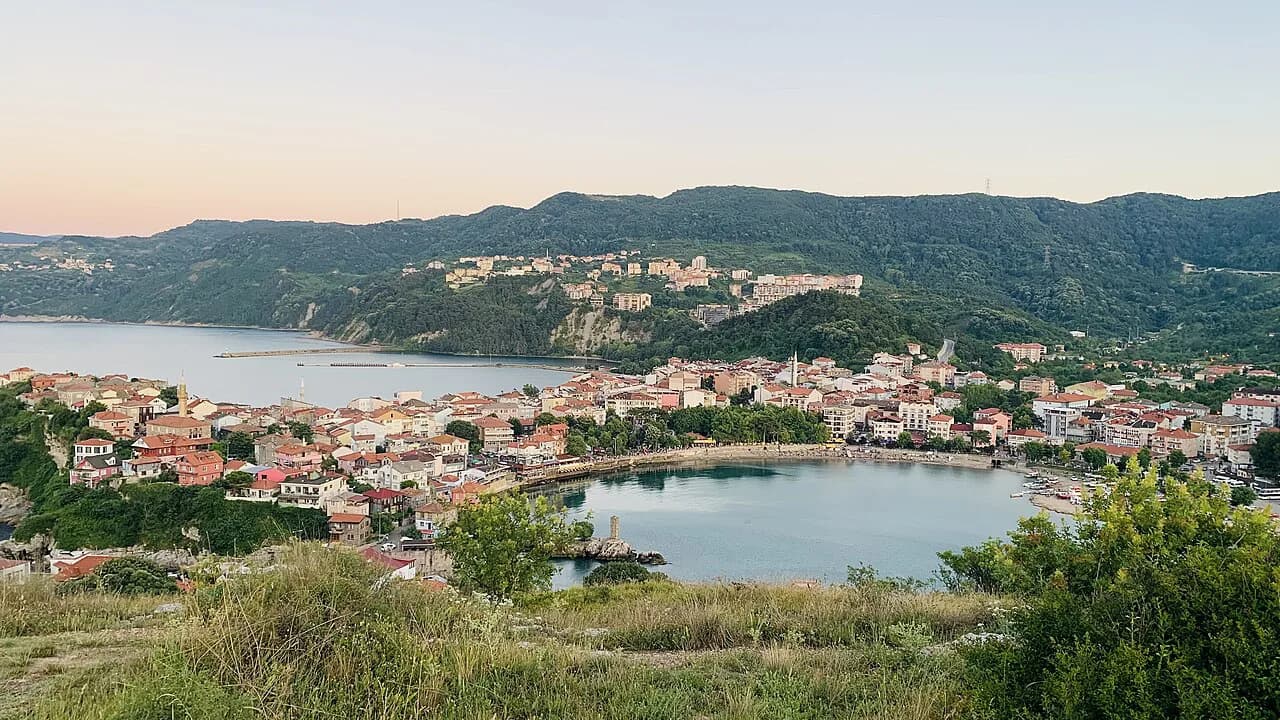
If you are touring the Black Sea coast on the same trip, Amasra is a harbour town with a very different scale and atmosphere, useful as a contrast to an inland Ottoman capital.
Is the Selimiye Mosque worth the trip to Edirne?
Yes, if you care about Ottoman architecture: the single great dome on eight columns and the four 85-metre minarets are the reason to come, and the külliye makes the visit more than one hall. Give it an hour and a half including the courtyard and the arasta, and build the rest of the day around Edirne's old town.
The main practical caution is that the prayer hall is a working religious space, so the exterior and courtyard are always the reliable part of the visit. Check locally on the day before planning your entry into the hall. If you have seen the Bursa Grand Mosque, the Selimiye will read as the next step in the same story rather than a repeat.
Explore more Bursa guides
Frequently Asked Questions
Was the Selimiye Mosque originally a church?
No. It was built as an Ottoman imperial mosque for Sultan Selim II between 1568 and 1575, designed by Mimar Sinan, and it has served as a mosque since then. It was added to the UNESCO World Heritage List in 2011 as a mosque and social complex.
Is the Selimiye Mosque Sunni or Shia?
It is an Ottoman imperial mosque, built for the Sunni Ottoman state, and it functions as a mosque for daily prayer. Visitors should follow standard mosque etiquette: covered shoulders and knees, shoes off at the door, and quiet behaviour in the prayer hall.
Is the Selimiye Mosque the same as Hagia Sophia?
No. Hagia Sophia is in İstanbul and was built in the 6th century as a Byzantine church before becoming a mosque. The Selimiye is in Edirne, was purpose-built as a mosque in the 16th century, and is distinguished by its single great dome on eight columns and four slender minarets.
How do you pronounce Selimiye?
Say it roughly as seh-lee-MEE-yeh, with the stress on the third syllable and a soft, short final syllable. The full Turkish name is Selimiye Camii, and locals will understand either form.
Sources
Notes for your next Turkey trip
Optional updates when we add or correct a town guide.
You might also like
Continue reading
More guides you'll find useful