Kuşadası Old Town: Kaleiçi Streets, Bazaar and Harbour Guide
Kuşadası old town in plain terms: the Kaleiçi lanes, the bazaar, the harbour promenade and Pigeon Island castle, plus how to walk between them.
On this page
Kuşadası old town is small enough to walk end to end: Kaleiçi, the historic quarter, sits beside the harbour, the bazaar runs through the centre next to it, and the castle on Pigeon Island sits offshore at the edge. This guide sets out how those parts connect, a loop that takes them in, and the timing decision that matters most, because the same streets are chaotic when cruise ships are in port and calmer in the evening after day-trippers leave. For the fort itself, start with the guide to Kuşadası Castle (Güvercinada), and for museums and other sights close by, see Museums in Kuşadası.
What Kuşadası old town is
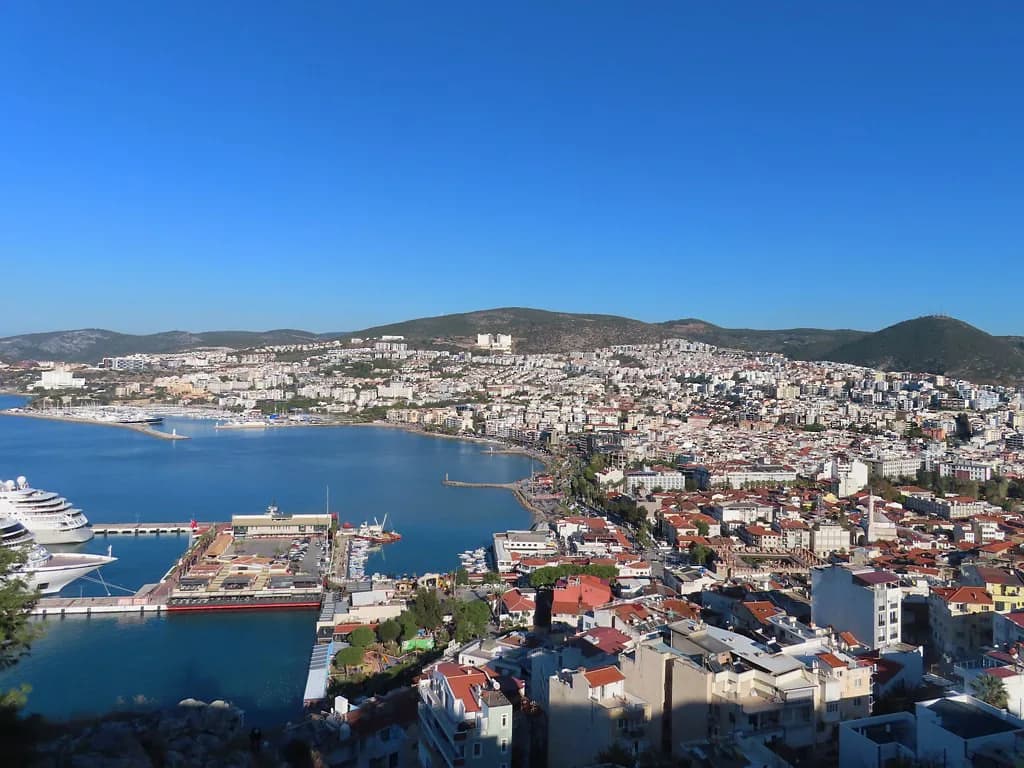
The old town is the oldest part of Kuşadası, wrapped around the harbour and the cruise terminal, with three anchors a visitor can picture before arriving. Kaleiçi is the quarter of narrow streets and traditional houses near the water, the bazaar is the shopping grid in the heart of the centre, and the fortress on Pigeon Island guards the bay just offshore. Everything sits within a pedestrian-friendly core rather than spread along a resort strip.
Kuşadası itself is on Turkey's Aegean coast in Aydın province, and the bazaar gives a street address in the Camikebir neighbourhood on Kışla Sokak. That is useful for two reasons: it confirms the market is a central city block rather than an out-of-town complex, and it gives you something to type into a map if you arrive by taxi from a hotel further out.
How the old town is laid out
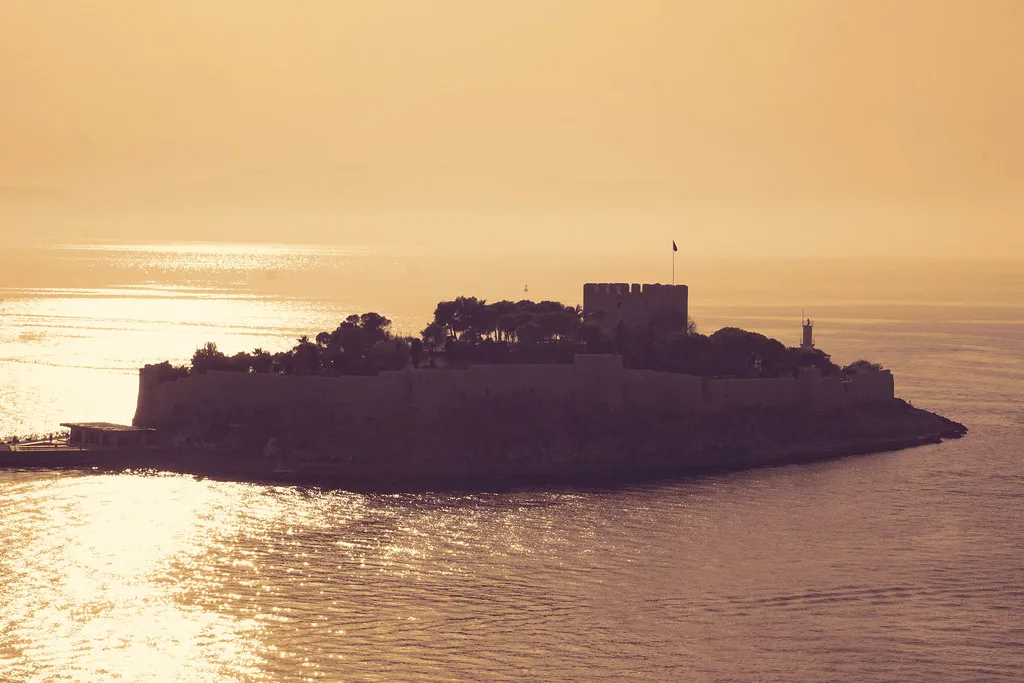
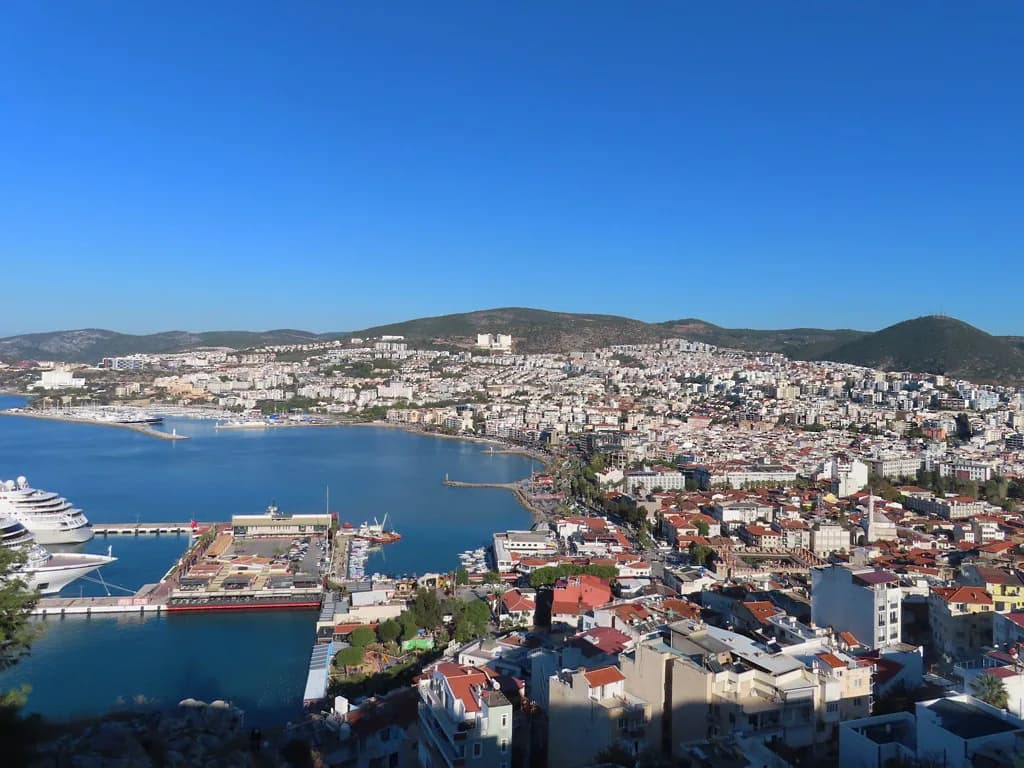
Read the centre as three bands running from the water inland. First the harbour promenade, with the port, the marina area and the waterfront walk; then the bazaar streets immediately behind it; then the Kaleiçi lanes folding back from the shopping grid. The castle sits off the end of the promenade on Pigeon Island, so it reads as the seaward full stop to the walk rather than a stop on the inland route.
The bazaar is laid out as a pedestrian zone close to the waterfront, the marina and the old Kaleiçi district, which is why the whole centre works on foot. Dolmuş minibuses run regularly through the city and many routes pass near the bazaar, so anyone staying at a beach resort can ride in and finish the rest of the visit walking.
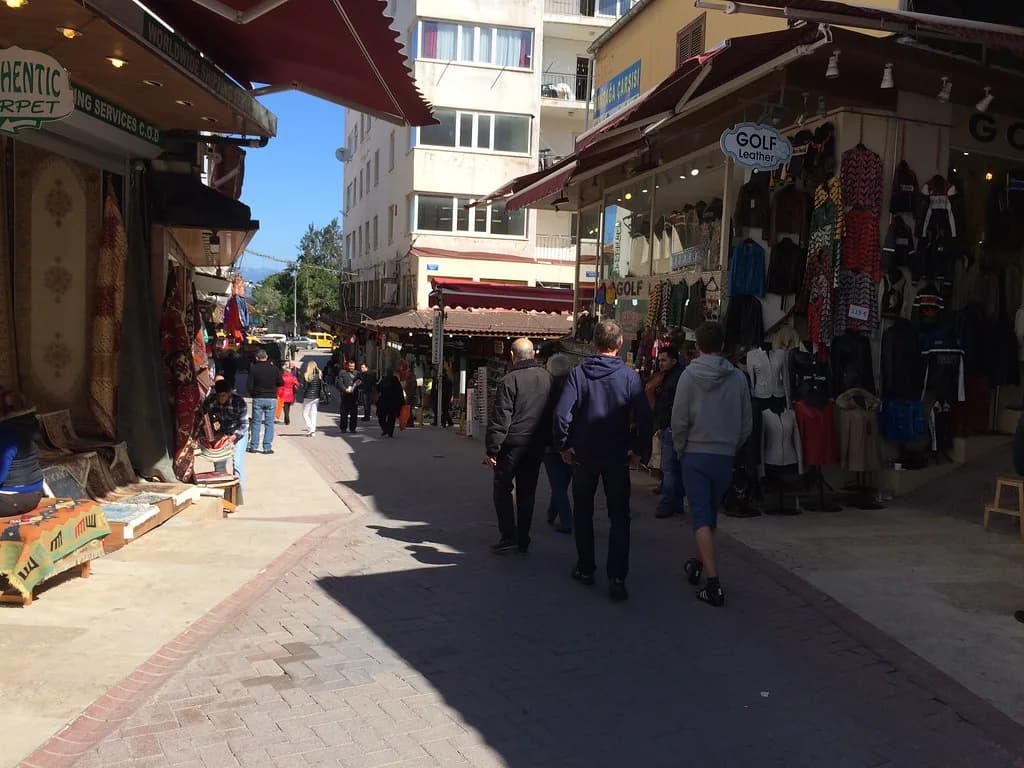
Kaleiçi is the part that rewards slower movement. The lanes near the harbour hold narrow streets, traditional houses and small shops selling souvenirs, handmade jewellery and leather goods, so the pleasure is in the turning and looking rather than in ticking off a list of sights. Give the bazaar the purposeful shopping and Kaleiçi the wandering.
Walking the old town: a short loop
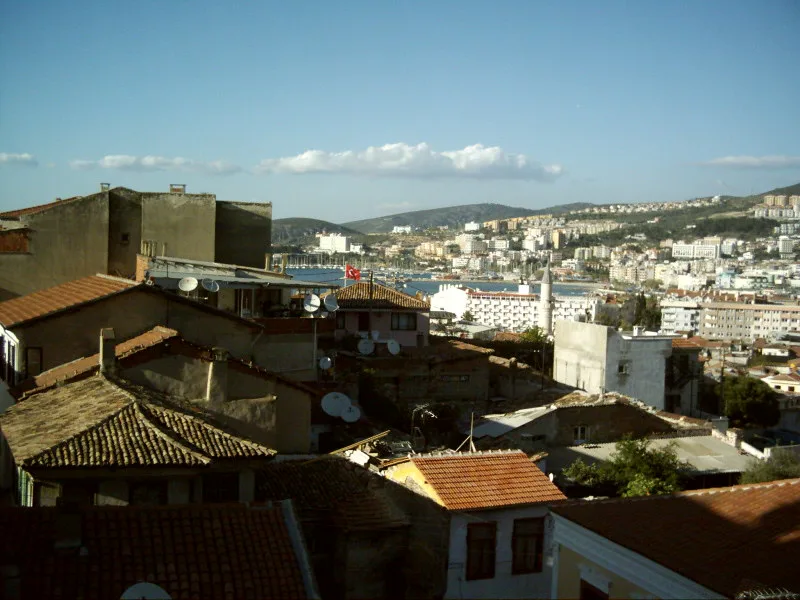
Start on the harbour promenade with the water on one side and the bazaar on the other, then turn inland into the shopping streets while your energy and cash are fresh. Work through the rows, then let yourself drift into the Kaleiçi lanes behind them, and finish back along the waterfront with the castle in view. The distances are short because the three parts touch each other; the loop is about pacing, not mileage.
Keep the sea as your reference point while you wander the market-and-harbour core: if you can see the water, you can find the promenade again. Because the bazaar, the Kaleiçi lanes and the waterfront all touch one another, the loop is about pacing rather than mileage, and you can branch into the bazaar rows or the back lanes and rejoin the harbour whenever it suits.
Walkers who want a single sight to build the loop around can slot in a museum visit, and those heading further afield can add the archaeological sites around Kuşadası on another day rather than squeezing them into this walk. The old town loop is a half-day of strolling, shopping and café pauses; Ephesus and the wider ruins deserve their own outing.
The bazaar: what is sold and how to shop it
Expect a broad spread rather than one specialism: textiles, leather goods, spices, Turkish sweets, jewellery, ceramics, carpets, clothing and gold all appear across the rows. Many stallholders offer a taste of sweets or a glass of Turkish tea while you look, which is a selling technique and also ordinary hospitality; accepting costs you nothing and commits you to nothing.
Bargaining is part of the local etiquette here, not a confrontation, so treat the first price as an opening and keep the exchange friendly. You can also watch craftsmen working at their stalls, and the cafés and small restaurants tucked beside the rows make a natural pause halfway round. Individual shop hours vary across independent vendors, so check with the Kuşadası tourist information centres or simply arrive mid-morning or afternoon and let the open shutters guide you.
Think of the centre as a compact market-and-harbour quarter you can cross in one wander rather than a sprawling covered bazaar that needs a floor plan: the shopping rows, the Kaleiçi lanes and the waterfront sit side by side, so you can move between browsing and strolling without a fixed route.
Kaleiçi details worth slowing for
The Kaleiçi lanes are not a museum set: many of the buildings still function as shops and stalls, so the historic fabric is in daily use. Look above the shopfronts for older structures, and expect the ground level to be merchandise rather than interpretation boards.
Kaleiçi Camii, the neighbourhood mosque, is listed among the central sights, and the old-town tanneries, known as the Tannery Garden, are another named stop in the same compact area. A mosque visit calls for ordinary courtesy: dress modestly, remove shoes at the entrance, keep voices low and stay out of the prayer area during worship.
Because the lanes are tight and partly residential, the best approach is to wander without a checklist and let the bazaar do the structured shopping. If you want the classic Aegean old-town contrast afterwards, Antalya Old Town (Kaleiçi) is the larger, more famous version of the same idea, worth comparing on another trip rather than on the same afternoon.
Kuşadası Castle on Pigeon Island
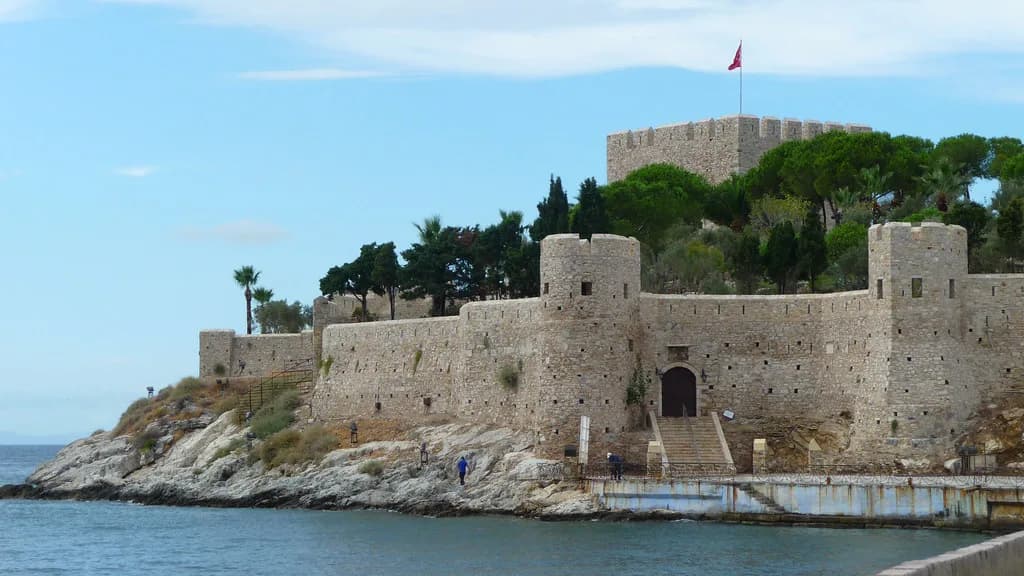
The fortress on Pigeon Island, described as a 17th-century Venetian castle, is the old town's landmark from the water, sitting offshore at the harbour's edge and visible from the promenade. The island setting is what makes the harbour view distinctive: you look out at the fortifications rather than back at them from the quay.
Treat the castle as the end point of a promenade walk and check its own page for what is open inside before you build a plan around it. Entry arrangements, any ticket and the hours of any interior display are not set out here, so confirm them locally or with tourist information on the day.
When to go: cruise-ship days versus evenings
The single biggest variable in the old town is whether ships are in port. On cruise-ship days the bazaar and surrounding streets can be overwhelming, and the neighbourhood empties noticeably once the day-trippers leave; the evening, from around 6pm onwards, is when the same lanes become relaxed. If your dates are flexible, that contrast alone is worth planning around.
Staying overnight flips the advantage: you get the calm evening version of the quarter that day visitors miss, so build the bazaar into late afternoon and the promenade into dusk rather than following the cruise-day crowd.
Getting there and getting around
On foot is the default: the bazaar sits in the centre within walking distance of the main tourist routes and close to the port, so cruise passengers and central hotel guests need nothing else. From further out, dolmuş minibuses run regularly through the city and its surroundings with many routes passing near the bazaar, and taxis will drop you at the market entrance.
If you are staying outside the centre, plan the old town as a half-day into the middle of town using a dolmuş or taxi, then walk the loop once you arrive. Wear shoes that cope with uneven paving and keep the sea as a live map; there is no need for a car inside the centre.
Practical etiquette in the lanes and the bazaar
Three habits smooth the visit. Bargain in the bazaar with good humour and walk away politely if the price does not suit; accept the tea offered in shops as a gesture and feel free to buy nothing; and dress and behave considerately in Kaleiçi Camii, keeping shoes off the carpet and voices down. None of this is complicated, and all of it is expected of visitors rather than optional polish.
Merchants are selling, so decide your budget before you enter the rows and hold to it rather than debating every item. If you want a calmer browse, aim for the evening window after day-trippers leave; if you want the full market energy, come when the ships are in.
What the old town does not give you
The centre is a market-and-harbour quarter rather than a museum district, so its pleasures are the lanes, the shops, the cafés and the waterfront. The old town therefore sits best as a morning or evening block within a wider Kuşadası trip, with the castle and any museums treated as their own short visits.
Anyone who prefers a different historic quarter with more interior sights should compare the Aegean alternatives. Reading up on Alanya old town is a fair start if old-town atmosphere is the main reason for your trip, but each place has its own character rather than one being a larger version of the other.
Evening or cruise-day: which version of Kuşadası old town should you plan for?
Plan the evening if you can. The bazaar and Kaleiçi lanes are at their most usable once the ships have emptied, and the promenade with the castle offshore makes a natural close to the day; on a cruise call, walk straight from the port to the bazaar in the morning and keep the quarter short and focused. Either way, the loop is small enough to do twice, once for shopping and once for atmosphere.
Explore more Kusadasi guides
Frequently Asked Questions
Where is Kuşadası old town in relation to the port?
The old town wraps around the harbour and cruise terminal, and the bazaar is a few minutes' walk from the port, so passengers can reach the shopping rows almost immediately on foot.
What day is market day in Kuşadası?
No market day is confirmed for the bazaar; it operates as a permanent shopping quarter of independent vendors in the centre. Tourist information in Kuşadası can advise on any weekly market elsewhere in town.
Do I need a dolmuş to reach the old town?
Only if you are staying away from the centre. From central hotels and the port the bazaar and Kaleiçi are walkable, while dolmuş minibuses and taxis serve guests staying further out, including at Ladies Beach.
Can I visit Kaleiçi Camii?
Kaleiçi Camii is listed among the central sights of the old town, but it is a working mosque, so visiting depends on prayer times and current arrangements; ask locally. Dress modestly, remove your shoes at the entrance and keep clear of worshippers.
Sources
Notes for your next Turkey trip
Optional updates when we add or correct a town guide.
You might also like
Continue reading
More guides you'll find useful