Kuşadası Ruins: Ephesus, the Castle & What Else to See
Plan your time around Kuşadası's ruins: Ephesus and the Temple of Artemis, the castle and harbour, plus how long each needs and how to get there.
On this page
Ephesus is the ruin to build your day around, and a half-day is the minimum it deserves; the town's own castle and harbour fill the rest of an unhurried day. This guide splits the sites into what sits in Kuşadası itself and what needs a road trip, then covers time budgets, tickets, heat and the stops that pair well with each.
It also separates the sites that are genuinely separate outings, such as Hierapolis at Pamukkale and the House of the Virgin Mary, from anything you can add to an Ephesus morning without rushing.
What ruins you can see in and around Kuşadası
Kuşadası works as a two-part base: the town's own surviving monuments sit within walking distance of the harbour, while the great Roman city of Ephesus lies a short drive inland near Selçuk. That split matters when you plan, because the two halves need different shoes, different amounts of water and different chunks of the day.
Beyond Ephesus, the wider area holds Hierapolis at Pamukkale, the House of the Virgin Mary and Sardis, all listed as archaeological sites within reach of town. Treat each of those as its own trip rather than an add-on to an Ephesus morning.
Ephesus: what survives and why it is the main draw
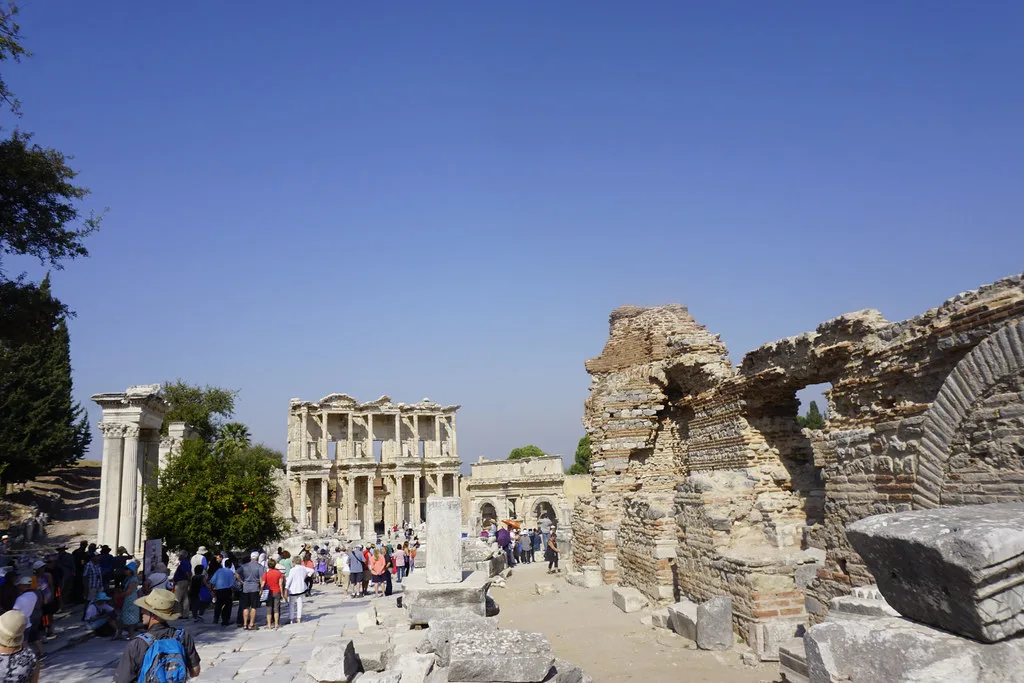
Ephesus is presented as the best-preserved of the ancient cities on this stretch of the Aegean coast, and its scale is what strikes people first: a whole Roman city laid out in marble, with streets, civic buildings and a theatre built to hold a crowd. It is the reason most visitors give Kuşadası more than a single night.
What you actually walk through is well preserved and presented, and reviewers point out that plenty of the site is still only partially uncovered, with a pillar or two standing where a building once was. That mixture is part of the experience: you read the plan as much as you admire the facades.
Guided excursions from Kuşadası typically combine the city with the terraced houses, the Roman Baths and the Great Theatre, so check what a tour includes, since not every ticket covers every extra. Prices and inclusions can change, so confirm current details when you book.
The Library of Celsus, the Great Theatre and the Temple of Artemis
The Library of Celsus is the image most people carry home: a two-storey facade with carved detail that still reads clearly from the street below, and the spot where every group stops for photographs. Arrive as early in the day as your ticket allows if you want it without a crowd of shoulders in the frame.
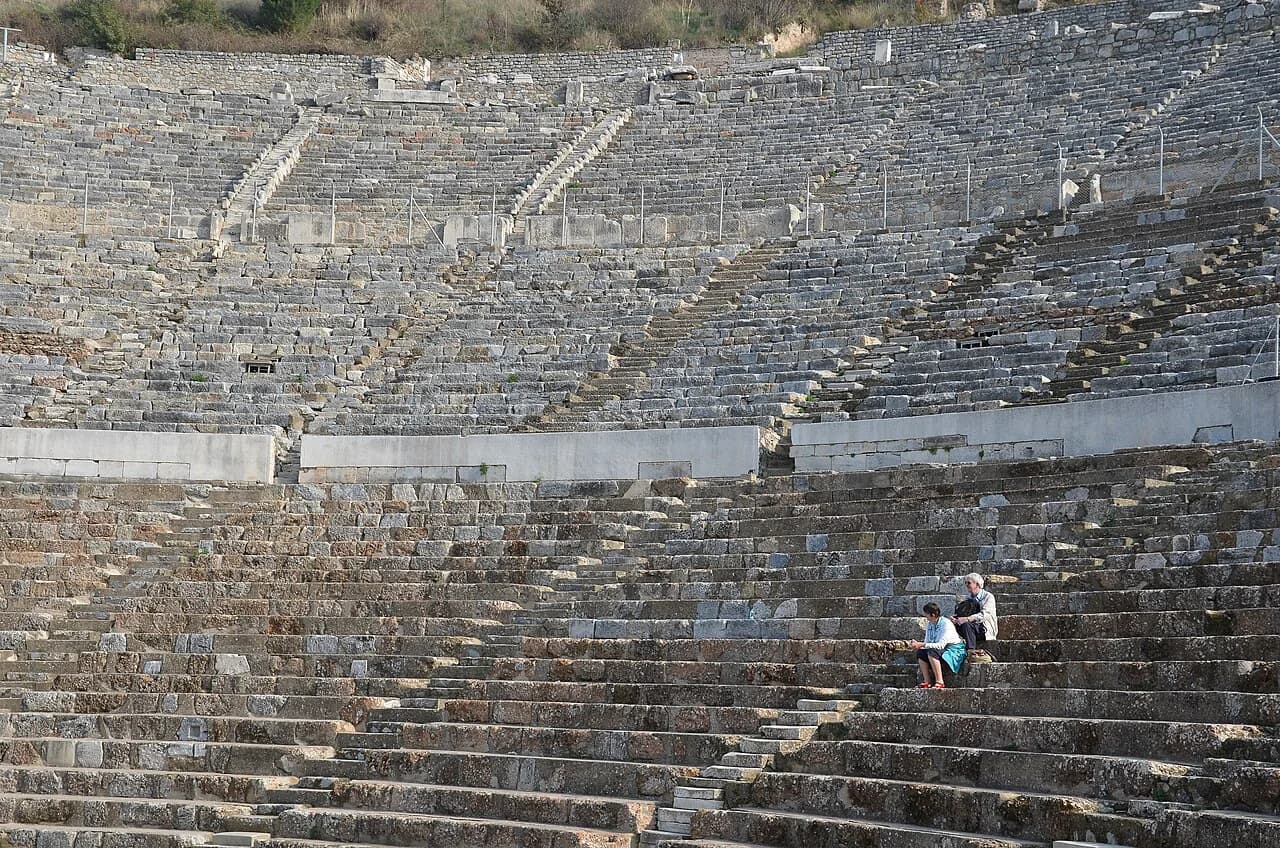
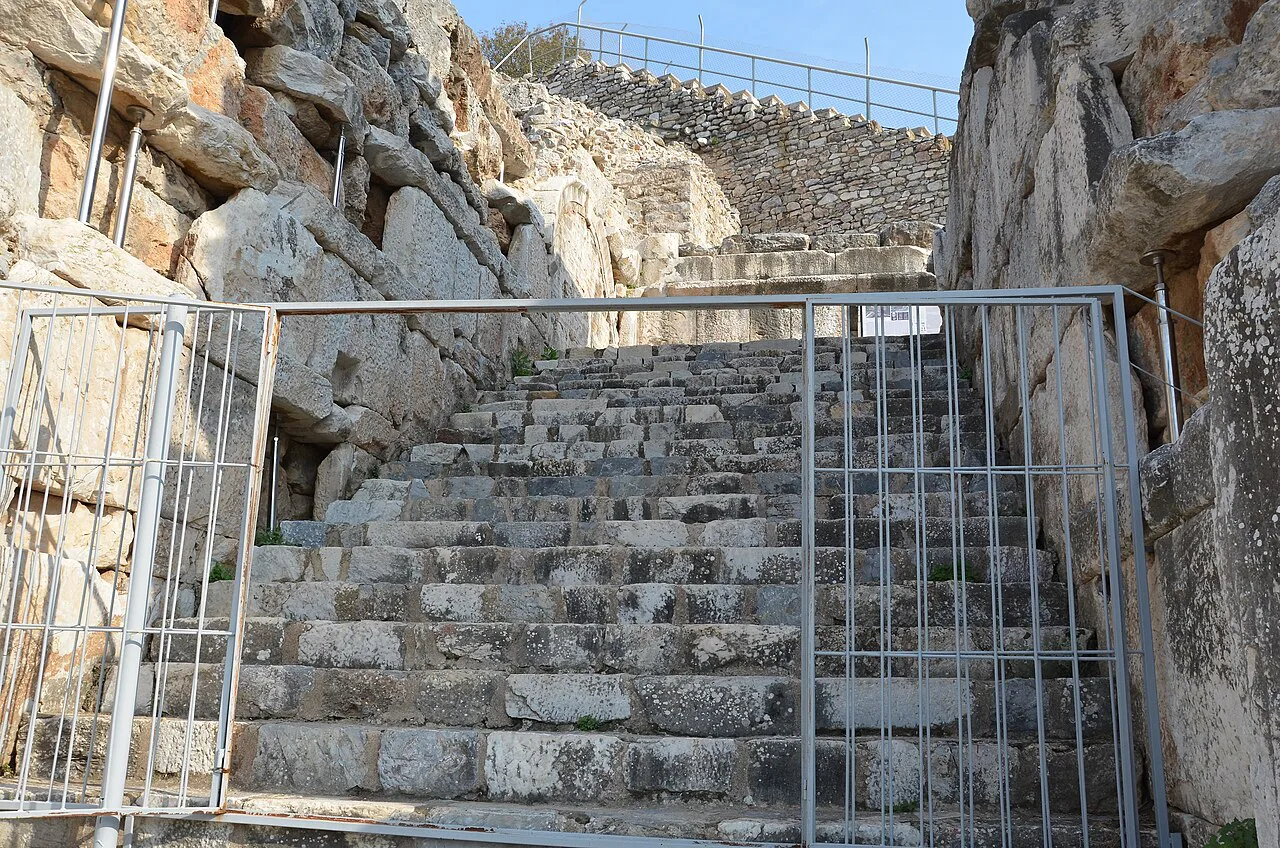
The Great Theatre greets you near the main entrance, cut into the hillside and large enough that the scale only lands when you climb the steps. The carved stonework around the site is remarkably intact in places, which is why a slow walk beats a fast circuit.
The Temple of Artemis is a short detour from the Ephesus visit, and only fragments remain, but it is worth a brief pause for the sense of what has vanished rather than a full separate visit.
How much time Ephesus needs and how to pace a visit
Set aside at least half a day for Ephesus and do not rush the upper terraces, because the site rewards slow walking and every corner asks for a stop. A common pattern is to give the whole morning to the ruins and leave the afternoon free.
If you only have an afternoon, drop the Temple of Artemis and the terraced houses and concentrate on the Library of Celsus, the Great Theatre and the main street between them. Completing the site in under two hours means spending most of it in the open sun with little shade.
Getting from Kuşadası to Ephesus: drive time and touring options
Ephesus is about a 30-minute drive from central Kuşadası, which makes a taxi, a hired car or a small-group tour a workable way to arrive before the coach crowds build.
Tours from town range from shared full-day outings to private excursions that pick up at the port and cover the Roman Baths, the Theatre and the rest of the site at your own pace. A private car costs more than a seat on a shared coach but lets you set your own start time, which matters in high summer.
If you travel independently, confirm your return time and pick-up point with your driver before you walk in, since it is easy to lose track of time inside a site this size.
Ephesus tickets, opening hours and night visits
The entrance fee was quoted at 493 lira in a 2026 traveller's account, and not every gate takes cards, so carry cash as a backup. Treat that figure as a 2026 reference and confirm the current rate and payment methods before you travel.
A 2026 traveller's account gives opening hours of 08:00 to 18:45, and reports evening openings from 19:00 to 23:00 between Wednesday and Saturday. Evening slots would be the most comfortable way to see the ruins in summer heat, but they are a reported arrangement rather than a confirmed fixture, so check the official listing for your dates before relying on them.
Heat, uneven stone paths and what to take
Ephesus is very exposed, so a hat, sunglasses and plenty of water are not optional in summer. The stone paths are uneven and polished by feet, which makes sturdy walking shoes a better choice than sandals.
Go early or take an evening slot if you feel the heat, and build in a shaded pause halfway round rather than pushing through the middle of the day.
Kuşadası Castle and the harbour
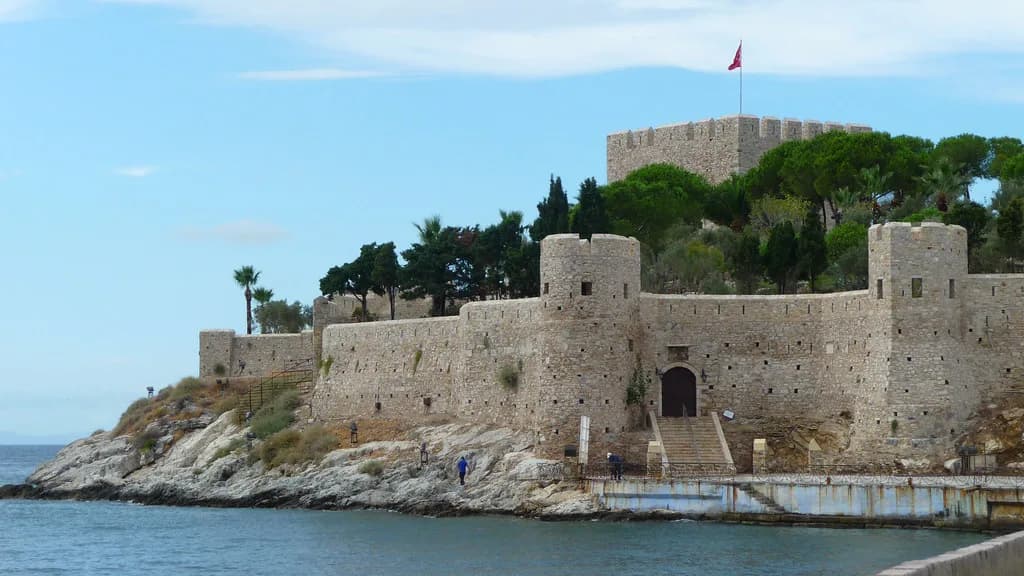
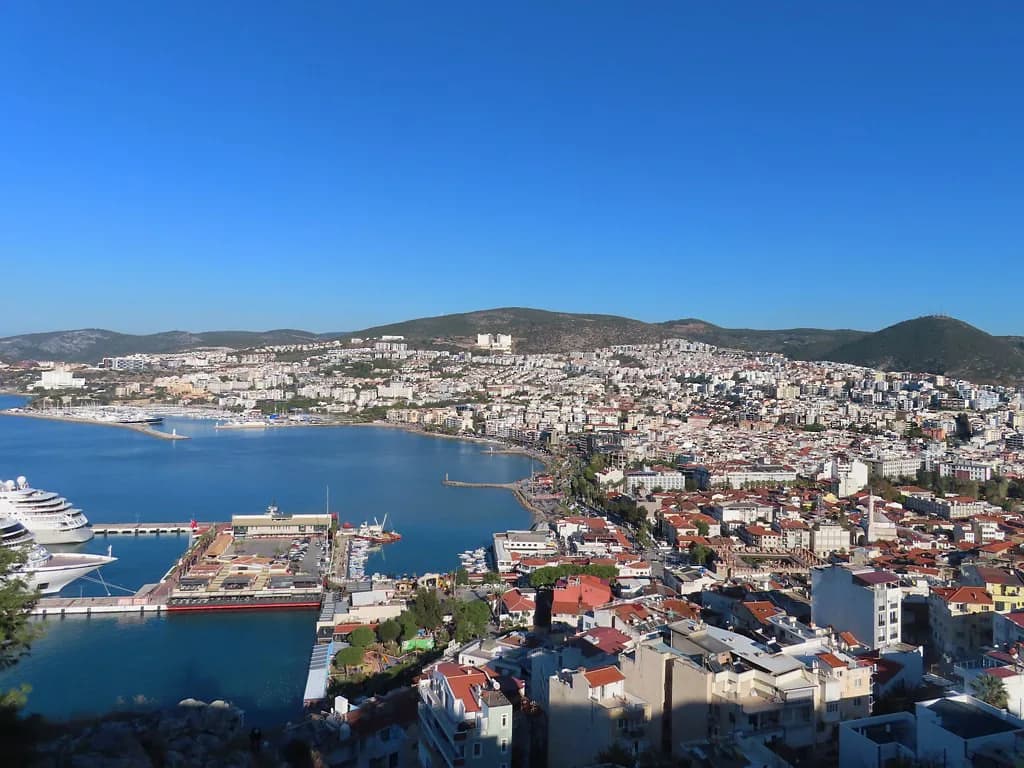
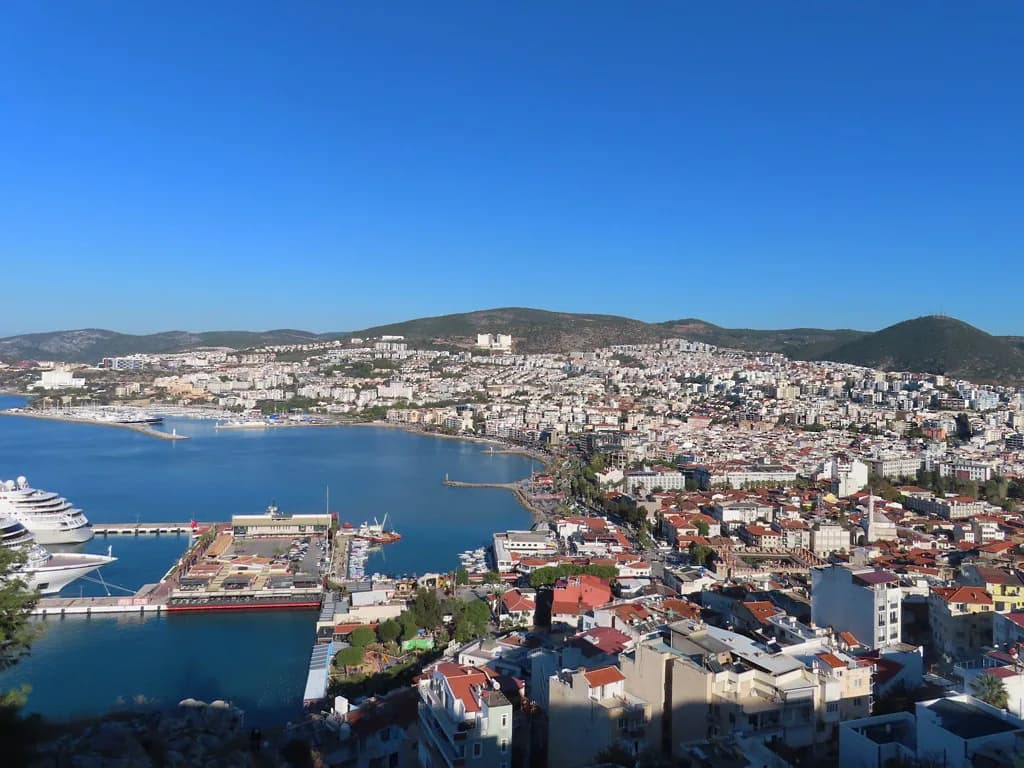
The town's own ruin is Kuşadası Castle, set on the small island at the end of the causeway, a short walk from the waterfront and an easy add-on to a harbour stroll. The harbour itself is at its best towards sunset, when the promenade fills and the seagulls work the water. See our guide to [[Kuşadası Castle (Güvercinada)]] for what survives on the island.
Allow an hour for the castle and harbour together, more if you stop for ice cream along the promenade or want to sit and watch the boats come in. The marina end of town is a quieter place to walk in the evening than the bazaar streets.
This is the half-day that fits neatly around an Ephesus morning: ruins first, then a late lunch by the water and a slow wander out to the castle.
Kuşadası bazaar after the ruins
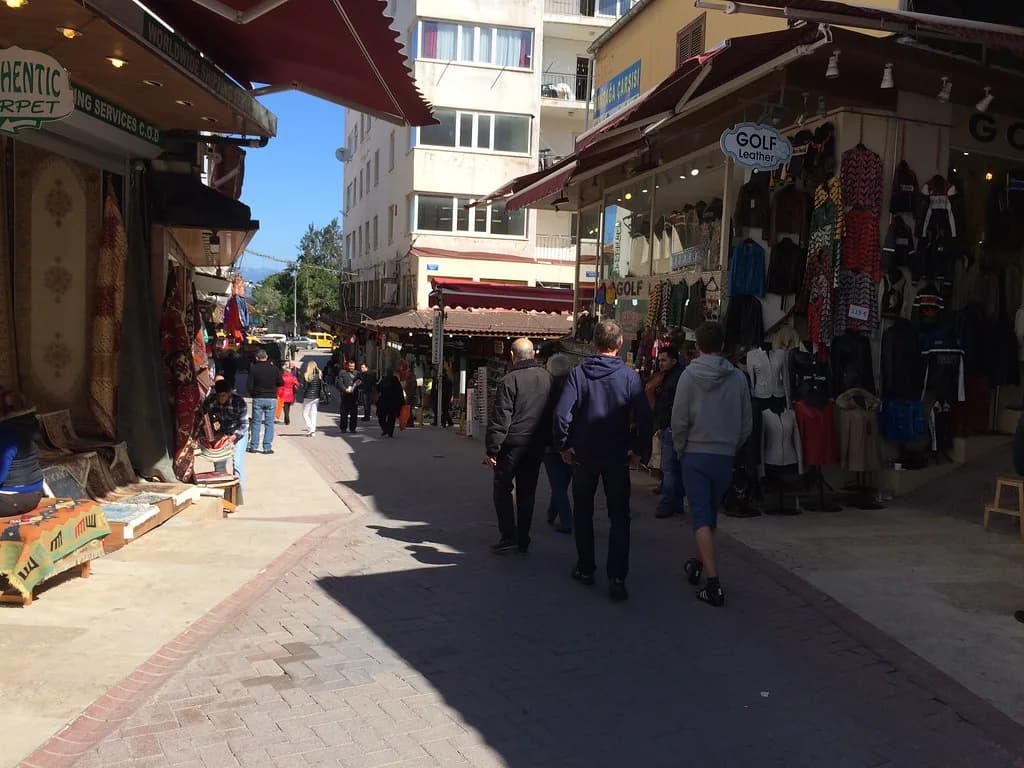
The bazaar is the afternoon counterweight to a morning among the stones: textiles, spices and handicrafts packed into covered lanes, with plenty of noise and colour. Bargaining is expected here, and a good-humoured attempt often gets a better price than walking away.
Keep your bag zipped and split your cash between pockets, because crowded market lanes are where pickpockets work. Shops near the pier sell snacks and cold drinks, which is useful if you have skipped lunch.
Further afield: Hierapolis and Pamukkale, the House of the Virgin Mary and Sardis
Hierapolis at Pamukkale, the House of the Virgin Mary and Sardis all lie beyond a comfortable morning from Kuşadası, and each deserves its own day rather than a rushed stop on the way back from Ephesus.
The House of the Virgin Mary is the closest of the three to the Ephesus run and pairs naturally with a Selçuk day, while Pamukkale and Sardis involve longer drives and are better booked as organised trips with transport included.
Should you put the castle before Ephesus?
Do Ephesus first thing, while the air is cool and the coach parties have not arrived, then come back into town for the castle and harbour in the afternoon. If you have a second day, give it to the bazaar and a slower walk through the [[Kuşadası Old Town]], or save it for Pamukkale rather than squeezing two ancient cities into one.
Explore more Kusadasi guides
Frequently Asked Questions
What is the ancient city of Ephesus known for?
Its scale and level of preservation: the Library of Celsus facade, the Great Theatre cut into the hillside and long marble streets lined with civic buildings. Parts of the city are still only partly uncovered, and the Temple of Artemis nearby survives as fragments.
Can you combine Ephesus with other sites in a day?
Ephesus itself is best given at least half a day. The town's own castle and harbour make an easy afternoon, while Hierapolis at Pamukkale, the House of the Virgin Mary and Sardis are further out and work better as separate trips. Confirm opening hours and ticket details for your dates before you travel.
Is it safe to go to Ephesus Turkey right now?
Ephesus is an open archaeological site with ticketed entry, and the practical risks are the ones that come with any exposed ruin: heat, uneven stone and crowds. Check your own government's travel advice for Turkey before booking, and confirm site opening hours for your dates.
Sources
Notes for your next Turkey trip
Optional updates when we add or correct a town guide.
You might also like
Continue reading
More guides you'll find useful