Lahmacun in Turkey: What It Is and How to Eat It
Lahmacun is a paper-thin flatbread topped with spiced minced meat, rolled with parsley, onion and lemon. Here is what is in it and how it differs from pide.
On this page
Lahmacun is a very thin round of dough carrying a thin, spreadable layer of spiced minced meat, baked quickly in a hot oven and eaten rolled, not sliced. Order it as a quick lunch or street-counter bite rather than a sit-down dinner, and pair it with ayran or tea. This guide covers what is in it, how it is made, what changes between southeastern kitchens, how it differs from pide, and what to drink alongside.
The name comes from the Arabic lahm bi'ajin, meaning meat with dough, which describes the dish exactly: a whisper-thin base under a finely minced topping rather than a thick crust under cheese. Menus aimed at visitors often call it Turkish pizza, but the comparison misleads, because lahmacun is lighter, sharper with herbs, and eaten by hand as a wrap.
What lahmacun actually is
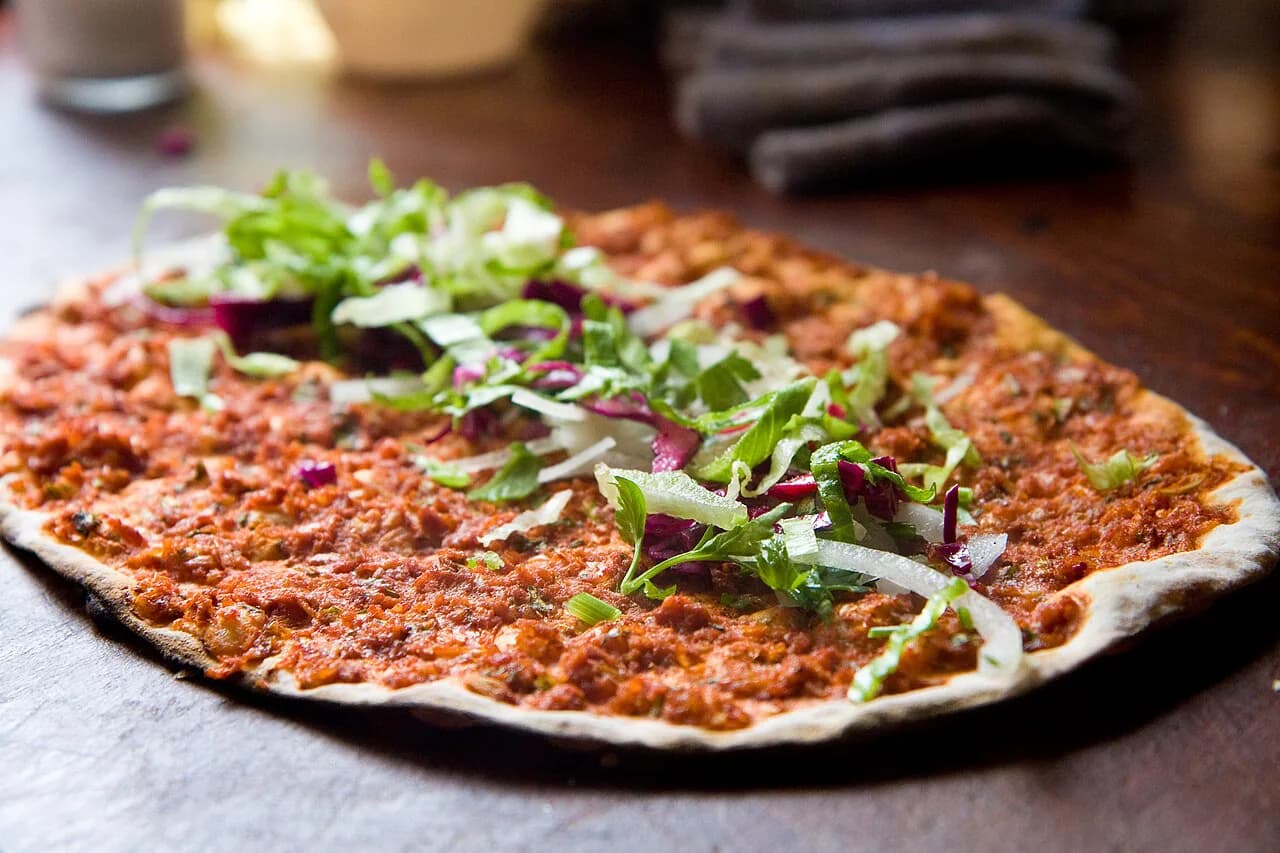
Lahmacun consists of a thin oval dough base topped with a spicy lamb or beef mixture and baked in a hot oven. That description is the whole architecture of the dish: no cheese, no sauce layer, no deep rim, just dough and a spread of seasoned meat paste.
Cooked properly, the base blisters and the edge curls and crackles, while the middle stays soft enough to fold. Professional lahmacuncu work at speed, sliding each round into a fiercely hot stone or deck oven and serving it the moment the top sets. That pace is why lahmacun arrives at the table within minutes of ordering and why it belongs to the lunch counter rather than the evening restaurant.
The scale is modest, which is why it works as a light meal: lahmacun are eaten one after another rather than as a single main, which also means they suit a shared table.
What goes into the topping
The dough is deliberately plain: flour, water, salt and sometimes a little oil, because the topping carries all the flavour.
How do you pronounce lahmacun? It is usually rendered lah-mah-JOON in English, with the stress on the last syllable. Turkish speakers run the sounds together quickly, so listen to the person at the counter rather than trying to match the spelling letter by letter.
Is lahmacun vegetarian? The classic version is not: the topping is built on finely minced lamb or beef, and the name itself means meat with dough. Vegetarian flatbreads in Turkey tend to be separate dishes, so ask what is in the topping before ordering if you avoid meat.
Can you eat lahmacun cold or reheated? Yes. Leftovers keep for a couple of days in the fridge, stacked and wrapped, or can be frozen for up to three months, then reheated in a pan, in the oven or a microwave.
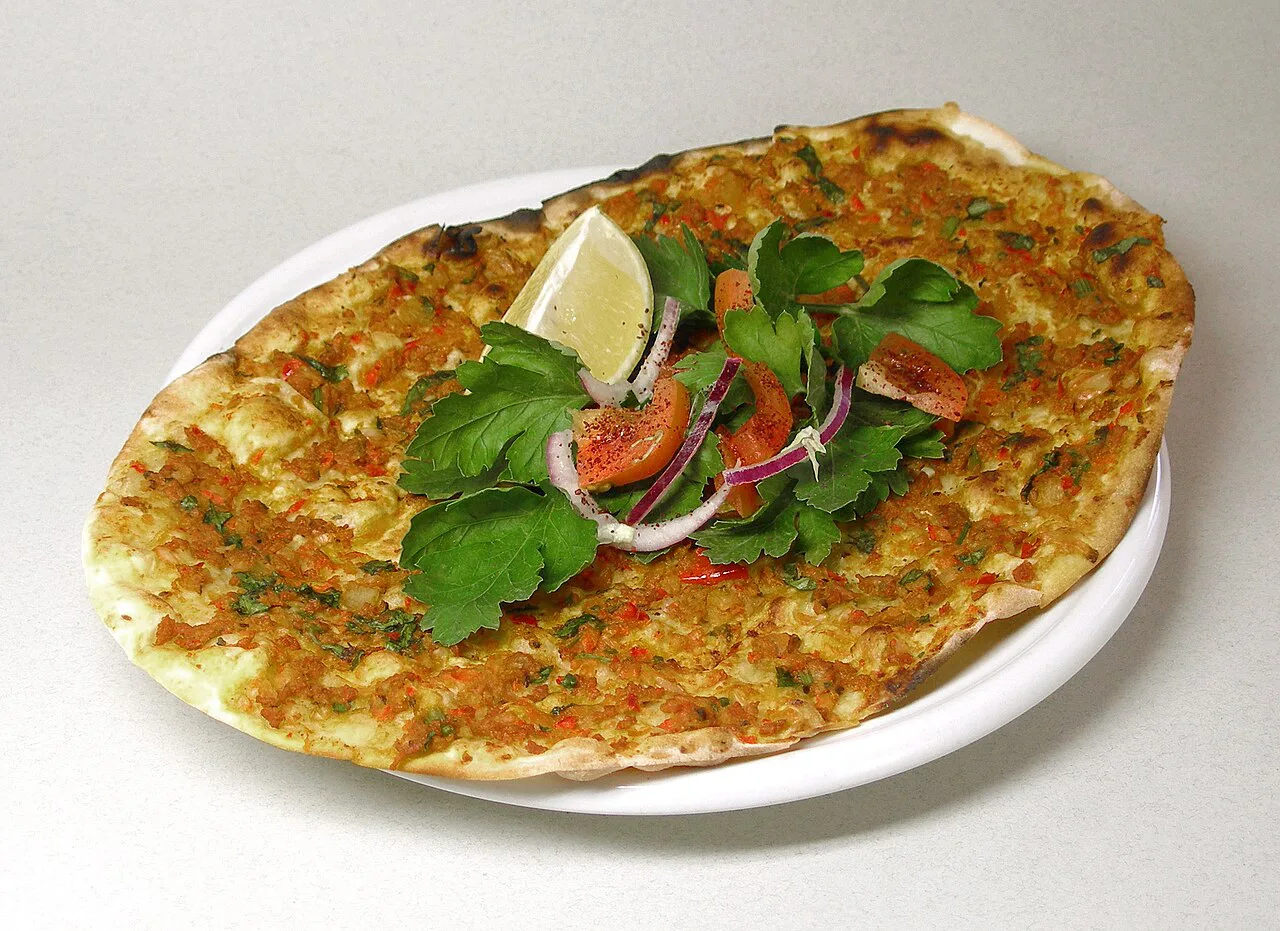
A home version combines minced beef and lamb with finely chopped onion, green pepper and tomato, plus garlic, tomato and pepper paste, parsley and a spoon of isot pepper or red pepper flakes. The mixture is chopped together until it forms a spreadable paste rather than a loose crumble.
The topping must stay thin. A thin, spreadable layer is what produces a light result, while a thick pile of meat weighs the base down and turns the whole thing heavy. Regions and families vary the spice mix, and paprika, cumin, black pepper and Urfa or Aleppo pepper all appear in published versions.
Lahmacun or pide: the choice at the counter
At a Turkish bakery or pide salonu you will usually be offered both, and they are different dishes rather than variants. Lahmacun is rolled paper-thin, carries no cheese, and is eaten rolled with herbs and lemon; pide is a thicker dough shaped into a boat with raised edges, often filled with cheese and meat, and eaten cut or torn.
Choose lahmacun when you want something crisp, sharp and light that you can eat with your hands, and pide when you want melted cheese and a fuller, doughier meal. The pide bakes for several minutes; the lahmacun is in and out of a hot oven in roughly one to two minutes, which is why it lands on the table so fast.
How to eat it the Turkish way
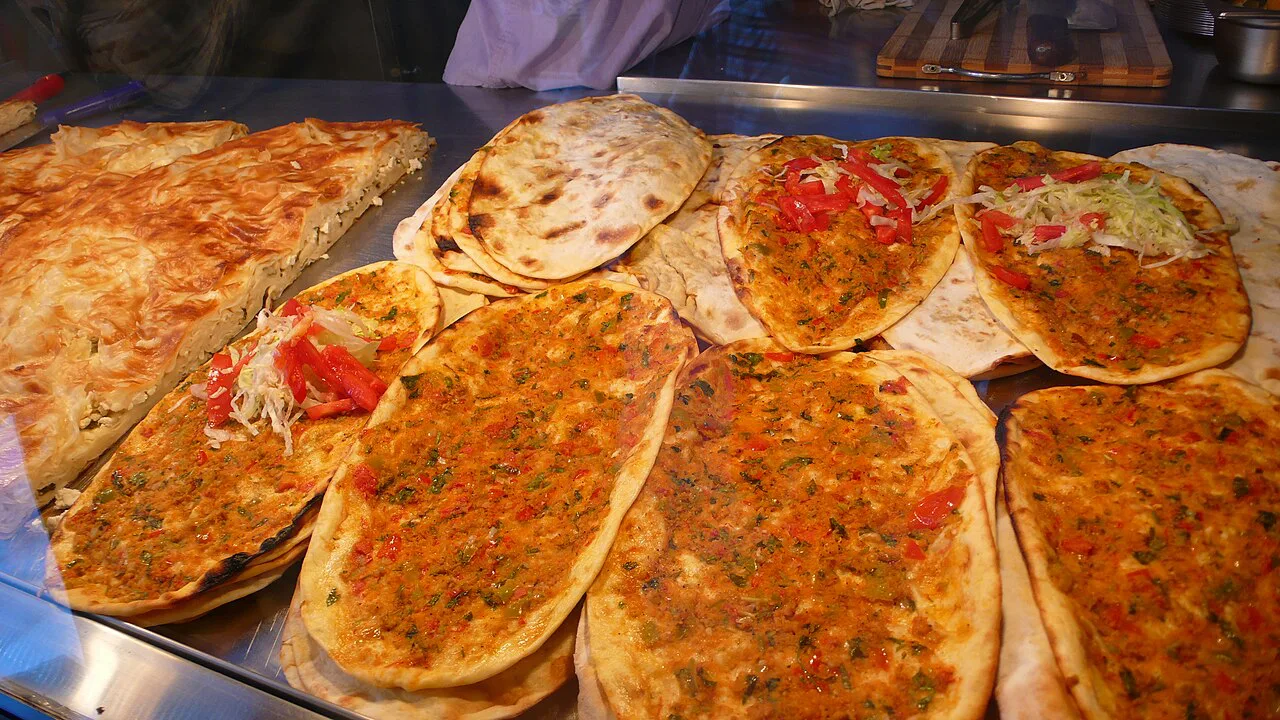
Do not eat lahmacun like a pizza slice. Lay the hot round flat, pile parsley and thinly sliced onion over the middle, squeeze lemon generously across the top, then roll it into a tight cylinder and eat it by hand while it is still warm. Some counters serve the onion tossed with sumac and lemon as sumac onion, which adds a tart, dusty note against the meat.
Lahmacun is rolled rather than sliced, with the garnishes placed in the centre, a squeeze of fresh lemon added, and the whole thing rolled up before eating. Slicing it flattens the point of the dish: the greens and lemon cut the richness of the spiced meat, and a knife and fork lose the contrast between crisp edge and soft centre.
Ayran, the salted yoghurt drink, or şalgam suyu, the sour turnip juice, are the classic accompaniments, and tea works just as well at a street counter. If you want to explore the wider repertoire of Turkish dishes before or after your lahmacun, our guide to Turkish food covers the meze, kebabs and vegetable dishes that fill the rest of the menu.
Regional styles and the southeastern heartland
Lahmacun's reference points are Gaziantep and Şanlıurfa in southeastern Turkey, where the pepper culture and stone ovens shaped the dish, and where lahmacuncu still compete over who rolls the thinnest dough and balances the spice without drowning the meat. Expect smoke and fruitiness from Urfa or Aleppo pepper in that style.
Outside that heartland the dish travelled widely: Istanbul kiosks, Ankara lunch spots and İzmir seaside tables all serve their own versions, and diaspora kitchens in Germany and the UK popularised it as an introduction to Anatolian food. What changes from counter to counter is the fineness of the mince, the heat of the pepper and the generosity of the herb garnish rather than the basic construction.
How to judge a good one
The test is whether the edge shatters and the middle still folds. A good lahmacun is crisp enough to crack at the rim but flexible enough to roll without splitting; if it bends like cardboard it has waited too long, and if it sags like pizza the dough was rolled too thick.
Look at the topping as well: it should reach the edge in an even layer with no bald patches and no thick lumps, and the base beneath it should show blistered spots rather than an even pale bake.
Where lahmacun fits in a Turkish trip
Treat lahmacun as everyday food: a quick lunch, a late bite or a cheap feed between sights, not a special-occasion dinner. Prices vary by city, neighbourhood and whether you sit down or take away, and they move with the lira, so read the menu board at the counter rather than relying on any figure quoted online.
Breakfast is its own institution in Turkey, built on eggs, cheese and bread, and our guide to Turkish breakfast explains what a serpme kahvaltı spread involves. Save the lahmacun for later in the day, when the ovens are running and the rounds come out fastest.
If you order lahmacun as a starter, keep it small and follow it with a shared pide or a plate of grilled meat rather than a second flatbread. Finish with something sweet from the trolley, and our guide to Turkish desserts sets out the syrup-soaked pastries and milk puddings you are likely to see.
Lahmacun at home versus in Turkey
In Turkey the rounds go into a wood-fired or stone oven at high heat, which blisters the base in a minute or two. At home the closest result comes from a pizza oven, or from a baking steel or pizza stone preheated in a very hot domestic oven, with a peel to slide the dough in.
Published home recipes differ on the details, and you should pick one and follow it rather than blending them. One bakes at 240°C on a tray, another uses a yeasted dough with a blend of beef and vegetables, so the flour, resting time and topping proportions are not interchangeable between versions.
Watch the topping layer rather than the clock. A thin, even spread cooks through in the time the base needs to colour, while a thick one will still be wet when the edges are already dark; keeping the meat light and spreadable is the single change that most improves a home bake.
Ordering your first lahmacun
Order one lahmacun, not two, the first time: ask for the parsley, onion and lemon on the side, roll it yourself and see how the balance works before adding a second round or a pide. Eat it at the counter where it comes out of the oven, since a lahmacun that has sat in a bag for ten minutes loses the crisp edge that defines it.
Menus, prices and opening hours change, especially with the lira, so check the board at the counter or ask before you order rather than trusting a figure you read elsewhere.
Explore more Turkey guides
Frequently Asked Questions
How do you pronounce lahmacun?
It is usually rendered lah-mah-JOON in English, with the stress on the last syllable. Turkish speakers run the sounds together quickly, so listen to the person at the counter rather than trying to match the spelling letter by letter.
Is lahmacun vegetarian?
The classic version is not: the topping is built on finely minced lamb or beef, and the name itself means meat with dough. Vegetarian flatbreads in Turkey tend to be separate dishes, so ask what is in the topping before ordering if you avoid meat.
Can you eat lahmacun cold or reheated?
Yes. Leftovers keep for a couple of days in the fridge, stacked and wrapped, or can be frozen for up to three months, then reheated in a pan, in the oven or a microwave. Cold lahmacun is eaten too, though the crisp edge is gone.
What is the difference between lahmacun and manakish?
They are cousins rather than the same thing: manakish is a Levantine flatbread topped with za'atar or meat, with a different dough and spice profile from lahmacun. Both are thin, baked fast and eaten by hand, so expect a similar style of eating rather than an identical flavour.
Sources
Notes for your next Turkey trip
Optional updates when we add or correct a town guide.
You might also like

Continue reading
More guides you'll find useful