Myra, Turkey: Rock Tombs, Theatre and How to Visit
Myra in Turkey is a Lycian city at Demre with cliff-cut rock tombs and a Roman theatre. Here is what you see, how to get there and how long it takes.
On this page
Myra is worth a half-day of your holiday: a compact Lycian city at Demre where the tombs are carved into the cliff face and a Roman theatre stands beside them. Allow roughly an hour on site, and pair it with the Church of St. Nicholas in Demre and the boat pier at Andriake. This guide covers what each part of the site is, the layout at the entrance, the published times and 2021 fee, how to reach Demre from Antalya, Kaş and Finike, and what to add nearby.
What Myra is and where it sits
Myra lies on the Teke Peninsula in the Demre district of Antalya province, about 2 km from Demre town centre, 30 km from Finike and 45 km from Kaş. It was one of the six leading cities of the Lycian League, and it kept its name and reputation through the medieval period because St. Nicholas served as bishop there. The ruins sit near the Demre stream, with the entrance close to the road rather than up a long track.
The rock tombs: two necropolises cut into the cliffs
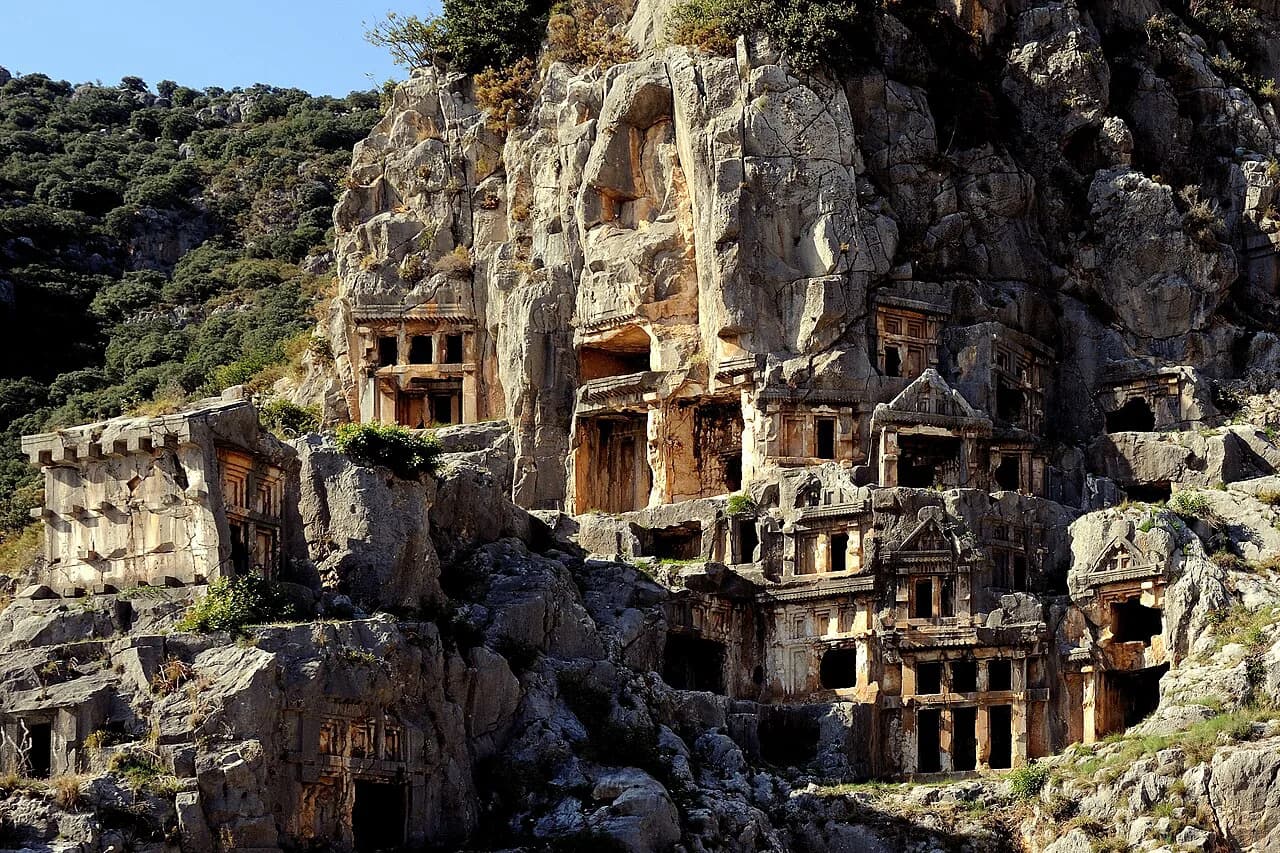
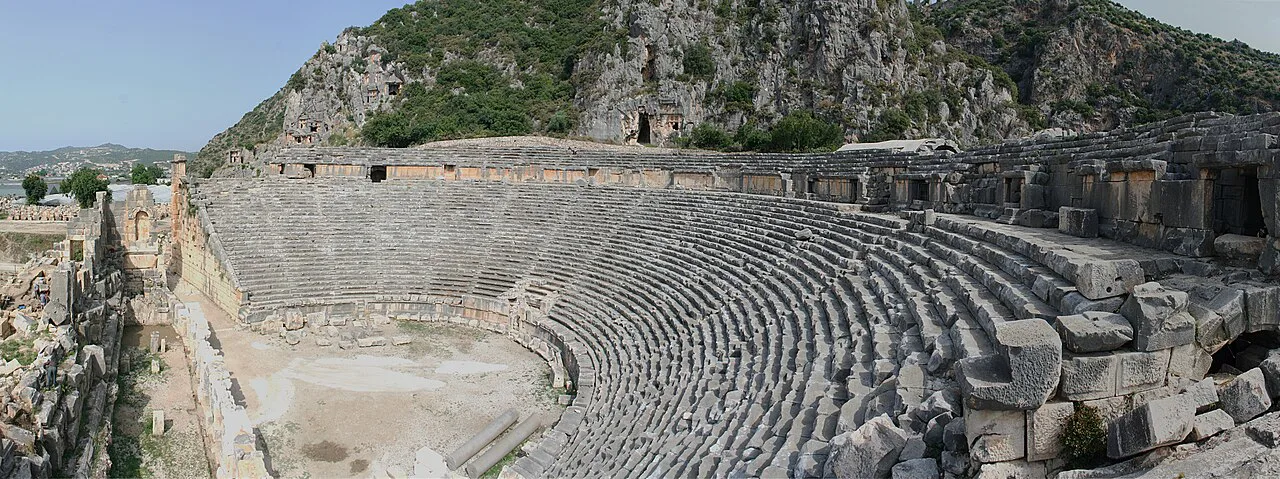
Two Lycian necropolis areas are cut into the vertical cliff faces above the city, and many of the tombs are carved with temple-style fronts and columns so they read as miniature houses. The most famous is the Lion Tomb. The carvings and the size of each tomb signalled the status of the person inside, and some reliefs at the base show scenes from that person's life. Look up as soon as you pass the gate: the tombs are the first thing that stops most visitors, and they are cut into the mountain above the theatre.
The Roman theatre
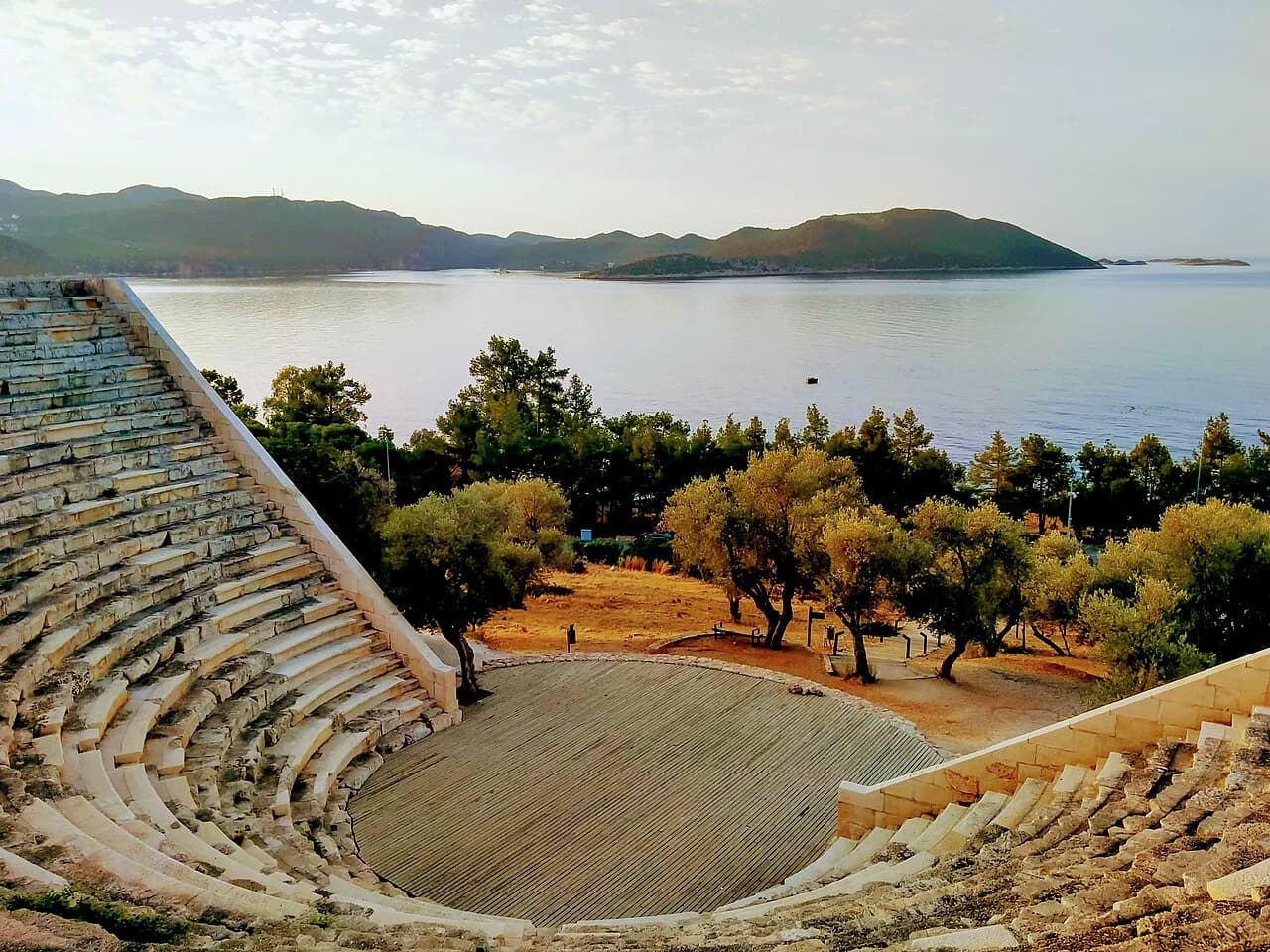
The theatre is one of the best preserved in Lycia, a Roman build with a capacity of roughly 11,000 and most of its two-storey stage building still standing. It was damaged by an earthquake in 141 and repaired by Opramoas, a wealthy merchant from Rhodiapolis. The audience side is thought to have been decorated with masks, reliefs and sculptures. Rock tombs are cut into the mountain above the theatre, so the dead overlooked the performances.
The theatrical masks
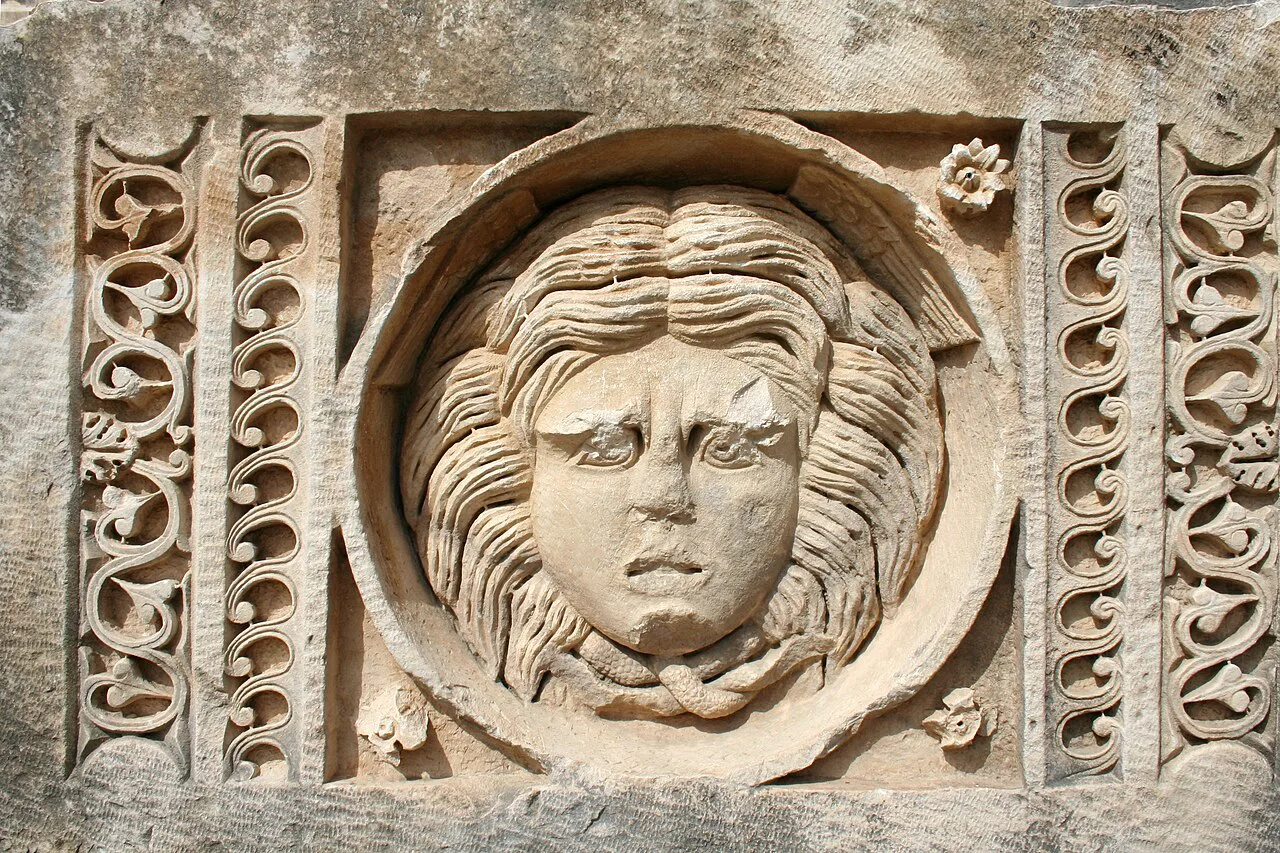
Myra is unusual for the number of theatrical mask sculptures found at the site, a collection that stands out from other Lycian ruins along this coast. They are the detail to seek out after the tombs and the theatre, and they tie the site to its theatre rather than to the necropolis.
The acropolis above
The city began on the hill above the rock tombs and later spread downhill, growing substantially in the 2nd century AD on donations from wealthy citizens. The acropolis sits directly above the tombs and theatre, but no significant remains survive up there. Treat it as a viewpoint and a piece of context rather than a third monument to tour, and spend your time on the two main structures instead.
Layout on arrival
At the entrance the rock tombs are on your left and the theatre on your right, which makes the site easy to navigate without a plan. Walk the theatre first while it is quiet, then cross to the tombs and look up at the cliff face above the seating. The whole site is compact, so you will not need transport between the parts.
The Church of St. Nicholas in Demre
St. Nicholas was bishop of Myra in the 4th century, and the church named for him in Demre is a separate visit from the ruins, with its own entry arrangements. The first church was built in the 6th century after his death, most of the present building dates from the 8th century, and a monastery was added in the second half of the 11th century. A bell tower went up during 19th-century restoration work, and the sarcophagus destroyed in 1087 was unearthed in 1968. The church has been on the UNESCO World Heritage Tentative List since 2000.
Opening times and tickets
The published pattern is a summer window of 08:30 to 19:30 and a winter window of 08:30 to 17:30. The entrance fee was 45 TL in 2021, and a Museum Pass covered entry free of charge according to the same 2021 information. Turkish lira prices and site hours change, so check the current figure at the ticket office or on the official museum site before you set out.
How to get to Myra from Antalya, Kaş and Finike
By car, head for Demre and look for the site entrance near the Demre stream; the ruins are about 2 km from the town centre, 30 km from Finike and 45 km from Kaş. By public transport, take the Antalya–Demre bus and then a taxi for the last stretch to the site. From Kaş the drive is short enough to combine with a boat day at Andriake, and from Antalya it is a long day out rather than a quick stop.
How long Myra needs
Give Myra about an hour: the theatre, the cliff tombs and the mask sculptures are all within a short walk of each other, and the acropolis has no standing remains to extend the visit. The trip becomes a half day or more once you add the Church of St. Nicholas in Demre and the drive, and a full day if you finish at the boat pier. It suits travellers based in Kaş or Finike better than those coming from Antalya for the day.
Andriake (Çayağzı) and boat trips to Kekova
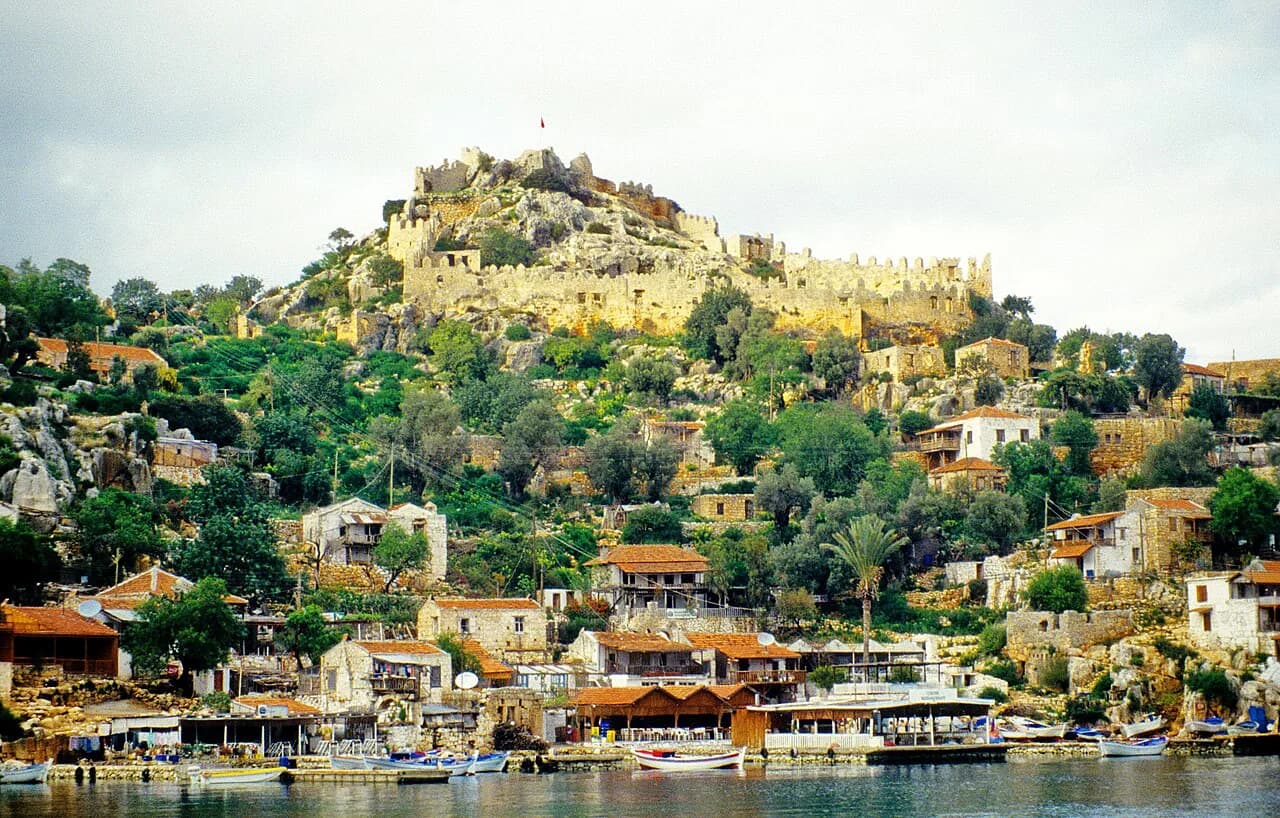
Myra's ancient port of Andriake is now Çayağzı, the pier where daily boat tours leave for Kaleköy, Kekova, Üçağız and Tersane Bay. You can join a group or rent a boat with a small group, with swimming stops in the coves along the way. Andriake was once among the largest and most important ports of its era, so the boat day adds a different layer to the ruins rather than repeating them. Our guide to Kekova: the Sunken City, Kaleköy and how to see it by boat explains what the sunken ruins look like from the water, and Simena (Kaleköy) covers the castle village at the far end of the bay.
Other Lycian sites on the same coast
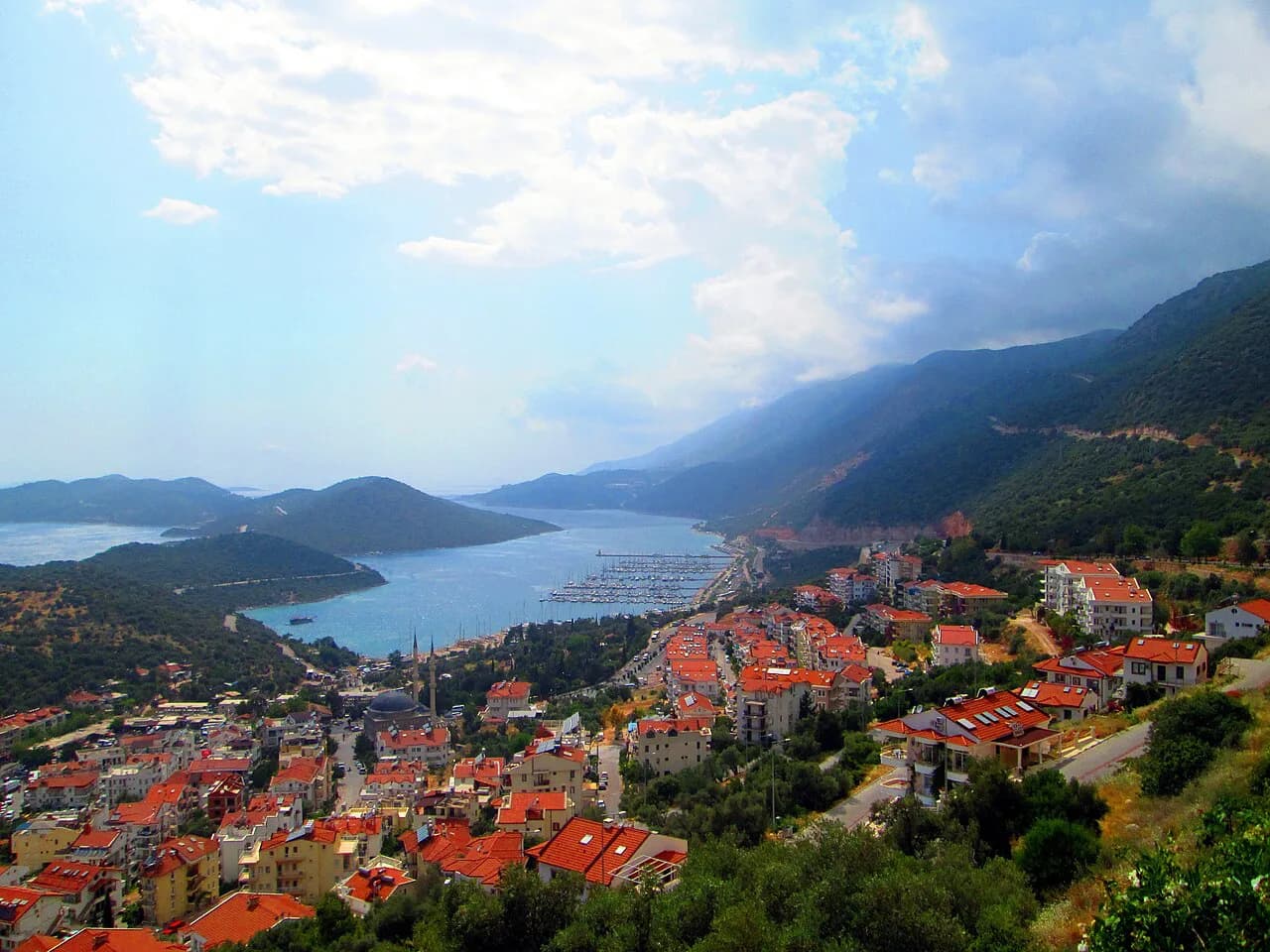
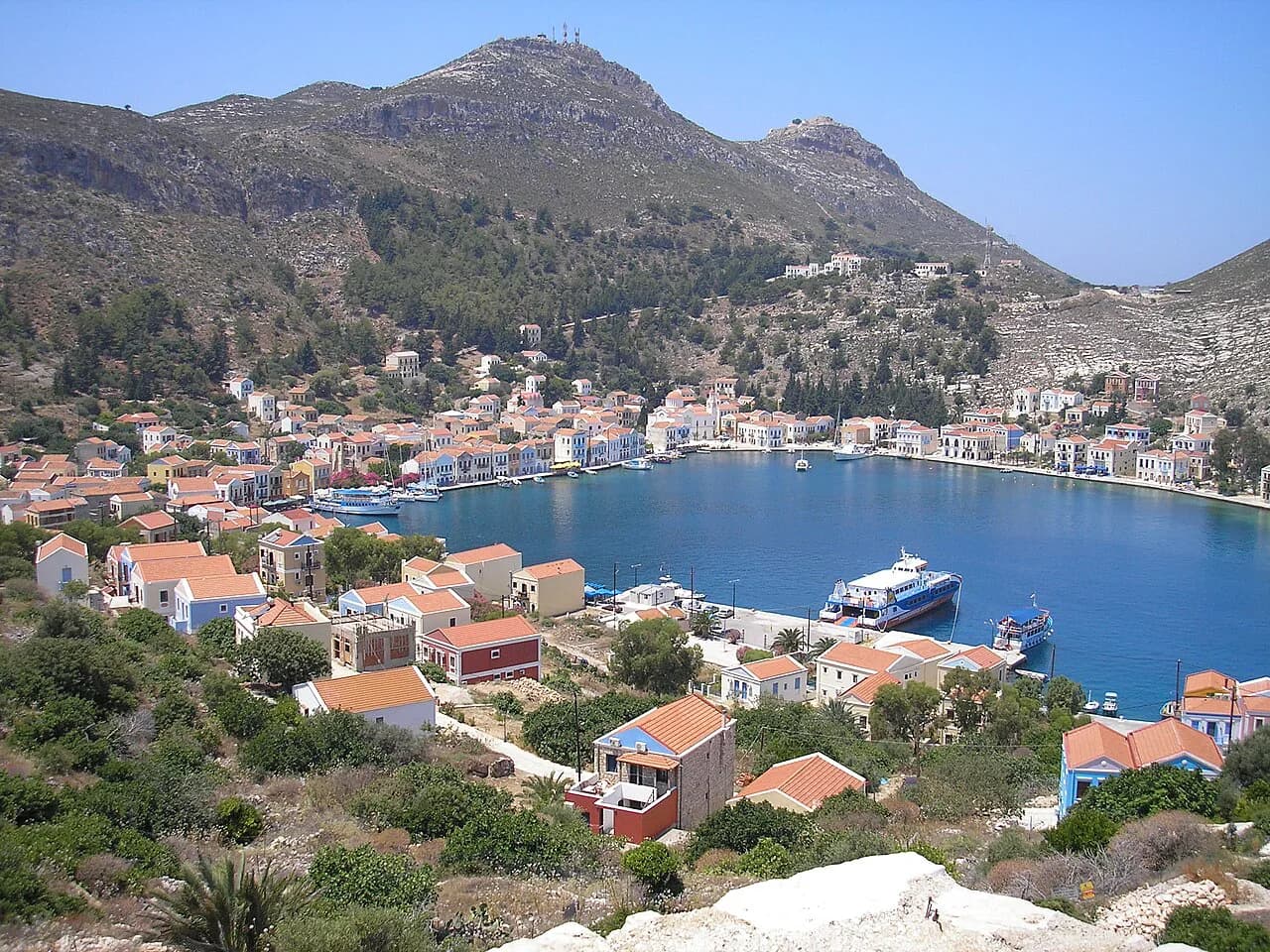
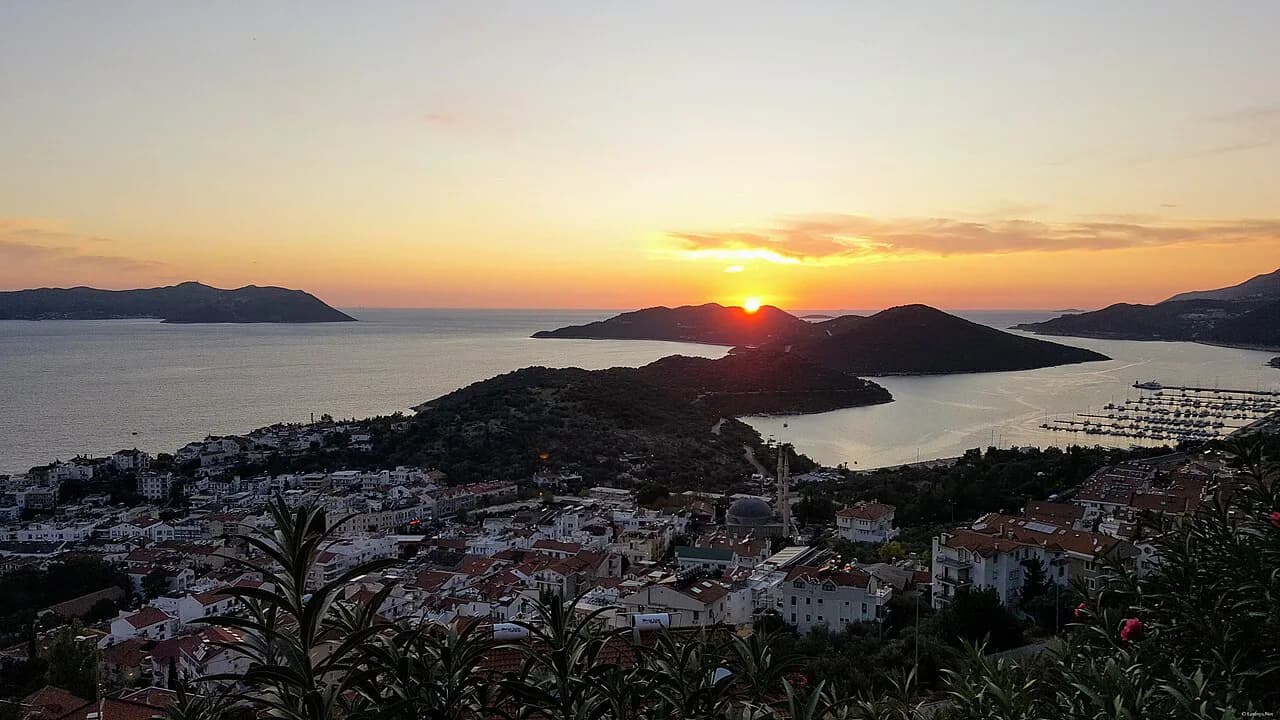
Myra belongs to a chain of Lycian League cities spread along this stretch of coast, and Patara, Xanthos and Olympos are the other names you will keep meeting on road signs and boat boards. If you are working west from Kaş, Xanthos: A Visitor's Guide to the Ancient Lycian City makes a natural second ruin, and from Kaş town you can also cross to Kastellorizo (Meis) for a day on a Greek island. Each of these is a separate ticket and a separate half day.
Is Myra worth the detour?
Yes, if you are already on the Kaş–Finike stretch of the coast or planning a Kekova boat day from Çayağzı. The site is small, the tombs and theatre are the reason to come, and an hour covers them properly. Skip it only if your itinerary is built around Antalya with no time for the western Teke Peninsula.
Frequently Asked Questions
In what country is Myra?
Myra is in Turkey, in the Demre district of Antalya province on the Teke Peninsula. It lies about 2 km from Demre town centre, 30 km from Finike and 45 km from Kaş.
Is Myra the same place as Demre?
No. Myra is the ancient city; Demre is the modern town beside it. The Church of St. Nicholas is in Demre and is visited separately from the ruins, which have their own entrance and ticket.
Sources
Notes for your next Turkey trip
Optional updates when we add or correct a town guide.
You might also like
Continue reading
More guides you'll find useful