Xanthos, Turkey: What to See at the Ancient Lycian City
Xanthos is a UNESCO-listed Lycian city near Kınık in Muğla, with pillar tombs, the Harpy Tomb and a Roman theatre. What to see and how long you need.
On this page
Xanthos needs about half a day, split between a flat lower city of Roman remains and a steep northern necropolis of Lycian pillar tombs. Budget two to three hours on site, and more if you climb slowly in the heat. This guide covers what stands where, which famous sculptures are casts or in London, how to reach the site from Fethiye or Marmaris, and how to pair it with Letoon and Patara.
The site sits near the village of Kınık in the Seydikemer district of Muğla Province, on the eastern bank of the Xanthos (Eşen) River, on a slope at the widest part of the valley. Its Lycian name was Arnña. Xanthos is on the UNESCO World Heritage List together with its religious sanctuary, Letoon.
What Xanthos is and where it sits
Xanthos was the most important and powerful city of Lycia in the dynastic period, and archaeological evidence dates it back to at least the 7th century BCE. The urban area covers roughly 30 hectares on a hillside above the river, with the Roman acropolis rising behind the lower remains.
The sea lies about 7.5 kilometres south today, though river silt has pushed the coastline back since antiquity, and Xanthos was not a port city. That matters when you plan: this is a hillside ruin inland from the coast, not a harbour-town stop.
Most of what you see standing belongs to the Roman period and later, while monumental tombs and stretches of city wall are the main dynastic-period survivals. Hellenistic remains are scarce. Expect a site of tombs, walls and foundations rather than a rebuilt street grid.
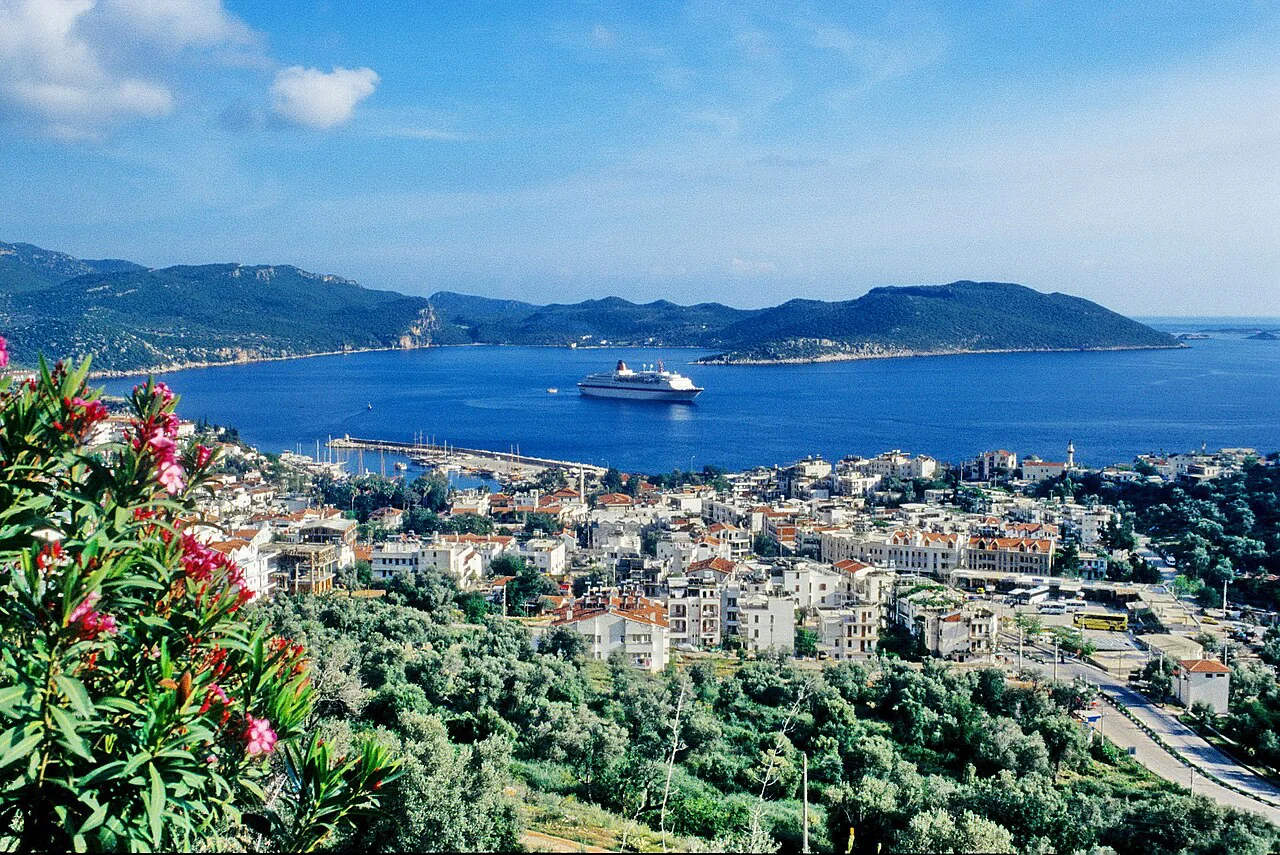
Getting to Xanthos from Fethiye, Kaş and Marmaris
Xanthos is 63 km from Fethiye and 185 km from Marmaris by road, which makes it the natural western end of a Lycian day out from either resort. From Kaş the site lies along the same coast road, so it fits a day heading west via Patara and Letoon.
The last approach is to Kınık, and the ruins sit beside the village. Local operators run group tours and private trips from Fethiye, Hisarönü, Övacık, Ölüdeniz and Çalış, and a combined Letoon–Xanthos–Patara excursion is sold from the same resorts. Those trips solve the parking and road questions; what they do not solve is the walking, which is the same for everyone.
If you drive yourself, treat Kınık as the waypoint rather than Fethiye or Kaş. There is no reliable public timetable in what the site's own material publishes, so confirm dolmuş times locally before relying on one, and allow for the return leg in daylight.
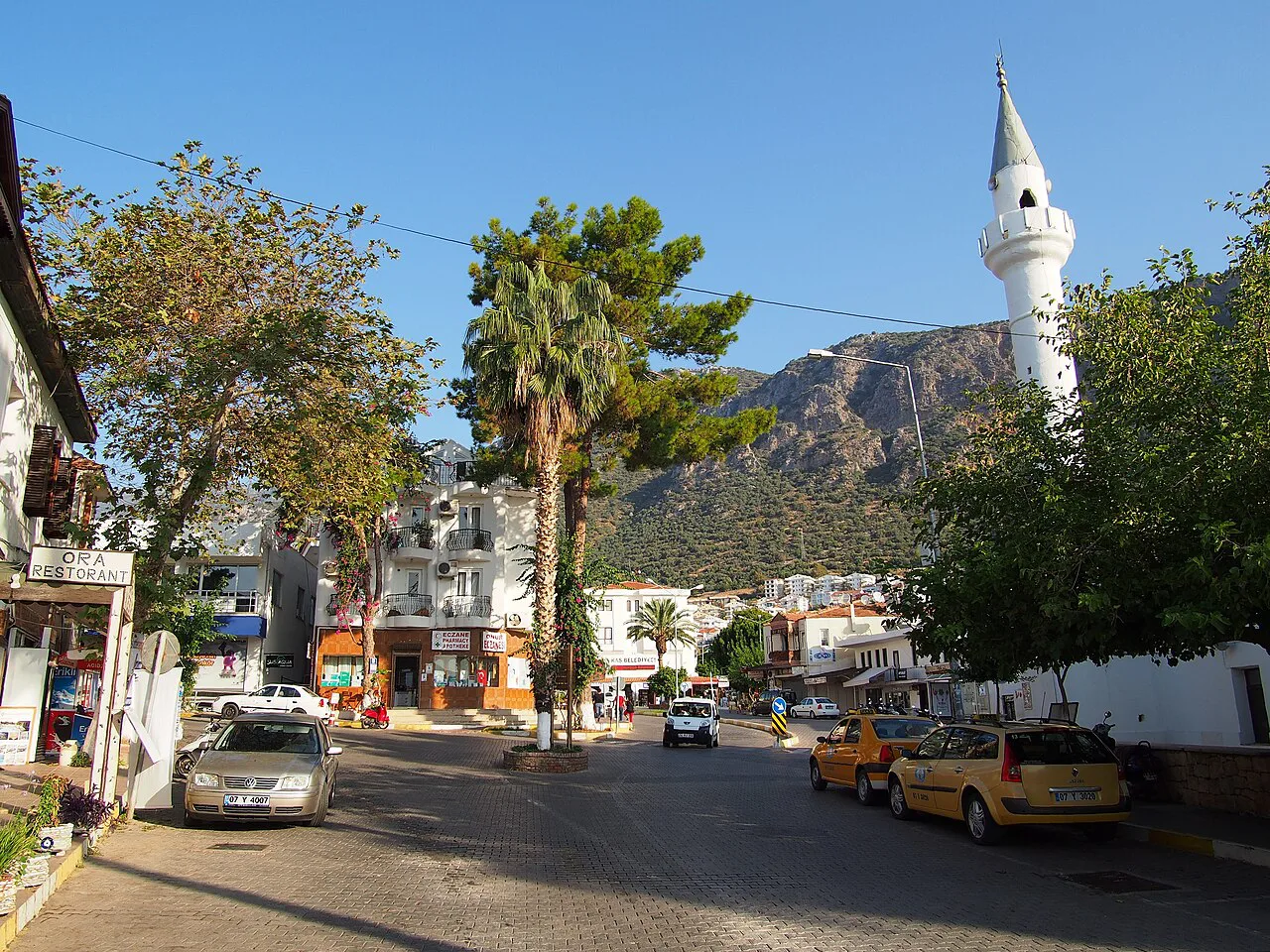
The lower city: theatre, agora and inscribed monument
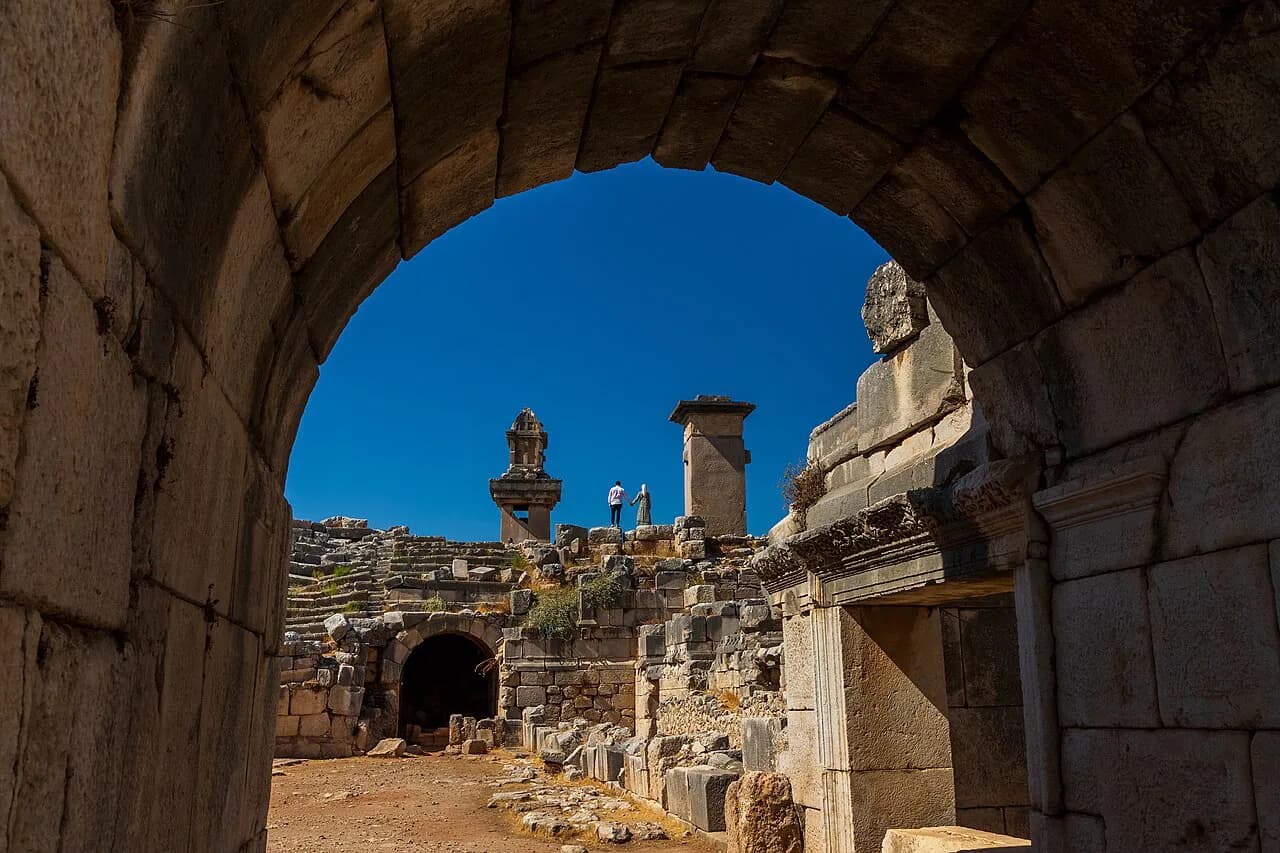
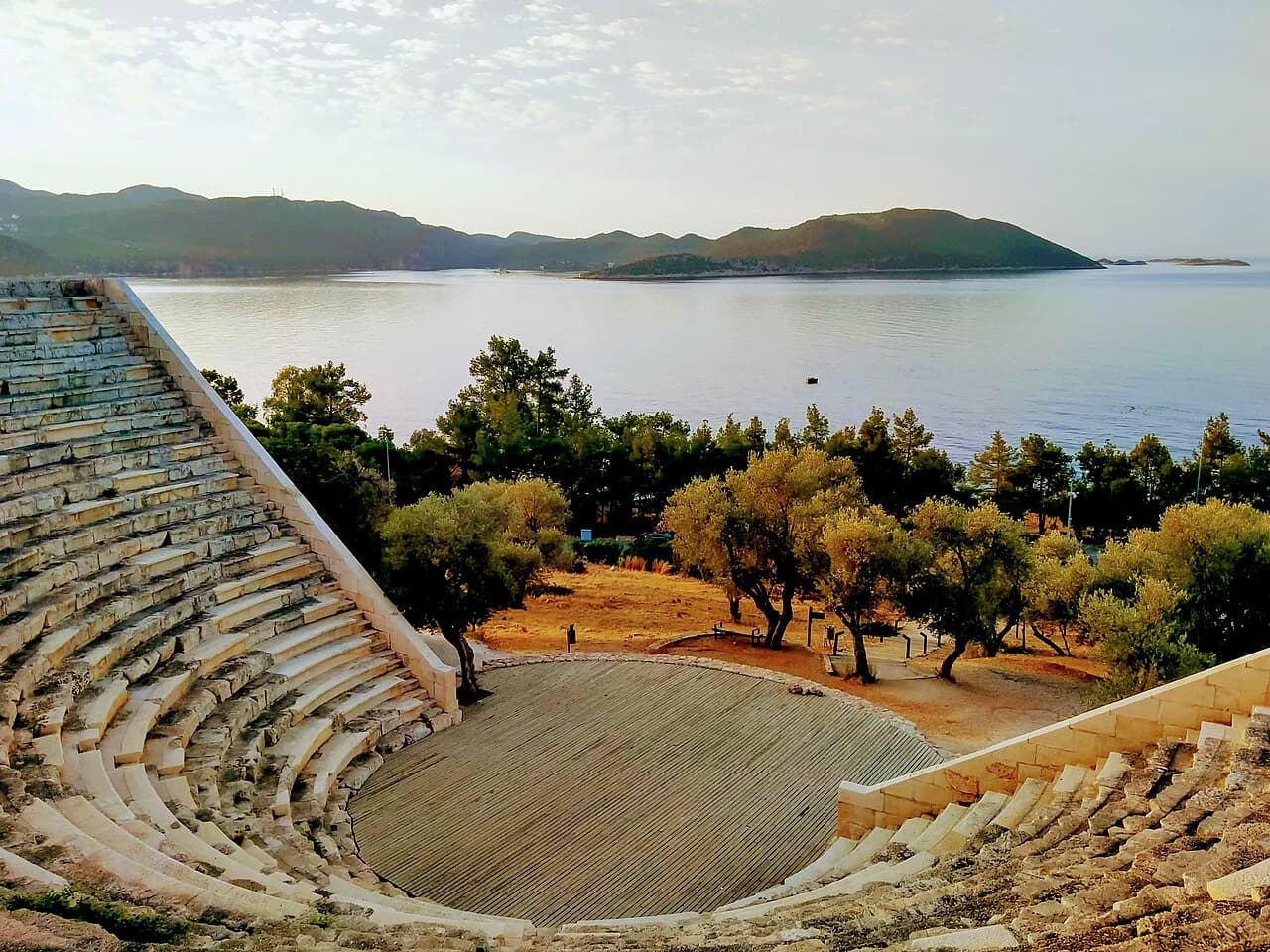
Start on the flat ground, where the Roman theatre and the agora are grouped within easy reach of each other. The theatre is described as well preserved, which makes it the most immediately readable structure on site.
The Xanthos Obelisk, dated to the 5th century BCE, is a giant stone slab carved with the longest known inscription in the Lycian language, some 250 lines. Read it as a monument to a language rather than a set of readable names; the Lycian script is not something you will decipher on the spot.
The lower city also holds the Hellenistic walls and gates, including the South Gate, also called the Vespasian Gate, and a Byzantine church with mosaics. Those three give the site its range: defensive, civic and religious building on the same patch of ground.
The northern necropolis and its pillar tombs
The climb to the northern necropolis on the eastern slope of the Roman acropolis is where the effort goes, and it is the part of Xanthos worth saving energy for. Most Roman rock-cut and sarcophagus tombs lie north of the dynastic walls that run southeast to northwest across the slope. The Payava and Ahqqadi tombs sit around the so-called Acropolis Pillar further south, inside the walls.
The Lion Pillar Tomb, east of the Roman acropolis, is generally treated as the earliest example of a Lycian pillar tomb on stylistic grounds, with a burial chamber cut into a column about 3 m high. It is dated to the mid-6th century BCE. Its reliefs were removed and are in the British Museum; the pillar itself stays on site.
The Harpy Tomb is a monolithic pillar about 5.43 m tall topped by a funerary chamber, 8.87 m overall, dated to roughly 480–470 BCE. Its reliefs are in London, and plaster casts were installed on the monument in 1957, so the figures you see at Xanthos are copies in place. Look for its position on the slope rather than for original carving.
The Merehi and Lions sarcophagi, both dynastic-period, are in the same northern area, which lets you see several tomb types in one short walk. Take the necropolis slowly: the slope is the reason to allow more than an hour here.
The Nereid Monument and the originals question
The Nereid Monument is the earliest known monumental tomb built in the form of a Greek temple, an Ionic structure on a podium about 8 m high with a platform of roughly 10.2 by 6.8 m. It is generally dated to about 390–380 BCE and is widely thought to have been built for the dynast Erbinna, also called Arbinas.
It had collapsed, probably in an earthquake, and its elements lay scattered before Charles Fellows had the reliefs and architectural pieces taken to England, where they are displayed in the British Museum. The reconstruction in London represents only the eastern façade, so the display there is not the whole building.
This is also why searching for the famous sculpture on site is a wasted hour: Fellows's work in 1838 moved much of the best material to London, and the site keeps what remained. Visit Xanthos for the setting, the tombs in position and the walls, and treat the British Museum as the second half of the story.
Other remains: temples, basilica and monastery
Beyond the tombs, look for the foundation of the temple of Artemis and the Byzantine basilica and monastery, along with the fortress walls. Several 5th-century BCE temple foundations have been identified, though none survived into the Roman period and no Roman-period temple has been found. The nearby sanctuary at Letoon, the principal cult centre of Lycia a few kilometres away, is the usual explanation.
Xanthos was deserted after raids in the 8th century, and the later Byzantine work on the walls and monastery belongs to that long final phase. For a visitor, that means a single site showing Lycian, Roman and Byzantine building in layers. The mosaic church floor is the piece most worth seeking out on the lower ground.
How long Xanthos needs and how to pair it
Allow two to three hours for Xanthos itself, with the necropolis climb taking the largest share. The lower city and theatre are quick; the slope above is slow, especially in summer. Bring water, wear shoes with grip and plan the climb for the morning, because the hillside offers little shade.
Pair Xanthos with Letoon and Patara rather than treating it as a standalone stop, since the three sit close enough for a single day out and the tour operators sell them together. Letoon is administratively connected to Xanthos and only a few kilometres away, which makes the link between the city and its sanctuary easy to see in one morning.
Adding a boat day changes the plan completely: the Lycian coast's sunken ruins at Kekova lie further east and are seen from the water, so keep them for a separate outing with a full day to spare.
Tickets, hours and what to confirm before you go
Ticket prices and opening hours for Xanthos are not fixed in the published material, so check them at the ticket office close to your travel date. Ask at the gate whether your Müzekart is accepted before you queue. Prices in Turkish lira move quickly, so treat any figure you read online as a rough guide only.
If you join a coach tour with a Xanthos stop, expect a short fixed slot that covers the theatre and part of the lower city rather than the full necropolis climb. Ask how long the stop is when you book, and check whether Letoon and Patara are included on the same day.
Is Xanthos worth the detour?
Yes, if you accept that Xanthos is a slopes-and-tombs site rather than a restored showcase, and that some of its best sculpture is in London. The reward is a compact UNESCO-listed city with pillar tombs still standing where they were cut, plus a sanctuary at Letoon a few kilometres away.
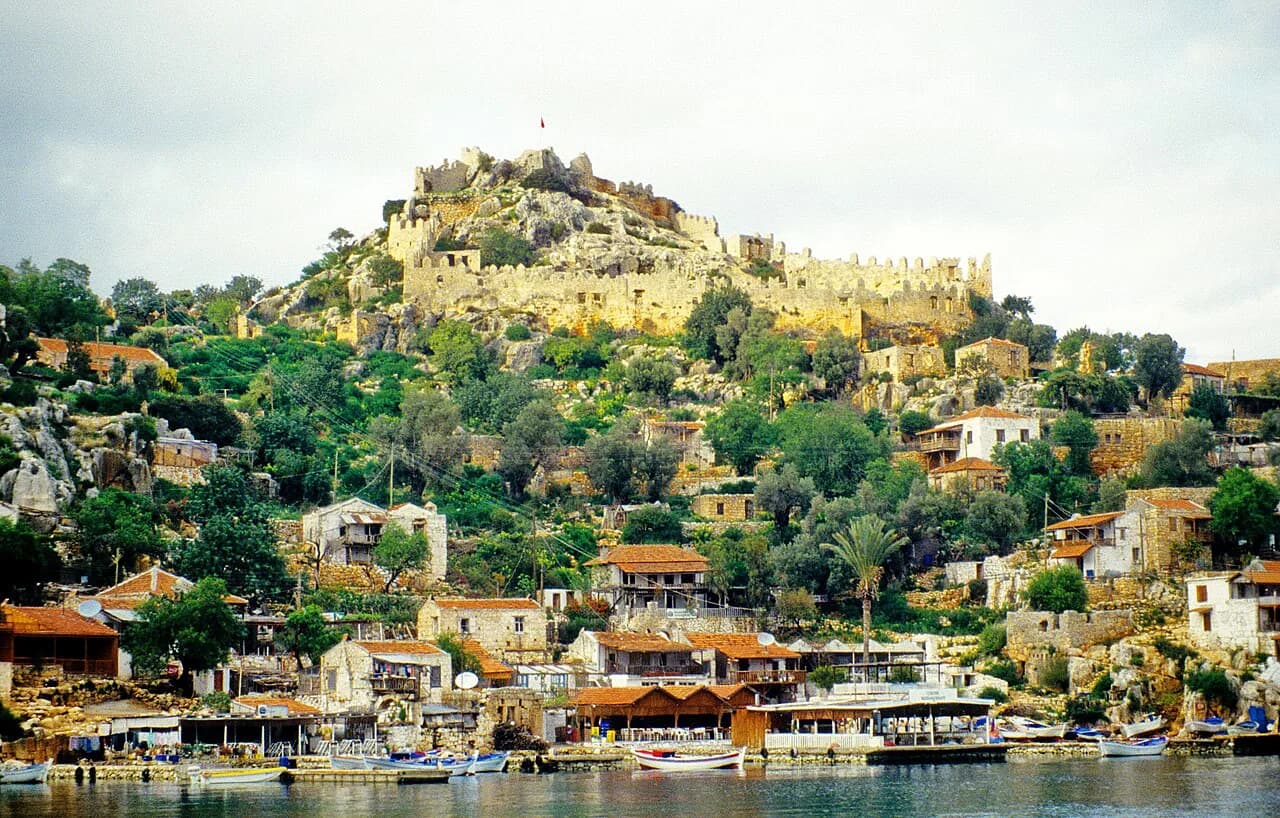
Build the day around an early start, a slow necropolis climb and Letoon afterwards, and confirm tickets and hours locally before you set off. That leaves you time to cross the bay to Simena (Kaleköy) for the castle view over Kekova Bay on a separate day.
Explore more Kas guides
Frequently Asked Questions
What does Xanthos mean in Greek?
The city's own Lycian name was Arnña. The river flowing past the site, known today as the Eşen River, appears as Siyanta in Hittite sources and as Xanthos in Greek. Visitors will mostly see Xanthos on signs and maps, with the river also signed as the Eşen River.
Which sculptures from Xanthos are in the British Museum?
Reliefs and architectural pieces from the Harpy Tomb, the Lion Pillar Tomb and the Nereid Monument were taken to England after Charles Fellows's work, and the Harpy Tomb at Xanthos now carries plaster casts installed in 1957. The British Museum reconstruction of the Nereid Monument shows only its eastern façade.
Sources
Notes for your next Turkey trip
Optional updates when we add or correct a town guide.
You might also like
Continue reading
More guides you'll find useful