Simena (Kaleköy): Castle, Sunken City and Getting There
Simena, now Kaleköy, is a car-free Lycian village above Kekova Bay, reached by boat or footpath, with a castle, rock-cut theatre and Lycian tombs.
On this page
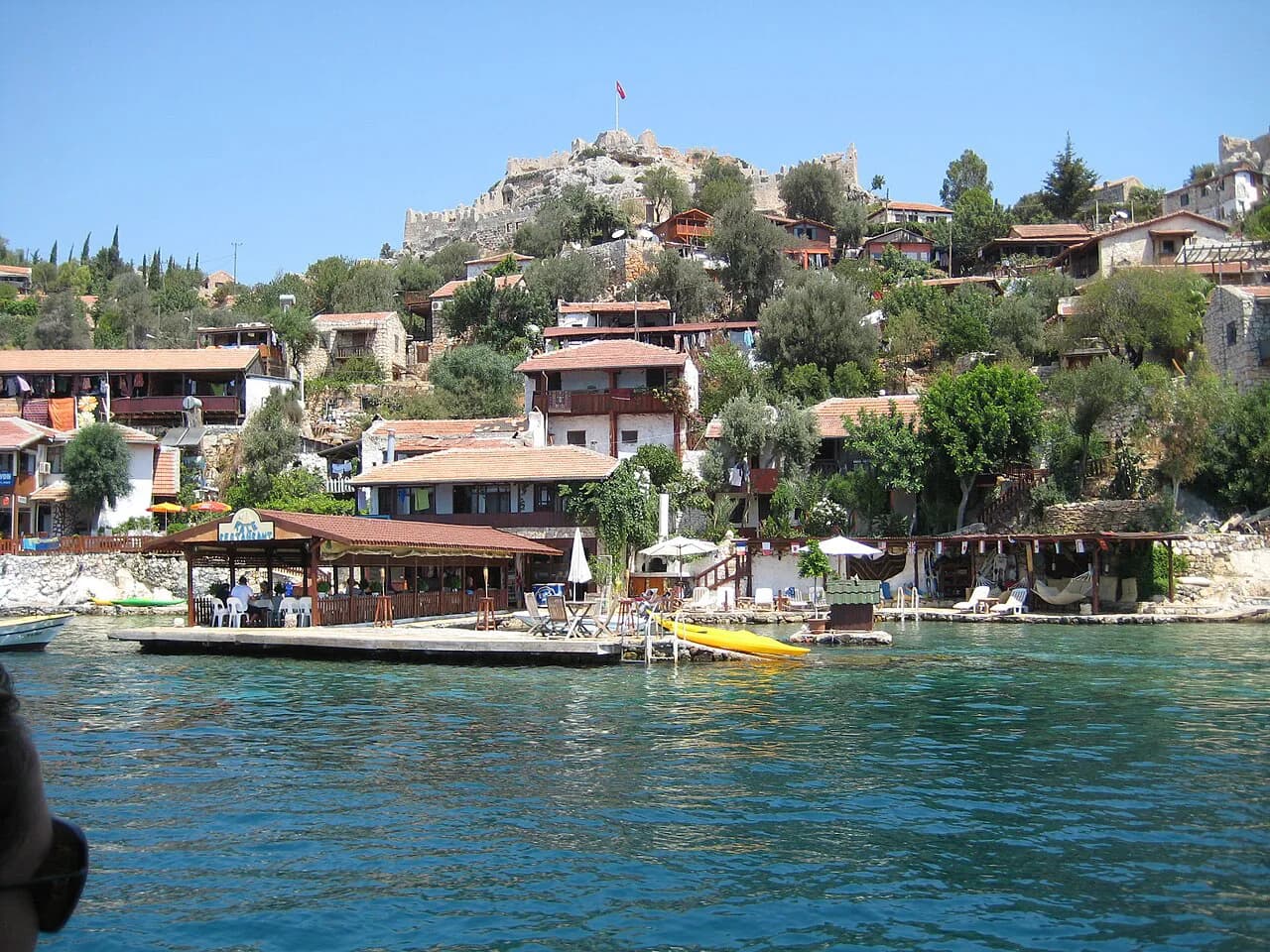
Simena is worth a day if you accept one constraint: no road reaches it. The Lycian settlement, now the village of Kaleköy, sits on a steep south-facing hillside on the northern shore of Kekova Bay, and every visitor arrives by boat or on the footpath. This guide covers what the village and castle contain, how the crossing works from Üçağız, and how to fit Simena into a Kekova boat circuit.
Keep three places separate in your head. Kaleköy is the inhabited village among the ruins, the castle crowns the ridge above it, and the Sunken City lies across the water on Kekova Island, where the ancient city of Dolichiste slipped beneath the sea. Planning around that geography saves an hour of confusion on the day.
What Simena is and where it sits on Kekova Bay
Simena occupies a steep, south-facing slope on the northern edge of Kekova Bay, sheltered by Kekova Island, which calms the anchorage in front of the village. The site lies between Kaş and Demre, roughly 25 km southwest of Kaş by sea and 35 km from Demre, with the castle summit standing about 100 m above sea level. The nearest road access is Üçağız, about 2 km away by water or 3 km on the footpath.
The village is a first-degree archaeological site inside the Kekova Special Environmental Protection Area, a designation covering 260 square kilometres of sea, coast and hinterland that was declared in 1990. That status governs what can be built and where boats may anchor, which is why Kaleköy still looks like a village rather than a resort. Expect stone houses, rooftop eating places and cisterns sharing the slope with Lycian tombs.
How you get there: boat from Üçağız or the footpath
Boats run to Kaleköy from Üçağız, and many Kekova day trips call at the village as one stop on a longer circuit. The alternative is the footpath from Üçağız, which covers about 3 km over rising ground. Neither route is a road, so a hire car gets you to Üçağız and no further.
Ask the boat operator in Üçağız or Kaş how long you get ashore when you book. A short stop lets you climb to the castle and come down; a longer one allows time for the lanes and a meal. Departure points, crossing times and fares change with the season, so confirm them directly with the operator when you book rather than relying on an old timetable.
The castle on the summit: Lycian foundations, medieval walls and the view over Kekova Island
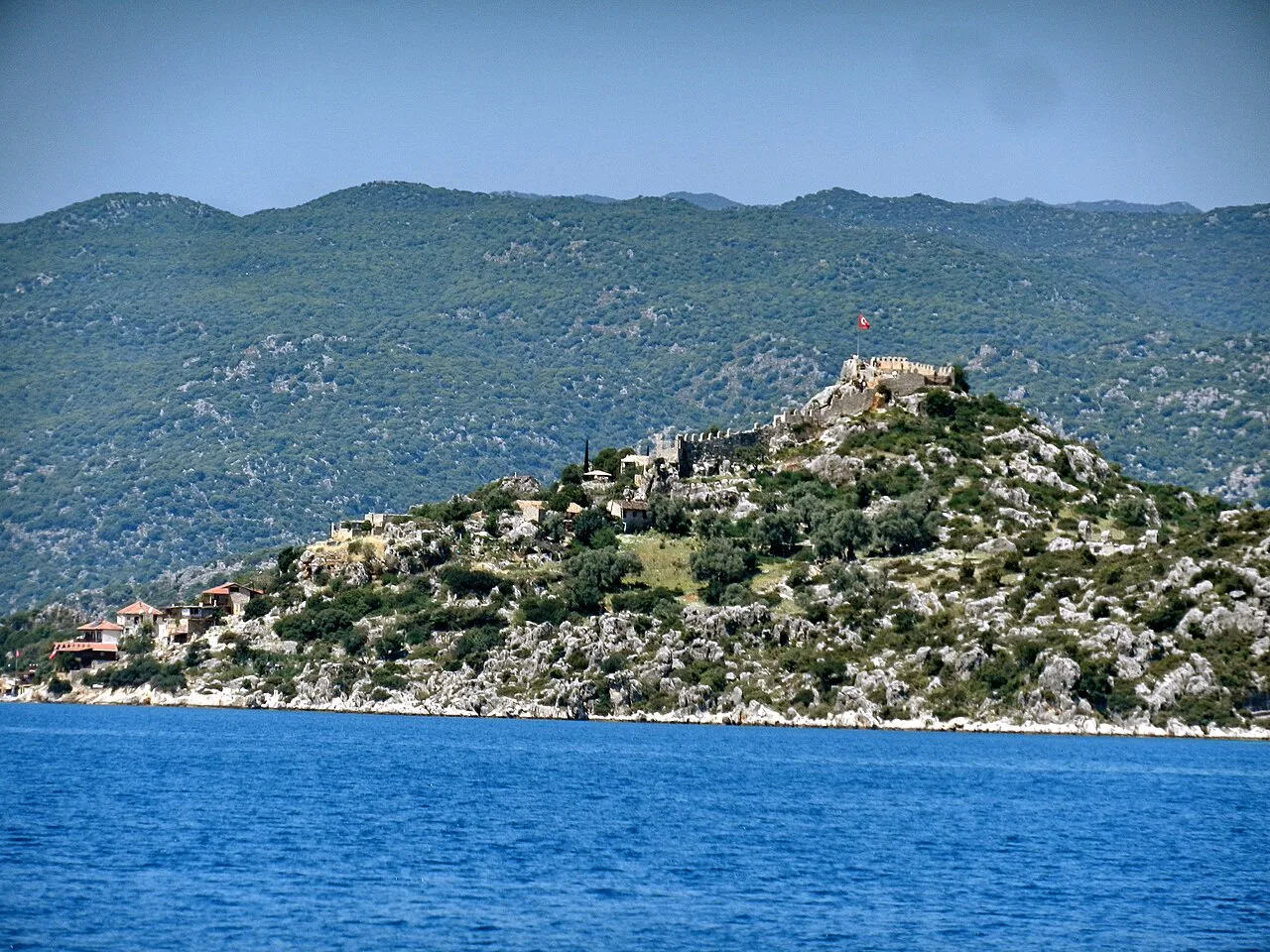
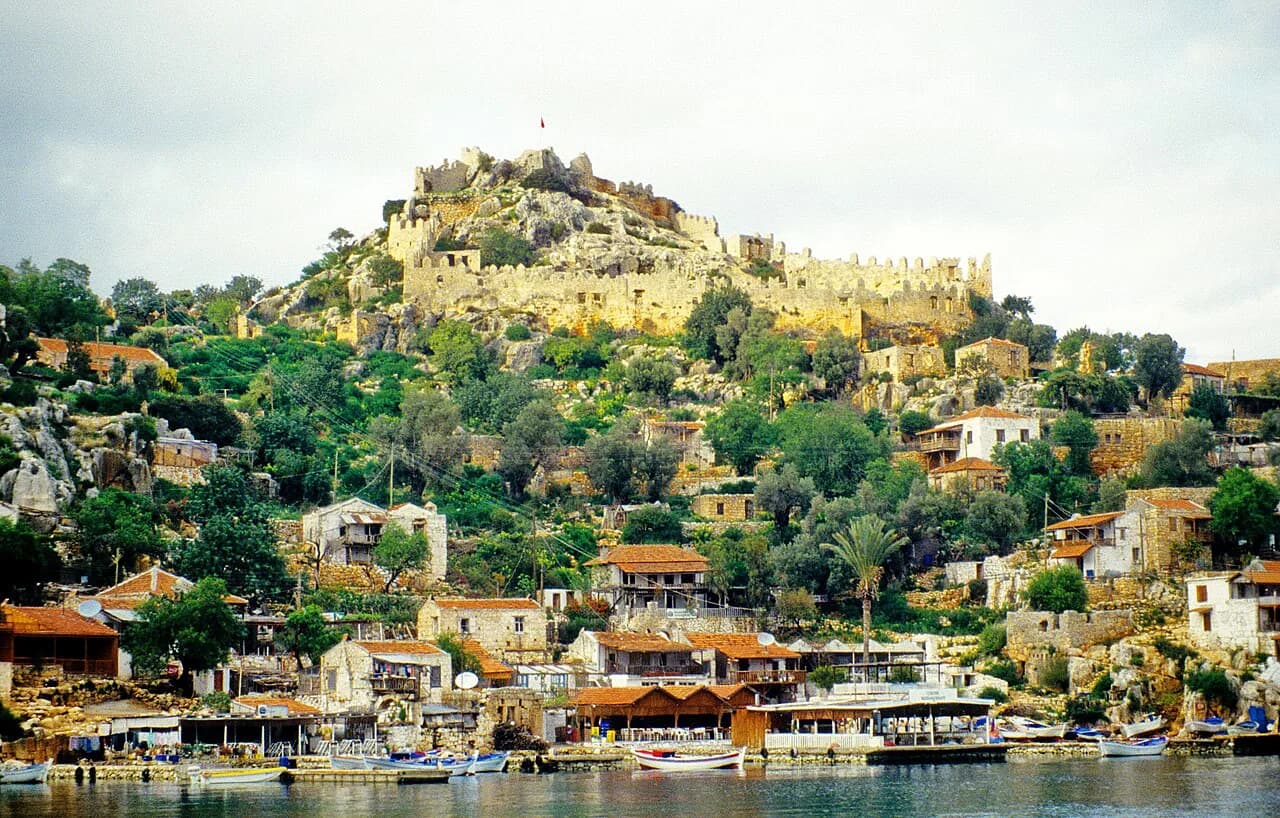
The castle is the reason to make the climb. Its walls were built largely in the Middle Ages by the Knights of Rhodes, raised partly on older Lycian foundations, and were meant to defend the coast against pirates. Look for the swallowtail battlements on the surviving towers as you approach the gate.
From the ramparts you look down on Kekova Island, the submerged ruins along its shore and the bays that indent this stretch of coast. Treat the climb as a proper walk rather than a stroll: the path rises steadily from the harbour in the heat of the day.
The rock-cut theatre inside the castle walls
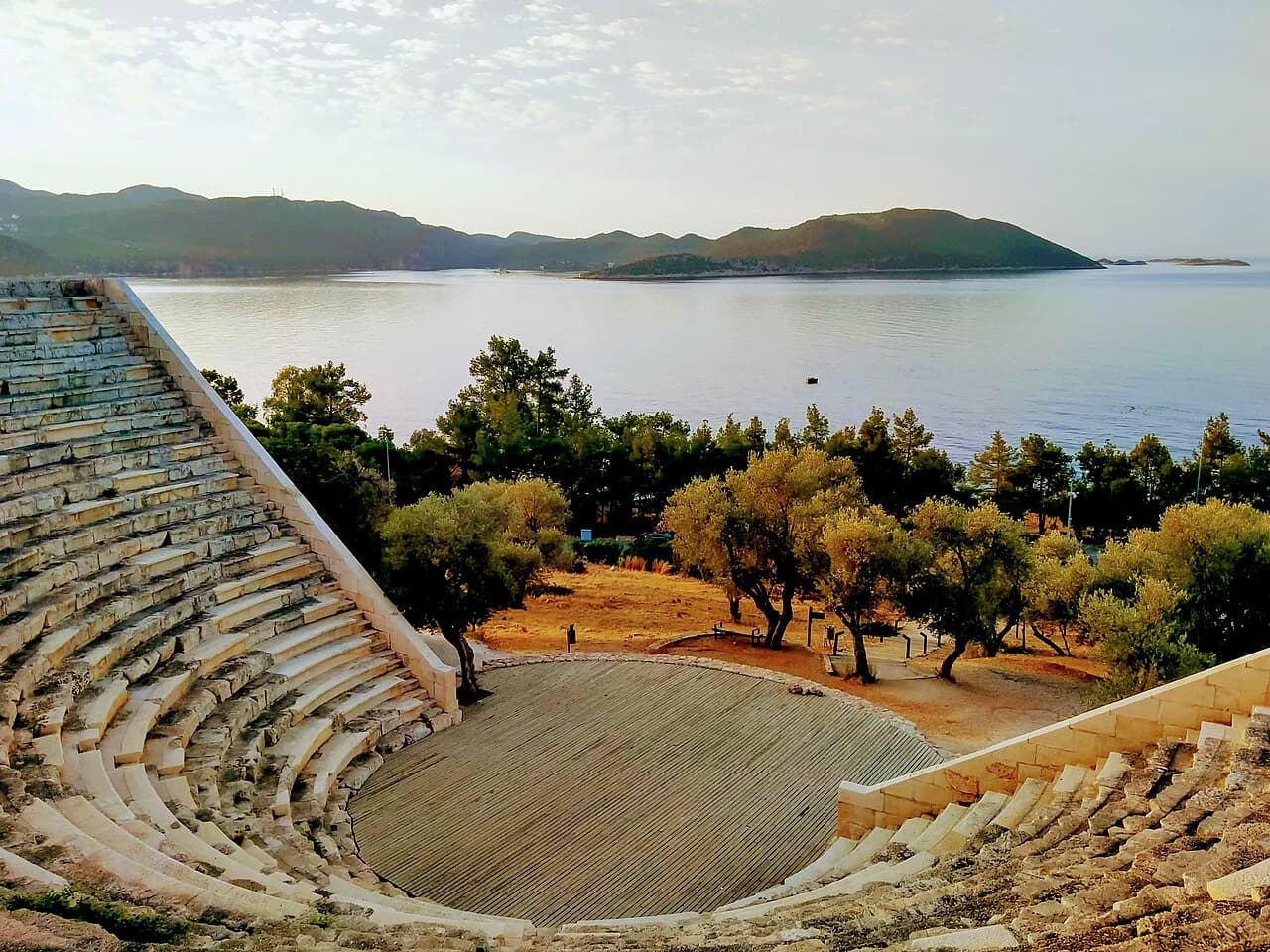
Inside the castle, a theatre is carved directly from the bedrock, with seven rows of seats and space for roughly 300 spectators, which makes it the smallest known theatre in Lycia. Its scale tells you something a large Roman theatre cannot: this was a small community that still kept up civic and cultural life. Sit on the upper row and the whole bay opens in front of you.
The theatre also explains why Simena mattered in Lycian politics without ever being a great city. Simena formed a sympoliteia with Aperlai, Apollonia and Isinda, and the four communities cast a single vote in the Lycian League assembly. The Roman author Pliny the Elder names Simena, and the site is also recorded in Lycian inscriptions.
Lycian sarcophagi in the village, including the half-submerged tomb in the harbour
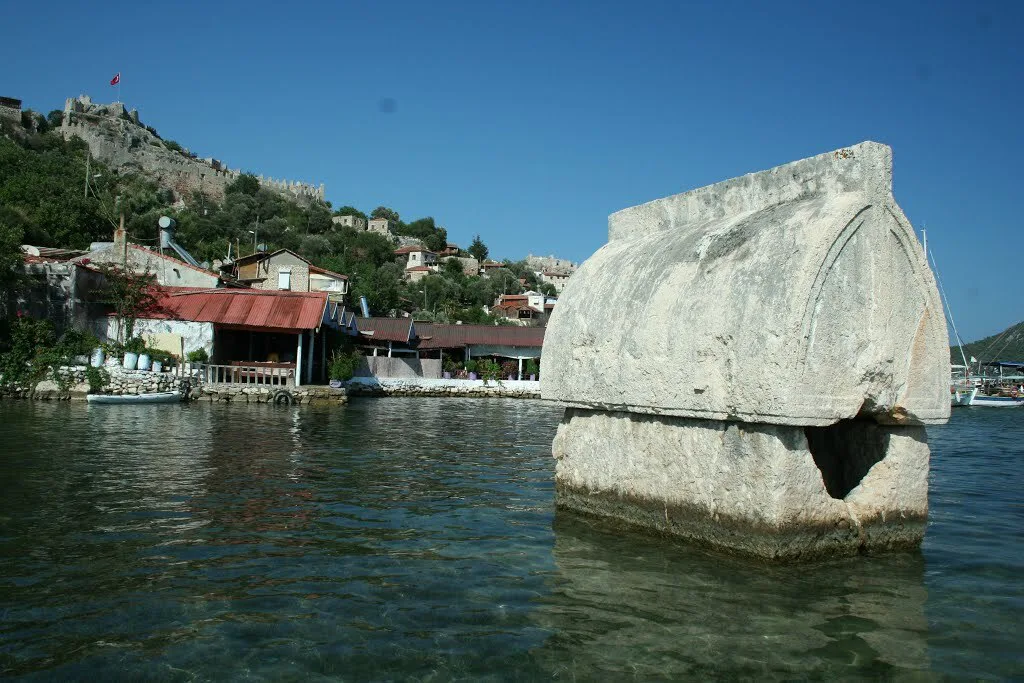
Lycian sarcophagi stand among the houses, and one rises half-submerged from the harbour water, the image most often attached to the Kekova region. They belong to the same funerary tradition as the rock-cut tombs found across Lycia, from Myra to Xanthos. Walking the lanes, you pass cisterns and Byzantine remains without any barrier between the old stones and the working village.
Kaleköy is inhabited, so treat lanes and terraces as someone's front yard. Keep to the paths, ask before photographing doorways and expect cats to inspect your table. That coexistence is what makes the village different from a fenced site with a ticket booth.
The Sunken City of Kekova: what you see from a boat and the swimming and diving restrictions
Across the bay, the northern shore of Kekova Island holds the submerged ruins of Dolichiste: staircases running down into the water, house foundations at four to five metres' depth and partly sunken harbour walls. A 2nd-century AD earthquake caused substantial subsidence along this coast, and the sea took the lower town. From a boat deck you read the shapes through clear water; on a calm day they are easy to pick out.
Swimming and diving over the sunken ruins are prohibited to protect the underwater archaeology, and anchoring is regulated inside the protected area. Boats view the site from the surface, so bring polarised sunglasses and a camera rather than a snorkel. The restriction applies to the ruins themselves, not to every bay in the Kekova area.
Walking Kaleköy itself: car-free lanes, stone houses and cisterns
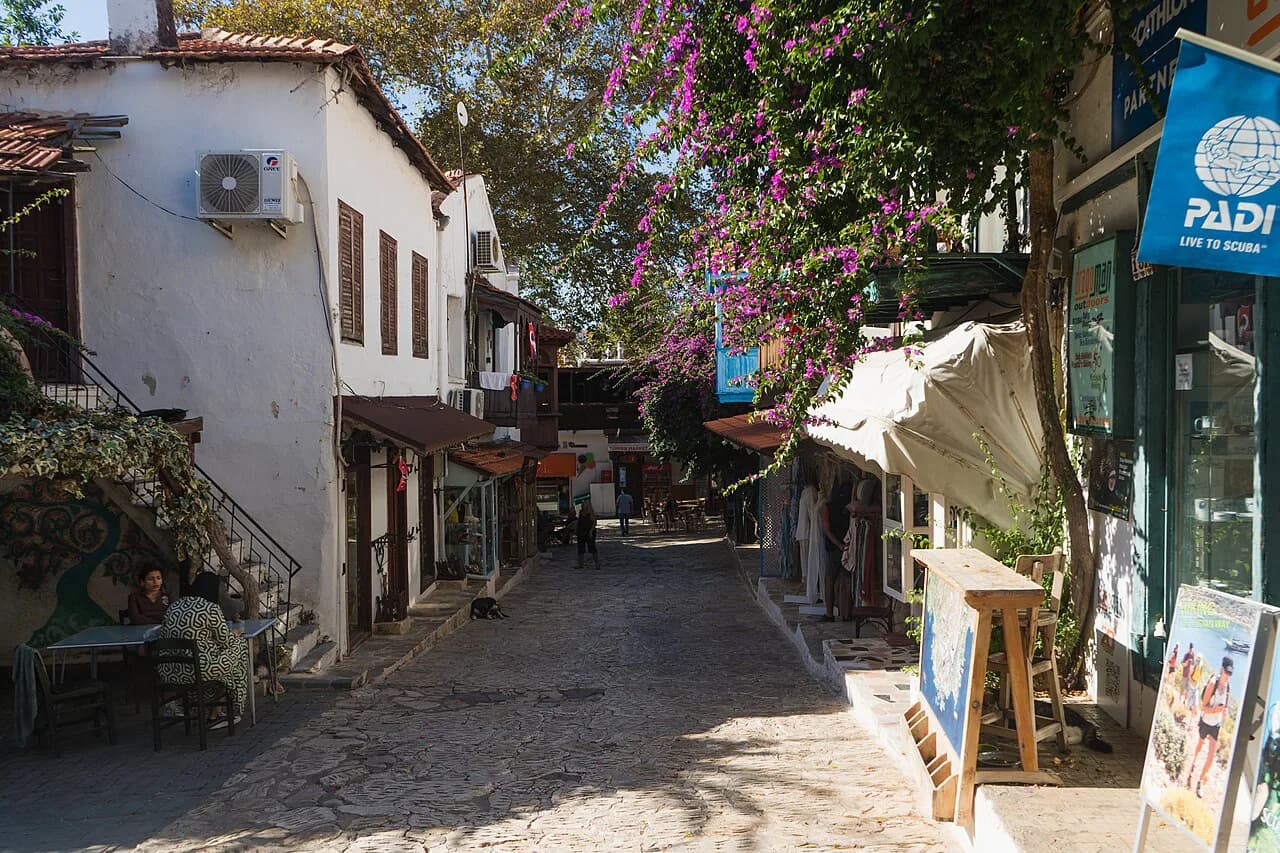
Take an hour to walk the village after the castle. The lanes are car-free, narrow and stepped, threading between stone houses and Byzantine cisterns, with terraces above the harbour for a drink. There is no circuit to follow; you wander up until the path runs out and come back down a different way.
Wear shoes with grip, since the polished stone is slick and the steps are uneven. If you are arriving by boat, agree a meeting point at the harbour rather than a time in the middle of the village, where the boat crew may not be able to wait.
How long Simena needs, and pairing it with Üçağız and the Kekova boat circuit
Give Simena two to three hours ashore: an hour for the climb, the castle and the theatre, and the rest for the lanes and a meal. On a half-day boat trip from Üçağız, that fits comfortably alongside a pass over the Sunken City. A full day adds the village of Üçağız itself and more of the bay.
Another option from the same stretch of coast is a ferry to Kastellorizo (Meis) from Kaş, which suits a separate day rather than a Kekova itinerary.
What a Kekova boat trip covers and what to check before booking
Most Kekova trips combine a slow pass along the Sunken City, a stop at Kaleköy for the castle, and time in one or two bays for a swim, often with lunch cooked on board. The exact mix, and whether Kaleköy is included at all, depends on the boat operator. Ask what the itinerary includes, how long you get ashore and whether food is part of the fare before you commit.
Book through a boat operator in Üçağız or Kaş rather than through a third party, and confirm the meeting point and return time in writing if you can. Summer departures fill up, so book a day ahead in high season. Fares vary by route and season, so compare quotes rather than assuming a fixed price.
Practical points: protection status, the climb to the castle, and heat in summer
Access to the castle and the ruins is not published with ticket prices or opening hours in the material for this guide, so ask at the harbour or with your boat operator on arrival about conditions and any charge on the day. Wherever you walk among the ruins, keep off the sarcophagi and walls.
Time your climb for early morning or late afternoon in July and August. The south-facing slope catches the sun all day, the path has little shade and the stone holds heat. Carry water, wear a hat and do not plan anything strenuous in the village directly after lunch.
Is the boat and the climb worth it?
Yes, if you want a Lycian village and castle that you reach only by water or on foot, with the Sunken City in view from the ramparts. The cost is the logistics: a boat from Üçağız, a steep climb and no road out. Build the day around a Kekova circuit and give yourself a full morning.
If you are based in Kaş or Demre, Simena fits easily into a Kekova boat day. If you are staying further east, pair it with a stop at Demre and the rock tombs at Myra, Turkey. Either way, confirm boat times locally before you set out.
Frequently Asked Questions
Can you drive to Kaleköy (Simena)?
No. No road reaches the village, which is the reason its character survived. You arrive by boat, usually from Üçağız, or on the footpath from Üçağız. A car gets you to Üçağız and no further.
What is the difference between Simena and Kekova?
Simena, now called Kaleköy, is the village and castle on the northern shore of Kekova Bay. Kekova is the wider bay and island area, and its Sunken City lies on Kekova Island across the water. A boat trip usually shows you both.
Is there an entrance fee for Simena Castle?
No ticket price or opening hours are set out in the visitor material for this guide. Ask at the harbour or with your boat operator on the day, and carry cash in Turkish lira in case there is a charge.
Sources
Notes for your next Turkey trip
Optional updates when we add or correct a town guide.
You might also like
Continue reading
More guides you'll find useful