Temple of Apollo in Side: Visiting the Harbour Ruins
The Temple of Apollo stands at the tip of Side's old town by the harbour, free to visit at any hour. Here's what survives, what to look for and how to plan it.
On this page
The Temple of Apollo in Side is a small, free, open-access ruin at the tip of the old-town peninsula, right beside the harbour. You need perhaps ten to fifteen minutes on site, more if you stay for the light, and it is best treated as one stop on a walk through Side rather than a ticketed attraction. This guide covers what stands there, what to look for in the stonework, how it fits with Side's other temples and ruins, and the honest trade-off of arriving at sunset.
What the Temple of Apollo is
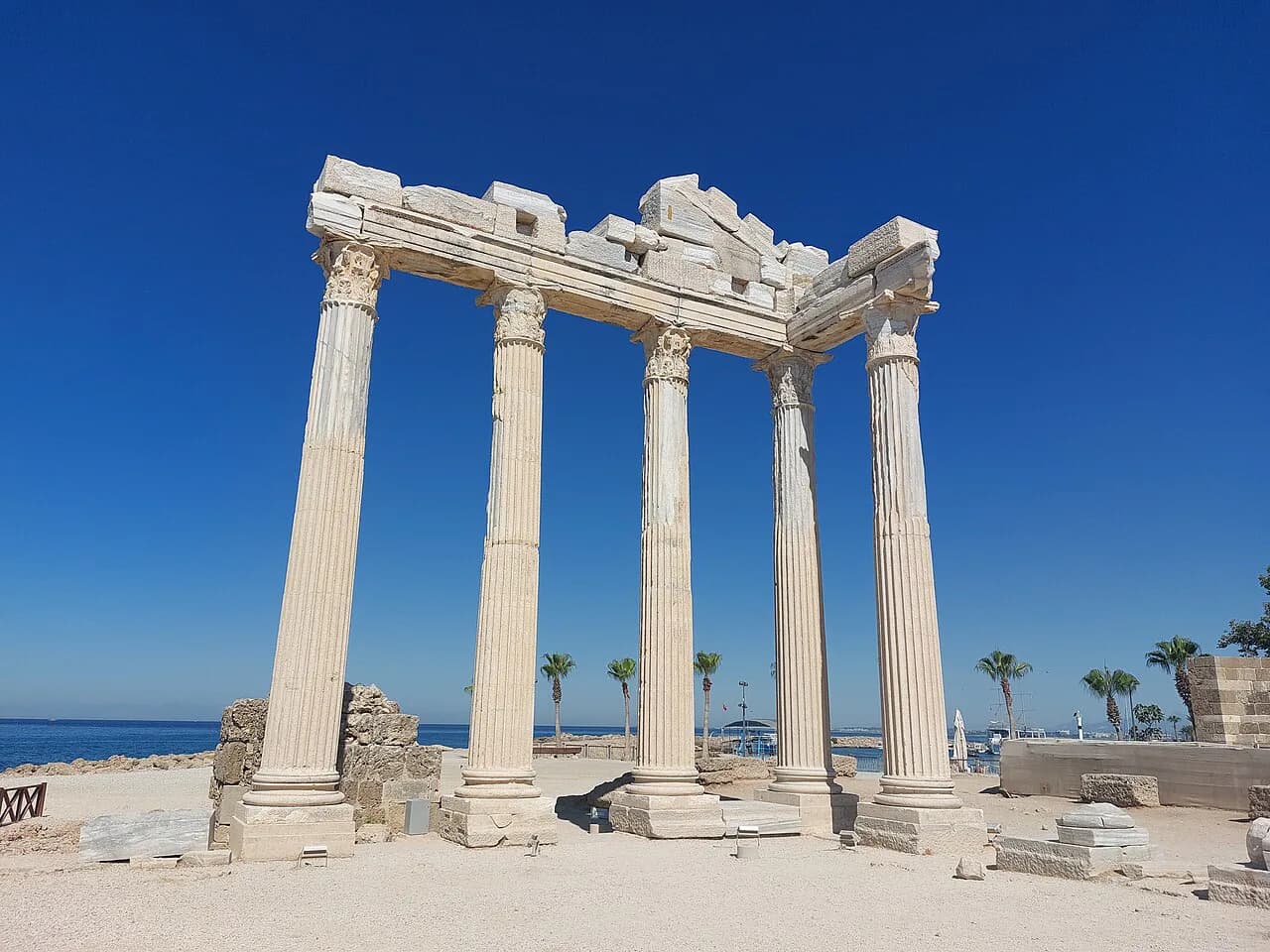
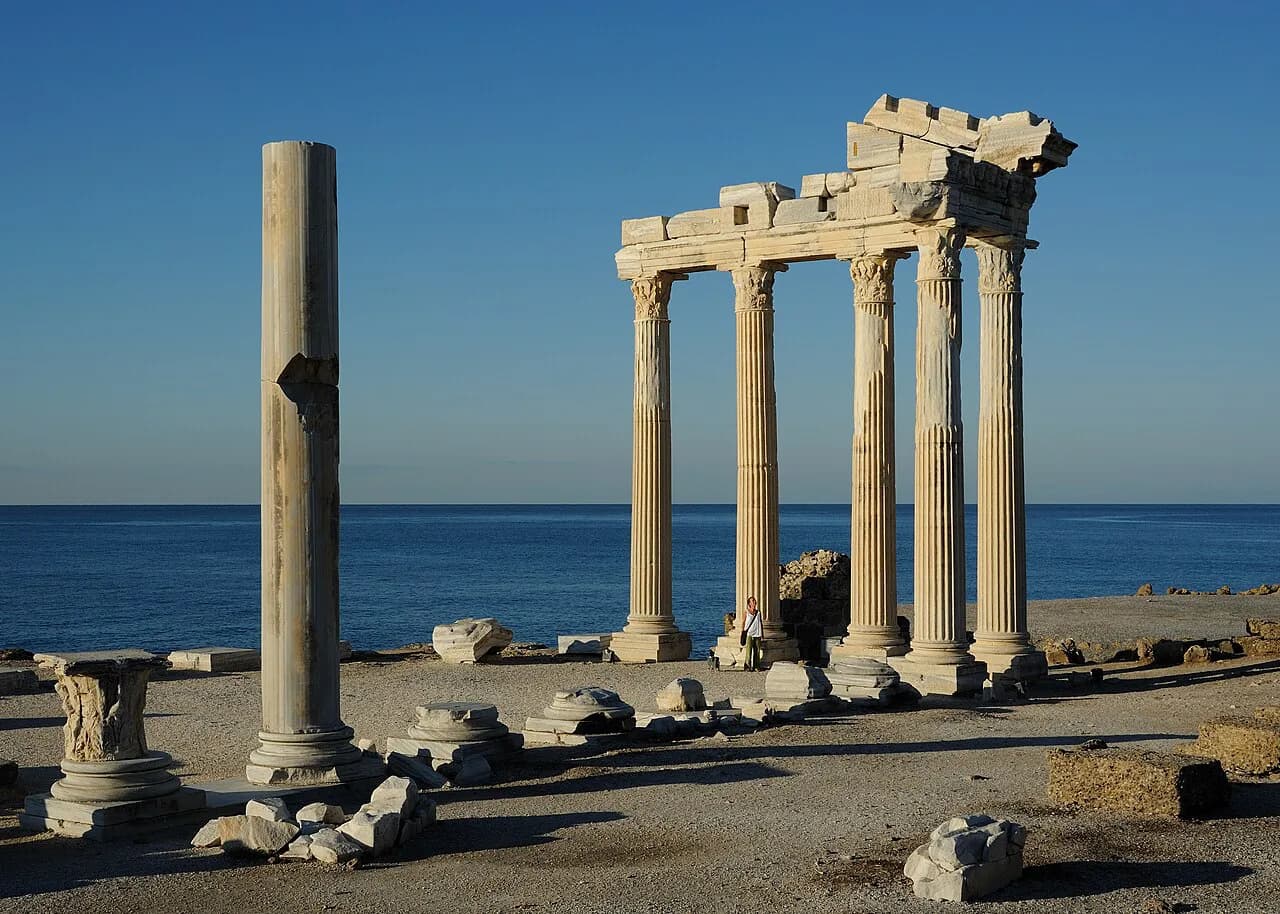
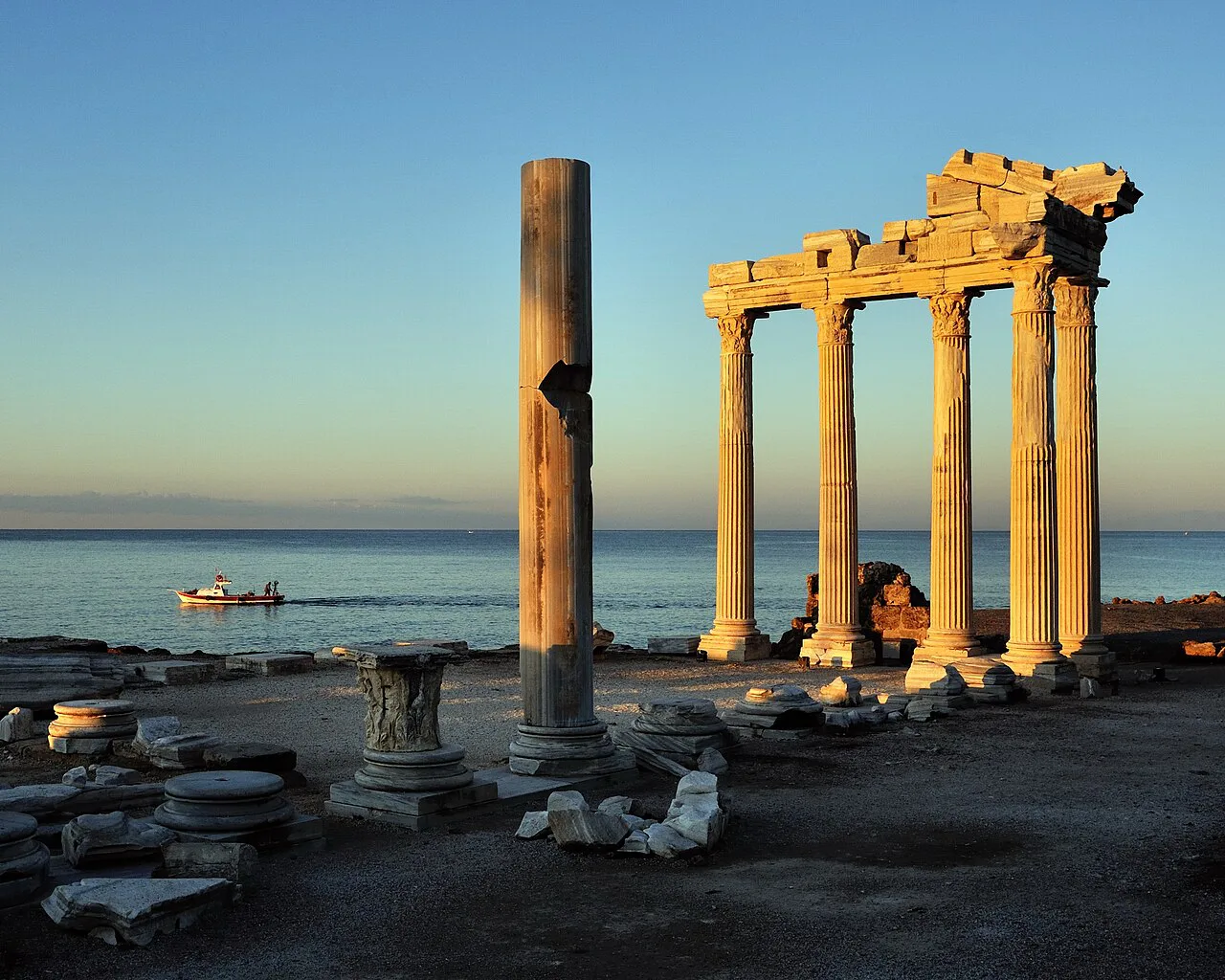
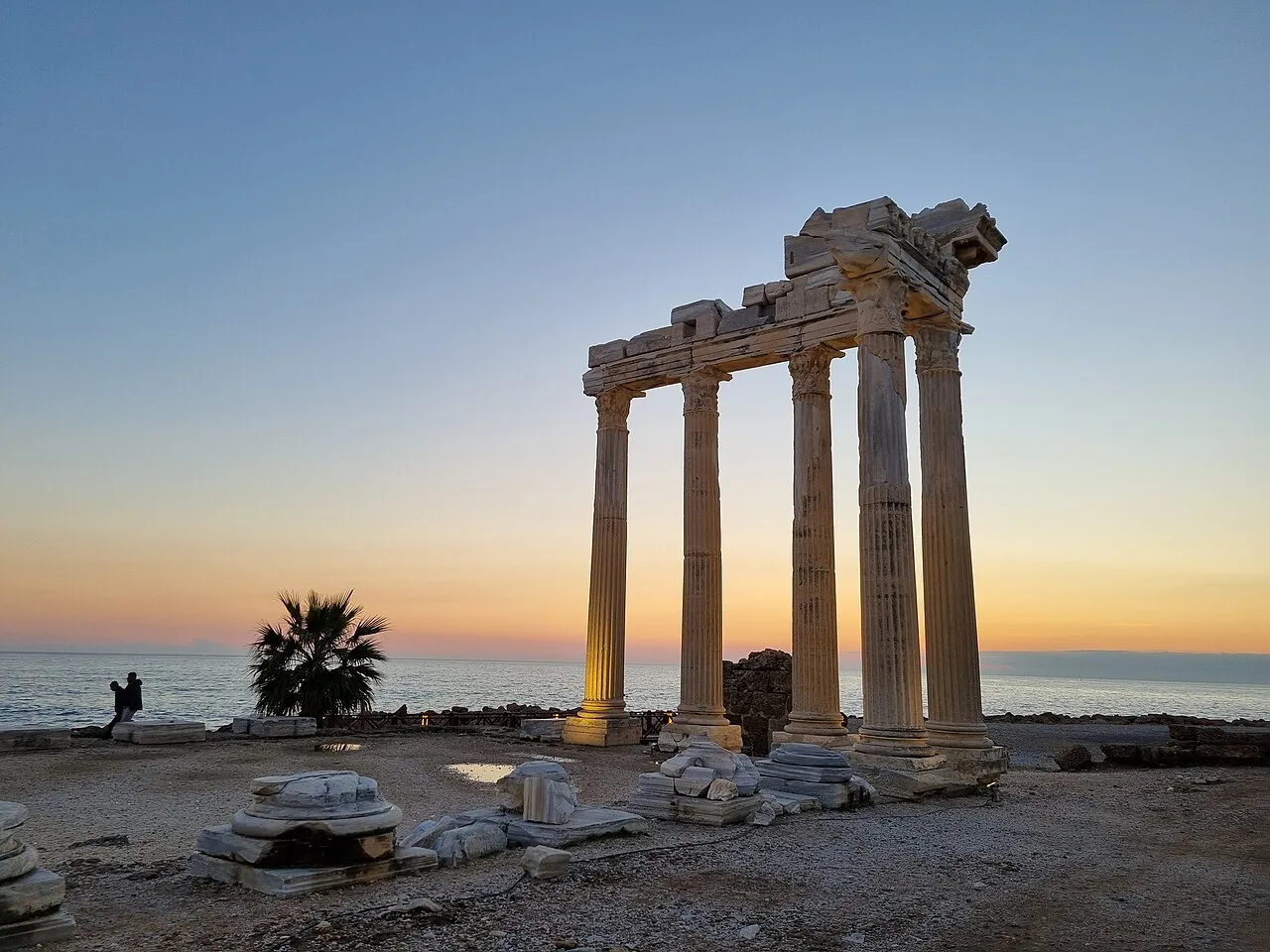
The temple was built around AD 150, in the second half of the 2nd century AD, in the Corinthian order and dedicated to Apollo, the god of light, beauty and the arts. As originally designed it carried eleven columns along each long side and six along each short side. Five columns stand today, re-erected in the 1980s, which is why the silhouette above the water reads as a fragment rather than a building.
Where it sits in Side old town
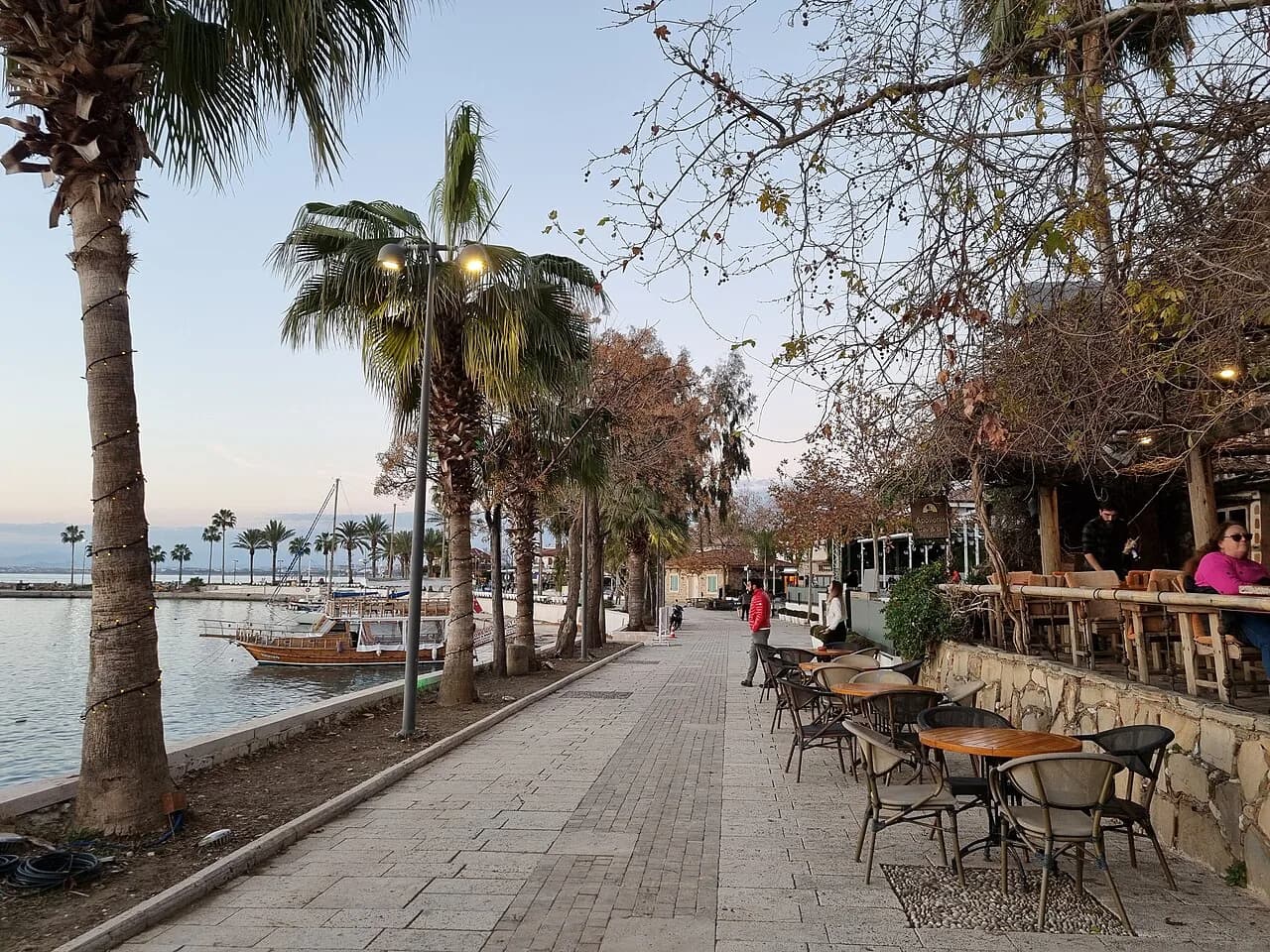
The temple stands at the very tip of the peninsula where the ancient settlement grew, next to the port, so it is visible from the harbour even before you reach it. Walking from the harbour towards the point takes only a few minutes on foot, and the approach is flat and easy to combine with the rest of the old town. The Temple of Athena and the remains of a 5th-century Byzantine basilica sit close by on the same coastal strip, which makes this the densest cluster of monuments in Side.
What you actually see
Look up rather than down: the frieze above the standing columns depicts the heads of Medusa, the mythological figure with a human female face and living snakes in place of hair. The platform the columns rest on, the stylobate, measures roughly 16 by 30 metres, which gives a sense of how much of the building is missing. A ruined temple with a handful of columns is the honest description, and it is still the most recognised landmark in Side.
The 1980s reconstruction
The five columns you see were re-erected in the 1980s under the supervision of Professor Jale İnan, using the original design as the guide. That campaign is the reason the temple has a recognisable colonnade today: nearly two thousand years of damage had left it far more fragmentary. Knowing this changes how you read the site, because the standing row is a modern reconstruction of an ancient form, not an untouched survival.
Free entry at any hour
There is no ticket booth and no gate: entry is free and you can visit at any time of day. That makes the temple easy to slot into a morning walk before the heat builds, or into the last hour of daylight. Because nothing closes, you set the timing rather than the site, which is worth remembering when you are building a day around Side's ticketed monuments.
Sunset and the trade-off
The temple is known above all for evening light, when the sun drops behind the columns and the whole point of the peninsula turns golden. The same quality that makes it photogenic draws a crowd, and the tip becomes busy precisely in the hour that looks best. Arrive early in that window if you want space at the rail, or come in the morning for a quieter look at the stonework and leave the sunset to the photographers.
Seeing the temple from the water
Many boat trips from Side run along this coastline and pass the peninsula, giving you the colonnade from the sea at an angle you cannot get on land. It is a different view rather than a better one, and it only works on a sailing day, so treat it as a bonus rather than the plan. If a river trip is the point of your day instead, the Manavgat river and its waterfall make a natural separate outing from the coast.
Side's other temples in one circuit
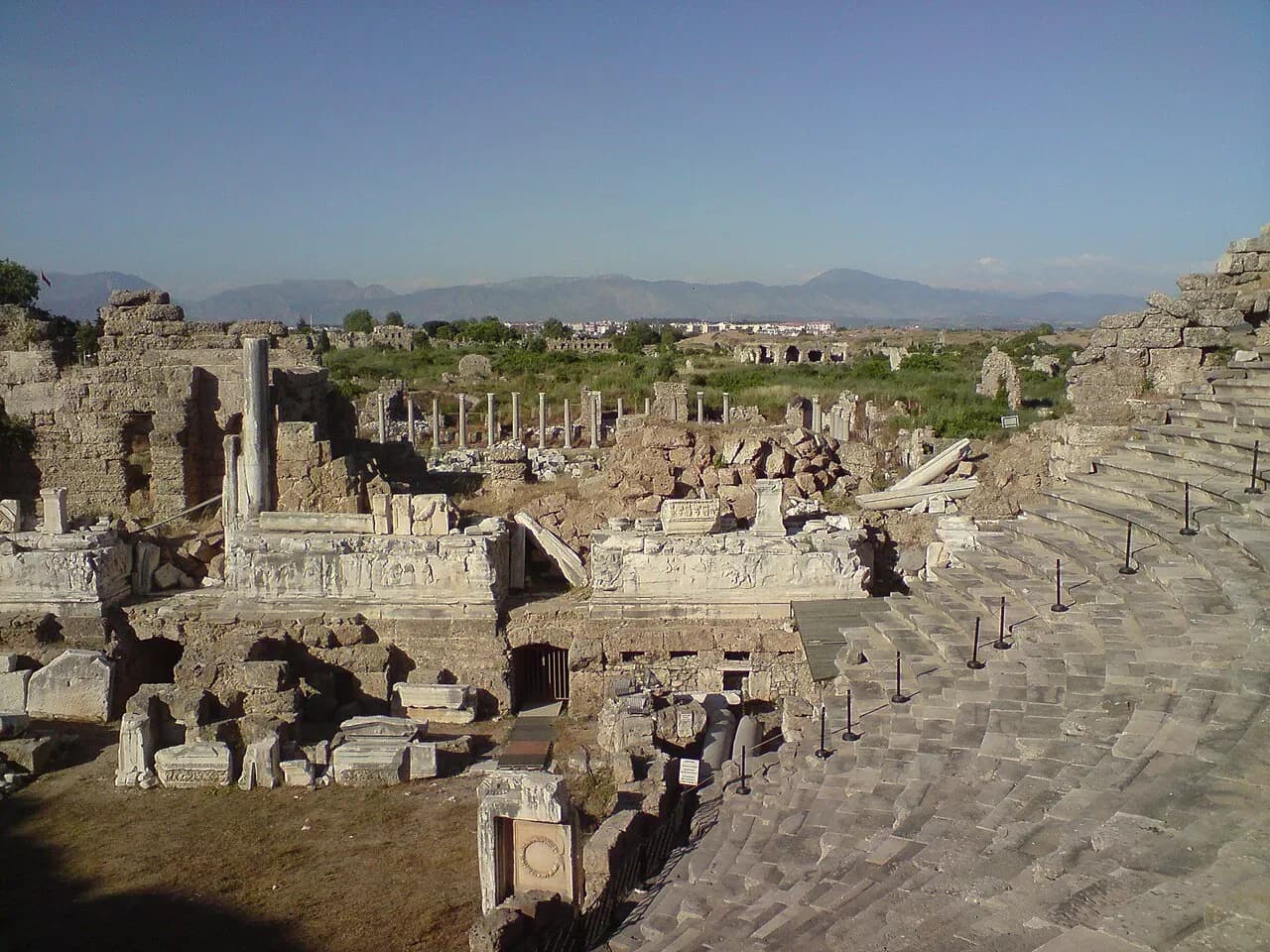
Apollo is only one of five temples known at Side. The scant remains of the Temple of Dionysus lie on the north-western side of the Roman theatre, the Temple of Men was a semicircular cult room on a different plan entirely, and the reconstructed Temple of Tyche now stands in the centre of the agora by the theatre. Add the basilica behind Apollo and Athena and you have a single walk that covers the whole religious footprint of the ancient city.
How long to allow and what to combine
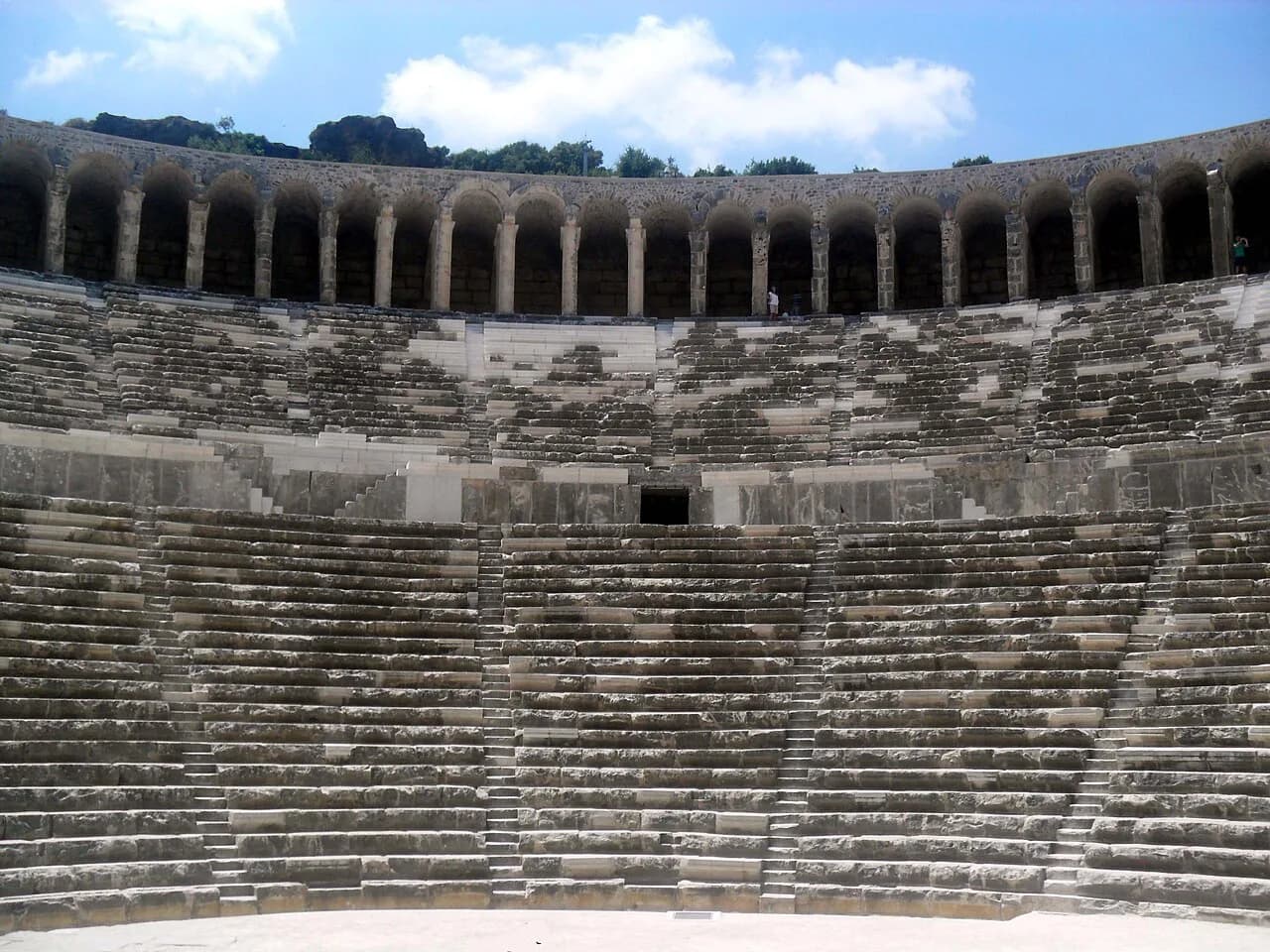
Give the temple itself ten to fifteen minutes, and the peninsula circuit with Athena, the basilica and the harbour an hour at an unhurried pace. Side's theatre and museum sit inland of the old town and will fill the rest of a half day. If you are touring Roman theatre architecture in the region, the Ancient city of Aspendos is the obvious next stop, and Perge Ancient City is the other major Pamphylian site within reach of Side.
Practical points before you walk down
Flat shoes are worth the trouble, since the tip of the peninsula is uneven stone and gravel rather than a paved promenade. Bring water in summer, because the exposed point has no shade and the walk back through the old town is warmer than the sea breeze suggests. The site is open and free, so the only variable is how many other people have had the same idea at the same hour.
Is the Temple of Apollo worth the walk?
Yes, as a short stop with a big view rather than a destination in its own right: five columns, a Medusa frieze, the sea on three sides and no ticket to book. Build it into a circuit with the old town rather than treating it as a ticketed attraction. If you want the golden-hour photograph, accept the crowd as part of the experience and arrive with time to spare.
Explore more Side guides
Frequently Asked Questions
Does the Temple of Apollo in Side still exist?
What survives is partial: five Corinthian columns re-erected in the 1980s on the ancient platform, with the frieze above them showing Medusa heads. The rest of the colonnade is gone, so you are seeing a reconstruction of the temple's form rather than an intact building.
Do you need a ticket for the Temple of Apollo?
No. The temple is free to enter and can be visited at any time of day, so there is nothing to book and no closing time to work around. That is what makes it easy to fit around Side's other monuments.
What destroyed the Temple of Apollo at Side?
Damage accumulated over nearly two thousand years, and the temple was in a far more fragmentary state before the 1980s reconstruction put five columns back up. It is one of several temples known at Side; Athena's stands beside it, and Dionysus, Men and Tyche are elsewhere in the ancient city.
Where exactly is the temple in Side old town?
At the tip of the peninsula beside the harbour, a few minutes' walk from the port. The Temple of Athena and a 5th-century Byzantine basilica are on the same coastal strip, so you can see all three together.
Sources
Notes for your next Turkey trip
Optional updates when we add or correct a town guide.
You might also like
Continue reading
More guides you'll find useful