Perge Ancient City: What to See and How to Visit
Perge is a Roman city about 17 km east of Antalya, with a stadium, theatre, Hellenistic gate and colonnaded street. Here is what to see and how to plan a visit.
On this page
Perge is worth visiting if you want Roman urban planning without the crowds of Ephesus: a stadium for 12,000 spectators, a theatre for 15,000 and a colonnaded street with a water channel down its centre, all about 17 km east of Antalya. Allow two to three hours on site, and treat it as the first stop of a Perge–Aspendos–Side day rather than a stand-alone outing.
This guide covers the headline monuments, a sensible walking order, getting there from Antalya by car or public transport, and how to fit the ruins around a half day. It also flags which finds, such as the Roman mosaics, are held in the Antalya Museum rather than on site.
What Perge is and where it sits in the Pamphylia plain
Perge lies in the Aksu district on the Pamphylia plain, roughly 17 km east of Antalya and close to the Mediterranean coast. It was once the capital of Pamphylia and grew rich on trade under Hellenistic and Roman rule, which is why the ruins read as a planned city rather than a scatter of fragments.
The site is large and open, with the monuments spread along and around the main avenue rather than clustered at an entrance. Coming from Antalya you approach across flat farmland, and the stadium appears on your right before you reach the central ruins.
The Turkish Wikipedia entry places Perge about 18 km east of Antalya in Aksu, so expect a short drive rather than a day trip into the mountains. The site sits on the open Pamphylia plain, which shapes how you plan a walk round it.
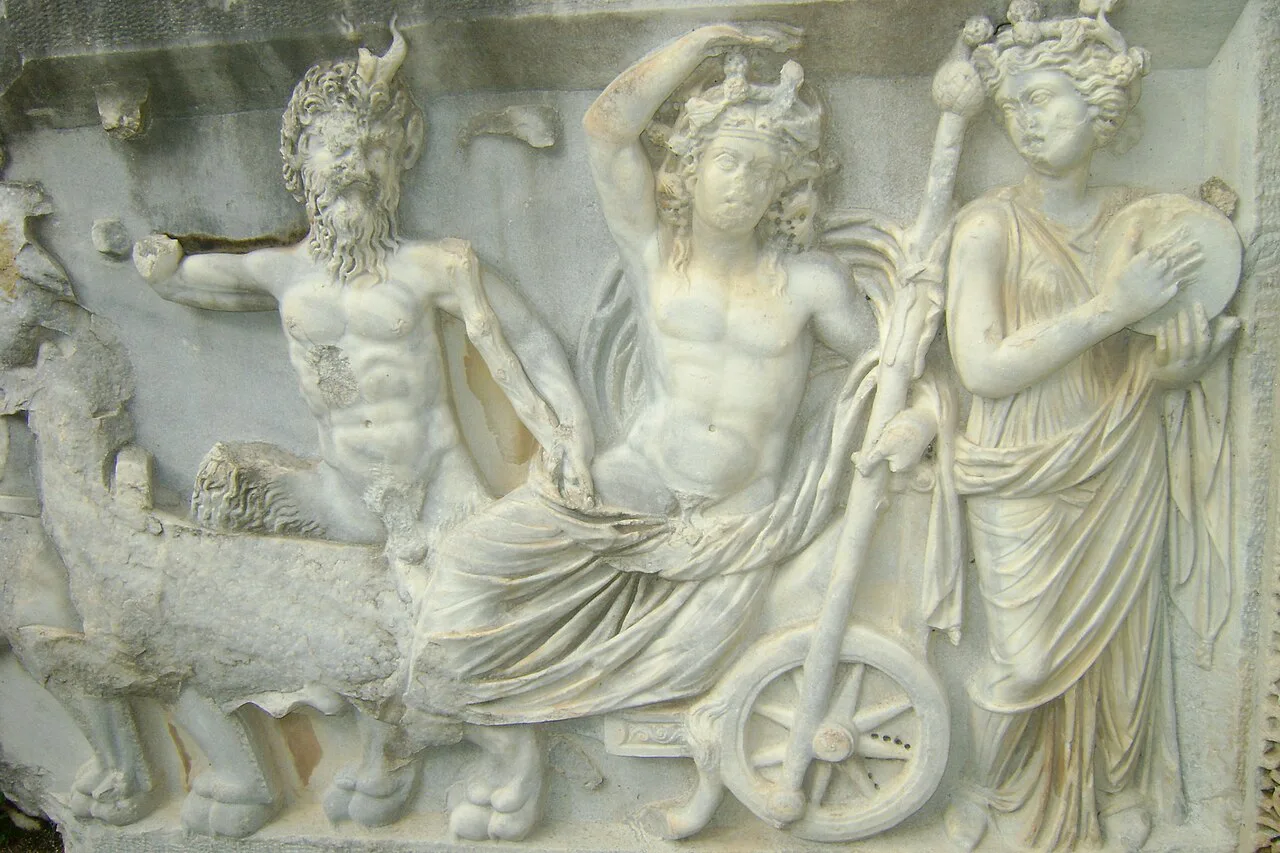
The stadium, theatre, Hellenistic Gate and Roman baths
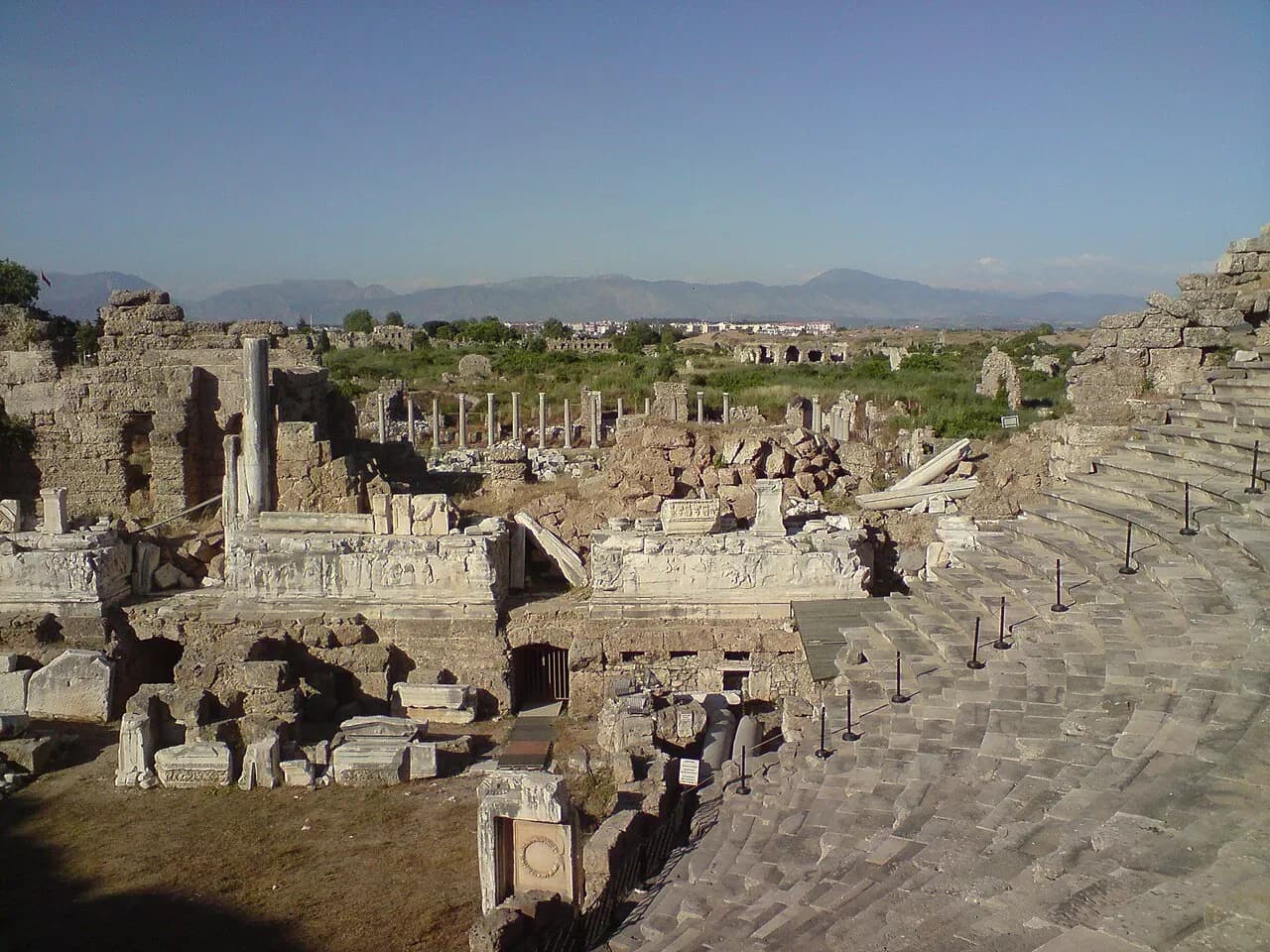
Start with the stadium, a long stone bowl with seating for about 12,000 and arches you can walk through beneath the tiers. It sits beside the theatre, which held around 15,000 and still shows the tiered seating and stage structures of a Roman entertainment building.
The Hellenistic Gate is the iconic entry to the city, flanked by towers and carved with inscriptions. Just beyond it stand the Roman baths, whose surviving halls and floors show how seriously the city took bathing and exercise; the site also had gymnasiums attached to that culture of public wellbeing.
A practical order is stadium and theatre first while it is cool, then the gate, baths and colonnaded street as you work inward. If you are short of time, the stadium and gate are the two set pieces to keep.
Walking the colonnaded street with its water channel
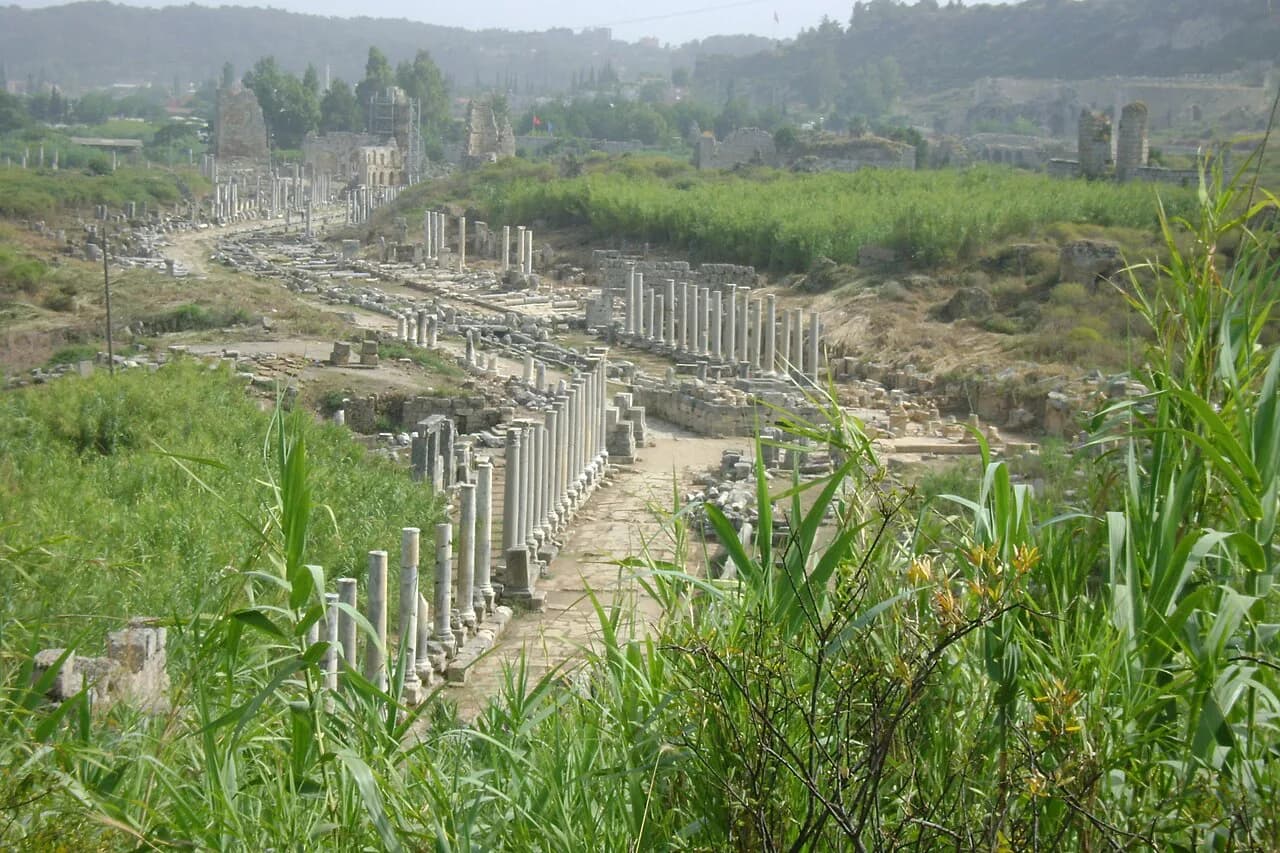
The colonnaded street is Perge's most striking feature: a long avenue flanked by marble columns, with a water channel running down the middle that once supplied the city. It served as the commercial and social spine, and walking it end to end gives you the clearest sense of the city's layout.
Look at the bases and column drums as you go; the street is where you notice how much of the urban design survives in place. Most of the site's walking is on uneven stone and gravel, so sturdy shoes matter more than distance covered.
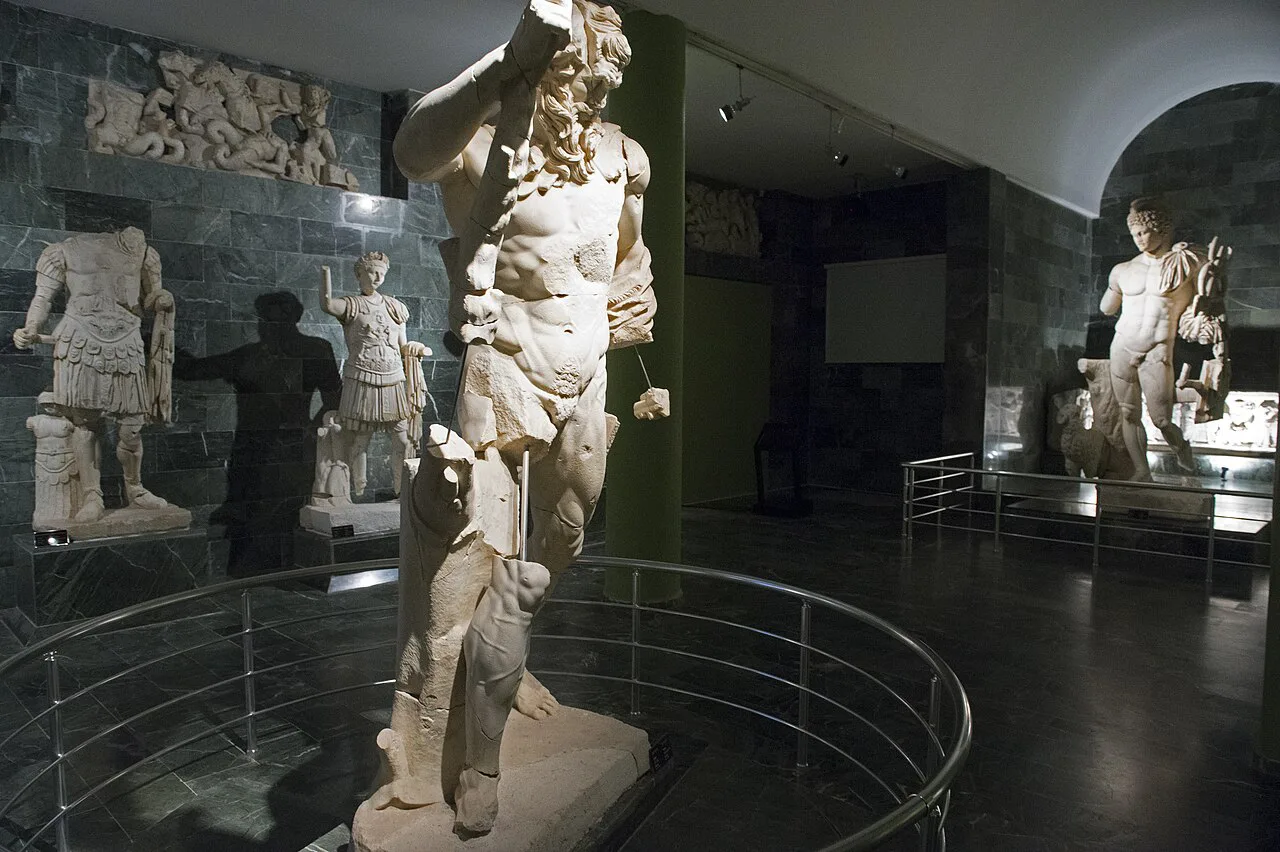
Mosaics, Artemis and St Paul: what the ruins tell you about the city
Perge was a centre of the cult of Artemis Pergaia, worshipped as the city's protector, and the city funded public buildings through wealthy benefactors. The Apostle Paul passed through Perge on his first missionary journey in the first century, which is why Christian pilgrims include it in itineraries.
Many of the Roman mosaics uncovered here are displayed in the Antalya Museum rather than left in situ, so plan a museum stop if floor mosaics are your interest. The site itself rewards attention to inscriptions, column carvings and the water system rather than to removed finds.
How long to allow and how to pace a half day
Give Perge two to three hours: enough to walk the stadium, theatre, gate, baths and colonnaded street without rushing. That makes it a half-day outing from Antalya, and a comfortable first leg of a longer day if you add Aspendos or Side.
Pace it in two blocks: the stadium and theatre first, then the gate, baths and colonnaded street on the way back. Keep water with you, because the site is exposed and there is little cover.
Getting to Perge from Antalya by car, public transport or taxi
By car, take the D400 east from Antalya, a drive of about 25 minutes to the site. By public transport, take a bus or tram to Aksu and then a taxi for the last stretch, which is the honest trade-off: cheaper than a taxi all the way, but with a change and a wait at the Aksu end.
Guided tours from Antalya typically include transport, a professional guide and stops at nearby sites, which suits travellers without a car. Whichever way you arrive, arrange your return before you start walking.
Pairing Perge with Aspendos and Side in one day
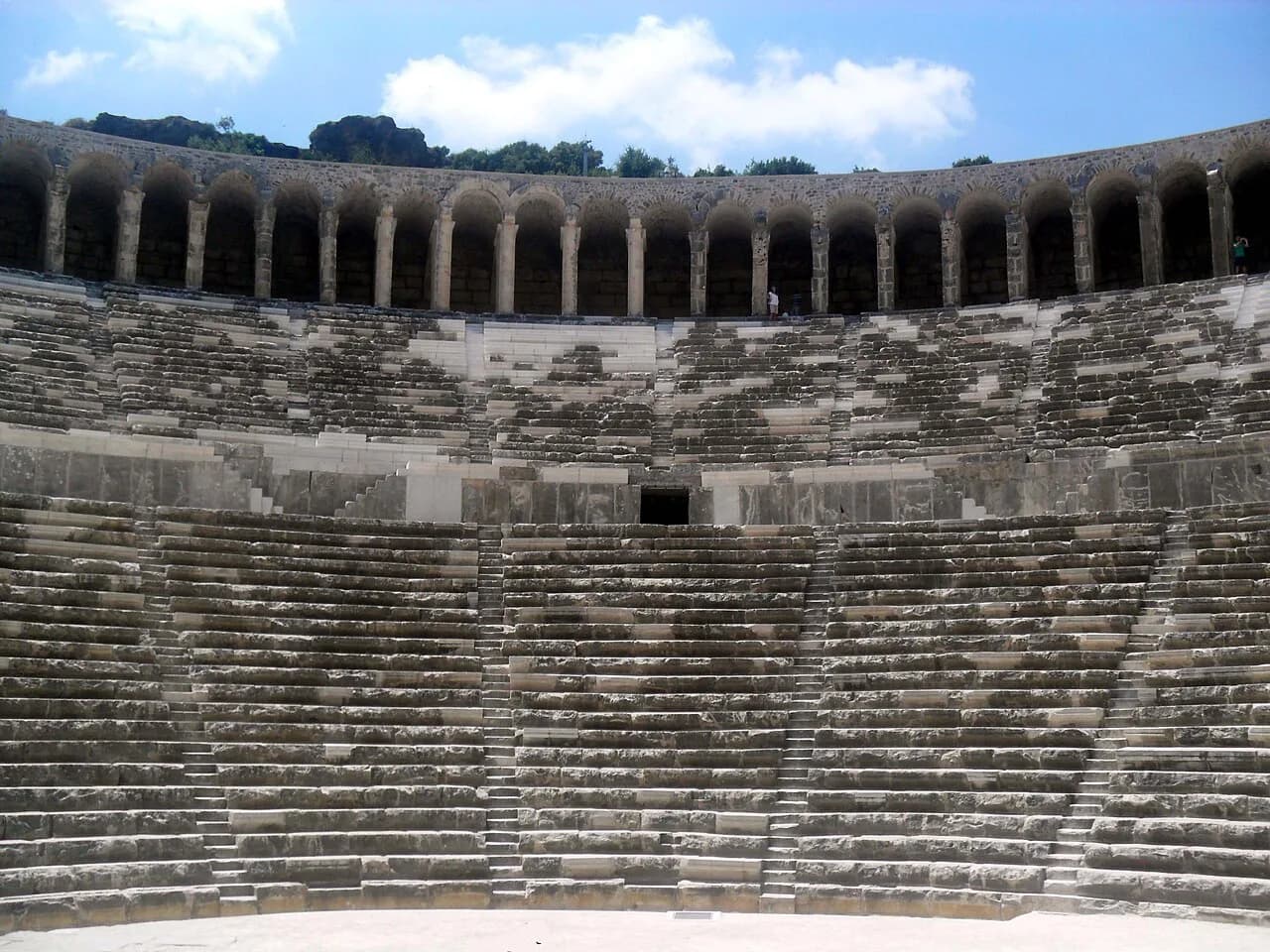
Perge works best as the first stop of a full day that continues to Aspendos, whose Roman theatre is the best-preserved in the region, then on to Side. Perge's colonnaded streets and stadium in the morning, Aspendos' stage in the afternoon, make a natural sequence along the same road east.
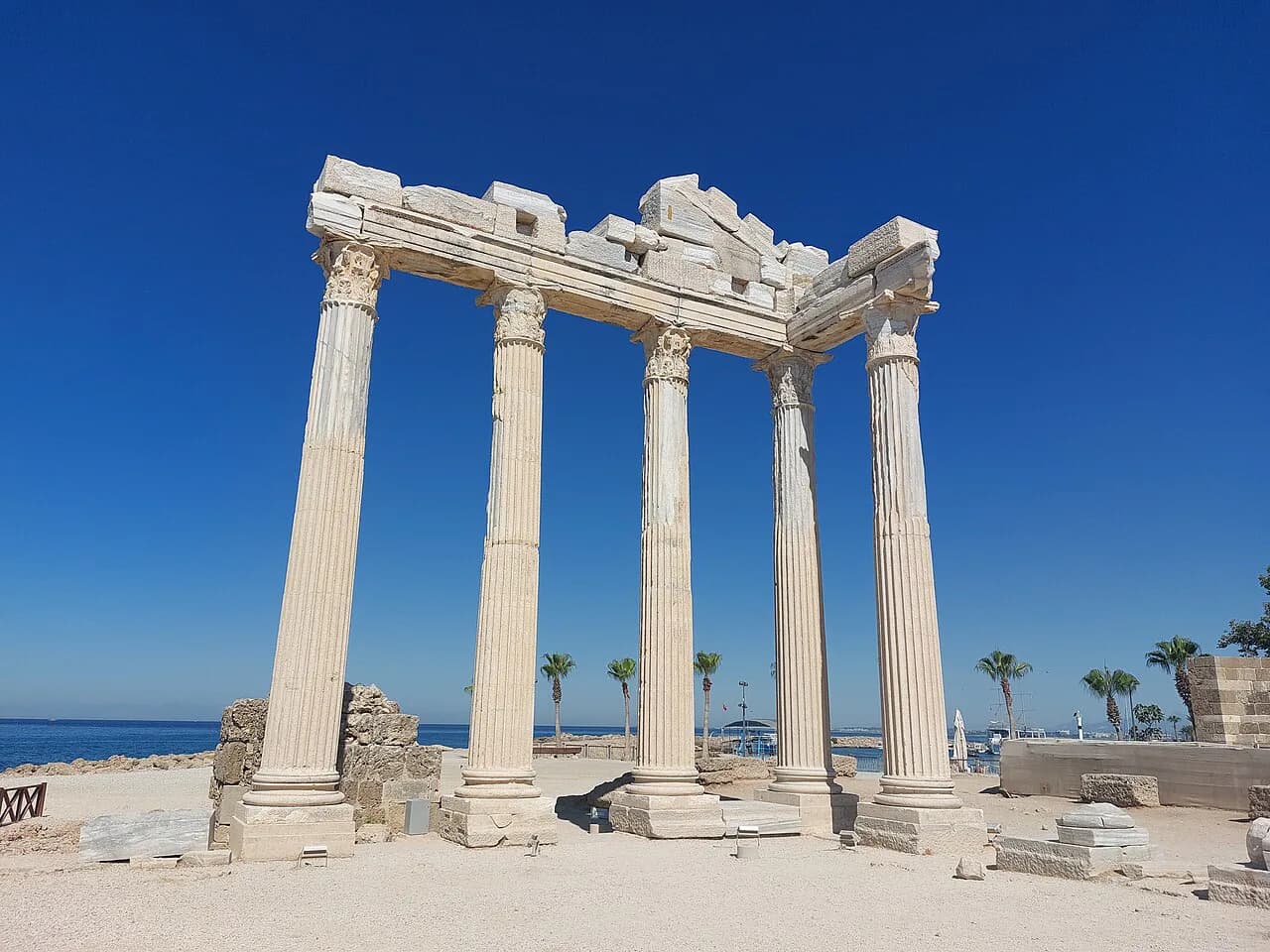
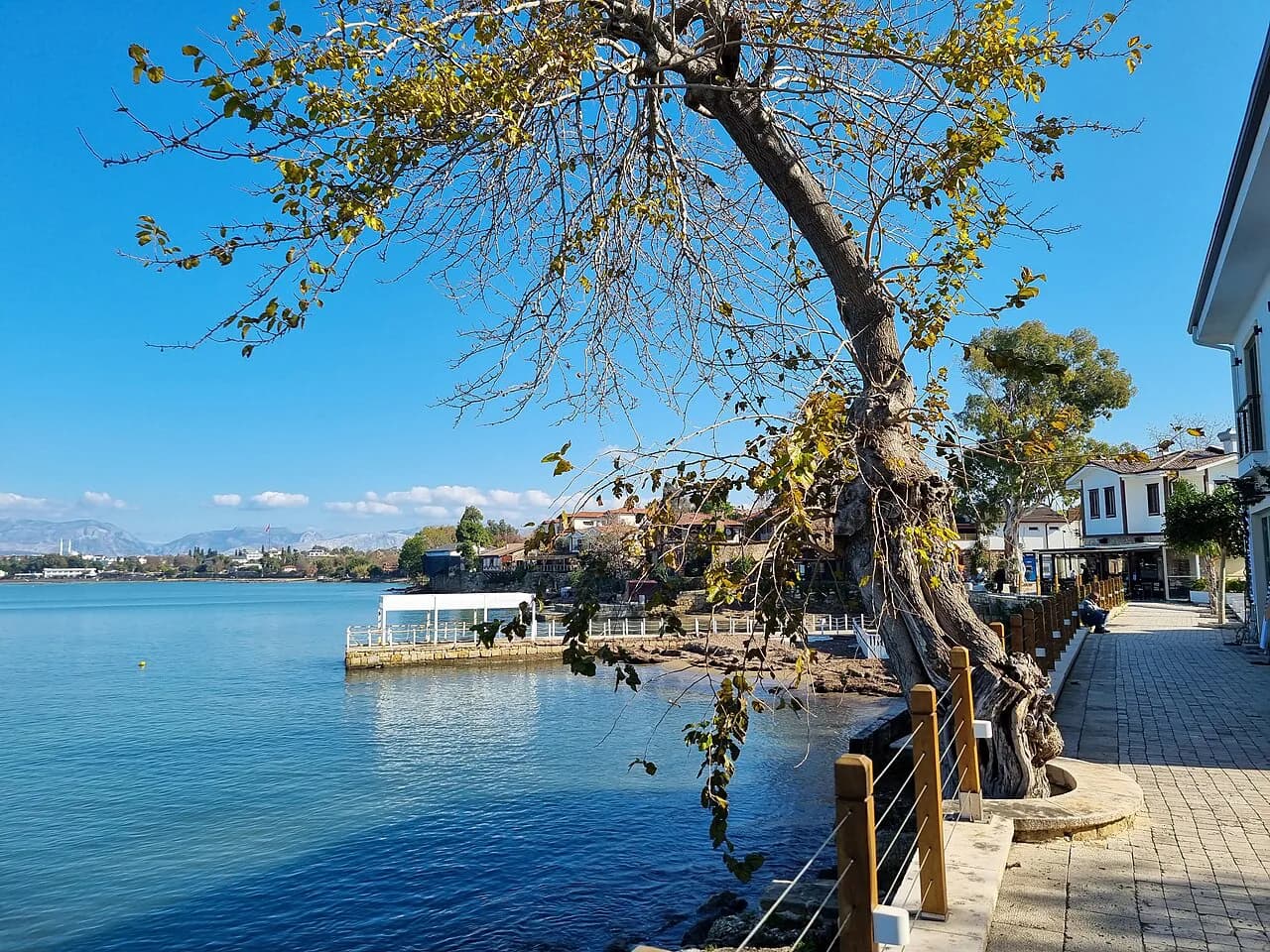
In Side, the Temple of Apollo on the harbour is the obvious late-afternoon stop before dinner, and it pairs well with the ruins at Perge and Aspendos thematically. Build in driving time between the three; each needs an hour or more on foot, so start early.
What to expect from a guided tour of Perge
A guided tour of Perge brings expert commentary on the stadium, theatre, gate and baths, plus transport from Antalya and often stops at Aspendos or Side. That saves you the Aksu change and the taxi, but it ties you to the group's pace at each monument.
Entry to the site costs roughly 100 Turkish lira in 2024 according to Megapass, with tours priced higher and usually including transport and guiding. Ask what the tour includes before booking, and check the current entry fee at the ticket window.
Is Perge worth the detour?
Yes, if you want a large Roman city you can walk through in two to three hours without Ephesus-level crowds. Skip it only if your schedule already holds Aspendos and Side and you are short of a full day.
Book the day around the D400 and start early: stadium and theatre first, colonnaded street last, with Aspendos and Side as the afternoon. A car or a guided tour removes the Aksu change, and either way you should confirm the current ticket price before you set out.
Explore more Side guides
Frequently Asked Questions
Is it Perge or Perga?
Both names refer to the same Pamphylia city; Perge is the Turkish and standard form, and Perga is the form used in older English and biblical contexts. Use Perge for signs, maps and transport.
What is Perge called today?
The ruins are known as Perge Antik Kenti and lie in the Aksu district of Antalya province, about 17 km east of the city. The modern settlement nearby is Aksu rather than a town on the ancient site.
Is Perge worth visiting?
Perge rewards a visit for its stadium for around 12,000, its theatre for around 15,000 and its colonnaded street with a central water channel. Two to three hours covers it, and it combines naturally with Aspendos and Side.
Sources
Notes for your next Turkey trip
Optional updates when we add or correct a town guide.
You might also like
Continue reading
More guides you'll find useful