Aphrodisias: What to See at the Ancient City of Aphrodite
Aphrodisias is a Greco-Roman city near Geyre in Aydın, with a 270-metre stadium, a Temple of Aphrodite and its own sculpture school. Here is what to see.
On this page
Aphrodisias is worth the detour for its stadium, its Temple of Aphrodite and its sculpture school, and it delivers them without the coach-tour crush that defines Ephesus. The site sits in the Dandalas valley near the village of Geyre, in Karacasu district of Aydın, on level ground that slopes gently south-west. This guide covers the named monuments in walking order, the time the site needs, and how the drive from the Pamukkale side works. Check ticket prices and opening hours before you set out.
What Aphrodisias is and why it stands apart from Ephesus
Aphrodisias is a Greco-Roman city named for Aphrodite, the goddess of love, and was the capital of the ancient Roman province of Caria. Ephesus gets most of the attention among Turkey's ancient sites, but Aphrodisias spreads over a large area that has been well preserved and restored, and it is easy to lose yourself in the ruins because the large crowds it probably deserves have not arrived. Treat the quiet as one visitor's account rather than a promise for your date.
The city's wealth came from fertile fields, wool and cotton, and a renowned school of marble sculpture whose products travelled across the Roman world. The temple at the centre later became a Christian basilica by swapping the columns around, one of the site's oddest architectural sights.
Where Aphrodisias is: Geyre, Karacasu and the Dandalas valley
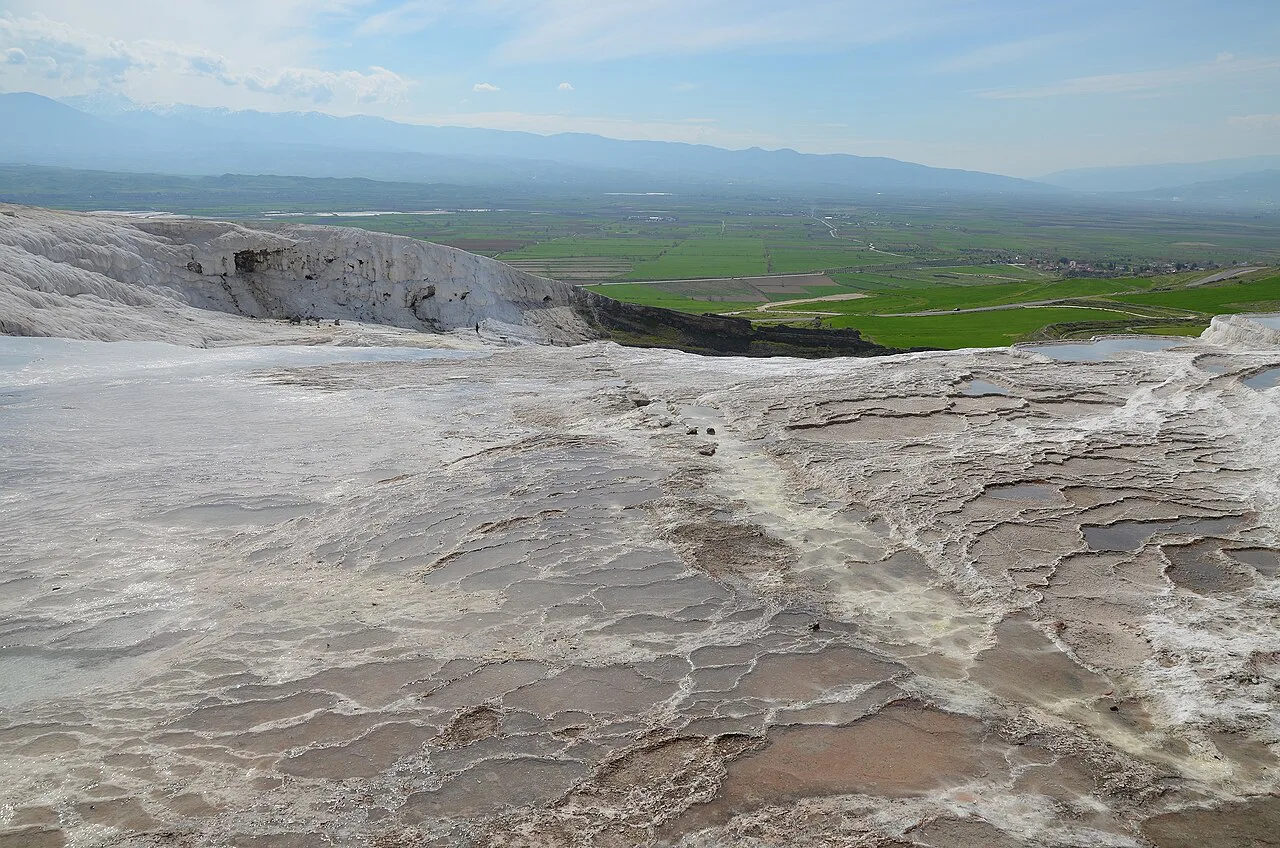
Aphrodisias lies near the village of Geyre in Karacasu district, Aydın province, in the Dandalas River valley below the Babadağ range at around 500 metres above sea level. The ancient city occupies a level piece of ground that inclines slightly to the south-west, which makes the walking order straightforward once you are through the gate.
For a trip on the Pamukkale side, treat Aphrodisias as a separate inland run rather than a stop on the travertine terraces. The site sits in a side valley of the Meander basin, and Turizm.net places it 38 km south of Nazilli on the Karacasu road. If you are already planning the white terraces, see the wider things to do in Pamukkale before deciding whether Aphrodisias gets its own half-day.
The stadium: 270 metres of stone seating
A plaque on site describes the stadium as the largest ancient stadium in the world and one of the best preserved, and that superlative is the site's own wording rather than an independent verdict. It runs 270 metres from end to end, and standing at one end the other seems very far away under the midday sun. The crowd that filled it once came from the whole region for the contests held below.
Walk the full length if you can, because the scale only registers from the far end looking back. The seating is exposed, so carry water and a hat and keep the stadium away from the early afternoon in summer. Pair it with the theatre and the baths rather than treating it as a photo stop, since the three together show how public life was spread across the city.
The Temple of Aphrodite and its conversion into a basilica
The Temple of Aphrodite is the heart of the site, and its Ionic columns are visible from the Karacasu approach with the city walls in front of them. The cult of Aphrodite was one of the most famous in the ancient world, and the city took its name from the goddess of nature, beauty, love and plenty. When Christianity became the state religion, the names Aphrodite and Aphrodisias were erased from inscriptions; attempts to rename the city Stavrapolis failed and locals kept using Caria.
What you see now is a building that changed religion without changing footprint: the temple became a Christian basilica by rearranging its columns. Look for the joins and reused masonry, which tell the story better than any label. The temple sits near the centre of the site, a natural pivot between the stadium end and the theatre end.
The Tetrapylon, the Sebastion and the Hadrian Baths
The Tetrapylon is the four-way gateway that frames the temple beyond. The Sebastion is the relief-decorated structure linked to the imperial cult, and the Hadrian Baths are the bathing complex that anchored one side of the civic centre. Treat these as a compact loop before walking on to the stadium or the theatre.
The baths were the social heart of the city, and the sequence of cold, warm and hot rooms is what makes a Roman bath legible. The Sebastion's reliefs reward a slowed pace, and they carry the sculpture school's signature that runs through the whole site.
The theatre, the agora and the wealthy city blocks
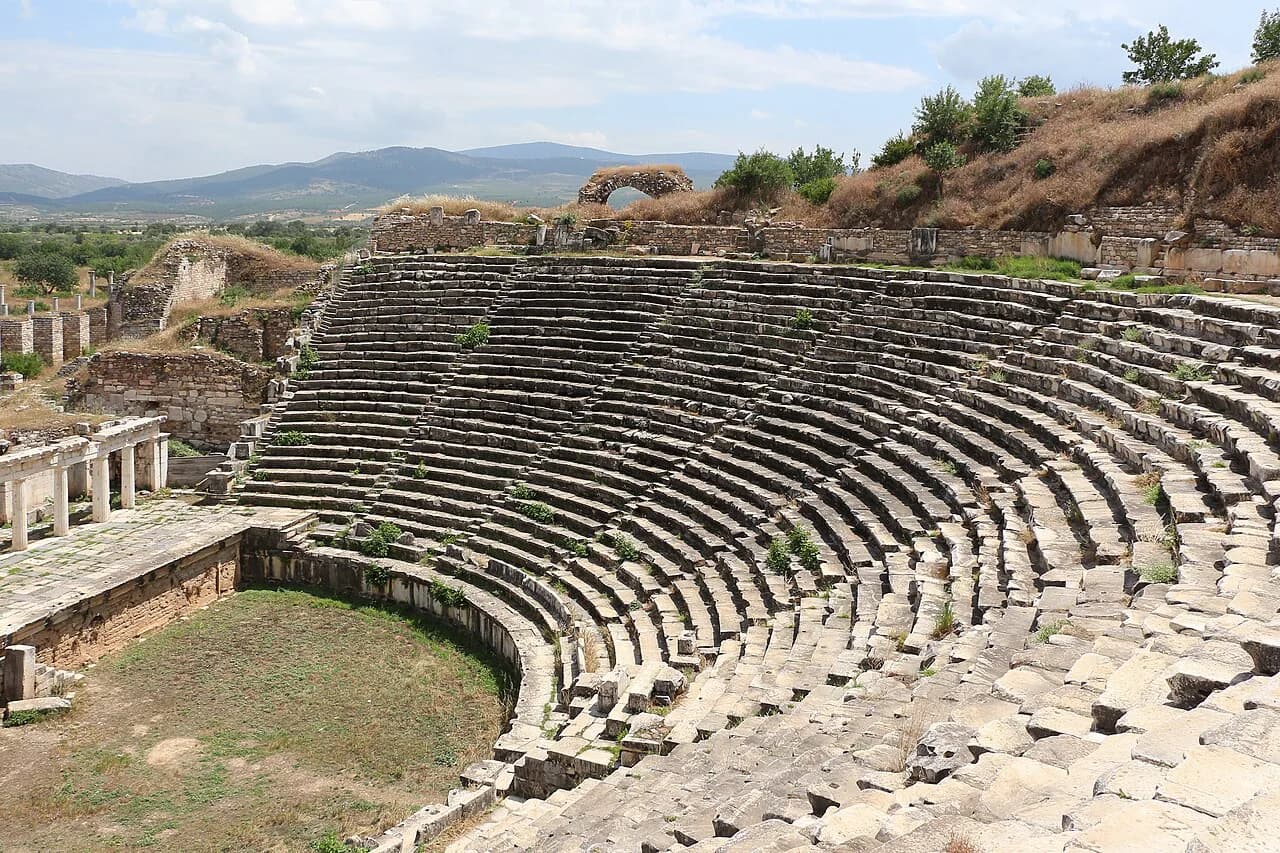
The theatre is cut into the acropolis hill, a 24-metre rise that gives a view over the whole city and was one of the first two areas settled. From the seating you can see the agora and the city below, which makes the theatre the best orientation point on site. The acropolis also holds traces of prehistoric occupation, with seven layers identified from the Bronze and Iron Ages.
Below the theatre, the agora was the civic and commercial centre, and some larger houses nearby take up a whole city block and reveal a wealthy, prosperous community. The houses make ordinary life imaginable, since most of the homes of average people have not been uncovered. Look for the long pool with fountains at each end that forms one boundary of the civic space.
The sculpture school and the marble that made the city famous
Aphrodisias was home to a renowned school of marble sculpture, and its craftsmen exported finished work across the Roman world. The school is not a single building; it is a thread to follow through the Sebastion reliefs and the temple's carved details.
Look at the carving depth and the drill work on the reliefs, which is where the school's hand shows most clearly. A slow pass through the Sebastion and the temple precinct will give you more of the school than any single labelled stop.
How long Aphrodisias needs and how the site is laid out
Give Aphrodisias three to four hours if you want the stadium, temple, theatre, baths and house blocks without rushing. The ground is level but slopes slightly south-west, so a natural route runs from the Tetrapylon and temple through the civic centre and up to the theatre, then across to the stadium at the far end. Walking times between monuments are short, so the limit is heat and attention rather than distance.
The city developed around the agora and the temple without genuine town planning, so expect to wander a little between monuments. Use the acropolis and the theatre as your landmarks, and keep the stadium for the cooler end of the day if you can.
Getting there: driving from Nazilli or Karacasu
The usual approach is by road: from Nazilli, Turizm.net puts Aphrodisias 38 km south on the Karacasu road, and the ruins announce themselves with the city walls and temple columns on the horizon. Drivers coming from the Pamukkale side should plan the run as a separate outing rather than a stop en route, since the valley road adds real time to the day. There is no station at the site, so base the drive on the nearest towns.
If you are relying on public transport, ask locally about dolmuş services from Nazilli or Karacasu, because timetables change with the season and are best confirmed in person. Organised day tours sometimes include Aphrodisias, so check the tour company's own listing to see what the day covers. For the geography of the terraces and spa town, the Pamukkale map is a useful planning aid before you fix the driving order.
Aphrodisias as a UNESCO World Heritage Site since 2017
Aphrodisias was added to the UNESCO World Heritage List in 2017, after Turkey first put it forward in 2009. The archaeologist Kenan Erim spent 30 years uncovering the site and is buried there. The listing is a reason to treat the ruins as a destination rather than a filler stop.
What to pair it with: Hierapolis and Pamukkale
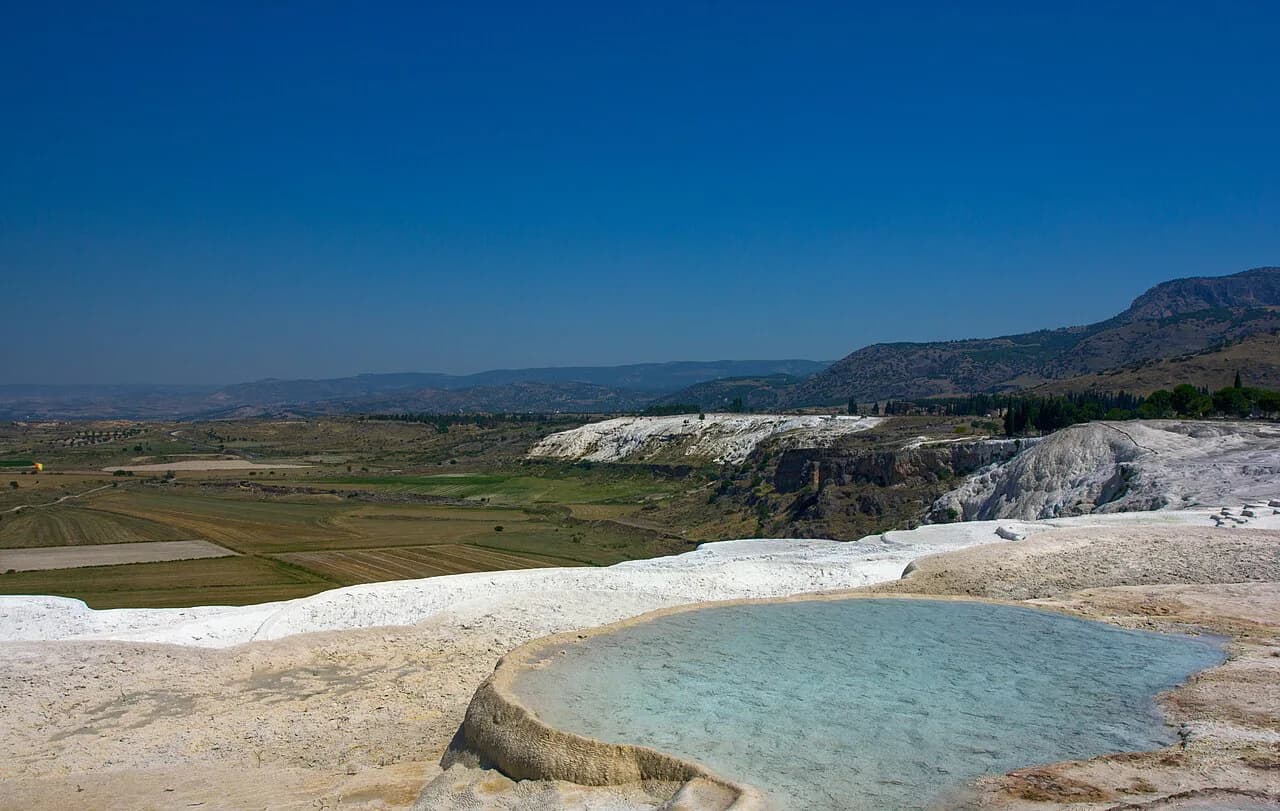
The obvious pairing is Hierapolis, the Roman spa city above the white terraces, where the theatre and the Gate to Hell sit within the same archaeological landscape as the travertines. The two sites differ in character: Aphrodisias is a marble city in a green valley, Hierapolis a spa town on the heights. If you have only one full day based on the Pamukkale side, choose one and do it properly rather than splitting the hours.
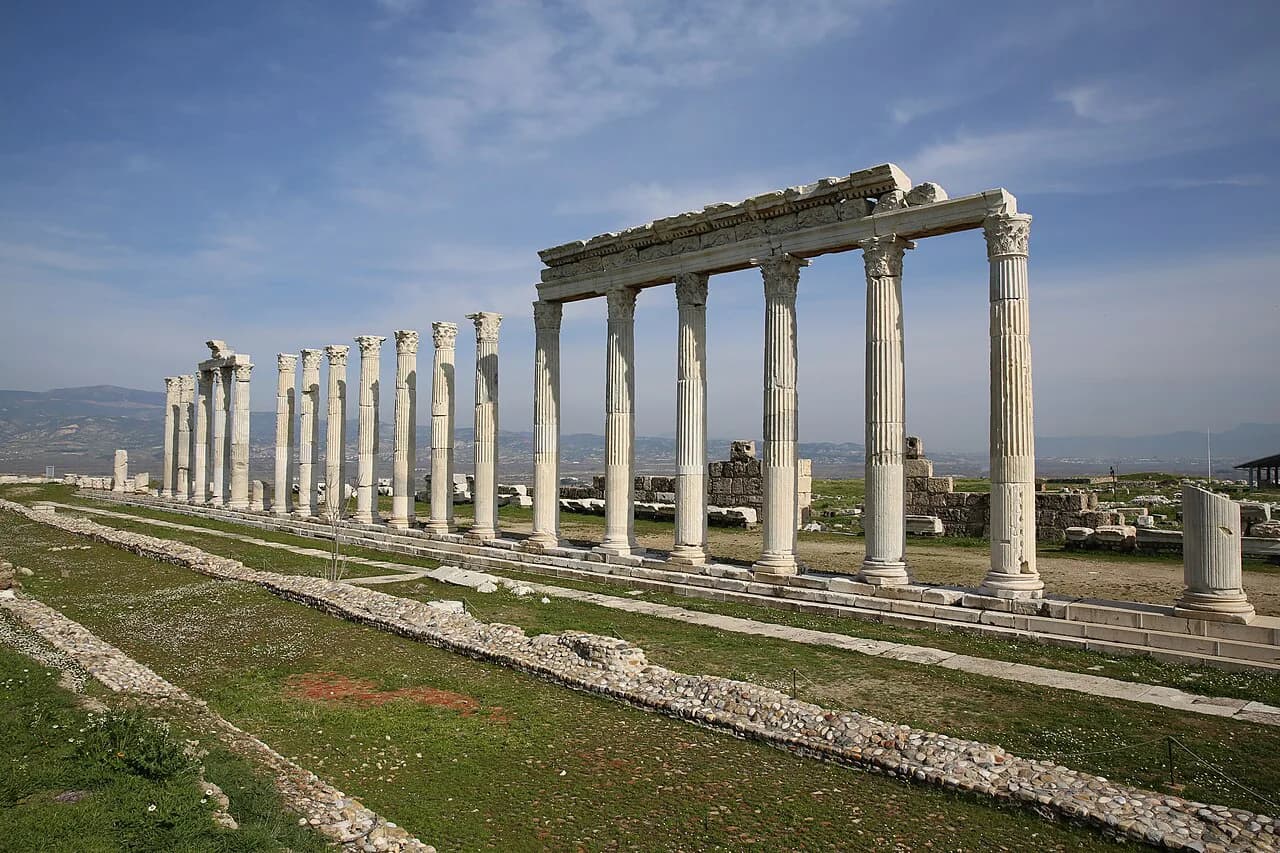
Build the day around the heat: start early, carry water, and save the exposed stadium for the cooler end. For the region's other ruins, Laodicea on the Lycus fits a driving loop if you have a second day.
What to know before you go: crowds, heat and exposed ground
Aphrodisias has not drawn the coach crowds of Ephesus, so you can often have the stadium or the temple largely to yourself, which is exactly why it rewards a slower visit. The trade-off is exposure: most of the site is open ground with little shade, and the midday sun is fierce in summer. Carry more water than you think you need and time the stadium and theatre outside the hottest hours.
The site is a working archaeological zone, so sections can be roped off and the visible extent of the ruins changes as excavation continues. Check the current opening hours and ticket arrangements before you travel, since those details change with the season, and confirm any Müzekart validity at the gate on arrival.
Is Aphrodisias worth the inland detour?
Yes, if you are based on the Pamukkale side or at Kuşadası and can give it a half-day. The stadium alone justifies the drive, and the temple, the Sebastion and the sculpture school reward a slower pace than the coastal ruins usually get. The trade-off is extra road time, so treat Aphrodisias as its own outing rather than a stop squeezed between the terraces and the airport.
Plan the drive from Nazilli or Karacasu with a full morning in hand, take the monuments in the order the ground suggests, and check the official opening details before you set out. Then decide whether the same trip has room for Hierapolis and the travertines, or whether Aphrodisias deserves the whole day.
Explore more Pamukkale guides
Frequently Asked Questions
Where exactly is Aphrodisias in Turkey?
Aphrodisias is near the village of Geyre in Karacasu district, Aydın province, in the Dandalas valley below the Babadağ range. It lies about 500 metres above sea level on level ground that slopes gently south-west. The site is reached by road from Nazilli, which lies about 38 km north on the Karacasu road.
Is Aphrodisias quieter than Ephesus?
Aphrodisias has not drawn the same coach crowds as Ephesus, and visitors often describe having the monuments largely to themselves. Treat that as a description of past visits rather than a guarantee for your date.
What is the stadium at Aphrodisias known for?
The stadium runs 270 metres, and a plaque on site describes it as the largest ancient stadium in the world and one of the best preserved. That superlative is the site's own wording, and the scale is best appreciated by walking its full length.
When was Aphrodisias made a UNESCO World Heritage Site?
Aphrodisias was added to the UNESCO World Heritage List in 2017, after Turkey first put it forward in 2009.
Do I need to book Aphrodisias in advance?
There is no station at the site, so most visitors arrive by car, taxi or organised tour. If you are relying on public transport, ask locally about dolmuş services from Nazilli or Karacasu, and check current ticket and opening arrangements before you set out.
Sources
Notes for your next Turkey trip
Optional updates when we add or correct a town guide.
You might also like
Continue reading
More guides you'll find useful