Hierapolis: What to See at the Pamukkale Ancient City
Plan a visit to Hierapolis above Pamukkale: the Roman Theatre, the Plutonium, the Necropolis and the colonnaded Plateia, and how long the ruins take.
On this page
Hierapolis is worth at least half a day, and a full one if you want the far corners as well as the theatre and the main street. The ancient city sits on the plateau directly above the white travertines, so the ruins and the terraces form one combined site rather than two separate trips. This guide covers what to see, the order to walk it in, how long it takes and how to reach it from Pamukkale village and Denizli.
The city was founded in the 3rd century BC on the site of a Phrygian cult place and grew into a Greco-Roman thermal spa, which is the basis of its World Heritage listing. Read it as a spa town with a theatre attached, not a ruined acropolis, and the layout makes far more sense.
What Hierapolis is today and where it sits above the travertines
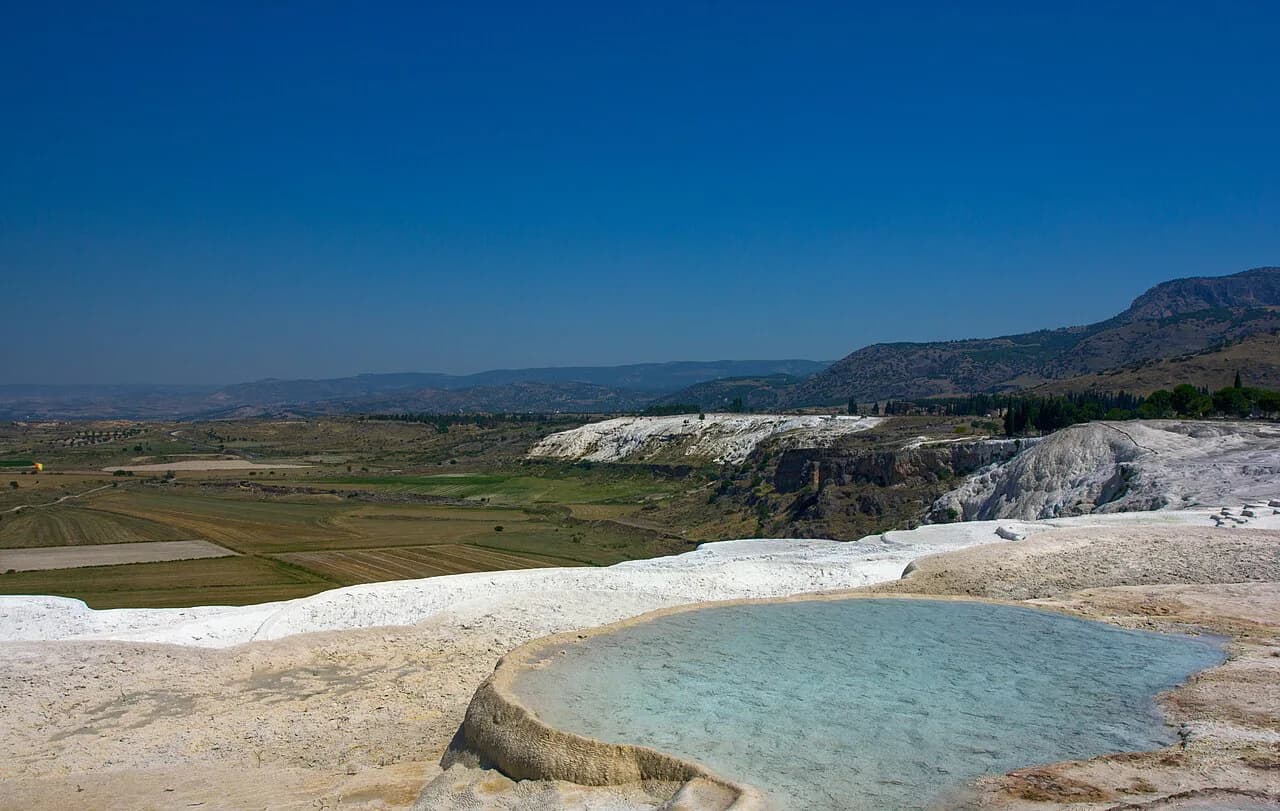
Hierapolis occupies the flat ground at the top of the travertine slope, with the modern village of Pamukkale below and the city of Denizli about 18 km to the south. The Ministry of Culture and Tourism lists the ruins and the travertines together as one archaeological site, entered from the top or the bottom of the hill.
That geography decides your day. Walk the ruins first while it is cooler and quieter, then take the travertine descent late, when the white surface glows in low light and the coach groups have gone. If you have time on the ground beyond the site, the wider selection of things to do in Pamukkale covers the village, the terraces and the surrounding valley.
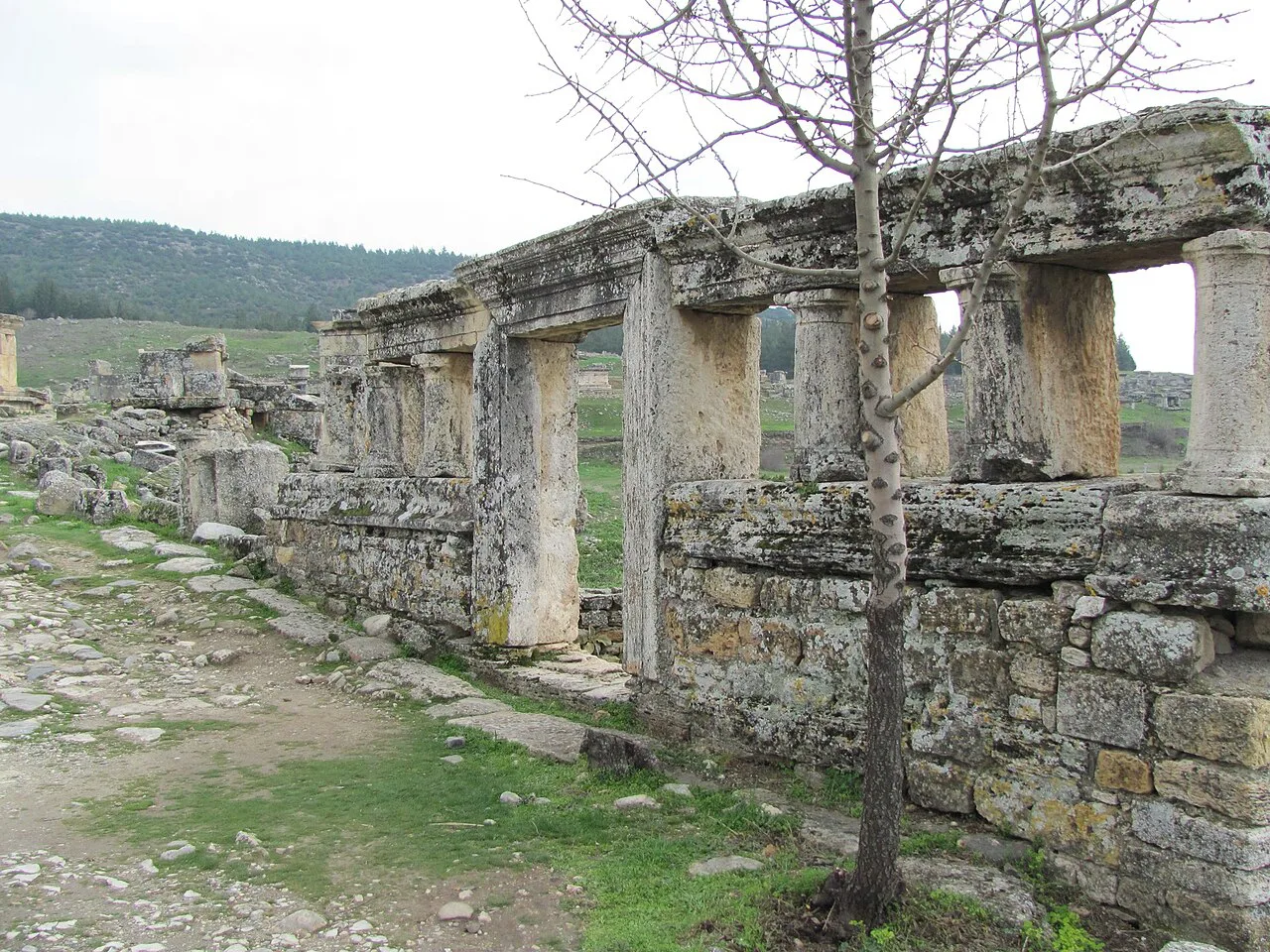
Hierapolis and Pamukkale on one ticket: how the site is entered and laid out
The ruins and the travertines sit inside a single ticketed area, and a guide written after a visit describes the two attractions being covered by one entrance fee, with the archaeology museum and the Antique Pool charged separately. Treat any figure you read online as a snapshot of its year rather than a price you will pay.
Check the current combined ticket on the official museum portal before you travel, since Turkish lira prices move quickly and the site page is the only reliable source for what is included. If you hold a Müzekart, ask at the gate whether it is accepted. The portal sells tickets for the Hierapolis-Pamukkale site directly.
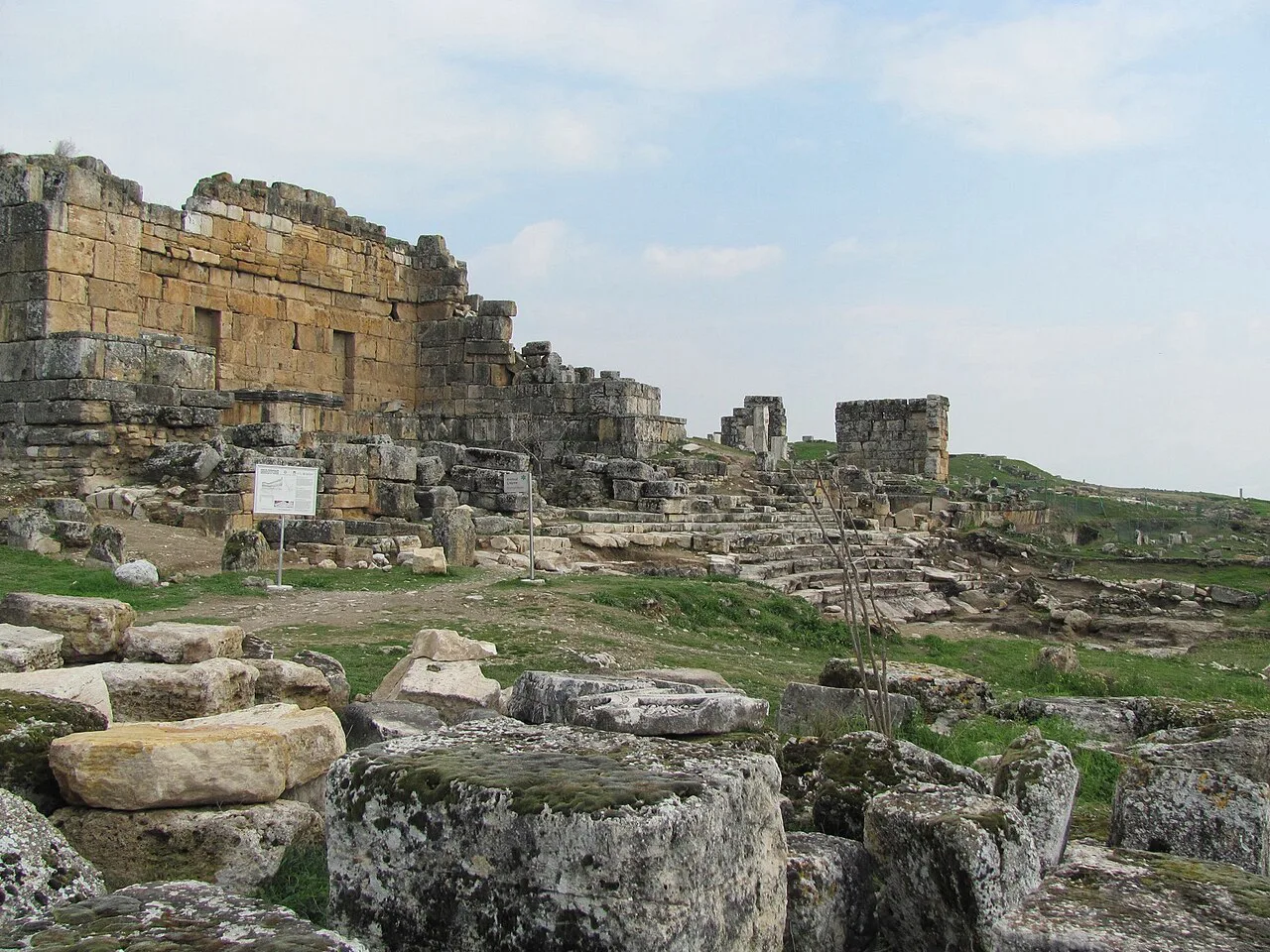
The Roman Theatre: seating, reliefs and the views over the Lycos Valley
The theatre is the best-preserved building on the site and the natural first stop from the South Gate. Its stage building carries detailed reliefs, and the upper rows give a wide view across the Lycos Valley and back over the ruins. A travel account puts capacity at around 20,000 spectators with VIP seating at the front, while noting that the vaulted passages under the seating carried the structure through the earthquakes that felled much else.
The theatre was built in 129 for a visit by Hadrian and thoroughly renovated under Septimius Severus, so the fabric you see reflects successive imperial patronage rather than one build. Allow fifteen minutes in the seats and another ten climbing to the top tier, which is steep and unshaded.
The Temple of Apollo and the Plutonium, the Gate to Hell
Below the theatre, the foundations of the Temple of Apollo mark the sanctuary at the heart of the city, dedicated to Apollo Lairbenos. Beside it lies the Plutonium, the small cave that Roman writers connected with the underworld and its toxic spring. Two visitors died here in recent years and the subterranean entrance is now closed off, so you view the opening from a distance rather than entering.
Do not plan on a descent into the cave. Look for the temple platform and the paved approach, then move on; the atmosphere of the spot comes from the setting rather than from anything you can walk into.
The Antique Pool and its submerged column fragments
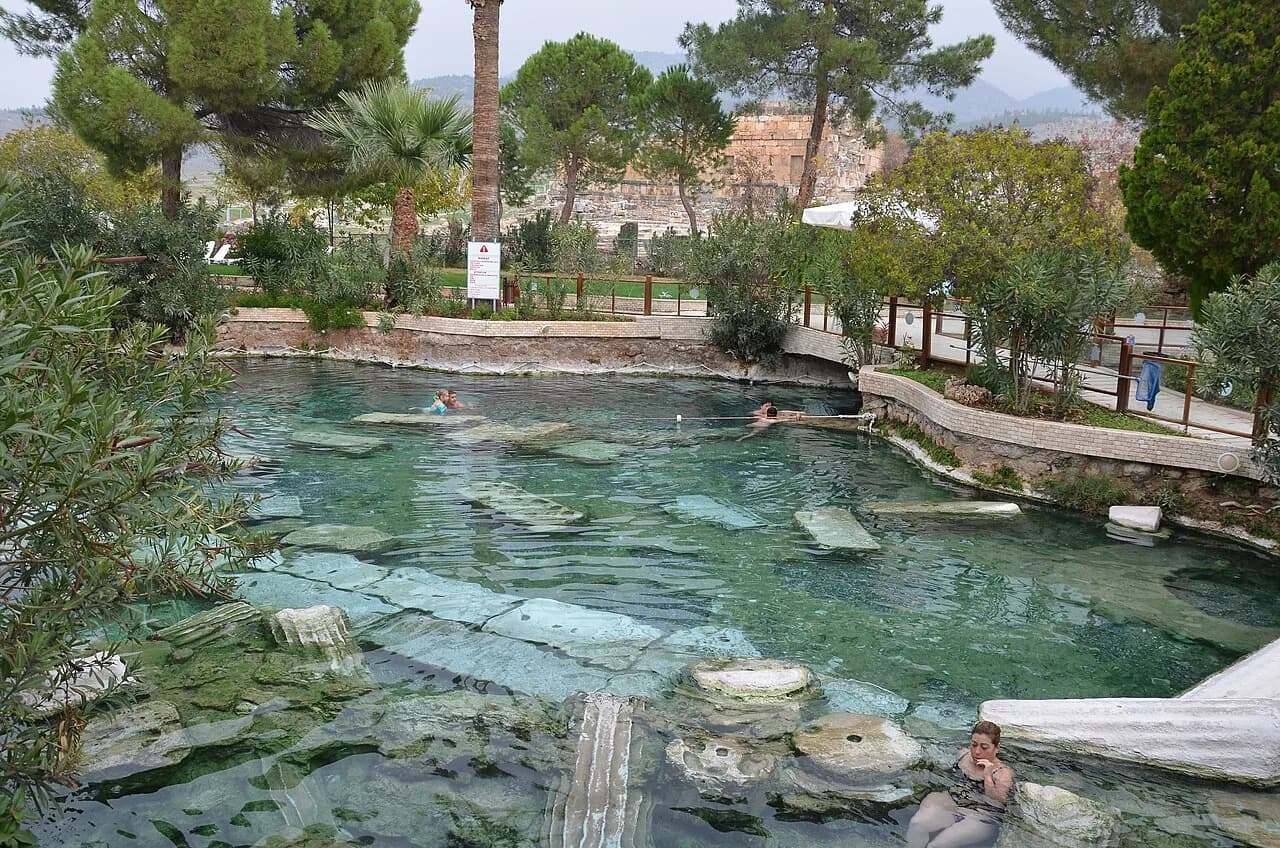
The Antique Pool is the modern swimming pool fed by the hot spring, with fallen marble column pieces lying on its floor, and a guide to the site records it as an extra charge beyond the main entrance. If a thermal swim is the point of your day, Cleopatra's Pool, Pamukkale is the same pool under the name most tour operators use.
Swim before you tour the ruins or after, not in the middle, since wet clothes and sun are a poor combination on an exposed plateau. Lockers, towels and changing facilities are the usual questions at the entrance desk.
Plateia, the Arch of Domitian and Frontinus Street
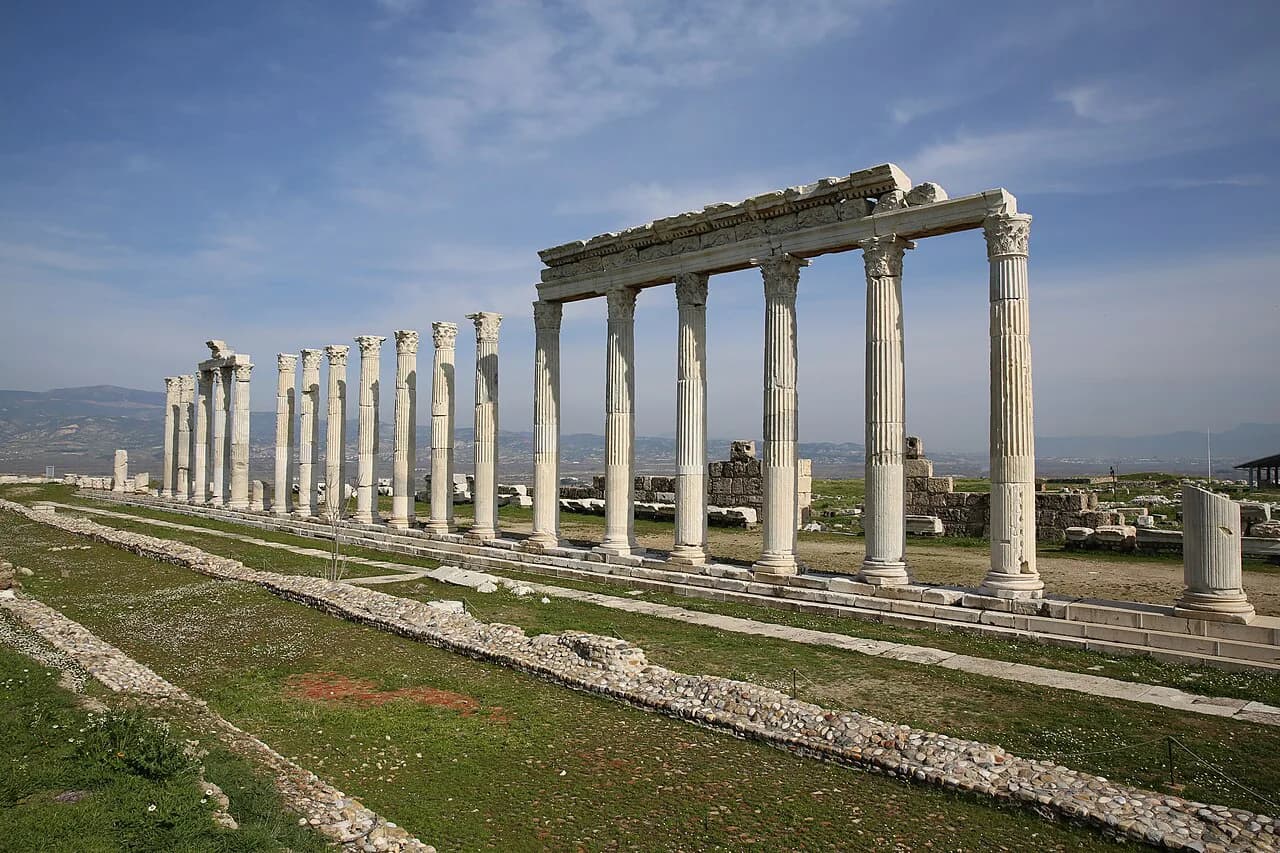
Plateia is the main street, running roughly half a mile from the south gate to the Arch of Domitian at the northern end, which has three arches and two towers and once stood two storeys high. Beyond the gate, a colonnaded street known as Frontinus Street formed the commercial centre of the Roman city. Walking Plateia end to end is the spine of any visit.
The street is paved and largely level, which makes it the easiest stretch for anyone with limited mobility or a pushchair. The site itself sits on a flat plateau, so the walking within the ruins is gentle even if the approach from the village is uphill.
The latrines and the colonnaded street
Just left of the Arch of Domitian stand the pillars of the public latrines, an ornate communal facility that says as much about Roman civic life as any temple. The colonnades along Plateia give a clear sense of how the street was framed, with columns on both sides and shops behind.
These details sit on the main route, so they cost nothing in time. Read them on the way past rather than treating them as a detour, and you will still reach the Necropolis with energy left.
The Necropolis: the north, south and west burial areas
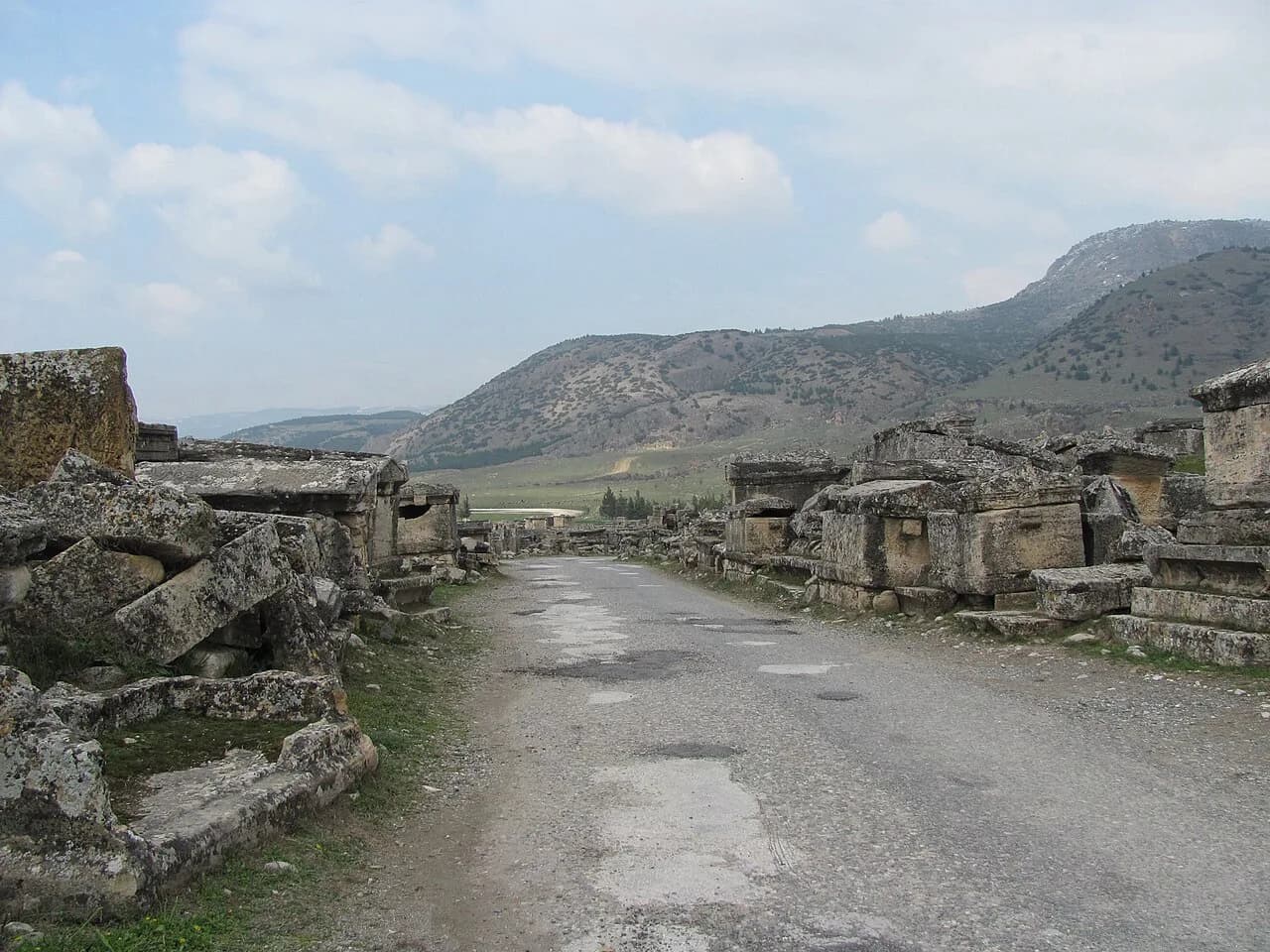
The Necropolis is reached by passing through the Arch of Domitian and is divided into northern, southern and western zones, with the northern area the largest. The northern zone holds more than 1,200 tombs, including tumuli, sarcophagi and house-shaped tombs spanning Hellenistic, Roman and early Christian periods. A travel account describes it as the largest burial ground in Anatolia.
Give the tombs a proper half hour. The northern section is the one to prioritise if you are short of time, and the ground is uneven, so wear shoes with grip rather than sandals.
The Roman Baths, the Nymphaeum and the House with Ionic Capitals
The site holds far more than the headline buildings, and the far corners are where the crowds thin. The Roman Baths, the monumental Nymphaeum at the Temple of Apollo and the House with Ionic Capitals all repay the extra walk, and a detailed guide to the ruins sets them out building by building.
Plan these as a loop off Plateia rather than a separate expedition. They are the reason a half-day visit stretches into a full one for anyone interested in Roman engineering.
The Byzantine gates, walls and the Gymnasium of the Southern Gate
Later phases of the city are easy to miss. The southern Byzantine gate and its walls, the Gymnasium of the Southern Gate and the Gate of St. Philip all belong to the Christian and Byzantine town that reused the Roman fabric, and the same architectural guide describes each of them.
If you enter from the south, you pass the Byzantine gate on the way in, so pause there first and the rest of the walk makes chronological sense.
How long Hierapolis needs and which gate to start from
Allow three hours for the theatre, the temple area, Plateia, the Arch of Domitian and the Necropolis, and five hours if you add the baths, the Nymphaeum and the Byzantine remains. Start at the South Gate if you are arriving by vehicle from Pamukkale or Denizli, since you enter at the top of the hill and walk down through the city rather than climbing into it.
In high summer the plateau is hot and shadeless, so time your walking for the morning or the late afternoon. Save the travertine descent for the end of the day, when it is cooler, quieter and better lit; the guide to the travertines of Pamukkale explains how the terraces are walked.
Getting there from Pamukkale village and Denizli
Pamukkale village sits at the foot of the travertines, with the site entrances a short ride or a stiff walk uphill, and Denizli is the regional city roughly 18 km away, served by its own bus and rail connections. The Ministry site page gives the location.
Dolmuş minibuses run between Denizli and Pamukkale village, and hotels in the village commonly run shuttles to the gates; confirm the arrangement at reception rather than relying on a timetable you found online. Taxis are the simplest option for the South Gate if you want to start at the top.
When to go: spring or autumn versus the high-season crush
Spring and autumn give the best conditions for the ruins: cooler walking, clearer light and fewer coach groups on Plateia. A guide to the site recommends visiting in spring or autumn to avoid the high-season crush and timing the travertine descent for just before sunset.
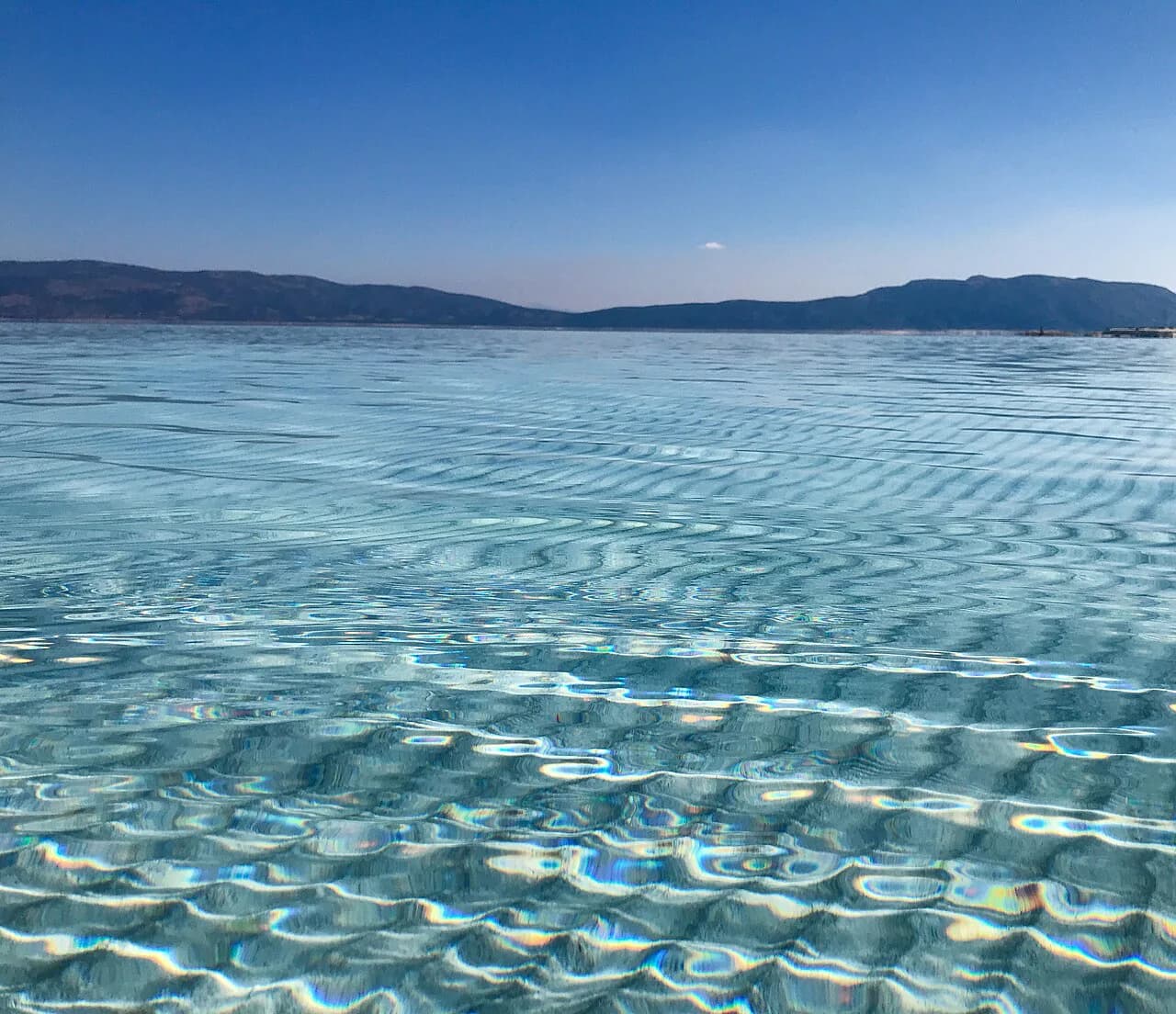
If you are in the region for longer, the Lakes Region around Salda Gölü and the ruins at Laodicea on the Lycus and Aphrodisias make natural second and third days. Salda Gölü is a lake stop, Laodicea a short drive from Denizli, and Aphrodisias the furthest of the three.
Tickets and the Antique Pool: what to check before you go
The Archaeology Museum of Hierapolis inside the site is a separate ticket, and the Travelbunny guide to the ruins describes both the museum and the Antique Pool as additional costs on top of the main entrance. Budget for them as extras.
Prices are published on the official museum portal, as figure changes on the Turkish lira make any printed or remembered price unreliable. Gate staff are the final word on what your ticket covers.
Should Hierapolis be the whole day, or part of it?
Make Hierapolis the main event of the day and treat the travertines as the descent that follows it. Three hours covers the theatre, Plateia, the Arch of Domitian and the Necropolis; add the Nymphaeum, the baths and the Byzantine gates for a fuller picture.
Enter at the South Gate, walk the city downhill, and check the combined ticket and any extra charges on the official portal the evening before you go. That list of extras is the one part of the plan most worth verifying in advance.
Explore more Pamukkale guides
Frequently Asked Questions
What is Hierapolis called today?
Hierapolis keeps its ancient name. The ruins sit on the plateau directly above the village of Pamukkale in Denizli province, and the Ministry of Culture and Tourism lists the ruins and the travertines together as one archaeological site within a World Heritage designation.
Why is the Gate to Hell closed?
The Plutonium is the cave linked in antiquity with the underworld, and the underground spring there emits toxic gas. Following fatalities in recent years, the subterranean entrance is closed off and visitors view the opening from outside.
Is Hierapolis worth visiting on its own, without the travertines?
Yes, if you want Roman ruins rather than the white terraces. The theatre, Plateia, the Arch of Domitian and the Necropolis justify the trip on their own, and the walk between them takes about three hours.
Sources
Notes for your next Turkey trip
Optional updates when we add or correct a town guide.
You might also like
Continue reading
More guides you'll find useful