Fethiye Bazaar: What to Buy, Market Days and Haggling
A practical guide to the Fethiye bazaar and its markets: Paspatur's old-town lanes, the Tuesday market by the stadium, what to buy and how to haggle.
On this page
The Fethiye bazaar is not one gate and one hall. It is the Paspatur old-town quarter, where cobbled pedestrian lanes under vines hold carpet, ceramic, jewellery and leather shops, plus a weekly market scene that moves around town: the Tuesday market at the Pazar Alanı beside Fethiye Stadium, a Friday food market and a Çalış market aimed at holidaymakers. This guide separates those places so you turn up on the right day, then covers what is worth buying and how to shop it.
Plan around the day rather than the map. Tuesday is the big general market, Friday is the food-focused one, and the Paspatur lanes are the anytime option when you want shade, a browse and a coffee between sights. The old town also sits within easy walking distance of the harbour, so it slots neatly into a day with the rest of the things to do in Fethiye.
What the Fethiye bazaar actually is
Treat the word bazaar as covering two different shopping experiences. The first is Paspatur, the old town's pedestrianised quarter, where cobbled streets are shaded by vines and awnings and the shops stay put week after week. The second is the weekly pazar, a temporary grid of stalls that sets up in a named open area on a set day and then disappears.
The distinction matters for planning. If you have one free afternoon and want ceramics, kilims and a shaded wander, head for Paspatur. If you want the full sensory crush of produce, spices, textiles and souvenirs in one place, build your day around the Tuesday market instead.
Paspatur old town: the year-round bazaar
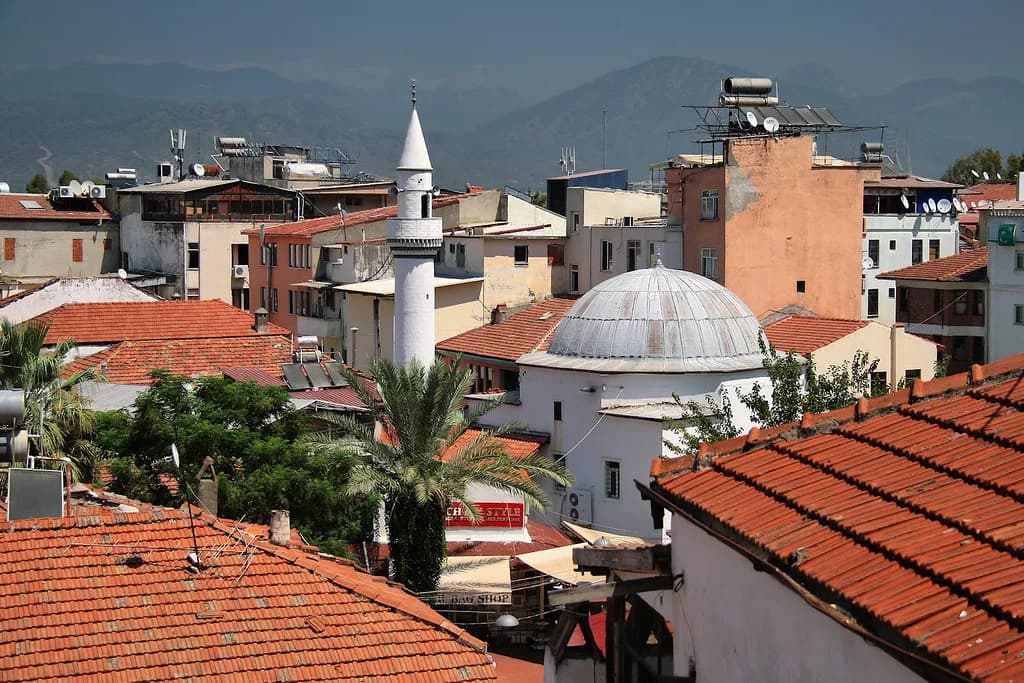
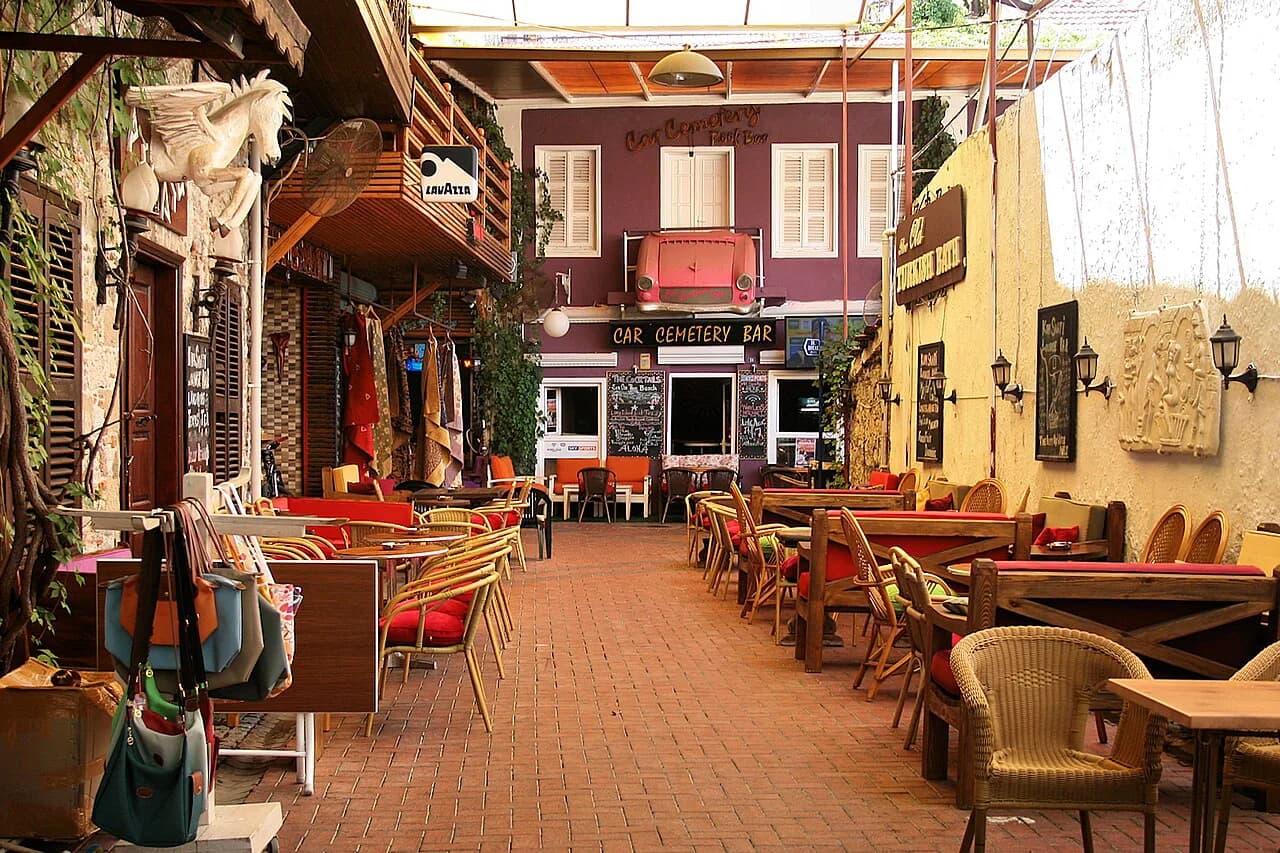
Paspatur is where Fethiye's old-town shopping concentrates, and its appeal is as much atmospheric as commercial. The lanes are pedestrianised and cobbled, covered by tangles of green vines and awnings, and the shops lean towards colourful Turkish carpets and kilims, good-quality ceramics, handmade crafts, jewellery and leather goods rather than pure souvenir tat.
Look past the obvious gift shops for the locally owned fashion boutiques, which sell handmade costume jewellery alongside clothing and accessories. This is browsing territory rather than a checklist: allow an hour or two, take the lanes slowly, and compare several carpet shops before you commit to anything expensive.
Where the Tuesday market is
The Tuesday market, known locally as Salı Pazarı, is held every Tuesday at the Pazar Alanı beside Fethiye Stadium, directly below the city stadium. It is the largest weekly open-air market in the area, which is why it pulls both locals doing a proper shop and visitors hunting souvenirs in the same aisles.
The stadium is the landmark to navigate by, not a street number. If you are staying in the town centre you can walk it; from further out, a dolmuş or taxi to the stadium area is the straightforward approach.
What the Tuesday market sells
Fethiye's Tuesday market is the largest and best-known in the area, and it covers everything: textiles and souvenirs on one side, fruit and vegetables, spices and nuts on the other. Villagers bring their own garden-grown produce to the stalls, which is what gives the market its texture.
Bring a bag and patience. The market is busy by mid-morning, so an earlier arrival makes the produce aisles easier to move through and gives you first pick of the better stalls.
The Friday market and its food focus
The Friday market concentrates on food: fresh vegetables, fruit and local products rather than the textiles-heavy mix on Tuesdays. It is the better stop if you are self-catering, want to assemble a picnic, or simply want to watch local shopping happen at close quarters.
On Fridays the market sells vegetables rather than the general goods you find earlier in the week, so do not arrive expecting to buy rugs or beachwear. Check locally which site is in use that week before you set out.
Çalış market and the neighbourhood circuit
Çalış has its own market aimed squarely at holidaymakers: summer clothing, handmade jewellery and decorative items for the house. It is a different proposition from the Tuesday produce-and-everything market, and better for a quick, low-stakes browse near the seafront.
Beyond Çalış, neighbourhood markets rotate around Fethiye on different days of the week, each with its own character. If a local market is a priority for your trip, ask at your accommodation which one is running closest to you rather than relying on any single printed schedule.
Shopping streets outside the bazaar
The centre is compact enough to cover on foot, and much of the best shopping sits outside both Paspatur and the weekly market. Walk Atatürk Caddesi and Çarşı Caddesi, duck into the pedestrianised side streets off Çarşı Caddesi, and find Umbrella Street, properly 95 Sokak, where shop air conditioning spills into the street in summer and makes it a genuinely cool place to browse.
Behind the main town square, the shaded Dispanser area is another pedestrianised pocket worth a loop. Between these streets you get genuine high-street shops, independent boutiques and the everyday shopping the town centre still supports, all within a short walk of each other.
Edible souvenirs worth carrying home
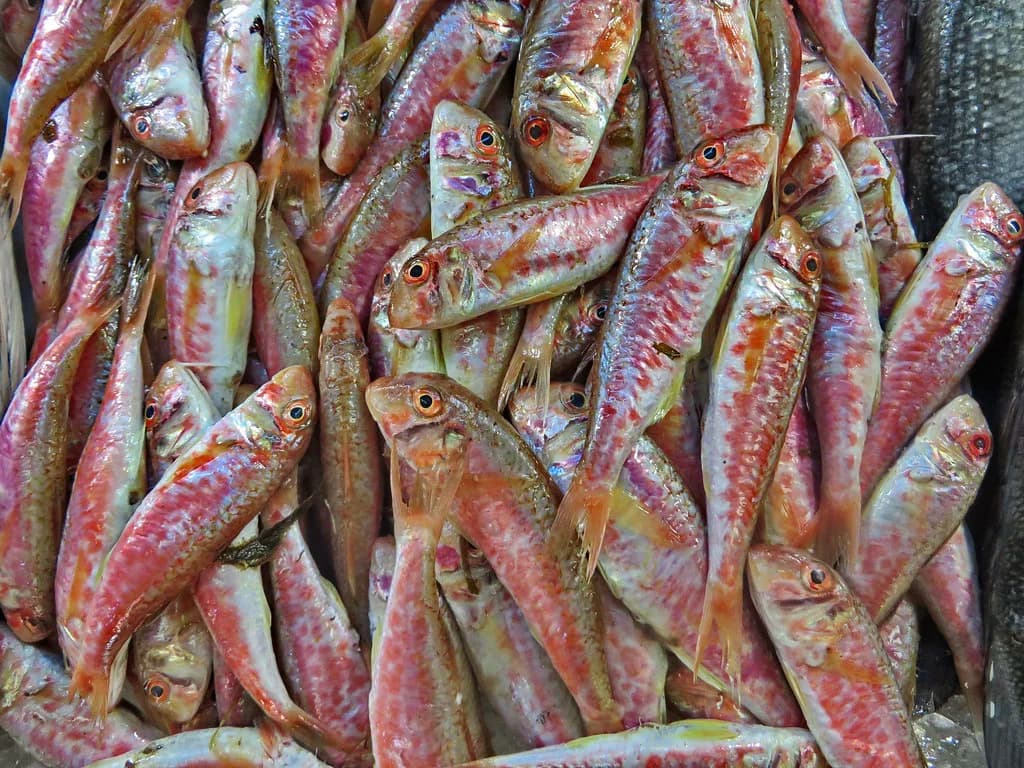
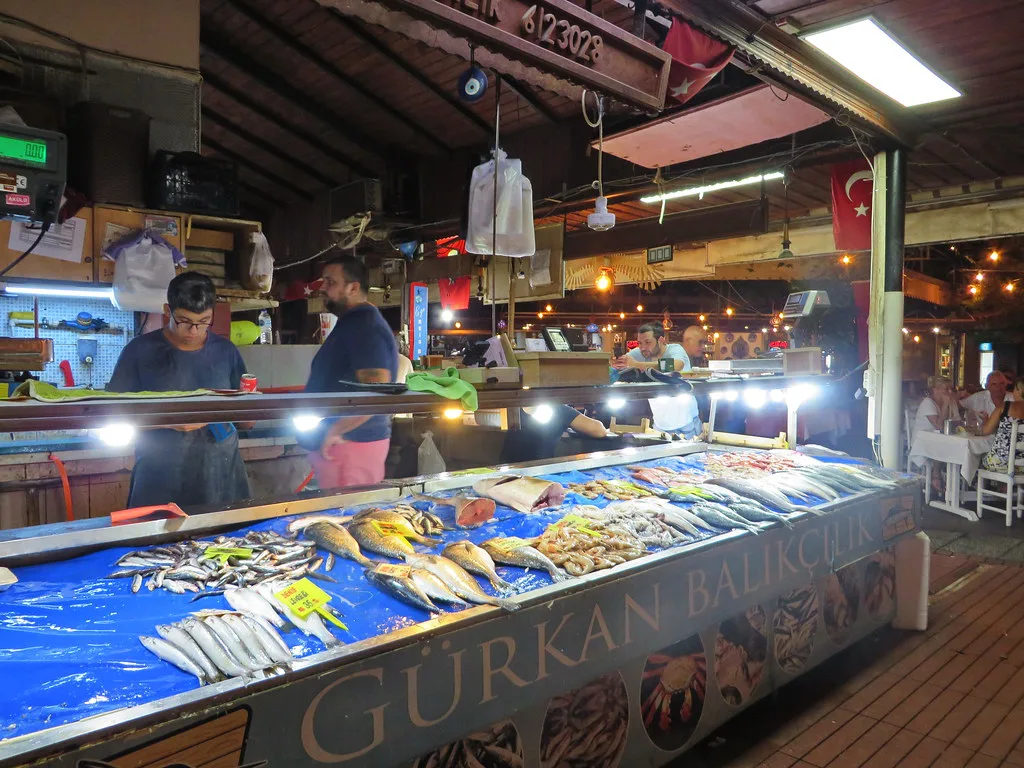
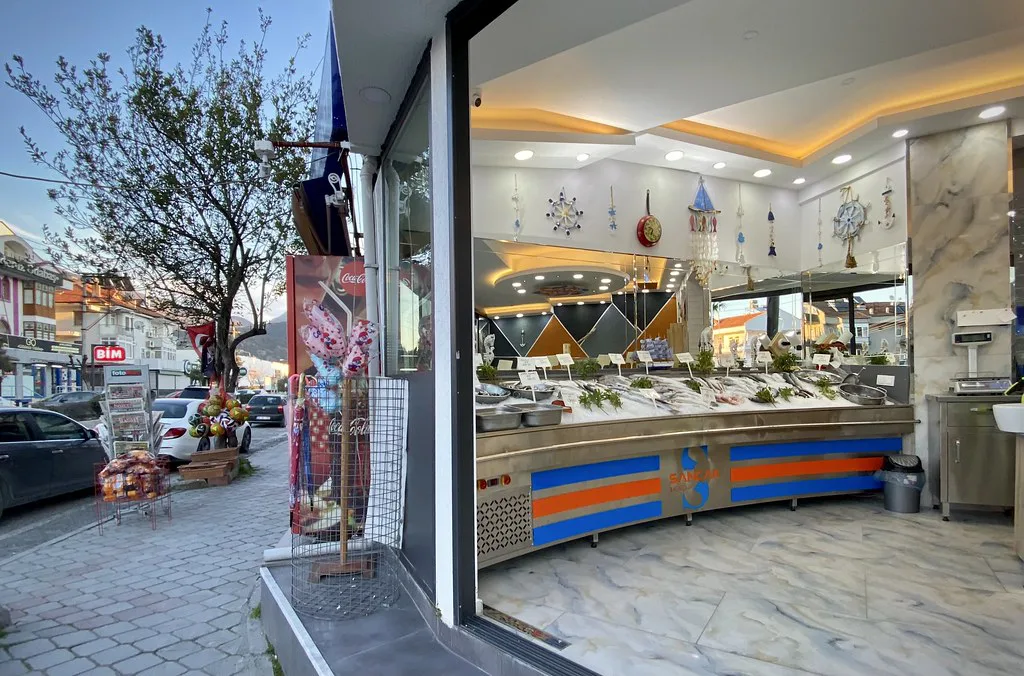
Spices and Turkish delight are the easy wins, sold in the old town and around the Fethiye Fish Market, where small shops on the perimeter carry a wide array of fragrant spices and herbal teas. Follow your nose to the coffee stalls nearby, which roast beans and sell Turkish coffee by weight.
For gifts with more local identity, look at Fethiye's natural olive oil, pine honey, goat cheese and dried herbs. These travel better than anything fragile and reflect the region's produce rather than a generic souvenir aisle.
Handicrafts worth the money
Weaving is Fethiye's signature craft, and hand-woven kilims coloured with natural dyes are the piece to take seriously. They sit alongside needlework, ceramics, handmade jewellery and wood carving, sold both in Paspatur shops and from makers in the surrounding villages.
If you want to understand what you are buying, some workshops in Fethiye run experiences such as rug weaving, ceramic painting and jewellery making, and small workshops run by local artists can be found in Kayaköy and around it. A short session before you shop makes it far easier to tell handwork from machine-made goods.
Haggling: where it works and where it does not
Haggle at the stalls, not in the shops with tickets on every item. The weekly market is a bargaining environment, with vendors calling out and prices open to conversation, whereas Paspatur's boutiques and the high-street stores generally price their goods and expect you to pay it.
On higher-value pieces such as kilims and carpets, treat the price as the start of a proper conversation rather than a contest. Ask about materials and where the piece was made, compare across several shops in Paspatur, and walk away if the number does not suit you.
How long to allow and how to walk it
Give the Tuesday market a full morning and Paspatur a relaxed afternoon; combining both in one day is possible but rushed. Everything in the centre sits within walking distance, so build a loose loop: Paspatur first while it is cooler, then the shopping streets, then the harbour.
For orientation before you set out, use a Fethiye map that shows the stadium and the old town together, since those two points anchor the two halves of the bazaar experience. If you are heading on to the coast afterwards, the Blue Lagoon at Ölüdeniz is a short dolmuş ride from the centre.
Honest trade-offs: heat, tat and gentrification
Two things shape a summer shopping trip: heat and shade. The vine-covered lanes of Paspatur and the air-conditioned stretch of Umbrella Street are genuine relief in July and August, so plan your browsing for the middle of the day rather than saving it for the afternoon.
Expect plenty of cheap tourist goods alongside the good stuff, and accept that the centre is changing. Modernisation and gentrification are reshaping Fethiye town centre, while the older shopping streets around the fish market still hold cobblers, knife sharpeners, watch kiosks and copperware sellers, which is where the town feels most like itself.
Which Fethiye market should you plan around?
If you have one shopping day, make it Tuesday: the Pazar Alanı beside the stadium gives you the widest range in one place, from produce and spices to textiles and souvenirs. If your dates miss it, Paspatur and the central streets carry the ceramics, kilims and leather without any timetable at all.
Confirm the day and site of the market you want shortly before you go, since neighbourhood markets shift location and the produce-only Friday arrangement differs from the midweek mix.
Frequently Asked Questions
Is shopping cheaper in Turkey than in the UK?
Local market produce and everyday goods are generally described as affordable, particularly where villagers sell their own garden-grown fruit and vegetables directly. Prices in shops and boutiques vary too much to generalise, so compare as you go.
How expensive is Fethiye?
Markets are the budget-friendly end of shopping in Fethiye, with villagers selling direct and shoppers described as getting natural products at reasonable prices. Beyond that, cost depends entirely on what you buy: a ceramic bowl and a hand-woven kilim are not in the same bracket, so set your own ceiling before you enter a carpet shop.
What day is the Çalış market on?
Çalış has its own market selling summer clothing, handmade jewellery and tourist souvenirs, distinct from the Tuesday and Friday markets in the town centre. The exact day is not fixed in published listings, so ask locally or check notices in Çalış before you walk over.
Do I need cash for the Fethiye markets?
Bring cash for the weekly pazar, where stallholders selling produce and spices work fast and small transactions are the norm. Paspatur shops and high-street stores are more likely to take cards, but keep some lira on you for the stalls and for smaller purchases.
Sources
Notes for your next Turkey trip
Optional updates when we add or correct a town guide.
You might also like
Continue reading
More guides you'll find useful