Fethiye Rock Tombs: The Tomb of Amyntas and How to Visit
The Fethiye rock tombs are Lycian cliff-cut tombs above the old town. Here's what you see at the Tomb of Amyntas, how to walk up and what entry involves.
On this page
The Fethiye rock tombs are reached on foot from the town centre, and the climb to the Tomb of Amyntas takes about an hour including time at the top for photos and the view. The tombs are cut into the cliff directly above old Fethiye, so you can see them from the streets below before you start walking. This guide covers what each group of tombs is, the route up, the free roadside viewpoints along Kaya Caddesi and what happens at the entry gate.
Two things shape a visit: the climb and the gate. The path rises in shallow winding steps, and the payment booth sits at the top by the main tomb, so the roadside and lower tombs cost nothing while the final approach to Amyntas is ticketed. Wear shoes with grip and carry water, because the snack bar opposite the entrance is the nearest refreshment stop.
What the Fethiye rock tombs are and where they sit
The tombs are Lycian rock-cut burial chambers carved into the cliff above Fethiye, looking out over the rooftops of the centre and the bay. They date from the Lycian period, when this stretch of coast was part of the Lycian League, and they remain the town's best-known archaeological sight. The cliff face makes them visible from much of central Fethiye, which is why most visitors spot them before they work out the route.
The ancient city here was Telmessos, in Lycia, and the tombs sit within that setting rather than in a detached archaeological park. That matters for planning: you are not travelling out of town to a fenced site, you are walking up from the streets of Fethiye old town to a monument above it. Allow the climb and the return leg as one continuous half-day stroll rather than a separate excursion.
The Tomb of Amyntas: a temple front cut from one piece of rock
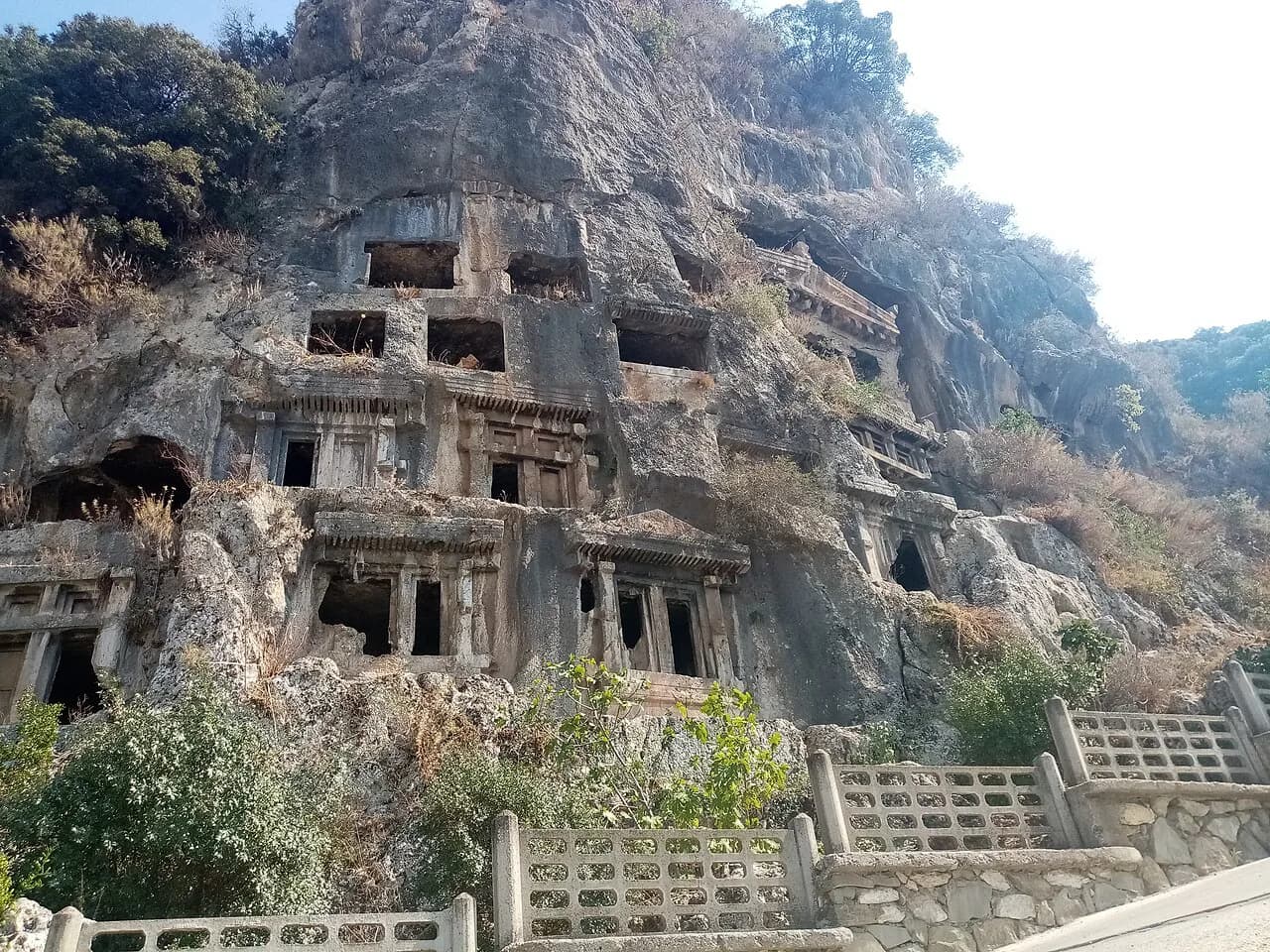
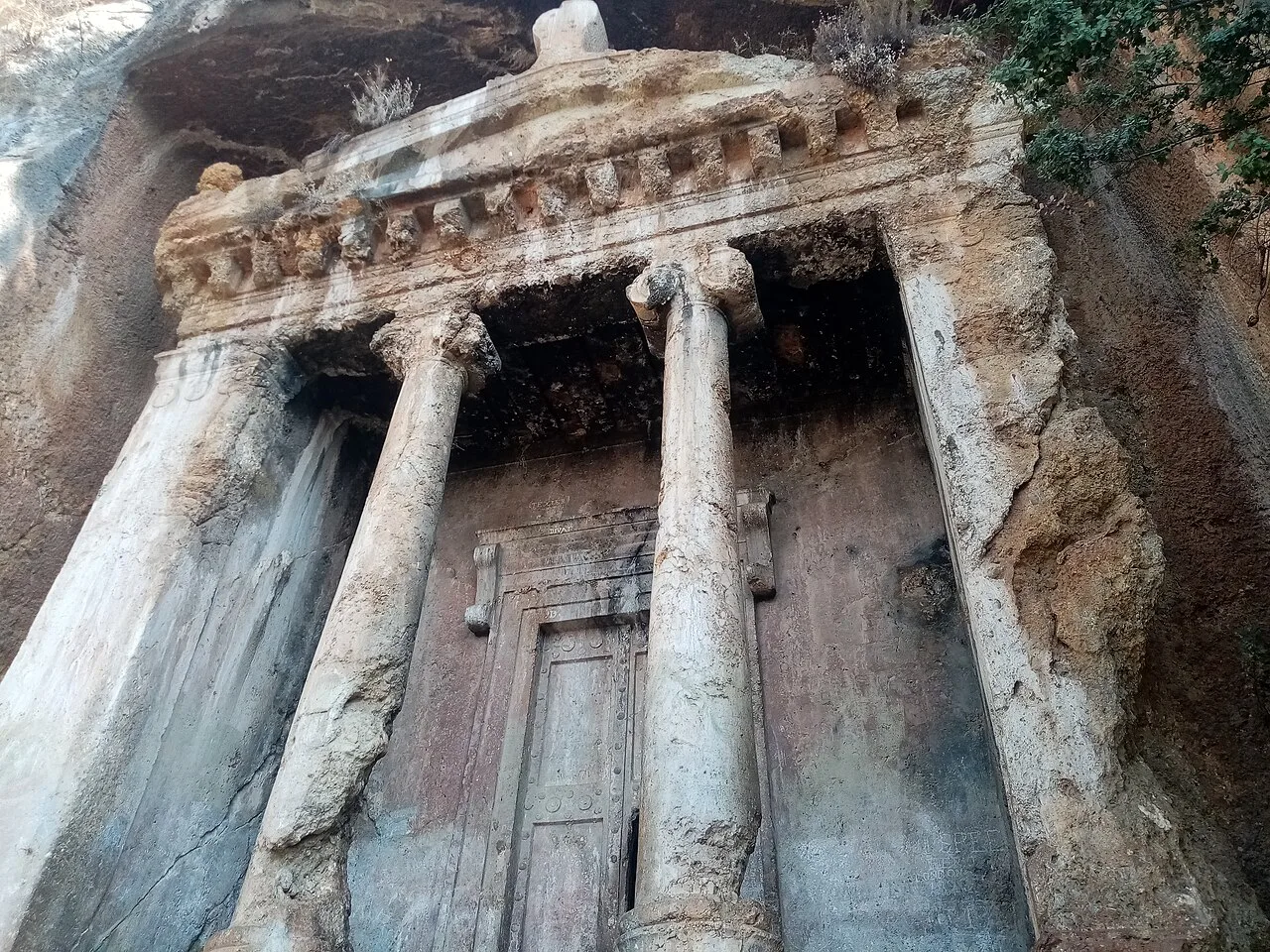
The Tomb of Amyntas, also called the King's Tomb, is the highest and largest of the group and the only one you can walk right up to. It is carved from a single piece of rock in the shape of an Ionian temple portico, with the entrance at the bottom right, and it dates from the 4th century BCE. Its size and position mark it out as the burial of someone important.
Set your expectations on condition: the tomb is an imposing sight but not in fantastic repair, and restoration of the Fethiye tombs was announced but no work was evident at the time of writing. You come for the carved facade, the scale of the cutting and the position above town rather than for sculptural detail. A short stop at the gate is enough; most of your time at the top goes on the view.
The lower group of Lycian tombs
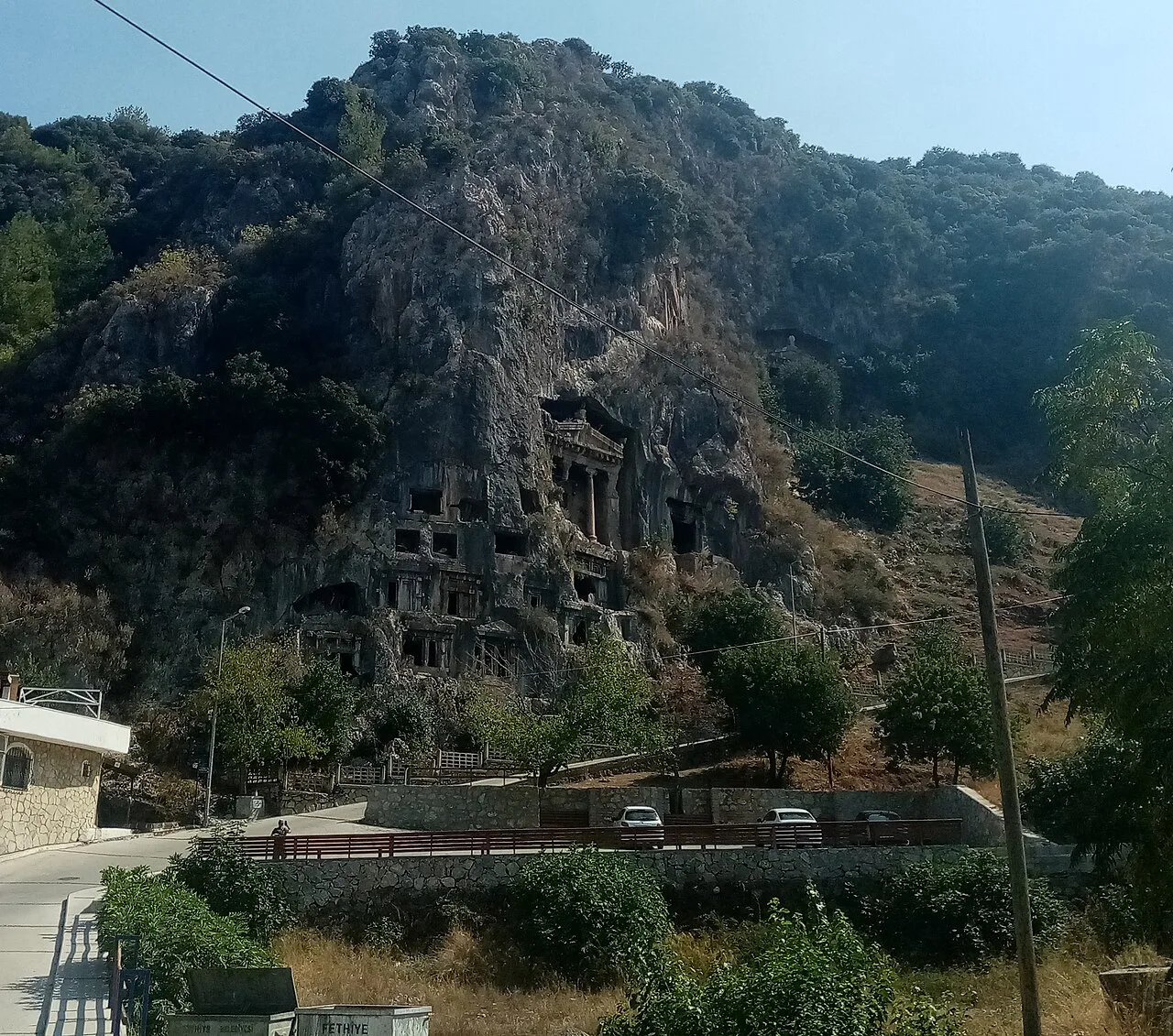
Below Amyntas, a cluster of smaller tombs is cut into the cliff for less important Lycian figures. They have no panoramic view, because the growth of Fethiye has long since blocked their line to the sea. As an archaeological feature, though, this group holds more to hold your attention than the single main tomb above.
On the way down, take a right downhill towards old Fethiye and follow the road past the lower tombs rather than retracing your steps. Just before the buildings of the old neighbourhood close in, turn round for the shot that puts all the rock tombs in one frame and shows how far Amyntas stands apart from the rest.
Walking up from Fethiye centre: route, steps and timing
The default way up is on foot, heading uphill from the centre of town towards the cliff. The steps are winding and shallow rather than steep and straight, so the climb is a steady pull that rewards you with the view opening up behind you as you go. Expect to be out of breath by the time you reach the stone steps below the main tomb.
From the town centre, start uphill and keep the tombs in sight above the rooftops. The walk is short in distance and slow in practice: it is the gradient, not the length, that sets the pace.
Allow around an hour for the climb, the wander at the top and the photos, then add the walk back down. Go early or late rather than in the middle of a summer afternoon, when the cliff path holds the heat and the steps offer little shade.
The view over Paspatur, the harbour and the bay
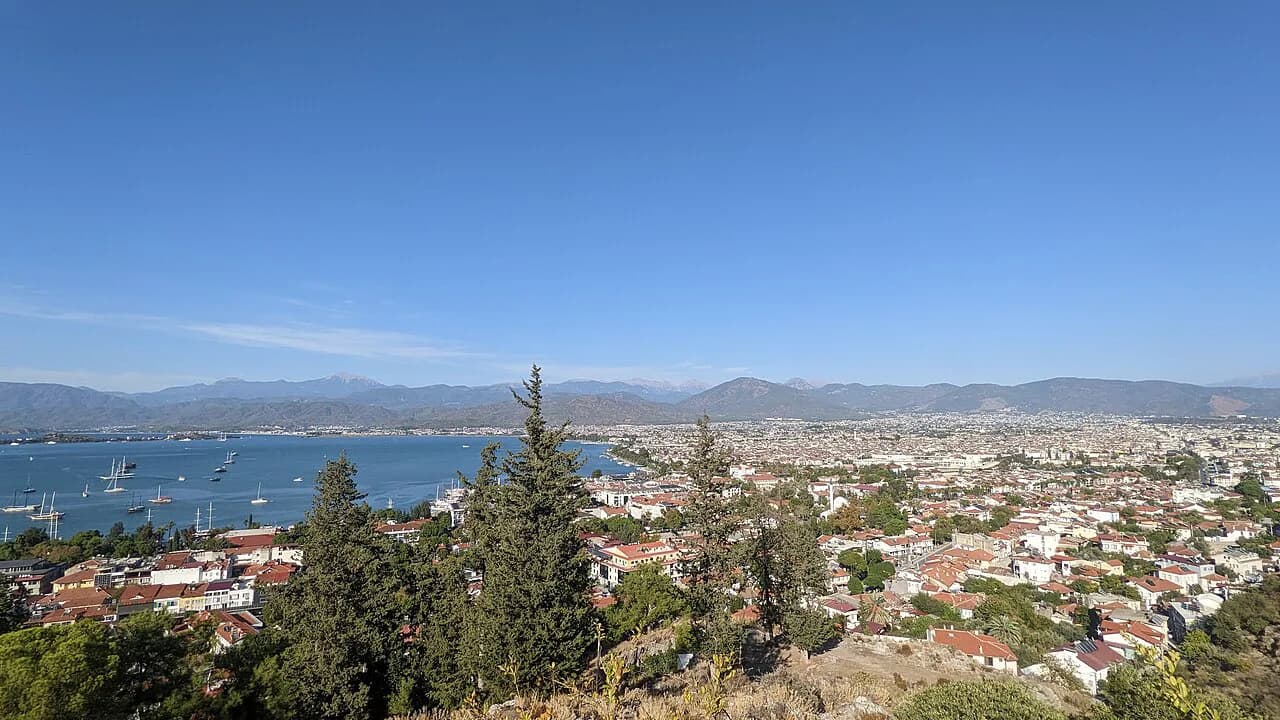
From the level of the Amyntas tomb, the whole of Fethiye opens up below: the rooftops of the old centre around Paspatur, the harbour and the spread of newer building beyond the bay. This is the best photo and video spot in town, and the reason the climb is worth the effort even for visitors with only a passing interest in tombs.
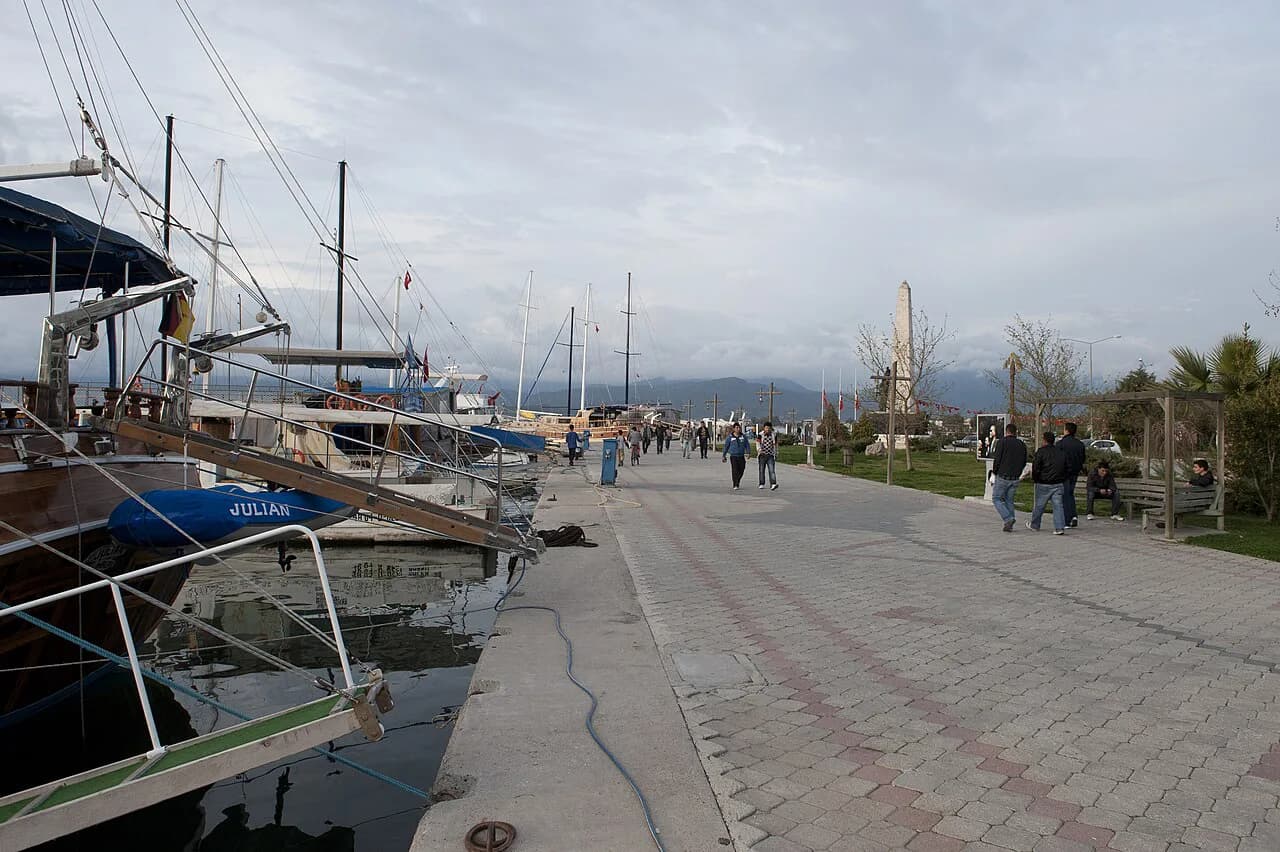
Work the angles on the way up as well as at the top, because the view changes at every bend of the steps. Down at water level, the Fethiye harbour and marina area makes a natural continuation of the walk once you are back in town.
Entry, the payment booth and the gate at Amyntas
Every tomb can be seen from the road, but there is an entrance fee to go right up to the Tomb of Amyntas, and the payment booth sits at the top of the stone steps by the gate. The charge was €3 in May 2026, collected when the warden is at the entrance, so check the current figure before you climb.
The site opens daily from 08:30, with last entry at 19:30 and closing at 20:00. Turkish citizens and residents get in free using the MüzeKart app, so have it loaded on your phone before you set off. Opening hours and the fee can change with the season, so confirm them before you travel.
Seeing the tombs for free from Kaya Caddesi and the roadside
The cheapest visit costs nothing: a fence lines the road and all the rock tombs can be viewed from the roadside on the way up. If you want the lower tombs and the view without the gate, the walk up Kaya Caddesi delivers both. Arguably the finest look at Amyntas is simply from below, framed against the cliff.
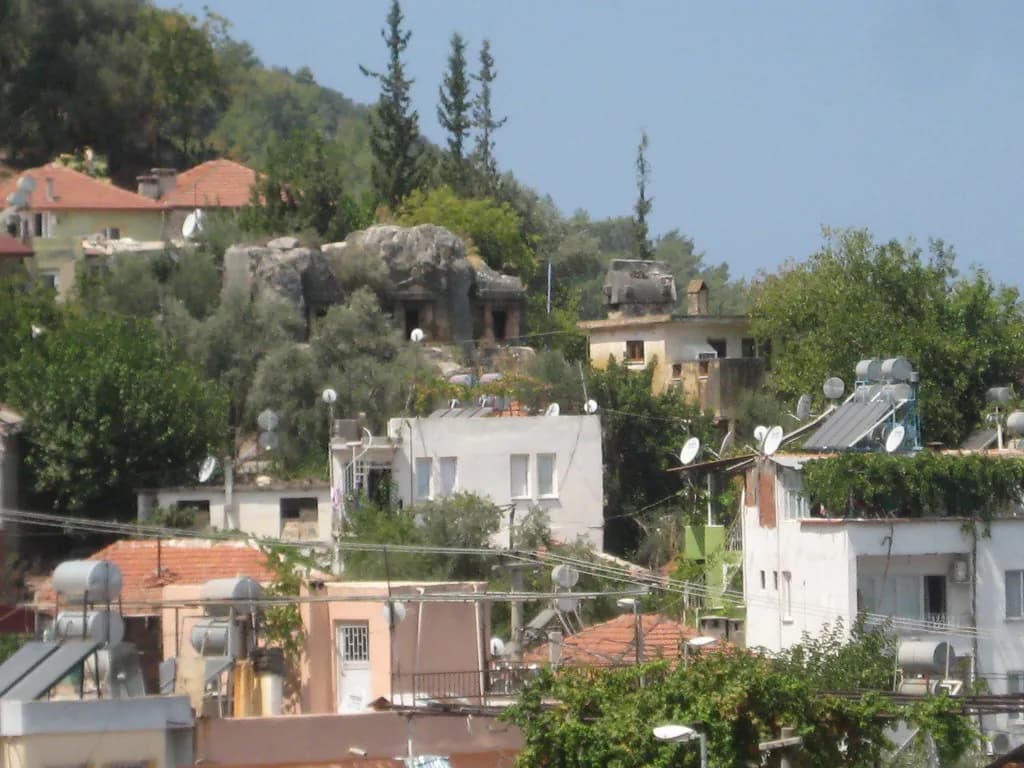
Kaya Caddesi also shows a different type of Lycian burial. Approach from the east side of the street and you pass two sarcophagi inside a fenced area on the right, plus a freestanding stone pillar tomb standing in the middle of the road. They are easy to walk past, so slow down and look for them.
Practical points for the climb
Take a breather on the stone steps below the gate before the final push, and use the snack bar opposite the entrance if you have run out of water. Carry a hat and a bottle from town, and remember the upper steps are exposed. Photography is best in the softer light of morning or late afternoon, when the cliff is not in flat midday sun.
Judgement on whether to pay: the ticket buys the last stretch to the carved portico and the panorama from its level, which is the view people come for. If you are short of time or travelling on a tight budget, the roadside and Kaya Caddesi walk shows you all the tombs and the town spread below.
Nearby ancient sites within reach of Fethiye
Fethiye sits in the Lycian region, and Xanthos and Letoon are where most of the archaeological clues to the Lycians have come from, which makes them a natural extension of an interest sparked by the tombs. Both are day-trip distance from town and worth reading up on before you go.
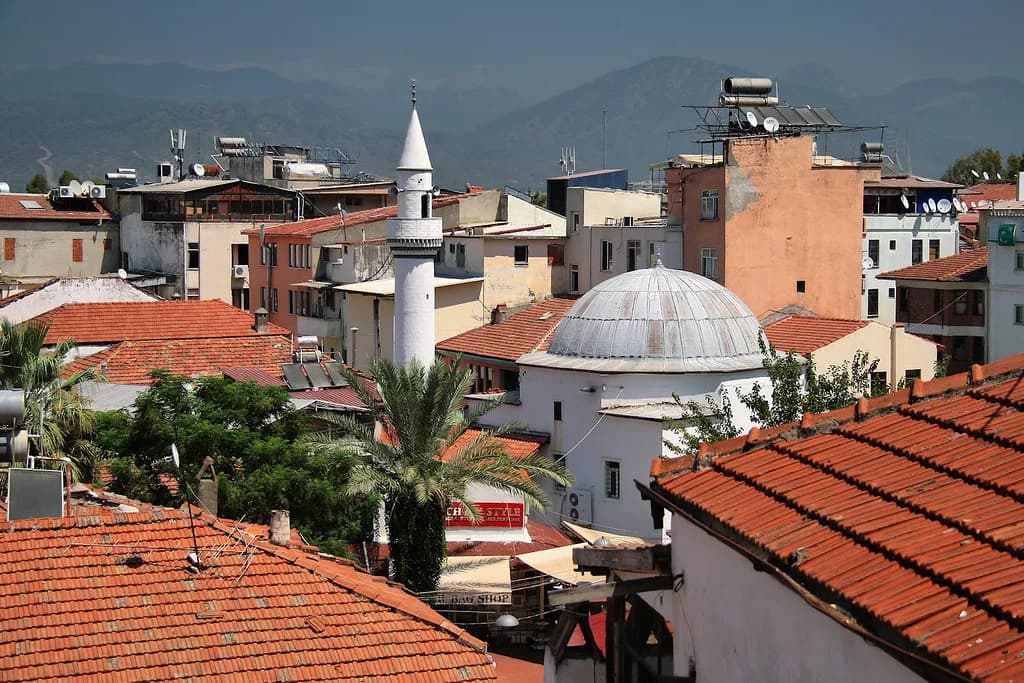
In town, the Fethiye Museum is the place to see finds from the surrounding sites and to put the cliff tombs in context before or after the climb. Pair it with a wander past the mosques and old streets, which sit on the route up towards the tombs. Out of town, the Dalyan rock tombs are the other famous set on this coast, carved in the same tradition.
Should you pay to go up to Amyntas?
Pay if you want to stand at the carved temple front and look down over Paspatur and the bay from its level; skip the gate and walk Kaya Caddesi if you mainly want to see the tombs and the town from below. Either way the climb is on foot, so go early or late, carry water and allow an hour.
Before setting out, confirm the current fee and opening hours, since both change with the season, and have the MüzeKart app ready if you qualify for free entry.
Explore more Fethiye guides
Frequently Asked Questions
Can you see the Fethiye rock tombs without paying?
Yes. All the rock tombs can be viewed from the roadside, and the walk up Kaya Caddesi passes the lower tombs plus the sarcophagi and pillar tomb on the street itself. The ticket only covers the final approach to the Tomb of Amyntas and the view from its level.
How long does the walk up to the Tomb of Amyntas take?
Allow around an hour for the climb, time at the top and the photos, then add the walk back down. The steps are winding and shallow, so the climb is steady rather than steep, but expect to stop for breath on the way.
Are there other Lycian tombs near Fethiye?
The Lycian tombs at Dalyan are the other well-known set carved into the cliffs on this coast. Further afield, Xanthos and Letoon are the sites that have yielded most of the archaeological evidence about the Lycians.
Sources
Notes for your next Turkey trip
Optional updates when we add or correct a town guide.
You might also like
Continue reading
More guides you'll find useful