Miletus: What to See, Getting There and How Long You Need
Plan a visit to Miletus in Turkey: the theatre, the Baths of Faustina and harbour monuments, how to get there from Kuşadası or Ephesus, and how long you need.
On this page
Miletus needs about an hour for its headline structures and two to three hours if you want the harbour district as well. The ancient city lies roughly 10 km inland from the modern coast, its harbours long since silted up, so you walk a Roman port that now sits in flat farmland rather than beside the sea.
This guide covers what stands at the site, how to order the walk when coaches are parked, driving times from Kuşadası and Ephesus, and ticketing with the year attached. It also explains why the city that produced Thales, Anaximander and Anaximenes matters beyond its stones.
Where Miletus sits today
The ruins stand near the Maeander River plain, close to the village of Balat, and about 10 km from the present shoreline. Four harbours once made the city rich, and the silting that closed them stripped away its sea trade and cut it off from the Aegean.
Expect a large, exposed archaeological field rather than a walled, signposted attraction. The theatre is visible from a distance as you approach, which makes the site easy to locate by car.
The main things to see at Miletus
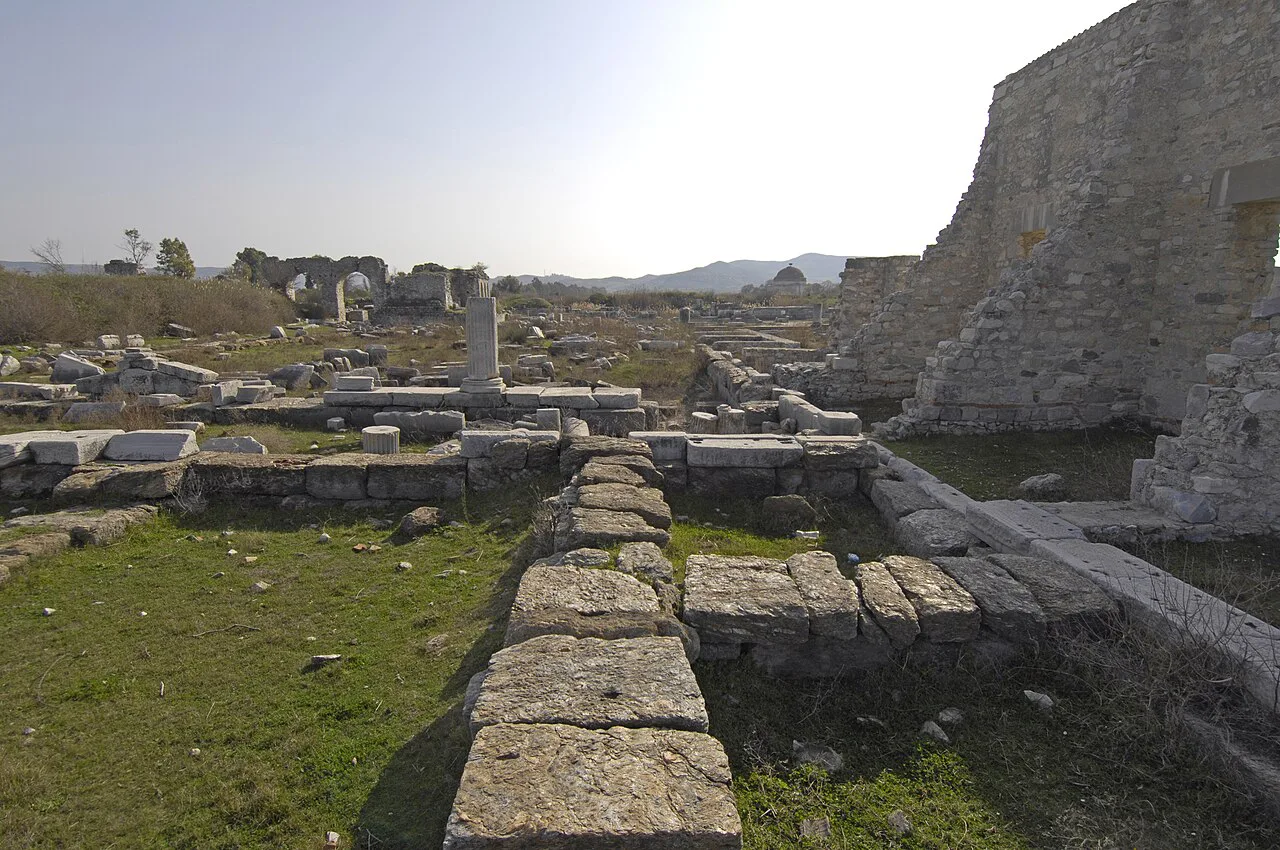
Five structures carry most of the visit: the ancient theatre, the Baths of Faustina, the Great Harbour Monument, the Ionic Stoa and the fortress on the hill above the theatre. Most visitors see only the theatre, so the rest of the field stays quiet even when a coach party is in.
The reconstructed Ionic Stoa stands on the Sacred Way, and the Roman naval monument sits in the old harbour district. A Byzantine church, that of St. Michael, lies well off in the distance and is usually only glimpsed on a guided stop.
The theatre and the climb to the top
The theatre began in the fourth century BC and was enlarged under Trajan in the second century AD to seat 25,000 spectators. Work on a theatre at the site started under Hecatomnus of Caria, and it remains the structure that dominates Miletus today.
A fortress sits on the hill above the seating, reached from the top of the theatre, and it gives the broadest view over the plain. The climb is the reason to give the theatre more than a glance, but the steps and the thistles on the upper ground demand proper shoes.
Baths of Faustina and the harbour district
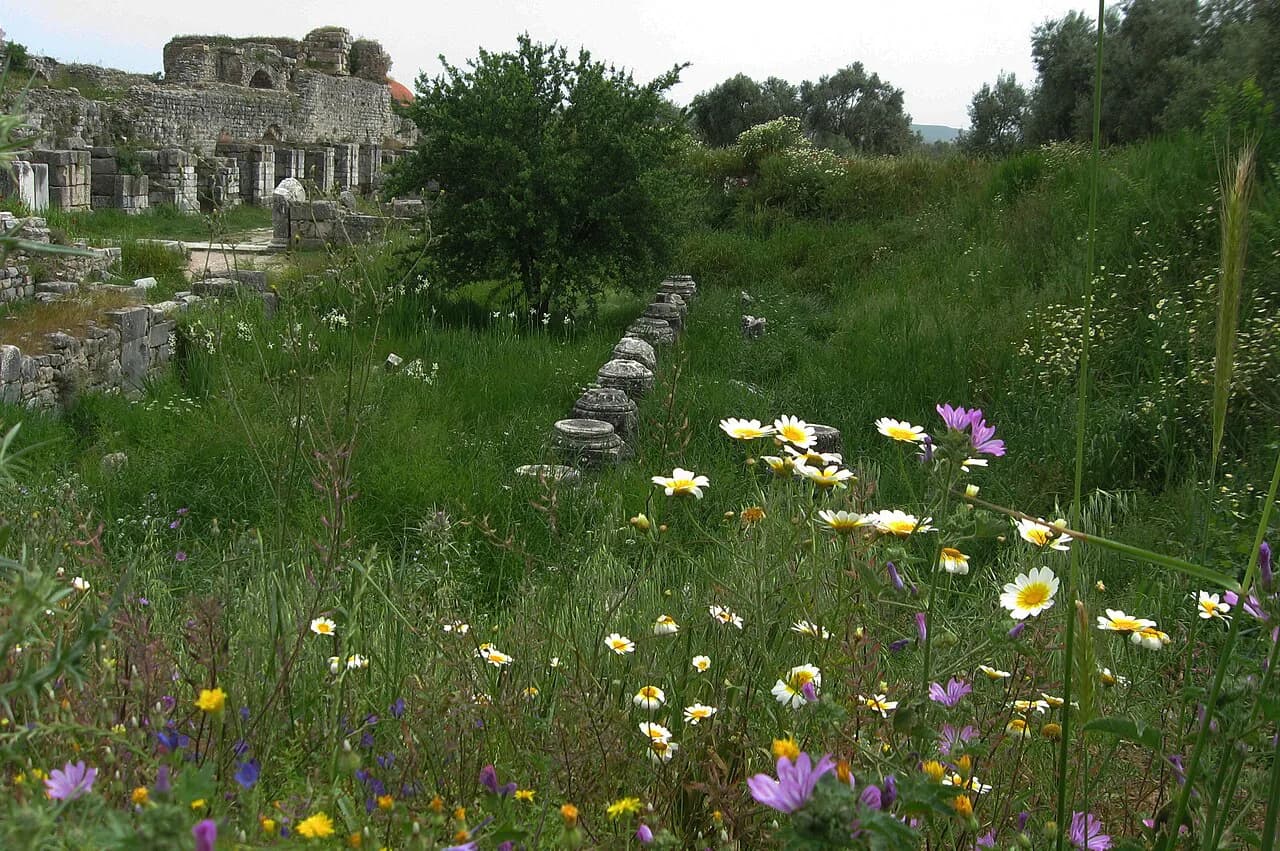
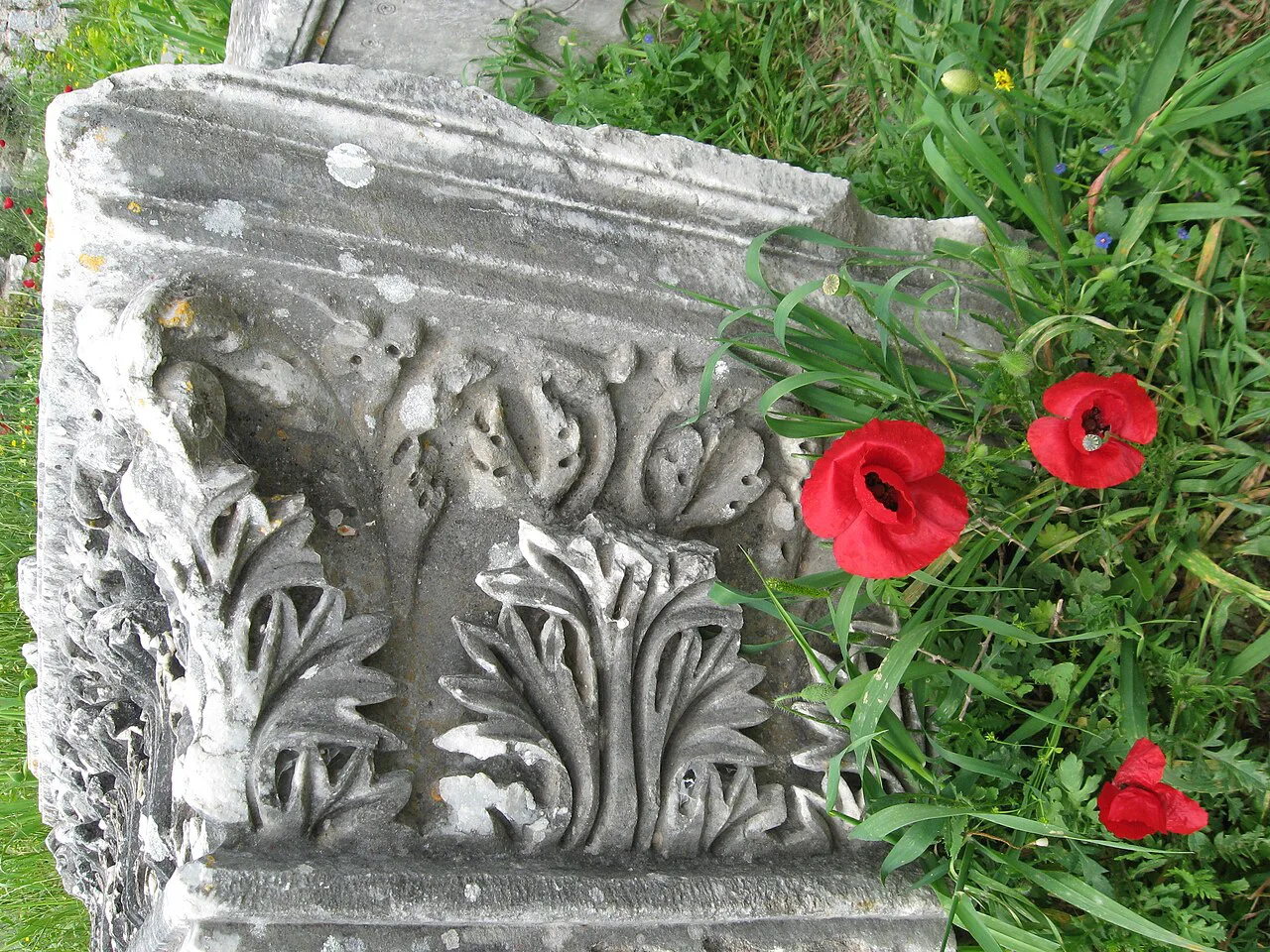
The Baths of Faustina are dated to the second century AD and were commissioned by Marcus Aurelius's wife, and the walls, statues and statue niches survive well enough to read as a bath complex. The harbour monuments and the Ionic Stoa sit in the same lower district, so see them together before doubling back to the theatre.
Bring your own notes or a guidebook for this half of the site. Without them the baths read as a set of walls, and on-site labelling is sparse; a tour supplies the explanation but limits how long you can linger.
How long to allow and how to order the walk
Give the main structures about an hour, and add time for the harbour district and the fortress climb if you want them. A full day trip from Kuşadası or Selçuk that also covers Priene and Didyma needs a car or a hired taxi, because the three sites are spread out.
When coaches are parked at the theatre, walk to the Baths of Faustina and the harbour first, then come back to the seating once the group has left. Coach traffic tends to arrive earlier in the day, so a later start often means a quieter theatre.
How to get there from Kuşadası, Selçuk and Ephesus
Miletus is about an hour's drive from Kuşadası and roughly an hour and 15 minutes from Ephesus, which makes it a straightforward half-day by hire car. Informal parking runs along the road in front of the shop at the site, and a sign there asked for TRY 100, about EUR 2, payable at the site rather than on the road.
A taxi hired for a full day covering Miletus, Priene and Didyma was quoted at around EUR 100 from Kuşadası or Selçuk, so ask for a fixed day rate and confirm which sites are included before setting off. Public transport is not described in the sources, so check locally at your resort or with the site before relying on a dolmuş.
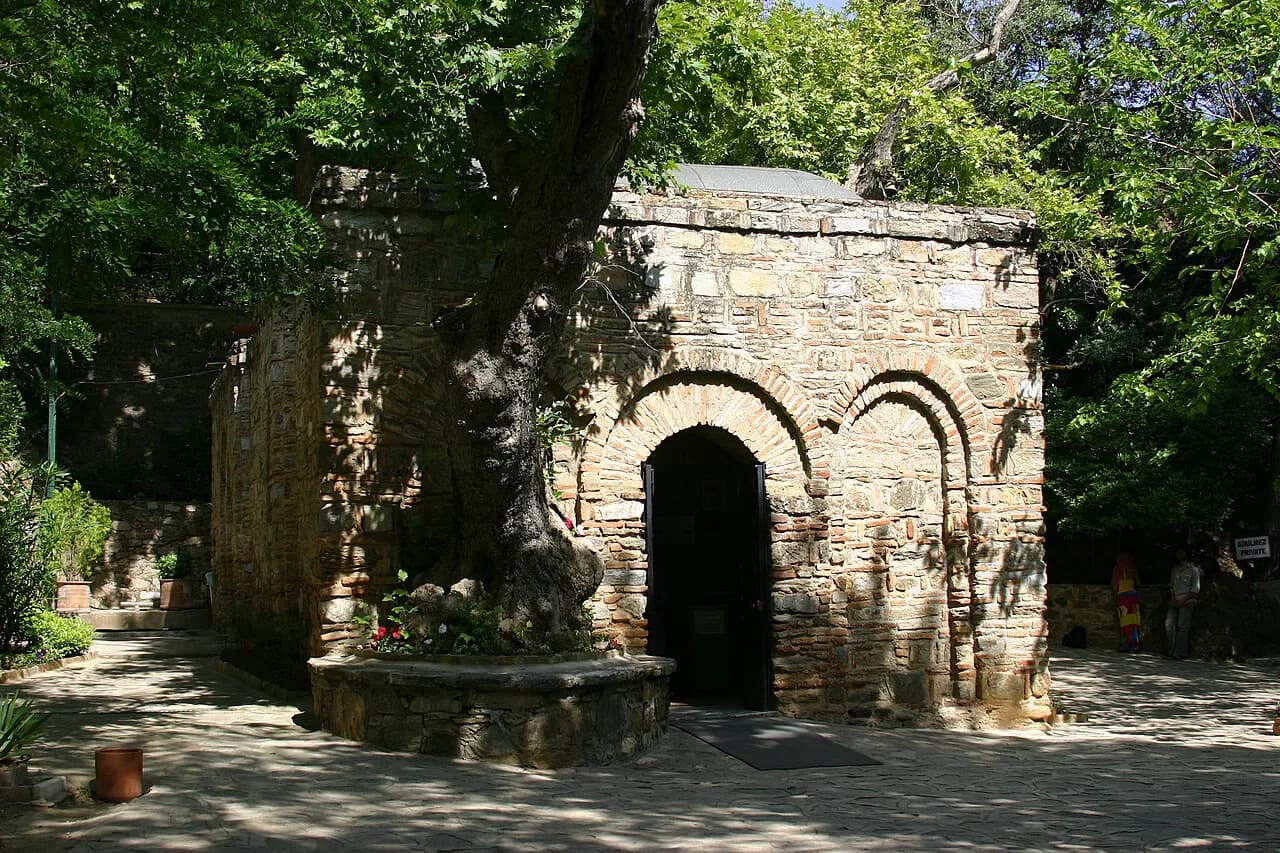
If you are basing yourself at Selçuk for the Ephesus ruins, treat Miletus as a separate morning rather than squeezing it into the same day. Ephesus: A Practical Guide to the Ancient City covers the ticketing, gates and walking order for that site, and the House of the Virgin Mary (Meryem Ana Evi) sits on the same hillside above Selçuk for a short add-on.
Tickets and opening hours
Tickets cost EUR 6, paid in Turkish lira at a table outside the site, and you receive an official ticket. The government ticketing site then listed EUR 3 and a closing time of 20.00 with last entry at 18.30, so the published figures did not match what was charged or observed.
The same visit found the site still open around 17.00 in June 2026, although some websites give a 17.00 closing, and it appeared that Miletus closes at 19.00 in summer. Treat any hour you read as a claim to confirm on the day, and check the official ticket page for Miletus shortly before you drive out; Müzekart validity here is not something the sources confirm.
The best time of day to walk the site
Miletus is a large, exposed archaeological field, so July and August are punishing and June and September can still be hot. Aim for early morning or after 16.00 if the day is fierce, and carry water for the stretch between the theatre and the harbour.
Pairing Miletus with Priene and Didyma
Miletus, Priene and Didyma make one sensible driving loop from Kuşadası or Selçuk, with the Temple of Apollo at Didyma as the third stop. The planning cost is time: three ruin fields, parking at each and a midday meal add up to a full day rather than a morning.
If you only have one spare day beyond Ephesus, the loop is the better use of it than a second visit to a single site, because each of the three has a different character. Keep the order flexible and start with Miletus if you want its theatre before the coaches arrive.
Why Miletus matters: philosophy and the grid plan
Miletus was the home of the Milesian school, the pre-Socratic thinkers Thales, Anaximander and Anaximenes, who looked to nature and logic rather than myth to explain the world. Thales, born around 624 BC, is credited with predicting weather and eclipses and with early geometry, including a method for measuring the height of the pyramids.
After the Persian sack in 494 BC the city was rebuilt on a grid plan named for its own planner, Hippodamus, a layout that became standard across Greek and Roman towns. That is why the street pattern you walk today reads as regular blocks rather than an organic tangle.
Why the harbour silted up and the city emptied
The Maeander River gradually silted the harbour, and by the sixth century AD the silting was severe enough to bring malaria as well as the loss of sea trade. The city shrank into a small Byzantine and Ottoman settlement and was abandoned after an earthquake in 1415.
The name survived in local form: the fortified theatre and palace ruins led to the name Palatia, which became Balat, the village beside the site today. Standing on the theatre steps and looking at farmland where ships once moored is the clearest way to understand the site.
Is Miletus worth the detour?
Yes, if you want a major Ionian city without the Ephesus crowds, and especially if you combine it with Priene and Didyma on a single driving day. The theatre, the Baths of Faustina and the harbour monuments give you a full hour of substantial ruins, and the philosophy connection gives the stones a story.
Skip it if you need labels, shaded walkways and a short stroll from a car park. Miletus rewards readers who arrive with notes, water and a car, and who check the ticket page for the current price and closing time before driving out.
Explore more Selcuk guides
Frequently Asked Questions
What is Miletus called today?
The ancient city is known as Miletus in English and Milet in Turkish, and the village beside the ruins is Balat. The name Balat developed from Palatia, the name given to the fortified theatre and palace ruins in the later period.
How do I pronounce Miletus?
English speakers generally say my-LEE-tus, with the stress on the second syllable. Turkish speakers say Milet, pronounced mee-LET, which is the form you will see on road signs near Balat and Söke.
Who destroyed Miletus?
The Persians sacked the city in 494 BC after the Ionian revolt, and Herodotus wrote that it was left empty of Milesians, though the extent of the destruction is still debated. The city was later rebuilt on a grid plan and continued under Hellenistic and Roman rule before silting and an earthquake in 1415 finished it off.
Can I visit Miletus without a guide?
Yes, but bring your own notes, because on-site labelling is sparse and the baths and harbour monuments are hard to read without context. A guide explains the structures but usually allows only about an hour on site.
Sources
Notes for your next Turkey trip
Optional updates when we add or correct a town guide.
You might also like
Continue reading
More guides you'll find useful