Antalya Mosque Guide: Kaleiçi's Historic Mosques
The mosques visitors can see in Antalya, from Kaleiçi's Murad Pasha and Kesik Minare to Alanya's Süleymaniye, with dress, etiquette and prayer-time tips.
On this page
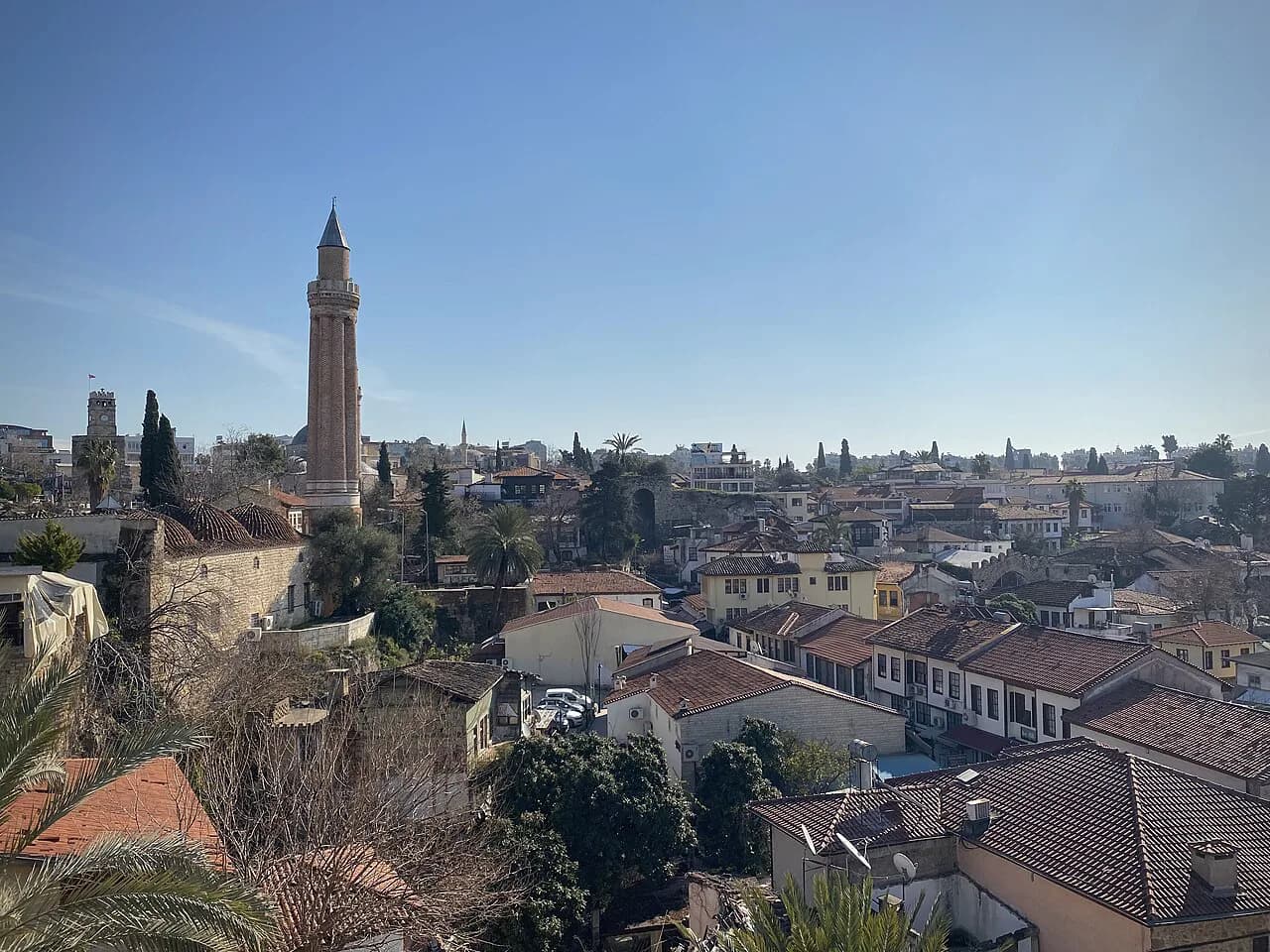
For most visitors, Antalya's mosque sightseeing comes down to two buildings in Kaleiçi: Murad Pasha Mosque, described as the largest mosque in Antalya, and the Kesik Minare Mosque, the Broken Minaret, on Hesapçı Sokak. Both sit within the old town, so you can see them on the same walk rather than treating them as separate outings. This guide covers what each one is, what to expect inside, dress and behaviour, and how to fold a visit into a route from Hadrian's Gate down to the harbour.
Murad Pasha stands in the city centre while still being tied to Kaleiçi, and the Kesik Minare sits deep in the old town's lanes. Beyond Antalya city, Alanya's Süleymaniye Mosque is a separate day out inside Alanya Castle. Treat the city mosques as places of worship first and sights second; that framing decides how smoothly a visit goes.
What mosques in Antalya can visitors see?
The practical shortlist is Murad Pasha Mosque and the Kesik Minare Mosque in Kaleiçi, plus Alanya's Süleymaniye Mosque if your trip reaches the eastern coast. Antalya's mosques are presented as part of the city's Islamic heritage and as working places of worship rather than museum pieces, so the visitor experience is a quiet look rather than a ticketed attraction.
Kaleiçi itself is the reason the two city mosques are easy to combine: the neighbourhood is compact, and its lanes, walls and harbour sit within a short walk of each other. If you want the wider context of the old town before you start, read the Antalya Old Town (Kaleiçi) guide and plan the mosque stops into that route.
Set expectations for scale. These are neighbourhood mosques you drop into for ten or fifteen minutes, not monuments that fill an afternoon; the old town's streets, gates and marina do the rest of the work. Alanya's Süleymaniye is the exception in setting, since it comes with the castle and its panoramic views.
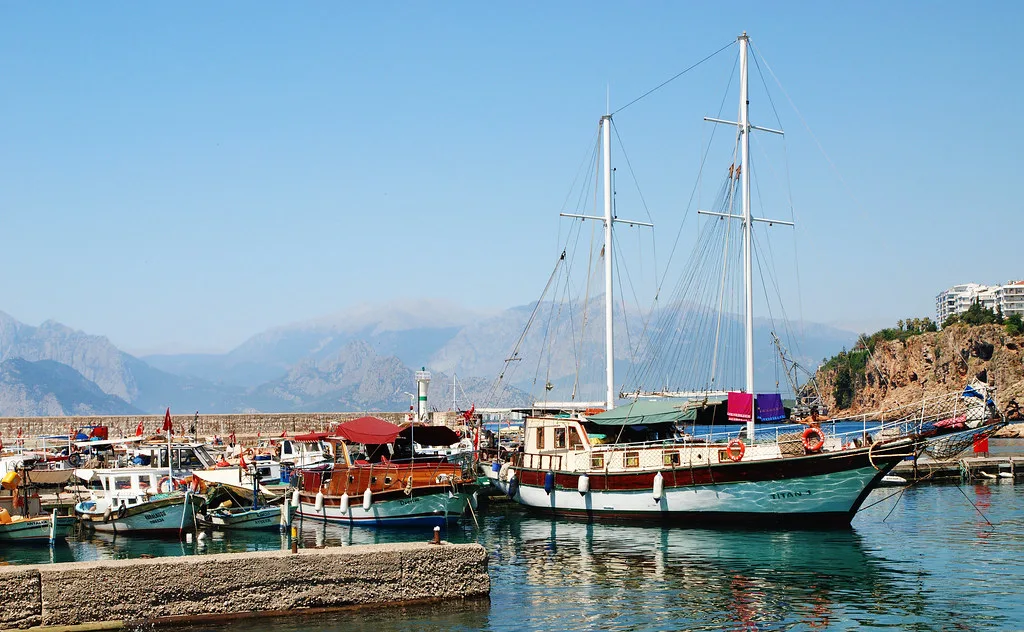
Murad Pasha Mosque: Antalya's largest mosque and its place in the old city
Murad Pasha Mosque is described as the largest mosque in Antalya, built in 1570 and credited to the Ottoman minister Murad Pasha, whose name it carries. The same account places it within Kaleiçi and points to traces of Seljuk-style art on its ceilings and walls. Take those details as the published description rather than a verified architectural survey, and treat the size claim as applying to Antalya, not to Turkey as a whole.
It is a working mosque as well as a visitor stop, and its position means you pass it naturally while moving between the modern centre and the old town's lanes. Look at the exterior and the entrance before deciding whether to go in, and keep any look inside brief and quiet. The building is also listed among Antalya City Centre attractions for orientation purposes.
If your interests run to Antalya's older layers, pair the mosque with the city's museums, which hold the portable finds that the mosques themselves do not explain. The museums in Antalya guide sets out what each collection covers so you can decide how much time to give the old town.
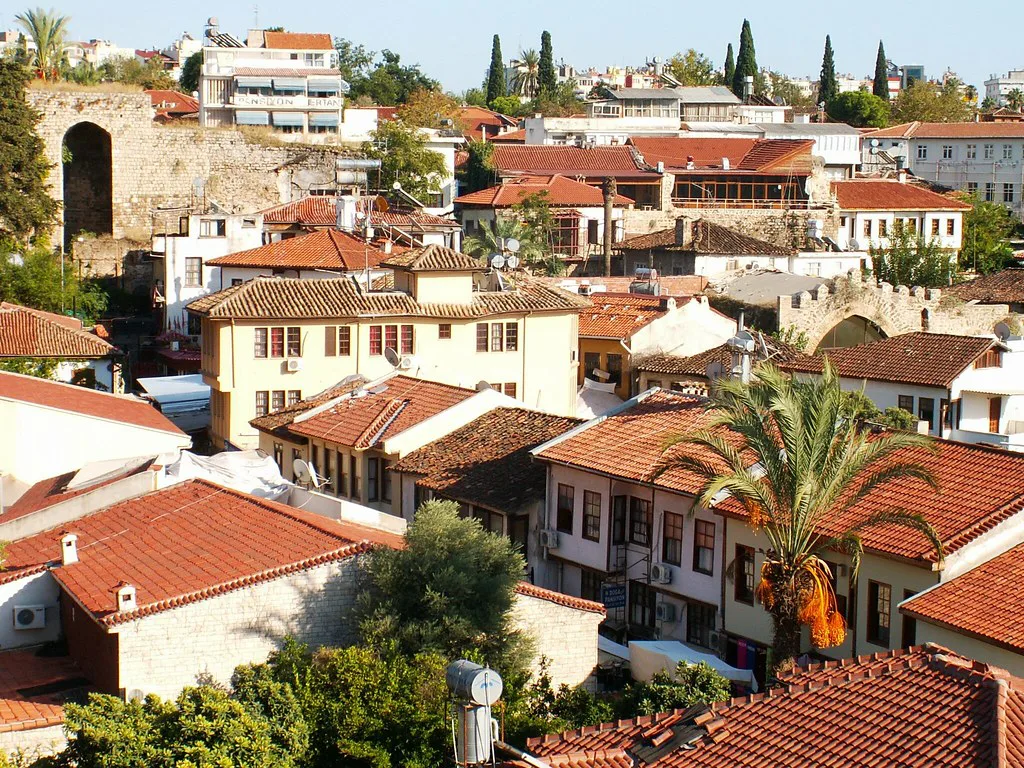
Kesik Minare Mosque (Broken Minaret) on Hesapçı Sokak in Kaleiçi
The Kesik Minare Mosque, also called the Broken Minaret Mosque or Korkut Mosque, stands on Hesapçı Sokak in the heart of Kaleiçi. Its site began as a Roman temple in the second century, and the building's story runs through later conversions before it became a mosque. That layered past is exactly what most people photograph past when they frame only the broken minaret.
Use the name carefully when asking directions: locals know it as Kesik Minare Cami, and the street name Hesapçı Sokak is the reliable marker in the tangle of lanes. Arrive on foot; the old town's streets are narrow and walking is the practical way in. Give it a short look, then continue through the lanes rather than doubling back.
For the Roman and later context behind a site like this, the city's older layers are covered in the Antalya history guide, which helps you read the masonry rather than just the silhouette. If ancient stonework is your reason for coming, the Antalya ruins guide points you to the sights that reward a longer stop.
What to expect inside an Antalya mosque: prayer hall, carpets and decoration
Inside, the pattern is consistent: a carpeted prayer hall, a mihrab indicating the direction of prayer, and decoration on the ceilings and walls. At Murad Pasha the published description singles out Seljuk-style traces overhead, so look up once you are through the door. Keep your voice low and stay at the edge of the prayer area rather than walking across the carpets.
Photography inside is a judgement call rather than a right: avoid photographing people at prayer, and skip flash. If worshippers are present, wait or leave; the building will still be there later in the day. A short, quiet visit respects the space and usually gets a warmer reception than a group filing through.
Mosques are not interpreted for visitors in the way a museum is, so the objects and labels you would normally rely on are absent. If you want the archaeological background first, the Antalya Ethnography Museum is one of the museums in the city that covers local life and craft, and it makes a sensible companion stop.
Dress and behaviour: shoes, headscarves and quiet during prayer
Dress modestly: shoulders and knees covered, and women should carry a scarf in case one is required at the entrance. Remove your shoes where others do, and leave them at the rack or shelf rather than carrying them into the prayer hall. These are the details that decide whether you are waved in or turned away.
Behaviour matters as much as clothing. Keep groups small and quiet, put phones on silent, and do not eat, drink or smoke inside. If a service or prayer is under way, do not walk in front of worshippers; step back or come back later.
Rules are set by each mosque rather than published centrally, and they can vary by building and by time of day. If entry is not obviously permitted, ask at the door or accept the answer you are given; the surrounding lanes of Kaleiçi are reason enough for the walk.
Visiting around prayer times: why a working mosque closes to sightseers
A working mosque prioritises worshippers, and the five daily prayers are when space and quiet are needed most. Plan your look for the periods between prayers, and be ready to find the door busy or the hall in use when you arrive. The call to prayer is the clearest signal that the building is switching to worship mode.
Do not treat a closed door as a snub. Wait in the street or move on to the next stop and return; the old town's lanes, the marina and the clock tower all fill the gap. Current prayer times are published daily by Turkish religious authorities and by mosque noticeboards, so read the day's timetable at the entrance rather than relying on a fixed schedule.
Opening arrangements for visitors are not standardised across Antalya's mosques and can change with the season or with restoration work. Ask at the entrance, or check with your accommodation on the day; a two-minute question saves a wasted walk.
Non-Muslim visitors: what mosques in Turkey allow
Turkey's mosques are places of worship that generally welcome respectful visitors outside prayer times, and Antalya's city mosques are described as drawing tourists as well as worshippers. Entry is a courtesy extended to you, not a ticket you have bought, so behave accordingly.
Some mosques restrict visitor access at particular times or set aside a screened area, and individual buildings differ. Read the entrance signage, follow any barrier, and accept a refusal without argument. If you want a guided introduction to Islamic architecture and practice, mosque-focused tours of the Antalya area are sold, including one that includes the Süleymaniye Mosque in Alanya.
Anyone can look at the exterior and the courtyard whatever the entry rules, and that alone justifies the detour on a Kaleiçi walk. Treat the interior as a bonus rather than the point of the visit.
Alanya's Süleymaniye Mosque inside Alanya Castle
The Süleymaniye Mosque in Alanya is an Ottoman-era mosque inside Alanya Castle, and it comes with the castle's panoramic views over the coast. It is a different day out from Antalya city, so it belongs in an Alanya itinerary rather than a Kaleiçi morning.
Because it sits within the castle walls, plan the mosque as one stop among the fortress walk rather than a standalone trip. The same dress and quiet rules apply, and the interior may be in use at prayer times. Castle opening hours and any entry charge are set locally, so confirm them at the gate or with the ticket office on the day.
Fitting a mosque visit into a Kaleiçi walk: Hadrian's Gate to the harbour
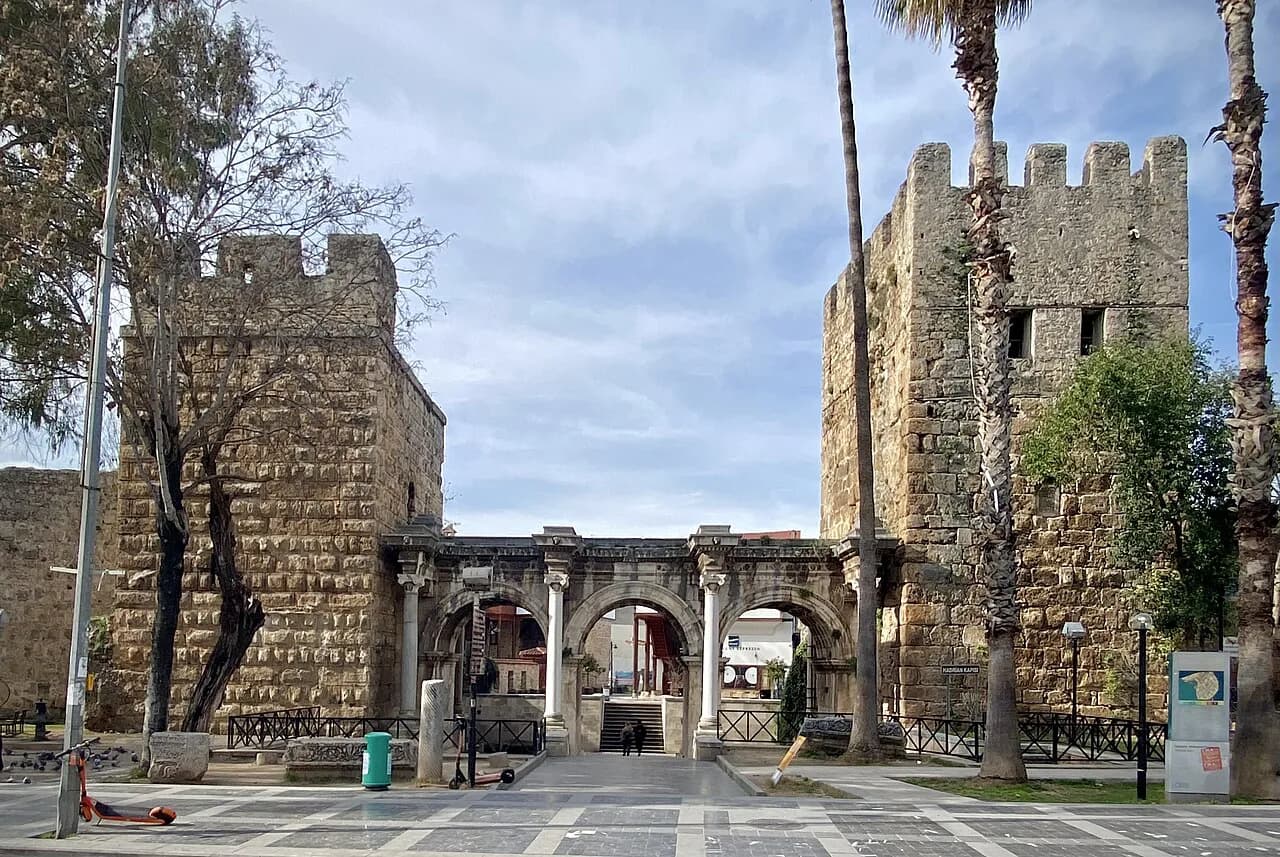
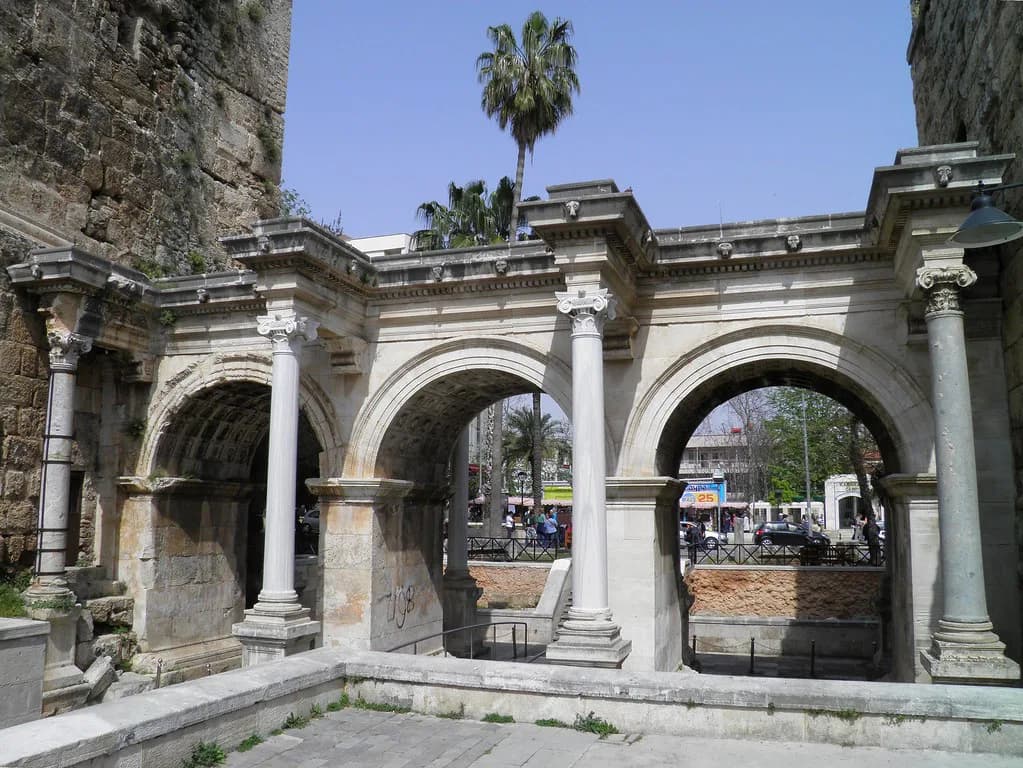
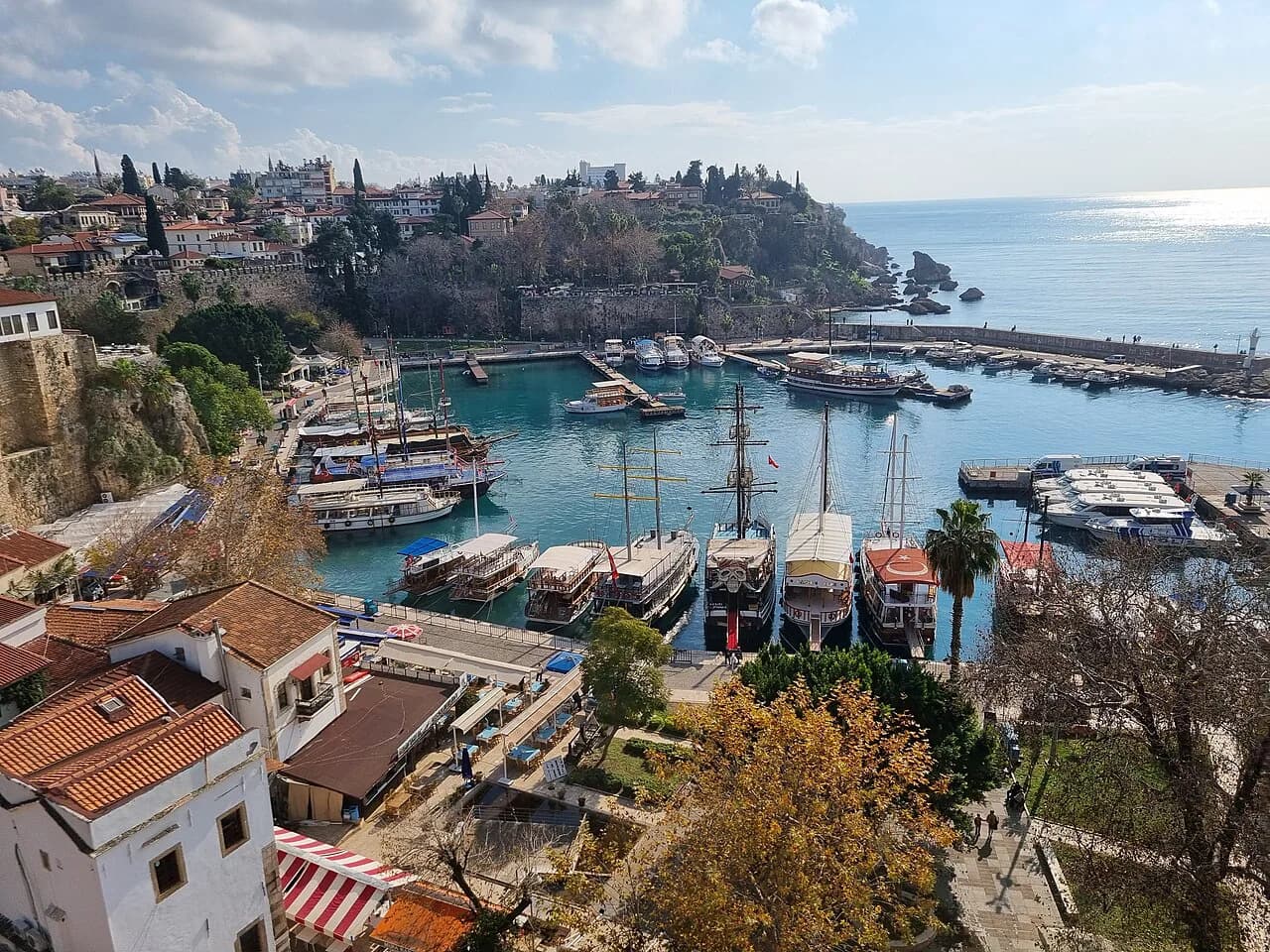
Start at Hadrian's Gate, the Roman triumphal arch that marks the entrance to the old town, and walk in through the lanes towards Hesapçı Sokak for the Kesik Minare. From there, continue downhill through the streets towards the water, picking up Murad Pasha as you go. Allow a relaxed half-day rather than a rushed hour.
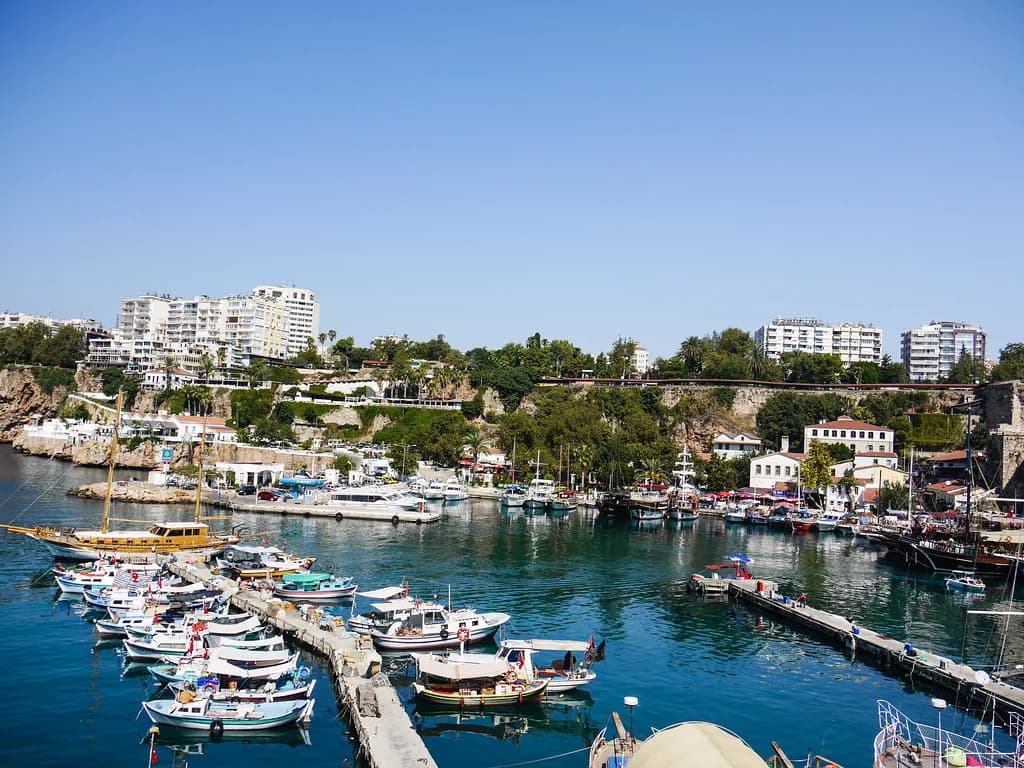
Finish at the harbour, where the boats and cafés give you a place to sit after the lanes. The Kaleiçi Marina area is the natural end point and the easiest place to reorient yourself for the walk back or a taxi.
The Saat Kulesi, Antalya's clock tower, is a useful landmark on the modern side of the old town when you need to fix your position. Use it as a meeting point if your group splits up among the shops and lanes.
Common mistakes: arriving at prayer time, loud groups, treating mosques as photo stops
The first mistake is timing: arriving as the call to prayer begins means you are in the way, and the door may be effectively closed to you. The second is noise; a chatty group in a carpeted hall carries further than you expect.
The third is treating the building as a backdrop for photographs while worshippers are present. Ask before photographing anyone, never block the entrance for a shot, and put the camera down during prayer. A brief, respectful look earns more goodwill than a long session with a phone.
Which mosque should you actually visit?
If you have one morning in Antalya, do the Kaleiçi walk and see both city mosques: the Kesik Minare on Hesapçı Sokak for its layered past and Murad Pasha for its size and decorated interior. If you are based in Alanya, the Süleymaniye Mosque inside the castle gives you the same architecture with a coastal panorama attached.
Whichever you choose, go outside prayer times, dress modestly, keep quiet and accept the answer at the door. Confirm the day's prayer timetable and any entry arrangements locally before you set out, since these are set building by building.
Sources
Notes for your next Turkey trip
Optional updates when we add or correct a town guide.
You might also like
Continue reading
More guides you'll find useful