Priene: Visiting the Ancient Ionian City near Söke
Priene is an ancient Ionian city on the slopes of Mykale near Söke, 30 km from Kuşadası. See the Temple of Athena, the grid streets and the marble walls.
On this page
Priene is a small ancient Ionian city set on the slopes of Mykale, the mountain above Söke in Aydın province, about 30 km south of Kuşadası and 35 km south of Ephesus by road. It suits a half-day visit built around three things: the Temple of Athena, the grid of streets laid out on terraces, and the marble city wall with its water system. This guide covers how to reach it, what to look for in what order, and how to pair it with other sites in the area.
The site rewards readers who understand its layout before arriving. Because the streets run in right angles across a hillside, a walk through Priene is a series of short climbs and level stretches rather than a flat circuit, which shapes how much you can comfortably see in summer heat.
What Priene is and where it sits
Priene was one of the first Ionian settlements in Asia Minor and an active member of the Ionic Confederation, and its inhabitants fought at the Battle of Lade in 495 BC with twelve ships. The city visible today rises on a different spot from the original settlement, which had two harbours; it was rebuilt after the Persians destroyed it following a revolt. The site sits on the slopes of Mykale, also called Samsun Mountain, above Söke.
The city later grew with backing from Athens, then passed to the Kingdom of Pergamon and eventually, in the 2nd century BC, to the Roman Empire. For a visitor this matters mainly as orientation: you are looking at a planned Hellenistic city with Roman-era layers, not a pile of unconnected ruins. The archaeological site at Priene lies 30 km south of Kuşadası and 35 km south of Ephesus.
How to get there: roads, distances and the climb
Priene is reached by road from the Kuşadası and Selçuk direction, with the site lying south of both. Selçuk, the base for Ephesus, is the usual starting point for the ruins of the area and lies north of Priene; Kuşadası is closer. The classic approach from this side combines the site with Miletus and Didyma on the same road south.
On arrival, the visit is on foot and uphill through terraced streets, so wear shoes with grip and carry water. There is no published timetable for local minibuses in the material available here; ask at your hotel or the Kuşadası bus station about the current dolmuş service towards Söke and the stop for Priene, and confirm the return time before you set out.
The grid plan: Hippodamos streets on a hillside
Priene was laid out on the Hippodamos system, named after the planner from Miletos, in which streets intersect at right angles. The aim was to control the growth of a city, replacing the looser organic construction of earlier Greek towns with a disciplined plan. On the ground this means you walk straight lanes that cross each other squarely, with the slope handled by terracing.
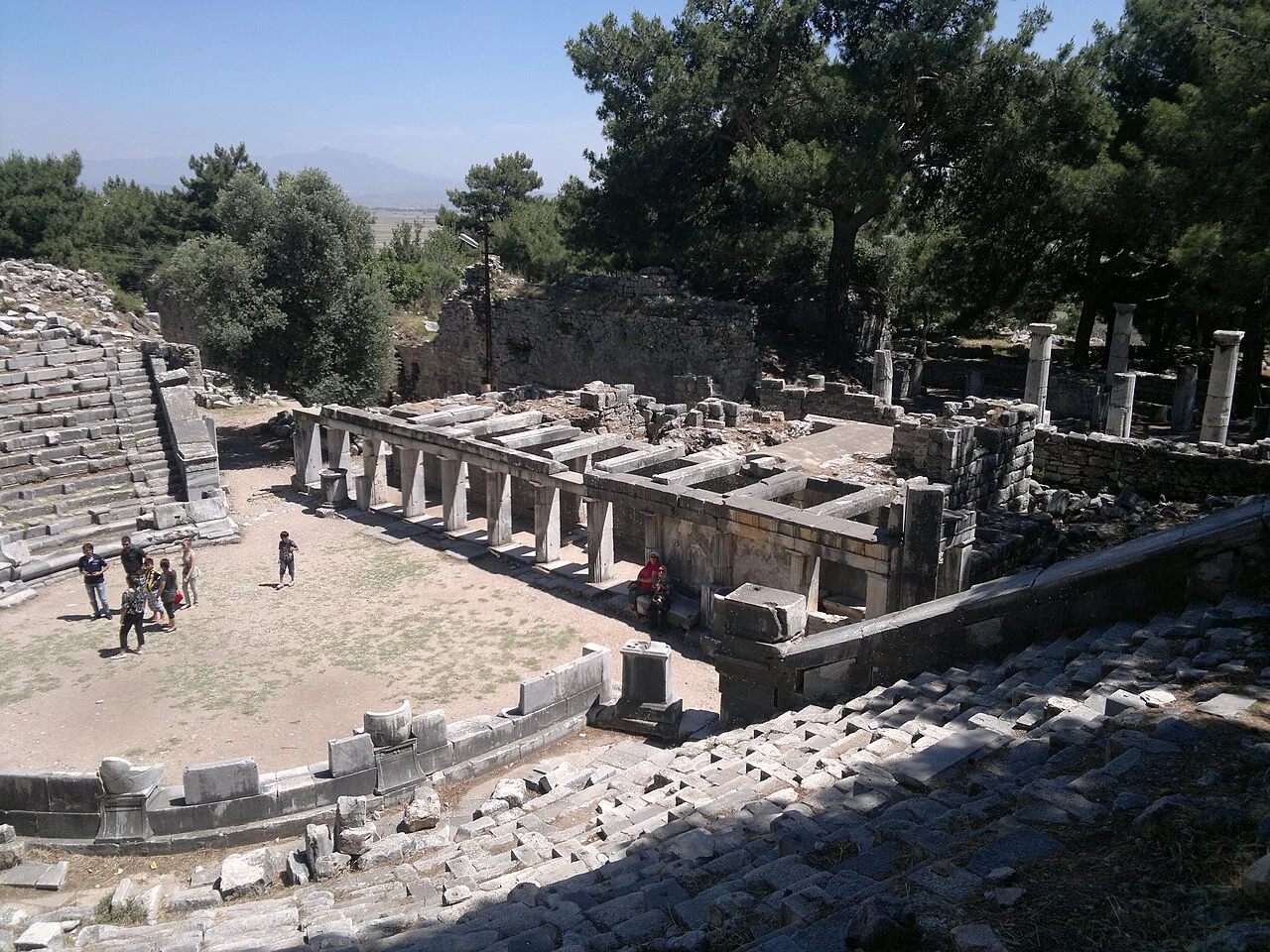
Practically, the grid makes Priene easy to navigate once you accept the vertical gain. A sensible route works along one terrace, then climbs via a cross street to the next, so you see the Temple of Athena, the theatre area and the upper city without doubling back down the hill. The return descent is steep in places, so take it steadily.
The Temple of Athena
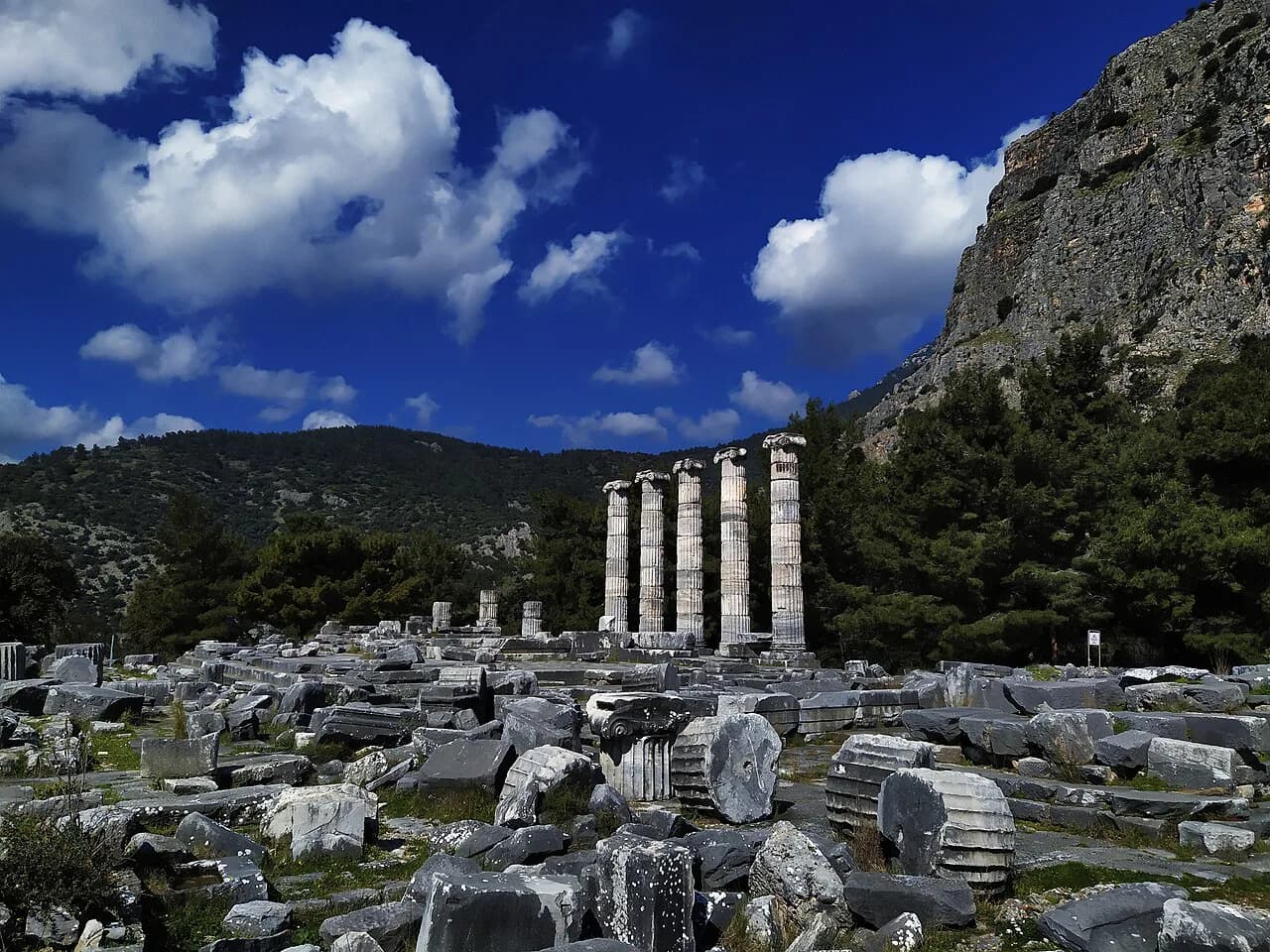
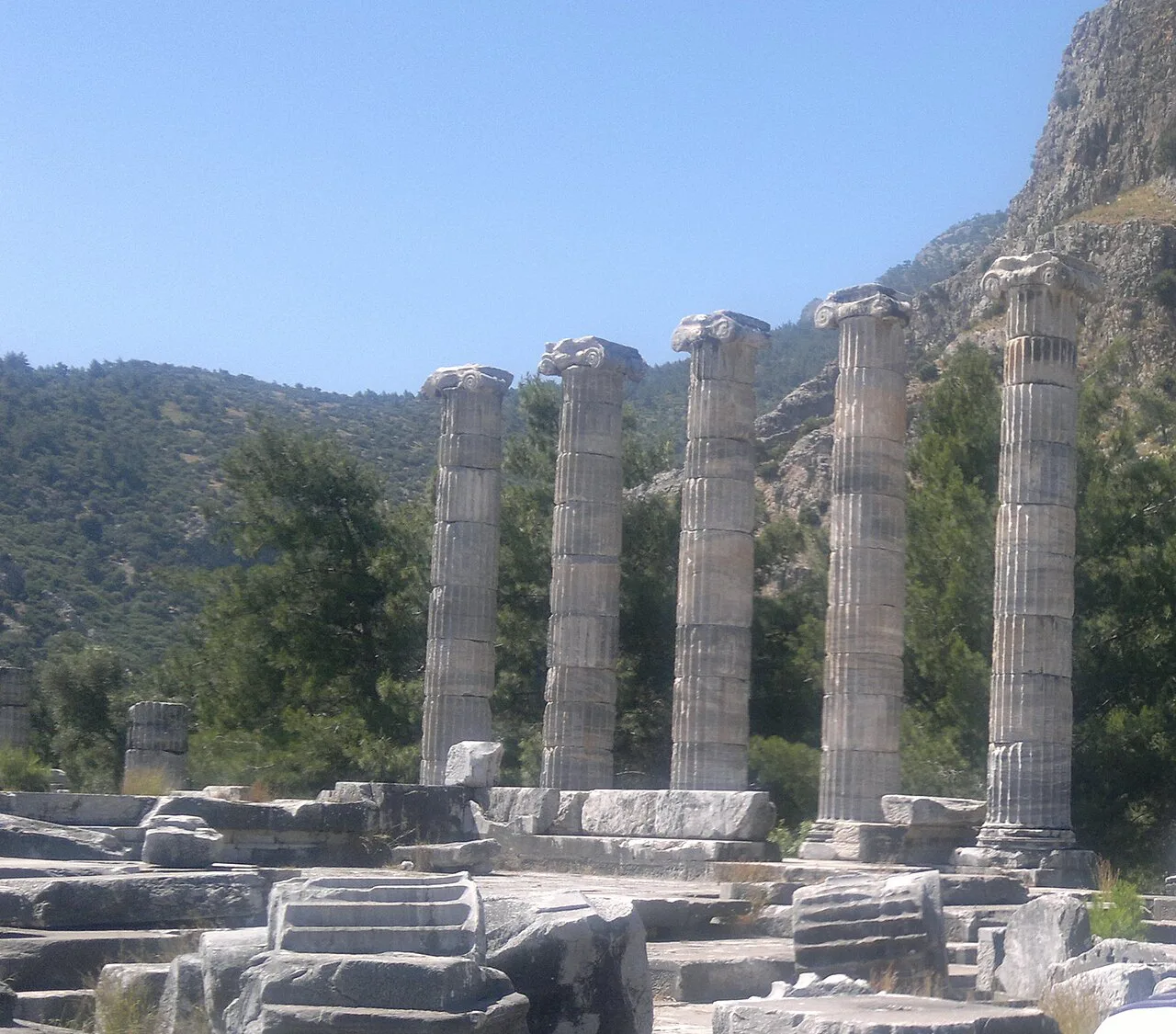
The Temple of Athena is Priene's principal monument and is recognised as a model of Ionic architecture. It was built under the architect Pytheos around the 4th century BC. The Ionic order is identifiable by its slender columns and capitals carved with volutes, more elaborate than the simpler Doric capitals.
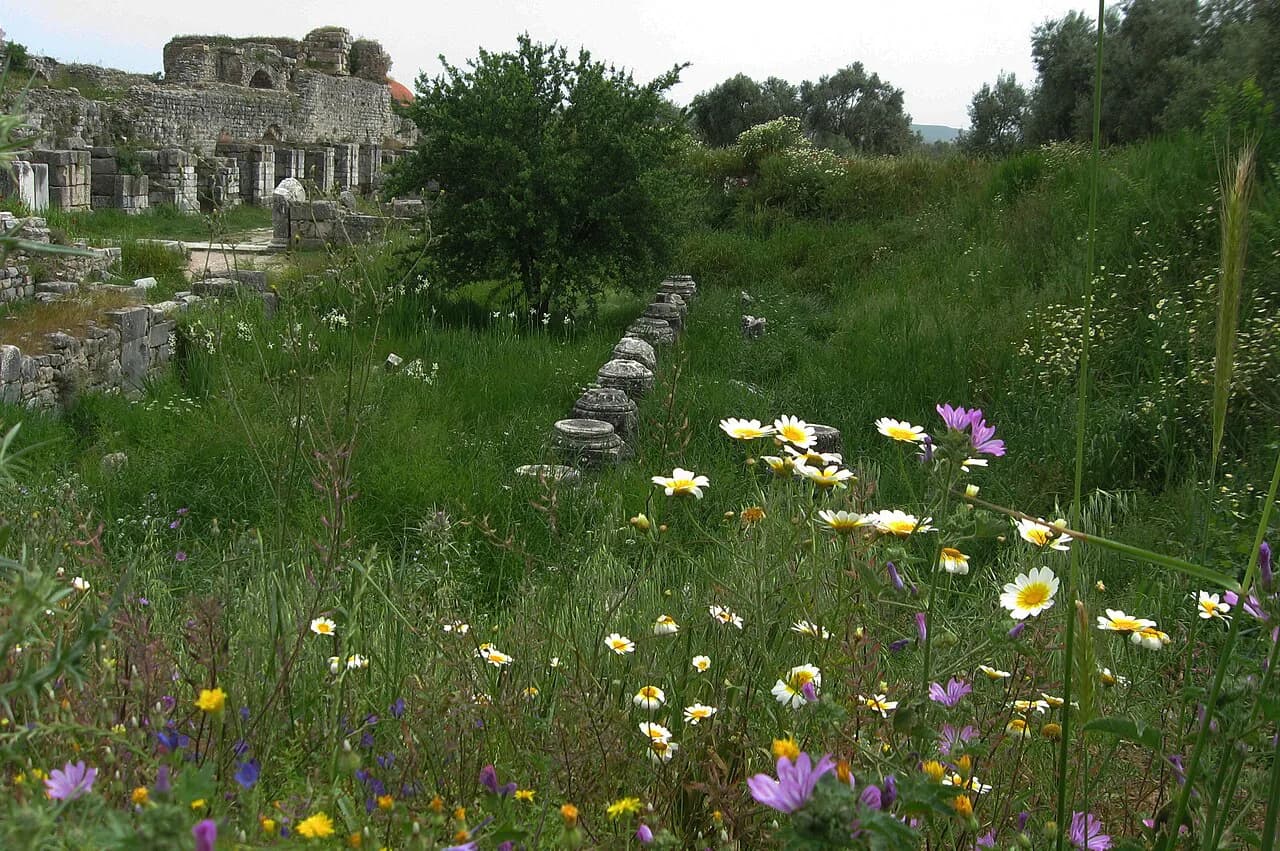
Five columns stand at the site today, and archaeologists have worked to re-erect further columns from fallen pieces found nearby, a slow process because each fragment must be catalogued and matched. When you look at the temple, read it as a partly reconstructed monument rather than a finished facade. The same applies to much of Priene: the pleasure is in the plan, the position and the masonry, not in completeness.
The city wall, aqueduct and fountains
Priene has an exceptional city wall built around 350 BC, in large part of marble, and much of it survives in good condition. Water arrived from the mountains through an aqueduct that doubled as part of the defences, then collected in three large pools and was distributed through pipes to the city buildings. Because water was plentiful, several fountains are still visible, where surplus water ran off in the Hellenistic era.
Look for these as three separate features rather than one general ruins walk: trace the wall along the edge of the terraces, find the pools where the aqueduct discharged, and pick out the fountain basins among the houses. This is the part of Priene most visitors hurry past on the way to the temple, and it is where the engineering of the city is easiest to read.
How long Priene needs and how to pace it
Budget around two hours on site for the temple, the theatre, the walls and the main terraces, plus time to climb and descend. In summer, start as early as you can reasonably reach the site and finish before the middle of the day, because the slopes offer little continuous shade. Carry more water than you think you need and wear a hat.
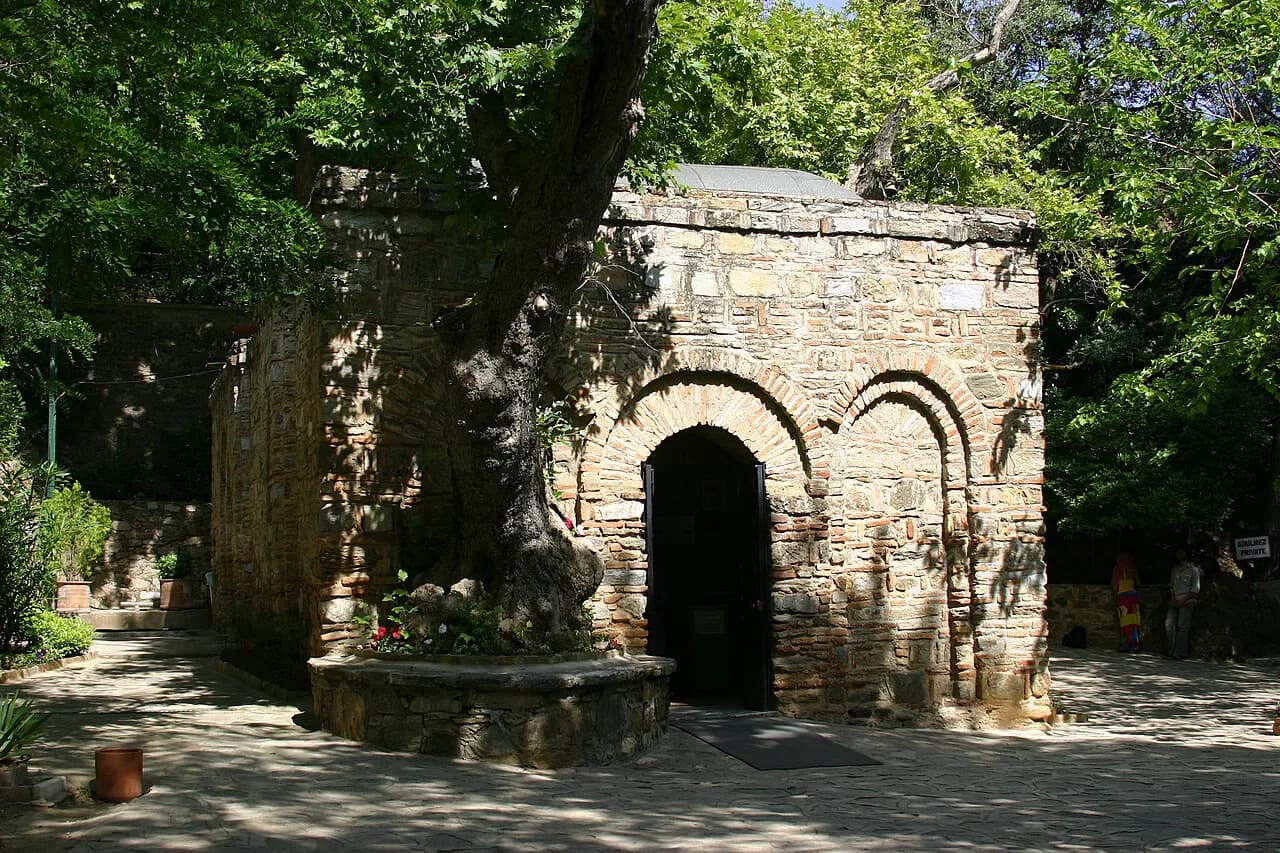
If you are combining Priene with other sites, give Priene the earlier slot and keep Miletus or Didyma for the afternoon, when the drive matters less than the walking. Groups moving slowly should cut the upper terraces rather than the temple, since the temple and the nearby streets make the clearest sense of the city's design. A stop at the House of the Virgin Mary on the Selçuk side works best as a separate short visit rather than an addition to a three-site day.
Combining Priene with Miletus and Didyma
The classic circuit from Kuşadası or Selçuk links Priene, Miletus and Didyma, all within reach on the same road south. Miletus has its own theatre and baths, and Didyma's Temple of Apollo is a short drive further on. Doing all three in one day is feasible by car or on a tour but leaves little slack, so plan the order to keep Priene, the most vertical of the three, for the coolest part of the day.
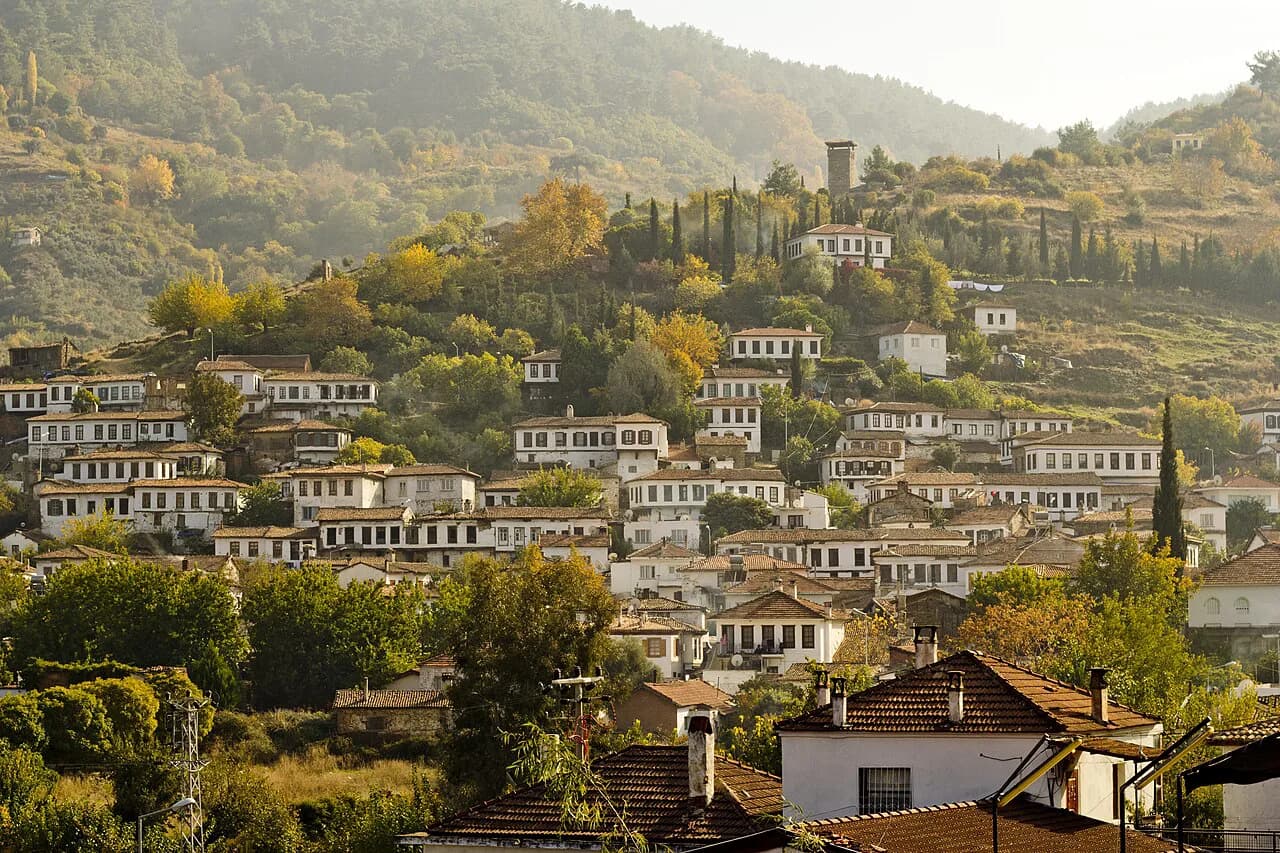
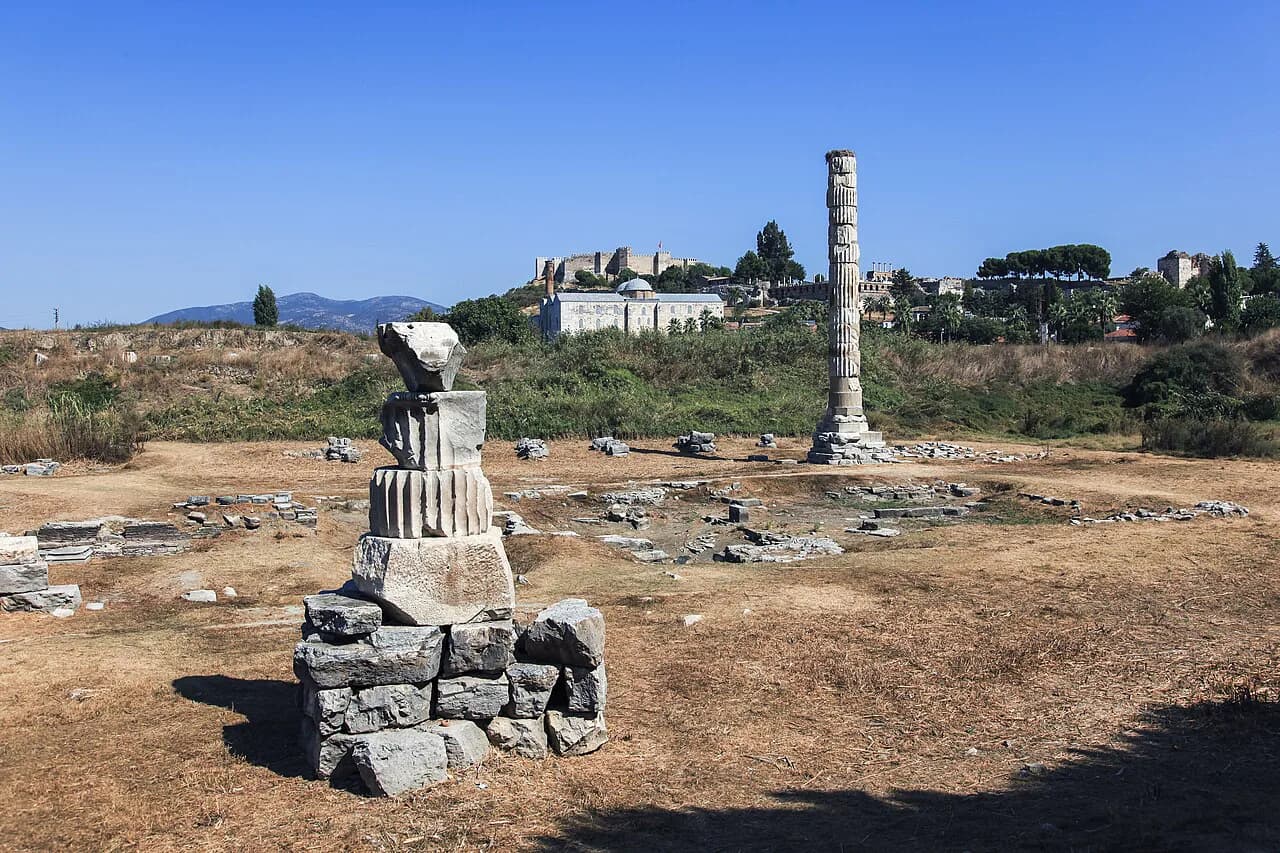
Readers basing themselves in Selçuk can add Ephesus and the Temple of Artemis on a separate day, and Sirince makes a gentler half day if you want a break from ruins. The distances look short on a map but the roads wind, so count driving time honestly when planning a two-site or three-site schedule.
Tickets, opening hours and Müzekart
Ticket prices, opening hours and any seasonal closures for Priene are not fixed from year to year, and the current figures should be checked with the official museum authority or at the ticket office on the day. If you hold a Müzekart, ask at the gate whether it covers this site before buying a separate ticket; eligibility varies by card type and site.
Plan your meal before or after the visit, since the site has limited facilities; Söke or Kuşadası are the obvious places to eat. Keep your ticket to hand for the duration of your visit, and check any re-entry rules at the gate when you arrive.
Is Priene worth the detour from Kuşadası?
Yes if you want a quieter, more legible ancient city than Ephesus and are willing to walk uphill for it. The Temple of Athena, the Hippodamos grid and the marble walls tell a clear story about how a Greek city was planned, and the site rarely carries the coach crowds of the bigger names.
Build it into a day with Miletus and Didyma if you have transport, or take it on its own as a half-day from Kuşadası. Check the current ticket and opening details before setting out, then give yourself two hours on the slope with water, grip shoes and an early start.
Frequently Asked Questions
How do you pronounce Priene?
Priene is usually said with three syllables, roughly pree-EH-neh, with the stress on the middle syllable. Turkish speakers say it in much the same pattern, so asking for Priene will be understood.
How far is Priene from Ephesus?
Priene lies about 35 km south of Ephesus by road, and roughly 30 km south of Kuşadası. The site sits on the slopes of Mykale above Söke, and the final stretch past Söke should be allowed for on top of the headline distance.
Can you visit Priene without a car?
Yes, by joining an organised tour from Kuşadası or Selçuk, or by taking a dolmuş minibus towards Söke and covering the last stretch locally. Minibus timetables change with the season, so confirm the current service and last return at your hotel or the bus station before relying on it.
Sources
Notes for your next Turkey trip
Optional updates when we add or correct a town guide.
You might also like
Continue reading
More guides you'll find useful