Ephesus: What to See, How Long It Takes and How to Get There
Plan a day at Ephesus: walk downhill from the upper gate past the Great Theatre, Marble Street and Curetes Street, and reach the site from Kuşadası or İzmir.
On this page
Ephesus takes about half a day on foot if you walk it as a single downhill route from the upper gate to the lower gate and stop at the main monuments. The ancient city sits on the Aegean coast roughly 20 minutes' drive from Kuşadası and about an hour from İzmir, so it works as a day trip from either. This guide covers what stands along the three main streets, how long each stretch takes at an unhurried pace, and how to reach the site by road, rail or sea.
What Ephesus is and where it sits between Kuşadası and İzmir
Ephesus is a large open-air archaeological site in the Aegean region of Turkey, reached from the coast between Kuşadası and İzmir. It lies about 20 minutes by road from Kuşadası and roughly an hour from İzmir, which makes either town a practical base for a morning or afternoon visit. The site has two gates, an upper and a lower, with a gentle slope between them, so most visits run from the top down to the bottom.
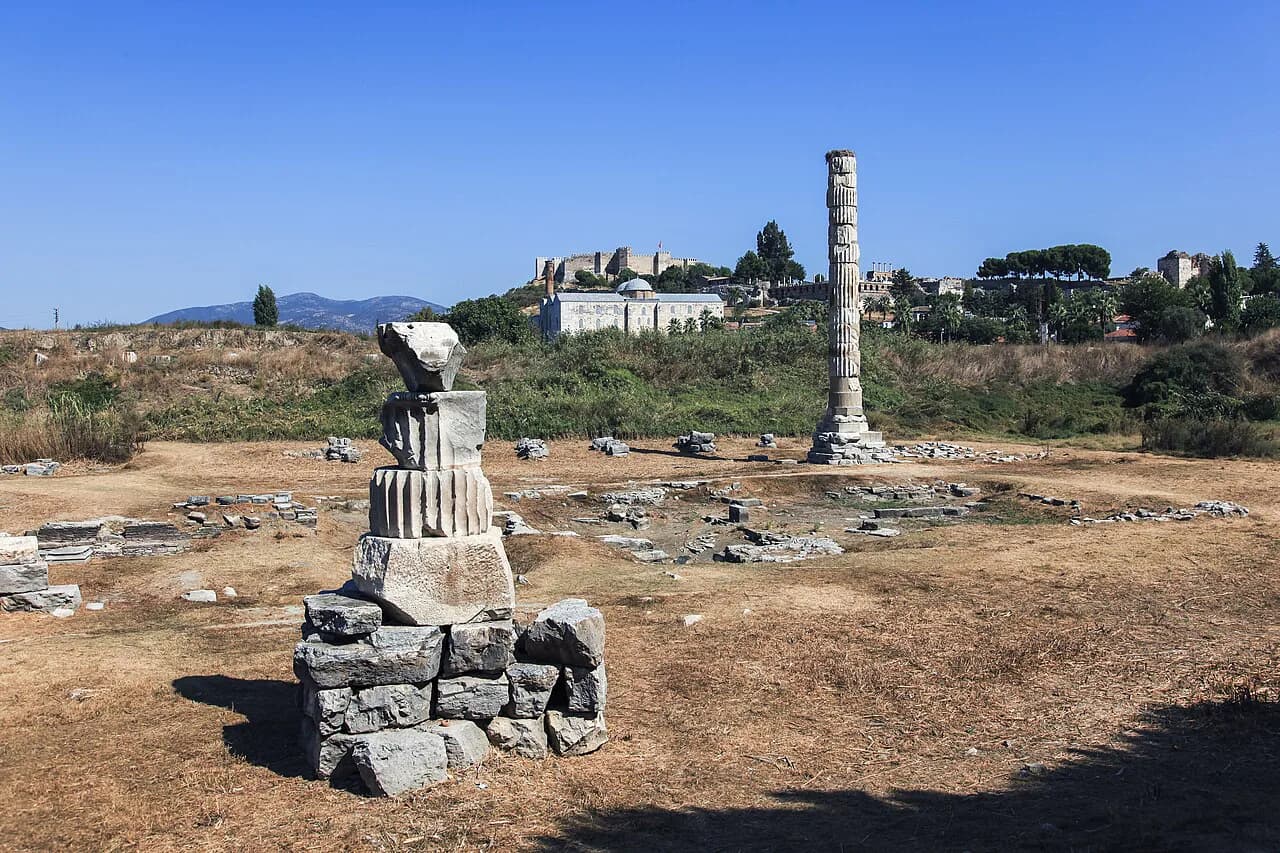
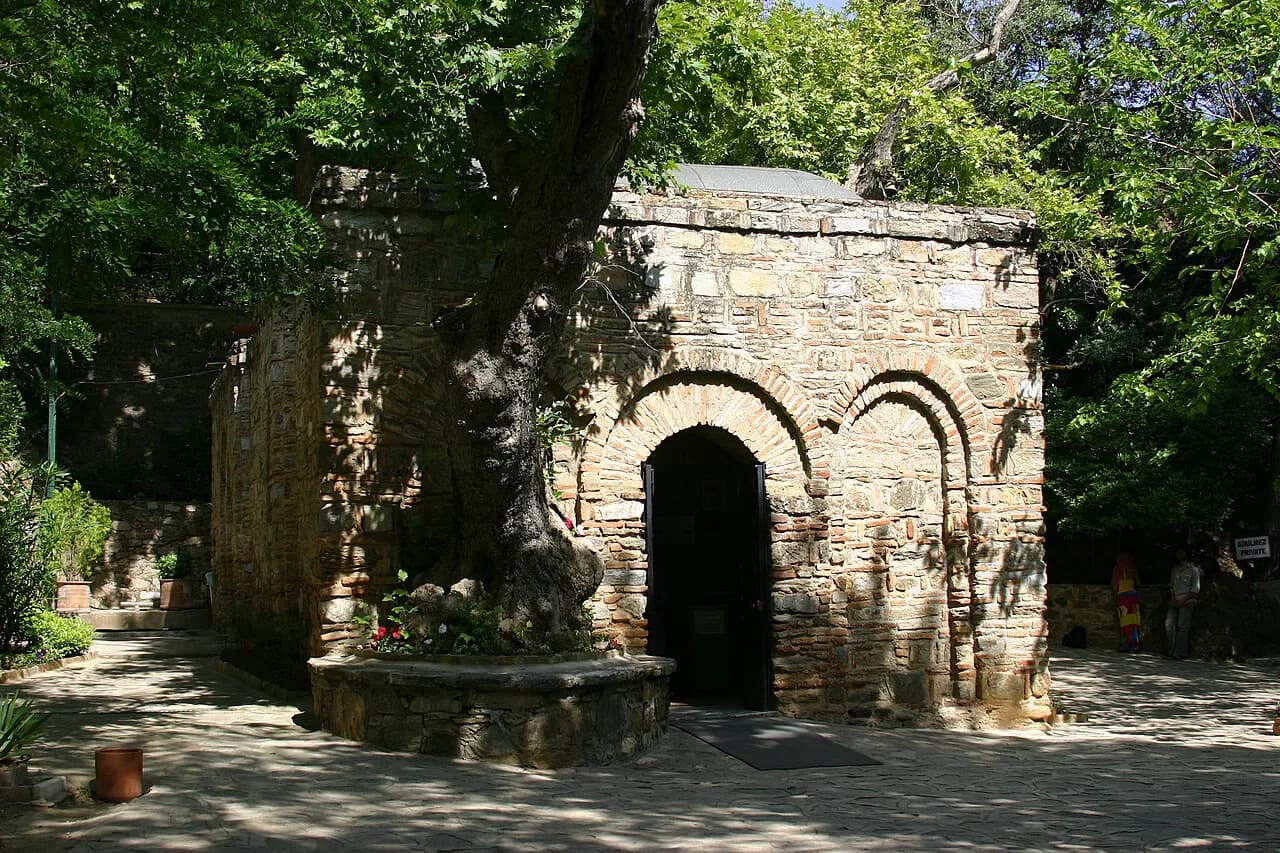
The ruins sit close to Selçuk, the nearest town, and the wider area holds other sites worth pairing with a visit. The Temple of Artemis, one of the ancient wonders, stands near Selçuk, and the House of the Virgin Mary (Meryem Ana Evi) is a short drive up the hill from the ruins. Allow extra time if you plan to see either on the same day.
How the site is laid out: upper gate, lower gate and the downhill route
The two-gate arrangement shapes the whole visit. Because the slope is gentle, tours start at the top gate and finish at the lower gate, which avoids doubling back uphill. If you arrive independently, check which gate your transport drops you at and plan to end at the other, or arrange a pickup at the lower gate.
The monuments line three main streets. Harbour Street runs from the Great Theatre down towards the old harbour, Marble Street links the Library of Celsus area to the theatre and on towards the Temple of Artemis, and Curetes Street carries the densest run of temples, baths and houses. Reading the site by street keeps the walk logical instead of turning it into a checklist.
The Great Theatre and Harbour Street
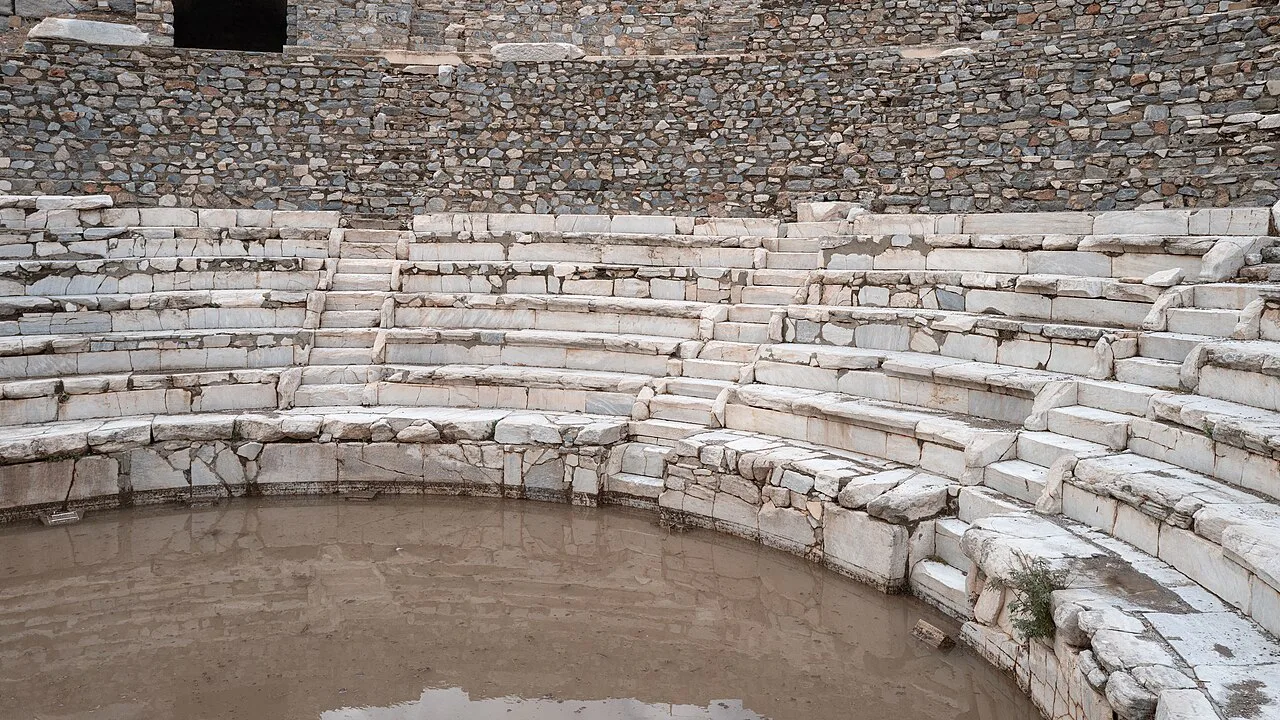
The Great Theatre is the biggest ancient theatre in Turkey, with capacity for 24,000 spectators. It began in the 4th century BC as a Greek theatre and was later converted for Roman use, taking 60 years to build, with a three-storey stage building added in stages. Standing at the top of the seating gives you the sweep of Harbour Street below and a sense of the city's old waterfront.
Harbour Street, also called Arcadian Street, runs about 530 metres from the theatre to the old harbour and was roughly 11 metres wide, with shops and crosswalks along both sides. At its far end stood a four-columned monument. Walking it takes perhaps ten minutes at a steady pace, but it is the stretch where the scale of the ancient port city reads most clearly.
Marble Street, the Library of Celsus and the Gate of Mazeus and Mithridates
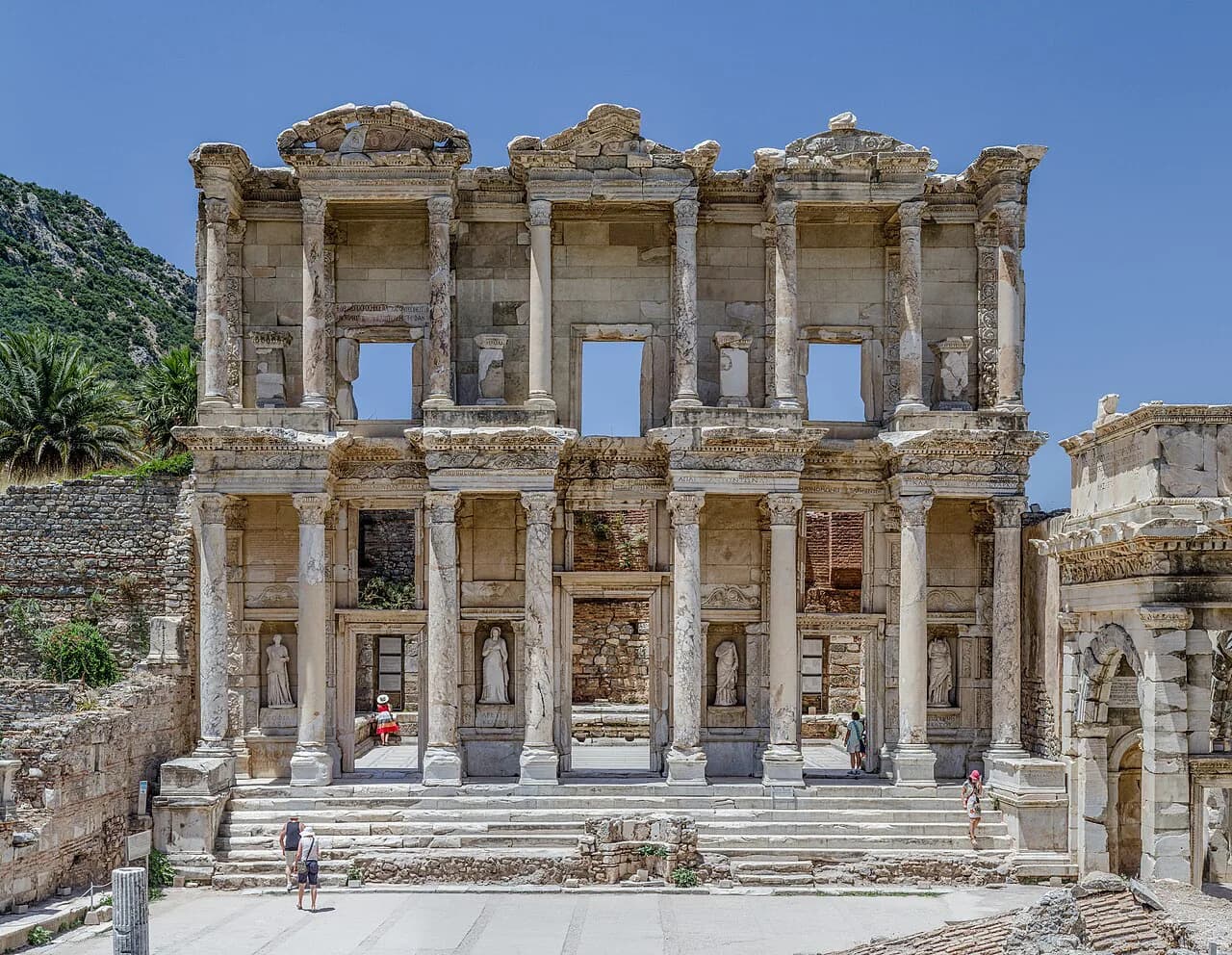
Marble Street is one of the three main streets, starting in front of the Library of Celsus, passing the theatre and continuing towards the Temple of Artemis. The library and the agora sit on its right side, the brothel building on the left, with a gymnasium further along. The Gate of Mazeus and Mithridates, built by the slaves Mazeus and Mithridates for the Emperor Augustus, stands next to the library and opens onto the agora.
The Library of Celsus fronts the stretch of Marble Street that runs down towards the theatre, with the agora on its right and the brothel building on its left. Expect the heaviest concentration of people here in the middle of the day, so coming early or late in the afternoon gives you a clearer view of the facade and the gate beside it.
Curetes Street: Hadrian's Temple, Trajan's Fountain, Scholastica Baths and the Terrace Houses
Curetes Street holds the richest run of monuments. Hadrian's Temple, built in the 2nd century AD in honour of the emperor who visited Ephesus twice, was later converted into a Christian church in the 4th century. The Trajan's Fountain, the Scholastica Baths and the Hercules Gate sit along the same stretch, so walk slowly and look up as well as down.
The Terrace Houses, also called the Hillside Houses, are a separate covered section reached from Curetes Street. These were the luxurious homes of wealthy Ephesians between the 1st and 7th centuries AD, and their mosaics and frescos have been open to visitors since 2002, with section 2 covered for protection in 1999. Check current access to the covered section when you arrive, as it forms part of the ticketed site.
The Scholastica Baths, a Roman bath complex restored after a 4th-century earthquake by a wealthy Christian woman named Scholastica, can be entered room by room, and a statue of her stands inside. Just in front of the Terrace Houses lies a mosaic-paved sidewalk of the 5th to 6th centuries, a reminder that the street had raised pedestrian paths on each side.
The Commercial Agora and the public toilets and latrina
The Commercial Agora covers some 11,000 square metres and was the biggest shopping area of its period, built in Hellenistic times and enlarged under the Romans, with shops on all four sides. St Paul is said to have worked here as a tent maker with Priscilla and Aquila. It is one of two agoras on the site, and it sits downhill from the library gate.
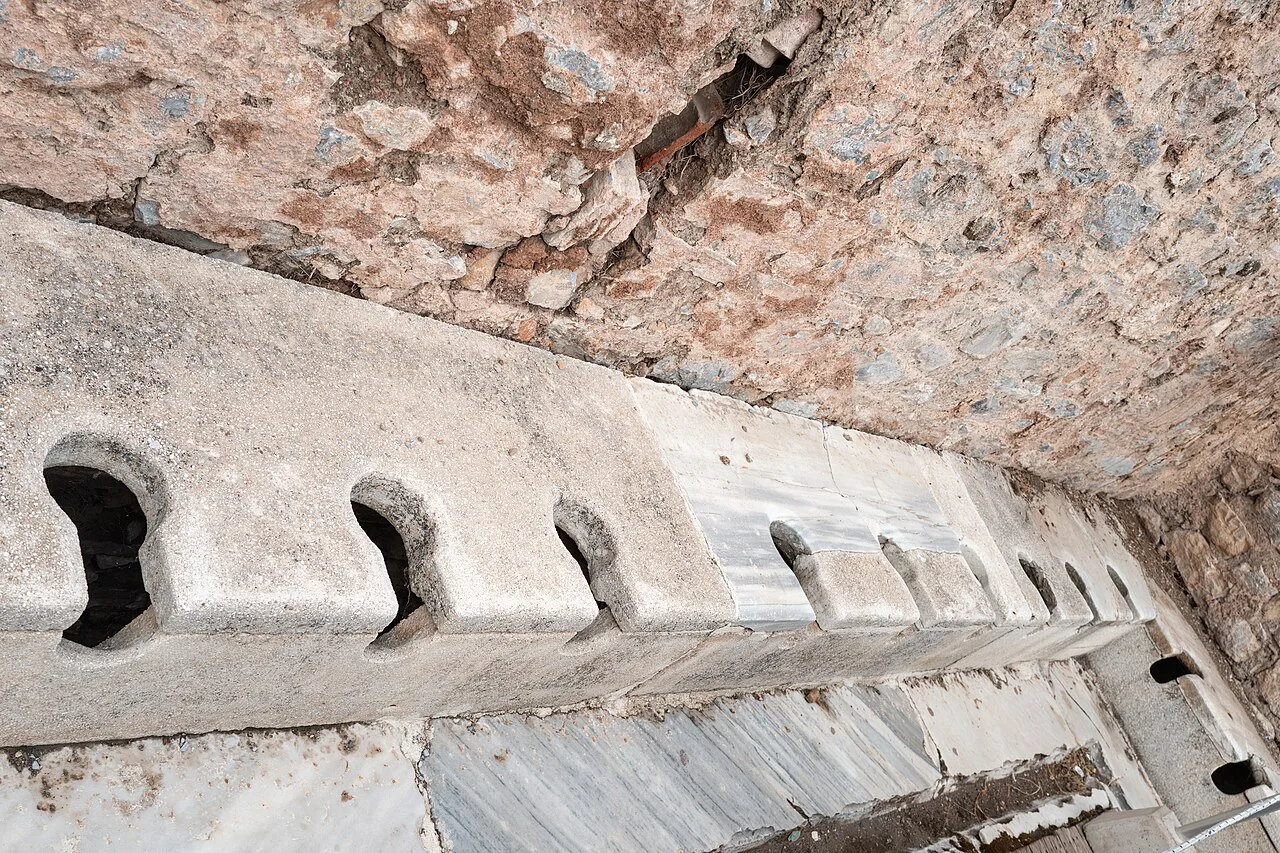
The public toilets, or latrina, are among the best-preserved small structures at Ephesus, with 44 holes on three sides and a reputation for being reserved for men. They make a quick but memorable stop between the baths and the lower street.
How much time Ephesus needs at a walking pace
Allow three to four hours for the site on foot, including the Terrace Houses and a slow pass through the theatre and library. The walk from upper to lower gate is not long in distance, but the monuments pull you sideways and the slope, though gentle, adds time when you stop to read and photograph. Add an hour if you are combining Ephesus with the Temple of Artemis or the House of the Virgin Mary.
Summer heat is the main constraint on pacing. The site has little shade outside the covered Terrace Houses, so a morning start suits most travellers, and water and a hat matter more than a detailed plan. If you are on a coach tour, the schedule is usually built around the upper-gate-to-lower-gate route and leaves little room for detours.
Getting there by road, rail and sea from Kuşadası and İzmir
Ephesus can be reached by highway, sea road and railway from the surrounding region. From Kuşadası the drive takes about 20 minutes, and from İzmir about an hour. Which mode suits you depends on where you are staying and whether you want to combine the transfer with Selçuk's other sights. Half-day and full-day tours also leave from the cruise port; our Kuşadası excursions guide compares them.
If you are based in Kuşadası or Selçuk, a taxi or a hired car gives you flexibility on gate drop-off and pickup. Rail is a realistic option for travellers coming from İzmir, with the nearest station serving Selçuk, though the exact timetable and fares are best confirmed locally on the day. If you stay on the coast, our guide to things to do in Kuşadası covers the resort itself.
Walking the site yourself or joining a tour, and what crowds to expect
Walking Ephesus independently gives you the freedom to linger at the Terrace Houses or return to the library in better light. A guided tour is more efficient for first-time visitors who want the street-by-street context and the downhill route handled for them. Either way, expect the largest crowds around the library and theatre in the middle of the day.
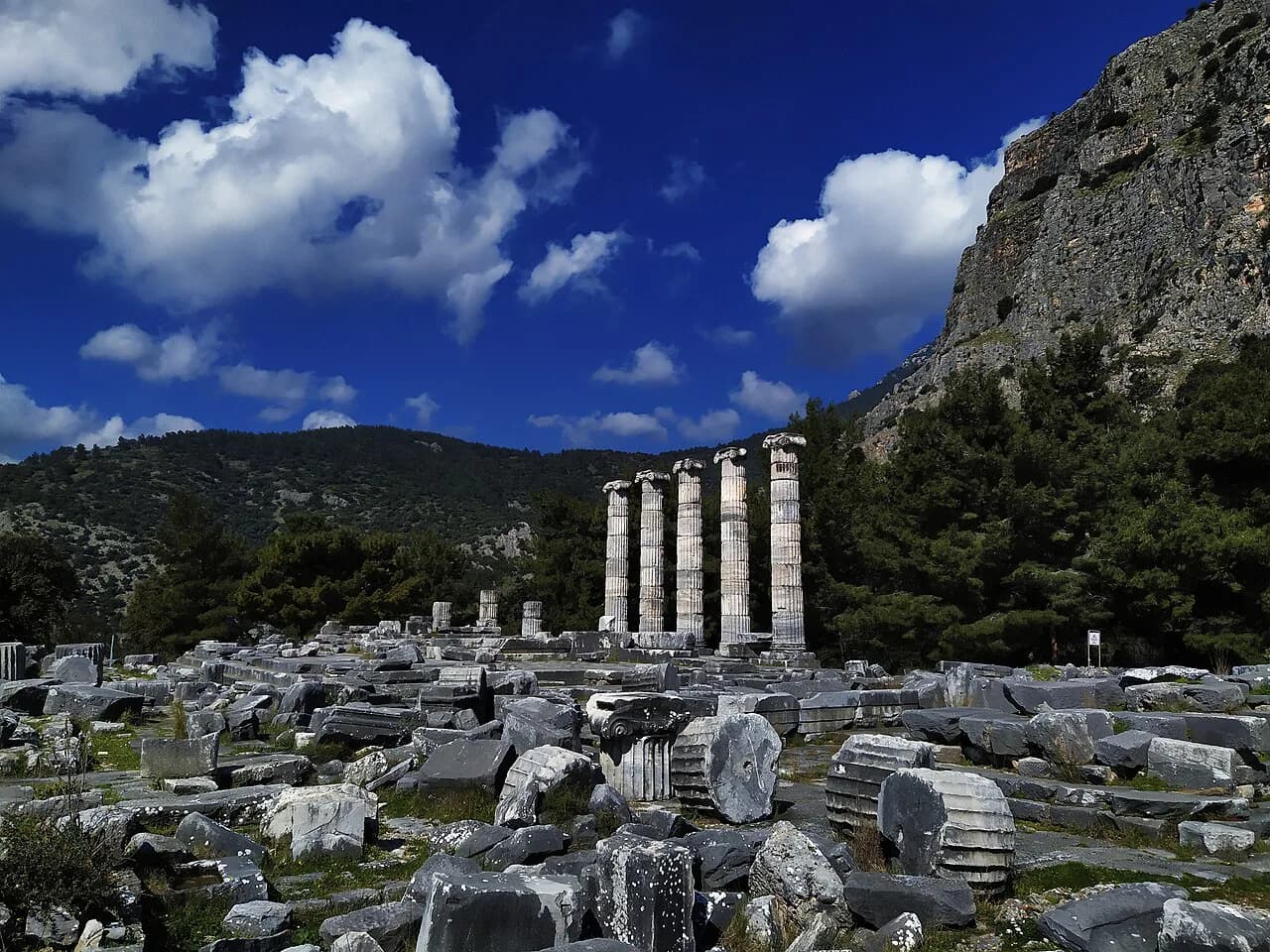
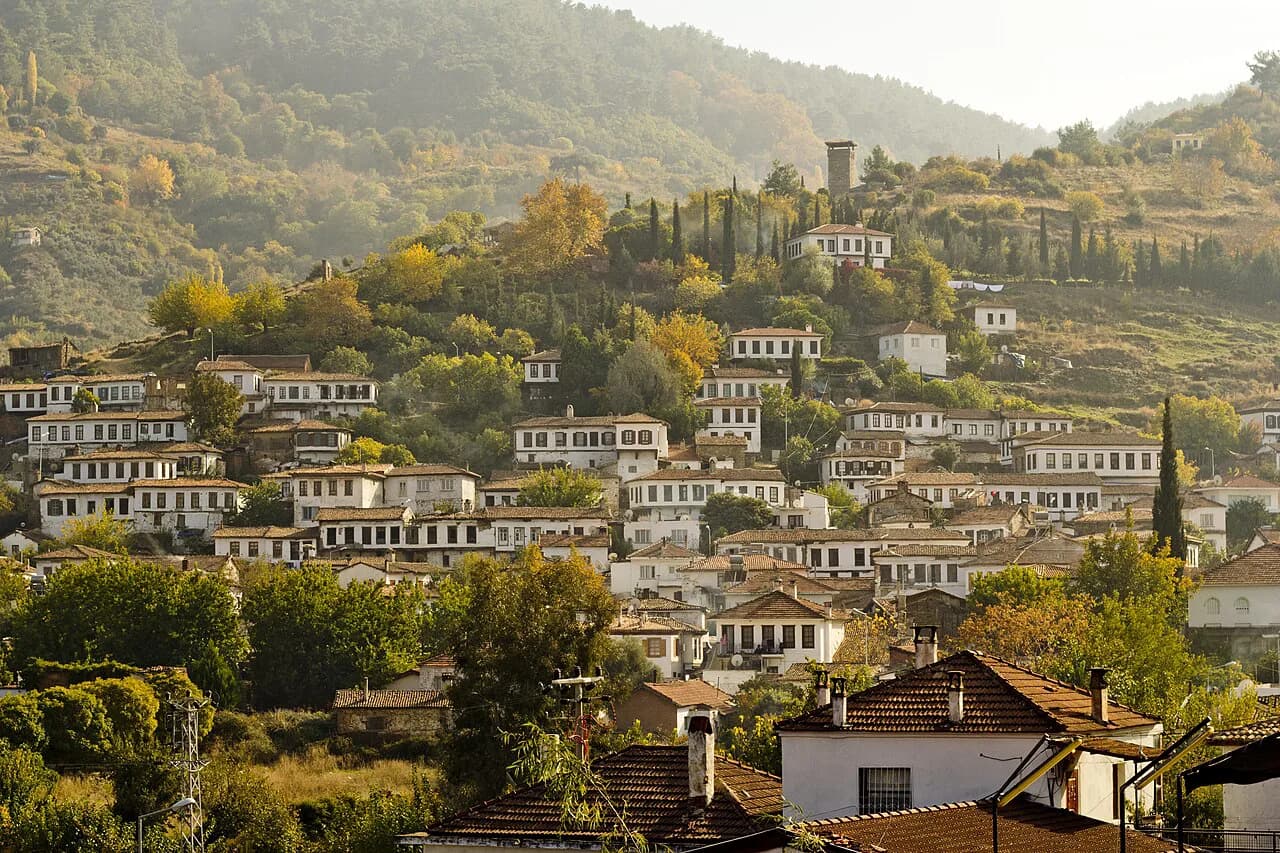
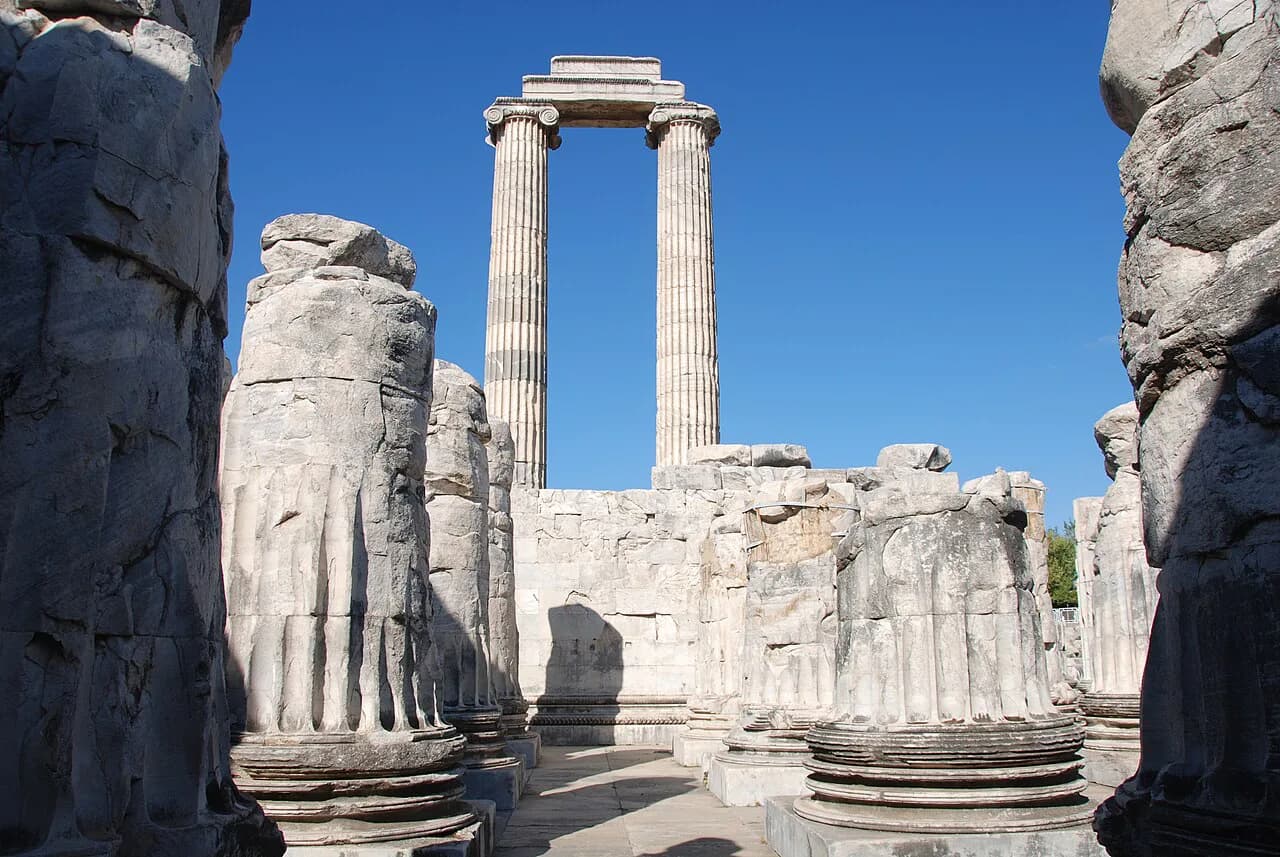
Several sites sit close enough to fill a second day in the area. Şirince is a hillside village within easy reach of Selçuk, and the ruins at Priene, Miletus and Didyma lie south towards Söke and Kuşadası. If you are already travelling between Kuşadası and Selçuk, the House of the Virgin Mary is on the same road up the hill.
What to check before you go: tickets and opening times
Tickets, opening times and any Müzekart arrangements are worth checking on the official Turkish museum service site before you travel, and again on the day, since these can change by season. You will also want to know whether the Terrace Houses carry a separate entry and how payment is handled, as these details affect how much cash or card you carry.
One further practical point: the site is exposed, so check the weather forecast and bring sun protection, water and sturdy shoes for the marble streets. The marble is smooth and polished by centuries of feet, which makes the downhill route less forgiving in sandals or smooth soles.
Which gate should you start at?
Start at the upper gate and walk downhill to the lower gate. That route follows the gentle slope, lets you see the Terrace Houses and Curetes Street while you are fresh, and finishes at the theatre and Harbour Street without doubling back. Arrange your transport to meet you at the lower gate, and the day runs smoothly from the first step.
Explore more Selcuk guides
Sources
Notes for your next Turkey trip
Optional updates when we add or correct a town guide.
You might also like
Continue reading
More guides you'll find useful