Pide in Turkey: What It Is and How to Order It
Pide is an oval Turkish flatbread baked with toppings such as minced meat, kaşar or sucuk. Learn how it is made, how it differs from pizza and how to eat it.
On this page
Pide is an oval Turkish flatbread, leavened with yeast and baked with toppings spread across it or sealed inside a folded edge. It is often described as a Turkish pizza, but the dough is fluffier and more bread-like than a thin pizza base, and the shape, toppings and serving style all follow their own Turkish logic. This guide explains what arrives on the plate, the words to look for on a menu, and how pide differs from lahmacun and pizza.
What pide actually is
Pide is made from a wheat-flour dough raised with yeast, rolled into an oval and baked with toppings such as spiced minced meat, spinach, Turkish sausage or cheese. The word is pronounced pee-dae, and in Turkey it covers both the plain bread and the topped versions, so a menu entry can mean quite different things. It is a staple of daily meals rather than a special-occasion dish.
Toppings are not an afterthought: they are the point of the dish. Minced meat with onion and pepper is the commonest version, while spinach, kaşar cheese and sucuk each have their own following. Some pides are baked open so the topping browns in the oven, and others are sealed so the filling steams inside the bread.
The bread is often part of a wider Turkish meal rather than a stand-alone dish, and the same wheat-flour flatbread tradition runs through much of the food covered in our guide to Turkish food. If you are putting a meal together, treat pide as the bread course and build the rest of the table around it.
Open (açık) versus closed (kapalı) pide
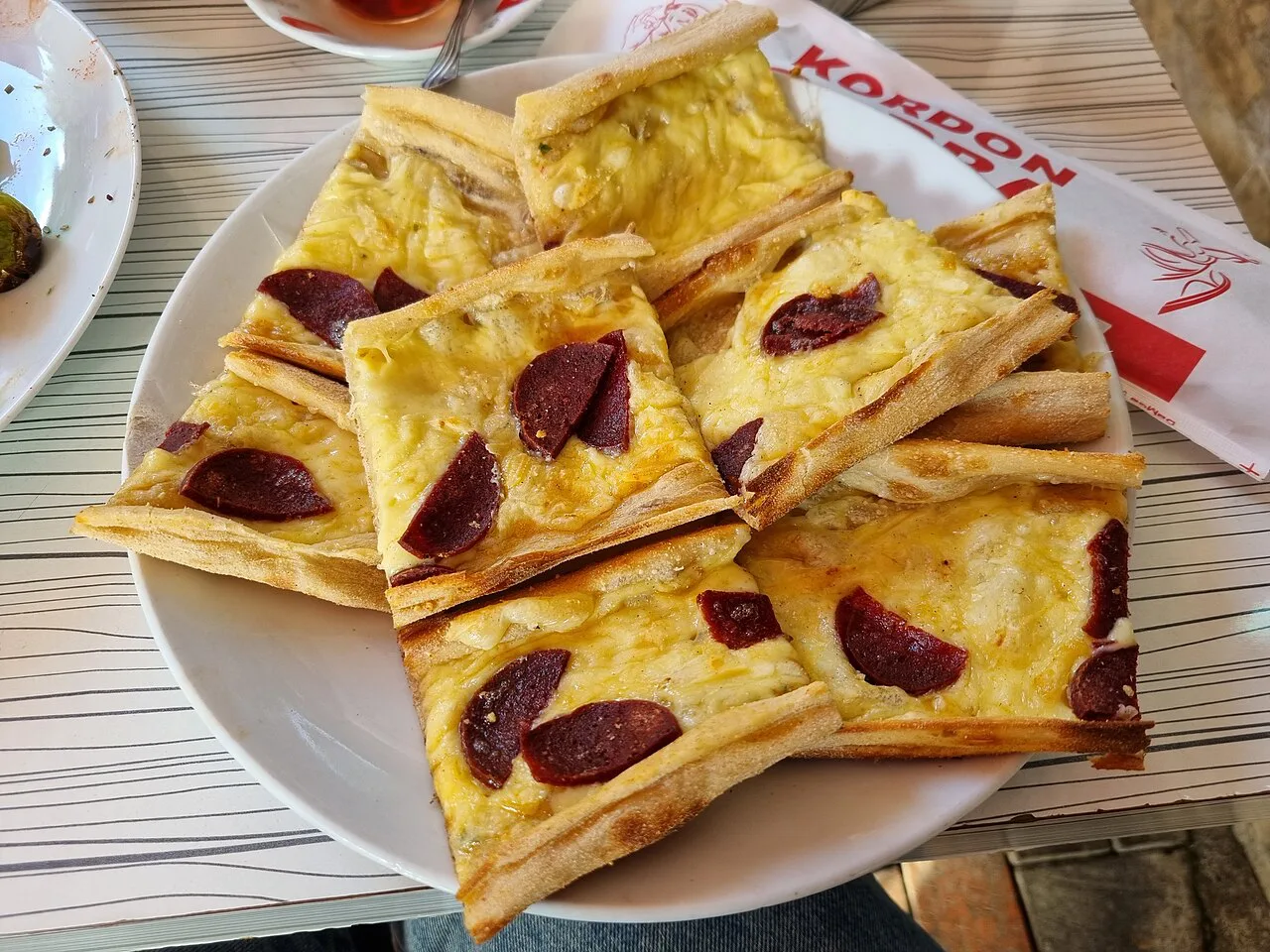
The shape is the first clue to what will arrive. Open pide, called açık, has the dough folded up around the edges with the filling visible and sizzling in the middle, which is the version most visitors picture. Closed pide, kapalı, seals the filling entirely inside the bread so none of the topping shows.
How do you pronounce pide? It is pronounced pee-dae, with two syllables. In Turkish the final e is sounded, so it does not rhyme with the English word hide.
What is Turkish pide made of? A leavened wheat-flour dough of flour, yeast, water, salt, a little sugar and oil or butter, rolled into an oval and baked with a topping or sealed around a filling. Common fillings include minced meat with onion and pepper, spinach and kaşar cheese, sucuk sausage or pastırma.
How is pide different from pizza? The dough is softer and more bread-like, the shape is oval rather than round, and the edges are raised or folded to hold the topping. Many Turkish cooks object to the pizza label, and the comparison is best used as a shortcut rather than a description.
Because the edges are raised, an open pide looks like a shallow boat, which is why the shape is so often described that way. The closed version keeps the filling sealed inside, so you see bread rather than topping on top. If you want the contrast between crisp edge and soft centre, the açık version shows it off best.
The dough: butter in the north, olive oil in the south
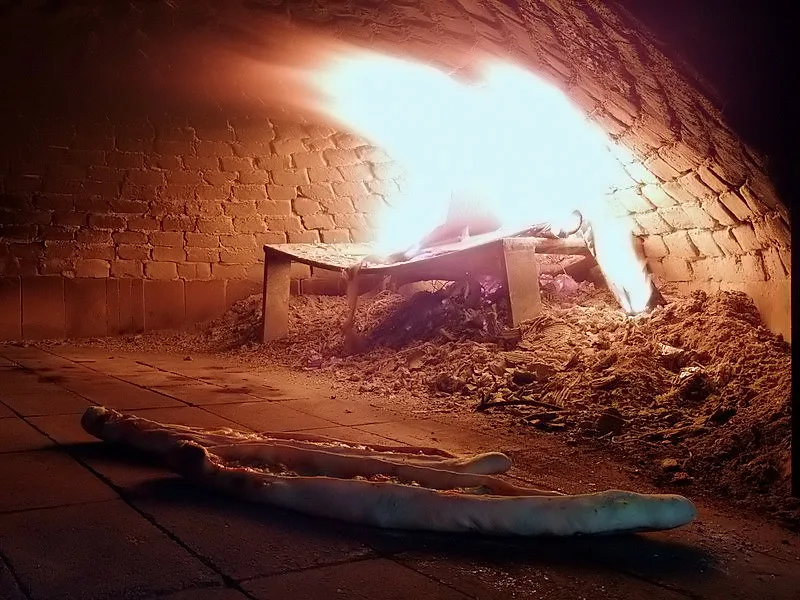
The basic dough is flour, yeast, water, salt and a little sugar, with oil or butter worked in. Bakers in the Black Sea region are known for using butter in the dough, which gives the baked bread a satiny sheen and a crisp crust, while bakers along the Aegean and Mediterranean coasts use olive oil. Both produce a soft, bread-like crumb rather than a thin, brittle base.
A plain pide may be finished with nigella or sesame seeds and served alongside other food rather than as a meal in itself. The little seeded loaf is a fair test of a bakery's dough, since there is nowhere for a weak bake to hide.
Common toppings to look for
Kiymali pide, minced meat with onion, tomato and green pepper, is the benchmark order. The filling is often cooked with the vegetables first and then combined with the raw meat before baking, which keeps it moist under the heat. Kuşbaşılı pide uses diced meat instead of mince, and it is a heavier, chunkier eat.
Vegetarian choices are mainstream: spinach with kaşar cheese, plain cheese with parsley, and mushroom versions all appear on pide menus. Kaşar is the yellow cheese used across Turkish baking and is the standard melting cheese for pide. Sucuk, the dried spicy sausage, and pastırma, cured beef, are the meat-heavy alternatives for anyone who wants something richer than mince.
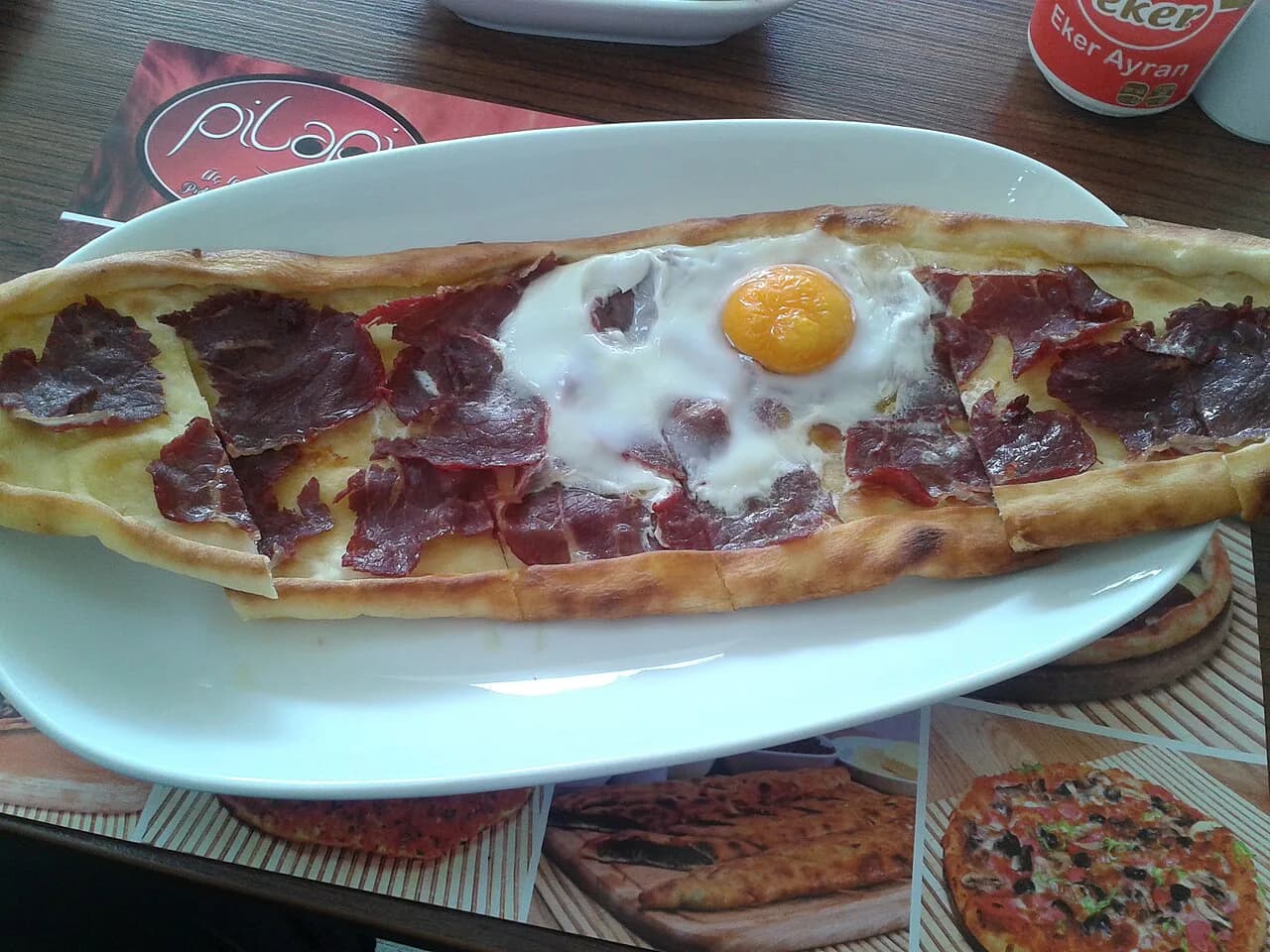
A cracked egg over the top towards the end of baking is a variant found in Black Sea pidesi, and it turns the bread into something closer to a full plate than a snack. If you are eating early, pide can sit within a Turkish breakfast spread, though a full serpme kahvaltı is a much larger affair.
How pide is bought: the fırın and the pideci
In Turkey, pide is not only restaurant food. It comes from two kinds of place: the fırın, the neighbourhood bakery with a stone or wood-fired oven, and the pideci, a shop that bakes and serves pide and little else. A pideci will usually offer piyaz or çoban salata alongside, which makes it an easy solo lunch.
In parts of Anatolia, families prepare their own filling at home and take it to the local bakery to be baked over, a practice still found in towns such as Antakya. Travellers are unlikely to do this, but it explains why a bakery counter may hold trays of customer-supplied toppings rather than ready-made loaves.
Pide versus lahmacun
Pide and lahmacun are both flatbreads with a meat topping, and the difference is shape and thickness. Lahmacun is round and thin, with the topping spread right to the edge, and it is squeezed with lemon and rolled into a wrap to eat. Pide is oval, thicker, and served in slices, more like a small loaf than a sheet.
If you want something you can eat one-handed while walking, choose lahmacun; if you want a sit-down plate you cut with a knife and fork, choose pide. Our lahmacun page covers the round version and its Urfa pepper heat in more detail.
Pide versus pizza: what to say and what not to say
Calling pide a Turkish pizza is a reasonable shortcut for a menu description, but many Turkish cooks object to the comparison, and it does not help you order. The dough is softer and more bread-like, the shape is oval rather than round, and the edges are usually folded up to hold the topping rather than left flat as a crust. The two are cousins in technique, not the same dish.
A takeaway shop in London tells an old anecdote about an Ottoman sailor at an Italian harbour whose mouthful of pide was heard as pize, which the locals then asked him to explain. Treat it as a story told over a counter, not as history. What matters more is that a pide is baked with a topping in the middle and eaten fresh, which is why it rarely travels well.
How pide is served and eaten
A pide arrives whole and is cut into slices at the table, usually with lemon on the side and sometimes a salad. The edges are crisp, the middle is soft under the topping, and the first bite should be taken near the centre where it is hottest. Squeezing lemon over the topping cuts the richness of cheese or mince.
In a pideci, order one pide between two people if you are also having a salad, or one each if pide is the whole meal. Pair it with piyaz, the white bean salad, or çoban salata, the chopped shepherd's salad, which is what the shop would serve with it. Finish with something sweet from our Turkish desserts guide, or a small Chocolate baklava if the mood takes you.
Ordering in a pideci without the guesswork
Point at what comes out of the oven if the counter is visible, or ask for kıymalı if you want the classic and kaşarlı if you want the cheese version. A pide is a full plate in itself, so order one or two to share depending on how hungry you are. Look for the word fırın on the sign, which signals a bakery oven rather than a reheating cabinet.
Prices vary by town, filling and whether you sit down or take away, and they change with the lira, so treat any figure you hear as a guide only. Bakeries and pideci run to their own oven rhythms, so check the board on the door or ask before you plan a meal around one.
Which pide to order first
Start with kıymalı, the minced-meat version, because it is the pide every shop bakes and the easiest way to judge the oven. If that goes well, come back for a closed pide or a Black Sea butter-dough version and see how different the same idea can taste. Either way, eat it hot, with lemon and a chopped salad alongside.
Explore more Turkey guides
Frequently Asked Questions
How do you pronounce pide?
It is pronounced pee-dae, with two syllables. In Turkish the final e is sounded, so it does not rhyme with the English word hide.
What is Turkish pide made of?
A leavened wheat-flour dough of flour, yeast, water, salt, a little sugar and oil or butter, rolled into an oval and baked with a topping or sealed around a filling. Common fillings include minced meat with onion and pepper, spinach and kaşar cheese, sucuk sausage or pastırma.
How is pide different from pizza?
The dough is softer and more bread-like, the shape is oval rather than round, and the edges are raised or folded to hold the topping. Many Turkish cooks object to the pizza label, and the comparison is best used as a shortcut rather than a description.
How do you eat Turkish pide?
It arrives whole and is cut into slices, usually with lemon on the side. Eat from the centre while it is hottest, squeeze lemon over the topping, and pair it with a chopped shepherd's salad or white bean piyaz.
Sources
Notes for your next Turkey trip
Optional updates when we add or correct a town guide.
You might also like

Continue reading
More guides you'll find useful